
Should we all be getting our testosterone levels checked?
You’ve probably heard by now that Defense Secretary Peter Hegseth announced every service member 30 years and older (women included!) will be screened annually for testosterone deficiency. Hormone treatment will be offered voluntarily to anyone who tests “low.” Troops under 30 can opt in, too. The stated goal, per a social media post accompanying his video announcement, was a “High-T Department of War.”
This might be his most notable foray into health matters since beards or vaccines. Peter Hegseth banned beards and called out “beardos” by name, ironically, as many consider facial hair an outward sign of masculinity. A study once showed, however, that a beard is not a reliable predictor of a man’s testosterone levels. Hegseth himself once sported a beard before a shave-off on live TV, by a barber the co-hosts introduced as “Russian.” It was a bizarre spectacle that might have had a lasting effect on him:
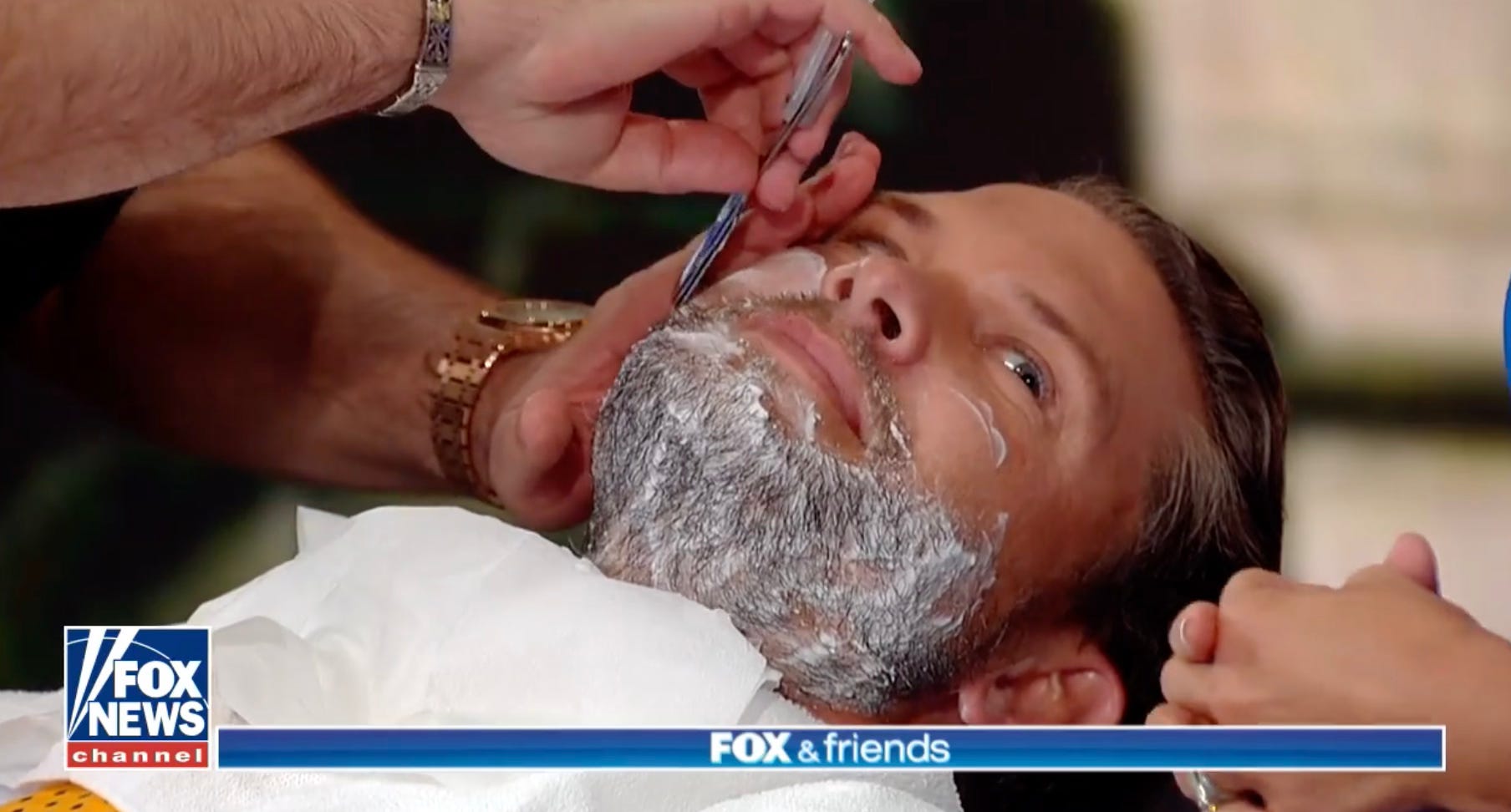
Remember how he also ended flu vaccine mandates for military personnel, then quietly reinstated flu vaccine mandates after a fatal outbreak at an Air Force basic training facility? Stuff like that keeps degrading public trust in vaccines, and indirectly undermines trust in family docs who fight the good vaccine fight.
Now this newest policy opens the door to a modern clinical question about “low-T” that comes up all the time in my office, brought there by popular culture as much as specific low testosterone symptoms.
Clinically low testosterone is not a wellness myth. It can cause muscle loss, fatigue, weight gain and sexual dysfunction. Low testosterone often goes along with diabetes, obesity, osteoporosis and depression. Military life is plausibly a risk factor. Stress, sleep debt and even head injuries can all suppress hormone levels. Some researchers have described an “operator syndrome” in which long-serving special ops troops report elevated rates of multiple medical problems, decreased testosterone among them. According to reporting I’ve read, low-T stigma keeps many from getting checked, and some may even fear professional repercussions. A program that normalizes testing in military men with symptoms, but not necessarily universal screening, addresses something real.
A screening mandate collides with how the diagnosis works. Hypogonadism isn’t a lab value. It’s a lab value plus a clinical picture.
Most contemporary guidelines — Endocrine Society, AUA, BSSM, primary care reviews — recommend against blanket testosterone testing in asymptomatic men. They cite circadian variation, assay variability between labs, and the sheer nonspecificity of the symptoms. Routine screening mostly yields borderline “abnormal” results whose treatment has unclear benefit.
The Endocrine Society requires a low morning testosterone (drawn 8 to 10 AM, ideally fasting) confirmed on two to three occasions, alongside specific signs that actually point to androgen deficiency. Here’s a deep dive in the block below, OK to skim if you’re just looking for the gist of all this:
The American Urological Association (AUA) recommends measuring total testosterone in men presenting with signs or symptoms of testosterone deficiency, and also in certain high-risk populations even in the absence of symptoms. Specifically, testosterone measurement should be considered in patients with a history of:
Unexplained anemia — as many as one-third of older men have unexplained anemia, and low testosterone is significantly associated with reduced hemoglobin levels
Bone density loss or low-trauma fracture
Diabetes
Exposure to chemotherapy or testicular radiation
HIV/AIDS
Chronic narcotic (opioid) use
Male infertility
Pituitary dysfunction
Chronic corticosteroid use
Beyond the AUA guidance, the Endocrine Society and other major societies agree that testosterone testing should be symptom-driven rather than population-based screening. The symptoms and conditions that should prompt testosterone measurement can be organized into two categories:
Symptoms with the strongest association with hypogonadism:
Decreased libido — the most specific sexual symptom
Decreased spontaneous/morning erections
Erectile dysfunction
New-onset gynecomastia (tender breast growth)
Infertility
Loss of secondary sex characteristics (e.g., decreased body hair)
The European Male Aging Study found that only sexual symptoms (poor morning erections, decreased libido, and erectile dysfunction) had a syndromic association with low total testosterone after adjusting for age.
Less specific but associated symptoms:
Fatigue and decreased energy
Depressed mood or irritability
Poor concentration
Reduced physical performance
Sleep disturbance
Decreased muscle mass or strength
These nonspecific symptoms alone are generally insufficient to justify testing, as they overlap with many other conditions. However, when present alongside sexual symptoms or in the context of high-risk conditions (listed above), they strengthen the indication for measurement.
A universal testosterone screening program, by design, tests asymptomatic people. It starts with the result and goes looking for the disease. No other military does T screening.
For those wanting an MD-level rundown on how selective testosterone screening should be done in an ideal world, here is an even deeper dive I prepared and reviewed using OpenEvidence. Warning, it is technical!
When deficiency is real, the benefits are real, too, and accrue in a predictable order. Society for Endocrinology guidance puts improvements in libido and depressive symptoms at three to six weeks.
Erectile function improves modestly.
Body composition and blood sugar control improvements build over six to twelve months.
Bone density starts improving a bit towards one to two years.
Anemia correction is well established, and in frankly hypogonadal men strength gains can be substantial. This is obviously important for active duty and combat forces. Strength and muscle gains confer psychological benefits for many, too.
Mood and cognition improvements are weaker claims. Controlled trials in experimentally hypogonadal men showed no real mood benefit from graded doses, and cognition has not moved in older men.
Erythrocytosis — too many red blood cells, and thus more clots — is among the most common adverse events, at roughly 8X the placebo risk, which is why counts need checking at three to six months and then q6-12 months at least. Risk is formulation-dependent: injectable esters produce peaks and more risk; transdermal formulations, significantly less.
Older studies suggested more heart disease. But the TRAVERSE trial ( ~5,000 men, mean 22 months) is the strongest new reassurance available: no excess of major adverse cardiac events, even in men with existing heart disease. But it found more pulmonary embolism, more atrial fibrillation, and, bizarrely, in the fracture subtrial, a 43% rise in fractures of ribs, wrists and ankles despite bone density improving. This trial also showed no increase in prostate cancer risk, but testosterone does increase PSA levels, which may lead to more biopsies and detection of subclinical low-grade cancers.
Before a first prescription a clinician still rules out prostate and breast cancer, untreated sleep apnea, uncontrolled heart failure, severe urinary symptoms and baseline erythrocytosis, and takes a clotting history. That’s a real encounter, not a lab order and I hope military protocols will include all of it. Worth remembering that all of this risk buys nothing in a man whose level was never truly low, which is why guidelines warn against the “trial” prescription. The FDA has never approved testosterone for levels that naturally fall with age.
The adverse effect deserving the most reckoning, with some bitter irony, is infertility. Testosterone shuts down sperm production fast. Intratesticular levels fall 94% within three weeks. The AUA calls it a strong, grade-A recommendation not to prescribe to men trying to conceive. After stopping treatment recovery usually arrives but slowly and unevenly — roughly two-thirds by six months and nearly all by 24 months in the most cited study, though in another big study a third of real-world androgen users remain subnormal at a year. Longer use, older age and longer-acting preparations predict slower recovery. Men wanting fertility within a year should avoid TRT, or bank sperm first.
Make sure to tell the young recruits about all this, right?
Common but generally manageable effects include acne, oily skin, breast tenderness, fluid retention, sleep apnea exacerbation, and blood pressure increases. Too high testosterone typically manifests as increased aggression, dominance-seeking behavior and risk-taking, all of which increase the risk of a Department of Defense becoming a Department of War in the Middle East.
Another problem here is the reductionist logic.
“High-T” treats a serum concentration as a proxy for what anyone actually wants — resilience, endurance, good judgment despite physical and mental exhaustion. The confounders that plausibly explain much of the population-level decline (obesity, sedentary life, sleep debt) are the actual targets, and things militaries also know how to help. Shortcutting around these might optimize the biomarker and patch the soldier up incompletely.
The testosterone idea is visible in civilian data, too. U.S. prescriptions grew from under a million in 2000 to nearly 12 million in 2025, fastest among younger men in whom up to a third did not meet the deficiency criteria according to the American Urology Association.
The framing from Peter Hegseth and allied voices emphasizes “operating at your absolute best,” “maximum psychological and mental readiness,” and testosterone as a top marker of overall health, which stretches beyond the indications recognized in endocrine and urology guidelines. This shifts testosterone from a specific hormone with defined clinical uses to a quasi-global vitality metric, an approach more common in influencer and “optimization” culture than in evidence-based medical practice.

Including women is the least defensible piece. Since this all came out, experts highlight that women also produce testosterone, but in much lower amounts, and that the evidence base for testing and treating “low T” in women is far thinner and more controversial than in men.
Current practice generally limits testosterone therapy for women to narrow indications such as post‑menopausal low sexual desire, and even there, guidelines are cautious.
Specialists quoted in health and science coverage have stated that blanket screening of all women, without clear indications or protocols, is particularly hard to justify.
Some relevant quotes from Dr. Hugh Cassiere in The Independent:
Females have 10 times less testosterone level than men. Women in the military perform the same as men in military, and their testosterone levels are 10 times less than men… Testosterone replacement therapy was not FDA‑approved for women, and introducing it could cause severe health complications, such as blood clots or elevated red blood cell counts, which could lead to strokes and heart attacks. How about women who are supposed to have low testosterone levels, and you're doing all these negative things by treating them?
I think this quote might be qualified such that “military performance” is not equated with male=female muscular strength. But women get the job done, especially in terms of modern warfare and the many roles to play in a well-functioning, balanced military.
.jpg)
The administration’s transgender troop ban rests partly on the claim that hormone therapy is impractical for soldiers in austere deployment conditions.
The legal director of the National Center for LGBTQ Rights argues that urging male troops onto the same medication exposes that reasoning as bias.
The Pentagon has not explained the distinction, which is its own kind of answer.
Hegseth’s screening program isn’t an isolated Pentagon eccentricity — it’s the military edge of a federal push. Backed by RFK Jr., the FDA removed testosterone’s boxed cardiac warning last year on the strength of the TRAVERSE data, and last month proposed rewriting the label to cover age-related symptoms like low libido and erectile dysfunction. Currently the drug is approved only for hypogonadism from a defined medical cause.
The reasoning is defensible; the timing is the problem.
Those same NIH trials that vindicated testosterone for sexual function found little or no benefit for fatigue, memory or well-being… the very things being promised to troops. And the guardrails were built for a reason: one Michigan study found just 12% of men receiving testosterone met the Endocrine Society’s own criteria. The Endocrine Society has asked the FDA for 15-to-20-year prostate cancer data before relaxing further.
I won’t see that many troops, though I do have lots of veterans. I’ll keep seeing lots of civilian men, some of them young, who read about this online and get influenced.
That’s the reach of a policy like this. A health claim with a federal seal on it reduces a complicated thing to a serum number that stands in for capability. Compact ideas travel.
So the request arrives, from someone tired for many reasons, who wants the test rather than the harder conversation about sleep, weight, alcohol, stress. The shortcut tempts physicians, too. Many men will just skip the hassle and buy it online.
A more examined approach: concede that service members have plausible risk factors; test only symptomatic men, twice, early morning; hunt reversible causes — obesity, sleep apnea, medical conditions; treat obesity-related hypogonadism with weight loss as a first priority; be honest about temporary male infertility; reserve TRT for men who meet criteria and understand the tradeoffs. Not just know your T.
Maybe the program helps readiness. Maybe the loosened FDA guidance opens closed doors. But very few impartial experts that I’ve read about this week expect a net benefit. The demand all this creates in civilian exam rooms and in money spent will be much easier to measure.
Here are evidence-based, non-pharmacological ways to naturally improve one’s testosterone. In a sentence, the strongest evidence points to losing weight if overweight (ideally 5–10% or more, especially via combined diet and exercise), getting adequate sleep, and limiting heavy alcohol use.

May God protect our troops.
May their lives and health and readiness first be improved
by a holistic approach that improves their actual lives.
Comments
Nothing yet. Say the first thing.
Sign in to join the conversation.