

NEWS#57 - GLOBAL EDITION

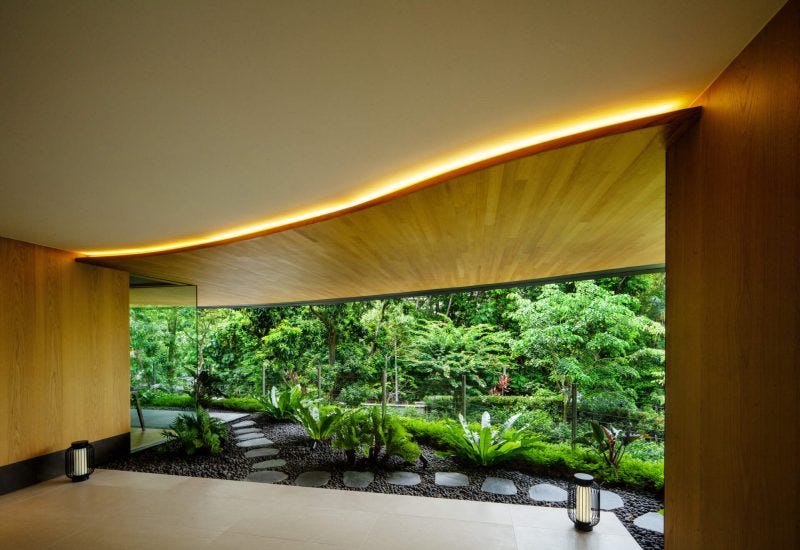
The middle of the year has arrived. A time to confront predictions, adjust course and discard what no longer deserves to follow us.
In 2026, that review is taking place under pressure. The World Bank has cut its global growth forecast to 2.5%, as conflict drives up energy prices and deepens economic and political uncertainty. The World Meteorological Organization has confirmed that 2015 to 2025 were the eleven warmest years ever recorded. Instability is no longer the exception. It has become the environment.
Against this backdrop, we turn to the home as refuge: a place to reorganise our thoughts, restore our energy and recover some sense of control before facing the second half of the year.
But does home really fulfil that promise?
That question led me back to the IKEA Life at Home Report 2024, a study of 38,630 people across 39 countries. Based on data from 2024, its diagnosis does not feel dated. It feels more precise.
For two-thirds of respondents, home is a frequent source of joy. Yet 36% consider that experience important and still do not find it regularly. Among those who rarely or never experience enjoyment at home, only 29% are satisfied with their home life, compared with a global average of 61%. Just 28% feel optimistic about the future, against 48% of the wider population.
This is not a matter of décor. Home, wellbeing and our sense of the future are interconnected. A home can restore our ability to act, but it can also drain energy, reinforce anxiety and narrow what we are able to imagine.
The report reveals four contradictions.
Feeling well. Sleep is the leading activity associated with physical and mental wellbeing, cited by 53% and 51% of respondents respectively. One in three says a clean and tidy home supports wellbeing. But lower-income respondents report greater concerns about their health. Comfort is therefore not simply an aesthetic choice. It depends on space, time, security and material conditions.
Making room for play. Hobbies, creativity and play are adult needs, not childish distractions. They can reduce stress, increase wellbeing and change how we experience our surroundings. The contradiction is clear: only 14% say their home brings out their playful side. Yet among those whose homes encourage play, 66% say home is their favourite place to be.
Expressing who we are. Personalising a space strengthens identity and belonging, but wanting to do so is not the same as being able to. Frequent enjoyment at home is reported by 47% of renters, compared with 56% of house owners and 54% of apartment owners. Without autonomy, even self-expression has limits.
Creating connections. Cooking, laughing, talking, welcoming someone in or simply spending time alone are part of the emotional structure of domestic life. Among those who find joy in hugging someone they love, 69% are satisfied with life at home and 55% feel optimistic about the future — above the global averages of 61% and 48%.
The discussion should not be romanticised. The World Cities Report 2026 estimates that as many as 3.4 billion people lack access to secure, safe and adequate housing. This is not a moral counterpoint, but a necessary distinction: a house and a home are not the same thing.
That does not make the question irrelevant to those who already have shelter, space and comfort. It makes it more demanding: once basic needs have been met, what does your home actually give back in rest, identity, connection, freedom and energy?
It is predictable that a furniture company would emphasise small changes to the domestic environment. More significant is what the data reveals beyond that commercial conclusion: the way we use our homes changes our habits; habits change relationships; relationships change how we see ourselves and the future.
Home is not simply the place we return to after facing the world. It quietly participates in shaping the person who goes back out into it.
Is the home you inhabit today merely protecting your present - or helping to build the future you claim to want?


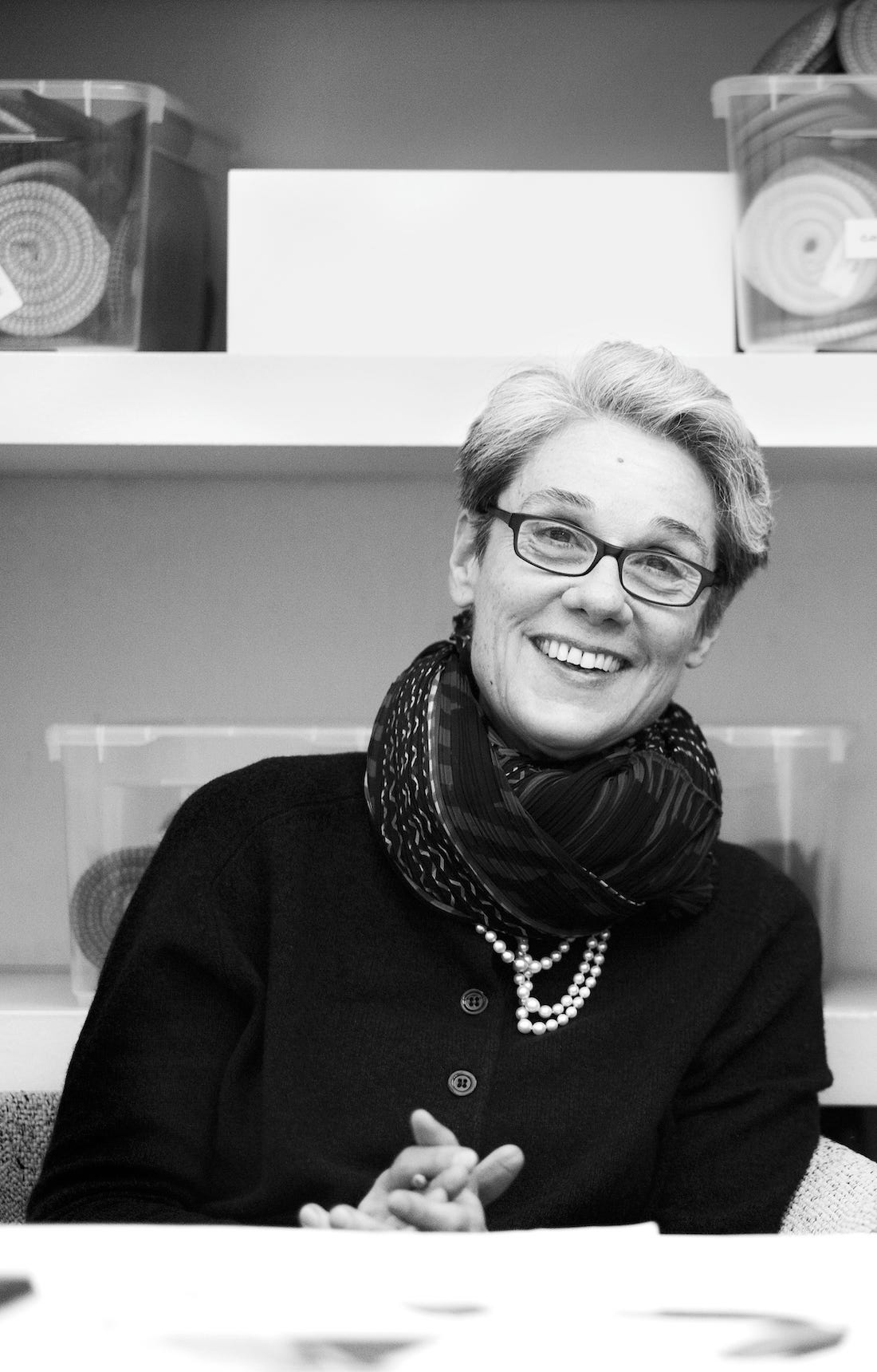
Paola Lenti did not begin with furniture. She began with yarn. And perhaps that is the key to understanding a brand that helped create a new language for luxury outdoor living: material came before form; color before collection; and before the outdoors became an object of desire came the decision to approach it with the same comfort and rigor once reserved for interiors. I witnessed this transformation firsthand. I worked with some of the leading international players in this market and saw outdoor living evolve from a functional category into a central part of how we inhabit space. Today, it is a mature, increasingly competitive sector, contested by major global brands. Paola Lenti, however, continues to occupy a very particular position. Although its essentially Italian products are available through multi-brand retailers in more than 60 countries, Paola Lenti has only two flagship stores: one in Milan and, curiously, the other in São Paulo. Brazil, after all, is one of the brand’s most important markets. But scale, in this case, does not explain identity. Among the major international outdoor brands, Paola Lenti is unique in having built its core language fundamentally around textile and color research, with proprietary technical yarns and fabrics developed in-house. While many competitors established their territory through materials engineering - synthetic fibers, aluminum - or through the strength of silhouette, Paola built a vocabulary of its own from material and color. Thirty years later, that distinction remains visible. And perhaps that is precisely why, even in a market that has learned to reproduce codes at remarkable speed, the brand remains instantly recognizable.
1. When you first began bringing to outdoor spaces the same level of comfort, beauty, color and attention to materials that had previously been reserved for interiors, the category was still approached in a far more functional way, focused primarily on durability and outdoor use. In your view, what was limited at the time: the product itself, the way people experienced outdoor spaces, the idea of what a home could be, or our understanding of how people wanted to live?
I believe the limitation was not so much in the product itself, but in the way outdoor space was conceived. Gardens, terraces and pool areas were still considered complementary to the home, intended predominantly for seasonal and functional use. As a consequence, furniture was designed primarily to meet requirements of practicality and resistance, while comfort, design research, material quality and attention to color were features reserved almost exclusively for interiors. We sought to change that perspective. From the very beginning, we knew that if we wanted to address such an important design question, we had to do so differently from everyone else and, above all, provide valid and precise answers. We imagined the outdoors as a true living space, capable of offering the same quality, well-being and expressive richness as interior environments. This required a long process of research into materials, yarns, colors and production technologies, in order to develop products capable of living outdoors without sacrificing comfort, beauty or durability. Today, this vision - unfortunately still sometimes regarded as something simple, as though it were merely a matter of “taking outside” what had been designed for interiors - is widely shared. At the time, however, it represented a paradigm shift. It was not simply about designing furniture for outdoor spaces. It was about rethinking the relationship between people, architecture and nature, and imagining outdoor space as an integral part of the experience of living.
2. When the home is no longer understood simply as a collection of interiors, but instead as a habitat, how does the responsibility of design change?
When the home is conceived as a habitat, the role of design changes profoundly. It is no longer simply about creating beautiful or functional objects, but about contributing to a balance between people, architecture, nature and time. Every product becomes part of a system of relationships and, precisely for that reason, must be designed responsibly. I believe that today, even more than in the past, the value of design lies less in the pursuit of a formal or self-referential gesture than in the ability to create objects that are meant to last. Durability is the most concrete form of sustainability. A product that preserves its aesthetic and functional qualities over time naturally reduces its environmental impact while continuing to generate value for those who use it. For this reason, we have always invested in high-performance material research, construction quality and solutions that allow our products to endure for years without losing their identity. Our formal language follows the same principle. Our collections favor essential lines, balanced proportions and a restrained aesthetic, conceived to transcend trends and preserve a coherent, relevant identity over time.
3. The luxury market is facing an evident tension: it must generate desire, rarity and excellence, yet it can no longer ignore excess, environmental impact and the rapid obsolescence of desire itself. What can still sustain the idea of luxury when abundance begins to feel like an outdated language?
I believe that today the value of an object should be measured by the quality of its design, the time required to make it and its ability to accompany people throughout their lives. Many of our products emerge from the encounter between design research and the knowledge embedded in Italian manufacturing traditions, preserved by highly specialized artisanal workshops. The handmade gesture is neither a decorative element nor a reference to tradition. It is what makes it possible to achieve surfaces, weaves and processes that could not be entirely reproduced through industrial production. Each piece carries small differences, variations and imperfections that reveal the process by which it was made and give it an identity of its own. I believe this authenticity is what represents the highest form of value today. In a world where everything tends to become fast, standardized and replaceable, an object designed to last, made with artisanal expertise and capable of preserving its meaning over time acquires a value that goes far beyond the material itself. It is not abundance that makes it precious, but the quality of the thinking, research and human work it contains. Its singularity lies in being an exclusive and unrepeatable product, while at the same time remaining high-performing, respectful of both people and nature, and technologically relevant.
4. When an innovative design language is absorbed by the market to the point of becoming a new standard, what happens to its original power? Does it lose exclusivity and authorship, or is that very assimilation by the market proof that a design idea has succeeded in enduring?
I believe that when a design language is absorbed by the market, it means, first and foremost, that it has been able to interpret a genuine need and introduce a new way of looking at design. From this perspective, the fact that certain ideas become part of a shared vocabulary does not represent a loss, but rather confirmation of their ability to endure and influence design over time. At the same time, I believe there is a dimension of authorship that cannot be replicated. In our case, it does not reside only in forms or colors, but above all in the body of research we have built, in the materials developed over the years and in the artisanal expertise that brings the products to life. Many of our processes require manual gestures, production times that must be respected and manufacturing knowledge passed down over time: stitching, weaving, embroidery and finishing techniques that make every piece slightly different from the next and therefore, in some way, unique and unrepeatable. It is precisely this encounter between research, design and craftsmanship that preserves the identity of our language. Ideas may inspire the market, but the value of what emerges from experience, experimentation and the human hand remains profoundly distinctive.



Jil Sander is synonymous with elegance and permanence. Everything she touches acquires a kind of expensive silence: nothing demands attention, yet it is impossible not to look.
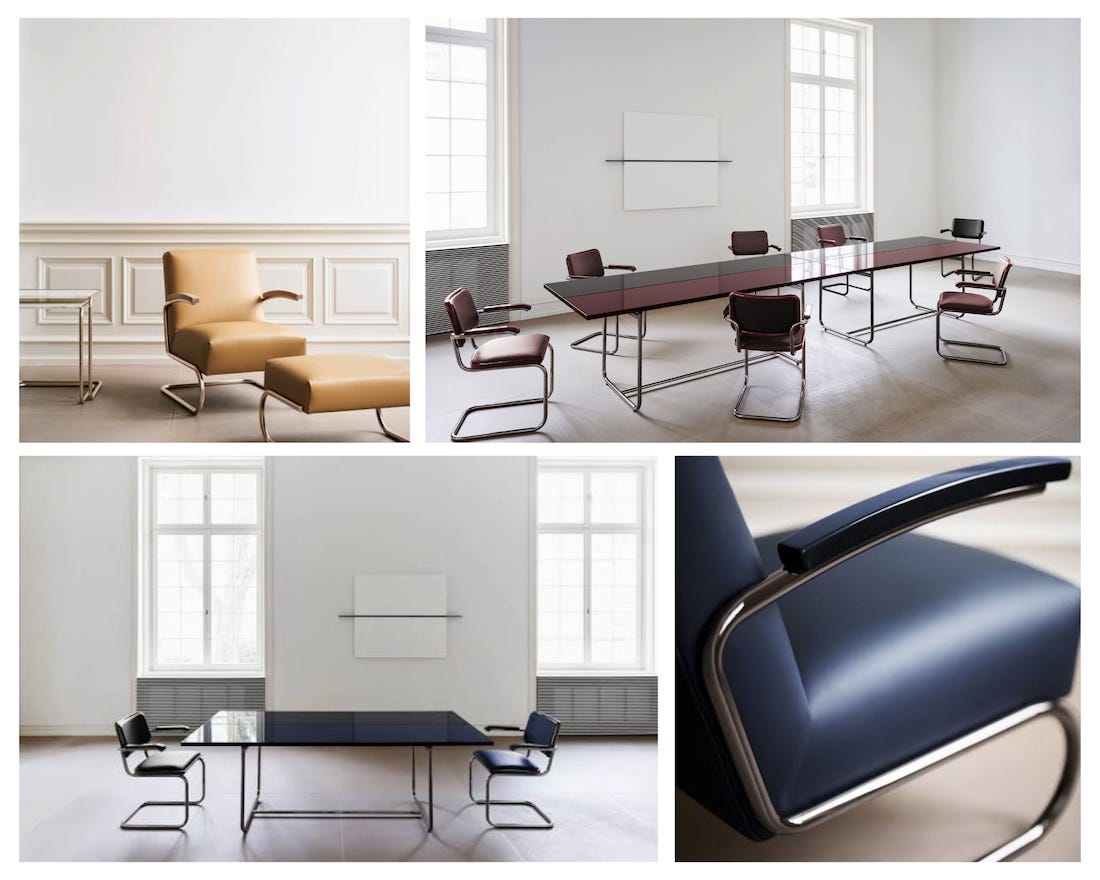
In the latest extension of her collaboration with Thonet, she brings that rigor to the S 411 lounge chair, created by the company itself in 1932, and to the S 1070 table, designed by Glen Oliver Löw with echoes of Marcel Breuer’s B 9 tables.
She does not redesign the past to make it feel “new.” She does something more difficult: she changes its temperature.
She strips away the shine of chrome, deepens the colors, brings Bauhaus closer to the body and turns technique into desire.
The same perspective extends to pieces by Mart Stam and Ludwig Mies van der Rohe, preserving the original strength of each design while giving it a different presence.
The collection is divided into two atmospheres, Serious and Nordic. On one side, black, graphite blue and ruby red. On the other, lighter, almost tactile tones.
The table is given a glossy top inspired by the finish of a Steinway piano; the lounge chair appears to float, without losing its weight.
Jil Sander has always understood that luxury does not require excess. It requires precision.
And perhaps permanence is precisely this: entering a room quietly and remaining there long after everything that once made noise has grown old.

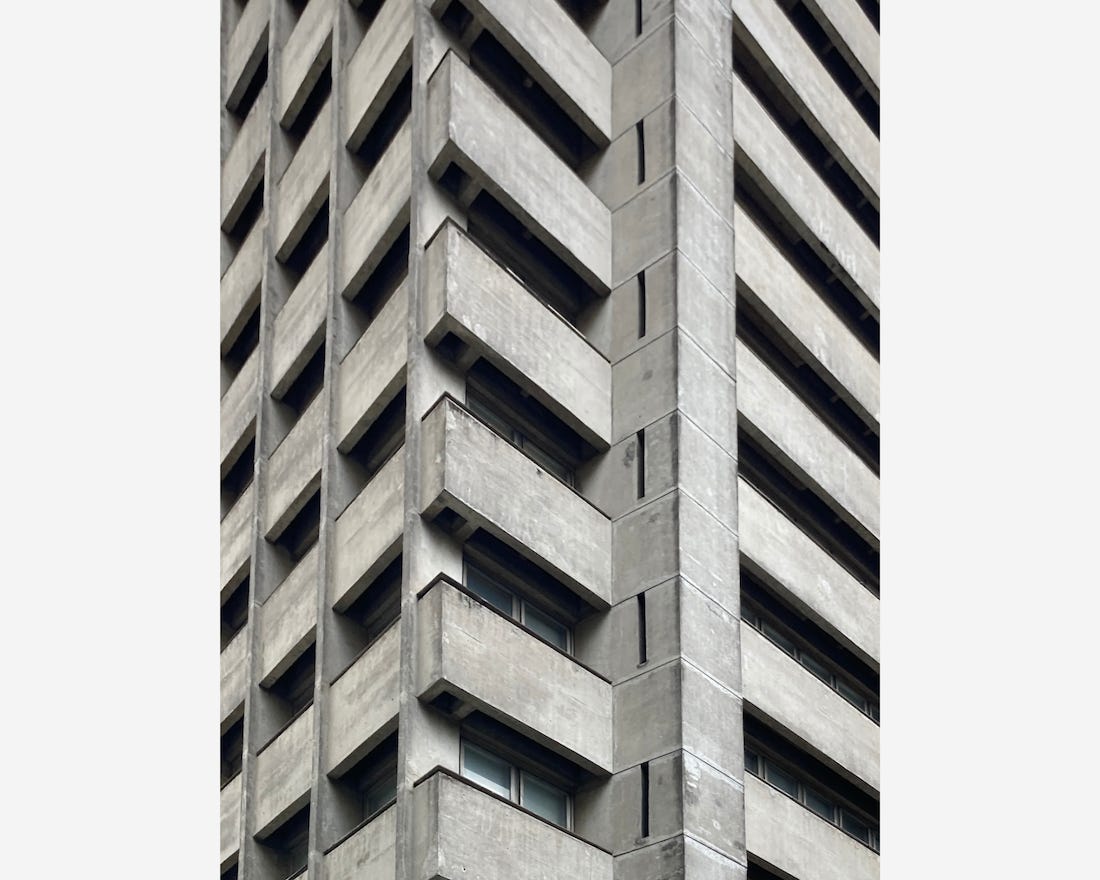
Brazil is one of the key territories in the history of Brutalist architecture. In São Paulo, it became part of the city’s urban identity and building culture. Avenida Paulista, in the heart of the state capital, brings together modernist and Brutalist buildings alongside landmarks such as MASP, the Fiesp headquarters and Conjunto Nacional - a cultural, financial and symbolic axis crossed by thousands of people every day.
Against this backdrop, Escola da Cidade will host “Brutalism Reloaded” from August 17 to 28. The course will be led by Swiss architect Guillermo Dürig and Brazilian architect, photographer and historian Ciro Miguel, whose research examines the built environment through images and archives.
Avenida Paulista will serve as a laboratory for a global question: how can modern buildings be adapted to current demands without erasing their architecture or treating demolition as the automatic answer?
Drawing on Swiss precedents and the teaching methodology of ETH Zurich, the course will explore precise interventions, new uses and environmental solutions. “The aim is not to apply universal solutions, but to develop specific architectural responses,” says Dürig.


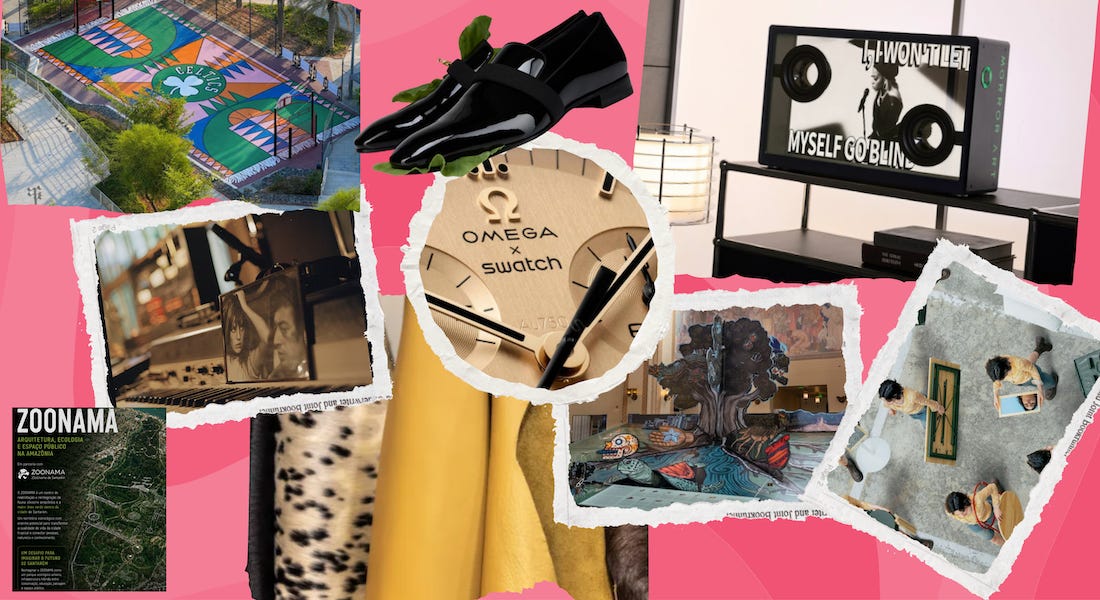
- Sports courts have become some of the most fertile canvases in urban design. From Paris to Memphis, artists are transforming once-anonymous surfaces into playable murals, visual landmarks and gathering places. The movement does more than beautify: it expands use, belonging and visibility in public spaces that are often overlooked. When art and sport share the same surface, the city becomes a collective experience again.
- Louboutin launched a loafer sculpted with lettuce leaves for $1,890 - and nearly sold out. The point is not the lettuce, but the strategy. Somewhere between the elevated basic and deliberate excess, Jaden Smith makes his debut as creative director by choosing a third path: understated humor built on a classic foundation. It is one way for a brand to prove it can remain relevant beyond the family name.
- Between Alter do Chão and Santarém, AA Visiting School Amazon 2026 proposes an international immersive design experience across two of the most singular natural, urban, ecological and cultural contexts in the contemporary Amazon. Led by Marko Brajovic and Nacho Martí, the workshop investigates circular architecture, biodiversity and new forms of coexistence between city, wildlife and forest.
- Leather has officially been removed from the scope of the European Union’s anti-deforestation law. The decision also covers bovine hides and skins and was presented as a technical adjustment, although experts point to industry pressure. The contradiction is clear: cattle remain regulated, while some of their derivatives do not. When regulation retreats under lobbying pressure, sustainability stops being a principle and becomes a negotiation.
- Before opening her father Serge Gainsbourg’s Paris home to the public, Charlotte Gainsbourg photographed the space as though trying to prevent memory from shifting place. In 5 Bis, her first photography exhibition, around 30 images turn shoes, medicine, cigarettes and portraits into traces of presence. The exhibition is on view at The Cloister Gallery during Rencontres d’Arles through September 6. Here, photography does not document: it preserves.
- Swatch and Omega are embarking on another journey to the Moon, this time with only 1,969 passengers. Priced at $570, the Mission to the Moon 1969 pays tribute to Apollo 11 with 11 grams of 18-karat Moonshine Gold, melted down from Omega components produced that year. A watch that does more than measure time: it turns history into collectible material.
- The MorningBlues SonicGlass A1 turns music into a visible object. Its transparent 21.5-inch display shows lyrics that appear to float, while the glass panel itself vibrates to produce sound. Through the app, users can also create animations and videos for each track. The expected price is $999, with launch pricing starting at $649. When listening is no longer enough, design gives music a body.
- In Los Angeles, the world’s largest pop-up book turns reading into architecture. Created by artist Daniel González and paper engineer Matthew Reinhart for the 100th anniversary of the Los Angeles Public Library, Luceros y Penumbras measures 9.4 meters wide and brings together family memory, identity and mythology. When a book grows to this scale, childhood no longer fits in the hand it occupies space.
- IKEA observed young renters who move from one home to another without a car and created KOMPISHÄNG: 11 lightweight, foldable pieces designed to be carried by the body itself. A table with a handle, an organizer that becomes a backpack, stools that form a shelving unit, even a plant pot designed to travel. Priced from $9.99 to $99.99, the collection understands something simple: mobility should not condemn a home to looking temporary.
- Baby boomers are supposed to downsize in retirement. Some of the wealthiest are doing the opposite: buying larger homes with room for children and grandchildren, shared living and future care needs. Accumulated wealth, cash purchases and the greater centrality of the home since the pandemic are supporting the shift. It is not simply about square footage. It is an attempt to turn old age into autonomy, permanence and the center of family life.

No posts
Comments
Nothing yet. Say the first thing.
Sign in to join the conversation.