
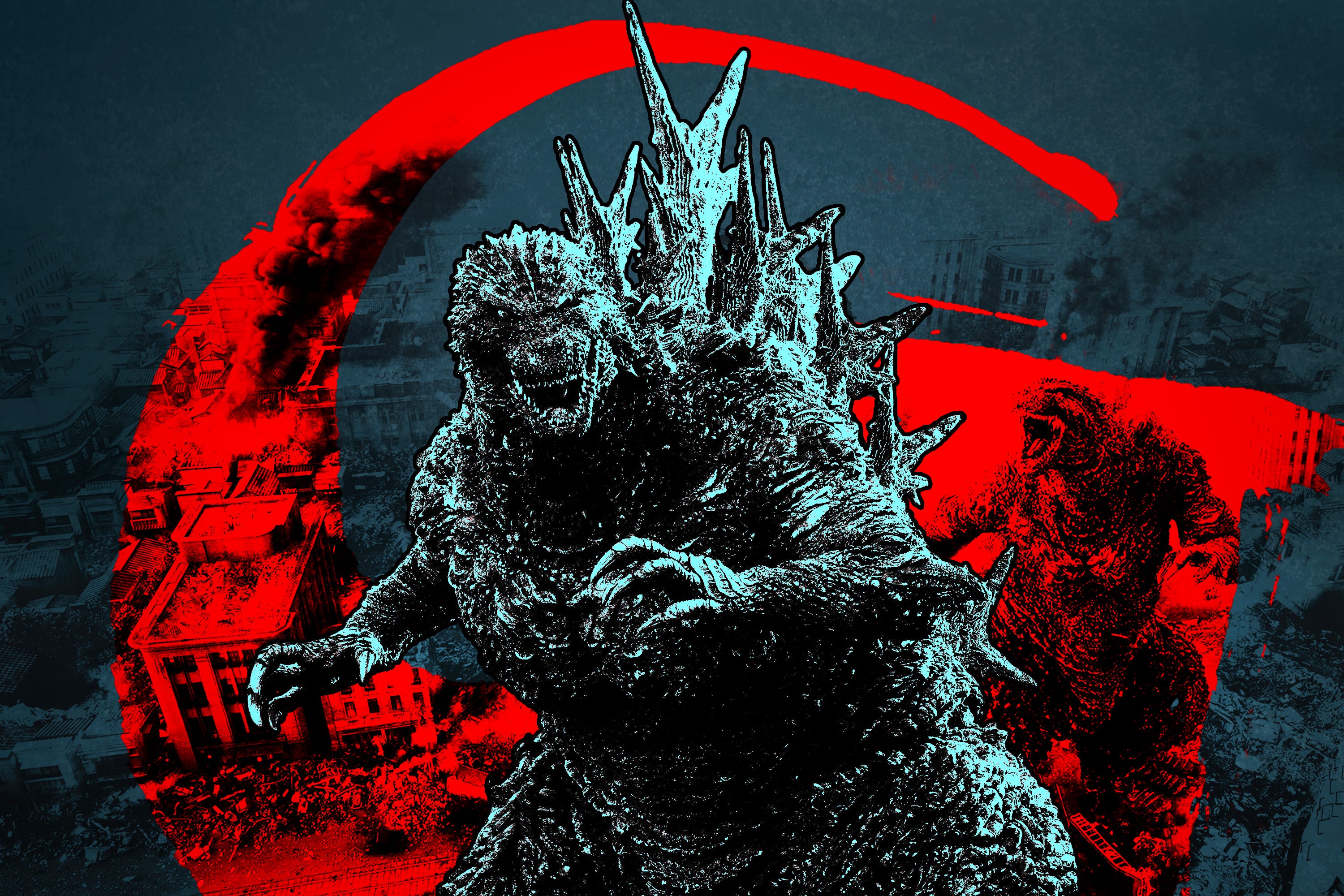
In what is becoming something of a recurring theme for me, I have a confession. Another one. Last time it was that I can’t stop watching Bullet Train. This time it’s that I am, apparently, a Godzilla fan. Who knew.
I was (and possibly remain) one of the few people who enjoyed the 1998 Roland Emmerich Godzilla—the one that tried to “modernize” Godzilla by making him look more realistic as he rampaged through Manhattan. The film stars Jean Reno as a French intelligence agent dispatched to New York (following his breakthrough American role as Léon in The Professional), and Matthew Broderick as, well, Matthew Broderick. I know, I know, the film wasn’t great. But at the very least it had a killer soundtrack. I also think I had a soft spot for it because I was in Cannes for the film festival that year, and the Carlton hotel had “Godzilla is this big” promotional banners on it. Yup, advertising works.
I also thought the 2014 reboot with Brian Cranston, Ken Watanabe, and a very young-looking Aaron Taylor-Johnson was fun, even if it is somewhat convoluted. But it more than made up for it by gifting the internet one of its great recurring GIFs—Watanabe’s “let them fight,” which reliably floods my socials whenever the latest spat between Elon Musk and Sam Altman gets a mention. And I’ve been watching Monarch: Legacy of Monsters on Apple TV, a show I’m enjoying rather more than I expected to. The first season reminded me of Lost—the time-jumpiness of it, the islands, a brooding and shadowy corporation in the form of the titular Monarch, and the general sense that something vast and incomprehensible is operating just below the surface of everything. The finale of season two drops on April 30.
But what made me fully realize and embrace my inner Godzilla fan status is Godzilla Minus One. Like Bullet Train, I find myself returning to it again and again—both the original and the wonderful black-and-white regrade Godzilla Minus One/Minus Color, which is so well done and makes me even madder that we’re still waiting on the cowards to release Rogue One in black and white. (I’ll keep trying to wish it into existence, despite the odds.)
I know I’m far from being alone in my praise here. While Godzilla Minus One was initially met with mixed reactions in Japan, the international response was overwhelmingly positive: rave reviews, a $116 million box office gross, and an Academy Award for Best Visual Effects—remarkable for a film made by a team of just 35 VFX artists on a budget that would barely cover catering on a Marvel production. It’s a testament to writer, director, and VFX supervisor Takashi Yamazaki’s working method: rather than presiding from a distance, he worked directly alongside his artists, rolling between workstations on a chair with casters. Each artist owned their shots end-to-end—animation, compositing, lighting, etc.—a soup-to-nuts approach that kept the creative process lean, fast, and extraordinarily cost-effective.
Read more from MBH4H:
So: why does Godzilla Minus One hit so differently? What does it understand from seventy years of monster movies that five increasingly expensive American Legendary Monsterverse entries have so consistently failed to appreciate? The answer was twofold: a deep love and creative understanding of the core material, and money—or rather, the lack thereof.
Godzilla Minus One was made for approximately $15 million—a big budget for a Japanese movie, as Yamazaki himself has stated. For comparison, Godzilla vs. Kong, released two years earlier, cost somewhere between $155 and $200 million to produce. Estimates vary, but that nonetheless means Yamazaki made his film for a fraction of what Legendary and Warner Bros. spent on theirs. Godzilla Minus One was also astonishingly successful financially: It made $56 million at the US domestic box office and over $116 million worldwide, becoming the highest-grossing Japanese-produced Godzilla film in the history of the franchise and one of the three highest-grossing non-English language films ever released in the United States, placing it alongside Crouching Tiger, Hidden Dragon and Life Is Beautiful.
Godzilla vs. Kong scraped past $100 million domestically and another $370 million overseas—though to be fair, it was simultaneously released on HBO Max during a global pandemic, which no doubt seriously dented its numbers—well above Minus One, but after factoring in production and marketing estimates, the net profit for each is much closer than you might expect.
But I’m not raving about how much money Godzilla Minus One made, nor am I simply celebrating what Yamazaki pulled off on a relative shoestring. What astonishes me is the combination: a pure, unironic love for what the Godzilla genre is and what it means, fused with the creative vision and discipline that a genuinely tiny budget demands. With $15 million, there is no room for spectacle as a substitute for substance. If the script doesn’t work, nothing works. If the performances don’t land, the whole thing collapses. Each one of the digital effects shots has to count because the budget is tight—and audiences, even audiences who came for the spectacle of a lumbering radioactive lizard obliterating large sections of post-war Tokyo, will forgive a great deal if they actually care about the people in the foreground. Of course, there’s nothing for them to forgive; quite the reverse.
Godzilla Minus One is considerably more CGI-heavy than I first realized—610 digital effects shots in total, which per the VFX team accounts for roughly two-thirds of the entire film—yet far more handcrafted than the CGI label implies. Both things are true, and the tension between them is exactly what gives the film its distinctive, authentic Godzilla-y vibe. The minesweeper sequences, for instance, were shot on real boats on real water—the maritime scenes filmed at Lake Hamana and in the Enshū Sea off the coast of the Tenryū River—real enough conditions to leave both cast and crew seasick. But all of the other ships in the movie share a single practical set. The illusion of the different ships was created through a combination of cranes, the actors’ performances, and digital extensions built around the real scenes. (This behind-the-scenes video explains it perfectly.) The set pieces may be heightened through digital compositing, but everything that most closely touched the human performances was kept as practical as possible.
The sequence where Godzilla pursues the wooden minesweeper across open ocean—perhaps the film’s most Jaws-like scene—required the CGI team to match the massive waves generated by an imaginary creature the size of a skyscraper to the very real, very small waves already captured on camera. In an interview with VFXWorld, Shirogumi VFX supervisor Kiyoko Shibuya described the minesweeper chase shots as the most difficult in the entire film—the problem of making CGI waves match the scale and precision of waves generated by a real boat on open water, all while Godzilla’s displacement had to dwarf them by orders of magnitude. When Yamazaki met Steven Spielberg at an Oscar luncheon, Spielberg told him he had watched the film three times—and specifically singled out the young VFX artist responsible for those water simulations. The first time I watched the film, I wrongly assumed the bigger ships were practical models in the mold of Gerry Anderson’s Thunderbirds. They’re not; they’re CGI. But I’ve wondered whether the boats look like models because Yamazaki wanted them to feel like models—tactile, physical, rooted in the tokusatsu tradition—even when they weren’t.
The same logic applies to Godzilla himself, and explains another misconception that I and others had that the on-screen creature is a person in a suit. He isn’t. Every frame of Godzilla is CGI, created by Yamazaki’s own VFX company, Shirogumi. Yamazaki and his team studied the original Shōwa-era suit performances in classic Godzilla movies extensively during production—the weight, the movement, the way those suit actors gave Godzilla a physical presence that pure CGI monsters so often lack—and deliberately tried to animate those qualities into a digital creature. The intention was that he should feel, in Yamazaki’s own words, like “both a monster and a deity.” The suit-performance tradition is in the DNA of Minus One‘s Godzilla even though there is no actual monster suit.
The 1998 Emmerich version—the one I watched and didn’t hate—took a very different approach, arguably to its detriment. Emmerich’s Godzilla was redesigned from the ground up as a plausible, giant Alien-esque creature: a massive, fast-moving iguana, photorealistic in intent, stripped of the mythic weight of the Toho original and replaced with something that looked like it could theoretically exist. The problem is that Godzilla cannot theoretically exist—and the attempt to convince you otherwise breaks the suspension of disbelief the film desperately needs to work. We know, on some level, that what we’re watching is impossible. The original Shōwa era films never pretended otherwise: the suit, the miniatures, the theatrical scale of it all were part of an unspoken agreement between the filmmakers and the audience that this was glorious, committed theater—and that the theater was the point. Emmerich tore up that proverbial agreement and replaced it with a creature that, though intended to be more realistic, was by definition clearly not.
Yamazaki’s genius in Minus One is precisely the inverse: He never once tried to make Godzilla look real. He made him look like the real Godzilla—mythic, massive, deliberate, and terrifying in the way that only something that was never meant to be real can be. The result is the most authentic Godzilla in decades. The final irony is that Emmerich’s version was a fusion of practical and digital effects—CGI mixed with some animatronics, technically closer to the physical world than Yamazaki’s all-CGI creature—and yet it’s Yamazaki’s Godzilla that feels like it has genuine weight and presence, while Emmerich’s feels hollow.
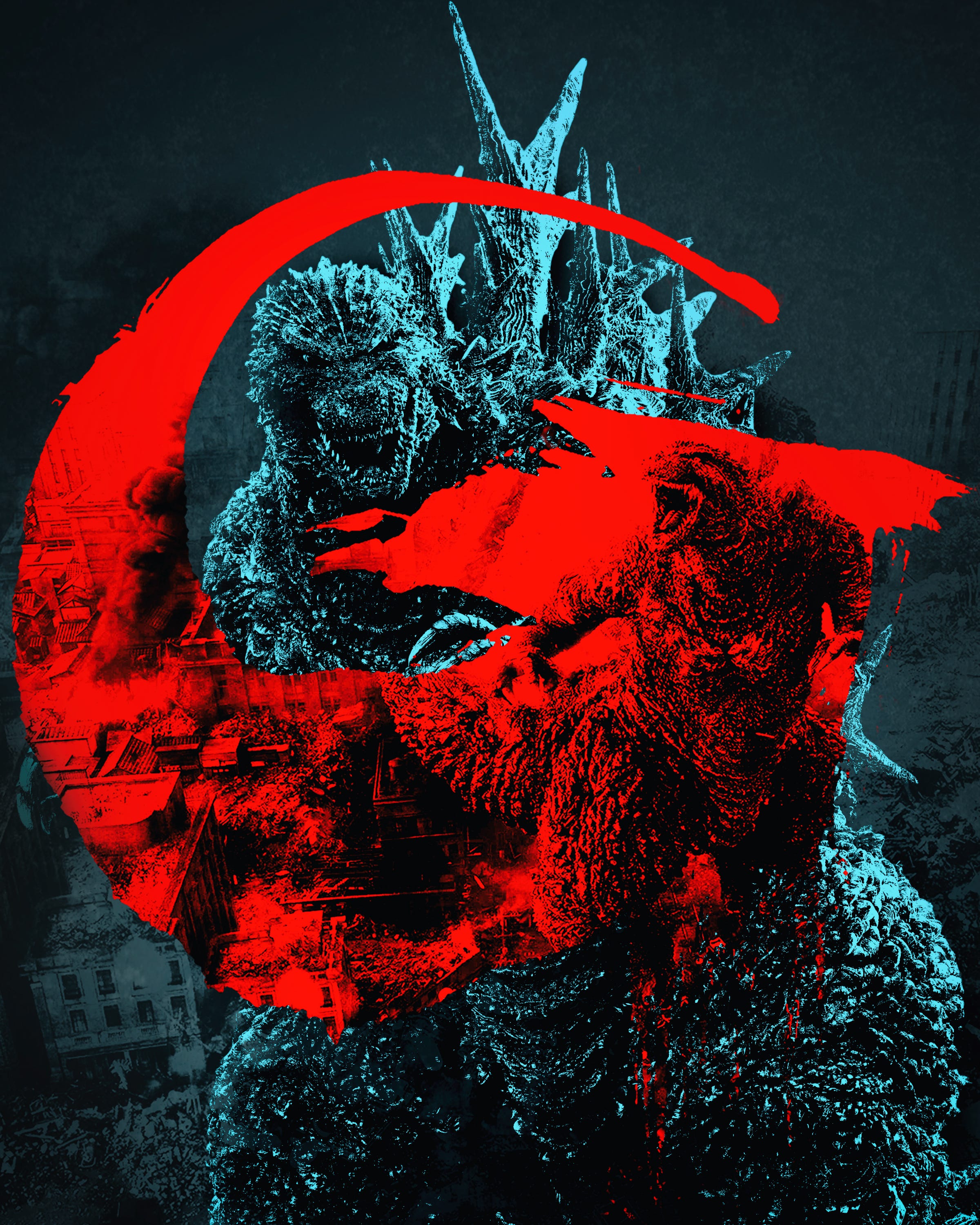
Godzilla is over 70 years old. There have been 33 Japanese films and (technically) five American-produced ones—an extraordinary amount of screen time for a creature that, in his finest iterations, you barely see. The original 1954 film, directed by Ishirō Honda, was made in the only country in history to have experienced the reality and unimaginable horror of atomic bombs dropped upon its cities, less than a decade earlier. Godzilla was never just a monster movie. It was nuclear dread given unfathomable scale and menace. The production design drew on the imagery of Hiroshima and Nagasaki, and Godzilla’s skin texture was inspired by the keloid scars on survivors—Godzilla himself was considered a victim of atomic tests. Honda wasn’t only making entertainment—he was processing a national trauma through the grammar of science fiction cinema. He also didn’t have very much money, which is most likely why the monster was so often obscured and glimpsed rather than shown; the director had no choice but to rely on the imagination of his audience to create the image in their minds.
The 1956 American release, retitled Godzilla, King of the Monsters! and re-edited to include new footage of Raymond Burr supposedly interacting with the original Japanese actors, stripped most of the political and emotional weight and gave American audiences the creature feature they’d paid for. It was a commercial success, but also paved the way for the further Hollywoodization of Godzilla—movies that tended to focus more on spectacle and massive amounts of property damage than the austere, post-war, human-focused stories of the Japanese source material.
The Monsterverse films—Legendary Entertainment’s more modern series of increasingly elaborate American productions—are the logical endpoint of this divergence. They are technically accomplished, often visually spectacular, and perfectly harmless distractions. But they have optimized for the thing the 1956 re-edit wanted: more monster, more destruction, more Kong. I’ve never entirely understood why Godzilla and Kong have so often shared billing in the same movie—much the same way I’ve never been able to get on board with Alien vs. Predator. And yet the two have proven to be the concession-worthy peanut butter and chocolate of monster double-billing since 1962. What all of these films share, though, is a progressively bigger budget and a progressively hazier memory of the original premise. The monsters, in every sense, are simply framing for the human stories.
The Apple TV series Monarch: Legacy of Monsters is the best argument I can make for this thesis. Throughout each episode, the show moves between two distinct timelines: a 1950s classic style reminiscent of the early Japanese movies and a modern day that begins soon after the events of 2014’s Godzilla (which is dubbed “G-Day” in this Monsterverse). When the series is set in the Fifties—in the early nuclear age, in the shadow of government secrecy and atomic paranoia and the creeping institutional awareness that something has gone profoundly wrong with the natural order—it’s genuinely compelling television. The period setting recreates the conditions of the original Godzilla film almost by accident: ordinary people, limited options, dread that can’t be managed away with technology or expertise or a strong Wi-Fi signal. The helplessness is the point. And like the 1954 original, the Titans are notable largely by their absence—I was astonished by how little screen time any of them get in the first series; the focus is on the human stories.
Yet the moment the show moves into the present day, something deflates. Not because the writing gets worse—it doesn’t, particularly—but because modern infrastructure makes a classic monster story feel like a modern tech story. Real-time satellite monitoring. People with lanyards in rooms full of screens. Post-war Japan had next to nothing. No satellites. No gadgets. Just rubble and Godzilla and the visceral understanding that the world had become newly, incomprehensibly dangerous to small, fragile human beings. That helplessness is where the horror and drama lives. That’s what Minus One understood and protected.
There’s a story about Jaws that Spielberg has told many times. The mechanical shark kept breaking down, so he was forced—against his instincts, against the entire premise of the film—to withhold it. He built dread through suggestion and reaction and a John Williams cello line rather than through shots of the shark itself. The result was a better film than the one he’d planned to make. The restriction that frustrated him on set became arguably the defining artistic decision of the movie.
A screenwriter friend and I were once discussing storytelling, and to make a point he asked me to tell him what Jaws was about. Duh—it’s about a shark terrorizing a New England beach community, I said. No, he said—it’s about the belief that one person can make a difference. And I instantly understood what he meant: Jaws isn’t about the shark. It’s about Chief Brody: a man who uproots his family from the chaos of 1970s New York to give them a quieter life, and who is then forced to literally risk everything to protect the community he’s chosen. The shark is the pressure that reveals him.
Godzilla Minus One works the same way. It isn’t a film about a monster, or at least, not only about a monster. It’s the story of a disparate group of people whose lives have been hollowed out after being dragged by their government into a long and pointless war, who are compelled to collaborate, protect one another, and strive to overcome a seemingly insurmountable threat. The monster is the pressure that forces their choices for personal redemption. Where Spielberg was forced to work around his unreliable mechanical shark, Yamazaki made a conscious choice to embrace the aesthetic of restraint—to mimic the weight and texture of austere Godzilla cinema not only because he had to, but because he understood that it was the right language for the human story he was telling. The irony that this decision won him the Academy Award for Best Visual Effects is, I think, the funniest and most instructive thing Hollywood has accidentally said about itself in years.
Which brings me back to Godzilla Minus One, and more specifically Godzilla Minus One/Minus Color. The black-and-white recut Yamazaki released a few months after the original—like Logan Noir and Mad Max: Fury Road Black & Chrome before it—is not a gimmick: It is a genuinely different film, specifically regraded with loving attention to detail. Stripped of color, everything chromatic and superficially spectacular falls away, leaving only composition, shadow, and emotional weight. The lighting on the faces of the cast gives their expressions depth and vulnerability. And Godzilla himself, rendered in black and white, stops being a visual effects achievement and becomes something much older and stranger—a time jump back to 1954 with 21st-century fidelity.
Minus Color reaches back toward Honda’s 1954 original not as pastiche or homage, but as a work of genuine kinship and respect—a direct line between two filmmakers working in the same medium, seventy years apart. The two versions are complementary rather than interchangeable: two sides of the same creative coin. Though I’ve watched Minus One many times now, I have yet to watch the original 1954 film in its entirety. Yet Minus One/Minus Color makes me feel, somehow, like I already have.
The next chapter is not far off. Godzilla Minus Zero is set to premiere in Japan on November 3rd, 2026—Godzilla Day, the anniversary of the original film’s Japanese premiere—and in North American cinemas three days later. Yamazaki returns as director, writer, and VFX supervisor. The same cast. The same family, two years on from the events of Minus One. And, based on the teaser unveiled at CinemaCon just last week: Godzilla approaching the Statue of Liberty. He’s coming to America.
I find this simultaneously thrilling and mildly concerning. The teaser is extraordinary, and the ambition of the project is genuinely exciting. Godzilla Minus Zero was shot for IMAX—the first Japanese film ever to do so—and, of course, the budget is larger..
So the central question Godzilla Minus Zero raises is this: Can the Japanese Godzilla come to America and remain authentically Godzilla? Or does the moment he crosses the Pacific inevitably turn him into something more familiar to American audiences? A spectacle. An event. A franchise—which is, more or less, the entire Monsterverse filmography to date. In other words, will a bigger budget and an IMAX camera loosen the creative constraint that made Godzilla Minus One so extraordinary, and so good?
Despite my misgivings, I’m inherently optimistic that Yamazaki and his team will pull this off. November 2026. We’ll find out. I cannot wait.
Comments
Nothing yet. Say the first thing.
Sign in to join the conversation.