
Over the years, I’ve asked older woodworkers where they source their wood from. Often times, the answer I get is something like, “Well, the wood finds you!”
Gee, thanks Sherlock!
Somehow, those old heads were right. In the past year, the right piece of wood has ended up finding me more times than I can count. So much so, it feels like it was universally fated.
From finding just the right offcut to make a quick scrap project to the absolutely perfect board for a portfolio project, it seems that wood will find me in the most serendipitous of ways.
I have a friend with a superpower. He always seems to find the best boards of cherry in existence, no matter where he goes. When he goes to the lumberyard to get some cherry, he’ll come back with boards that have extraordinary curl, tight grain, and a beautiful, rich color.
At this point, he could probably get construction lumber from Home Depot and find the perfect board of cherry hiding there. He simply has a gift for finding these incredible cherry boards.
Abalone Shelves was the first piece that I made in 2026. At first, I was planning to make it using large offcuts of cherry that was leftover from other projects. As I continued searching through my stash, I realized that all the boards had mismatched color and grain, which would look funky on a cohesive piece.
I went to my bench, deep in thought as to how I’d manage to make a piece that worked with what I had. At that moment, my friend pulled out one of the most incredible boards of rough-sawn 6/4 cherry I’d ever seen and placed it on his bench with a measuring tape. It was the perfect board. At around 8.5” wide, it had just enough of a rift-sawn section to get a beautiful spine out of it. And it was also wide and thick enough to make cohesive looking shelves from single boards that could have centered cathedrals within it. The color was a deep, reddish brown color with a rolling, ropey curl running consistently through the whole board.
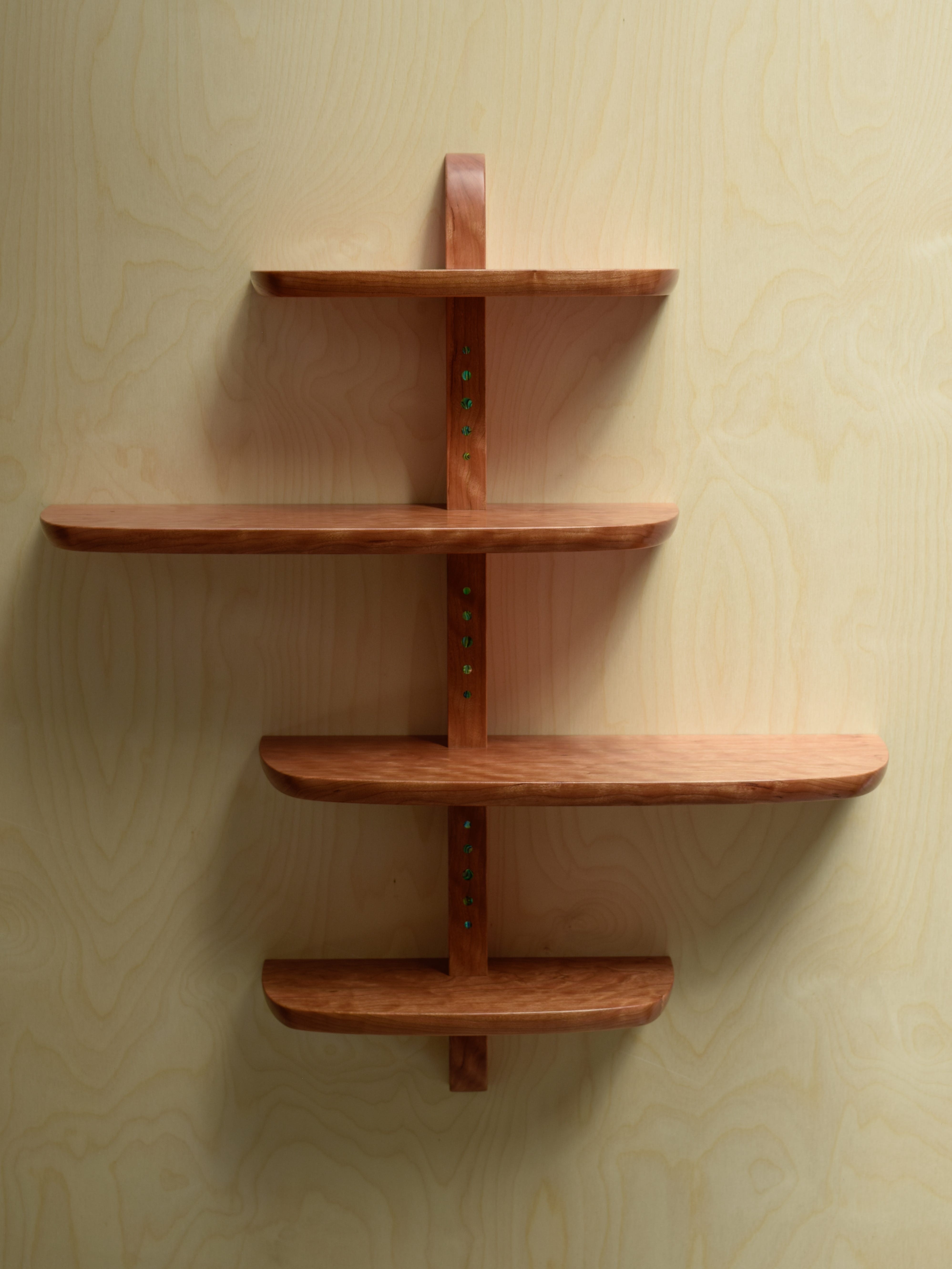
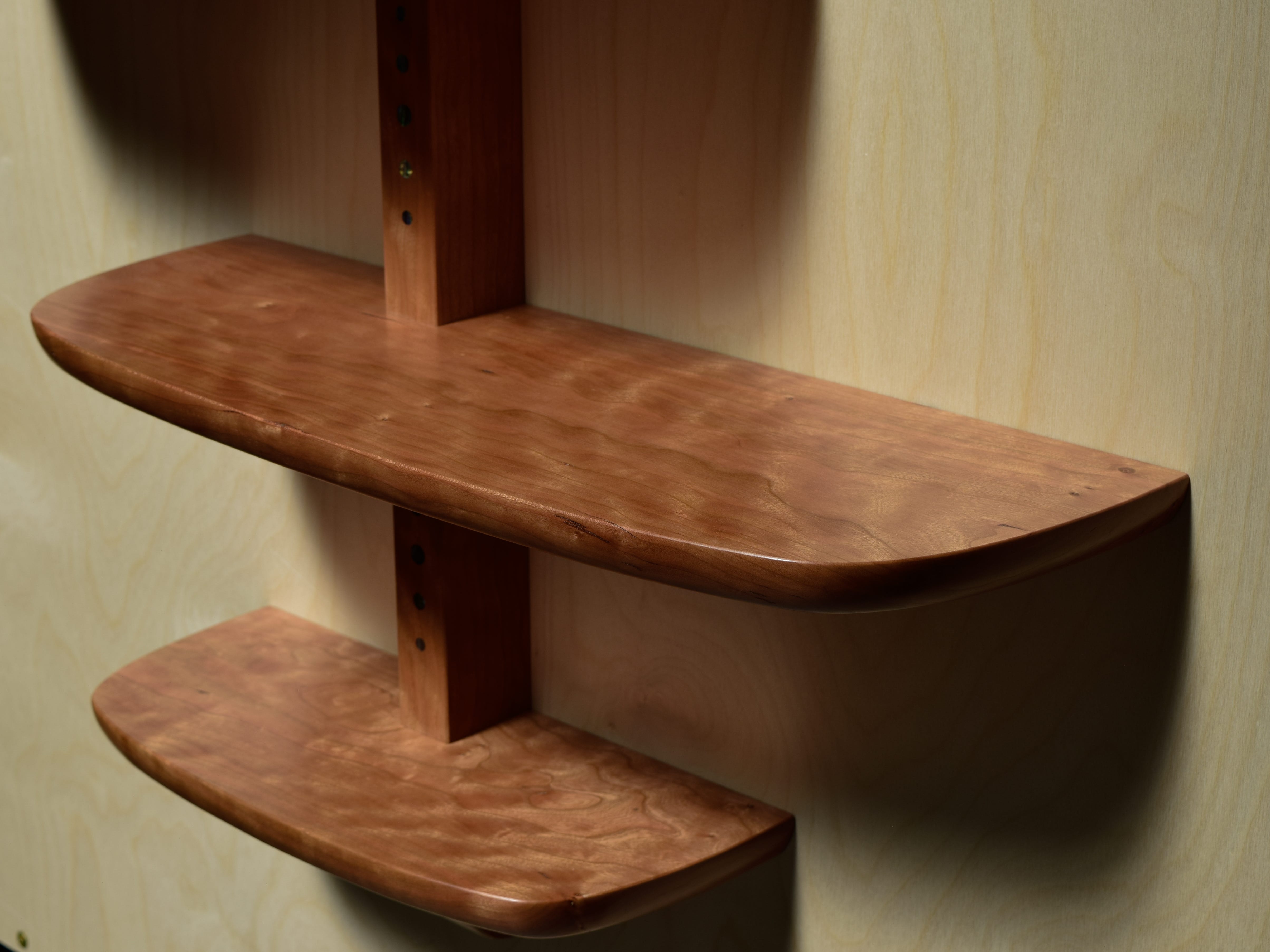
It was totally stunning and it was certainly calling out to me.
I watched him take a couple of measurements and saw him shake his head a few times.
It turned out that this board was just a bit too small for a coffee table that he was planning to build.
I took some measurements myself, and it was quite literally the perfect length and width for my project. I asked if he was open to selling it, and he very graciously agreed to do so.
And so the perfect board found me for just the right project at just the right time.
The Concord Table is one of my more recent creations, and boasts one of the most wild and stunning cherry table tops that I’ve ever seen.
When I first went to the lumberyard to buy boards for it, I spent nearly two hours looking through every single 8/4 board in stock. I needed just two boards to make the table, but I was struggling to find exactly what I needed.
One board was gigantic with a huge rift sawn section in it. This board yielded the legs and aprons for the piece. When I saw this board, I knew exactly what it would be.
The other board was smaller with decent grain, but nothing too special. I was planning to use that board to make veneers for both the top and bottom of the table top. However, I didn’t leave feeling very confident about that board. It was something I purchased because it was “good enough”, but it surely wasn’t the perfect board.
When it came time to saw the face veneers, some internal tension was released within the wood during two cuts where it completely botched the veneer cut as the blade drifted considerably for a few inches of a 6 foot long sheet of veneer. As a result, I was left with just enough veneers that were usable for one side of the table top. I needed to find another board to cover the other side.
At this point in the build, I was starting to come up on the deadline and needed wood ASAP, so another weekend trip to the lumberyard and delayed delivery was not an option. One of the shop cofounders and dear friend graciously allowed me to search for a suitable board in the shop’s lumber stash reserved for our classes.
It was in that stash that I found a large, prominent board of 6/4 cherry that was hard to decipher from the rough surface texture. As I looked at it in the light, I began to notice what appeared to be some curl. But, the board was so rough that it was genuinely difficult to decipher if I was seeing tool marks or curl.
Nevertheless, I felt a call toward it, and ended up purchasing that board.
When I started surfacing it, I realized that I had just uncovered the most stunning board off cherry that I’ve ever had the privilege of working with. The grain graphics, color, and curl were absolutely perfect for the particular table I was making, and were compatible with the other boards in the table. I could not have asked for a more perfect board than what unexpectedly fell into my lap.
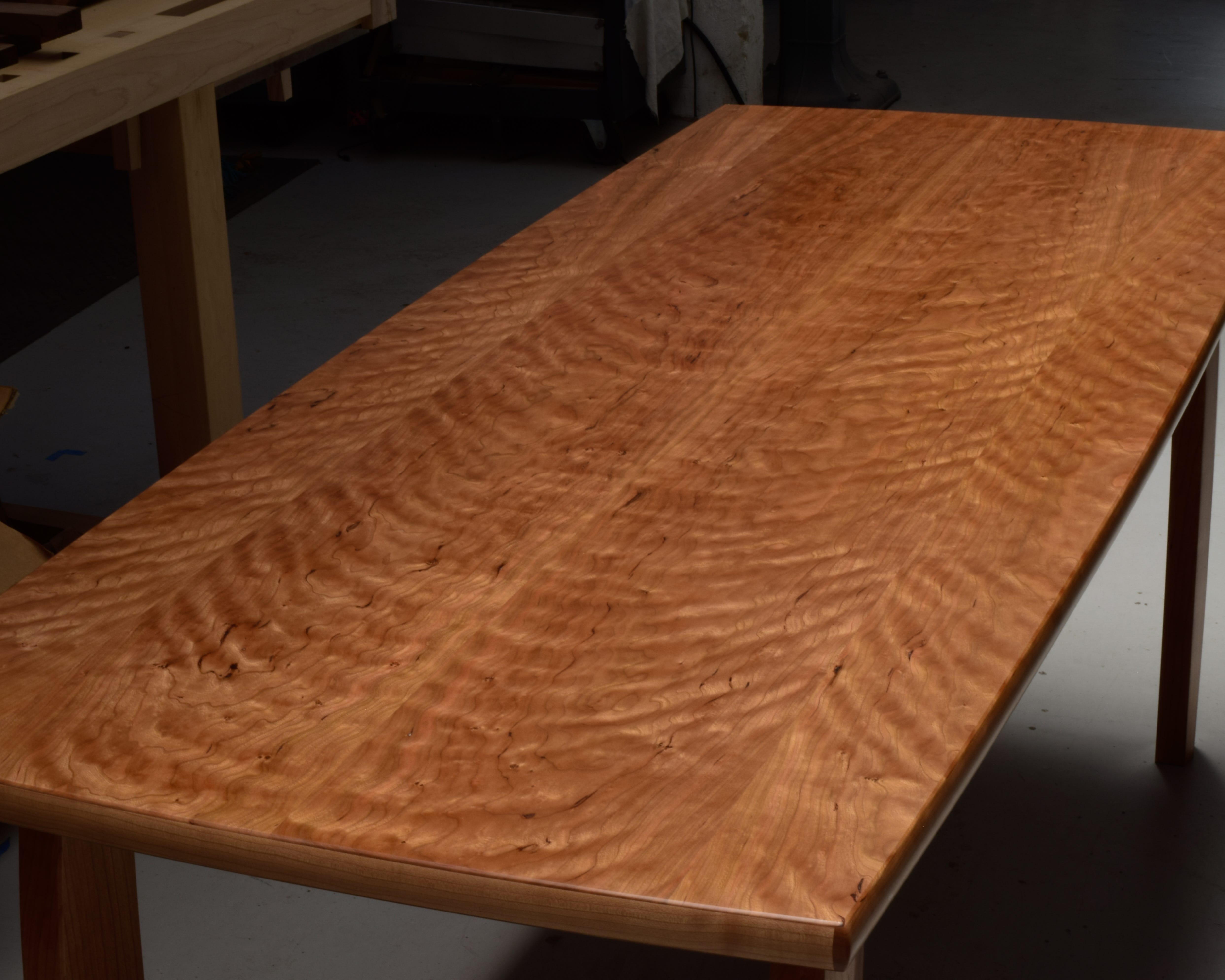
In a moment where I was just looking for wood that could complete a table top I already wasn’t too thrilled about, I found a board that just couldn’t be better.
In this case, part of it felt like the object had started forming its own center of gravity. Work around this object just seemed to happen, regardless of how gargantuan of a task it was. It almost felt like that particular board was magnetized to be a part of this table and got drawn into the object’s orbit.
I just felt lucky to be there at the right time and right place for this particular board to find me.
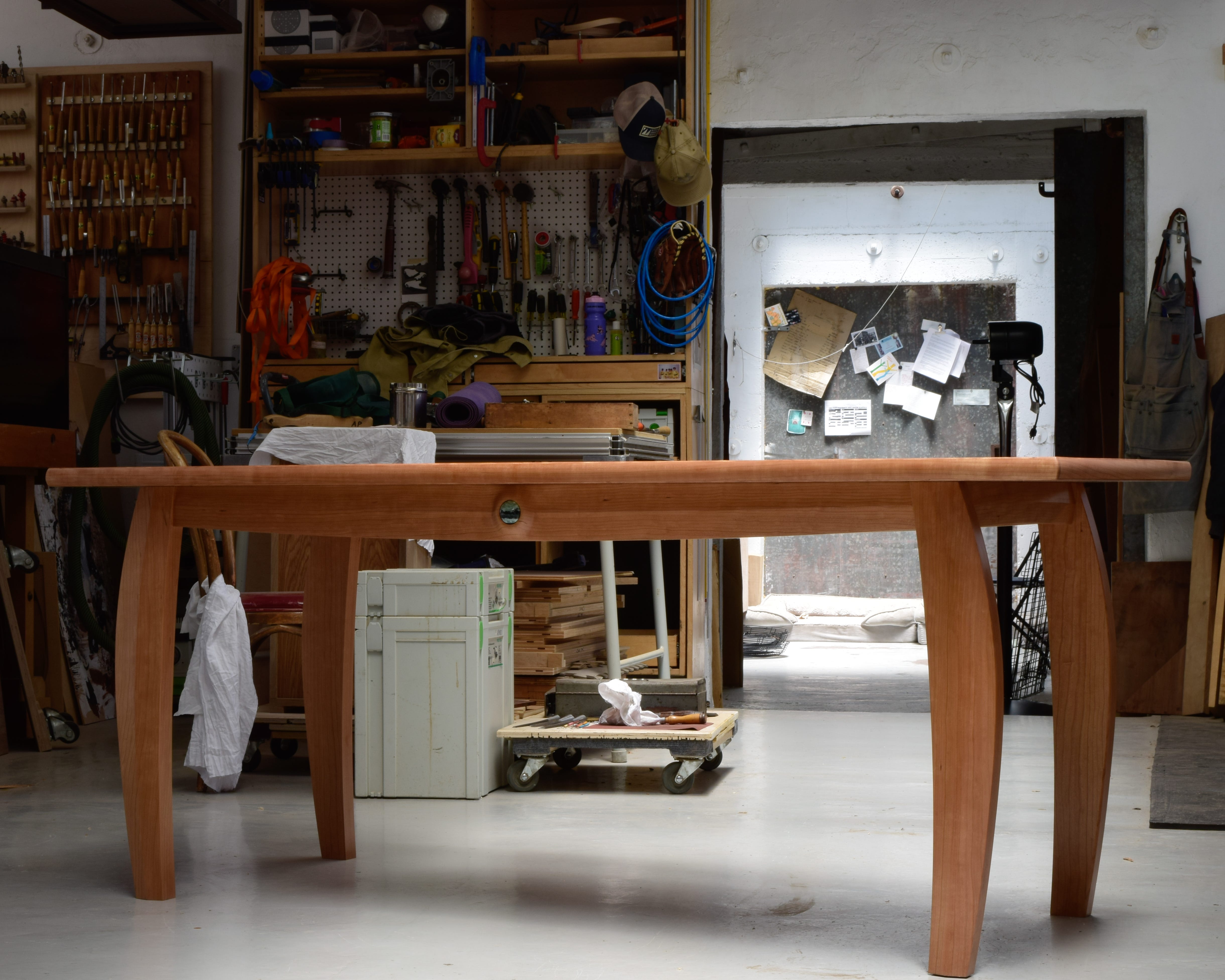
My most recent creation was a sculptural birdhouse made out of old growth cedar. I acquired the board nearly a year ago when our shop was notified that a local woodworker passed away and their spouse was donating many of the items, including tools and wood. Among that stash was a single board of 6/4 cedar, approximately 40” long and 6” wide.
It was one of those boards that isn’t large enough to do something considerable with, but not so small that it can’t make anything. If used efficiently, it could make a small to medium sized object.
I typically do not use boards of this nature because of how many limitations they impose, but I was drawn to this board for its unusually tight grain and beautiful aroma. I decided to keep it, but had no idea what to make of it. Ideas came and went, but none were suitable for such a board.
It sat in my lumber storage for nearly a year.
A few weeks ago, I was notified of an artist open call to make a birdhouse for an art festival. As soon as I learned about it, I realized that this board was meant to make that object. Every drawback of this board before became a pro in this project.
The narrow width of the board made it easy to design a shape that took advantage straight, unwavering grain. The thickness of the board made it an easy decision to slice the board into thin veneers and thin panels, rather than trying to make the object out of solid wood. The pale sapwood could be easily book matched to make a cohesive top and bottom for the birdhouse.
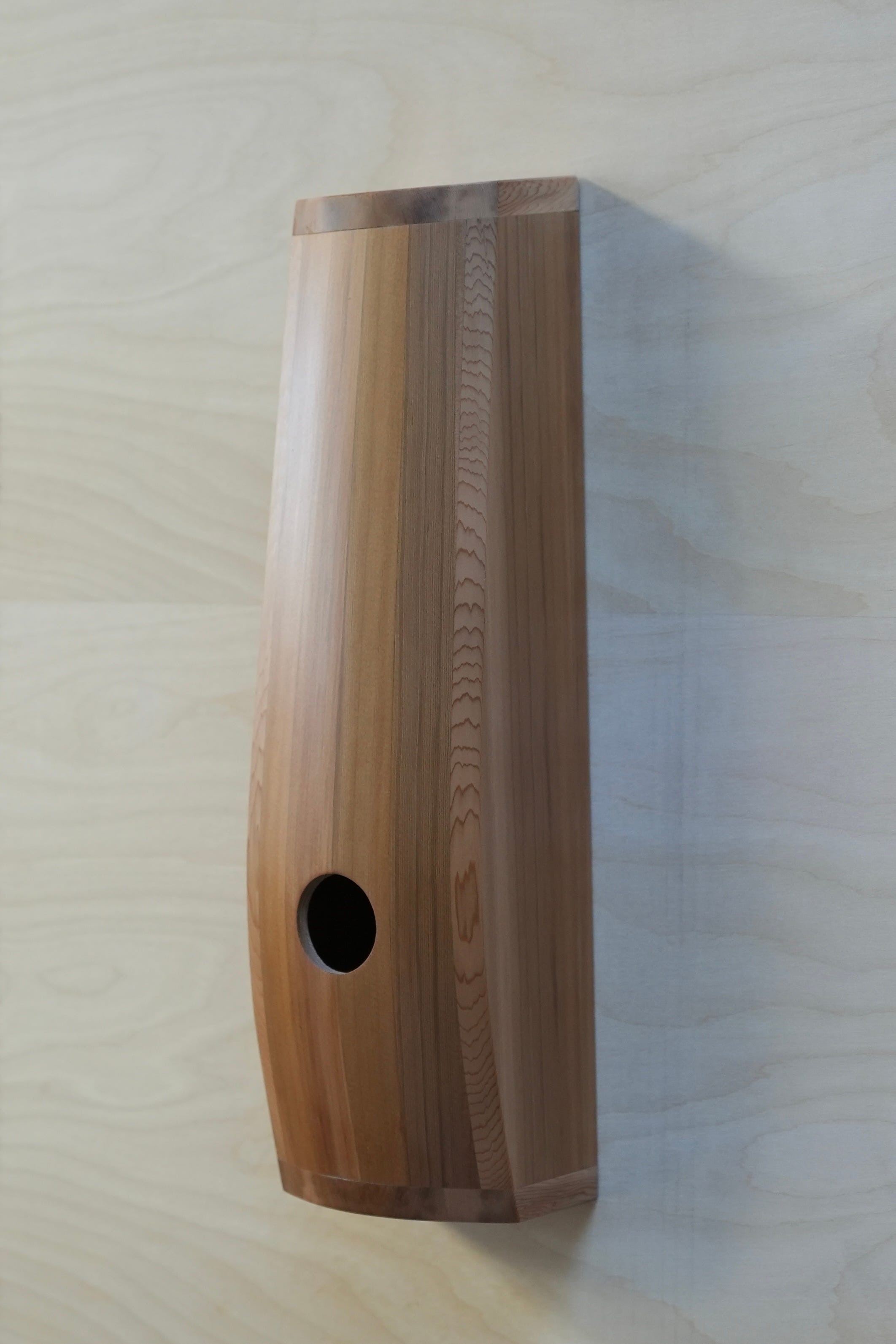
When I finished the project, I had absolutely no wood left. Every single square inch of that board had been fully utilized and nothing went to waste. I quite literally could not have had a more perfect board for the task.
From these experiences, among many others, I’m now starting to see what those old-heads were talking about. It turns out, wood really does find you some way or another :)
No posts
Comments
Nothing yet. Say the first thing.
Sign in to join the conversation.