
I’m in an unusual, though self-created situation where my work is constantly in the public eye. I work out of a community woodshop where there are students, hobbyists, and professionals who are able to see what I’m making at any point in the process. At the same time, I’ve also begun to document my work in all stages and post it consistently across social media to make my work, processes, and ideas more visible. The inspiration for this article comes from my lived experience of creation while being simultaneously observed and perceived.
There’s an old adage that goes something like, “Never show a fool half-finished work”. In other words, people who lack vision and clarity on what you are creating should not see your creations in their incomplete state, as they cannot visualize your work beyond only that which stands in front of them. It is akin to showing someone a budding water lily that hasn’t opened; if that person has never seen a lily before, they have no idea what to expect and the budding lily is entirely uninspiring. Within the context of woodworking, I’ve found that saying to be all too true — though the fool can be anyone, including the maker. Much of my work is organic and sculptural, so it spends a long time in unrecognizable forms before it actually starts to take shape. For instance, a coopered cabinet starts off as a collection of rectilinear pieces and remains that way until all the joinery is completed. When the project is first dry assembled, it looks completely unrecognizable. Once it is shaped, it starts to look more familiar. The piece only looks “right” once it is actually finished.
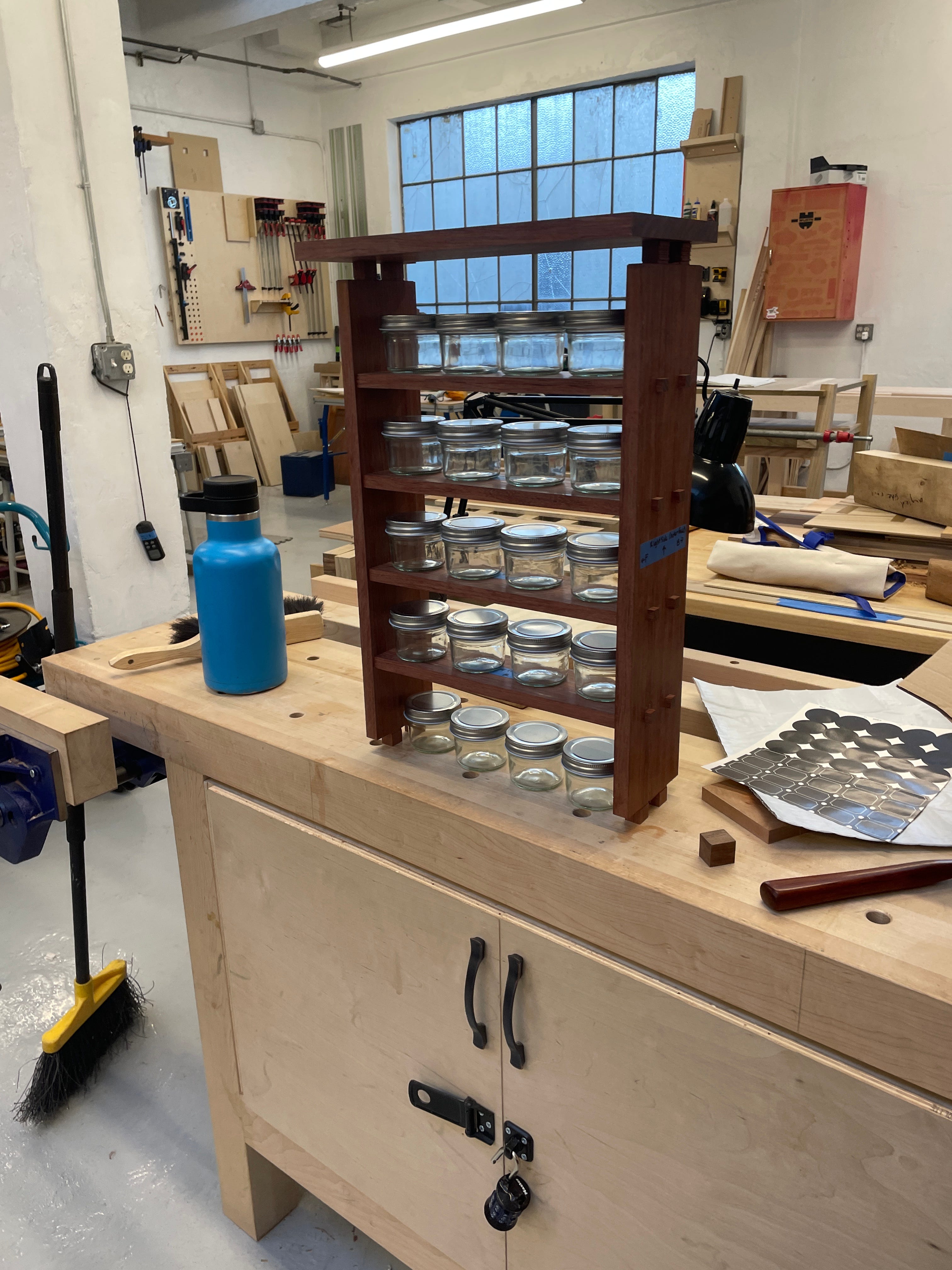
When I make something, it is almost always completed before pencil touches paper or tool touches material. I see the piece fully realized in the mind’s eye and am emboldened to bring it into the physical plane. My job is simply to be as faithful as possible to the vision I saw. Based on that, I determine form, proportions, material, grain selection, and finish in that order. I can make drawings, 3D models, scale models, and mockups to further articulate and expand upon what I first witnessed through the mind’s eye. Despite that, l’ve realized that in matters of creation, people only understand what they see in front of them. Other people don’t actually see your vision when they see a drawing or scale model. There is only so much explanation or hand gesturing that can help someone understand an idea until they actually see the object completed for themselves.. I am no different. The only reason I can understand the creation is because I have seen it before within the mind. If I didn’t see it, I couldn’t understand it, let alone make it!
While in the physical process, there are two main detractors from creation: the doubts of other people and yourself. In the physical and digital environments I create in, my work is under constant observation. Often times, viewers are positive and encouraging. Sometimes they aren’t. Both are inevitable. It has been a challenging, ongoing lesson to not take stock in criticisms of half-finished work. The criticism may be valid for the current state of the project, but ultimately, it is irrelevant. The critic does not know where the work is heading. In my earlier example of a water lily, if someone criticized the budding lily, saying that the color and form didn’t look like “right” for a flower and it had strange proportions, they’d be correct. The bud is a bud, not a flower. What they’re expecting to see and what they actually see are two different things. And who can blame them? They can only see a bud in front of them, not a flower. Eventually, the bud becomes a flower. The difference is that the gardener knows the flower is arriving with due time and effort, whereas the fool thinks the bud remains forever. Strangely enough, the fool can even be the maker themself! The question then becomes, “Can I believe beyond what I see in front of physical eyes? Can I trust that the object will eventually become what once saw many weeks or months ago?” Self-doubt around the project and conviction to finish can exist simultaneously, but it is ultimately our decision to decide which beliefs we choose to feed.
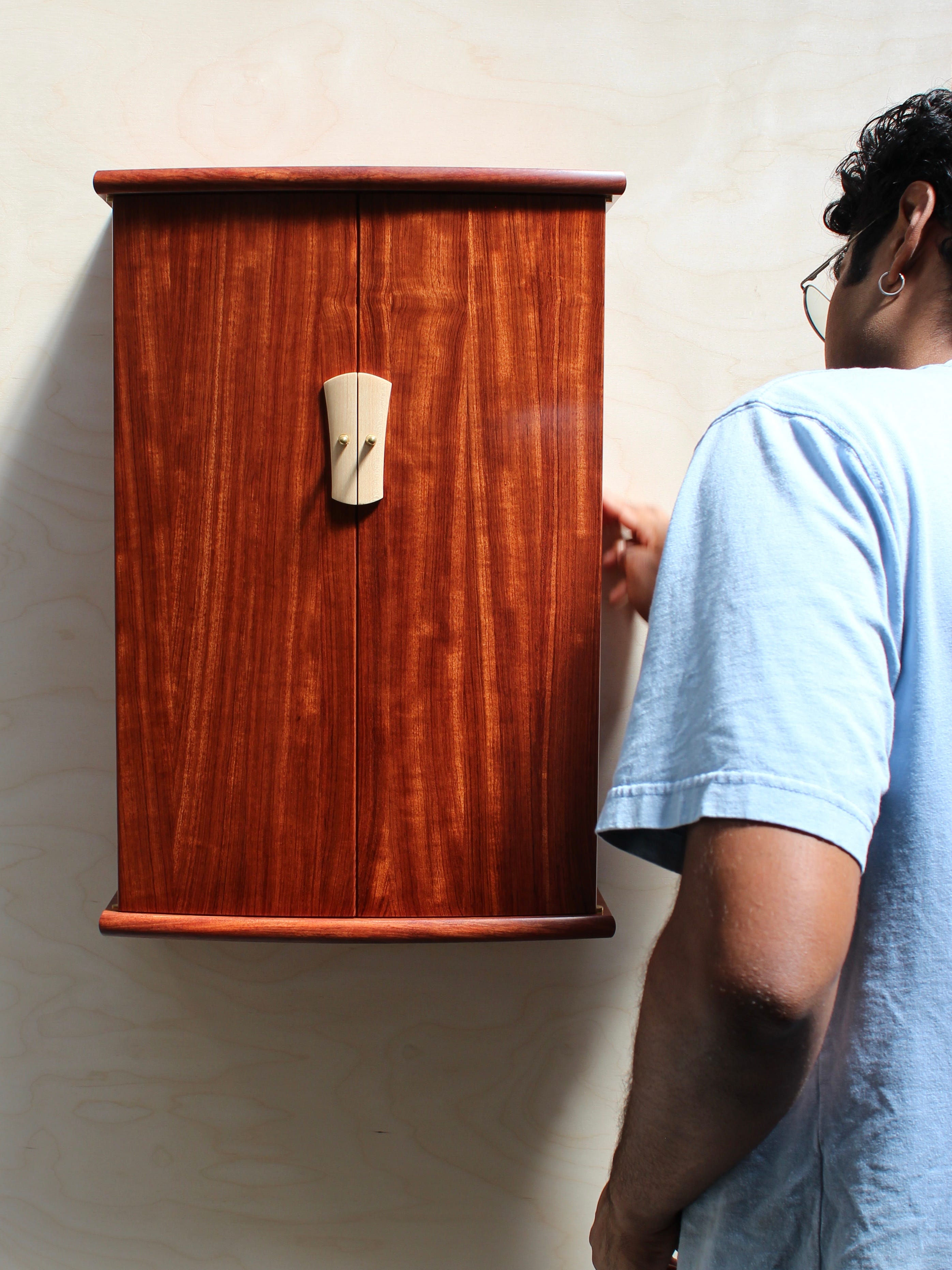
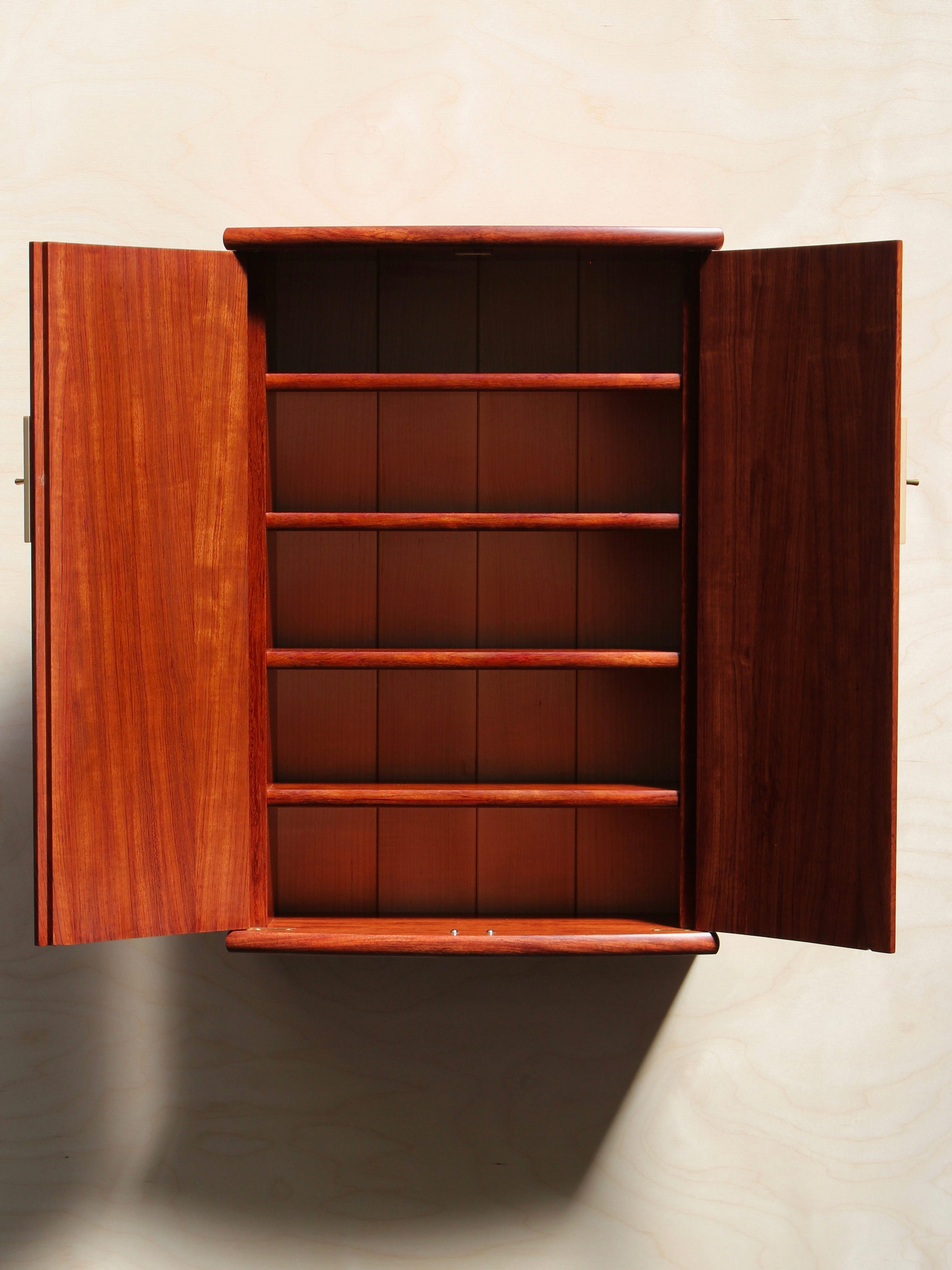
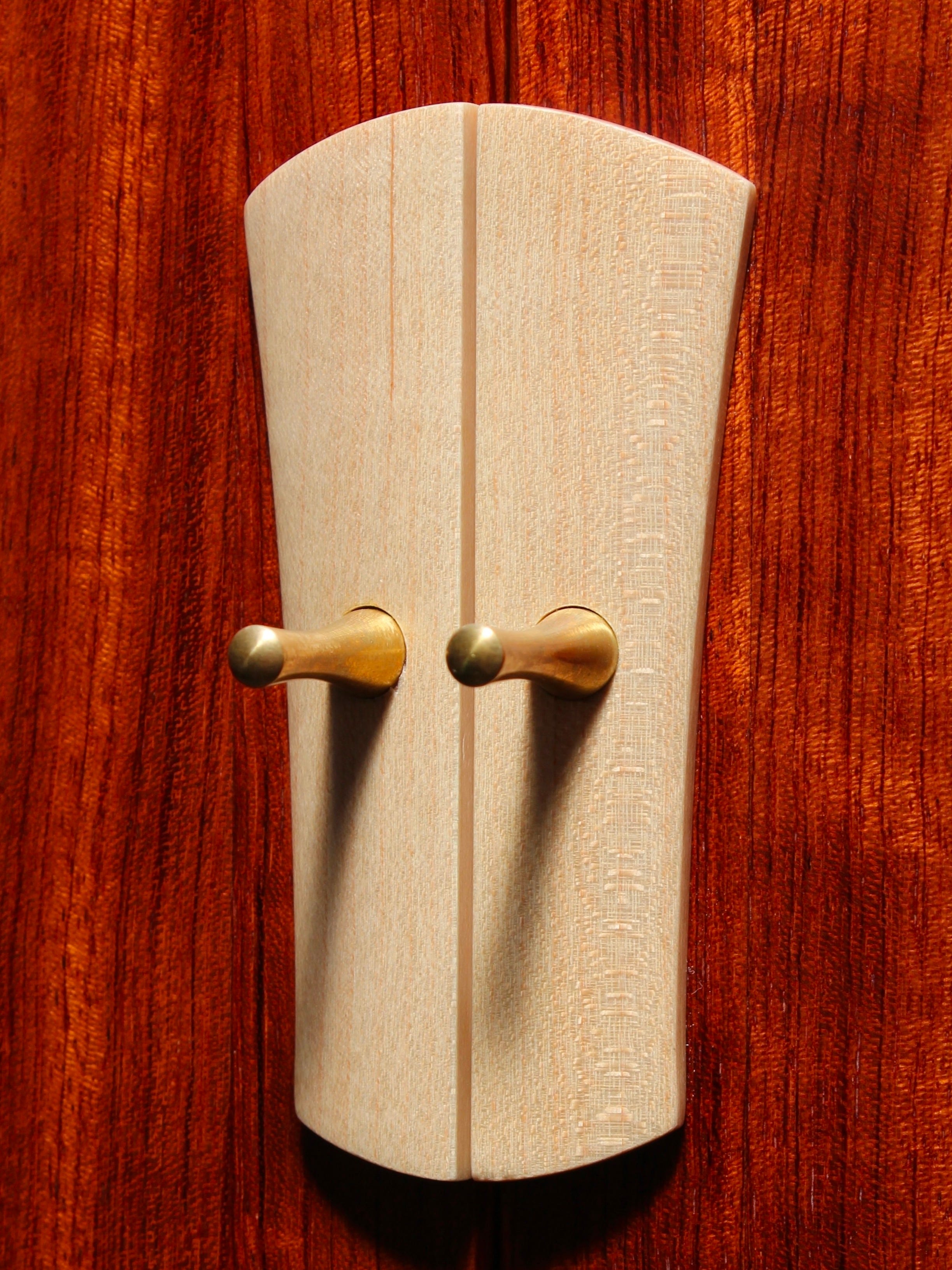
Around a year ago, I was in the process of making some sculptural pull details on the Spice Cabinet. I made some small maple accents that would sit on the bubinga doors of the cabinet. While I was prepping the maple, one of the shop members walked up to my bench and asked what it was for. This member is a good friend, with formidable skills, refined taste, and — like most woodworkers — very strong opinions. When he learned of my plan, he quickly expressed his dismay at that decision. He believed the white maple on a dark red bubinga was a loud, garish detail which disrupted the rest of the cabinet. Of course, I quickly told him he was wrong. Quit your grumpin’ old man! Just lemme cook. I stayed the course and created those maple accents.
Once the cabinet was fully completed, I showed it to him again. He stared at it for a while, slowly examining it and walking around it. Then he looked at me, shook his head, and went “You know that’s actually not too bad. I’m normally not a fan of that crazy contrast, but surprisingly, that works on this piece.” Coming from him, that actually meant a lot to me, since I know he’d tell me to my face if he didn’t like it. And a “that’s actually not too bad” is practically a standing ovation from him. But it also showed me that when it comes to creative work, the fool can be anyone. The fool can be friends, family, peers, or anyone whose opinion that you may value. The maker can become the fool if they lose conviction in what they’re creating.
In a way, this realization has made it easier to create in the midst of increased visibility. The process from concept to physical creation can be long, arduous, and filled with obstacles. The hardest part of the journey is staying the course while the object is being born. Fools will see the work regardless, but they should not determine whether the work is completed as intended. My recent works have been developing my sculptural abilities with gouges and scrapers, which has made it increasingly difficult to stay true to the course. While in progress, the sculptures look terrible. Parts look wonky, proportions feel off, and the work looks messy. Showing the work in this stage feels vulnerable, though it is an honest part of the process. As tool marks fade and forms become more refined, the work starts to feel true to my original vision. I finish the work feeling grateful that I stuck the course, as the object that once existed in my mind is now born in the world for all of my fellow fools to witness.
No posts
Comments
Nothing yet. Say the first thing.
Sign in to join the conversation.