
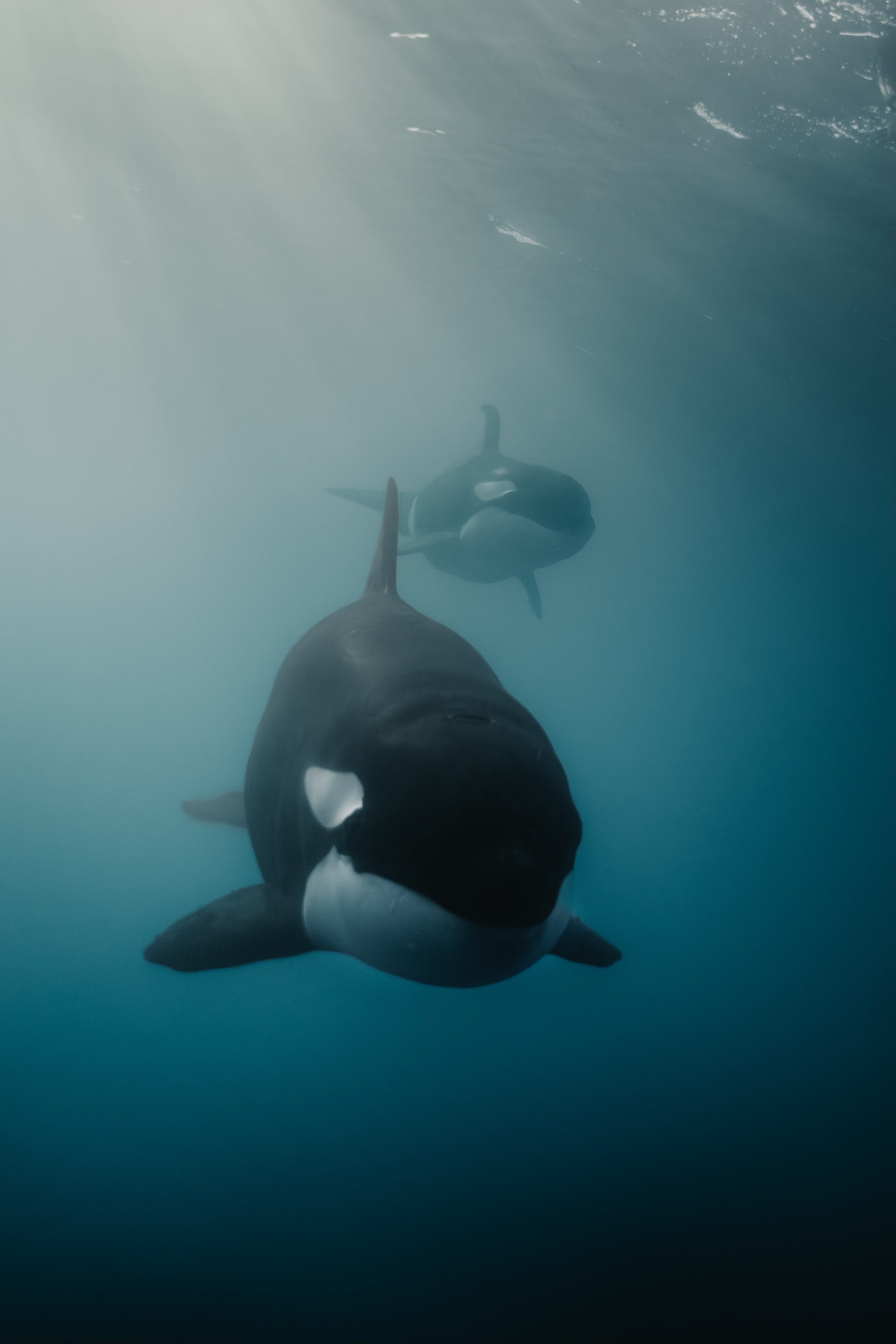
“It looks like a missile!,” I remember thinking, in the exact instant I took this photo. The tip of a bullet, that same shape, half white and half black. An enormous, living bullet. This is how they look like when we look at them on the same level.
Adrenaline. I’m on the boat now, racing across the bay. It’s a real race against time, we have only a few minutes of daylight left. The sky had already turned orange and believe it or not, still no sign of them. Once the sun drops, we can’t be in the water at all. This is it, whatever happens has to happen now. My stomach is in knots. I’d swum with orcas before, but somehow I already knew this time would feel different.
We’d come out so hopeful, scanning every direction, and for a long stretch, nothing appeared.
Then, finally, one big black shape broke the surface.
They’re here.
Welcome to Wild Wednesdays! Once a week, I share the true story behind the photo.
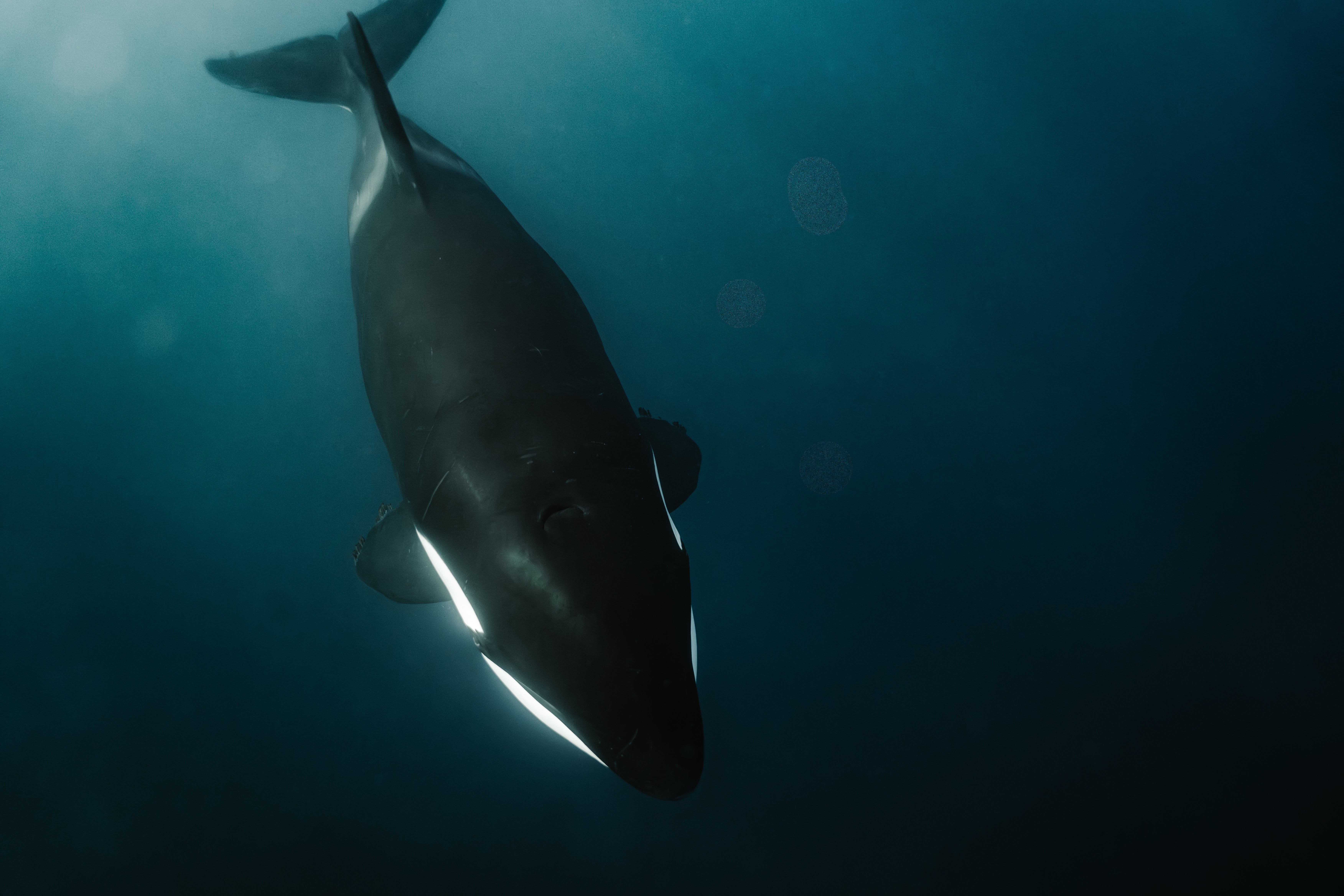
I go into the water and still can’t see them. I could only see the blue in every direction. This is the part only divers will ever really understand: the sensation of staring into empty blue until a dark shape slowly starts to form out of nothing.
That exact second when nothing becomes everything, when an animal reveals itself to you out of open water. She takes shape slowly, the lines resolving until you recognize exactly what you’re looking at. It’s her.
I feel my heart slams and my stomach flips. We are eye to eye.
She comes so close that I have to back away again. (This has happened to me once before, with humpback whales. A story for another day.) Twice now, a giant has closed the distance to my own head entirely on her own terms, until I was the one retreating. I think her curiosity was bigger than mine. But there’s no question who was more moved, watching something this beautiful arrive.
One convenient side effect of years behind a camera is that sometimes I can get shots like this without really looking through the lens anymore. I adjust the settings first having an idea of the water condition before. So here my finger was clicking on its own while my eyes stayed locked on her, nowhere near the display. That might explain many awful photos that came out of this encounter (I admit haha), but a few I could save. All I wanted, in that moment, was to understand exactly how big and black her eye actually was.
If you’re a photographer or an enthusiast, here’s the camera and the settings I used:
Sony alpha 7IV
24-70mm f2.8 sigma lens (on 24mm)
Sea frogs housing
Shutter speed 500
F4.0
ISO 2,000
I sobbed when came back to the surface. I really did.
Well let’s go back at it for a moment. Ten minutes earlier, I didn’t think any of this was happening at all.
It was the last afternoon of my third and last expedition of the season that I was hosting in La Ventana, Baja California Sur, our very last chance to see them before flying home the next morning. At 3pm we had already embraced the fact that we woundnt be with then this time. My guests had already showered, already started packing, already made peace with a trip that wouldn’t include an orca after all. Then our amazing guide got a call out of nowhere, and every one of us ran, wet hair, swimsuits still half wet, and there we went straight back down to the boat!
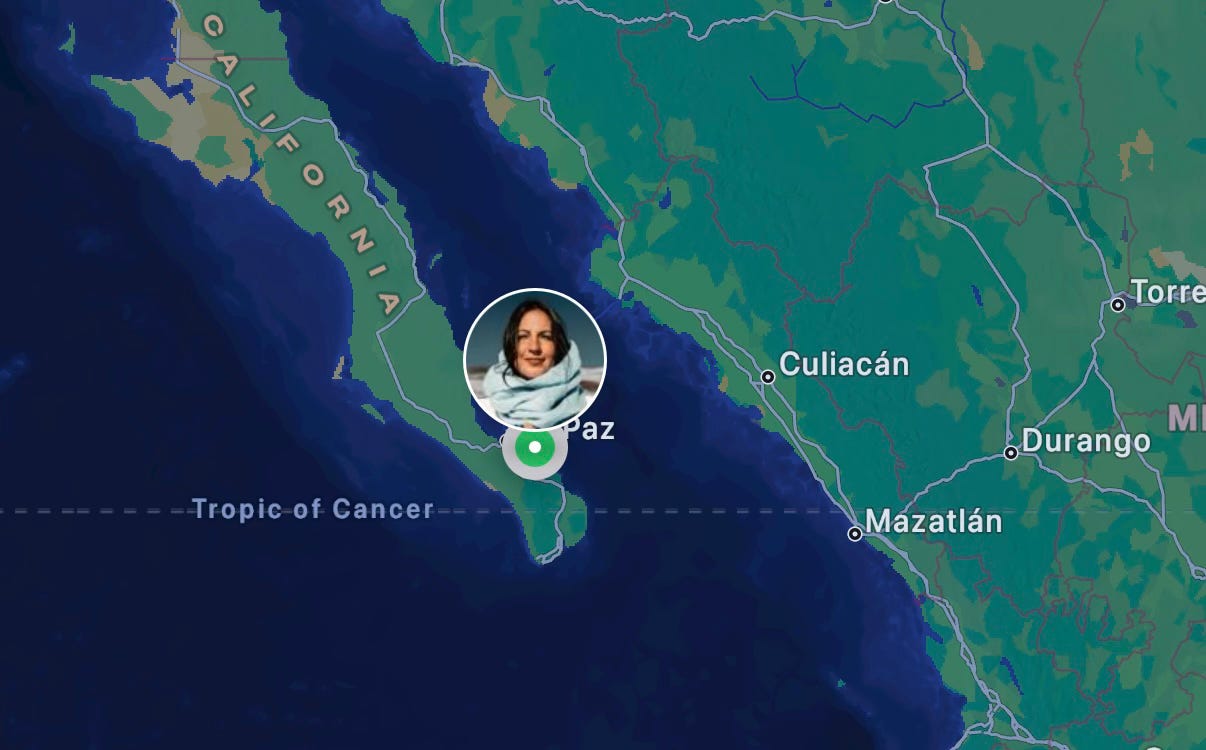
La Ventana isn’t just a pretty stretch of the Gulf of California. It’s also the only place in Mexico where swimming with wild orcas is legally regulated, instead of living in the gray area it sat in for years. Baja California Sur became the first state in the country to write real rules for it, after the activity went from local secret to Instagram phenomenon almost overnight back in 2019.
So yes! Swimming with orcas in La Ventana is allowed, but under very specific conditions:
Not allowed during active hunting, high-speed travel, or rest
No more than 5 people (including guide) in the water per vessel
Boats must follow precise approach rules:
Wait at 100 meters (buffer zone)
Hold at 60 meters (waiting zone)
Approach to 20 meters only if animals allow
Swimmers must enter parallel, not intercepting the pod
Ans to increase accountability, the plan also includes:
Mandatory GPS tracking on all boats
Annual report submission including:
Number of tours and swimmers
Behavior and sightings
Infractions or risky situations
Only then can swimmers slip in, and only in small groups, five people per boat, guide included. Even then, you’re supposed to stay at least 20 meters back and let the animals decide the rest, entering the water parallel to them rather than cutting across their path. Every boat is permitted and tracked by GPS, and if the orcas start hunting or moving fast, nobody gets in the water at all.
The orcas that pass through here are Bigg’s orcas, transient hunters that follow mobula rays and other prey through this waters for a few weeks each year, mothers teaching calves how to hunt in the same waters, generation after generation.
I’ve hosted a lot of ocean encounters. I don’t cry at most of them, nut I cried at this one, snorkel still in my mouth, guests around me doing exactly the same. Its special to realize you’re with the top predator in the world and they are still here alive in this planet.
We only protect what we know and what we love.
With respect, ethic and following the law, the ocean can get more than visitors, can get future guardians.
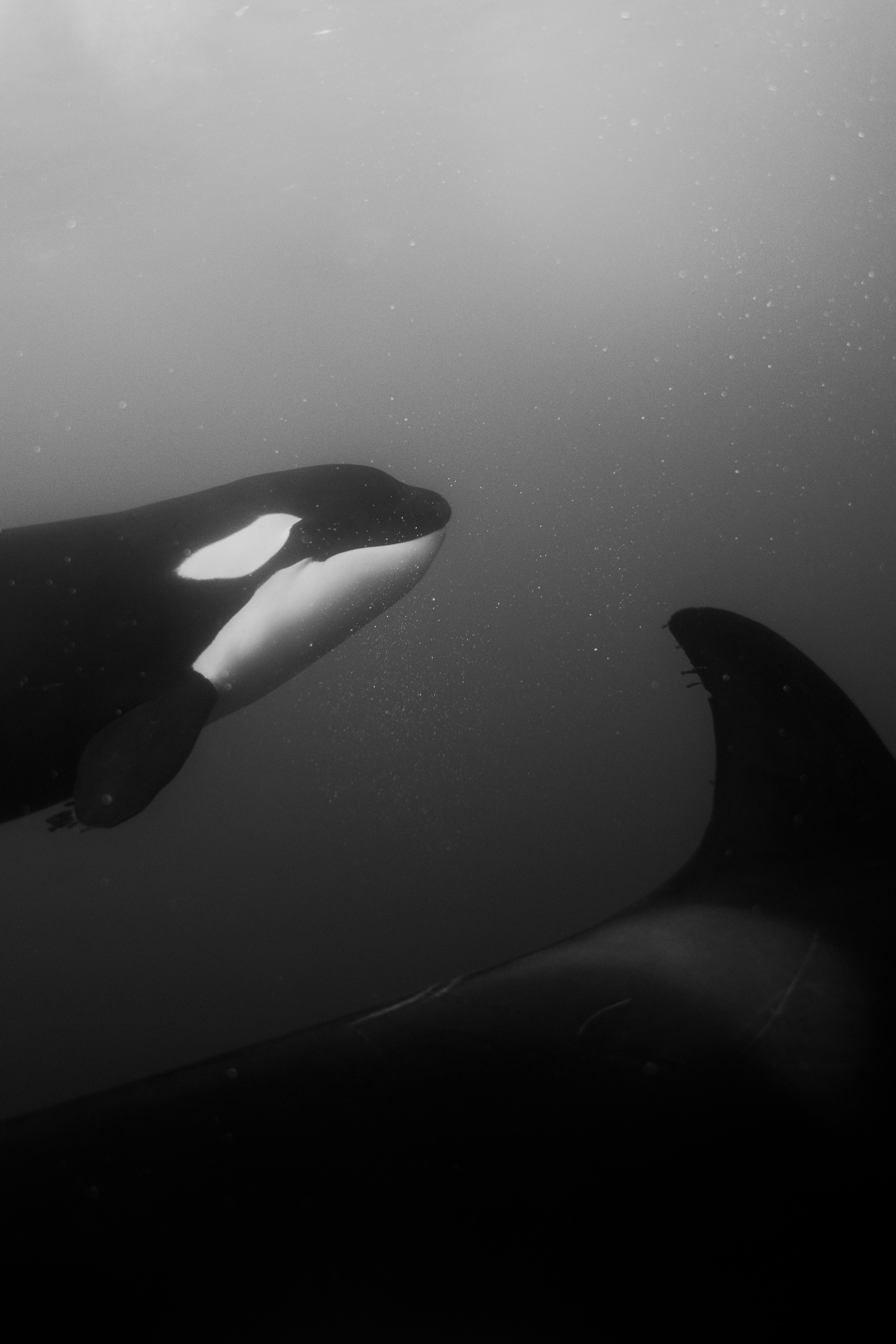
I’ll be there all the season and will be a pleasure to have you on the boat with me. Link in bio for more information on how to book.
How do you think you would react? Have you ever had an eye contact with a wild animal before that touched you deeply? Comment bellow, I’d love to read about and feel touched by your story.
I read every comment, and I reply to as many as I can.
Every story I write starts with a good cup of coffee. This piece took me 1 day and 2 cups. If this one moved you, thank you for buying me the next cup ☕☺️
No posts
Comments
Nothing yet. Say the first thing.
Sign in to join the conversation.