
There Is Always Another Film. There Isn’t Always Another Summer With Your Children. A Mind That Never Stops
By Mauro Mueller / El Suizo
I don’t remember the last day I didn’t think about a film. Not because I had to or because someone was paying me. And also not because I was behind on a deadline or trying to impress anyone. Simply because that’s how my mind works.
I’m driving when a line of dialogue appears. I’m swimming laps and a scene suddenly solves itself. I’m cooking dinner and wondering whether a character should forgive her father twenty pages earlier. I watch a wonderful film and leave inspired. I watch a terrible one and spend the evening trying to understand why it didn’t work. Even on vacation, when I promise myself I’ll disconnect, my mind quietly wanders: What if...?
What if the story began here instead? What if the protagonist were thirty years older? What if the comedy became a thriller? Those questions don’t feel like work. They feel like breathing.
People often ask how I stay disciplined enough to keep writing. The honest answer is that discipline isn’t the difficult part. By the time I sit down at my desk, my brain has often been writing for hours already. Stories drift into walks, airports, grocery stores, conversations, and quiet evenings without asking permission.
We sometimes treat that kind of preoccupation as something unhealthy. We use words like obsession, as though loving your craft deeply must come at the expense of everything else. Certainly, it can. There are people who disappear into their work. But I also think we’ve become suspicious of devotion itself. We confuse vocation with imbalance.
I genuinely love filmmaking. Not just directing or writing, but the whole messy, improbable process of turning an idea into something another human being can feel. I hope I never lose that excitement. If, at eighty, I’m still thinking about scene transitions while making coffee, I’ll consider that a life well lived.
The challenge isn’t that I think about films too much but remembering that, every so often, life is asking me to stop thinking about stories long enough to fully live one.
The Most Beautiful Place... and I’m Thinking About Scene 11.
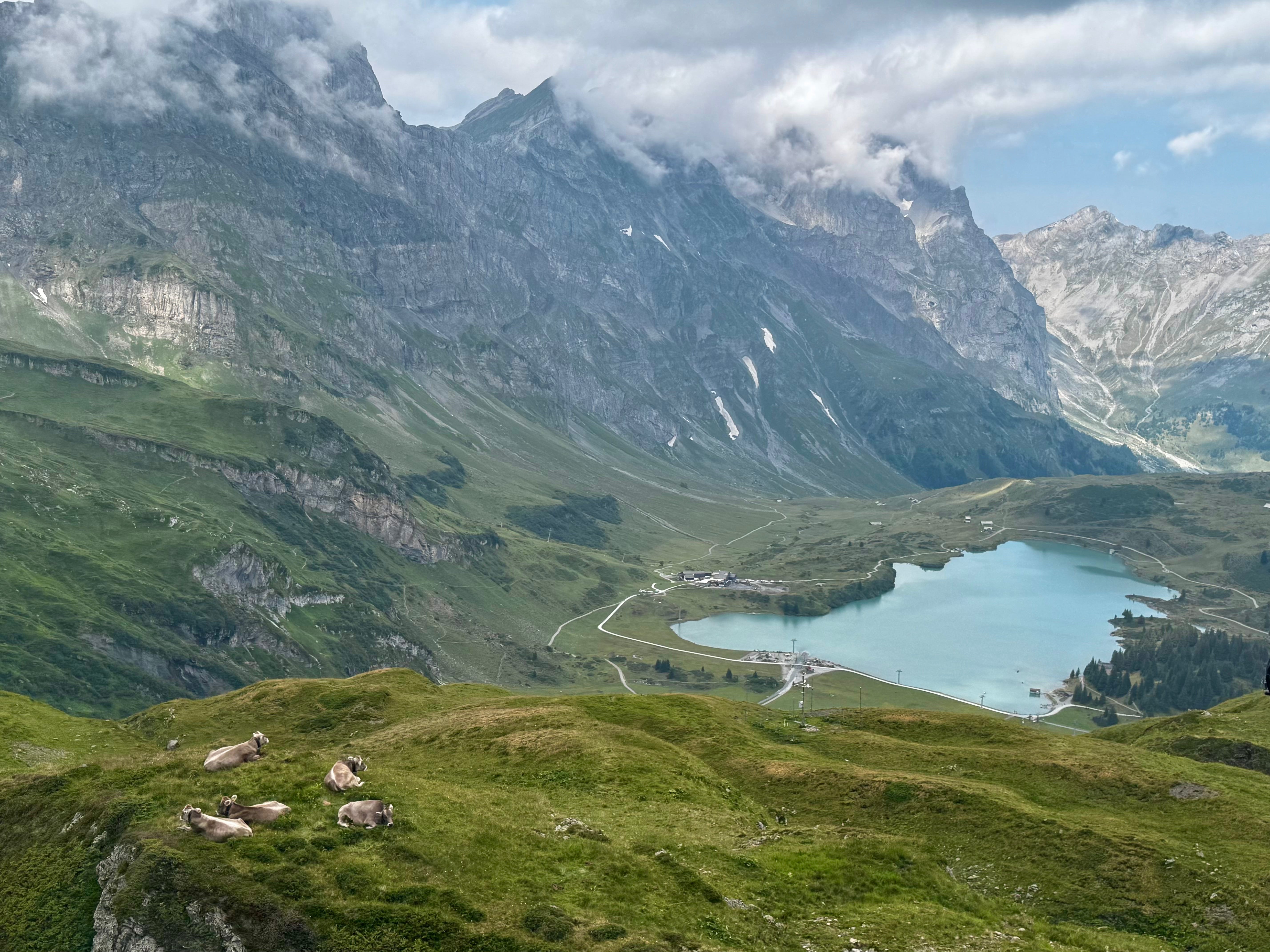
A few days ago I found myself riding the gondola up Mount Titlis in central Switzerland with my family. Outside the window, the Alps unfolded in every direction. Jagged peaks still covered in snow. Tiny lakes reflecting the morning light. Hikers who looked like little dots against enormous mountains. It’s the kind of landscape that makes even adults go quiet for a few minutes.
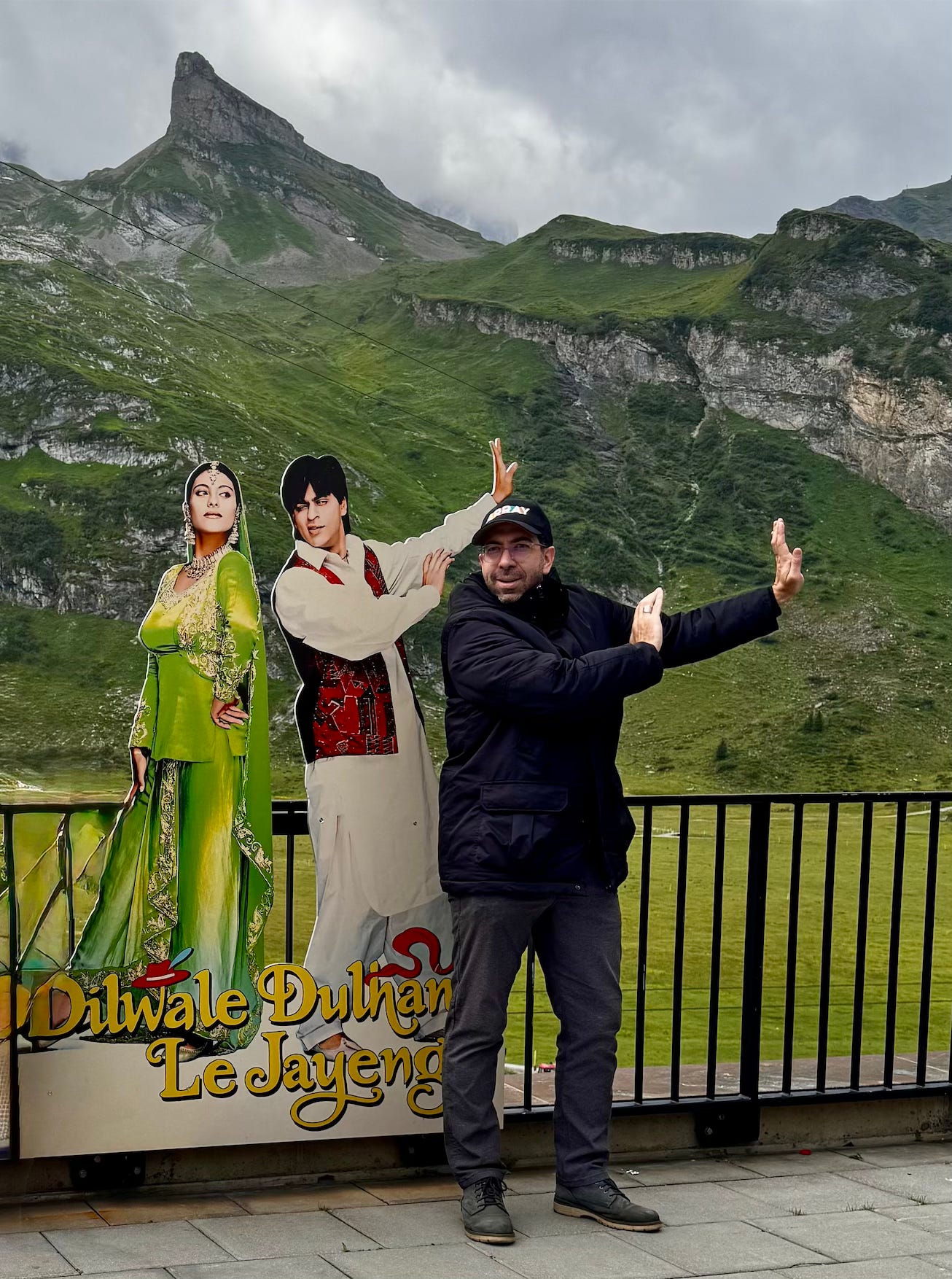
Halfway up the mountain there’s an unexpected reminder that this place also belongs to another story. A life-size Bollywood cutout from Dilwale Dulhania Le Jayenge, the beloved Bollywood classic that filmed scenes on Titlis and helped turn this Swiss mountain into a pilgrimage site for generations of Indian movie lovers. Just a few months earlier I had been in India for the first time, presenting The Janitor at the International Film Festival of India in Goa before traveling to Mumbai. I completely fell in love with the country, with its energy, generosity, contradictions and impossible scale. Standing there on a mountain in Switzerland, suddenly connected to memories of India through cinema, my brain immediately began making creative associations that absolutely nobody had asked it to make.
At the very same time, I’m developing a comedy about older and younger generations trying to understand one another. Almost instinctively I began imagining whether a mountain like this could appear somewhere in the film. Then, before that thought had even finished, another project interrupted it. I’m also trying to finance a Bonnie-and-Clyde-inspired road movie set largely in Calgary before heading into the Canadian Rockies. Here I was standing at over 3,200 meters in the Swiss Alps, mentally scouting locations for mountains on another continent.
Meanwhile, my children had started a snowball fight. They weren’t thinking about film festivals or financing plans or location scouting. They were trying to hit me with snow. For a brief moment I became aware of two realities unfolding simultaneously. One was happening inside my head. The other was happening ten feet away from me. Neither was wrong.
The world was offering beauty. My mind was offering work. But only one of them was happening right now. So I bent down, picked up some snow and lost the battle against two children who, unsurprisingly, had far more energy than I did.
My Children Keep Growing Anyway
The next day was my son’s birthday. By coincidence, or perhaps because the universe enjoys testing priorities, it was also the day my newest feature film was officially announced as the Opening Film of the Atlantic International Film Festival in Halifax. For any filmmaker, a world premiere is one of those rare milestones you spend years hoping for. There are emails to answer, messages to return, congratulations arriving from friends and collaborators around the world. It’s exciting. It’s validating. It’s the kind of day you imagine for a long time.
And yet, for once, it could wait. Not forever. Just until tomorrow. That day belonged to a nine-year-old. We celebrated. We laughed. We ate cake. We played. We watched him open presents with the kind of joy adults spend decades trying to rediscover. Halifax was still there the following morning. The press release didn’t disappear because I answered my emails a day later. The festival remained just as real.
What changed was my understanding of time. There will always be another screenplay to rewrite. Another financing meeting to prepare for. Another festival to attend. Another project that feels impossibly urgent. There won’t always be a nine-year-old asking me to race him or play ping-pong. And there won’t always be a little girl who reaches for my hand without thinking about it. One day, she’ll stop. And that’s exactly what growing up is supposed to look like.
One day they’ll want independence more than piggyback rides. They’ll have friends, their own lives, their own adventures. That’s exactly what’s supposed to happen. Childhood isn’t meant to last. I don’t find that thought depressing. I find it clarifying.
Presence Is Also a Creative Skill
People often talk about work-life balance as though work and life are opponents standing on opposite sides of a rope, each trying to pull us away from the other.
I’ve never quite experienced it that way. I genuinely love what I do. Thinking about stories doesn’t drain me; it gives me energy. I don’t dream about retirement. I hope I always have a project I’m excited about. But I’ve also come to realize that creativity doesn’t only happen while sitting in front of a computer. In many ways, the writing happens long before the writing. It happens while cooking dinner together. While walking through an unfamiliar city. While watching clouds move across a mountain. While reading a bedtime story for what must be the two hundredth time (For reasons I still don’t fully understand, my daughter is obsessed with The Story of the Little Mole Who Knew It Was None of His Business—the one where a mole gets pooped on and spends the rest of the book trying to identify the culprit.) Anyway, I’m digressing into another story. The writing before the writing happens while traveling, listening, getting lost, laughing, arguing, apologizing, and paying attention.
Children, especially, are extraordinary teachers. They remind us how to ask questions without embarrassment. How to become completely absorbed by a game. How to forgive quickly. How to fail publicly and try again five minutes later. How to find wonder in things adults stopped noticing years ago. They have made me more patient, more curious and, I hope, a little kinder. None of those qualities appear in a screenplay software menu, yet all of them somehow find their way into my stories.
Our family doesn’t always separate work and travel into neat categories. Sometimes a film festival becomes the beginning of a family holiday, or a few meetings are followed by several days of hiking, swimming, or simply exploring a new place together. During the day I’m mostly with my family. At night, after the children are asleep, I might write for three or four hours because that’s when my mind is quiet. It isn’t a schedule I’d recommend to everyone, nor do I think there is a single correct way to build a creative life. It’s simply the rhythm we’ve found that allows me to remain deeply committed both to my work and to the people I love.
There Will Always Be Another Film
I still think about films every day. I probably always will. And I sincerely hope I do. Storytelling has given me friendships across continents, unforgettable experiences, and a life far richer than the twenty-three-year-old version of myself could ever have imagined. I don’t want to love it less. I don’t think that’s the answer.
I just want to remember that there will always be another screenplay waiting on my laptop. Another idea asking to be developed. Another rewrite. Another film.
There won’t always be another summer when my son is nine. There won’t always be another year when my daughter still asks me to read the same bedtime story again and again. One day she’ll stop reaching for my hand without thinking about it. That’s how childhood is supposed to unfold. It just happens faster than we expect.
The more present I’ve become in my own life, the better storyteller I’ve become. The stories that stay with us don’t come from clever ideas alone. They come from paying attention. To the snowball fight. To the bedtime story. To the laughter that almost went unnoticed because my mind was already outlining the next scene.
I’ve started to suspect that becoming a better filmmaker and becoming a better father aren’t competing ambitions. They ask the same thing of me: to be fully present. To notice the hesitation before an actor speaks. The silence after a joke. The way light changes a room at sunset. The new word a child learned today. The extra second they still hold your hand. The joke they've told three times because they're so proud of it. They're not different muscles. They're the same one. Presence.
There will always be another film. There won’t always be another summer with my children. If I’m lucky, the films will outlive me. But these afternoons never will.
—Mauro / El Suizo

———————————————————————————————
Siempre habrá otra película. No siempre habrá otro verano con tus hijos.
Una mente que nunca se apaga
Por Mauro Mueller / El Suizo
No recuerdo la última vez que pasé un día sin pensar en una película. No porque tuviera que hacerlo, ni porque alguien me estuviera pagando. Tampoco porque estuviera corriendo contra una fecha de entrega o tratando de impresionar a nadie. Simplemente, así funciona mi cabeza.
Voy manejando y de pronto aparece una línea de diálogo. Estoy nadando y, de repente, una escena encuentra su solución. Estoy preparando la cena y me descubro preguntándome si un personaje debería perdonar a su padre veinte páginas antes. Veo una película extraordinaria y salgo lleno de inspiración. Veo una mala y paso el resto de la noche intentando entender por qué no funcionó. Incluso en vacaciones, cuando me prometo desconectarme, mi mente empieza a divagar en silencio: ¿Y si...?
¿Y si la historia empezara aquí? ¿Y si el protagonista tuviera treinta años más? ¿Y si la comedia se convirtiera en un thriller? Esas preguntas no se sienten como trabajo. Se sienten como respirar. La gente suele preguntarme cómo logro mantener la disciplina para seguir escribiendo. La verdad es que la disciplina no es la parte difícil. Para cuando me siento frente al escritorio, mi cabeza muchas veces ya lleva horas escribiendo. Las historias aparecen mientras camino, en los aeropuertos, haciendo el supermercado, en medio de una conversación o durante una noche tranquila, sin pedir permiso.
A veces tratamos esa clase de entrega como si fuera algo poco sano. Hablamos de obsesión, como si amar profundamente tu oficio tuviera que significar descuidar todo lo demás. Y sí, puede pasar. Hay personas que terminan perdiéndose por completo en su trabajo. Pero también creo que nos hemos vuelto desconfiados de la verdadera dedicación. Confundimos la vocación con el desequilibrio.
Yo amo hacer cine. No solo dirigir o escribir, sino todo ese proceso caótico, improbable y, a veces, casi milagroso de convertir una idea en algo que otra persona pueda sentir. Ojalá nunca pierda esa emoción. Si a los ochenta años sigo pensando en cómo resolver una transición entre escenas mientras preparo el café, sentiré que tuve una vida bien vivida.
El verdadero reto no es que piense demasiado en películas. Es recordar que, de vez en cuando, la vida me está pidiendo que deje de pensar en historias el tiempo suficiente para vivir una de verdad.
El lugar más hermoso... y yo pensando en la escena 11
Hace unos días subía con mi familia en el teleférico rumbo al monte Titlis, en el centro de Suiza. Del otro lado de la ventana se desplegaban los Alpes en todas direcciones: picos escarpados todavía cubiertos de nieve, pequeños lagos reflejando la luz de la mañana, excursionistas que parecían diminutos puntos perdidos entre montañas inmensas. Es uno de esos paisajes que logran algo poco común: dejar en silencio incluso a los adultos.
A mitad del ascenso aparece un recordatorio inesperado de que este lugar también pertenece a otra historia. Una figura de tamaño real de Dilwale Dulhania Le Jayenge, el entrañable clásico de Bollywood que filmó aquí algunas de sus escenas y convirtió al Titlis en un sitio de peregrinación para generaciones de cinéfilos indios. Apenas unos meses antes había estado por primera vez en la India, presentando El Conserje en el Festival Internacional de Cine de la India, en Goa, antes de viajar a Mumbai. Me enamoré profundamente del país: de su energía, de la generosidad de su gente, de sus contradicciones y de esa escala casi imposible que tiene todo. Estar ahí, en una montaña suiza, y descubrir de pronto ese puente inesperado hacia la India a través del cine hizo que mi cabeza empezara, automáticamente, a establecer conexiones creativas que absolutamente nadie le había pedido.
Al mismo tiempo estoy desarrollando una comedia sobre el intento de distintas generaciones por entenderse. Casi sin darme cuenta empecé a imaginar si una montaña como esa podría aparecer en la película. Y antes de terminar ese pensamiento, otro proyecto se coló en mi cabeza. También estoy intentando financiar un road movie inspirado en Bonnie y Clyde, que transcurre en buena parte en Calgary antes de adentrarse en las Montañas Rocosas canadienses. Ahí estaba yo, a más de 3,200 metros de altura en los Alpes suizos, haciendo mentalmente scouting para unas montañas que están al otro lado del mundo.
Mientras tanto, mis hijos ya habían empezado una guerra de bolas de nieve. Ellos no estaban pensando en festivales de cine, planes de financiamiento ni posibles locaciones. Su única misión era darme un bolazo. Por un instante me di cuenta de que había dos realidades ocurriendo al mismo tiempo. Una sucedía dentro de mi cabeza. La otra estaba apenas a unos cuantos metros de mí. Ninguna de las dos era incorrecta.
El mundo me estaba regalando un momento de una belleza extraordinaria. Mi mente, en cambio, me ofrecía trabajo. Pero solo una de esas dos cosas estaba ocurriendo aquí y ahora. Así que me agaché, tomé un puñado de nieve y perdí, sin demasiada dignidad, la batalla contra dos niños que, como era de esperarse, tenían mucha más energía que yo.
Mis hijos siguen creciendo, aunque yo esté ocupado
Al día siguiente fue el cumpleaños de mi hijo. Por pura coincidencia, o quizá porque al universo le gusta poner a prueba nuestras prioridades, ese mismo día se anunció oficialmente que mi más reciente largometraje sería la película inaugural del Festival Internacional de Cine del Atlántico, en Halifax. Para cualquier cineasta, un estreno mundial es uno de esos momentos con los que uno sueña durante años. Empiezan a llegar mensajes de felicitación de amigos y colegas de distintas partes del mundo. Hay correos por responder, llamadas por devolver, publicaciones que compartir. Es emocionante. Es una confirmación de que todo el esfuerzo valió la pena. Es uno de esos días que imaginas durante mucho tiempo.
Y, sin embargo, esta vez podía esperar. No para siempre. Solo hasta el día siguiente. Porque ese día le pertenecía a un niño de nueve años. Celebramos. Nos reímos. Comimos pastel. Jugamos. Lo vimos abrir sus regalos con esa capacidad de asombro que los adultos pasamos años intentando recuperar. Halifax seguía ahí a la mañana siguiente. El comunicado de prensa no desapareció porque respondiera mis correos veinticuatro horas después. El festival seguía siendo igual de real.
Lo que sí cambió fue mi manera de entender el tiempo. Siempre habrá otro guion que reescribir. Otra reunión de financiamiento para preparar. Otro festival al que asistir. Otro proyecto que parecerá absolutamente urgente. Lo que no siempre habrá será un niño de nueve años pidiéndome que corra una carrera con él o que juguemos ping-pong. Y tampoco siempre habrá una niña pequeña que, sin pensarlo, busque mi mano para caminar juntos. Un día dejará de hacerlo. Y eso es exactamente lo que significa crecer.
Llegará el momento en que prefieran su independencia a que los cargue sobre mis hombros. Tendrán amigos, sus propias vidas y sus propias aventuras. Y así debe ser. La infancia no está hecha para durar. Lejos de entristecerme, esa idea me da claridad.
Estar presente también es una habilidad creativa
A menudo hablamos del equilibrio entre la vida y el trabajo como si fueran dos fuerzas enfrentadas, tirando cada una de un extremo de la cuerda para alejarnos de la otra.
Yo nunca lo he vivido así. Me gusta profundamente lo que hago. Pensar en historias no me agota; me llena de energía. No sueño con el retiro. Ojalá siempre tenga un proyecto que me emocione. Pero también he descubierto que la creatividad no ocurre únicamente frente a una computadora. En muchos sentidos, la escritura empieza mucho antes de sentarse a escribir. Empieza mientras cocinamos la cena en familia. Mientras caminamos por una ciudad desconocida. Mientras vemos cómo las nubes se deslizan sobre una montaña. Mientras leo el mismo cuento antes de dormir por, quién sabe, ¿la vez número doscientas? (Por alguna razón que todavía no logro entender, mi hija está obsesionada con La pequeña topo que quería saber quién se había hecho aquello en su cabeza, ese libro donde a un topo le cae un excremento encima y pasa el resto de la historia investigando quién fue el responsable). Pero ya me estoy desviando hacia otra historia. La escritura antes de la escritura sucede mientras viajamos, escuchamos, nos perdemos, nos reímos, discutimos, pedimos perdón y, sobre todo, prestamos atención.
Los niños, en particular, son maestros extraordinarios. Nos recuerdan cómo hacer preguntas sin sentir vergüenza. Cómo entregarnos por completo a un juego. Cómo perdonar con facilidad. Cómo equivocarnos delante de todos y volver a intentarlo cinco minutos después. Cómo maravillarnos con cosas que los adultos dejamos de ver hace mucho tiempo. Mis hijos me han vuelto más paciente, más curioso y, espero, un poco más amable. Ninguna de esas cualidades aparece en el menú de un programa para escribir guiones y, sin embargo, todas terminan encontrando su lugar dentro de mis historias.
En nuestra familia no siempre separamos el trabajo y los viajes en compartimentos distintos. Muchas veces un festival de cine se convierte en el inicio de unas vacaciones familiares, o unas cuantas reuniones terminan dando paso a varios días de caminatas, de nadar en un lago o, simplemente, de descubrir juntos un lugar nuevo. Durante el día estoy, casi siempre, con mi familia. Por la noche, cuando los niños ya están dormidos, a veces escribo tres o cuatro horas, porque es cuando mi mente encuentra silencio. No es una rutina que recomendaría a todo el mundo, ni creo que exista una única forma correcta de construir una vida creativa. Simplemente es el ritmo que nosotros hemos encontrado para poder entregarme de lleno tanto a mi trabajo como a las personas que más quiero.
Siempre habrá otra película
Sigo pensando en películas todos los días. Y probablemente siempre será así. La verdad, espero que nunca deje de serlo. Contar historias me ha regalado amistades en distintos continentes, experiencias que jamás habría imaginado y una vida mucho más rica de lo que aquel Mauro de veintitrés años hubiera podido soñar. No quiero querer menos al cine. No creo que esa sea la respuesta.
Solo quiero recordar que siempre habrá otro guion esperándome en la computadora. Otra idea que desarrollar. Otra reescritura. Otra película.
Lo que no siempre habrá será otro verano en el que mi hijo tenga nueve años. No siempre habrá otro año en el que mi hija todavía me pida que le lea el mismo cuento una y otra vez antes de dormir. Un día dejará de buscar mi mano de manera automática. Así es como debe transcurrir la infancia. Lo único es que pasa mucho más rápido de lo que imaginamos.
Lo curioso es que, mientras más presente intento estar en mi propia vida, mejor narrador siento que me vuelvo. Las historias que realmente permanecen con nosotros no nacen solo de ideas ingeniosas. Nacen de prestar atención. A una guerra de bolas de nieve. Al cuento de antes de dormir. A esa carcajada que casi pasó desapercibida porque mi cabeza ya estaba pensando en la siguiente escena.
Cada vez estoy más convencido de que convertirme en un mejor cineasta y convertirme en un mejor padre no son dos objetivos que compitan entre sí. En el fondo, ambas me exigen lo mismo: estar plenamente presente. Notar la ligera duda antes de que un actor diga su siguiente línea. El silencio que queda después de un chiste. La forma en que la luz transforma una habitación al atardecer. La palabra nueva que aprendió hoy un hijo. Ese segundo de más en el que todavía te toma de la mano. El mismo chiste que ya contó tres veces porque está orgulloso de haberlo inventado. No son músculos distintos. Son el mismo. Presencia.
Siempre habrá otra película. No siempre habrá otro verano con mis hijos. Si tengo suerte, las películas seguirán existiendo mucho después de que yo ya no esté. Pero estas tardes… estas tardes no.
— Mauro / El Suizo
No posts
Comments
Nothing yet. Say the first thing.
Sign in to join the conversation.