
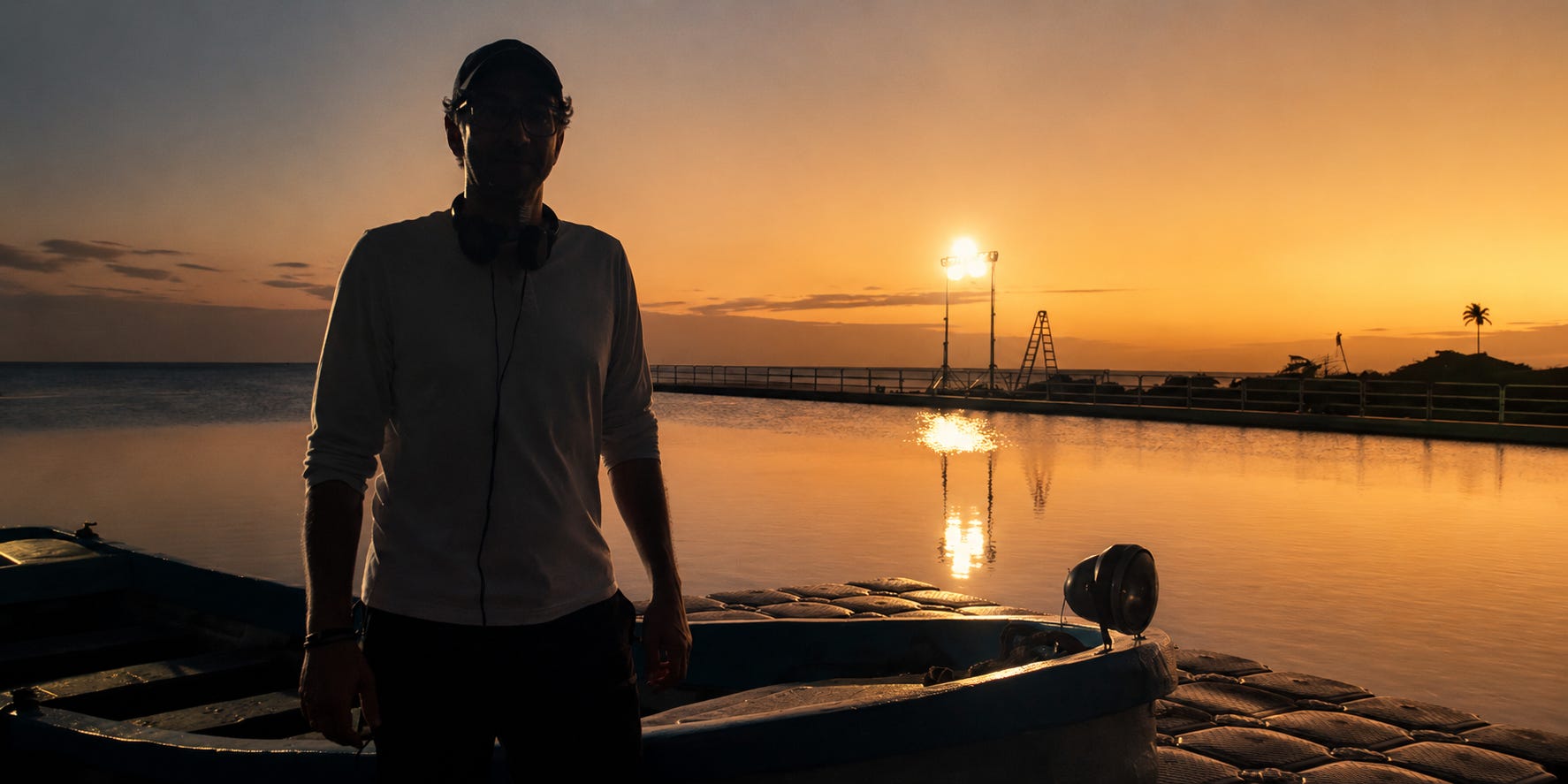
Filmmaking Is the Art of Choosing: Making films has never been easier. Making a living from them has never been harder.
By Mauro Mueller / El Suizo
If I’m honest, artificial intelligence isn’t the thing that worries me most about the future of filmmaking. The harder question is economic.
Over the last decade, our industry has quietly reshaped itself. Studios have merged. Streamers that once seemed willing to finance almost anything are now under pressure to become profitable. Public broadcasters are being asked to justify their existence while competing with an endless stream of online content. Independent distributors, the people who used to champion unusual films and take chances on emerging voices, have become fewer and understandably more cautious. None of these changes happened overnight. They accumulated so gradually that many of us only noticed them once we realized there were simply fewer doors left to knock on.
What’s fascinating is that, while the business has become more difficult, the tools have moved in exactly the opposite direction. It’s never been easier to make a film. The camera I carry today would have seemed miraculous when I bought my first MiniDV camera twenty years ago. Editing software that once belonged exclusively to large studios now runs on a laptop. A small team can create images that previously required entire departments. The technical barriers that kept so many people out of filmmaking have fallen with astonishing speed.
Making films has become wonderfully democratic. Making a living from them hasn’t. That’s the paradox I keep returning to. We solved many of the technical problems, only to discover that the economic ones had become even steeper. Financing remains difficult. Distribution may be even harder. Once a film is finally finished, it enters a world overflowing with remarkable work, all competing for the same finite resource: people’s attention.
The hardest part isn't making one film. It's making a second, then a third, and somehow building a sustainable life in between. For many filmmakers, the real challenge today isn't simply getting a project financed. It's building a career that can survive the long stretches between productions. Most people I know spend almost as much time financing, applying, pitching, consulting, or teaching as they do actually directing. That's become part of the profession. The creative work may happen on set, but the work of staying a filmmaker happens every day in between.
I sometimes joke that the easiest part of independent filmmaking is making the film. It’s only half a joke. The challenge today isn’t simply getting something made. It’s convincing someone to stop scrolling, leave the house, click “Play,” or spend two hours with a story they’ve never heard of. The democratization of production has not been matched by the democratization of distribution. We can all make films now. Getting them seen is another matter entirely. And getting them seen is ultimately what makes it possible to make the next one. For most independent filmmakers, distribution isn’t simply the end of the process. It’s what determines whether there will be another beginning. In many ways, a film’s release is no longer the finish line. It’s the audition for your next opportunity.
Oddly enough, I find that reality reassuring. It reminds me that the real challenge has never been making more films than everyone else. It’s making one that lingers. One that earns those two precious hours and perhaps, if you’re lucky, stays with someone long after the credits have rolled.
The Best Assistant I Never Had
Ironically, this is also why I find the conversation around artificial intelligence so fascinating. People often assume I must either fear it or celebrate it. As though there are only two acceptable positions: AI will destroy cinema, or AI will save it. The truth, as usual, is considerably less dramatic.
I use AI almost every day. Sometimes it’s to summarize a report on film incentives in a country I’ve never shot in. Sometimes it’s to compare contracts, organize scattered research, or translate documents. Occasionally I ask it to argue with me. “What’s wrong with this idea?” can be a surprisingly useful prompt after you’ve spent months trying to figure it out and everyone around you has become too polite.
In many ways, AI reminds me of the assistant I never had. It happily assembles information faster than I ever could, drafts schedules, organizes notes, and patiently answers questions that would eventually make most of my friends stop picking up the phone. It’s remarkably useful. Unlike me, it also never complains about Excel spreadsheets.
I suspect these tools will eventually become as ordinary as digital cameras or non-linear editing software. They’ll quietly disappear into the background of the creative process, becoming less interesting precisely because they’ll become so common.
What they won’t do, at least in my experience, is replace the hardest part of filmmaking. I think we sometimes confuse making work faster with making it better. Anyone who’s spent time in an editing room knows that the difficult part isn’t producing more material. It’s deciding what to throw away. The hardest sentence in a screenplay is often the one you delete. The most valuable shot is sometimes the one you decide not to chase because tomorrow’s scene matters more. Creativity, despite appearances, has always been surprisingly subtractive.
Directing Is Mostly Decision-Making
AI is exceptionally good at generating possibilities. Filmmaking, however, is largely the art of choosing between them. That realization has changed the way I think about directing.
The more I spend directing, the more I realize how little of my job is actually inventing stories. Most of my days are spent making decisions. Which note deserves another draft? Which one is simply someone’s personal preference dressed up as objectivity? Is one more take likely to reveal something new, or is the performance already there? Does this location make the story better, or are we simply attached to it because we worked so hard to secure it? Film sets are, in many ways, decision-making machines disguised as creative workplaces.
The screenplay, wonderful as it is, has never been the finish line. It’s the invitation. The real work begins when the script starts colliding with reality. An actor hesitates before saying a line because something doesn’t feel truthful. Is that hesitation the beginning of a better scene, or did they simply forget the dialogue? A production designer points out that a cramped hallway communicates the emotional claustrophobia of a relationship better than the beautiful apartment you’ve spent months preparing. Do you protect the original vision, or admit that someone else has just improved it?
Then comes the edit, that wonderfully humbling place where every director eventually discovers that the film turns out to have opinions of its own. I’ve cut scenes I absolutely loved because, despite being beautifully written and acted, they belonged to an earlier version of the movie. They were answering questions the film was no longer asking. Letting them go hurt. It also made the film better. Movies rarely reward sentimentality. They reward honesty.
Over time, I’ve become less interested in directors who always have the answer and far more interested in those who know how to recognize one when it appears. Sometimes the best idea comes from the lead actor. Sometimes from the costume designer. Sometimes from the sound designer who quietly removes half the music from a sequence and suddenly allows silence to accomplish what dialogue couldn’t. Directing, I’ve come to believe, isn’t really about having the best ideas. It’s about recognizing them, wherever they come from.
The Hardest Part
That’s why I find myself less interested in asking whether artificial intelligence can write a screenplay. I don’t doubt that it will write increasingly competent ones. It already can. The more interesting question is whether it can recognize the moment when a story unexpectedly becomes true. Whether it can sense that an actor’s accidental pause reveals more than the line that was written, or understand that the scene you’ve spent months perfecting suddenly has no place in the film because the story has quietly become something else. Perhaps one day it will.
Filmmaking has spent more than a century proving that today’s impossibility has a habit of becoming tomorrow’s routine, and I wouldn’t bet against technology. Artificial intelligence will almost certainly become another tool in the toolbox. Some jobs will disappear. New ones will emerge. Financing will continue to evolve. Distribution certainly will. Movie theaters will survive in different forms. Festivals will adapt. The question isn’t whether filmmaking will survive. It always has. The real question is whether enough people will still be able to make a living doing it. Every generation of filmmakers eventually discovers that the medium itself is more resilient than the business models surrounding it. What remains surprisingly constant is the audience’s desire to feel something real.
People rarely remember a film because the rendering was impressive or because the workflow was revolutionary. They remember the ending they didn’t see coming. The performance that quietly broke their heart. The image that stayed with them for days because it revealed something true about themselves. That experience has survived silent cinema, television, VHS, DVDs, streaming, smartphones, and every technological revolution in between.
I suspect that’ll survive artificial intelligence too. Not because cinema is indestructible, but because human beings have never stopped searching for stories that help them understand themselves and each other. And until that changes, I suspect the most valuable tool on a film set won’t be the camera, the software, or even artificial intelligence. It’ll be judgment.
—Mauro / El Suizo
———————————————————————————————
Hacer cine es el arte de elegir: Nunca había sido tan fácil hacer una película. Nunca había sido tan difícil vivir de ella.
Por Mauro Mueller / El Suizo
Si soy sincero, la inteligencia artificial no es lo que más me preocupa sobre el futuro del cine. La pregunta más difícil es otra: la económica.
Durante la última década, nuestra industria se ha ido transformando casi en silencio. Los grandes estudios se han fusionado. Las plataformas de streaming, que hace apenas unos años parecían dispuestas a financiar prácticamente cualquier proyecto, hoy están bajo una enorme presión para demostrar rentabilidad. Las televisoras públicas tienen que justificar constantemente su existencia mientras compiten contra un flujo interminable de contenido en internet. Y los distribuidores independientes, quienes durante años apostaron por películas distintas y por voces emergentes, son cada vez menos y, comprensiblemente, mucho más cautelosos. Ninguno de estos cambios ocurrió de la noche a la mañana. Fueron sucediendo poco a poco, de manera casi imperceptible. Muchos solo nos dimos cuenta cuando levantamos la vista y descubrimos que, simplemente, quedaban muchas menos puertas a las cuales tocar.
Lo fascinante es que, mientras el negocio se ha vuelto cada vez más complicado, las herramientas han evolucionado exactamente en la dirección opuesta. Nunca había sido tan fácil hacer una película. La cámara que llevo hoy en la mochila me habría parecido un milagro cuando compré mi primera MiniDV hace más de veinte años. El software de edición que antes solo existía en grandes estudios ahora corre en cualquier laptop. Un equipo pequeño puede crear imágenes que antes requerían departamentos enteros. Las barreras técnicas que durante décadas mantuvieron a tantas personas fuera del cine han caído con una velocidad asombrosa.
Hacer películas se ha democratizado. Vivir de ellas, no. Ese es el gran contraste al que siempre regreso. Resolvimos muchos de los problemas técnicos solo para descubrir que los económicos se habían vuelto todavía más difíciles. Conseguir financiamiento sigue siendo complicado. Distribuir una película quizá lo sea aún más. Y cuando por fin logras terminarla, entra a competir en un mundo saturado de obras extraordinarias, todas peleando por el mismo recurso limitado: la atención de la gente.
Lo más difícil no es hacer una película. Lo más difícil es hacer una segunda, luego una tercera, y encontrar la manera de construir una vida sostenible entre una y otra. Para muchos cineastas, el verdadero reto hoy ya no es conseguir el financiamiento de un proyecto, sino construir una carrera capaz de sobrevivir los largos periodos entre producciones. La mayoría de los colegas que conozco dedica casi tanto tiempo a buscar financiamiento, aplicar a fondos, hacer pitches, dar clases o encontrar el siguiente proyecto como a dirigir. Eso ya forma parte del oficio. El trabajo creativo sucede en el set, pero el trabajo de seguir siendo cineasta ocurre todos los días entre una película y la siguiente.
A veces bromeo diciendo que la parte más fácil del cine independiente es hacer la película. Y solo es medio broma. Porque hoy el reto ya no consiste únicamente en lograr que una película exista. El verdadero desafío es convencer a alguien de dejar de hacer scroll, salir de su casa, darle play o dedicarle dos horas de su vida a una historia de la que nunca había oído hablar. La producción se ha democratizado. La distribución, no. Hoy casi cualquiera puede hacer una película. Conseguir que alguien la vea es una historia completamente distinta. Y lograr que una película encuentre a su público es, al final, lo que permite hacer la siguiente. Para la mayoría de los cineastas independientes, la distribución no marca el final del camino. Es lo que muchas veces determina si habrá otro. En muchos sentidos, el estreno de una película ha dejado de ser la meta. Es, en realidad, la primera reunión para conseguir la siguiente.
Y, curiosamente, esa realidad me da cierta tranquilidad. Me recuerda que el verdadero reto nunca ha sido hacer más películas que los demás. Ha sido hacer una que permanezca. Una que se gane esas dos horas tan valiosas. Y que, con un poco de suerte, siga acompañando al espectador mucho después de que aparezcan los créditos finales.
El mejor asistente que nunca tuve
Y, curiosamente, esa es también la razón por la que me parece tan fascinante la conversación alrededor de la inteligencia artificial. Con frecuencia se asume que uno tiene que estar en uno de dos bandos: o la IA destruirá el cine, o la IA lo salvará. Como si no existiera ningún punto intermedio. La realidad, como casi siempre, es bastante menos dramática.
Yo uso inteligencia artificial prácticamente todos los días. A veces para resumir un reporte sobre incentivos cinematográficos en un país donde nunca he filmado. Otras para comparar contratos, organizar investigaciones dispersas o traducir documentos. Y, de vez en cuando, hago algo que me resulta especialmente útil: le pido que me contradiga. “¿Qué tiene de malo esta idea?” Es una pregunta sorprendentemente valiosa después de pasar meses encerrado tratando de resolverla y de que todos a tu alrededor se hayan vuelto demasiado amables (o demasiado diplomáticos) para señalar sus fallas.
En muchos sentidos, la IA se parece al asistente que nunca tuve. Reúne información mucho más rápido de lo que yo podría hacerlo, organiza notas, prepara calendarios, compara documentos y responde con infinita paciencia preguntas que, después de la tercera llamada, harían que la mayoría de mis amigos dejaran de contestarme el teléfono. Es increíblemente útil. Y, a diferencia de mí, jamás se queja cuando le toca organizar hojas de cálculo.
Sospecho que, dentro de algunos años, estas herramientas serán tan normales como hoy lo son las cámaras digitales o la edición no lineal. Dejarán de ser tema de conversación precisamente porque se habrán integrado por completo al proceso creativo.
Lo que no creo que hagan, al menos según mi experiencia, es reemplazar la parte más difícil de hacer cine. Porque a veces confundimos trabajar más rápido con crear algo mejor. Cualquiera que haya pasado suficiente tiempo en una sala de edición sabe que el verdadero trabajo nunca consiste en generar más material. Consiste en decidir qué eliminar. Muchas veces, la mejor línea de un guion es la que decides borrar. Y el plano más valioso puede ser aquel que eliges no perseguir porque sabes que la escena de mañana es más importante. La creatividad, aunque parezca lo contrario, siempre ha sido un ejercicio de renuncia. Crear también consiste en elegir qué dejar fuera.
Dirigir es, sobre todo, tomar decisiones
La inteligencia artificial es extraordinariamente buena para generar posibilidades. Pero hacer cine consiste, sobre todo, en elegir entre ellas. Esa idea ha cambiado profundamente mi manera de entender la dirección.
Cuanto más tiempo paso dirigiendo, más me doy cuenta de que una parte muy pequeña de mi trabajo consiste en inventar historias. La mayor parte del tiempo estoy tomando decisiones. ¿Vale la pena reescribir una escena a partir de esta nota o simplemente refleja el gusto personal de alguien disfrazado de verdad absoluta? ¿Conviene hacer otra toma porque todavía hay algo por descubrir o la actuación ya llegó exactamente a donde tenía que llegar? ¿Esta locación realmente mejora la película o nos cuesta dejarla ir porque nos tomó meses conseguirla? Los rodajes son, en muchos sentidos, enormes máquinas para tomar decisiones disfrazadas de espacios creativos.
El guion, por maravilloso que sea, nunca ha sido la meta. Es apenas la invitación. La película de verdad comienza cuando ese guion se enfrenta a la realidad. Un actor duda antes de decir una línea porque algo no le termina de sonar verdadero. ¿Esa pausa es el inicio de una escena mejor o simplemente olvidó el diálogo? La directora de arte te muestra un pasillo estrecho y te hace notar que transmite mucho mejor la sensación de asfixia emocional de una pareja que el hermoso departamento que llevas meses preparando. ¿Qué haces? ¿Proteges la idea original o aceptas que alguien acaba de mejorar tu película?
Y luego llega la sala de edición, ese lugar maravillosamente humilde donde todos los directores descubrimos, tarde o temprano, que las películas también tienen voluntad propia. He eliminado escenas que adoraba. Escenas bien escritas, bien actuadas y de las que estaba profundamente orgulloso. Pero pertenecían a una versión anterior de la película. Respondían preguntas que la historia ya había dejado de hacerse. Quitarlas dolió. Y, sin embargo, hizo que la película fuera mejor. Las películas rara vez premian el apego. Premian la honestidad.
Con los años me interesan cada vez menos los directores que siempre parecen tener la respuesta correcta. Me interesan mucho más aquellos que saben reconocer una buena idea cuando aparece. Porque, muchas veces, la mejor propuesta viene del actor principal. Otras, del diseñador de vestuario. O del diseñador sonoro que, silenciosamente, elimina la mitad de la música de una secuencia y permite que el silencio consiga lo que el diálogo nunca pudo. Cada vez estoy más convencido de que dirigir no consiste en tener las mejores ideas. Consiste en saber reconocerlas, vengan de donde vengan.
La parte más difícil
Por eso cada vez me interesa menos preguntarme si la inteligencia artificial puede escribir un guion. No tengo muchas dudas de que cada vez escribirá mejores guiones. De hecho, ya lo hace. La pregunta realmente interesante es otra. ¿Podrá reconocer ese instante en el que una historia, de pronto, se vuelve verdadera? ¿Podrá darse cuenta de que una pausa accidental de un actor dice mucho más que la línea escrita en el guion? ¿O entender que esa escena que llevas meses perfeccionando ya no tiene lugar en la película porque, casi sin darte cuenta, la historia terminó convirtiéndose en otra?Quizá algún día sí.
El cine lleva más de un siglo demostrando que lo que hoy parece imposible suele convertirse en la rutina de mañana, y yo no apostaría en contra de la tecnología. La inteligencia artificial casi con toda seguridad terminará siendo una herramienta más dentro del oficio. Algunos trabajos desaparecerán. Surgirán otros nuevos. Las formas de financiamiento seguirán cambiando. La distribución también. Las salas de cine sobrevivirán, aunque de maneras distintas. Los festivales se adaptarán. La pregunta no es si el cine va a sobrevivir. Siempre lo ha hecho. La verdadera pregunta es si seguirá siendo posible que suficientes personas puedan ganarse la vida haciéndolo. Al final, cada generación de cineastas descubre que el medio es mucho más resiliente que los modelos de negocio que lo rodean. Lo que sorprendentemente permanece constante es el deseo del público de sentir algo auténtico.
La gente casi nunca recuerda una película porque el render era impresionante o porque el flujo de trabajo fue revolucionario. Recuerda ese final que no vio venir. La actuación que le rompió el corazón en silencio. La imagen que siguió acompañándola durante días porque le reveló algo sobre sí misma. Esa experiencia ha sobrevivido al cine mudo, a la televisión, al VHS, al DVD, al streaming, a los teléfonos inteligentes y a todas las revoluciones tecnológicas que han aparecido en el camino.
Tengo la sospecha de que también sobrevivirá a la inteligencia artificial. No porque el cine sea indestructible. Sino porque los seres humanos nunca hemos dejado de buscar historias que nos ayuden a entendernos a nosotros mismos y a los demás. Y mientras eso siga siendo cierto, sospecho que la herramienta más valiosa en un rodaje no será la cámara. Ni el software. Ni siquiera la inteligencia artificial. Será el criterio.
— Mauro / El Suizo
No posts
Comments
Nothing yet. Say the first thing.
Sign in to join the conversation.