
I’ve opened paid subscriptions. You can upgrade if you’d like to support my work. There will be subscriber-only live streams, and the Founding Member subscription includes an annual meeting with me, which can take place over Zoom or IRL in New York or Los Angeles. If you’re looking for an hour of consulting, trendspotting, or conversation, hit that button.
I was fortunate to dine with Jonathan Gold exactly twice. During our second meal together, we shared a table at the MAD Symposium in Copenhagen in 2016. I had been invited to speak about cookbook writing, and Gold and I (and some Lucky Peach folks) shared a long communal table at one of the conference’s blowout lunches. It was outdoors and under a massive bridge, from what I recall. There were a lot of roasted meats on display. Gold, who I knew a little by then, was shy, kind, and seemed to be just soaking it all in. He stayed really quiet, greeting people only when they approached.
My first meal with Gold was a more intimate affair. I was working on my first cookbook, Koreatown, and one of the book’s recurring bits was a shared meal in Koreatown. I had incredible fun breaking pajeon with a weird mix of characters. There was a double dinner date in Manhattan with Fall Out Boy frontman Patrick Stump. We hit Hangawi and Muk Eun Ji (RIP) on 32nd Street. I shared kimbap with Joe Hahn of Linkin Park and Andrew Zimmern at a Minneapolis food hall. Pulitzer Prize–winning novelist Adam Johnson ate with me at Brothers Restaurant on Geary in San Francisco, and comic Andy Milonakis met me super late at the then-24-hour Bulrocho in Los Angeles.
It was an interesting mix. The goal was to show that Korean food expands far and wide outside the Korean diaspora, which sounds a little obvious now, though in 2013 this argument was needed. It was my meal with Gold that stands out the most in my memory. He died a few short years later, and his legacy is still frequently referenced to this day. I wish I had gotten to know him better. I wish we could have recorded a podcast. I wish I could read his Substack today. He and his good friend Robert Sietsema would have made a great team, covering the food scene from both coasts. I’d pay for that. Here’s where I landed in 2014 when writing about the time Jonathan Gold walked into a Korean restaurant.
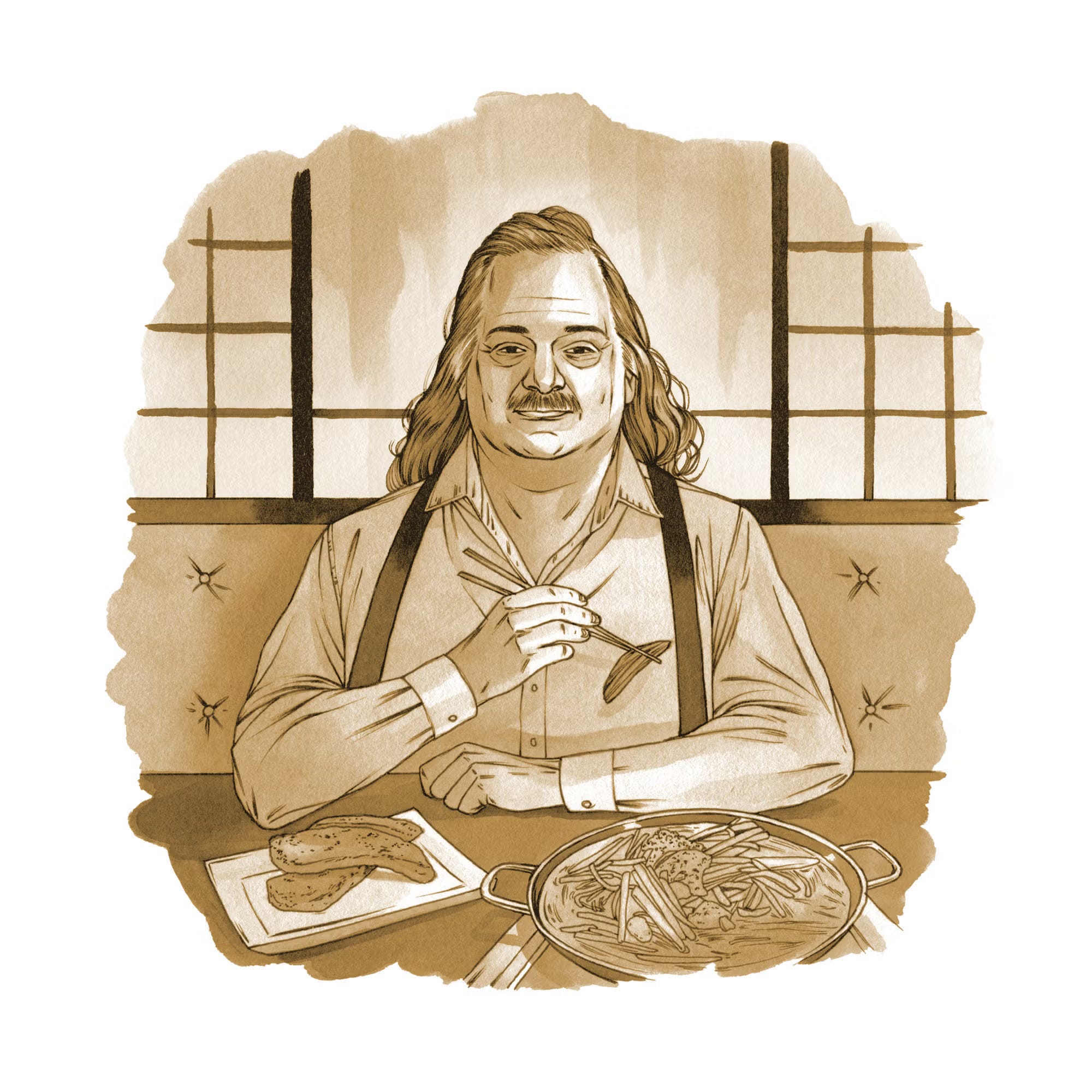
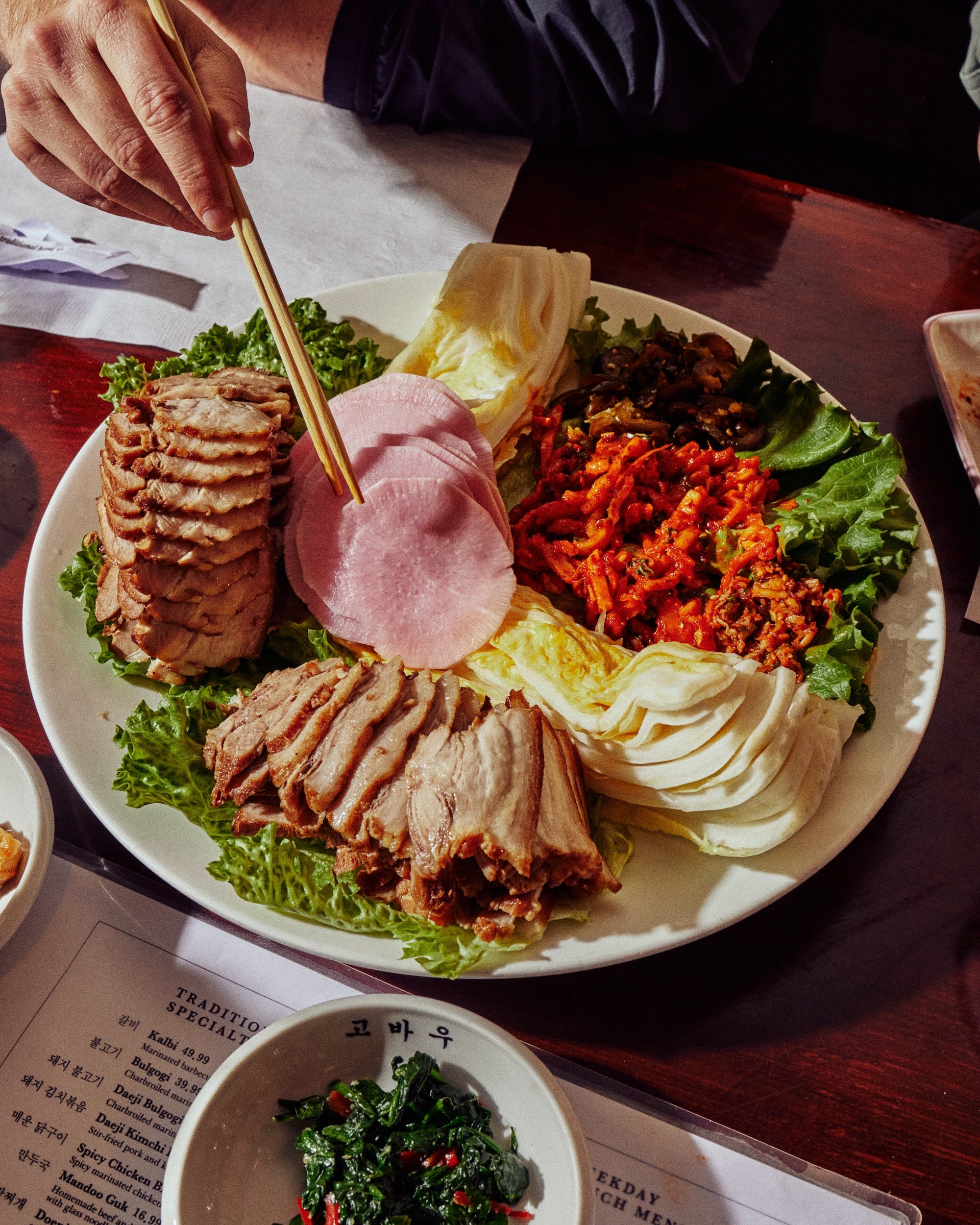
Pulitzer Prize–winning food writer Jonathan Gold’s last story as restaurant critic at the LA Weekly in 2012—a position he held for nearly three decades before returning to the Los Angeles Times—was a 10,973-word masterpiece detailing Korean food in Los Angeles. Though the “60 Korean Dishes Every Angeleno Should Know” headline reads more like a listicle than a magnum opus, the article told the story of not just where to get the best bossam in LA County (for me, it’s always Kobawoo House) but reaffirmed that the nation’s most acclaimed restaurant critic was a keen observer and lover of Korean food and culture.
We met for lunch at Ham Ji Park (RIP!) on West 6th Street on a cool January afternoon in 2014. I was researching the cookbook I would write with Deuki Hong, Koreatown, and I had just arrived at my sublet in Silver Lake when I received a short email from the critic saying we could connect at 1:45 p.m. “You’re hot on Ham Ji Park,” his email read. “Ok. Pico or Sixth St.?” I sensed some skepticism. (This was a place I loved that served my favorite stew, and I wanted Gold’s take.) But Gold was game to eat, drink, and talk about Los Angeles’s Koreatown—a place he loved dearly and wrote about for almost four decades.
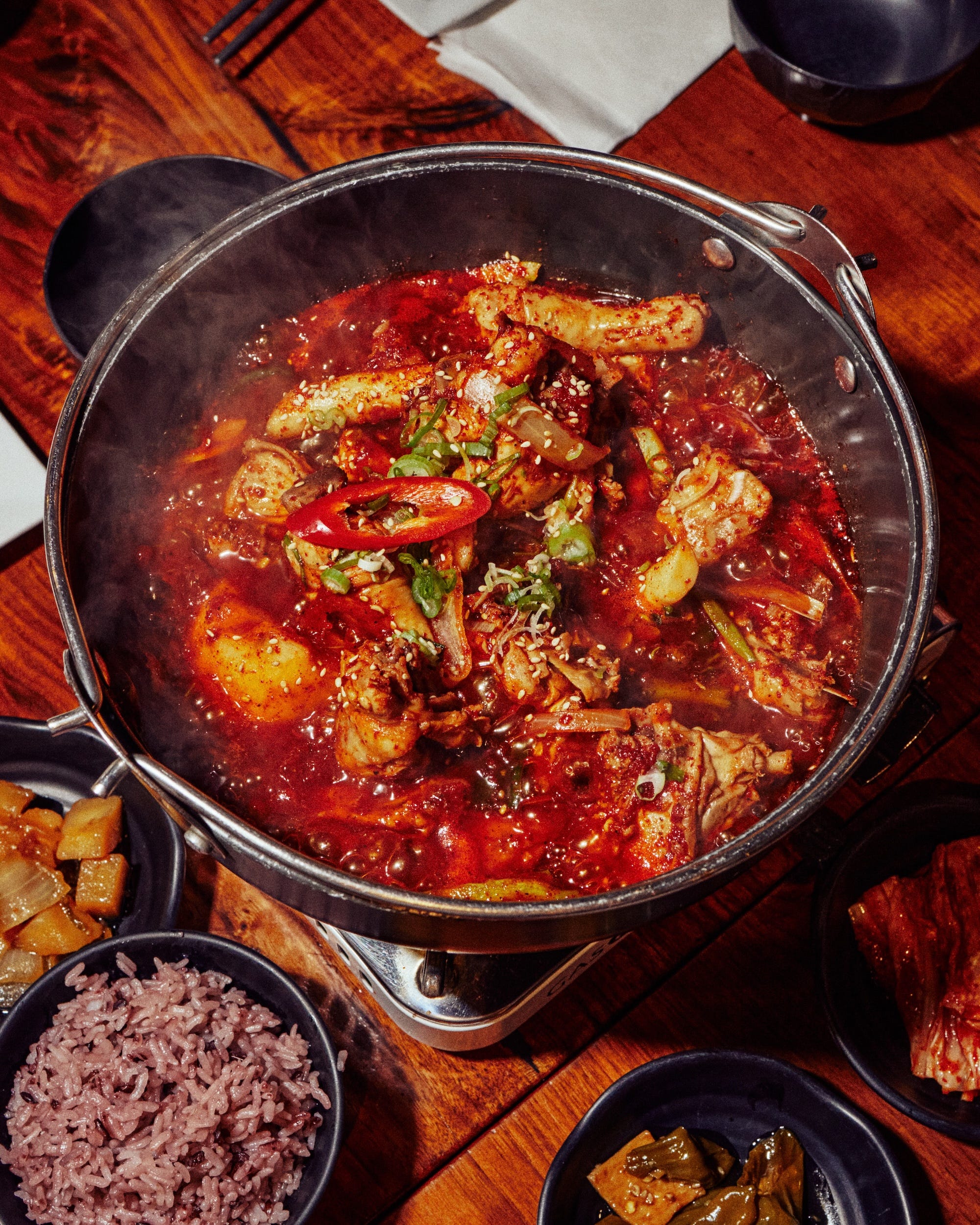
I’m convinced Koreatown was his favorite LA neighborhood (among many neighborhoods he loved), and I regret not asking him to lay it down for the record. We dove into grilled pork ribs, a steaming bowl of gamjatang (a pork neck stew spiked with wild sesame seeds), and a small cauldron of cheonggukjang, an extra-fermented bean paste soup that Gold compared, possibly favorably, to a scene from Invasion of the Body Snatchers. “It just takes over your fucking system,” he said, declining a bite. We started talking about his recent trip to South Korea, where he attended a kimchi festival and trucked around Gwangju with San Francisco chef Russell Moore. “It’s so obvious that Korea was such a profoundly poor country,” he said after a sip of Chamisul. “They eat the low-tide stuff. There are hagfish and sea squirts off every coastline, but only a few will eat it. It’s a cuisine of necessity.”
Necessity is also how Gold described the reason a vast number of LA Koreans moved to the city in the late ’70s and early ’80s, many to build businesses that make up the sprawling Koreatown of today. At that time, while the Korean economy slowly transitioned from an agrarian society to the technological superpower we now know, immigrants flowed into America’s biggest cities in record numbers, hoping to make a better life for themselves. With few entrepreneurial opportunities, due to language barriers and cultural divides, many of the new arrivals opened food-related enterprises like produce markets, small grocery stores, and, of course, restaurants that catered directly to the Korean American immigrant community. It was a “for us, by us” ethic that remained strikingly the same for some 30 years later.
This may be why many Korean restaurants around the United States, but particularly in Los Angeles, have a more dated aesthetic and a clear resistance to assimilating to Western tastes (menus featuring more Hangul than English, Korean folk music playing on the crackly stereo). “It’s like if there was an ‘American House’ in another country and it was stuck in the Ed Koch era,” Gold observed. But the lack of change presents a unique and exciting opportunity for people of all backgrounds to explore a food culture firmly of its time, place, and circumstances. The Koreatown of Los Angeles is a very special Koreatown.
“The thing is, the restaurants here are as good as the restaurants in Seoul,” said Gold. He conceded that if you took the top 50 restaurants in both cities, the top 10 would go to Seoul, but he insisted that numbers 11 through 50 would be in the United States. While some Koreans living on the peninsula in East Asia might attribute Gold’s statement to either hometown pride or ignorance, the truth of the matter is that Korean food in America is the real deal; in many cases, it’s never been watered down, and this tireless critic had spent a whole lot of time thinking about it. I asked Gold to humor me with a bite of cheonggukjang. He dipped his spoon into the funky stew and had a taste. “It’s better on Olympic,” he said. But I knew that already. It was in his article.
This writing first appeared in Koreatown, the cookbook I wrote with Deuki Hong in 2016.

It was really great talking with Elly Truesdell of food and drink VC firm New Fare Partners. On an episode of This Is TASTE, we cover a lot of ground:
✔️ Beyond Meat’s cynical protein energy drink launch 🙃
✔️ Investing/exiting with Bachan’s ($400M) 💰
✔️ What is it with pasta $auces? 🍝
✔️ Grocery trends, busts, movements, investments, head fakes 🏀
✔️ Where is the remaining white space in the CPG word? (LOL yes, I wrote that)
✔️ The second half is a fun interview with Jake Karls, cofounder of Mid-Day Squares
Listen: Inside the Mind and Shopping Cart of a Food VC with Elly Truesdell
No posts
Comments
Nothing yet. Say the first thing.
Sign in to join the conversation.