
I’ve opened paid subscriptions. You can upgrade if you’d like to support my work. There will be subscriber-only live streams, and the Founding Member subscription includes an annual meeting with me, which can take place over Zoom or IRL in New York or Los Angeles. If you’re looking for an hour of consulting, trendspotting, or conversation, hit the that button.
If you are reading this as a food writer, chef, restaurant superfan, or deep food thinker, you very likely have a chip on your shoulder about the popularity of chicken breasts—specifically the boneless, skinless kind—and toward the many people who prize what is obviously an inferior cut on the bird. It’s a true technical foul with the fowl.
As a reminder, the chicken leg and thigh have more flavor and more fat, retain moisture to stand up to long cooking techniques like braising and stewing, are more versatile, and are, simply put, more interesting to cook with. Think of chicken thighs marinated in miso and soy sauce or soaked in buttermilk overnight and shallow pan-fried. Tagine, Basquaise, lacquered with a gochujang-based pan sauce. Filipino adobo, Punjabi dhaba-style chicken curry, Jamaican jerk thighs—the list goes on and on. No matter what direction you choose, a properly cooked chicken thigh, or even one that has been overcooked by several minutes, is tender, lip-smacking, finger-licking unctuousness.
An aside: I hate that word so much and often cut it out when hammering away in the Word docs with our terrific writers at TASTE. Why? It’s often misused. “Unctuous” refers to something having an oily or fatty quality. In food contexts, it describes that melt-in-your-mouth texture you get from well-rendered fat, like a perfectly braised short rib or a velvety chicken liver mousse. Baked goods cannot be unctuous, and neither can wine or crème brûlée. Sourdough bread cannot have an “unctuous chew.” Grilled chicken breast is the opposite of unctuous.
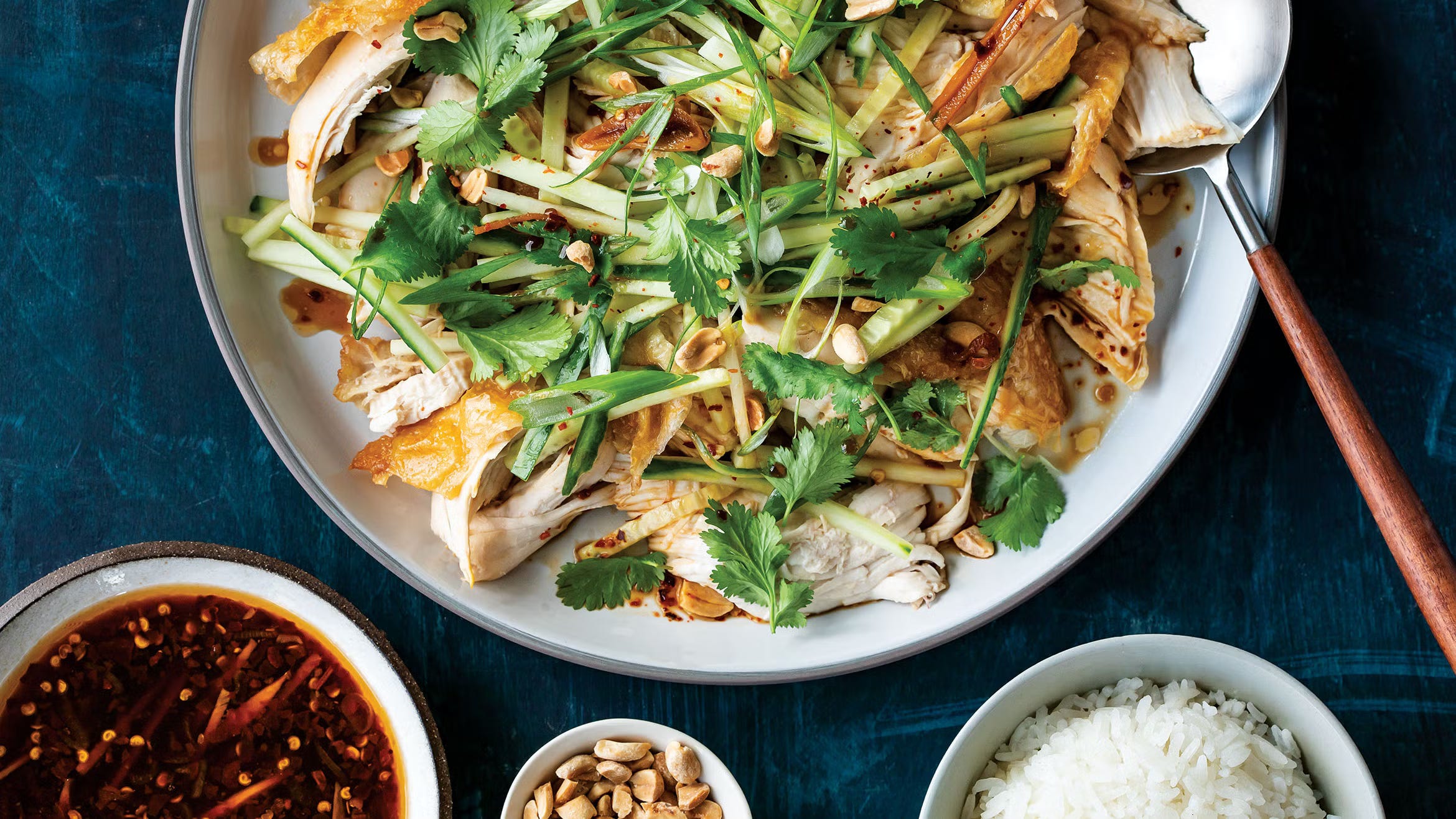
With all that said, there’s a faction of (possibly slightly older) folks and certified protein-maxxers who love themselves a juicy breast. There are some people who equate white meat with quality, and in general, the breast is more expensive because breasts are more sought-after, with around 60 percent of chicken sales falling into the white meat category—although in recent years, thigh sales have been quickly catching up.
To be fair to our wiser generations, some people simply enjoy a leaner cut of meat—meat that has no sinew, gristle, or fat. (Ask any bodybuilder or NBA power forward, and they’ll tell you what it’s all about.) The breast is just a big, juicy cut of meat, and there is a certain appeal there. Sort of.
The real issue with chicken breasts is this: they are often overcooked, which dries them out. Breasts, particularly the skinless kind, are very low in fat, and fat is the texture the human palate equates with moisture—so chicken breasts, with very little intramuscular fat (called marbling) have an extremely narrow margin of error, drying out the moment they overcook. My Food IQ coauthor, the chef Daniel Holzman, has real issues with cooking chicken to 165ºF (the temperature suggested by the US Food and Drug Administration). That figure is garbage, in his opinion—hammered, as they say in the industry. Think more like 135ºF to 140ºF max, for a barely opaque and truly delicious, juicy breast.
But let’s say you like chicken breasts—or have a freezer full of them, at least. What to do? Japanese cooks have a very interesting suggestion: meatballs, or tsukune. In the West, the breast is the most expensive cut, and with its lean and dry texture, it makes a poor candidate for a meatball. But in Japan, chicken breasts are less popular and therefore less expensive. Making up for the breasts’ lack of fat and flavor, tsukune are made by chopping the lean meat and mixing it with aromatic vegetables, chicken skin, and cartilage for flavor, moisture, and texture, then forming the blend into football-shaped meatballs that are skewered and grilled over charcoal and served with a sweet and salty dipping sauce and raw egg yolk. Rie McClenny, author of Make It Japanese, has a very good recipe for tsukune using tofu and lean ground chicken.
On “the other white meat”
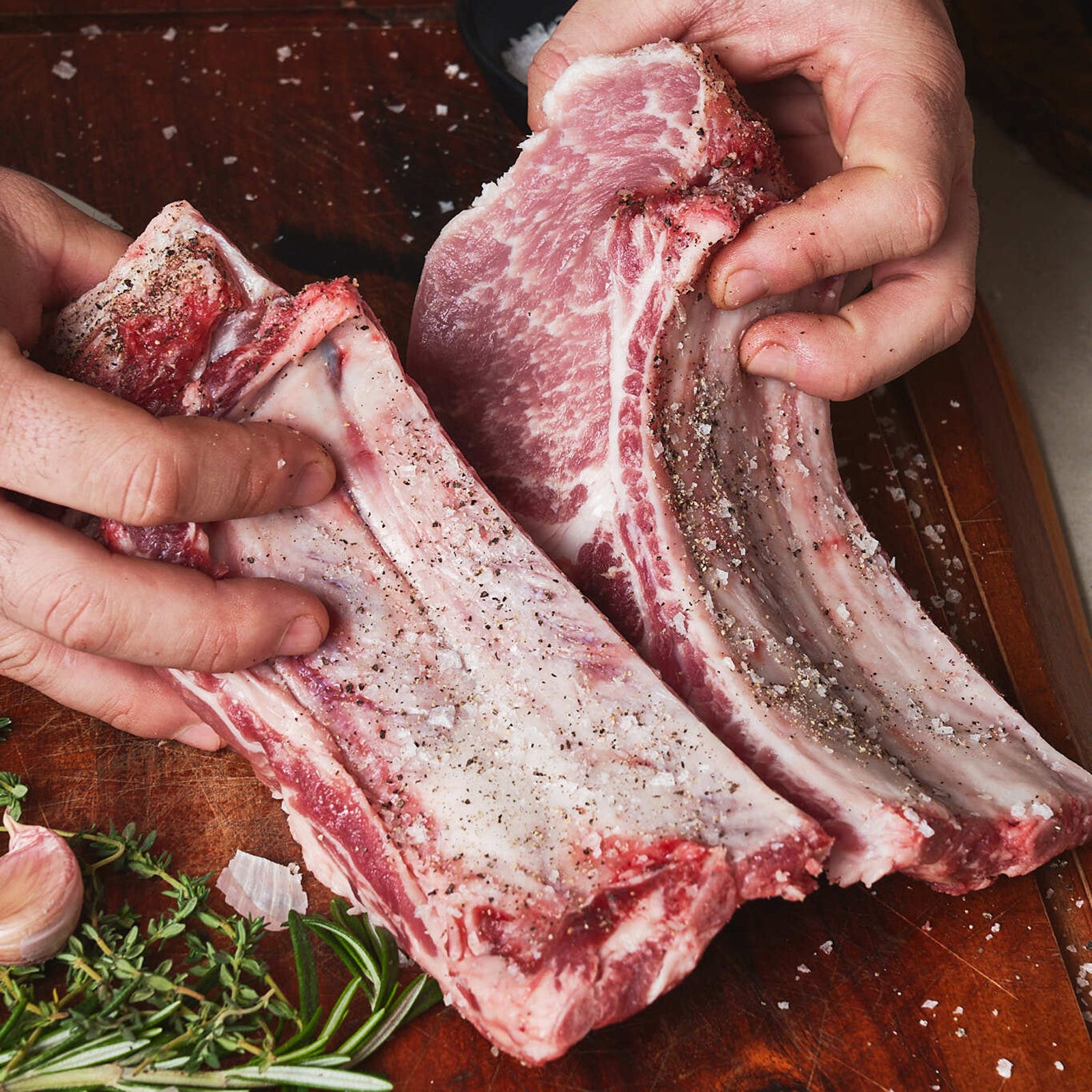
Thinking about industrialized agriculture in the United States is a big bummer, and chicken in particular is one of factory farming’s greatest monstrosities. The chickens you find in your grocery store and those served at many inexpensive restaurants have been bred for decades to produce oversize breasts, to feed the above-mentioned demand but also to create a uniform shape for ease of mechanical processing and a bland flavor that is less offensive to the average American palate. Pork has gone through the same sad evolution. Do you remember that slogan, “the other white meat,” that brainwashed a generation of home cooks to view pork, like chicken breast, as a blank canvas? The TV commercials from the 1990s were wild. Erase that from your memory.
Pork has a big personality, and if you’ve ever had a chop or a shoulder or charcuterie from a heritage breed like Berkshire (sometimes called Kurobuta), Duroc, Red Wattle, or Mangalica, you know how exciting pork can be. I think about Paul Carmichael’s chuletas can-can at Kabawa getting all of that ink. It’s a deeply flavorful chop with the belly and skin attached. According to the restaurant, “This Puerto Rican classic became popular in the 1950s and is characterized by its flared shape, crispy chicharron, and succulent meat. At Kabawa, the pork skin is salted, then the entire cut is hung for a few days—steps that are integral to achieving an extra crispy exterior when the skin is seared” (though Paul wants us talking about the bass, to be fair). There was a time when the flavor of pork was shunned. It’s crazy.
Those heritage pigs have been bred over centuries for flavor and fat. Luckily there is a network of farms working hard to maintain these special heritage breeds, and you can do your part to support the cause as well. Campo Grande is a great place to start. I’ve caught up with its founder Kurt Oriol at various trade shows and he’s the real deal. The company is bringing heritage Spanish Ibérico pork to many retailers in America, including Whole Foods Market. Be on the lookout. And the bottom line is simple: eat more good-quality, heritage-bred, non-commodity meat. Call your local butcher, and ask for the good stuff. It’s certainly waiting there. And if they don’t carry it, demand that they do.

Recently on This Is TASTE, I had a great conversation with restaurateur Andrew Tarlow. It was his first appearance on the podcast, and a really good one. We talk Diner, Borgo, and so many other great topics, including:
✔️ The birth of Diner in South Williamsburg in 1998. The paper on the table’s origin is cool. 🗽
✔️ Odeon in the early ‘90s, and major respect for Lynn Wagenknecht
✔️ The opening of Borgo in Manhattan was 25 years coming and a high-wire act. I think we all can say that we love how it turned out. That wasn’t a given.
✔️ Working with his son, who is deep in the family business 🧑🧑🧒
✔️ A great Three Things at the top 🇰🇷🇲🇽
Listen: This Is TASTE 759: Andrew Tarlow Waited 25 Years to Open in Manhattan. Then Came Borgo.
No posts
Comments
Nothing yet. Say the first thing.
Sign in to join the conversation.