
If you are an emerging photographer, somewhere in the long middle of trying to find your own voice, I hope to offer something in this piece that is not a tip, a technique, or a preset. I hope to give you a practice. A way of sitting with your own work that, by the time you reach the end of this, might loosen the quiet panic I think a lot of us are carrying right now.
In May a company that makes photo editing software, VSCO, put a single sentence in front of every photographer it could reach. “Your eye, the way you see the world, can't be generated. It can't be prompted. It's irreplaceable.” And it landed with me initially like a bit of relief. The real impact of AI is obviously on a lot of our minds, not just as artists but as humans throughout society.
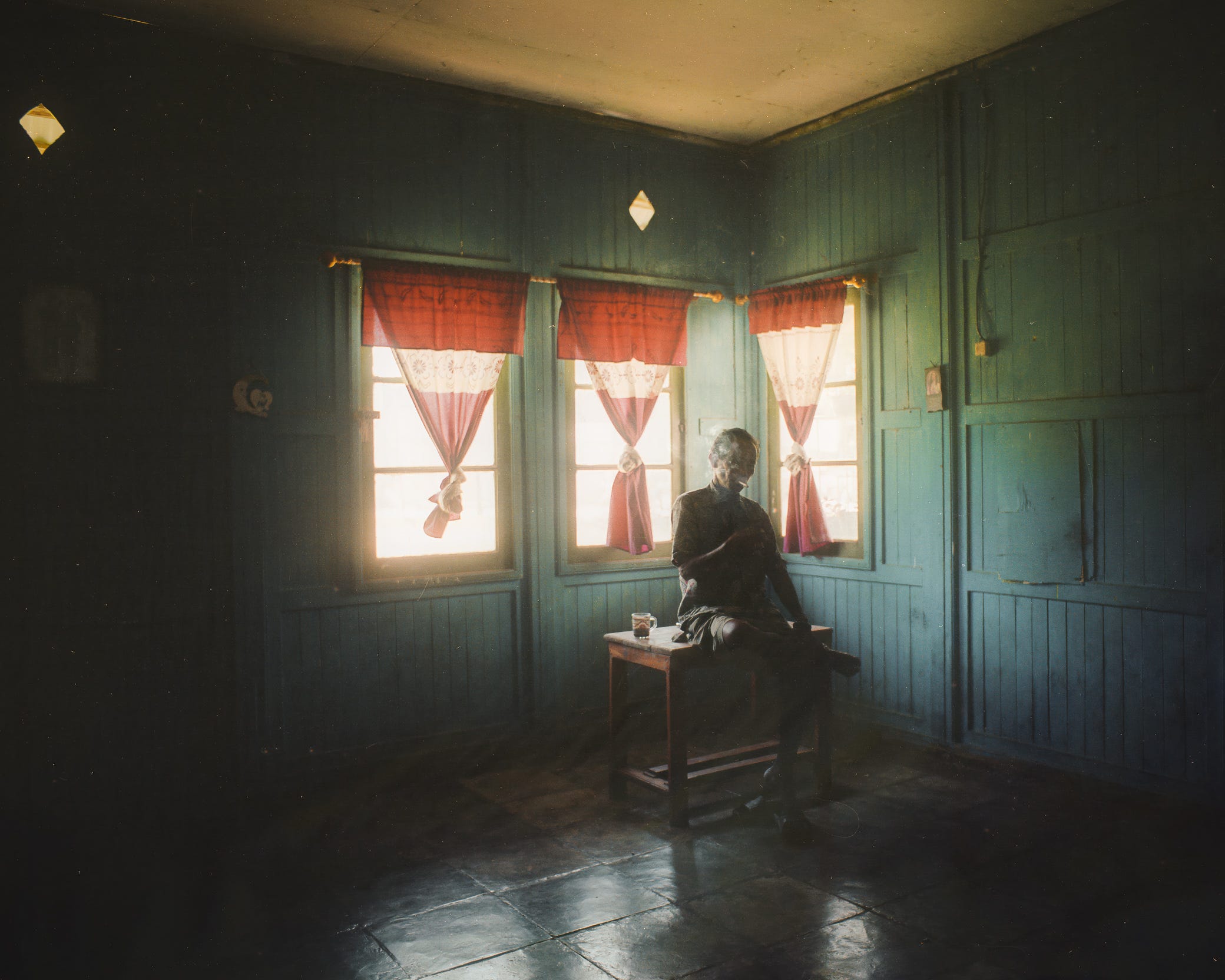
I’ve been sitting with one of my photographs that I made it in a place that is quietly disappearing, and I keep returning to it, because it seems to know something about my voice that I keep forgetting, and as such I am drawn back to this place, time and time again. By the end of this article I want you to be holding a frame like it in your own mind. The one that is still unmistakably yours, even on the days your voice feels broken into a hundred pieces by everyone else’s opinions.
But to get there, we have to start with why that reassuring little sentence felt so good, and what it quietly gives away, but I am not going to answer that just quite yet.
2 questions sit underneath everything I am going to say today.
Did we really need a company to tell us that our own eye was worth something, and
What if your eye was never yours to begin with (and what if that turns out to be the best news you have heard all year)?
OK, kind of 3 questions then.
Before we go any further though, sit still with me. Wherever you are, bring to mind one photograph you have made. Not your most liked and not your best performing, but the one you would still have made if you knew no one would ever see it. Picture it now and notice that you do not have to defend it to anyone here. There is no number underneath it in this room. There is only you, and the thing you saw, and the fact that you were the one who saw it. Hold it there, because we are going to come back to it.
Let me name the worry, because it is real and I am not going to pretend otherwise. Images can now be conjured out of nothing. Infinite, instant, costless. Brands that used to hire photographers are generating what they need instead. The platforms we built our names on bury our best work beneath whatever is trending that afternoon. And somewhere in the back of the room there is always a voice, sometimes other people’s, sometimes our own, asking whether any of this is still worth doing.
So I look back at this one photograph from a place I won’t name - it’s precious to me and a world I want to keep as fiction - and I admit the machine could approximate it now. It could render the light, the dust, the faces, the texture. What it could not do is be there. It was not the one standing in that heat, invited into that moment, carrying whatever I carried into it. All my thoughts, fears, worries, hopes and desires. My physical exhaustion, the games in my head, the external pressures of time, people, light and environment, and so much more.
And here is the part I kept turning over. The same company that told us our eye cannot be generated also builds the tools that generate. It runs a whole lab of Artificial Intelligence. Its own research found that an overwhelming number of photographers already use these tools every single day. And woven through the very pages of that reassuring campaign are invitations to subscribe. I am not saying this to attack them - I use their app, and I love it - and I think the sentiment is probably sincere. I am saying it because it reveals something; the reassurance is also a transaction, and the comfort is also a product. And if comfort about your own worth has become something that can be sold back to you, we have to ask who first convinced you that you needed to buy it.
So here is what I have come to believe. The crisis is not necessarily AI, but that the sentence ‘your eye cannot be replaced’ felt like rescue. And rescue is only sweet to someone already drowning. We were drowning long before the machines arrived, and we had slowly handed the verdict on our own work to everything outside ourselves - the likes, the algorithm, the client’s nod. The small grey number underneath the picture…
If you are an emerging photographer and your voice feels fragmented, like it changes shape depending on who is looking, this is the reason. You are carrying a dozen judges in your head, and not one of them is you. AI is simply the newest judge whose approval we are terrified of losing.
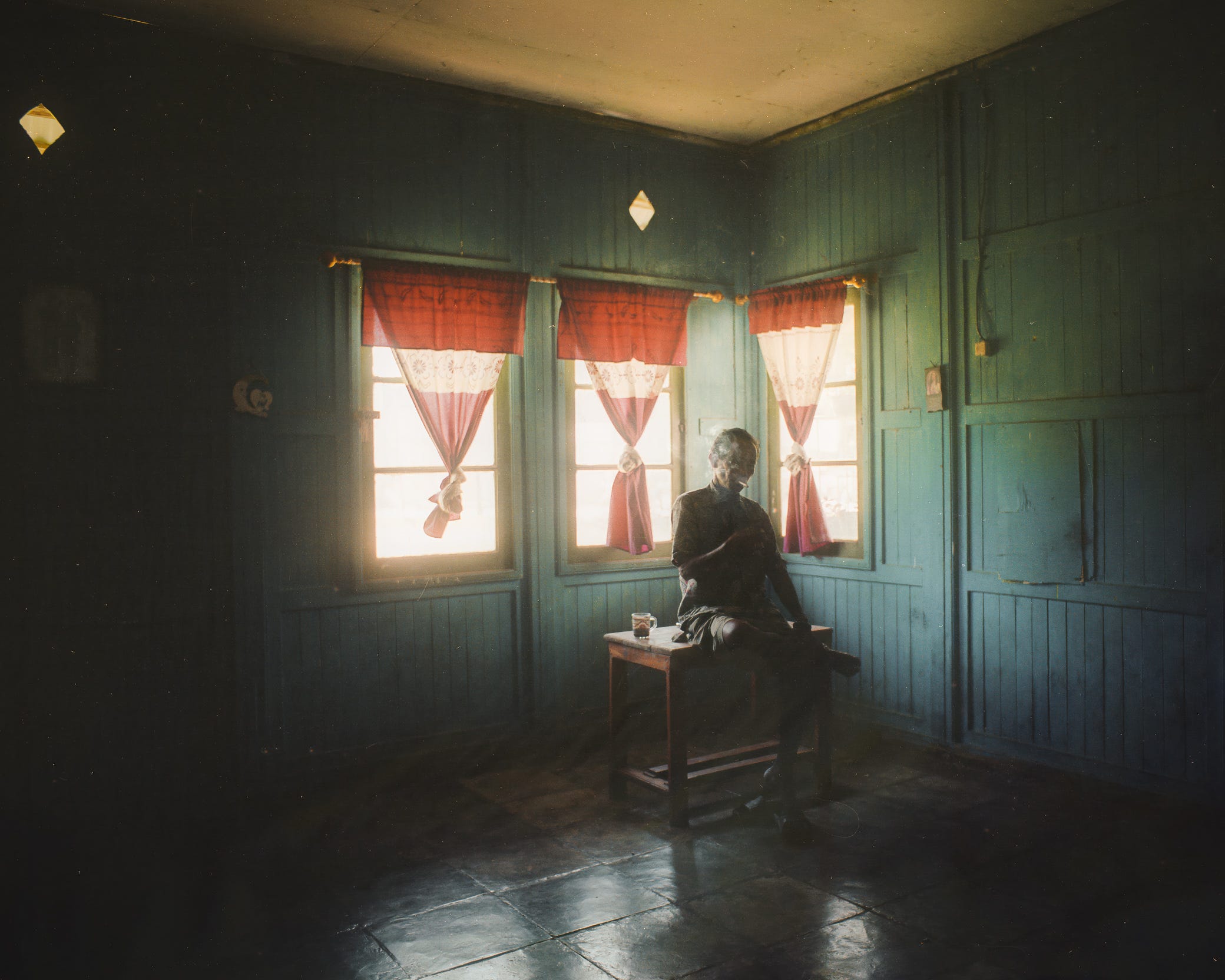
When I look at this frame, the reason it still feels unmistakably mine is almost embarrassingly simple. For once, I made it for no verdict but my own.
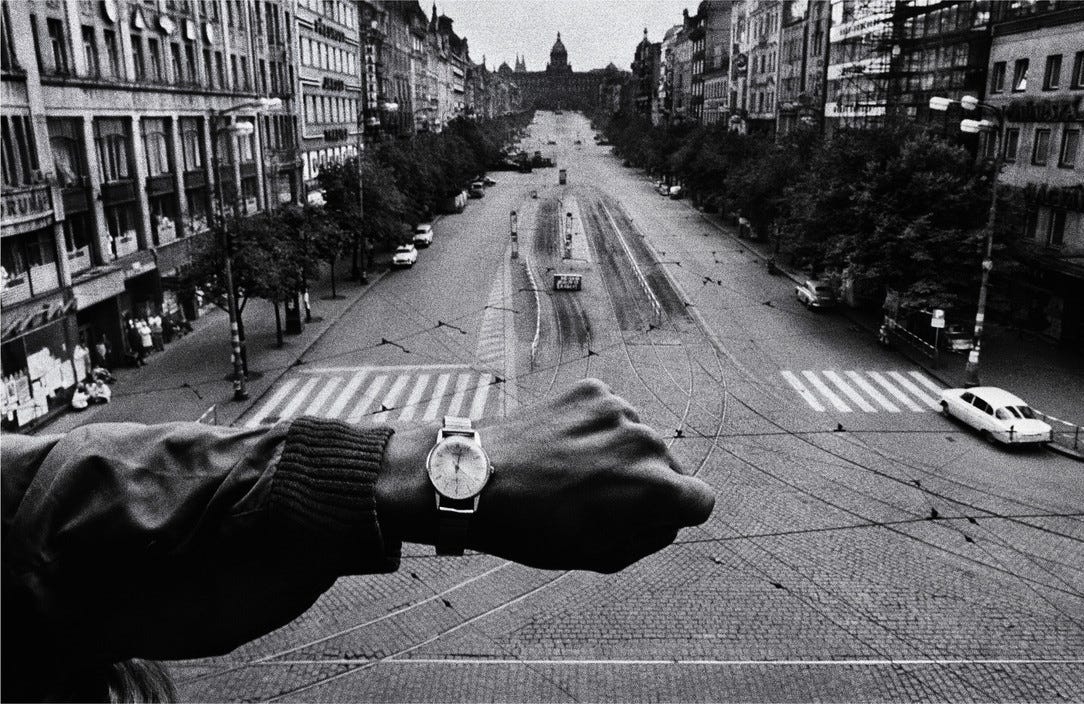
I have been thinking, all through this, about Josef Koudelka. In August of 1968, Soviet tanks rolled into Prague. Koudelka was 30. He was not a news photographer, and had never photographed anything you could call an event. He photographed theatre, and the Roma communities of his own country, quietly, for no one but himself. And then the tanks came into his city, and something in him simply had to lift the camera.
“It was my country. I took these photographs for myself, not for a magazine. It was only by chance that they were published. I knew it was important to photograph, so I photographed.”
Those negatives were smuggled out under the name of an unknown Czech photographer, because if he had been identified he could have been imprisoned, or worse. He won one of the most prestigious awards in the medium, and could not tell a soul the pictures were his. For 16 years he carried that silence, and it did not diminish the work by a single degree, because the worth of those photographs was never out there.
It lived in him.
That is what I am after in this one frame. Not to be Koudelka of course, but to remember that the seeing was the thing, not the applause. A machine can render the smoke and the crowd, but what it cannot be is the witness.
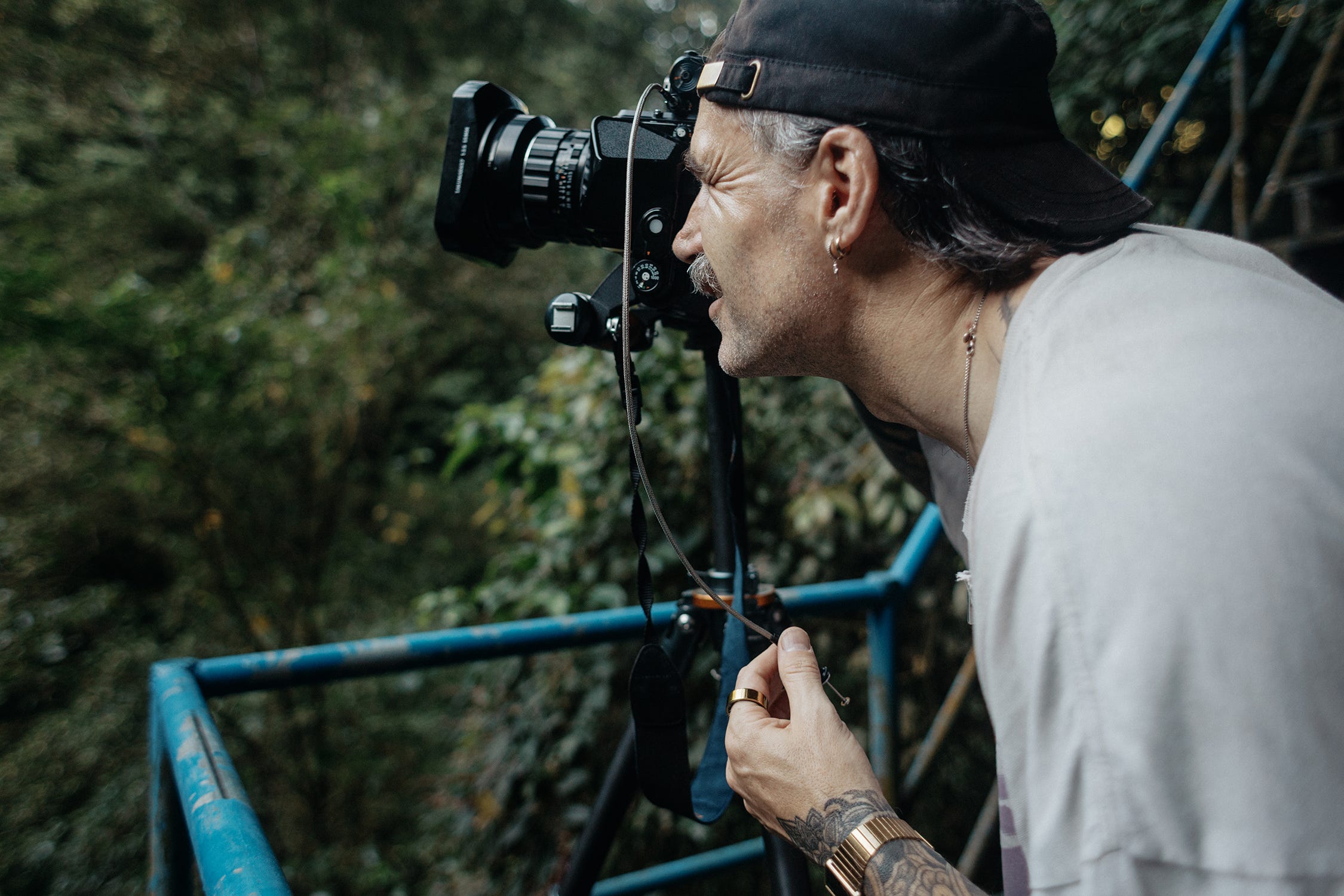
Relearning to trust your own eye is almost impossible to do alone, because everything around you is built to keep you looking outward for the verdict. That is the thing that fragments a voice in the first place. So I made a room where the scoreboard is switched off. It is called MOOD Insiders. People there ask what you saw, not how it performed. If your voice feels scattered, that is the room where it slowly gathers back into one.
Now, I am not going to pretend the fear underneath all this evaporates because a Czech man was brave in 1968. So let me say it out loud, the real one, the one at 2am…
What if my eye is ordinary?
What if I am not bearing witness to anything, and I am just photographing the same coastline as everyone else?
What if the machine really is good enough now, and the world quietly stops needing what I make, and my voice never gathers into anything whole?
I have sat in that myself, more than once.
Let it be here for a moment. The comfort I am about to offer is worthless if I rush you out of the fear before you have felt it.
Here is the first thing I have come to believe, and it begins as something almost embarrassingly practical.
Real photography is about to become more valuable, not less.
When something becomes infinite, it becomes cheap. We are about to be buried under an avalanche of images that cost nothing, that no one lived, that no one stood in the heat for, that no one returned to a disappearing place 3 times to make.
And against that flood, a frame like this of mine, with actual experience inside it, becomes rare. People feel the difference even when they cannot name it, and they reach for the real thing, because the human heart has always hungered for what is true. The work that costs a person something is becoming scarce, and scarcity, in the end, is value.
But there is something larger moving underneath the economics, and it is the part I find genuinely hopeful. There is a phrase going around now, coined by a man named Steven Johnson: “The revenge of the humanities”. For a generation we were all told that the safe future belonged to the technical, the coded, the automatable, and that the artists and the writers and the people who studied the human soul were indulging something quaint. And now the machine has arrived and quietly swallowed exactly the work we were told was safe. What it cannot swallow is the rest - the taste, the judgement, the lived understanding of why a thing matters, and the voice that arrives at a conclusion that is genuinely its own, rather than the most plausible average of everything everyone else has already said.
Even the people building these systems are saying it out loud. Daniela Amodei, who co-founded one of the largest AI companies in the world, studied literature, and she has said the things that make us human will become much more important, that studying the humanities now matters more than ever. Sit with how strange and how reassuring that is. For decades the market treated your sensibility, your eye, your years of quiet looking, as a soft and unserious thing. The machine is about to make it the most valuable thing you own. Not because you can out-produce it - you can’t of course - but because you can do the one thing it will never do; you can mean it.
This is why I am not afraid for my photograph(s). A thousand synthetic versions of this place could exist by tonight, and not one of them will have been there. Not one will carry a single hour that was actually lived, and in a world drowning in images that no one lived, the one that was lived becomes the only one worth looking at twice.
So here is what I want to say to you, plainly, as the emerging photographer I am actually talking to.
Go deeper.
Not louder.
Deeper.
Find the voice that is yours and follow it past the point where it is comfortable. Because in amongst the noise, in amongst the endless AI slop scrolling past every thumb on earth, the one thing people are starving for is a human being who saw something and meant it. We want to hear your voice. We are going to need it more than we ever have. Do not go quiet at the exact moment the world is finally desperate for the real.
But the practical comfort is not the one that I think is actually liberating. Koudelka, late in his life, after the tanks and the exile, said something that resonated:
“One world is disappearing. I am trying to photograph what is left. I have always been drawn to what is ending, to what will soon no longer exist.”
For me, I don’t go back to that location where I took the photo to prove I am irreplaceable. I go because the seeing moves through me when I am there, the way it moves through anyone who slows down enough to look. And that is the thing I want to hand you. Your eye was never a possession, and it was never something you could own, or lose, or have stolen by a machine. It moves through you whenever you stop and pay attention. You cannot lose what you never owned, which means you can finally stop gripping it. Stop proving it. Stop measuring whether your work is original enough, or seen enough, to justify the years you have given it. Those were never the industry’s rules, yet they were the ones we wrote for ourselves.
And we are allowed to put them down.
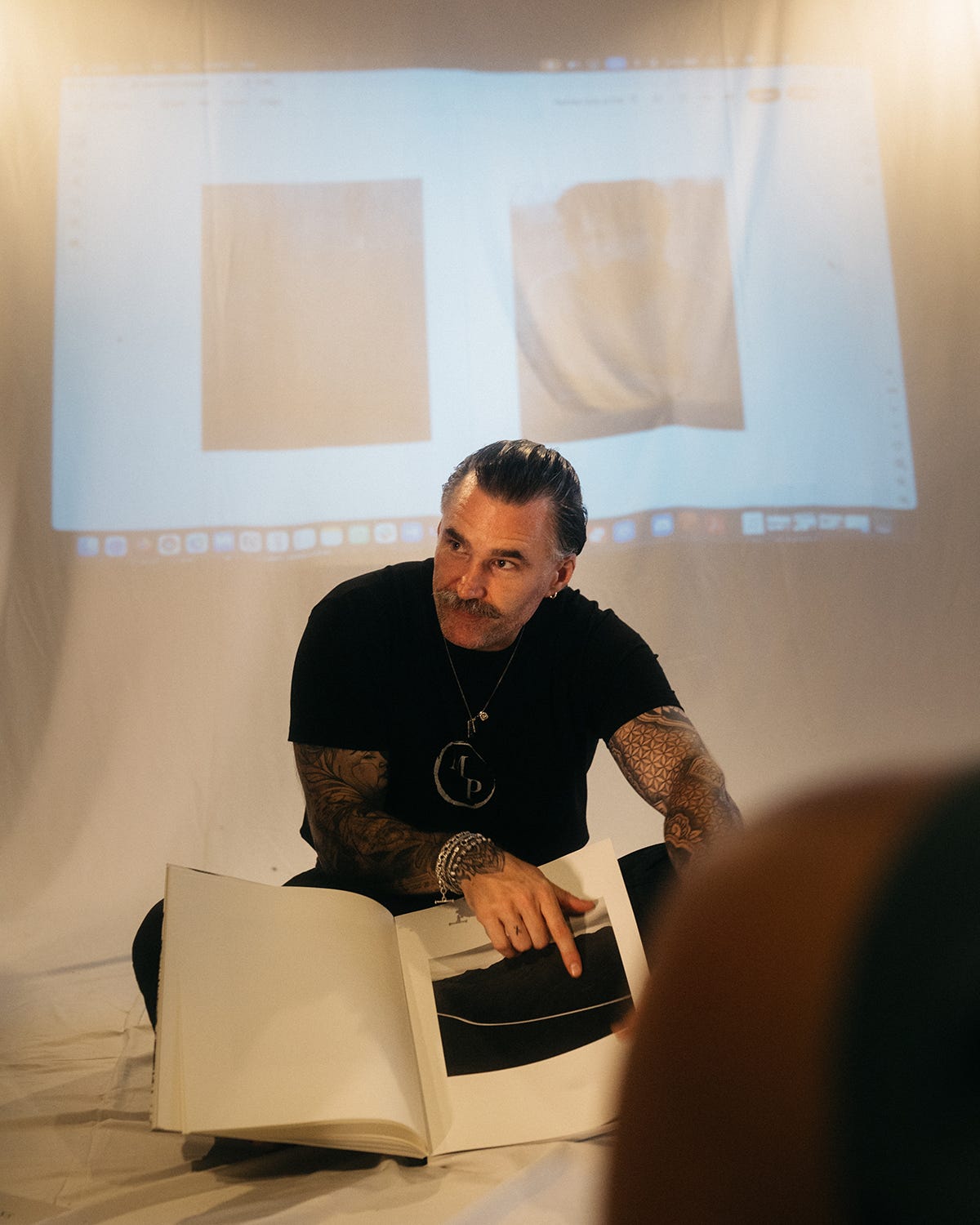
Let me gather this into a few things we can ponder.
The concern, and in some places panic, was never really about the machines. It was about how much of your own worth you had already handed away, long before they arrived.
The work that costs a human being something is becoming rare, and rare things gain value. You do not have to win that argument. The market makes it for you.
Your eye was never a possession. It was never yours to own or to lose. It moves through you whenever you slow down and look. So you can stop defending the imperfect frame. It is okay that the work is not perfect. It just IS. And that is the freedom.
Here is the reflection I am leaving in your hands, the one I will be sitting with myself this week. Go and find the single photograph that is unmistakably yours. Not your best. Yours. The one you would still have made if the internet had never existed. Look at it without defending it to anyone, and ask what it already knows about your voice that you have been too scattered, too busy, too afraid of the verdict to hear.
That frame is not fragmented.
You are not fragmented.
You only forgot which judge to listen to, and it was always the one looking through the lens.
It is okay that your eye was never yours. That was never the loss, but was always the freedom. And it was never theirs to take.
Happy Shooting,
Matt x
If you want to keep doing this work, finding the frame, switching off the scoreboard, with people who ask what you saw and not how it performed, that is what MOOD Insiders is for. The door is open.
Rather watch this ramble? The full Moments of Mood episode is below.
Comments
Nothing yet. Say the first thing.
Sign in to join the conversation.