
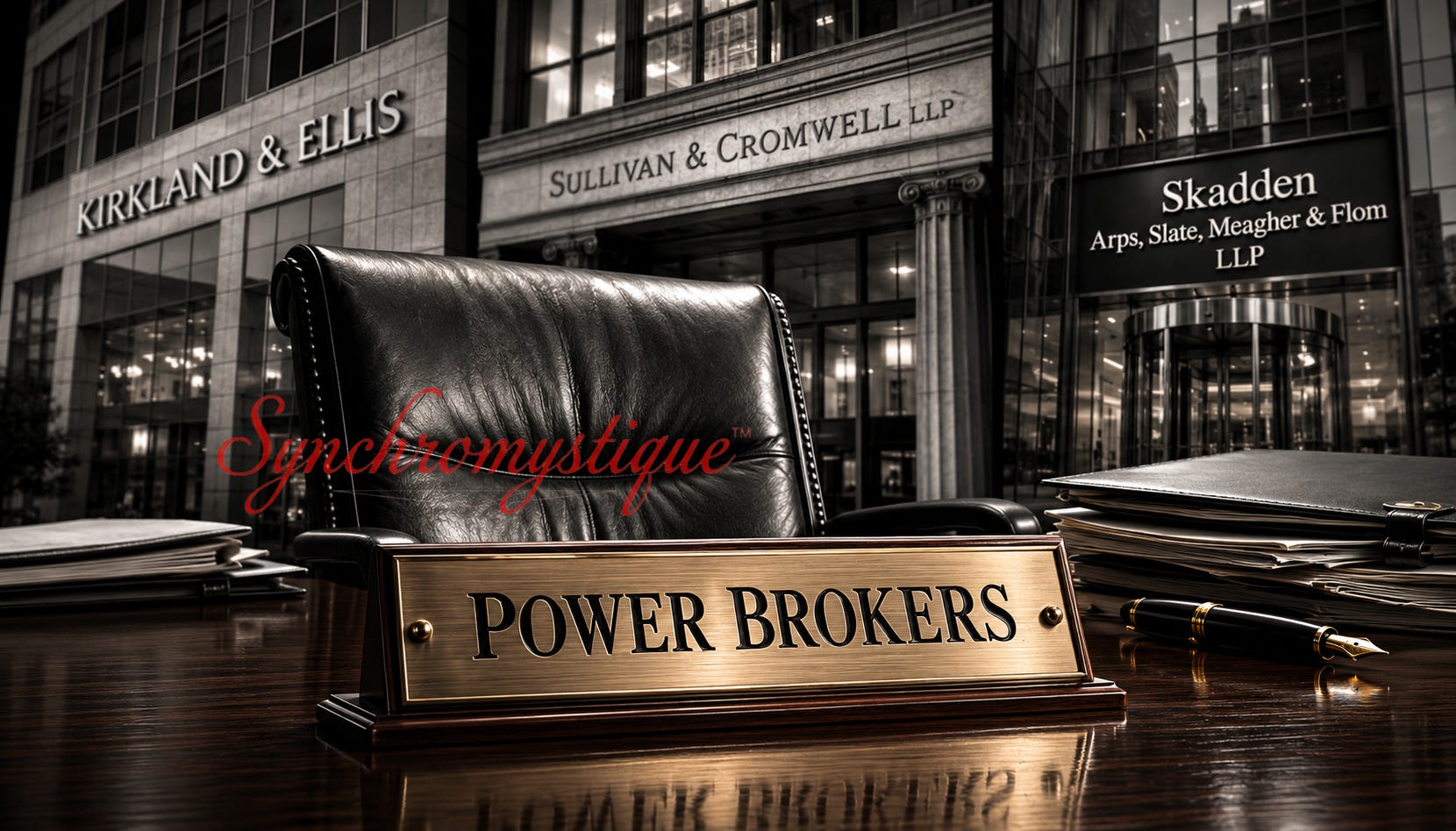
“Corporations have neither bodies to be punished, nor souls to be condemned; they therefore do as they like.” – saying derived from Sir Roger Manwood (source)
“When plunder becomes a way of life for a group of men in a society, over the course of time they create for themselves a legal system that authorizes it and a moral code that glorifies it.” – Frédéric Bastiat (source)
What follows is a provocative survey of eleven firms: white-shoe, blue-chip, and occasionally black-hearted institutions whose names — Skadden, Sullivan, Sidley, Kirkland, Dunn — may sound less like the names of attorneys than like the players in some Jacobean revenge tragedy.
They create the holding companies, help “float” bonds, and draft the laws and regulations that constrain or govern our lives — a framework they are frequently paid (by the sorts of people and institutions who can afford that kind of action) later to circumvent. With startling consistency, they also produce the men and women who go on to run the Central Intelligence Agency, occupy seats on the United States Supreme Court, or stand at a podium to explain why a given war, coup, or financial collapse was — however “regrettable” — in fact lawful.
Litigiousness being as pervasive as it is, we wish to emphasize, first of all, that this is not a brief against the legal profession as such. Nor, secondly, have we leveled any accusations under our own steam, as it were. This is merely a compilation condensed from what is already a matter of public record.
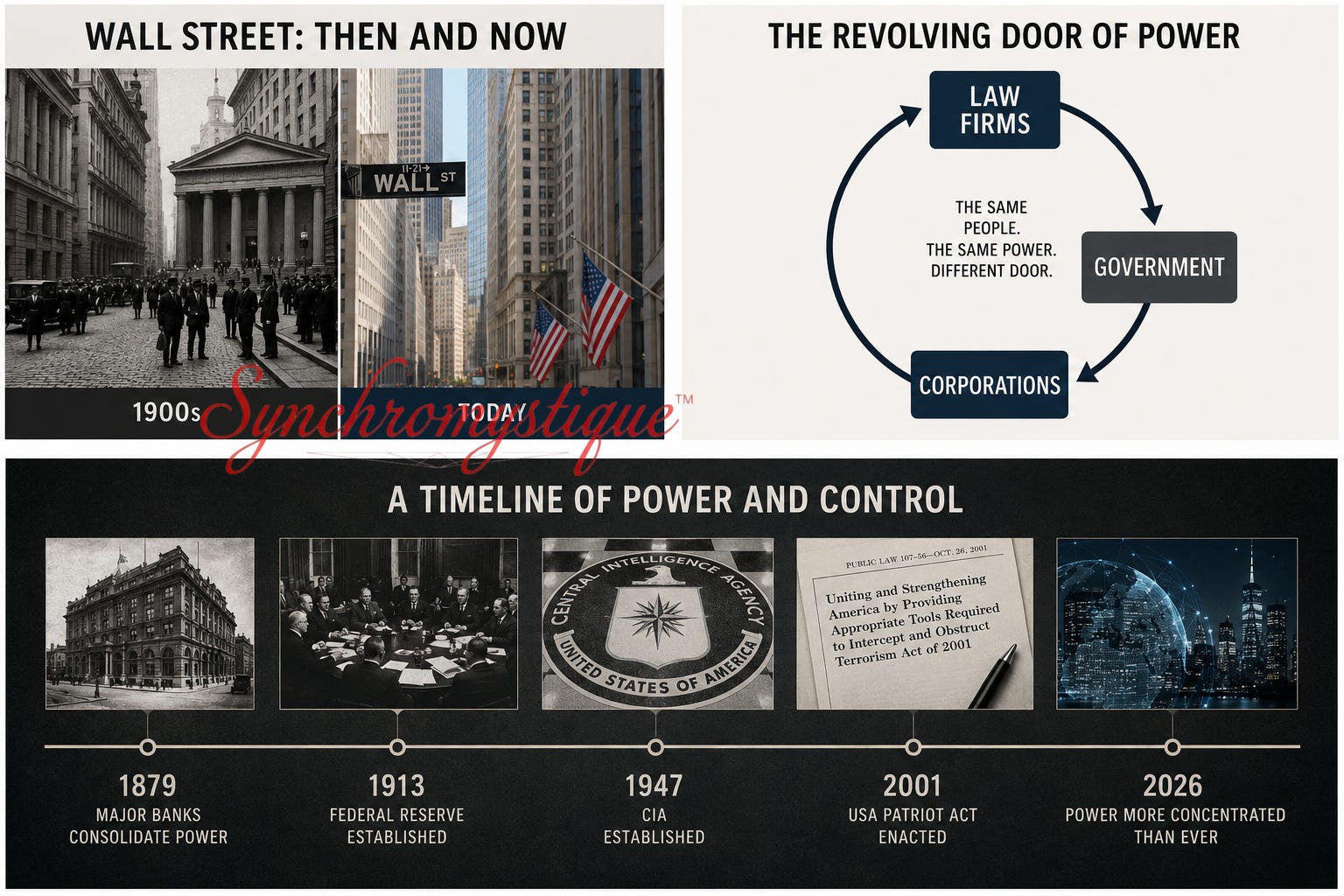
Instead, and in line with Synchromystique™, an invitation to do some pattern detection. And we may prime the pump with a question: How often do the same dozen or so addresses on Wall Street, in Chicago’s Loop, or off Wilshire Boulevard, recur at critical junctions of twentieth- and twenty-first-century history? We’re thinking of such events — objectively momentous, even if intentionally muted in news coverage — as the founding of the Federal Reserve System; the overthrow of foreign governments (like the 1954 Guatemalan coup); the creation (via subsidies) of flag-carrying national-brand companies (like Pan American World Airways — including, perhaps, informing damage control following the aftermath of disasters, like at Lockerbie, Scotland); the refereeing of contested presidential elections (like during the year 2000); the near-total collapse of the world economic order (as happened in 2008); clampdowns on past, current, or once-and-future presidents (such as with Richard Milhaus Nixon and Watergate; William Jefferson Blythe III, a.k.a. “Bill Clinton” and the Starr Report; or Donald John Trump’s several prosecutions); and the periodic exposure (or partial exposure) of criminal networks (e.g., that implied by and in the Epstein Files).
For some SynchroMystical angles related to those latter limited hangouts, see our previous Substack article “Stanley Kubrick Was Right.”
Swiss depth psychologist Carl Gustav Jung proposed that Synchronicity is an “acausal connecting principle” that provides the metaphysical “ground” for meaningful coincidences that have no discernible, plausible, or traceable causes in the usual sense. Where there are facts, we have tried to supply footnotes. (As an unfortunate housekeeping matter, we have to report that Substack’s footnote apparatus is extremely touch-and-go. Simple copy/paste edits become a nightmare when one discovers that end notes didn’t seem to go along for the ride. We have tried to reconstruct our citations from older drafts. However, we cannot guarantee absolute completeness.) But, whether the bulk of what follows constitutes synchronicity in the Jungian register, “conspiracy,” or merely the unglamorous outworking of statistical probability given that (what’s now termed) the “oligarchy” has a comparatively small and exclusive membership list, the reader must judge for him- or herself.
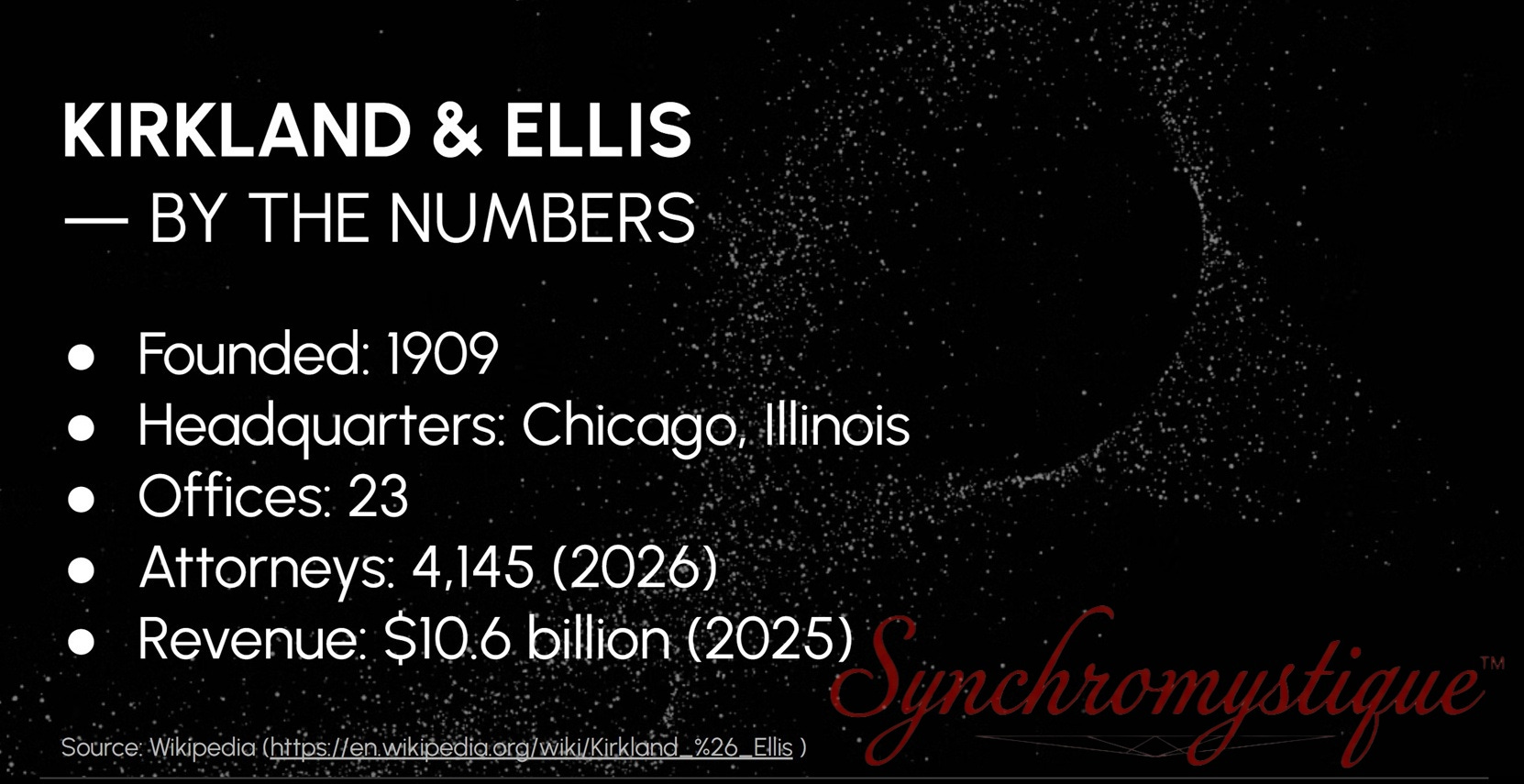
Kirkland & Ellis has been in the news somewhat recently, especially in relation to the Boeing 737 MAX disaster. Part of the penumbra of that legal controversy is the highly convenient (for Boeing) deaths of whistleblowers Joshua Dean and John Barnett, aged 45 and 62, respectively.
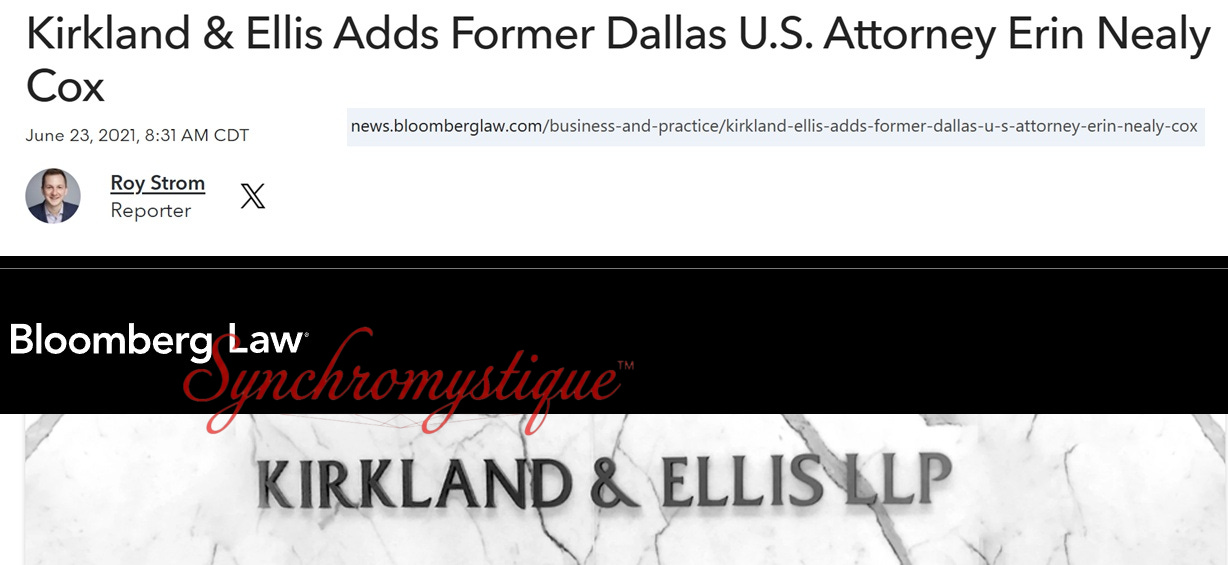
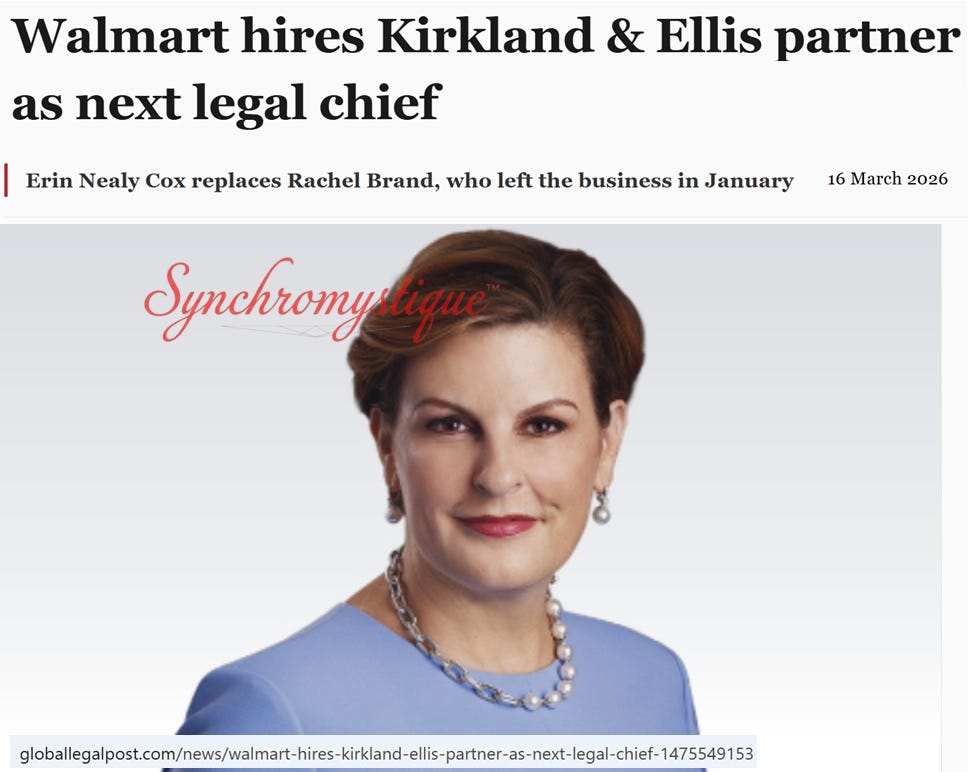
Then-Texas-based U.S. prosecutor Erin Nealy Cox negotiated a settlement that definitely disappointed some victims’ families, and also may have shielded Boeing execs from further scrutiny. Cox was later hired by Kirkland & Ellis and was subsequently tapped by Walmart as its chief legal officer.
The firm — which was established between 1907 and 1909 — is named after Weymouth Kirkland and Howard Ellis. This obscures the involvement of its actual founders, Stuart G. Shepard and Robert Rutherford McCormick. “Colonel” McCormick is best remembered as having been the editor & publisher of the Chicago Tribune, for forty-four years, from 1911 until his death in 1955.1
For more on the word “colonel” (and its homophone, kernel) — which we regard as a Twilight-Language code word — see our dedicated YouTube presentation.
Kirkland & Ellis has produced such political insiders as William Pelham Barr and Robert Heron Bork. The latter was solicitor general for Presidents Richard Milhous Nixon and Gerald Rudolph Ford; he took over as attorney general following the departure of Elliot Lee Richardson,2 who resigned in protest over Watergate. The former, lawyer “Bill” Barr, was twice the U.S. A.G.: first under President George H. W. Bush (1991-1993) and then under Donald Trump (2019-2020). Then there’s Brett Michael Kavanaugh who, after nomination by Trump, achieved what Bork had been unable to under Ronald Reagan: Senate approval as a Supreme Court associate justice.
For more on Bill Barr, the Barr family, and various entanglements with Jeffrey Epstein, see our past publication “Spiritual Gurus.”
Kenneth Winston “Ken” Starr, best remembered for sketching the legal basis for impeachment proceedings against President William Jefferson Blythe III, otherwise known as “Bill” Clinton.
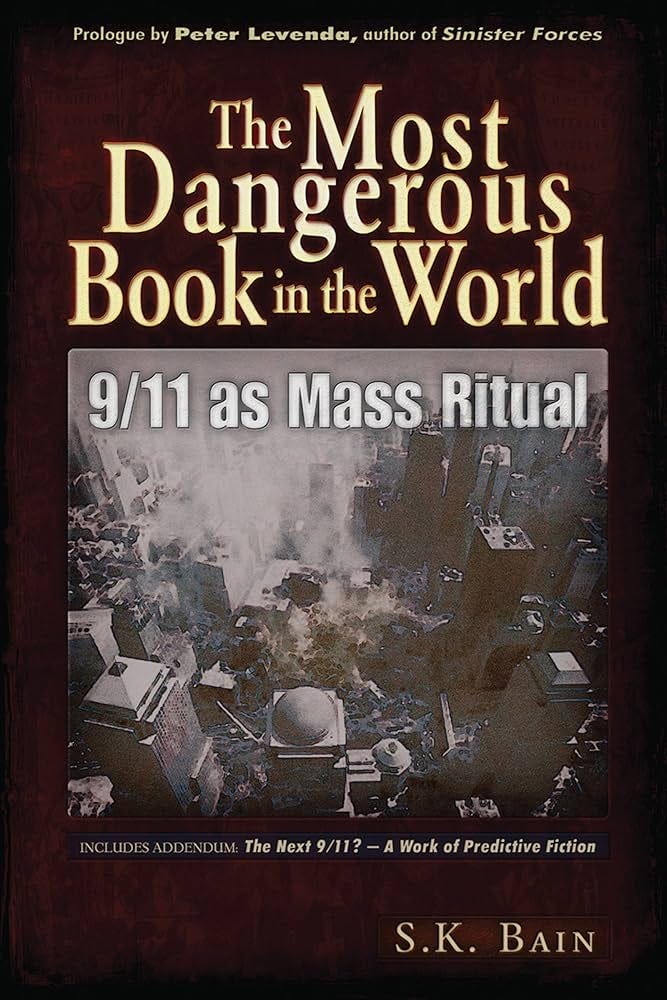
Following other sleuths, such as S. K. Bain, we noted elsewhere that the eponymous Starr Report was dated September 11, 1998.
Other notables include cabinet member Alexander Acosta – who, you’ll recall, approved a non-prosecution agreement for notorious sex criminal Jeffrey Epstein in 2008; Alex Michael Azar II — the former president of Eli Lilly & Co.’s U.S. branch who originally led Trump’s White House Coronavirus Task Force; and A.G. Jeffrey Adam Rosen — who declined Donald Trump’s repeated requests to investigate fraud accusations against Dominion Voting Systems — for further investigation of these latter angles, see our presentation “10 Milestones in Election Fraud.”
Don’t forget, also, that none other than George Herbert Walker “Poppy” Bush was on the board of directors for the above-named pharmaceutical company Eli Lilly. Bush held this position from 1977 to 1979 — just after his stint as the Director of the CIA, and right before he was selected (supposedly at the urging of William Casey) to be the running mate and vice president of Ronald Wilson Reagan. Eventually (of course), he became the 41st president of the United States.3
“[W]e could see a horrible increase in international terrorism, with American citizens more at risk than ever before. We cannot and we need not allow this to happen. Our objective must be to exploit the unparalleled opportunity presented by the cold war’s end to work toward transforming this new world into a new world order…” — George H. W. Bush (source)
Here’s some of what Kirkland and Ellis has been up to more recently: Advancing the New World Order — in the literal sense seemingly intended by George “H. W.” Bush — by crafting legal cover for the U.S. invasion of Panama; pardoning Iran-Contra actors; promoting the Unitary Executive Theory (as depicted in the 2018 movie Vice, featuring the unlikely — but, it turns out, brilliant — cast choice of British-born actor Christian Bale as Richard “Dick” Cheney); and drafting the USA Patriot Act.
It also seems to specialize in aiding private-equity takeovers such as Toys R Us; assisting many gargantuan corporate mergers and acquisitions, including those related to finance heavy hitters Blackstone Inc. and GLP as well as Big Pharma giants Bristol-Myers Squibb and Celgene; attempting to silence tobacco-industry whistleblower Jeffrey Wigand; and shielding oil behemoth BP from the consequences of the Deepwater Horizon oil spill environmental disaster in 2010.
Wikipedia gave its annual revenue, for 2023, at $7.2 billion. In March of 2026, it reportedly became the first U.S. law firm in history to cross the $10-billion revenue threshold.
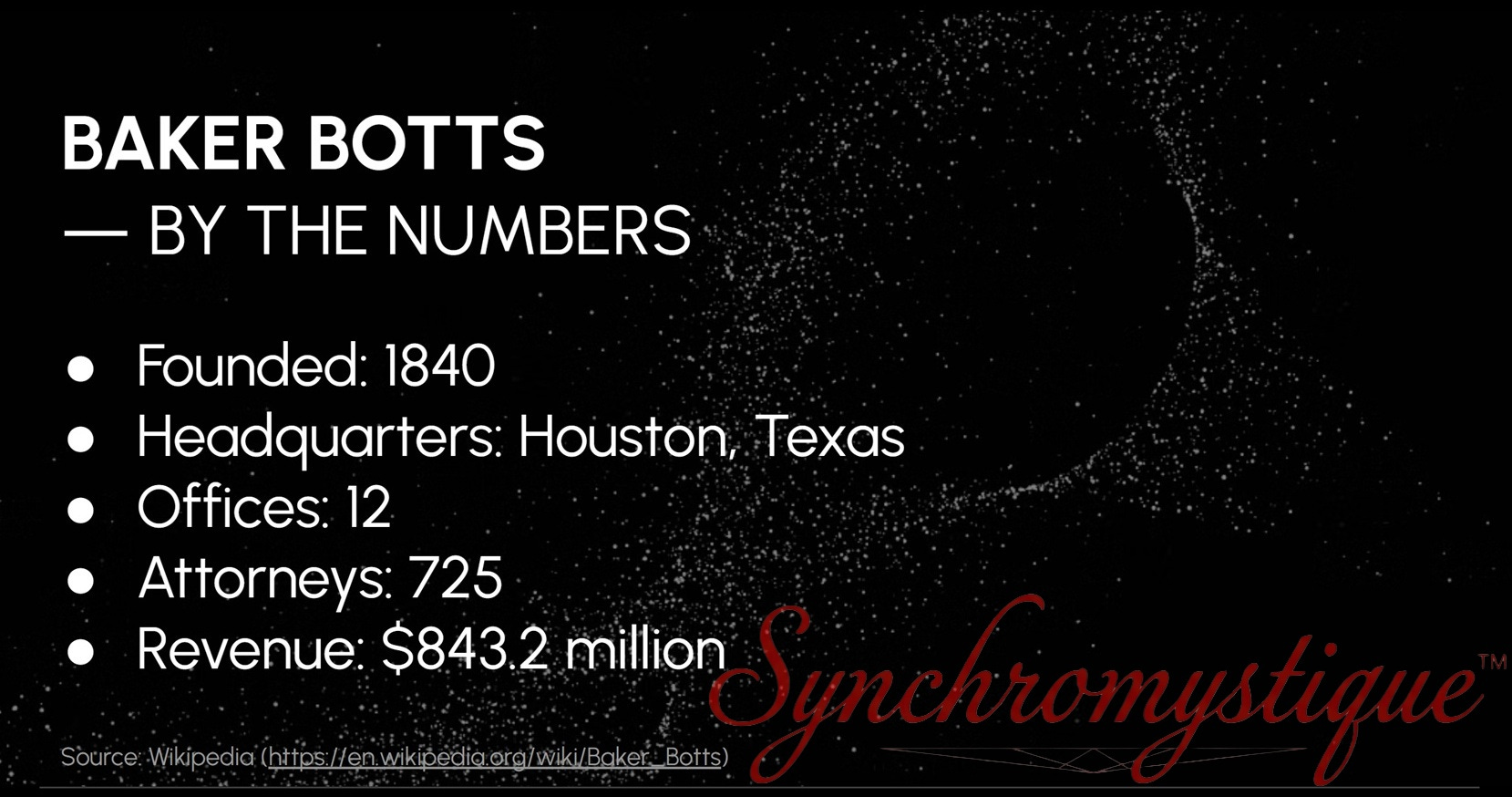
Compared to Kirkland and Ellis, this firm’s annual revenue is a measly $843.2 million. But it has origins in Reconstruction-Era Texas when State Judge James Addison Baker was removed from his post in 1865 because of his Confederate past. At that point, Baker went into private practice in Houston, joining Walter Browne Botts and Peter W. Gray.
Judge Baker’s son, the lawyer “Captain” James Addison Baker (Junior), allied himself with millionaire cotton merchant, insurance executive, and railroad tycoon, William Marsh Rice. During the Civil War, Rice had relocated to the Mexican border town of Matamoros.
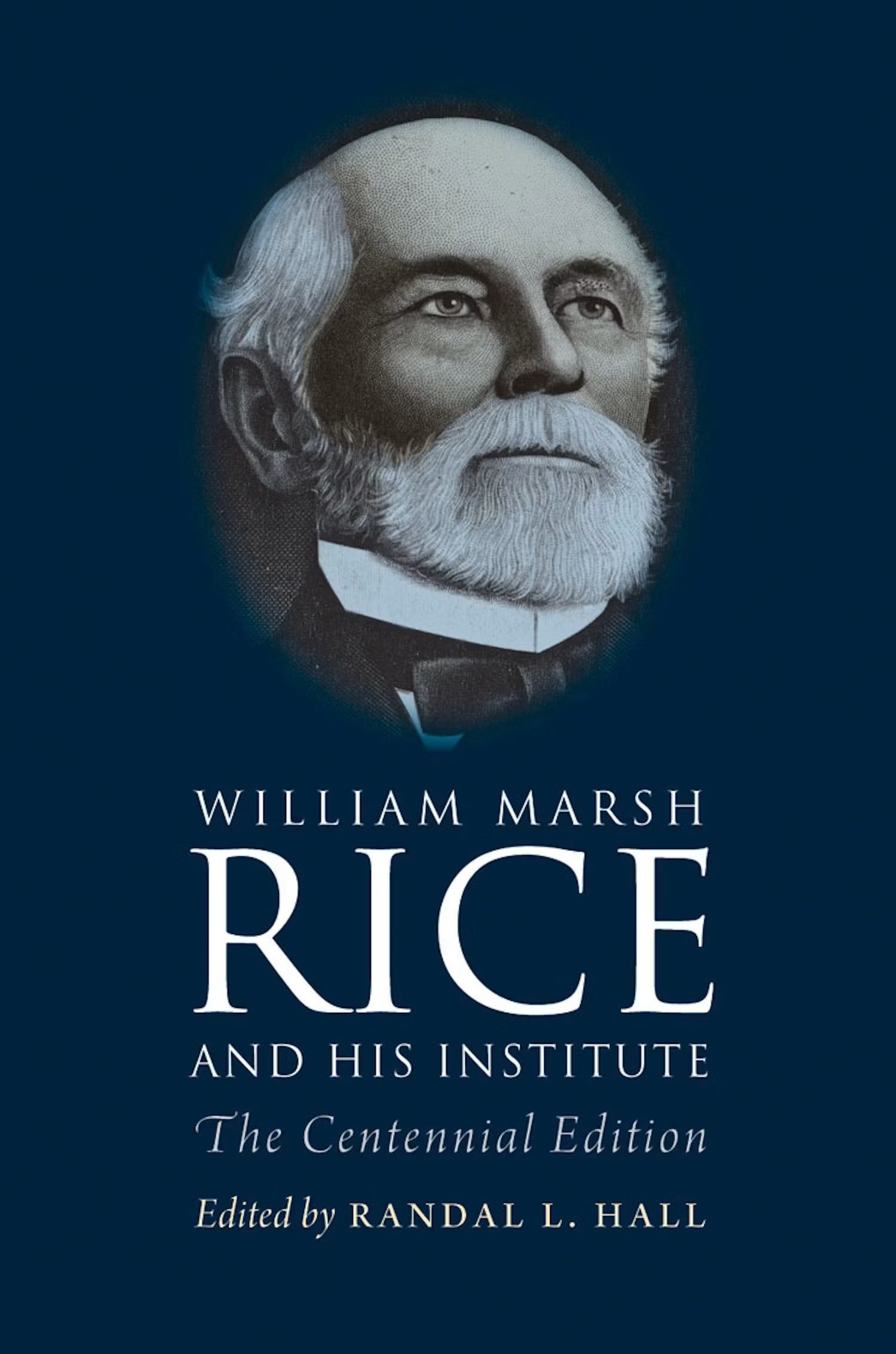
Rice, whose name is memorialized in Houston’s Rice University, had two wives die before he himself was murdered at age 84 in New York City in an apparent plot to alter the old man’s will.4
Captain Baker – along with two other men – had supposedly been named executor of both wills. Wikipedia credits him with “…help[ing] New York authorities unravel the murder conspiracy…”.5
The mastermind was alleged to have been rival attorney Albert T. Patrick, who was convicted and sentenced to death on what would later be called questionable evidence. Ultimately, Patrick – whose sentence was commuted to life imprisonment – was pardoned and released in 1913 by Democratic Governor (and lumber and paper magnate) John Alden Dix.
Captain Baker’s son is – confusingly – known as James Addison Baker, Jr. (even though he was the third in descent). And his son, James Addison Baker III was, for decades, a major Republican power player. Baker III was a Department of Commerce undersecretary for President Ford, treasury secretary under Ronald Reagan, and, in the administration of George H. W. Bush, first secretary of state and then White House chief of staff.
Ex-Baker Botts lawyers include numerous politicos, including Dillon Anderson; George W. Bush’s treasury undersecretary for financial terrorism, Stuart A. Levey; Bill Clinton’s deputy attorney general, Jamie Shona Gorelick; and current SCOTUS associate justice Amy Coney Barrett, whose work goes all the way back to the infamous Bush v. Gore case following the highly questionable 2000 U.S. presidential contest. See, again, “10 Milestones in Election Fraud.”
In 2001, Baker & Botts merged with Miller, Cassidy, Larroca & Lewin, which was co-founded by Herbert John “Jack” Miller. Miller doggedly pursued Teamster boss James Riddle “Jimmy” Hoffa and also went after Lyndon Johnson’s shady henchman and secretary, Robert Gene “Bobby” Baker, for influence peddling and sexual bribery. Miller had also been retained by “Tricky Dick” Nixon, following the Watergate disclosures and the latter’s resignation in 1974, as well as by long-time Democratic Massachusetts Senator Edward Moore “Ted” Kennedy, after the Chappaquiddick incident in 1969. That event – ostensibly an accident — claimed the life of the comely, 20-something campaign worker Mary Jo Kopechne — under mysterious circumstances that continue to provoke speculation.6
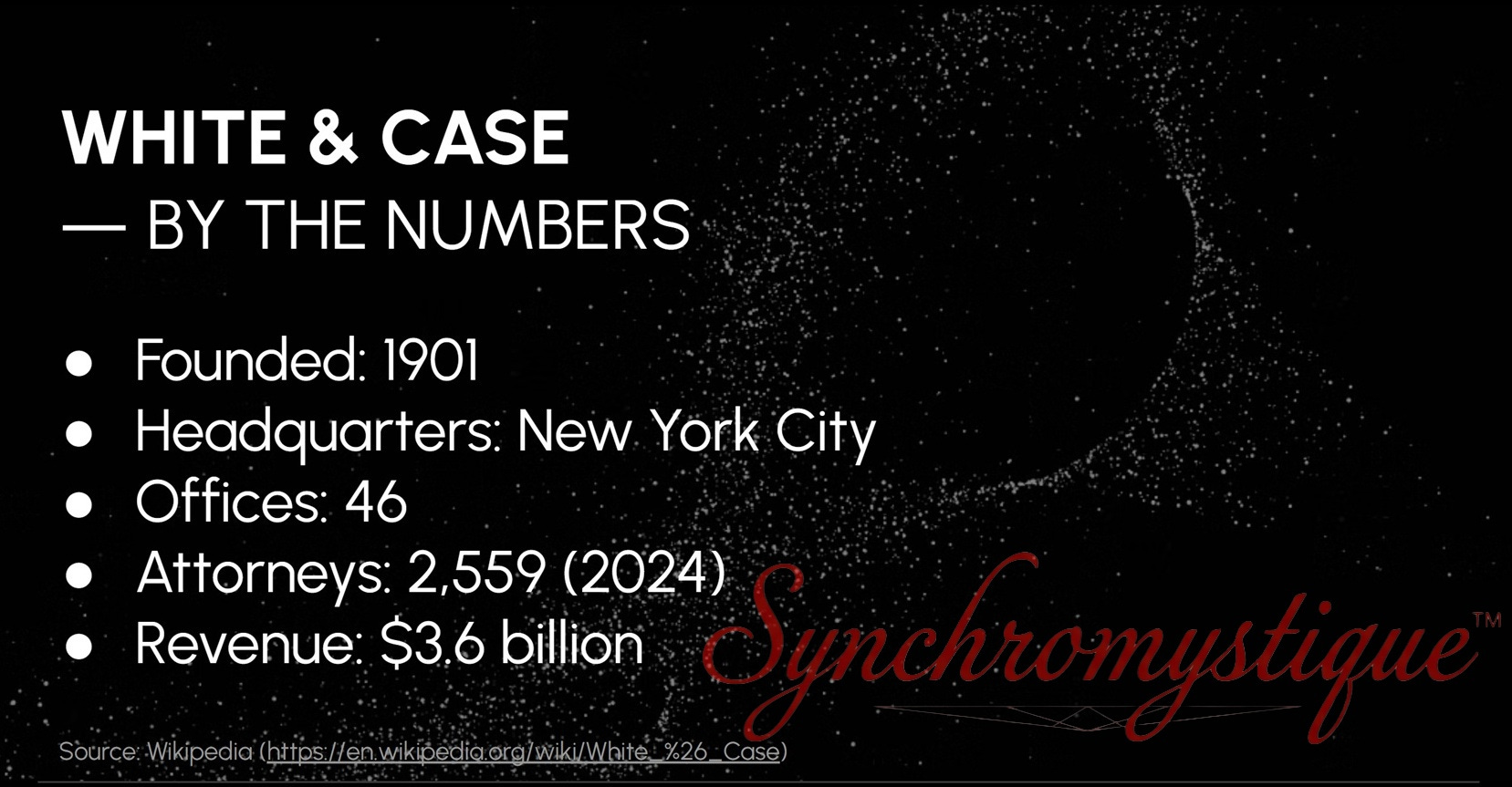
Founders George Bowen Case7 (Skull and Bones, class of 1894) and Justin DuPratt White specialized in clients such as the highly suspicious Bankers Trust Co. and the Central Intelligence Agency-entangled Cornell University, DuPratt’s alma mater.
The pair’s association with the former operation was evidently brokered by Bankers Trust co-founder Henry Pomeroy Davison, Sr.8 Davison was an agent of John Jacob Astor IV and, at least following Astor’s untimely demise on the Titanic, J. P. Morgan.9 Davison also has the dubious distinction that he was one of the architects of what, in 1913, emerged as the Federal Reserve system.
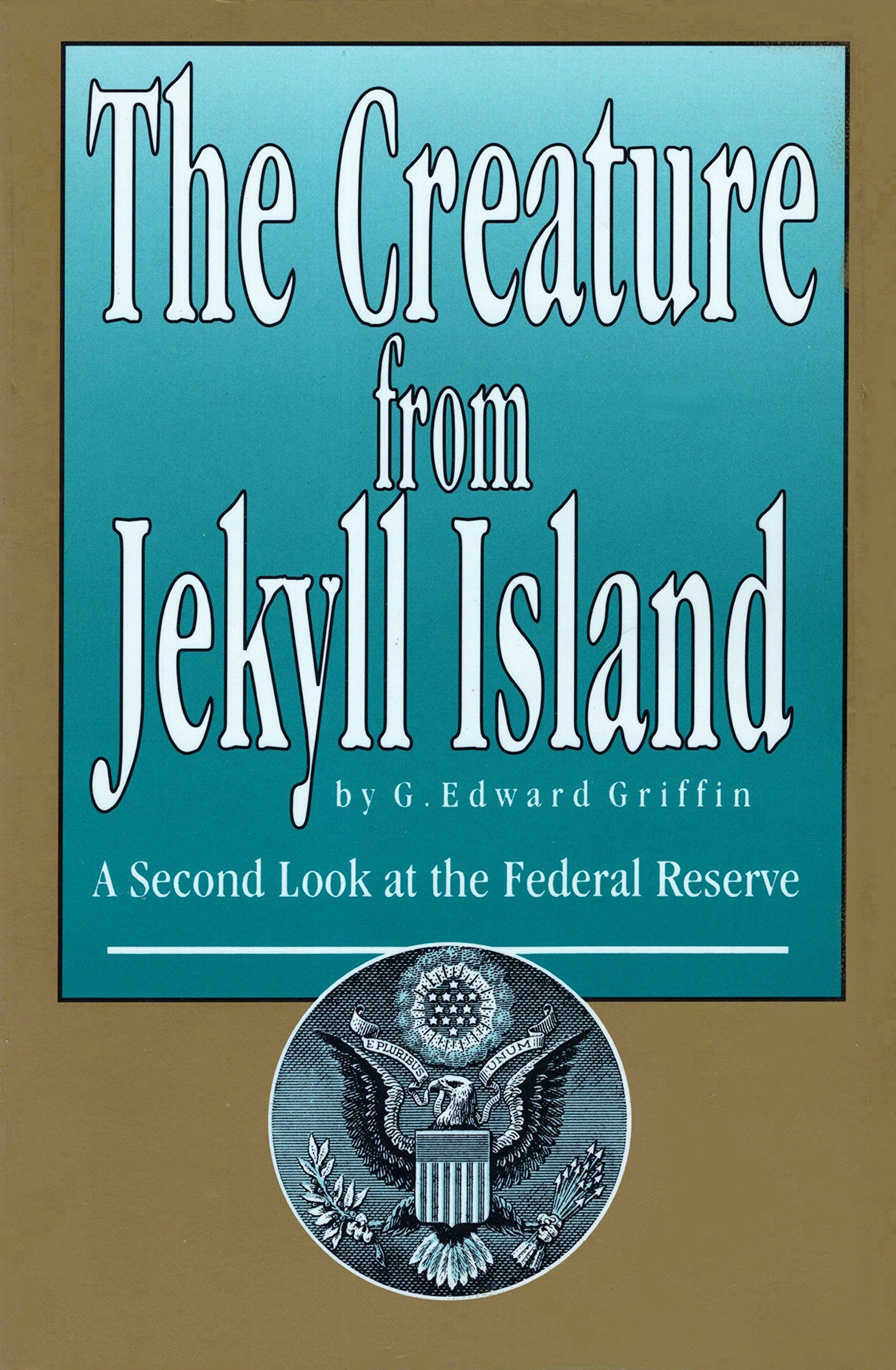
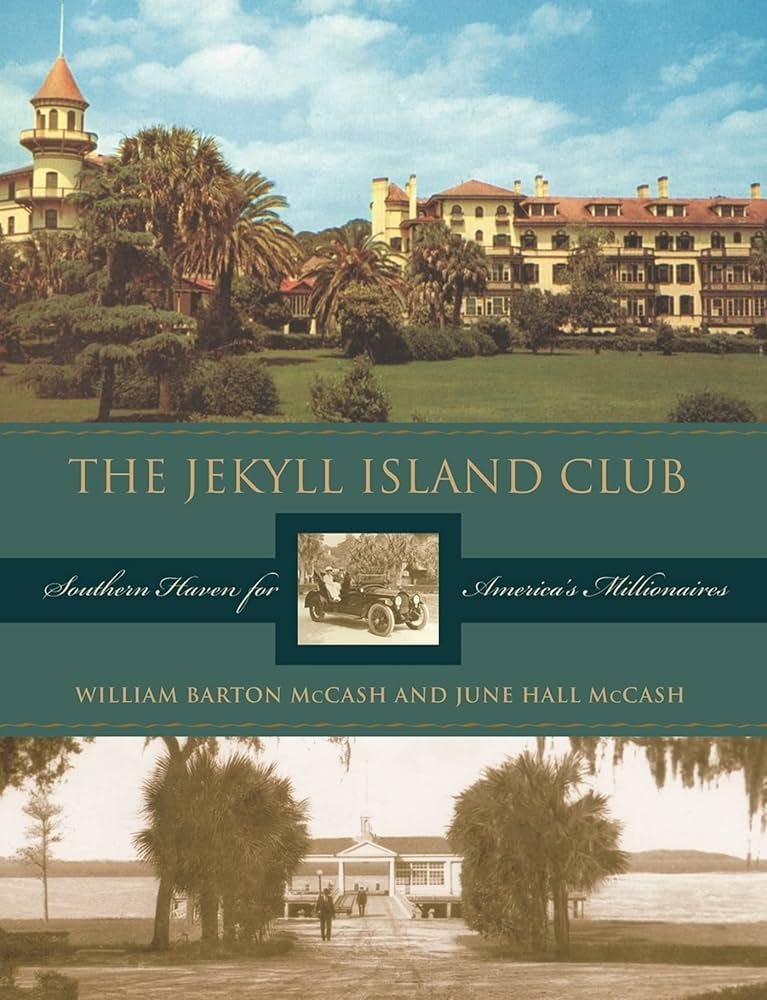
This he did by participating in the infamous secret meeting that took place in 1910 on J. P. Morgan’s Jekyll Island retreat, a barrier island off the coast of Georgia.10
Throughout the 1910s, as banks were compelled – by hook or by crook – to join the Fed’s new cartel (our characterization, not Davison’s), Bankers Trust Company absorbed, or was otherwise combined with, other money trusts such as those under Astor’s umbrella or within the so-called “House of Morgan.” Don’t forget to check out our Bankers Trust deep dive.
White & Case were also involved with negotiating the settlement involving infamous “Salad Oil Scandal” masterminded by commodities scammer Anthony “Tino” De Angelis.11
More recently, White & Case has retained the consulting firm McKinsey & Company — the folks who helped give us the Universal Product Code (or “UPC”) “bar code” — on whose advice, one presumes they’ve been able to hit $3.6 billion in annual revenues.
Among White & Case’s lawyers: Steven Lynn “Steve” Beshear and Andrew Graham “Andy” Beshear, a father-son duo who’ve both been governors of Kentucky; Rudolph William Louis “Rudy” Giuliani, former New York mayor during the attacks of September 11, 2001, who helped Trump challenge the official results of the 2020 election;12 Irving Sands Olds, one-time law clerk for the influential SCOTUS Justice Oliver Wendell Holmes Jr. and a long-time U.S. Steel CEO;13 and Stephen Myron Schwebel, connected with the globally important World Bank apparatus.
As of 2022, “…White & Case [had] joined many firms in riding …[the latest] M&A wave…” – that is, brokering “mergers and acquisitions,” often in an attempt to boost corporate stock prices.14
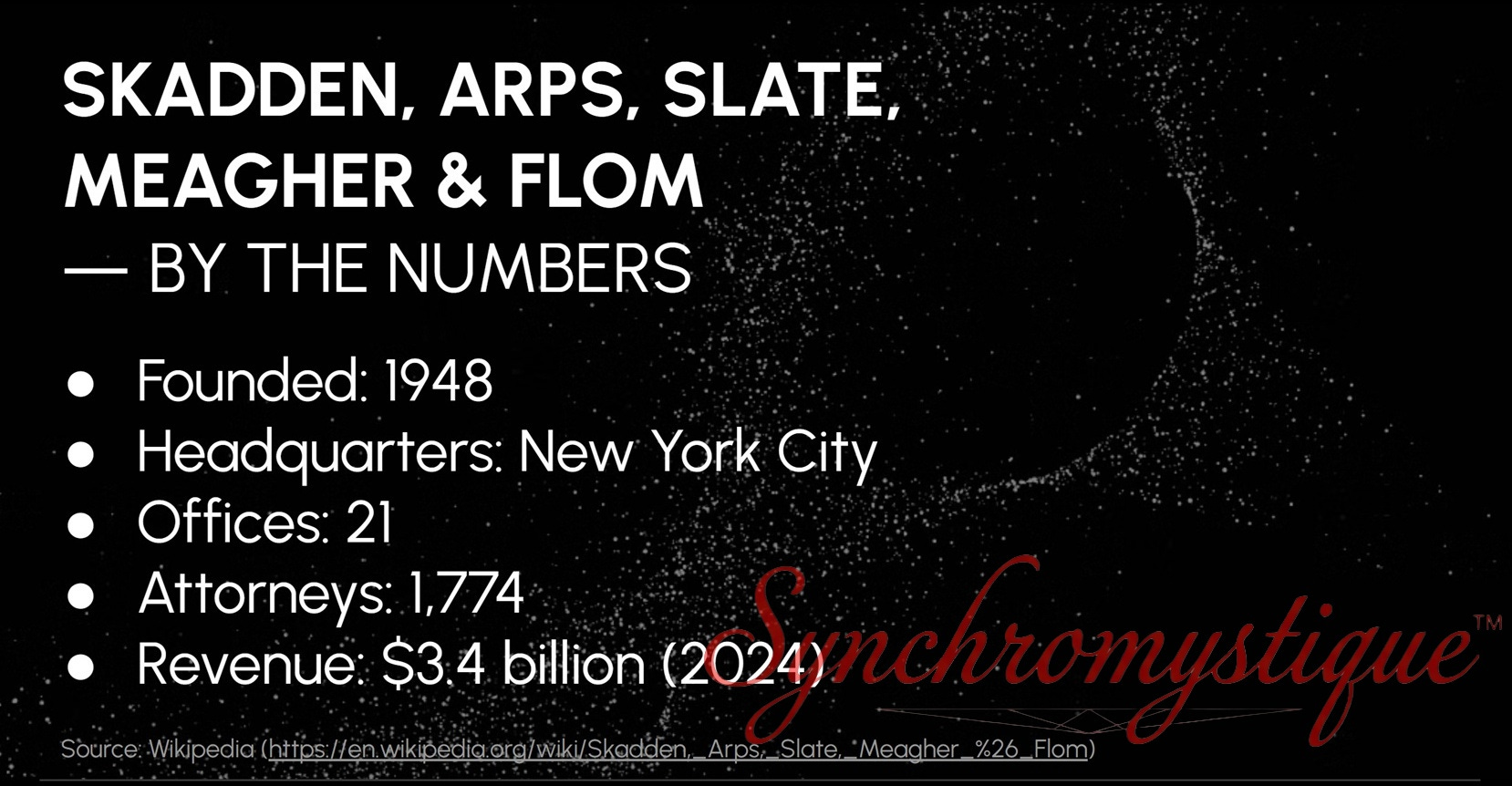
Skadden Arps was founded in 1948 by Marshall Skadden, Les Arps, and John Hampton Slate. Incidentally, co-founder Slate had associations with the curious, 20th-century “Trappist” monk Thomas Merton, and the “abstract” artist Adolph Friedrich “Ad” Reinhardt.
For more on these angles, look for an “Extra” section, as a follow-up post— containing some of the digressions that we decided to remove from the present article.15

One of “Skadden’s” (as the firm is widely known) early principal clients was Pan American World Airways. For decades, “Pan Am” enjoyed “blue-chip” status as a major, even premier, company. It offered worldwide, international flights; its double-decker Boeing 747s gave it a luxury feel.
Pan Am received significant funding from the U.S. government from its inception in 1927, when it was the recipient of lucrative foreign-airmail contracts, until well into the 1950s. Afterwards, when Skadden likely got involved, through the 1970s, Pan Am — likely courtesy of its crack legal team — got federal support apart from subsidies. Regulations heavily favored (and protected) it against competition on international routes. So much for the fabled “free market.”
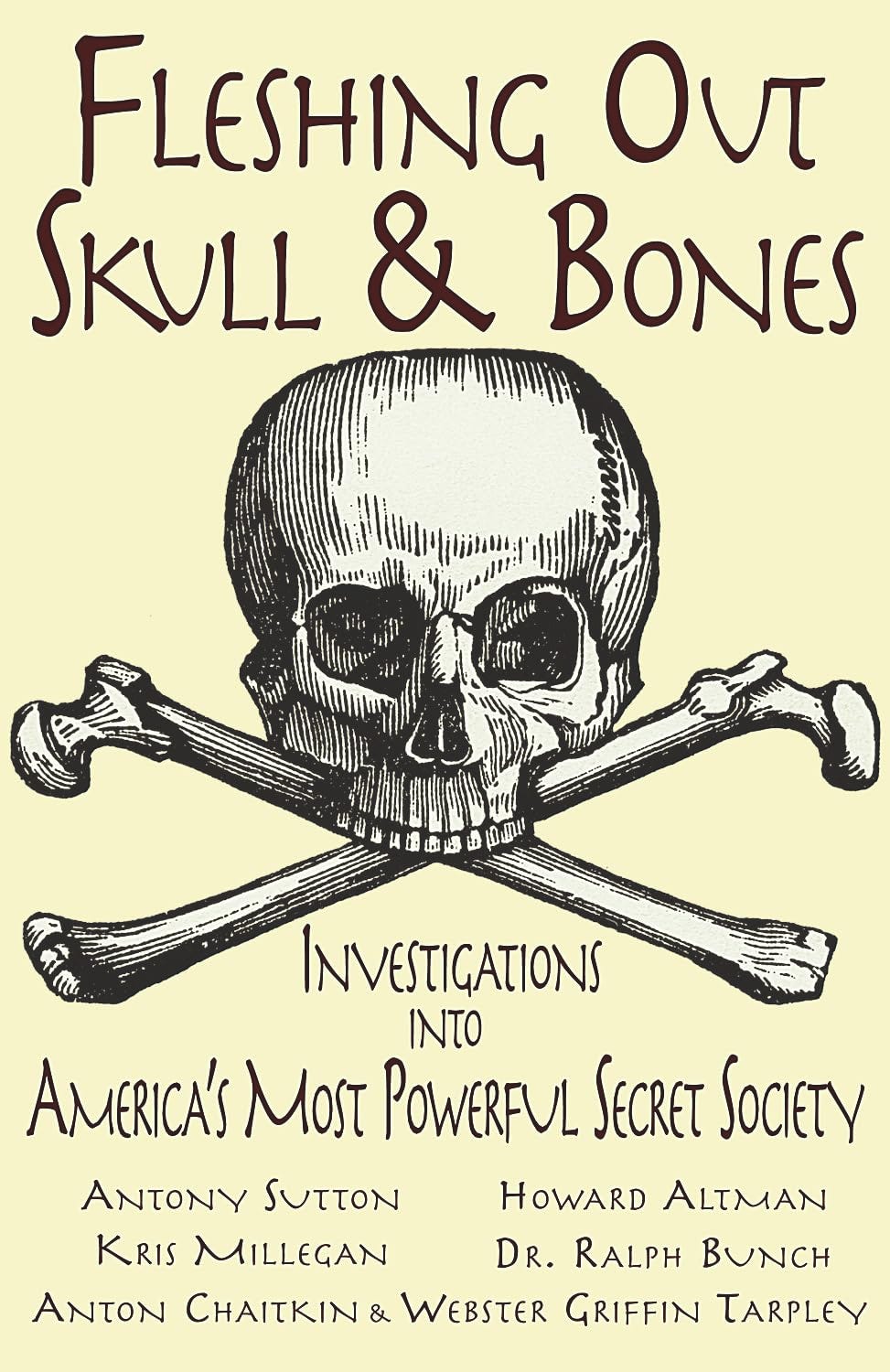
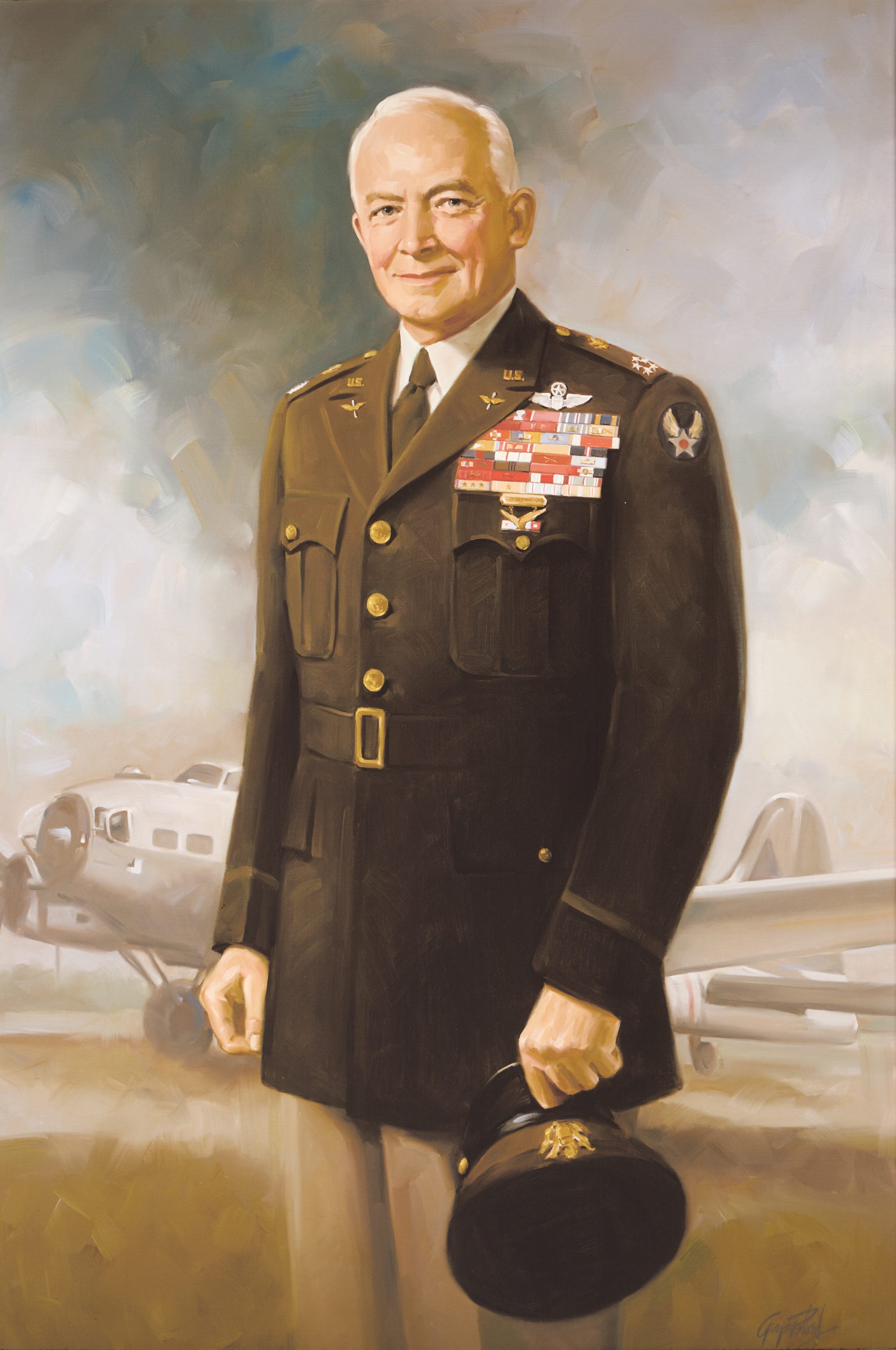
Pan Am had its own curious list of founders, among them Skull-and-Bones-Yalie Juan Terry Trippe (later CEO) and Henry Harley “Hap” Arnold (reportedly the only person to have been a five-star commander in two different branches of the U.S. military).16 Besides Pan Am, Arnold was also a prime mover behind the RAND Corporation, which — as we have sketched in other places — has long enjoyed primo-“Insider” status as a so-called “think tank.” The money behind the Pan-Am is said to have come from W. Averell Harriman and Cornelius Vanderbilt Whitney.17
Skadden resurfaced in the headlines for its rôle in the coordinated-pressure campaign against universities during the Gaza‑war protest wave. Skadden was one of roughly two dozen Wall Street firms that signed a stern letter warning top law schools that tolerating pro‑Palestinian demonstrations (framed in the letter as “antisemitism”) would carry “corporate consequences.” Firms weaponized their hiring powers to restrict campus speech, reminding deans that students must be “prepared” for workplaces with “zero‑tolerance” policies. The message was clear to us: Big Law seems poised to police political expression, and universities are expected to fall in line. As we read it, this is a classic example of the velvet glove concealing an iron fist.18
There’s also Irving Saul Shapiro, a former CEO of DuPont who also had ties to the Howard Hughes Medical Institute. These lucrative dealings helped Skadden become the first law firm to surpass $1B in annual revenue in the year 2000. And it currently brings in an estimated $3.4B.
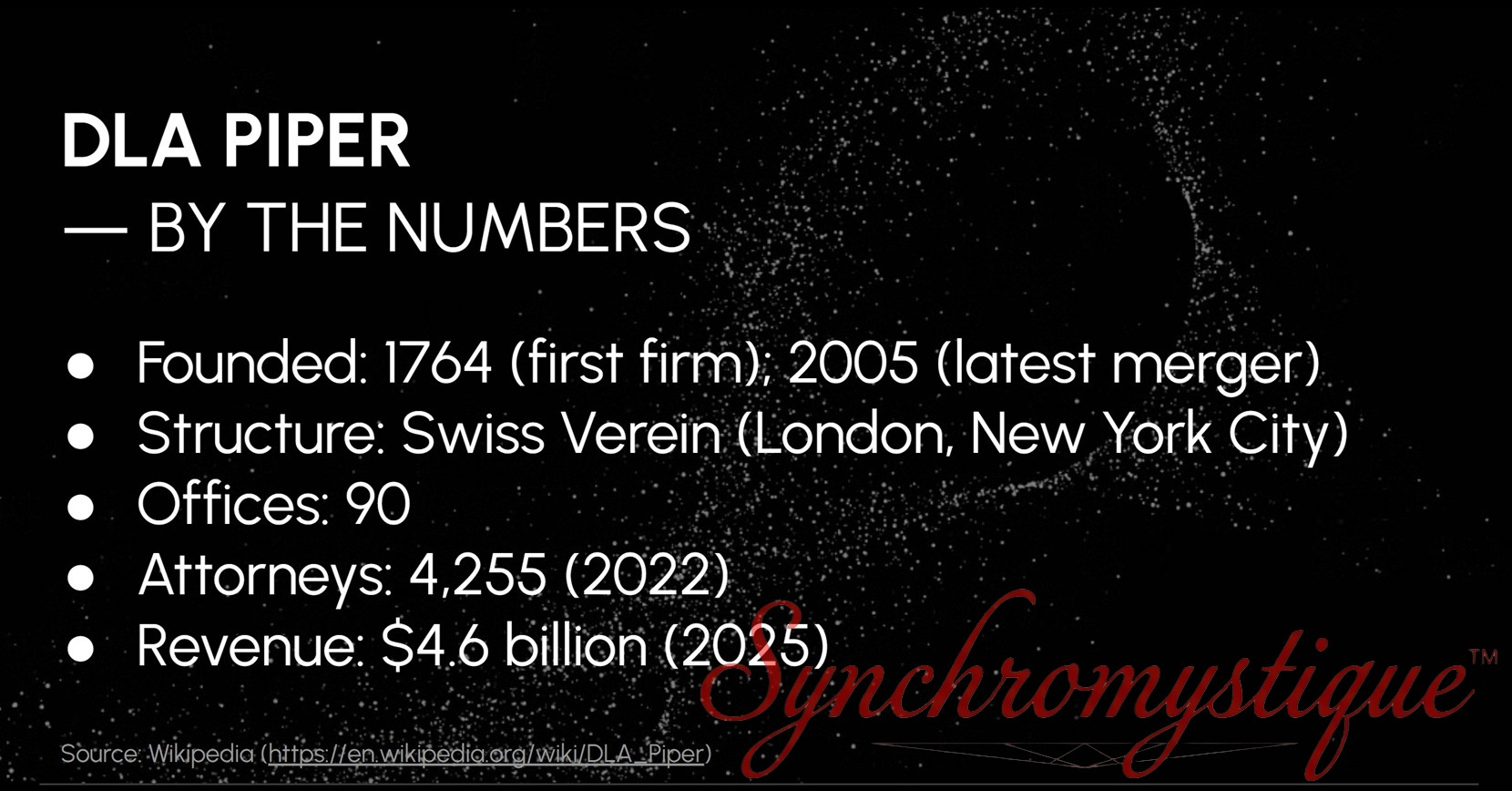
Some firms attract bankers, others bureaucrats; DLA Piper seems to draw a very particular constellation of intelligence-connected figures, especially from the post‑9/11 security apparatus, and the stranger corners of American political history. But… we’ll get around to that.
Our first alumnus from this firm — which brings in a whopping $4.6 billion a year — is Dick Armey, longtime Congressman from Texas, and one of the principals in Newt Gingrich’s 1994 “Republican Revolution.”
In 2002, “Just before President [George W.] Bush signed the homeland security bill into law an unknown member of Congress inserted a provision into the legislation that blocks lawsuits against the maker of a controversial vaccine preservative called ‘thimerosal,’ used in vaccines that are given to children. Drug giant Eli Lilly and Company makes thimerosal. …But nobody in Congress would admit to adding the provision, reports CBS News Correspondent Jim Acosta – until now. House Majority Leader Dick Armey tells CBS News he did it to keep vaccine-makers from going out of business under the weight of mounting lawsuits. ‘I did it and I’m proud of it,’ says Armey, R-Texas. ‘It’s a matter of national security[.] … ‘We need their vaccines if the country is attacked with germ weapons.’”19
Two years into William Jefferson Blythe III’s first term (that’s “Bill Clinton” to most folks), Republicans gained 54 House seats and eight in the Senate. After retiring from government, Armey took over the top spot at the Koch brothers’ Citizens for a Sound Economy, a right-leaning operation previously chaired by Ron Paul.
Another notable was Thomas Andrew “Tom” Daschle, erstwhile Democratic Senator from South Dakota.20 Apropos of nothing, Daschle’s office was exposed to anthrax-contaminated mail in October 2001.21 Daschle has been criticized for working with the Bush administration to narrow the scope of the post-9/11 congressional inquiry.22
For more on that date’s SynchroMystical entanglements, see our dedicated YouTube video.
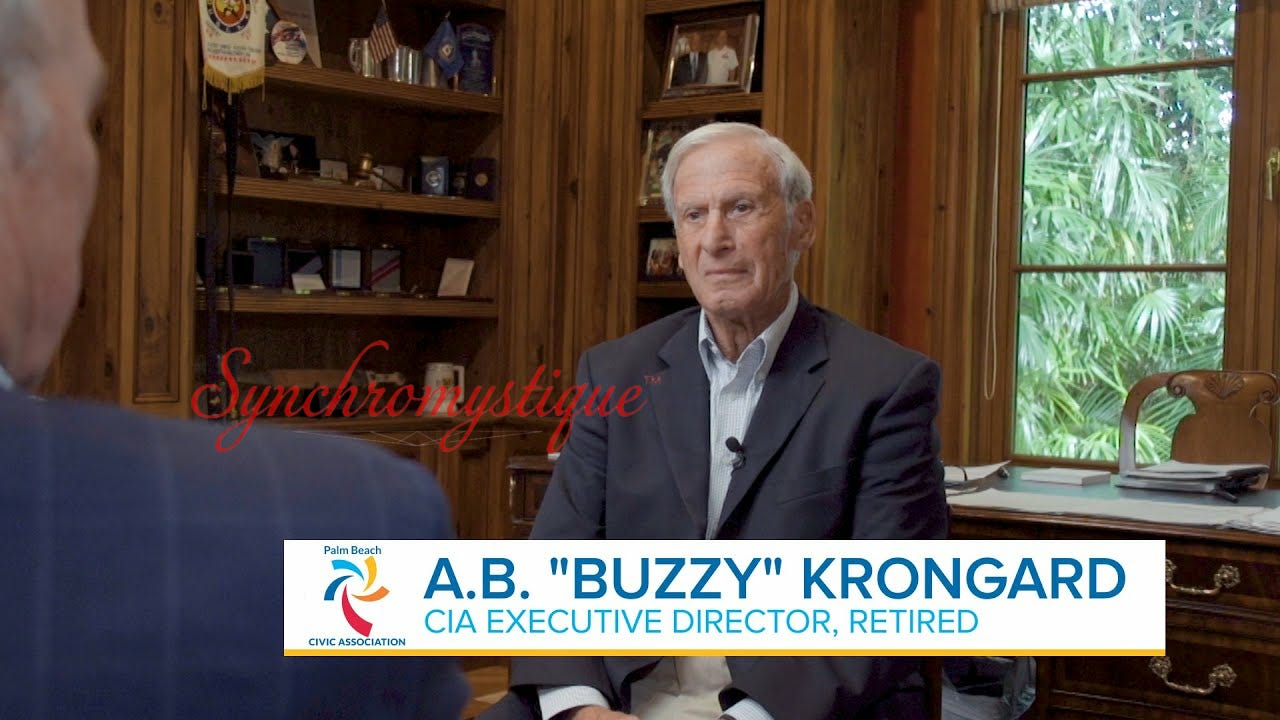
And that brings us to Alvin Bernard A. B. “Buzzy” Krongard, who served as Executive Director of the CIA — that’s its number-three position — from 2001 to 2004 and was previously chairman and CEO of the investment bank Alex. Brown & Sons. His brother, Howard “Cookie” Krongard, was Inspector General of the State Department under George W. Bush, a tenure not without its own controversies — including allegations that he had blocked investigations into Blackwater USA, the private security contractor with deep ties to the Iraq War. Buzzy Krongard himself later joined Blackwater’s advisory board, a connexion he initially failed to disclose.
Buzzy’s résumé intersects with one of the strangest financial riddles in modern history: the unclaimed airline put‑option profits traced to his old firm in the days surrounding that fateful September 11th. Our investigation opened onto a labyrinth of Morgan‑era banking dynasties, pyramidal architecture, and a Russian mystic hauling a “sacred stone” across Central Asia — all of it somehow dovetailing with Krongard in uncanny ways. See our Bankers Trust deep dive.
Suffice it to say: when a Krongard shows up in a story, the synchronicities tend to multiply. And DLA Piper is similarly magnetic: evidently a revolving door for the intelligence-adjacent set.
One more notable alumnus, perhaps of interest to the historically minded: Douglas Craig Emhoff, a former entertainment lawyer, worked at DLA Piper’s Los Angeles office before leaving to marry one Kamala Devi Harris, who would become the 49th Vice President of the United States under Joseph Robinette “Joe” Biden, Jr. Emhoff thus became the first Second Gentleman in American history — and the first Jewish spouse of a sitting president or vice president.
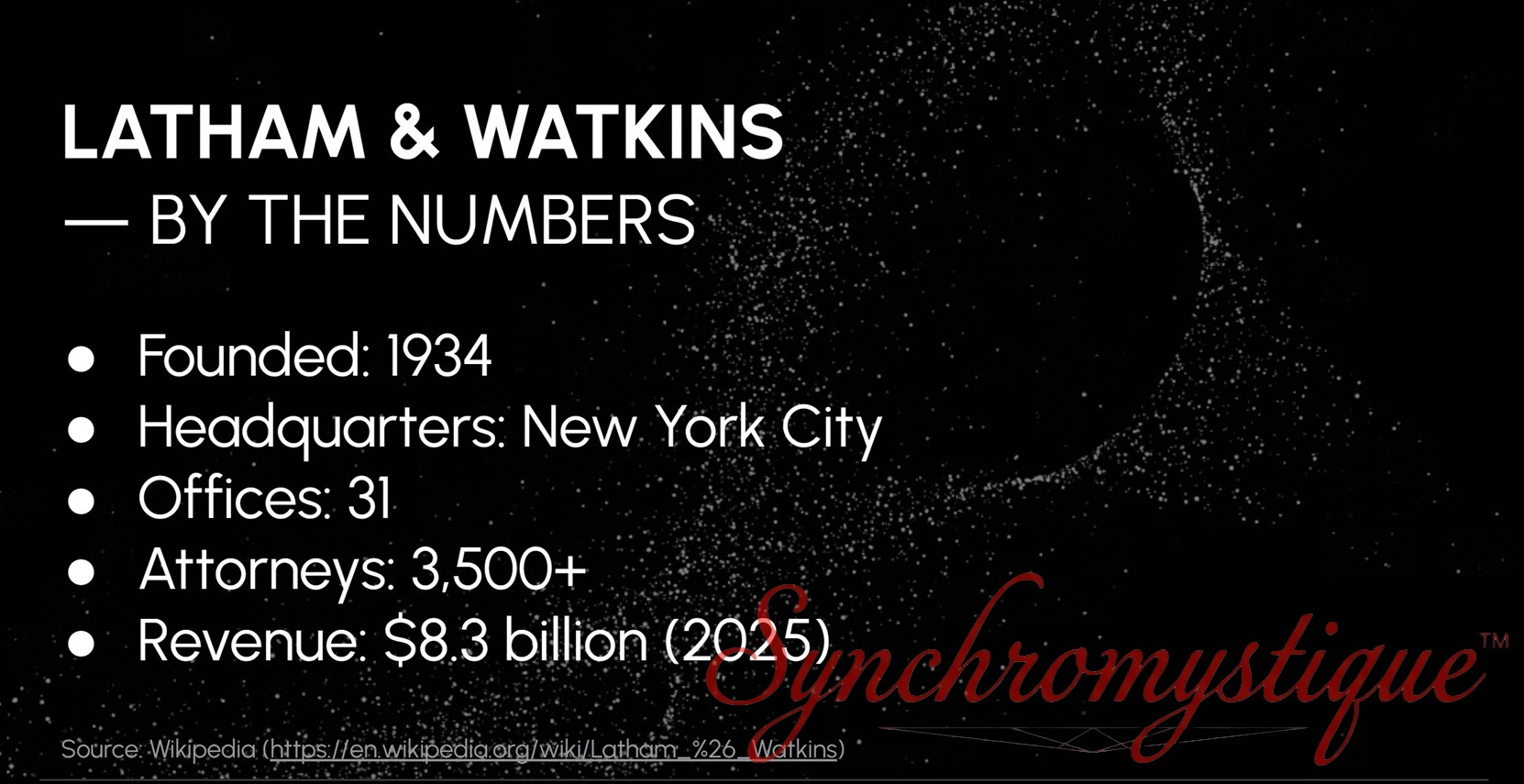
This now-über-profitable law firm — with a revenue stream in the vicinity of $8.3 billion, annually — was co-founded by Dana Latham, Internal Revenue Service commish under President Dwight David Eisenhower from 1958 to 1961. For a time, Latham was the home of later Homeland Security chief, Jewish-American lawyer, Michael Chertoff.
Here’s an interesting anecdote: When Hearst Magazine’s Popular Mechanics (PM) undertook an attack on skeptics of the “official story” of 9/11, it did so partially with the help of a then-young “senior researcher” named Benjamin Chertoff.
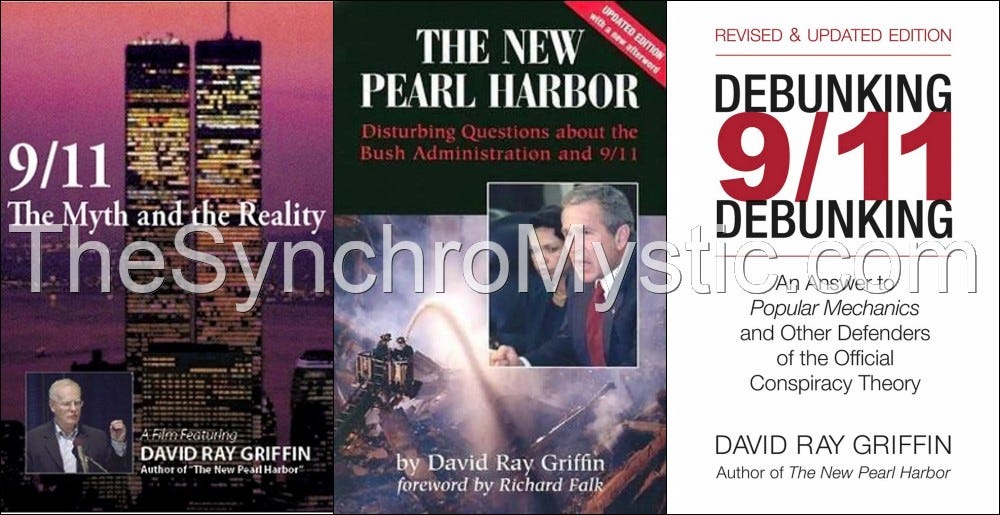
One Christopher Bollyn reported that... that Benjamin Chertoff “is a cousin of the …head of Homeland Security, Michael Chertoff.”23 Although Bollyn is a writer whose work we don’t necessarily otherwise endorse, he was taken seriously by David Ray Griffin.
According to “Bollyn…, this familial relationship seemed to be something that neither Benjamin Chertoff nor PM wanted to advertise. When young Chertoff was asked by Bollyn if he was related to Michael Chertoff, he replied, ‘I don’t know,’ then said that all further questions should be put to PM’s publicist. Bollyn then called Benjamin Chertoff’s mother. When asked whether her son was related to the new secretary of Homeland Security, she reportedly replied: ‘Yes, of course, he is a cousin.’”24
For his part, Benjamin Chertoff protested this notion, counter-asserting: “No one in my family has ever met anyone related to Michael Chertoff” — which, even if true, seems to us a tad beside the point at issue.25 The Chertoffs — and their Establishment network — are now taking the position that it’s possible the two are “distantly related,” but they don’t talk to one another.26
After leaving government, Michael Chertoff only burrowed deeper into the post‑9/11 security architecture. He co-founded the Chertoff Group, a private, homeland‑security consultancy whose clientele spans biometric‑ID firms, counterterrorism contractors, and the ever‑expanding surveillance‑industrial complex. In other words, Chertoff didn’t merely help design the security state — he privatized his expertise and sold it back to the very system he helped create.
It’s worth recalling that Latham’s entrée into Washington power‑circles came earlier, in 1978, when former Housing and Urban Development (“HUD”) Secretary Carla Anderson Hills joined the firm as a named partner and helped establish its D.C. presence. Hills — whose résumé spans the Ford and Bush administrations, and whose husband chaired the SEC — effectively stitched Latham into the Beltway’s regulatory nervous system. Her presence forms a quiet bridge between Latham and Munger, Tolles & Olson, revealing how the same family appears at the fulcrum of elite law, federal oversight, and multinational trade policy. In the SynchroMystic sense, Hills is a “nodal figure,” a person whose career traces the hidden circuitry connecting America’s legal, financial, and political superstructure.
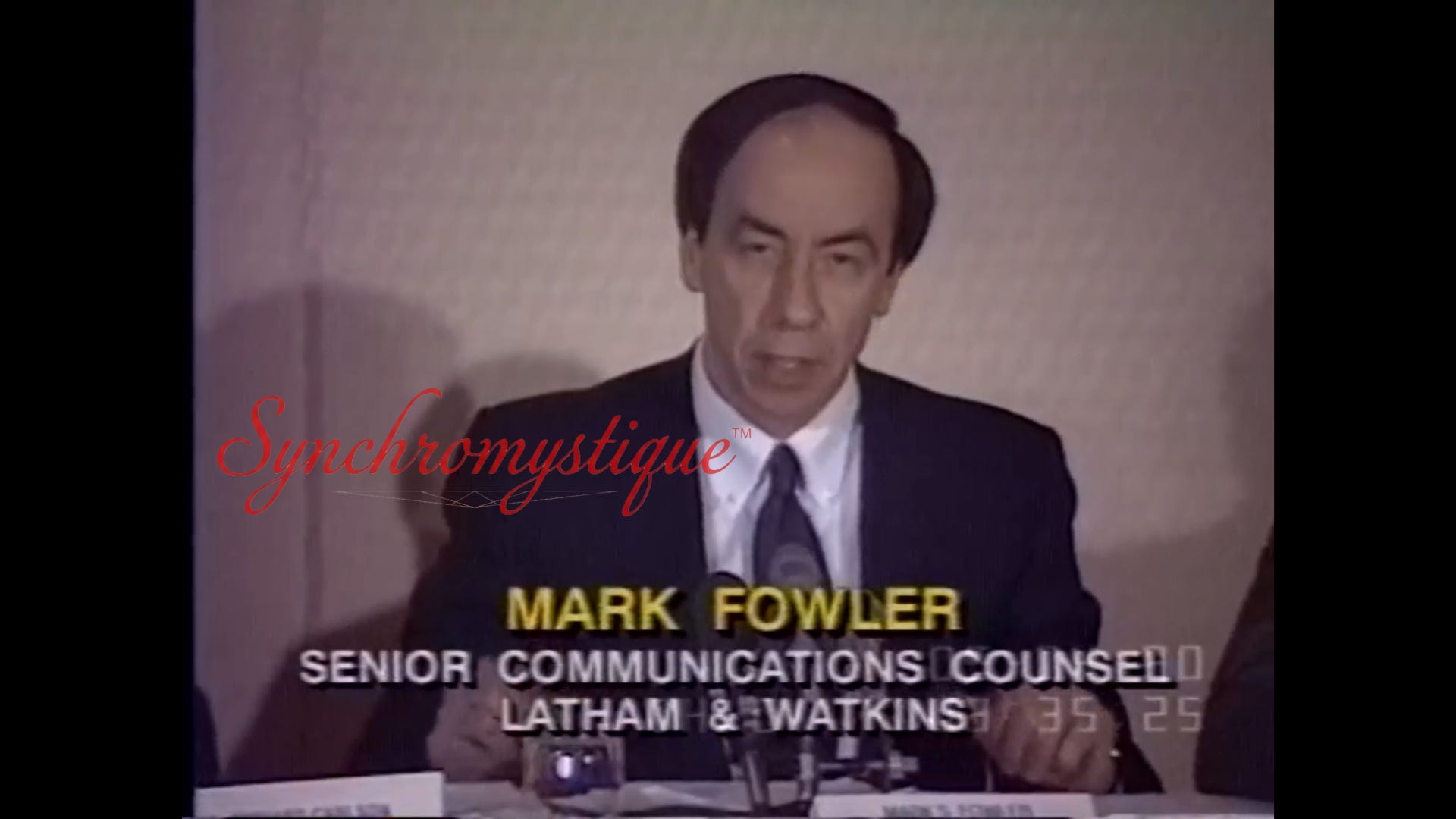
Then there’s Latham’s “communication’s counsel,” Mark S. Fowler who, at one time, was 40th President Ronald Wilson Reagan’s Federal Communication Commission (FCC) chairman. More than anyone, it was Fowler who secured the repeal of the “Fairness Doctrine” in news broadcasting, which had been in place since 1949 under the administration of Harry S. Truman. According to the Fairness Doctrine, broadcasters were required to present, in a balanced and fair manner, controversial issues that had importance for public policy. This usually necessitated that news stations devote airtime to contrasting or dissenting viewpoints, in order to promote informed public discourse.
This was repealed in 1987, under Fowler’s watch and with the Neoliberal aim of letting “market forces” dictate content. The initiative, like much else championed by Reaganites, aligned (no doubt coincidentally) with the interests of money moguls. For example, it was particularly lucrative for broadcast titans like Australian-American Keith “Rupert” Murdoch and American Robert Edward “Ted” Turner III Turner, who relished the idea of having fewer restrictions on their (aptly named) television programming.
The repeal’s key ramifications included the virtually unchecked rise of partisan newscasting, which arguably fueled media polarization by allowing outlets to prioritize ideological agendas over neutrality. It was this permissive environment that gave rise, in 1996, to Murdoch’s Fox News — much favored by self-styled “conservatives” (in that word’s Americanized sense).
It further prompted long-standing competitors, such as Turner’s Cable News Network (CNN) to likewise develop along a highly opinion-driven trajectory. The total effect, minimally, was to exacerbate the creation of a proverbial “echo-chamber,” where dedicated viewers of a single channel or news show may seldom have any exposure to contrary points of view. Maximally, observers worry about the dominance of so-called “disinformation” and “mis-information” (or, in Donald Trump’s oft-used phraseology, of “fake news”) or, in any event, how one-sided-news commentary and reportage has resulted in the sharp division of American public opinion.
(It’s worth noting that, when Ted Turner first started CNN as a cable network in 1980, ostensibly in order to deliver news twenty four hours a day, around the clock, it was also partially because he hoped to avoid having to conform to the FCC’s Fairness Doctrine. Turner’s position was that regulation only applied only to over-the-air broadcast television and radio stations because his own cable-TV shows didn’t consume public resources.
As for Fowler, he also spearheaded the deregulation of children’s television. This led to the diminishment and removal of educational-program requirements in the early 1980s, and paved the way for toy companies (like American Greetings, Hasbro, and Mattel) to market directly to kids, with twenty-three-minute-long (on average) advertisements disguised as cartoon “entertainment” shows as Care Bears, G.I. Joe, Jem and the Holograms, My Little Pony, Rainbow Brite, Strawberry Shortcake, and Transformers, among others. The Matchbox toy-car company even got in on the action, latching onto the Japanese-inspired super-robot Voltron.
Even more revealing of Latham’s place in the modern power‑structure was its extraordinary 2025 agreement with the Trump administration. Faced with the threat of punitive executive orders targeting firms deemed insufficiently cooperative, Latham capitulated and pledged $125 million in pro bono legal work for causes personally endorsed by the president. This was not philanthropy; it was a negotiated act of institutional self‑preservation — a white‑shoe firm bending under the weight of executive pressure. The fallout was immediate: major corporate clients, including Morgan Stanley (one of the shorted entities in the 9/11-related “put-option” débâcle) and Microsoft (whose short-lived promotional relationship with quasi-Satanic, Serbian performance artist Marina Abramović we noted in “Stanley Kubrick Was Right”), quietly moved their business to firms that had refused to sign similar deals.
In our SynchroMystic register, the episode reads like a rare moment when the velvet‑gloved world of élite legal practice briefly revealed the iron machinery beneath — a glimpse of how political power, corporate power, and legal power can fuse into a single coercive apparatus.
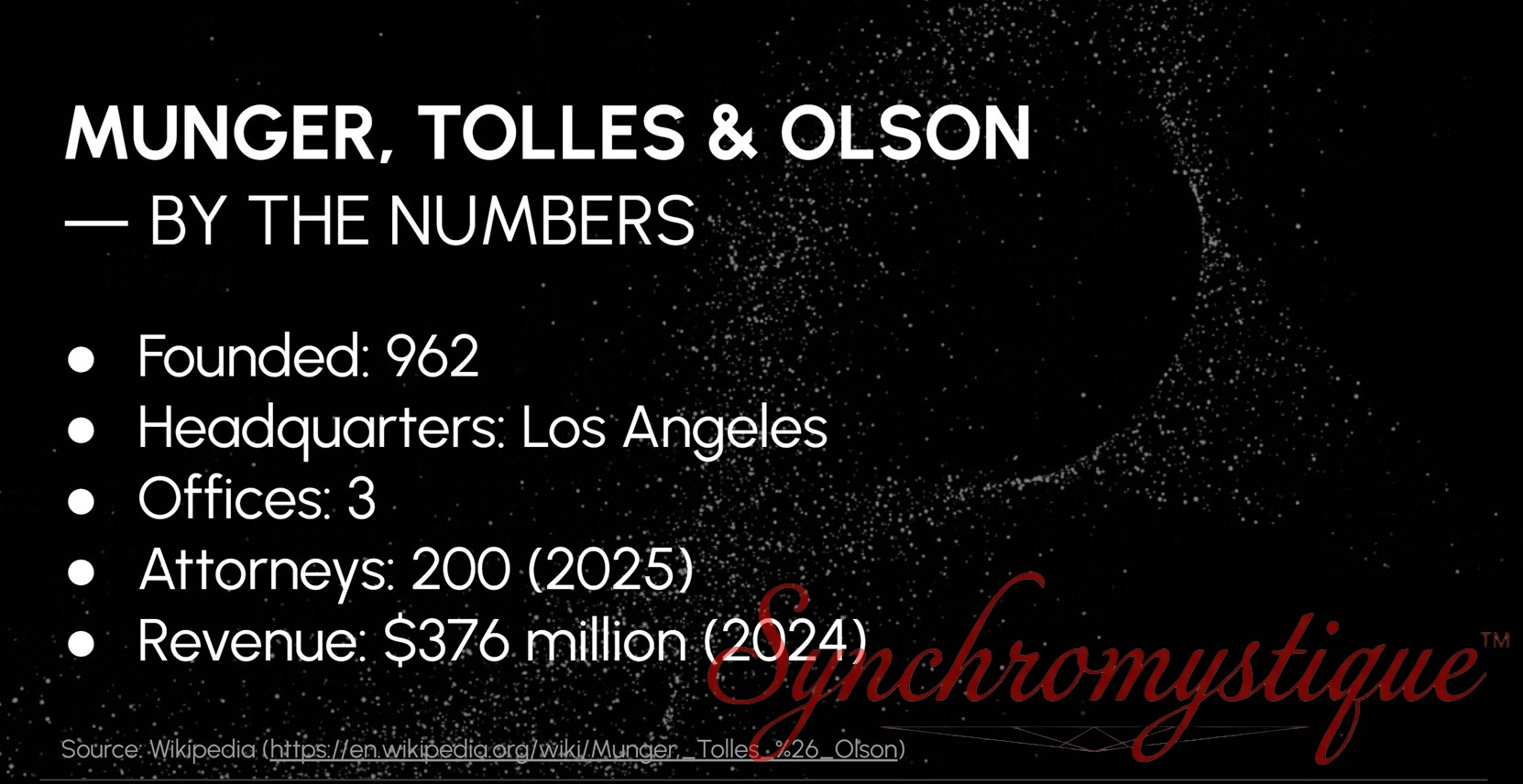
Contrasted with others on our list, this firm brings in a relatively small $376 million a year.
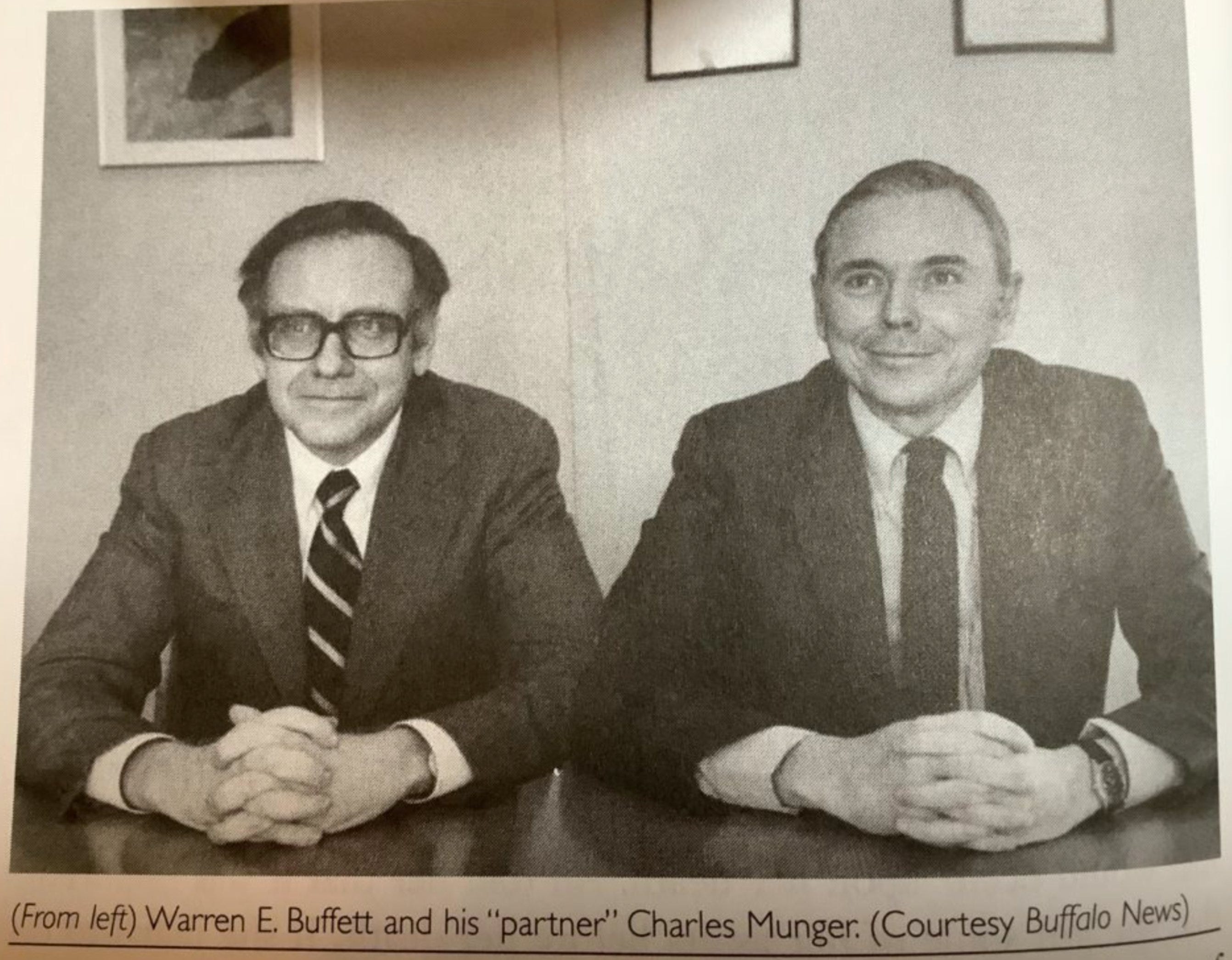
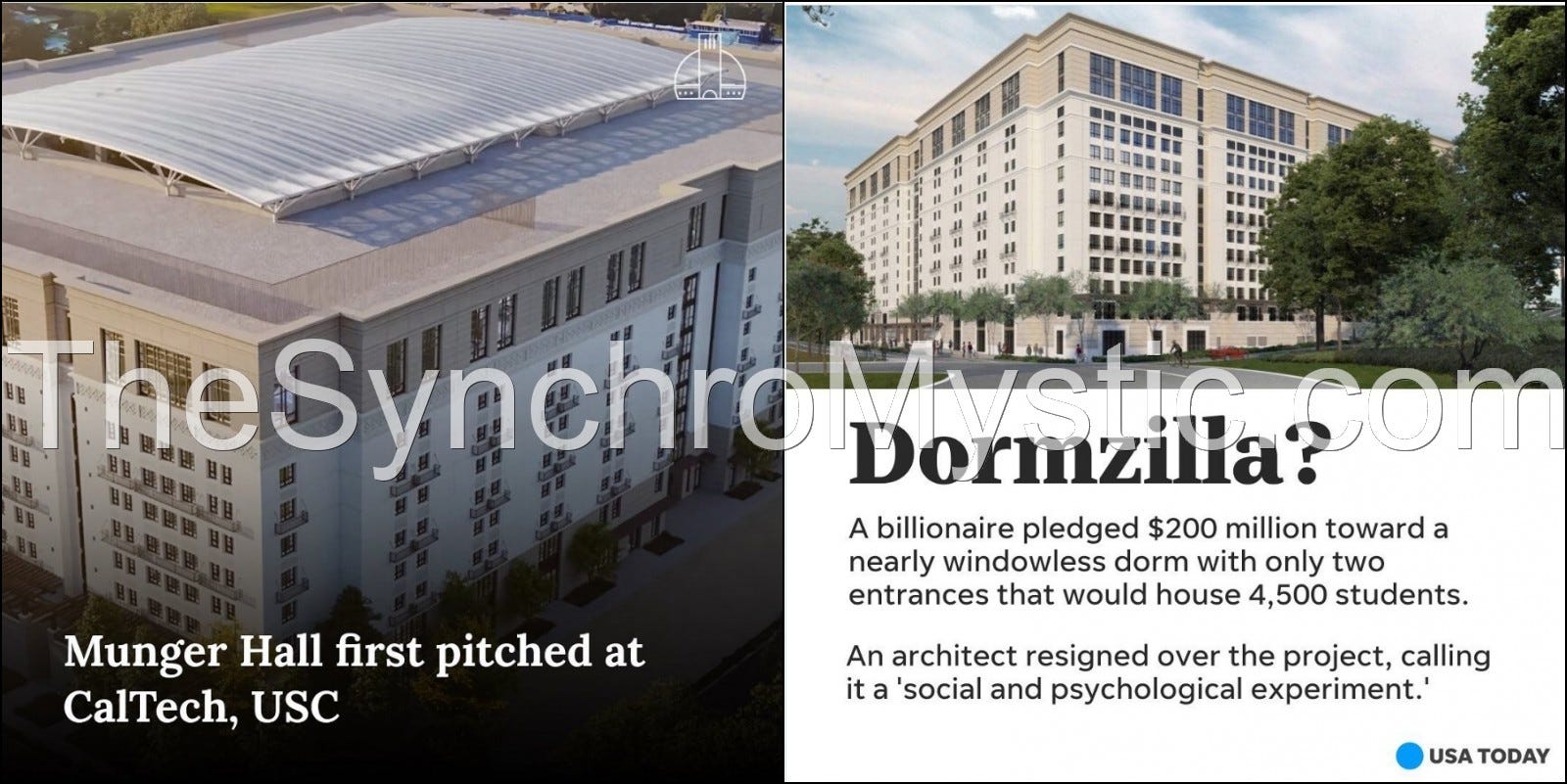
Our interest stems from the identity of one of its principal founders. Yes, “Oracle‑of‑Omaha” Warren Buffett’s righthand man, Charlie Munger, started off as an attorney. Munger came out of the firm of Wright & Garrett — later Musick, Peeler & Garrett — before co‑founding what became Munger, Tolles & Olson in 1962, a firm that would, in time, evolve into a kind of quiet legal nerve‑center for Berkshire Hathaway itself. He departed for full‑time investment management in 1965, eventually ascending to vice chairman of Berkshire Hathaway.
The final name partner, Ronald L. Olson, meanwhile, sat on the board of directors of Berkshire Hathaway from 1997 to 2025 — a tidy arrangement, with the guy simultaneously serving as a director of the eponymous firm’s own most celebrated client.
Co-founder Carla Anderson Hills, previously discussed in relation to Latham & Watkins, served as Secretary of Health, Education and Welfare under President Gerald Ford and as United States Trade Representative under President George H. W. Bush, whom — owing to his ties both to the Central Intelligence Agency on the one hand, and to Yale University’s Skull and Bones fraternity and California’s Bohemian Grover gathering, on the other, we discussed in “10 Occultist Spies.”
We mentioned Ford — so far the only U.S. president never elected to the office he occupied — in our brief video “Presidential Name Changes.” (He was born Leslie Lynch King, Jr.)
Hills’s husband and fellow co-founder, Roderick Hills, chaired the Securities and Exchange Commission, also under Ford.
Among the firm’s notable alumni are Brett Michael Kavanaugh — who clerked there while working toward his own eventual Supreme Court seat — and Usha Vance, wife of the 50th Vice President, James David “JD” Vance, another noteworthy “name changer,” by the way.
There’s also Ro Khanna, California Democratic member of the U.S. House of Representatives, who courageously teamed with Kentucky Republican Congressman Thomas Massie to insist on the release of the Epstein Files, a topic that we have covered more in-depth — and from our usual, SynchroMystical perspective — in the Substack article “Stanley Kubrick Was Right.”
Khanna’s rise in Silicon Valley politics was powered by strong backing from Big Tech, with major financial support from Google (especially Eric Schmidt), Facebook (Sheryl Sandberg), and Yahoo, as well as from venture capitalist Marc Andreessen. Tech money helped Khanna unseat incumbent Mike Honda and brand himself as the “innovation candidate.” As a result, Khanna entered Congress as one of the most explicitly tech-aligned lawmakers in modern U.S. politics.
Among its current and former client portfolio, Munger Tolles has represented technology giants Google and Intel, financial conglomerates Berkshire Hathaway and Bank of America, media titan Walt Disney Company, Pacific Gas & Electric (notorious for its starring role in the Erin Brockovich cancer-contamination scandal), and the BNSF Railway.
The firm has topped The American Lawyer’s prestige “A-List” — a ranking incorporating pro bono work, diversity metrics, and associate satisfaction alongside sheer revenue — eleven times since 2008, making it arguably the most celebrated mid-size firm in the country.
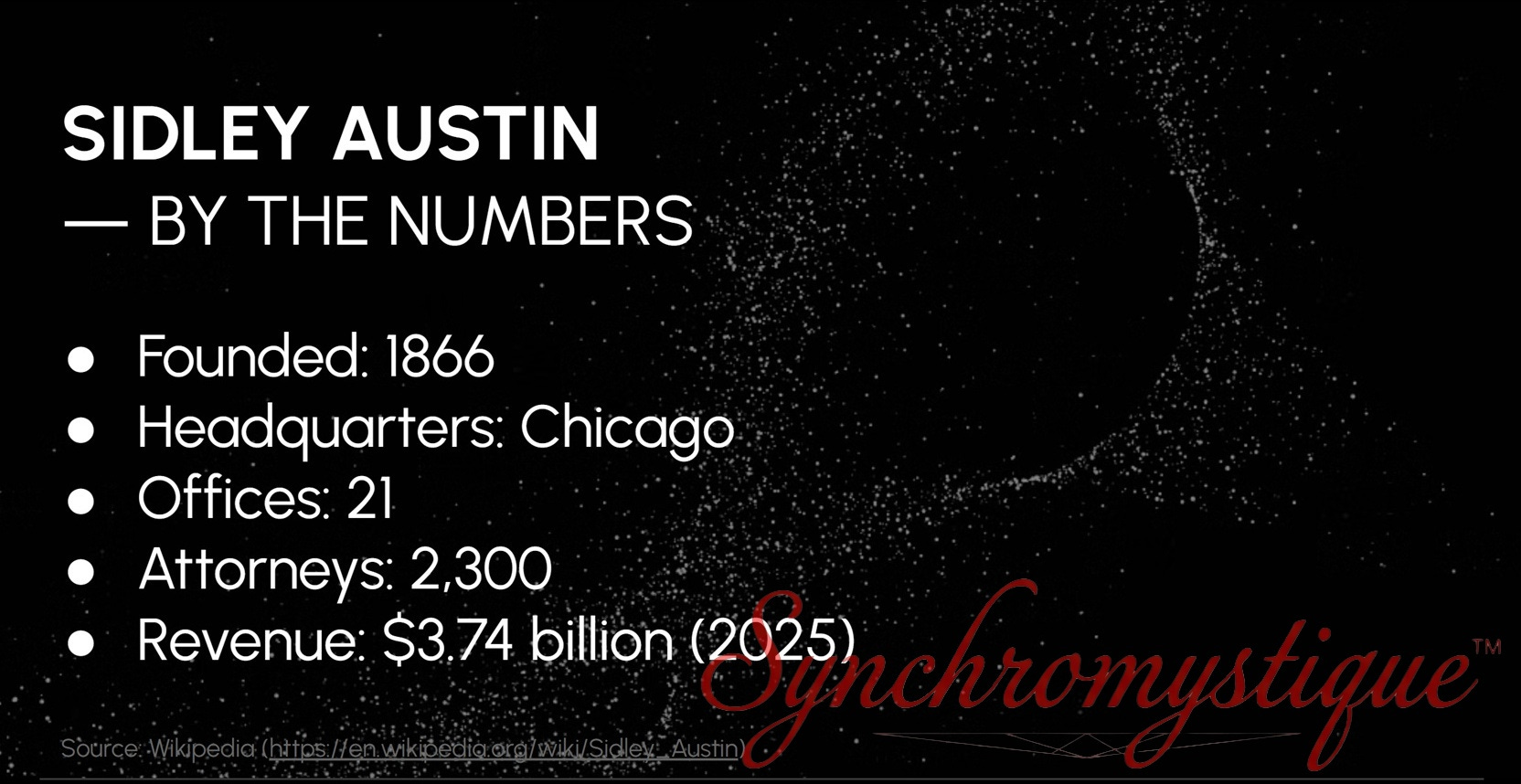
Founded in 1866 as Williams & Thompson in Chicago, this now-global giant (reporting in the neighborhood of $3.74 billion in revenue) traces its earliest clients to the titans of the Gilded Age: the Pullman Company, whose ornate sleeping railway cars were practically synonymous with 19th-century rail grandeur (and at whose request one labor strike was violently suppressed, resulting in the deaths of around 50 people — plus or minus — and the creation of “Labor Day” as a peace offering from President Grover Cleveland); Western Electric, manufacturing arm of the Bell System; Illinois Steel; and — curiously enough — Mary Todd Lincoln, who sought legal counsel in the years following her husband Abraham Lincoln’s assassination.
For more on Lincoln’s ghost, which has allegedly been sighted numerous times in the ensuing years roaming the White House — especially in the eponymously named bedroom and Yellow Oval Room — as well as the creepy goings on within the enormous “undercroft” beneath the 16th president’s memorial, read our article “Haunted D.C.”, or watch the companion video.
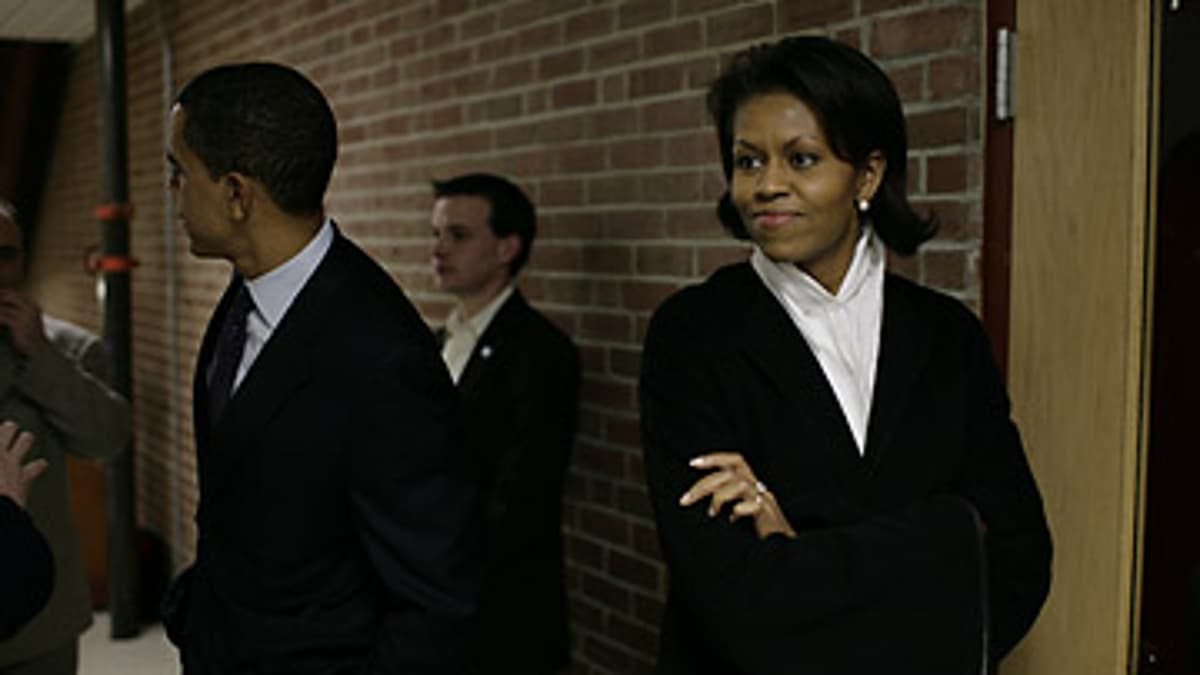
The firm’s roster of alumni is an A-list of American political and jurisprudential life. Its summer associate class of 1989 included both Barack Hussein Obama and his future wife Michelle LaVaughn Robinson, who met there — making Sidley Austin, in a minor but SynchroMystical way, partially responsible for the 44th presidency.
Broader alumni include Newton Norman Minow, the FCC chairman under President Kennedy best remembered for his famous “vast wasteland” speech indicating the quality of American television; J. Edward Day, Kennedy’s Postmaster General (and the bureaucratic godfather of the ZIP code); and the current Vice President of the United States, James David “JD” Vance, protégé of billionaire venture capitalist and Palantir co-founder Peter Thiel.
Of course, we discussed both Vance as well as the above-mentioned POTUS 44 in our “Presidential Name-Changers” presentation.
In more recent decades, Sidley Austin has served as a revolving door for matters touching on both Big Tech and the national security apparatus. In 2019, it was retained to lobby on behalf of Huawei — the Chinese telecommunications behemoth that the Trump administration has placed in its regulatory cross-hairs — and subsequently registered under the Foreign Agents Registration Act for its representation of Hikvision USA, a California subsidiary of a Chinese state-linked video surveillance company.
In 2007, the firm agreed to pay $39 million to the IRS to settle allegations of fraudulent tax shelter activities — a transaction that might give pause to clients seeking counsel on fiscal propriety.27 Specifically, an IRS bulletin states: “The penalty stems from the firm’s promotion of abusive tax shelters and a failure to comply with tax shelter registration requirements.”28
Sidley also represented AT&T in the landmark antitrust breakup that dissolved the “Ma Bell” monopoly in the early 1980s — a case that still reverberates through the telecom world.
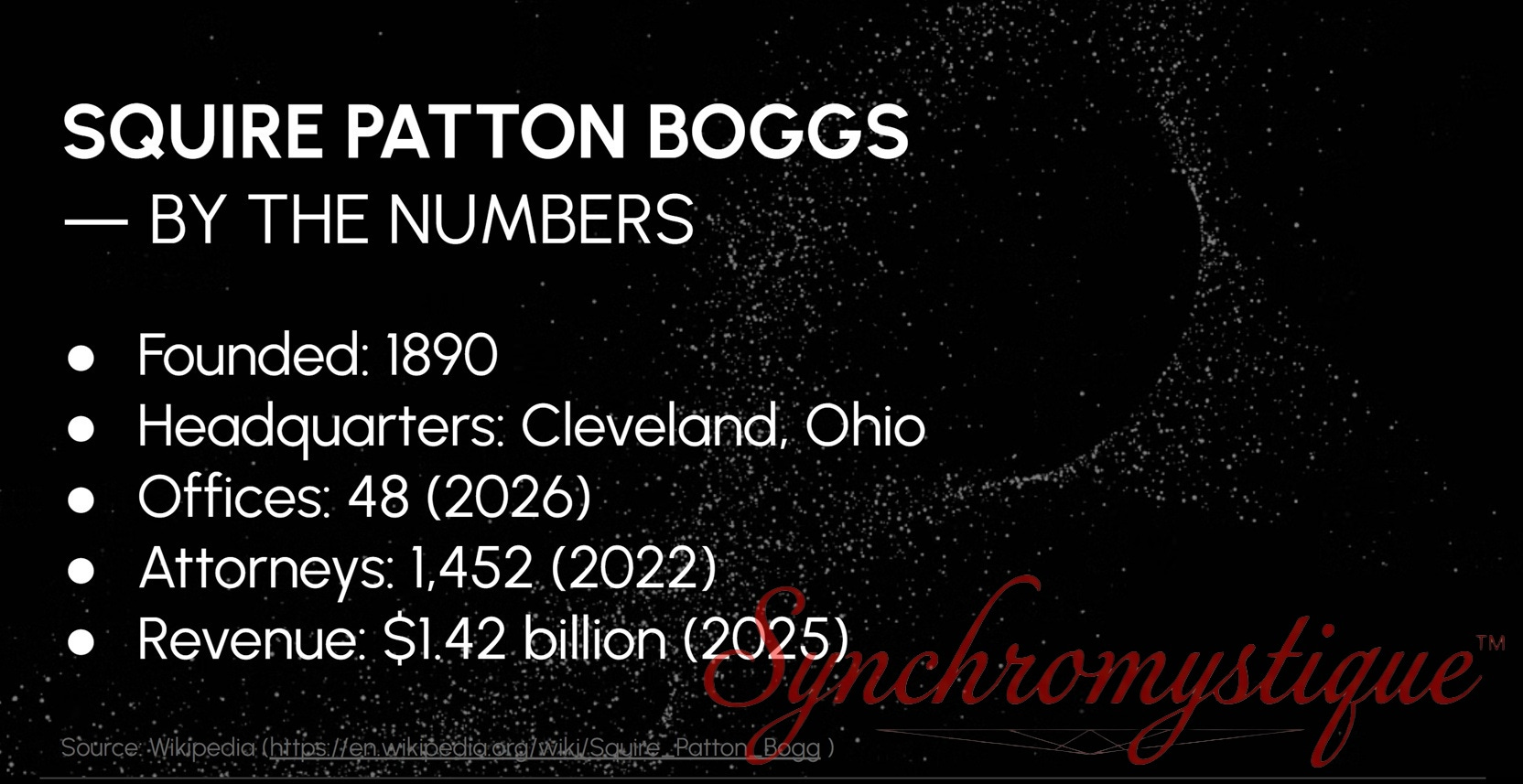
The principal founder of the firm (in 1962, under the name Barco, Cook, Patton, Boggs and Blow) was James R. Patton, Jr.29 Pursuant to his ambition to be involved in international law, Patton “spent several years in southeast Asia, initially as Special Assistant to the American Ambassador to Indochina and later as an attorney for the CIA’s Office of National Estimates.”30
Patton was also briefly associated with Cornell Law School “[f]rom 1963-1964”. During this interval, Cornell was the seat of the MK-Ultra front operation known as the “Human Ecology Fund.”31 (N.B. The two facts are documented separately; we found no record connecting Patton personally to the Human Ecology Fund.)
For more on MK-Ultra, see (again) “10 Occultist Spies.”
See, also, ABC News’s 1979 “Mission Mind Control.”
For a time, it was also the institutional home of Louis Jolyon West, whom we’ve touched on before — for example, in “10 Connexions Between the JFK Assassination and the CIA.”
According to Patton’s obituary, his law firm “was a trailblazer, setting a new standard in which lawyers were no longer just litigators, but lobbyists as well.”32
Wow, thanks, Mr. Patton.
The obit exulted that Patton had “participated in the formation of every major multilateral trade agreement considered by Congress.”33 Before we break out our pom-poms, we might recall that these dishonestly named “trade agreements” are really “‘investor rights agreements’.”34
“According to OpenSecrets, Patton Boggs was one of the top law firms contributing to federal candidates during the 2012 election cycle, donating US$1.7 million, 67% to Democrats.”35 This traceable amount ought not surprise us, since the firm pulls in $1.42 billion in annual revenue.
A long‑time senior partner was Thomas Hale Boggs, Jr., son of the late Congressman Thomas Hale Boggs (Sr.). Indeed, Boggs, Jr. eventually became the firm’s senior partner, presiding over a lobbying portfolio that touched everything from the repeal of Glass‑Steagall on behalf of the American Bankers Association to the $1.5 billion Chrysler bailout.
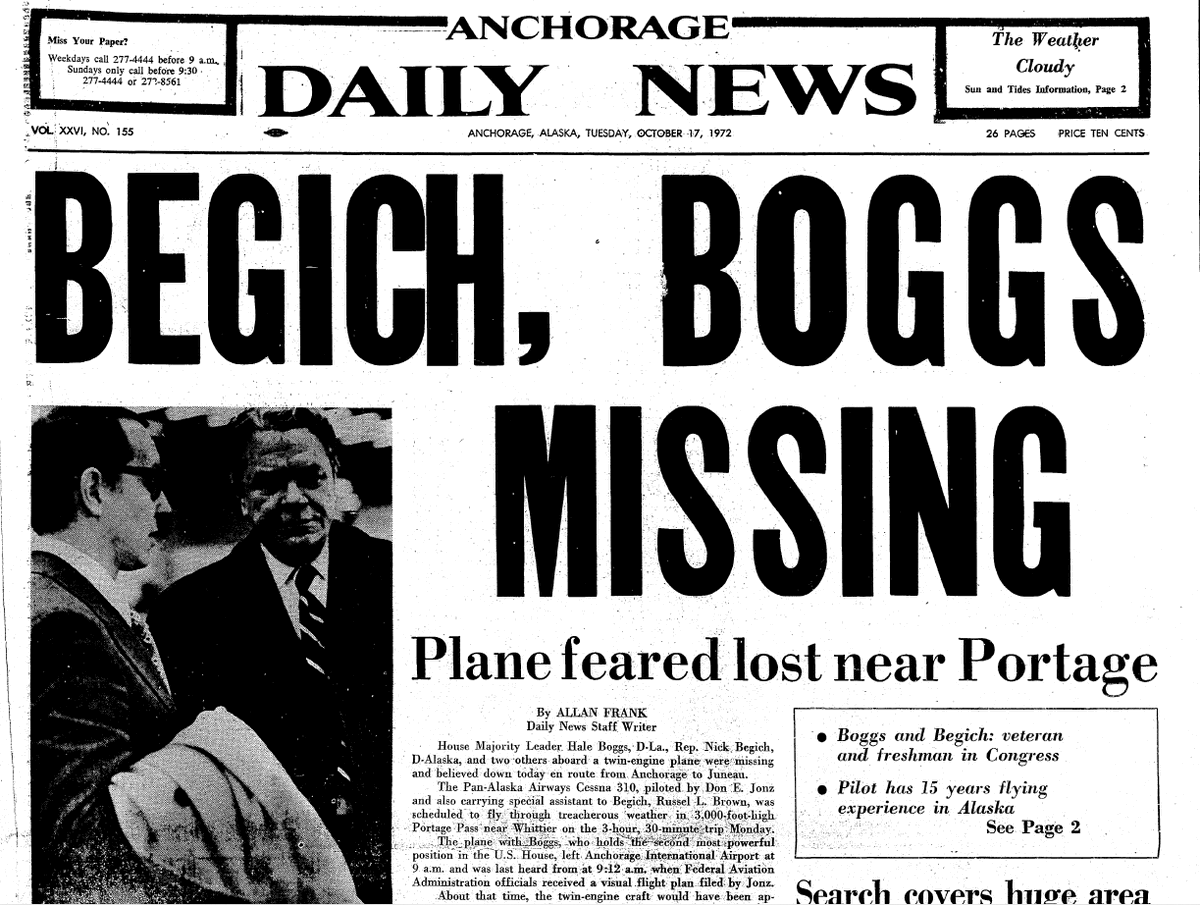
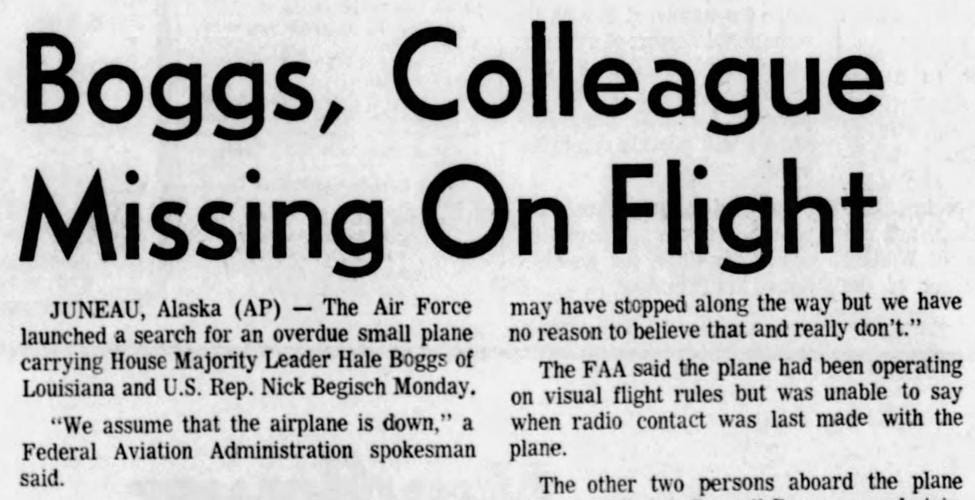
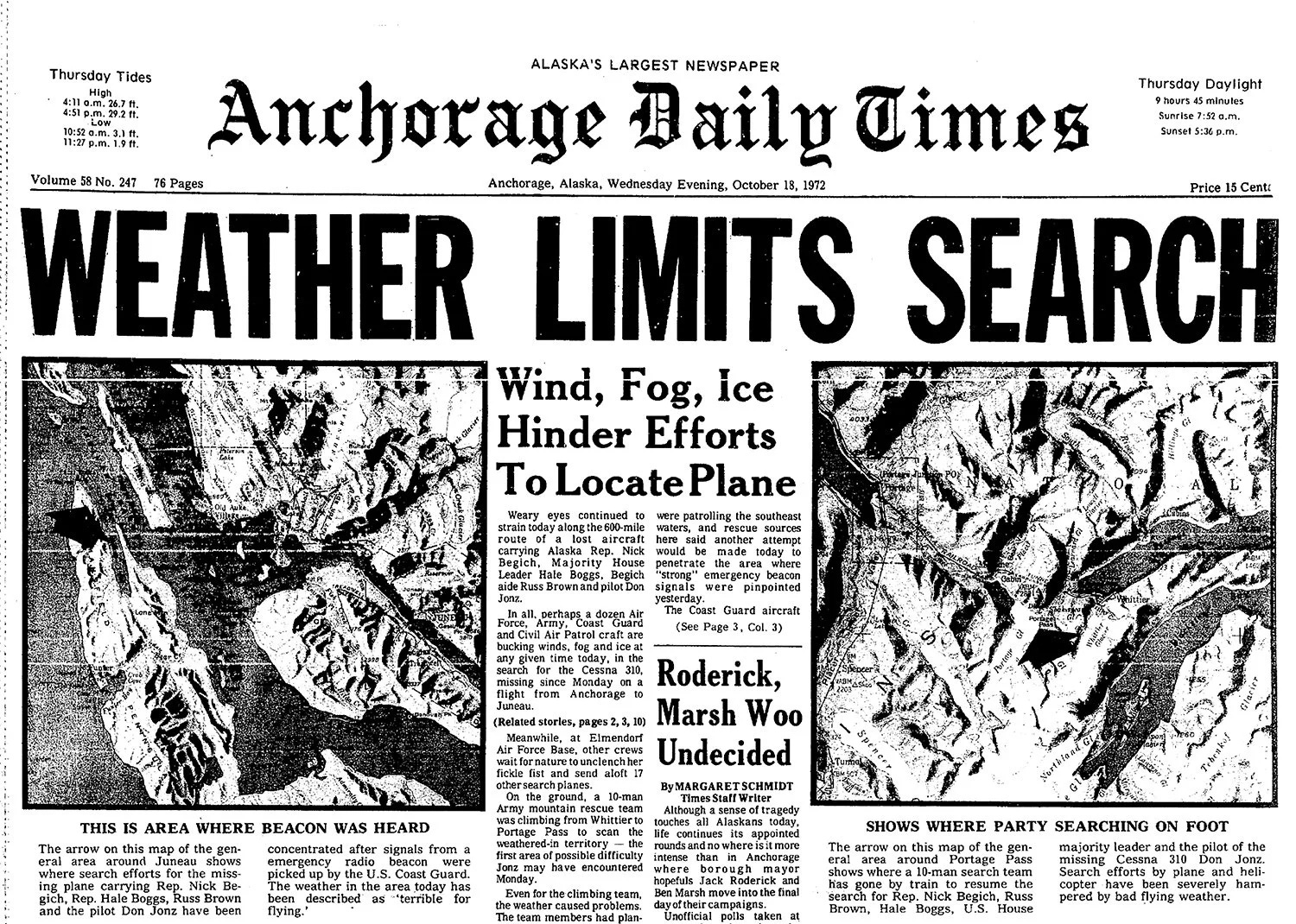
His father, of course, is remembered for something rather different: vanishing without a trace in 1972 while flying over Alaska — a disappearance that, despite exhaustive searches, produced neither wreckage nor remains.
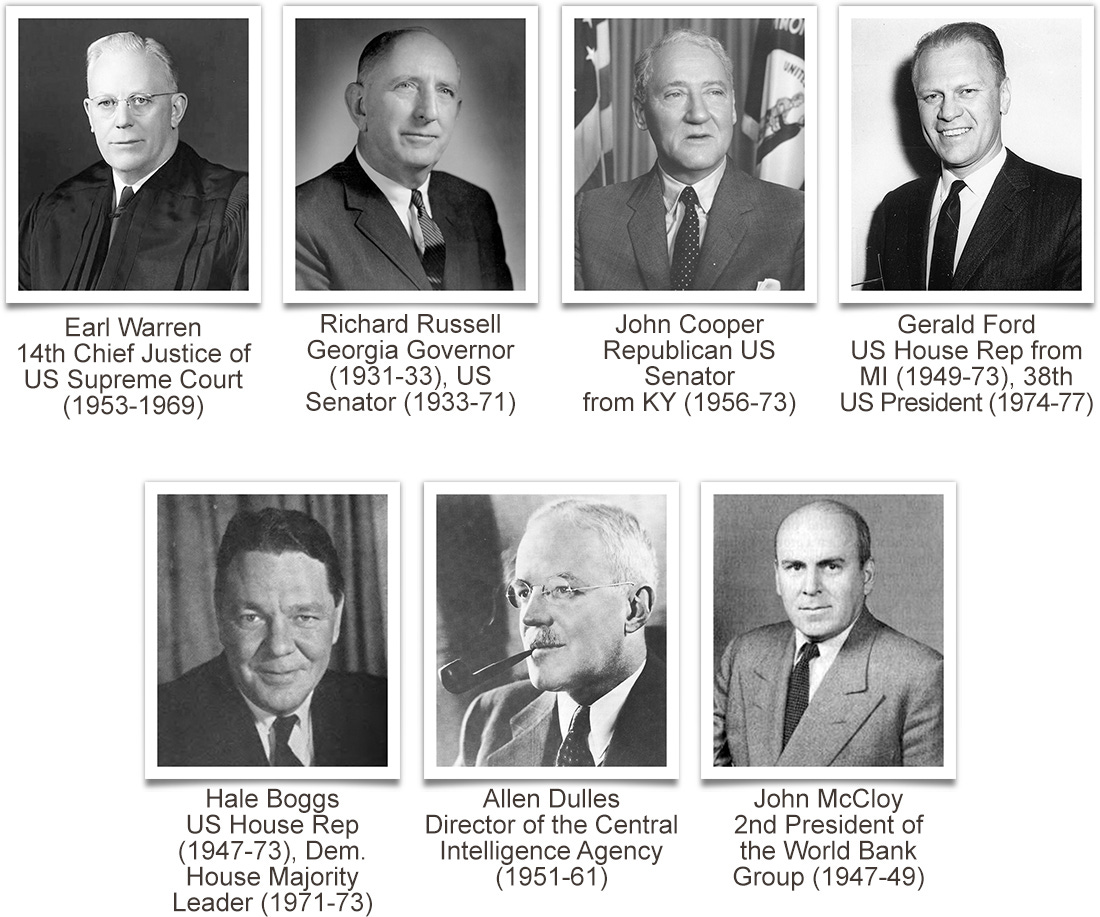
Hale Boggs, Sr. had been a member of the Warren Commission, and shortly before his disappearance had publicly criticized the FBI and J. Edgar Hoover, a sequence of events that has kept conspiracy researchers busy for half a century.
For more, we did touch on Boggs in one of our two past treatments of JFK’s assassination.
The family’s entanglements didn’t end there. Boggs’s daughter, born Mary Martha Boggs, but better known as “Cokie” Roberts, became a pillar of the Washington press corps. Son, Thomas Hale “Tommy” Boggs, Jr. built one of the most powerful influence shops in the capital. And his widow, “Lindy” Boggs (born Marie Corinne Morrison Claiborne), succeeded him in Congress, later serving as U.S. Ambassador to the Holy See. The Boggs lineage forms a kind of Beltway dynasty — one part political royalty, one part unresolved mystery, and one part revolving door between Congress, K Street, and the deeper, more opaque strata of American power. For a firm already founded by a CIA‑connected international lawyer, it’s an oddly fitting family tree.
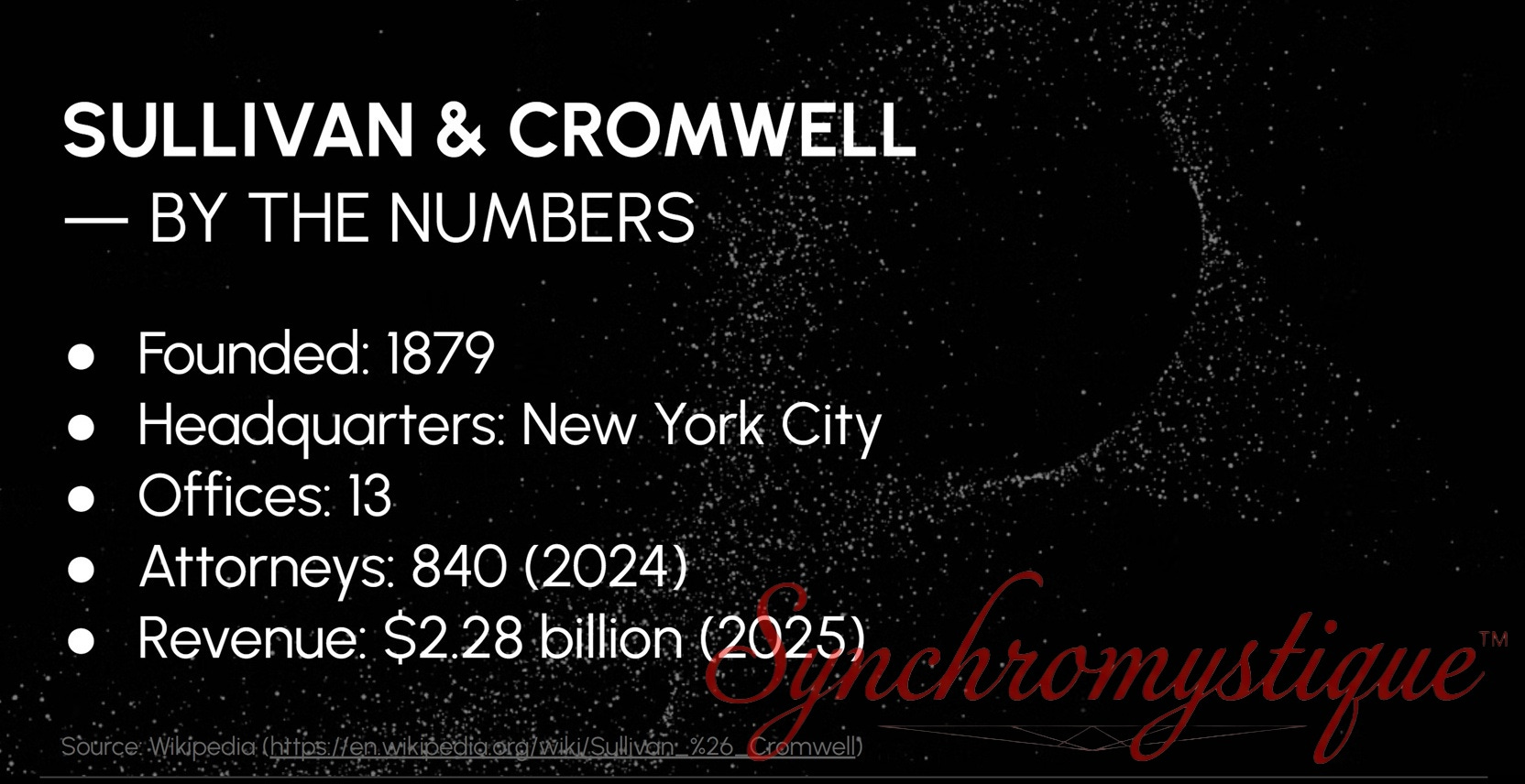
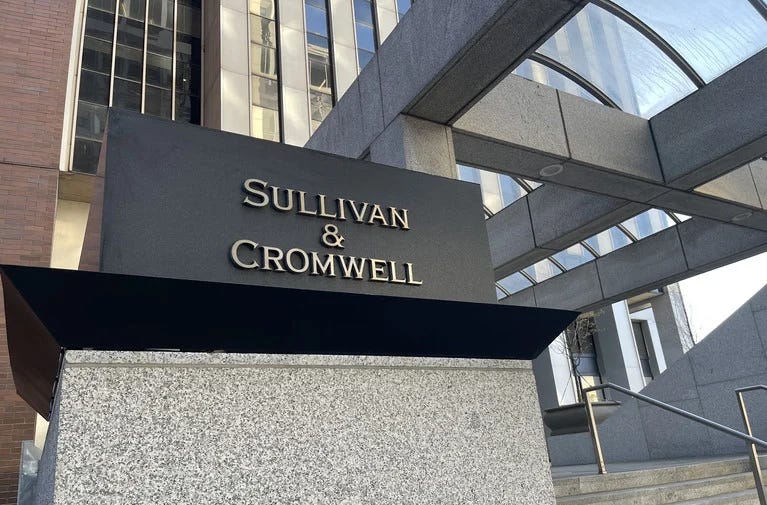
The firm dates to 1879 and the partnership of Algernon Sydney Sullivan and William Nelson Cromwell. From its earliest years it was at the elbow of American industrial capitalism: Sullivan & Cromwell advised John Pierpont “J. P.” Morgan (Sr.) during the formation of Thomas Edison’s General Electric in 1882, and later guided him (along with other key players) in the creation of U.S. Steel in 1901, after he purchased Andrew Carnegie’s company.
Co-founder Cromwell is credited with developing the concept of the holding company and persuading New Jersey to enshrine it in state law, thereby enabling companies incorporating there to sidestep antitrust constraints. This evasion is possible because a “holding company” places multiple ostensibly independent firms under a single parent entity, allowing coordinated control and monopoly‑like behavior while maintaining the legal fiction that the subsidiaries are separate companies. This maneuver has proved enormously consequential for American corporate history — and for broader U.S. history as well.
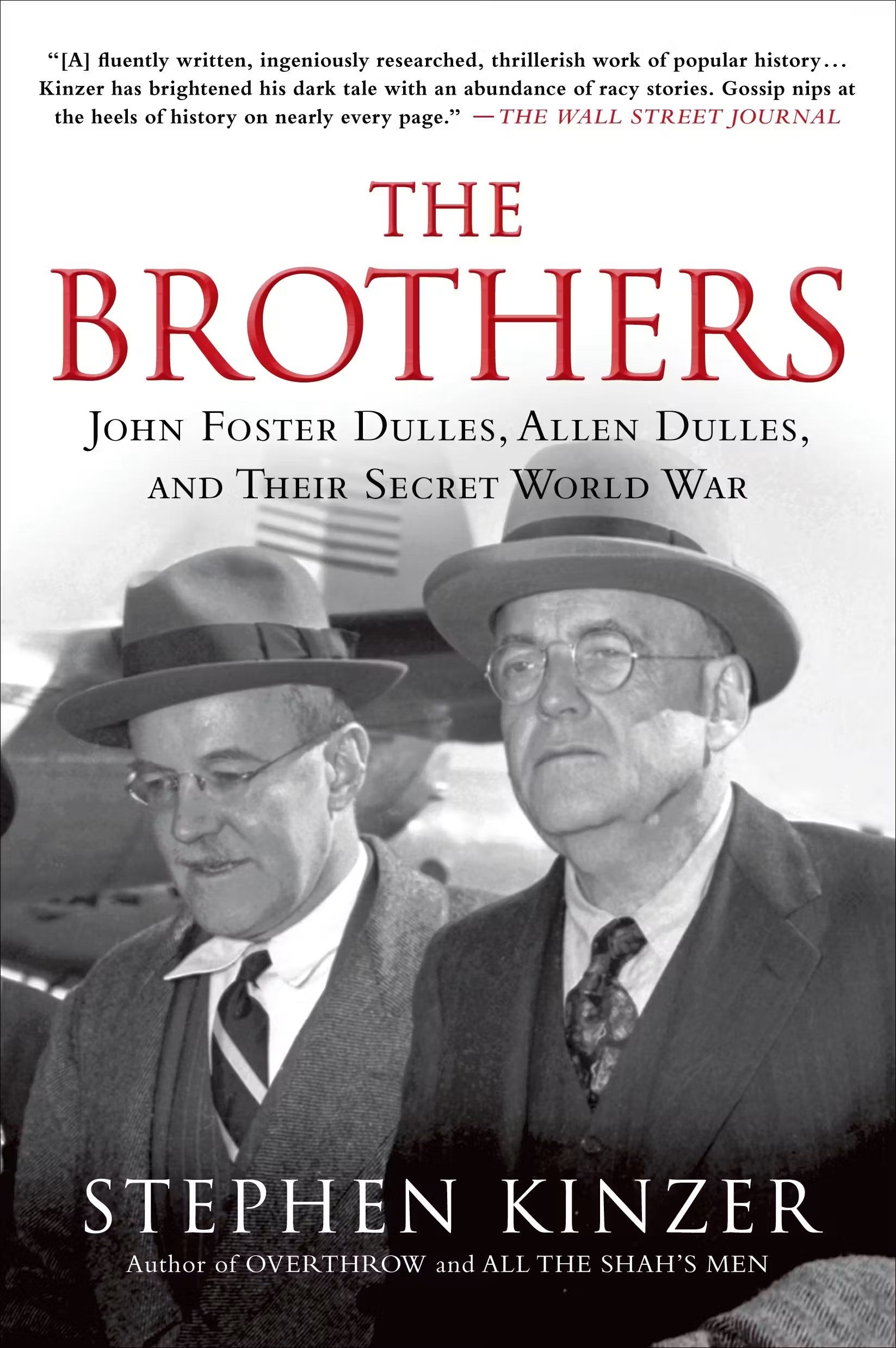
The names most indelibly associated with the firm are those of the brothers John Foster Dulles and Allen Welsh Dulles. Foster, a senior partner from the 1920s onward, later (from 1953 to 1959) served as Secretary of State under President Dwight D. Eisenhower. (We covered both brothers — with a comparison to Anthony and Sir Francis Bacon — in “10 Occultist Spies.”)
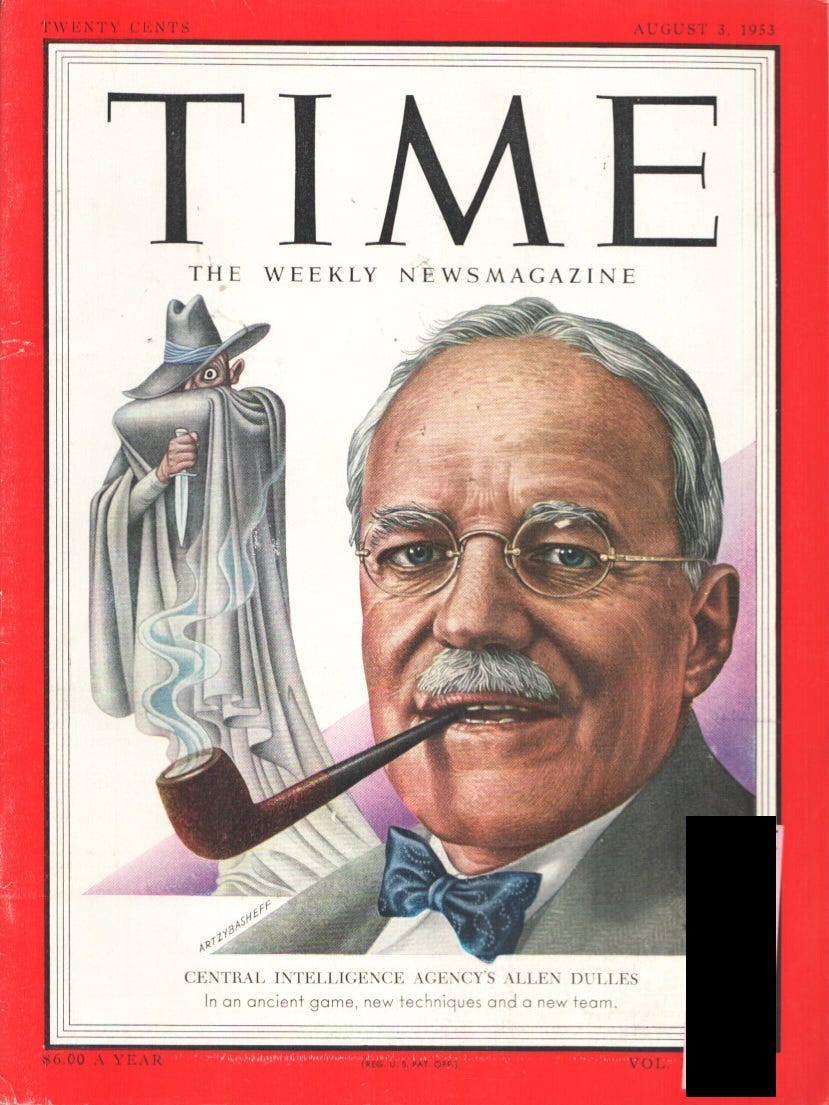
Allen, meanwhile, became the Director of Central Intelligence from 1953 to 1961 — the longest-serving DCI in the Agency’s history. As journalist David Talbot has argued, in his book The Devil’s Chessboard, Allen Dulles was not merely a peripheral figure in the historically contested events surrounding President Kennedy’s assassination, but a central architect — a man who, in partial retribution for JFK having fired him as CIA head, helped orchestrate the plot against JFK and then steered the subsequent Warren Commission “investigation” away from any discovery of the agency’s own involvement.
During the years Allen was at its helm, Sullivan & Cromwell was the largest law firm in the world. The brothers had, in effect, rotated from Wall Street to the uppermost tiers of American foreign policy, and the transition was seamless because, for them, the two realms were scarcely distinguishable. We add that it’s not doing too shabbily these days, either, with a $2.28 billion revenue stream, according to reports.
But its activities during the Nazi-era controversy are particularly electric. Under Foster Dulles, the firm assisted in incorporating the German chemical conglomerate I. G. Farben — later notorious as the manufacturer36 of Zyklon B and a user of concentration-camp slave labor — into an international nickel cartel alongside American, Canadian, and French companies.
For a veritable treasure trove of forbidden counterpoints, political incorrect analyses, and other suppressed facts concerning a certain, much ballyhooed aspect of the Second World War, see our monumental Antzion II, available as a downloadable .pdf.
Forbidden 3,000-Page Archive on Israel, Judaism, & Zionism
·
Mar 9
What if one of the most controversial historical archives ever assembled — spanning centuries of commentary (including on Zionism, Judaism, Israel, and geopolitics) —had quietly been digitized and released online… and almost nobody noticed? The 3,000-page compendium
As we reported in our long-form “10 ‘Nazi’ Occultists, Part 1,” (article, full video, short version): “U.S. spymaster Allen Welsh Dulles had …been stationed in Istanbul before his tenure at the Central Intelligence Agency. …[A]ccording to biographer Peter Grose, Allen Dulles had a tête-à-tête …with then-chancellor [Adolf] Hitler – in 1933. I’m sure there’s nothing at all suspicious in the fact that a future CIA insider met with Der Führer on the literal eve of the latter’s total domination of the German political machine. As to what the meeting was about, we’re left to guess. You see, the chief spook, ‘who never missed an opportunity to tell a good story,’ felt that whatever happened was so secret that he allegedly felt compelled to withhold details even from lifelong colleague Richard Helms.”37
When, in 1935, Allen Dulles visited Germany and returned supposedly newly “troubled” by the direction of the Third Reich, the partners voted to close their Berlin office. They subsequently backdated the announcement of the closing by a year, to 1934. Allen’s corporate clients at Sullivan & Cromwell had included the J. Henry Schröder Banking Corporation, General Aniline & Film Corp. (a U.S. front for I. G. Farben), and the Krupp arms-manufacturing dynasty.
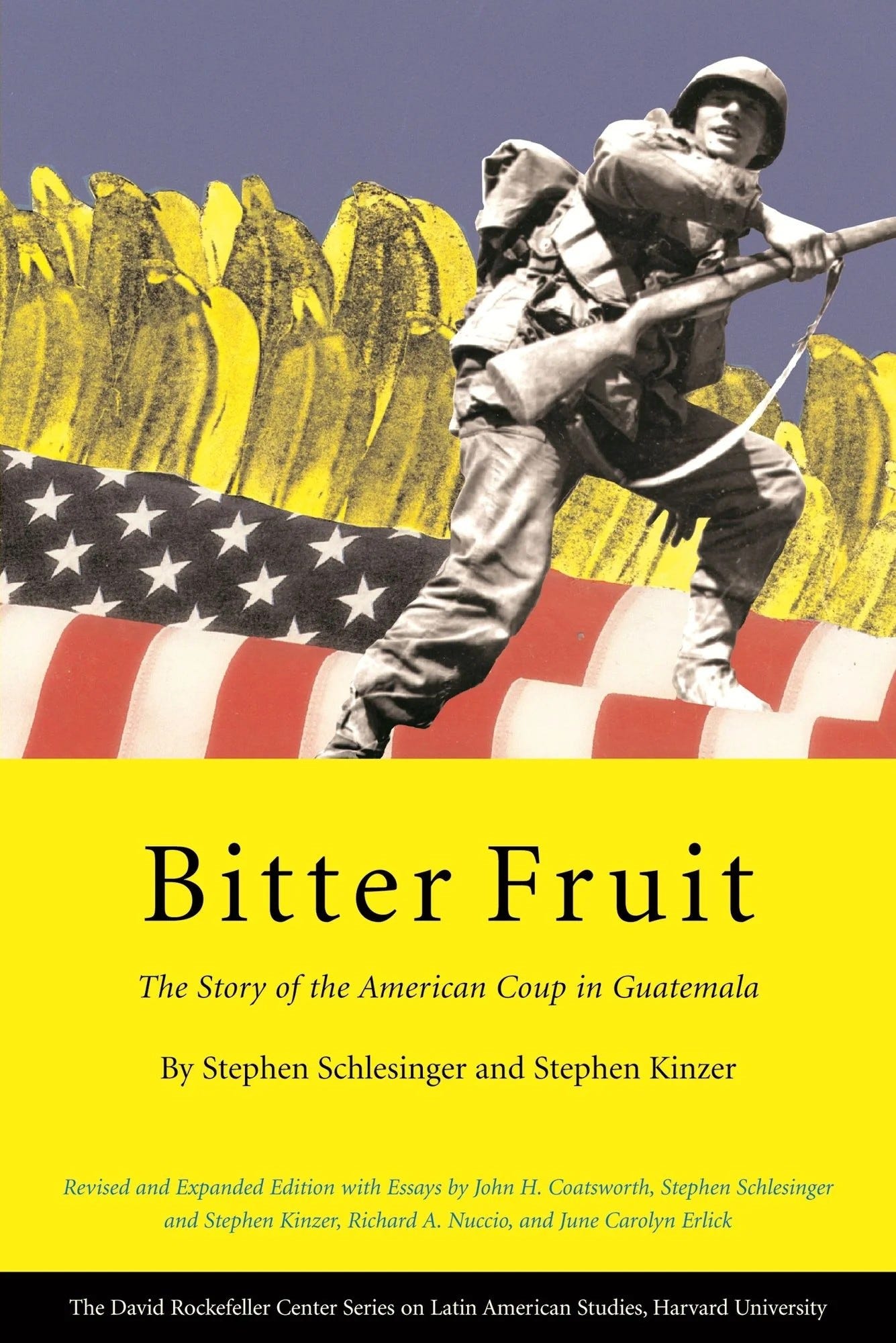

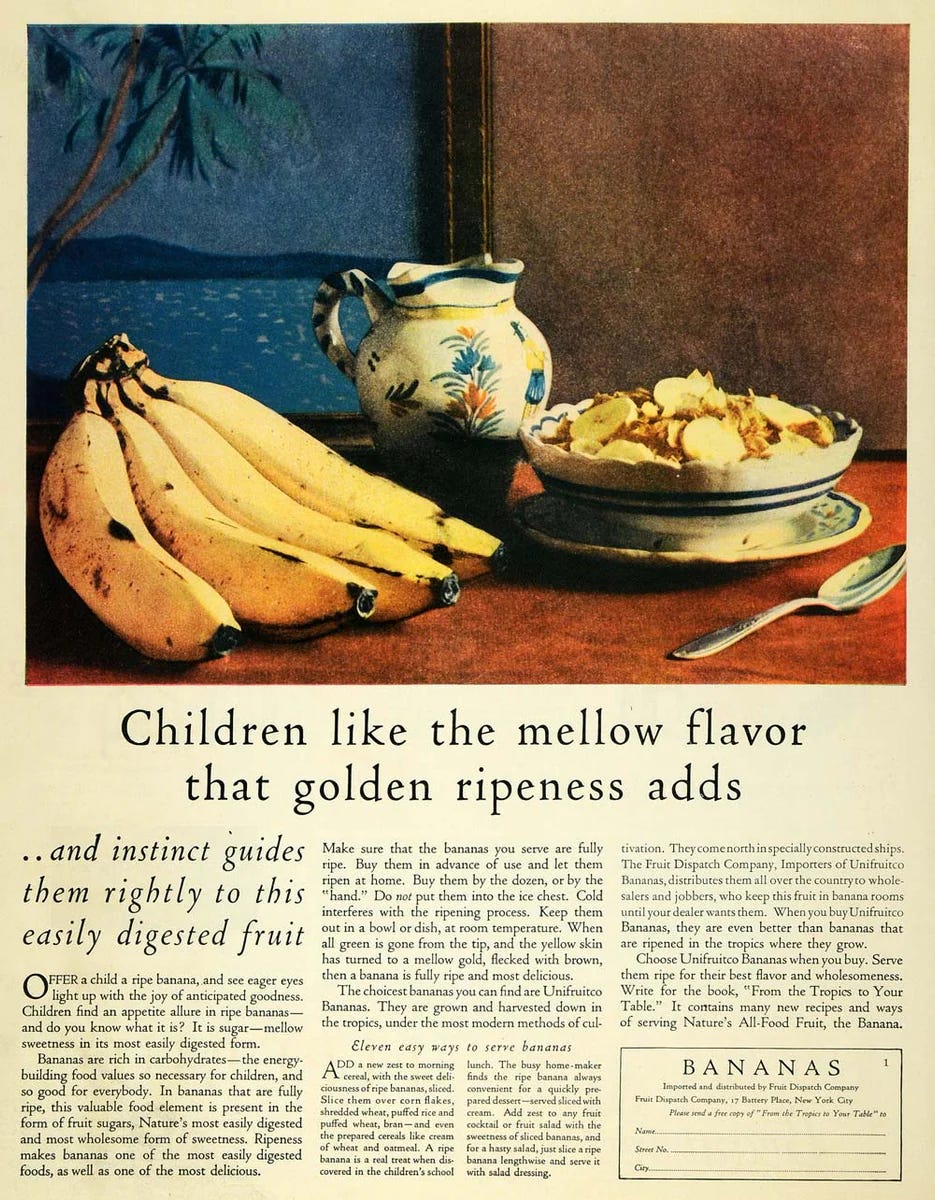
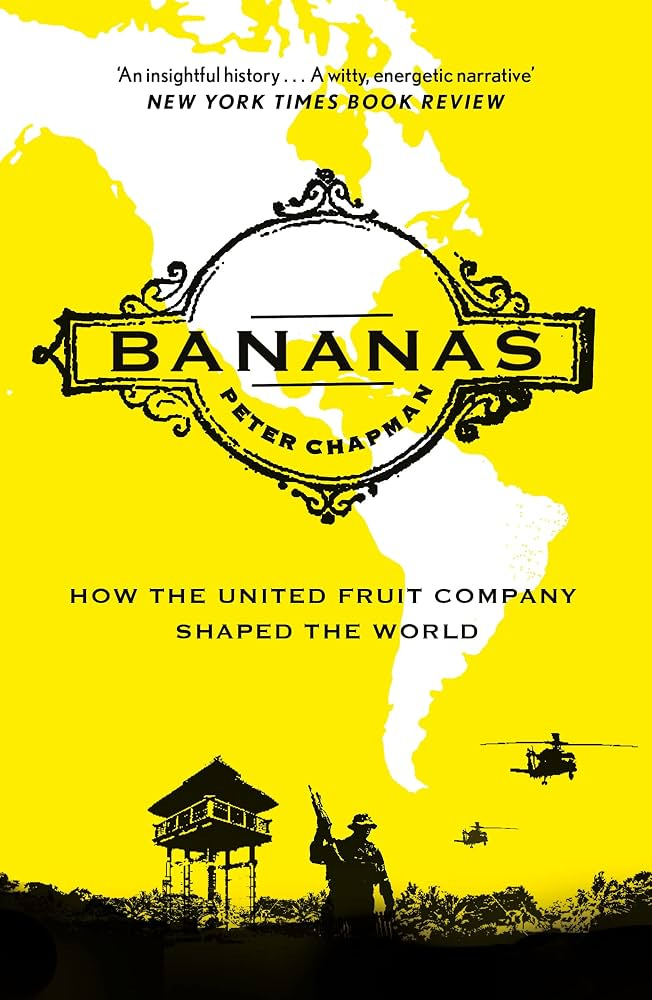
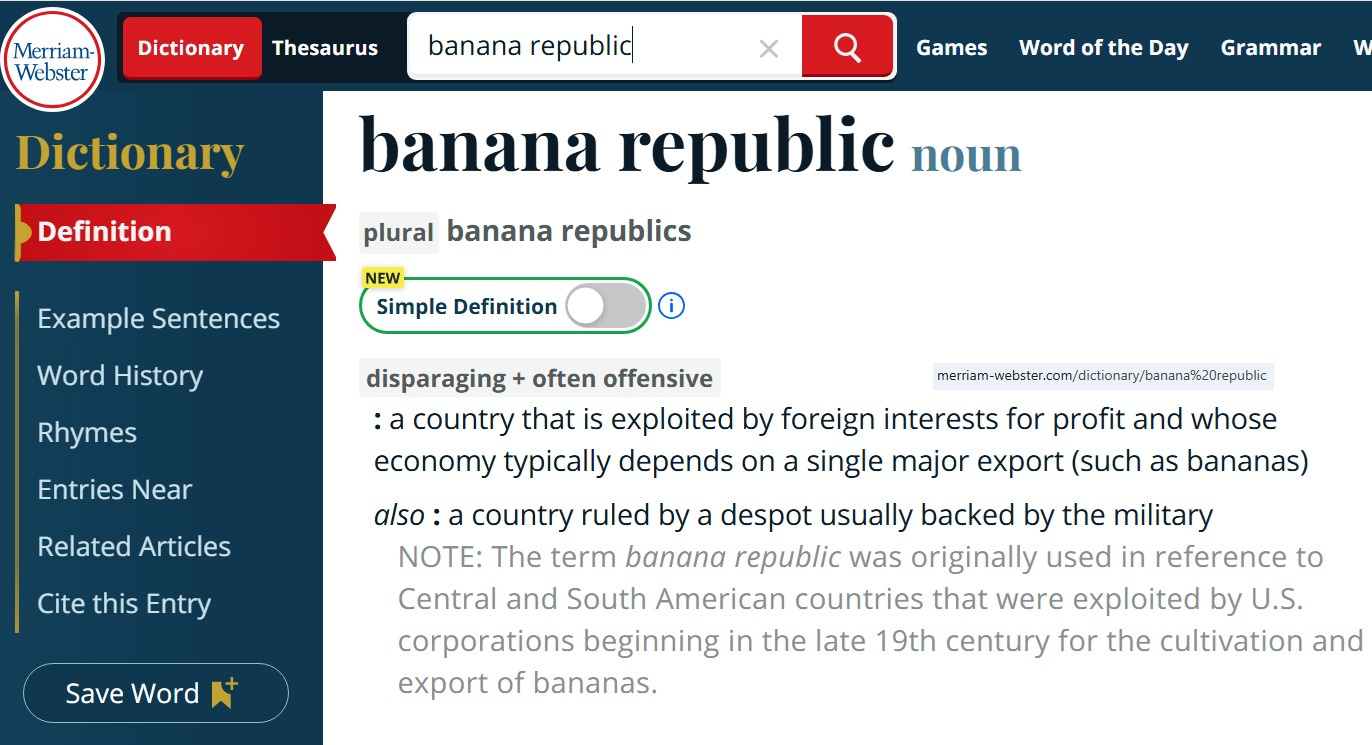
In 1954, the firm was directly implicated in the CIA-engineered coup d’état that overthrew Guatemala’s democratically elected president, Jacobo Árbenz. Sullivan & Cromwell represented the United Fruit Company, which had extensive landholdings in Guatemala and had lobbied strenuously — through the firm and other channels — to convince President Eisenhower, Secretary of State Foster Dulles, and CIA Director Allen Dulles to remove Árbenz. The Dulles brothers’ simultaneous roles as former Sullivan & Cromwell firm partners and sitting architects of U.S. foreign policy represented a conflict of interest that, in a later era, might have attracted rather more scrutiny than it did at the time.
The more recent controversies are no less striking in their breadth. In 2008, a former firm attorney — one Gil Cornblum, then a part with Dorsey & Whitney — was found to have participated in an insider-trading scheme that netted over $10 million in illegal profits across a 14-year span. Cornblum committed suicide by jumping from a bridge while under investigation.
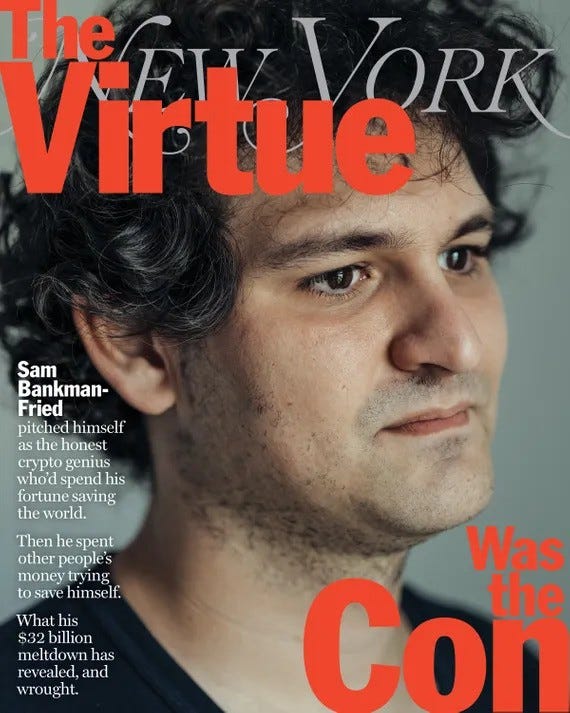
In 2022, the firm advised the cryptocurrency exchange FTX, and its founder and CEO Sam Bankman-Fried, shortly before its spectacular collapse, and subsequently served as bankruptcy counsel — prompting a bipartisan group of U.S. senators to allege a conflict of interest.
In 2024, the firm came under fire for employing a background-check company to scrutinize law students involved in pro-Palestinian campus protests.38 And in January 2025, Sullivan & Cromwell became the first major firm to represent former President Donald J. Trump in the appeal of his 34-count criminal conviction.39
Most recently, in April 2026, the firm was compelled to apologize to a federal bankruptcy court after submitting AI-generated legal citations that turned out to be fictitious — a rather unbecoming moment for an institution of its pretensions.40
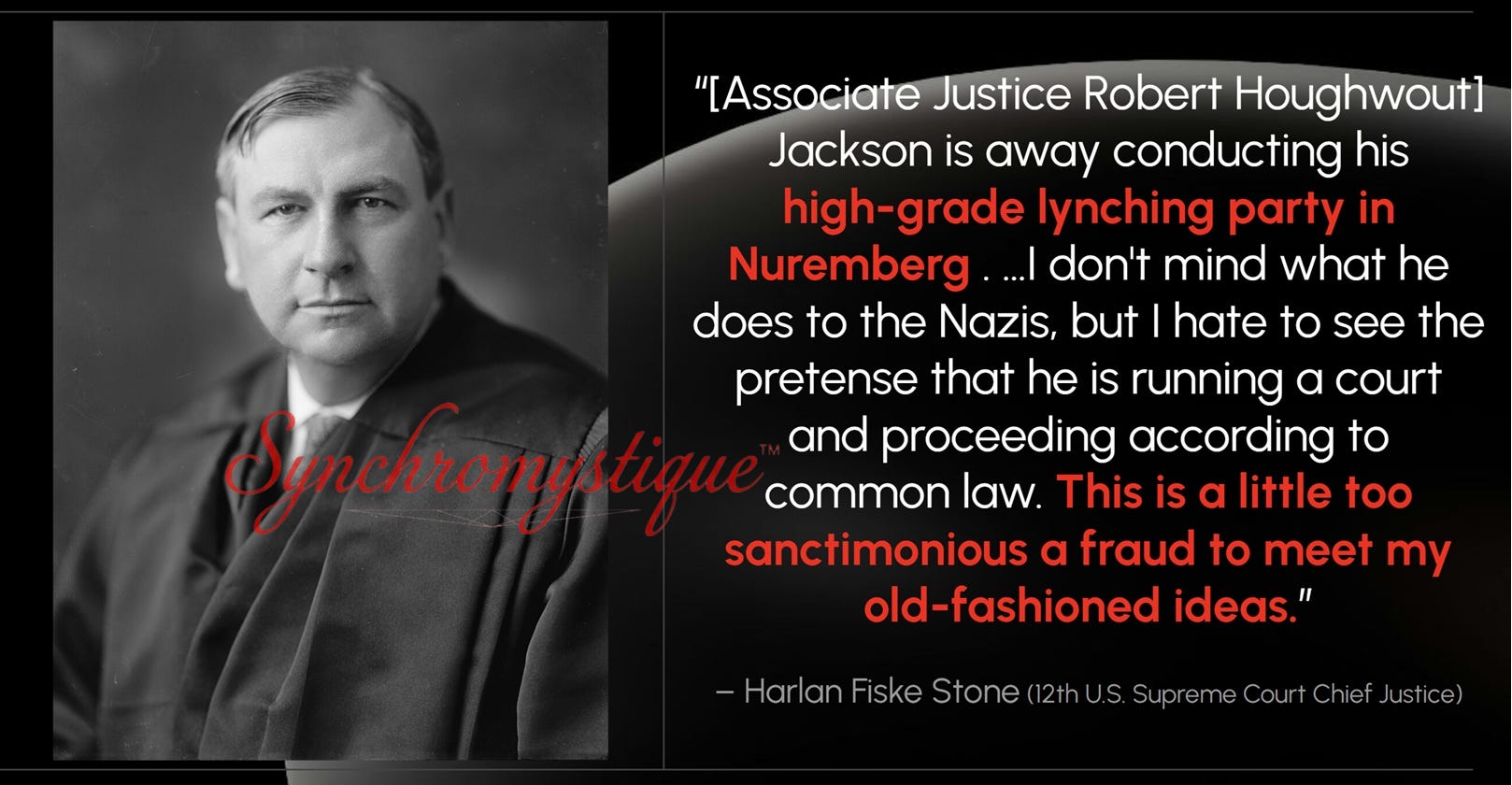
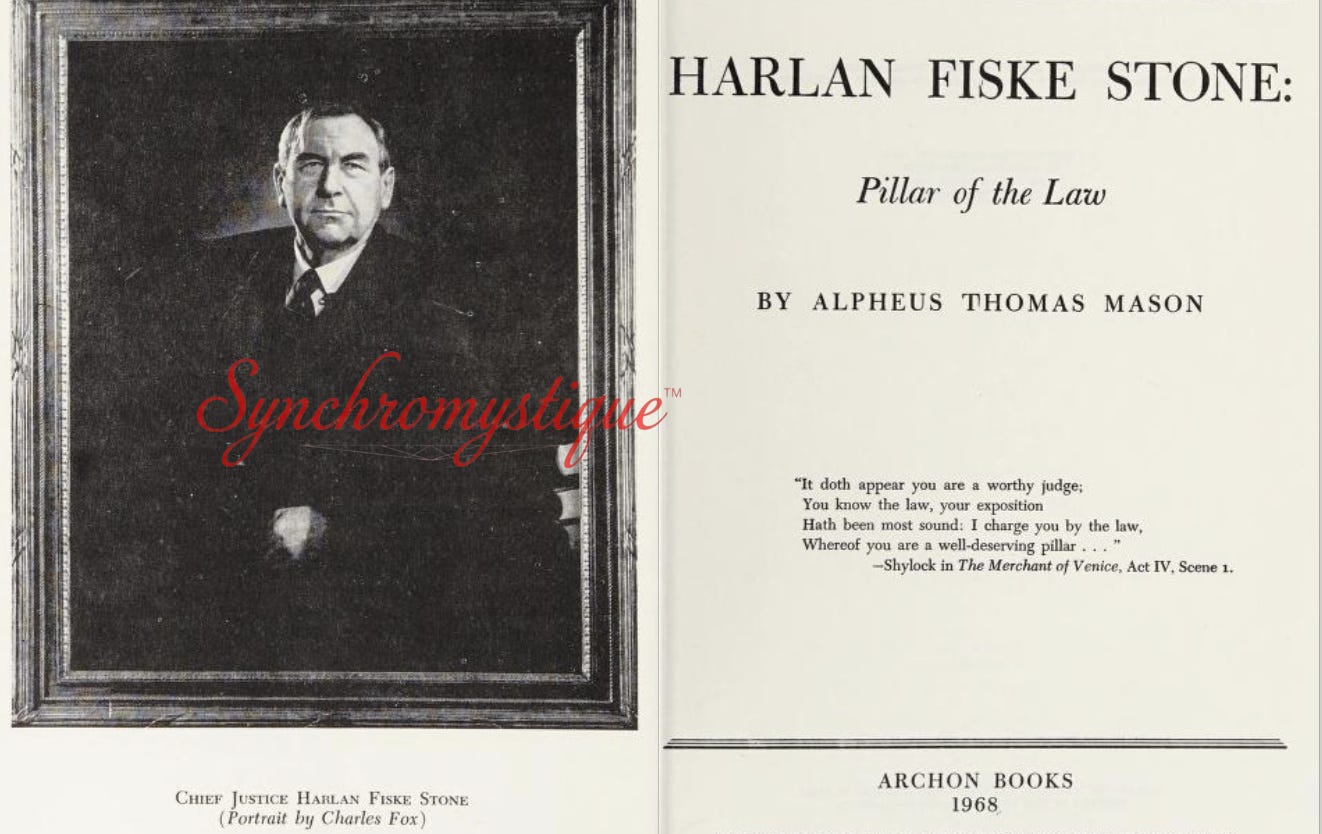
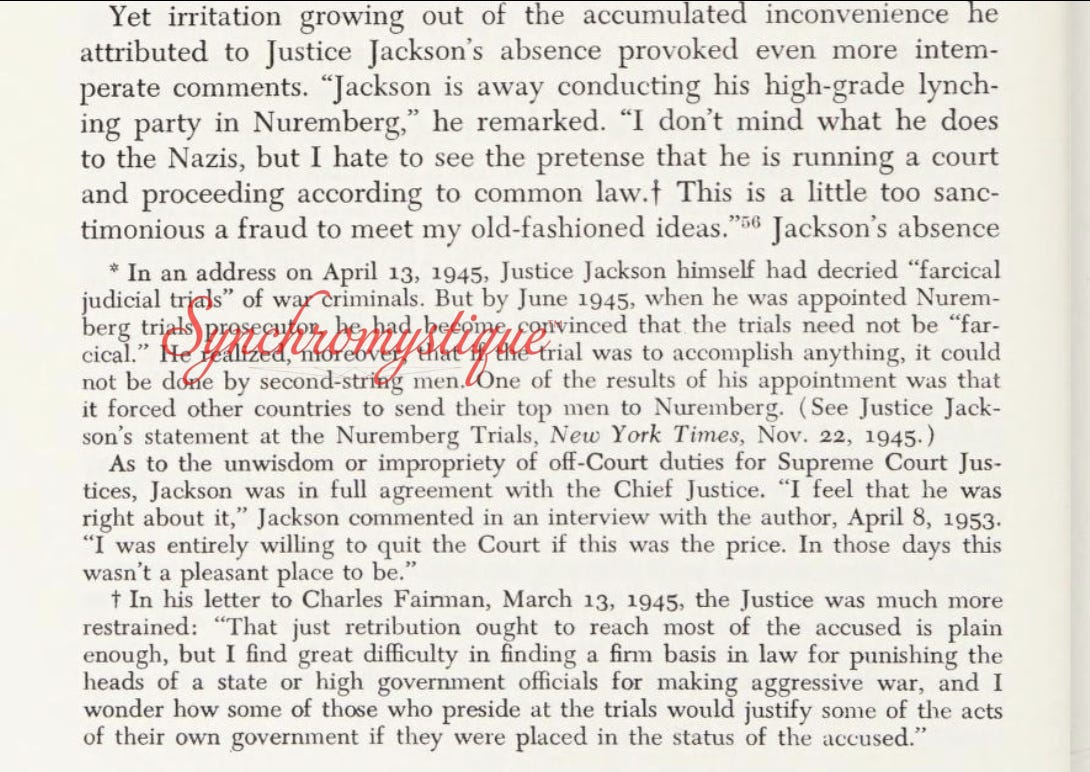
Other alumni of note include: Chief Justice of the United States Harlan Fiske Stone (who famously castigated Associate Justice Robert H. Jackson for the latter’s rôle in the Nuremberg trials, which the former said were nothing more than a “high-grade lynching party”41); venture capitalist and PayPal co-founder Peter Andreas Thiel (political patron of the current U.S. Vice President James David “JD” Vance42); and Amal Alamuddin Clooney, the human-rights lawyer and wife of actor George Clooney (who, in a small irony of professional biography, began her career in the firm’s own New York office before decamping for London’s Doughty Street Chambers, where her docket has since run from the Hague’s ad hoc tribunals to the UN Human Rights Committee) — a name whose glamour, it must be said, is somewhat at odds with the firm’s characteristically gray institutional self-presentation.
Among Amal Clooney’s more politically charged engagements was her multi-year representation of Julian Assange, the WikiLeaks founder, whom she advised from 2011 through his protracted battle against extradition to Sweden on sexual-assault allegations — a campaign that, by way of the Ecuadorian embassy gambit and the eventual British prosecution under the U.S. Espionage Act became one of the defining press-freedom causes of the decade. Her practice placed her at the center of cases concerning genocide, sexual violence, torture, and freedom of expression for journalists. A leaked 2013 strategy memo, drafted by Clooney and obtained by the U.K.-based Daily Mail some years later, floated the idea of installing Assange as a kind of Ecuadorian diplomat-in-exile — “technology minister” was the proposed title — on the theory that diplomatic status would furnish him a more durable shield against extradition than the embassy’s four walls alone. The arrangement never materialized, but the episode is a useful index of how thoroughly the Assange affair had, by then, fused legal defense with statecraft: a private barrister quietly drafting instruments of sovereign appointment for a man wanted by Washington.
On Thiel’s investment in the blood-harvesting company Ambrosia, pointed out to us by Jim Brandon, see our previous article “Sex Crime & Spycraft, ‘Zio’-Style.”
Sex Crime & Spycraft, ‘Zio’-Style
·
September 12, 2025
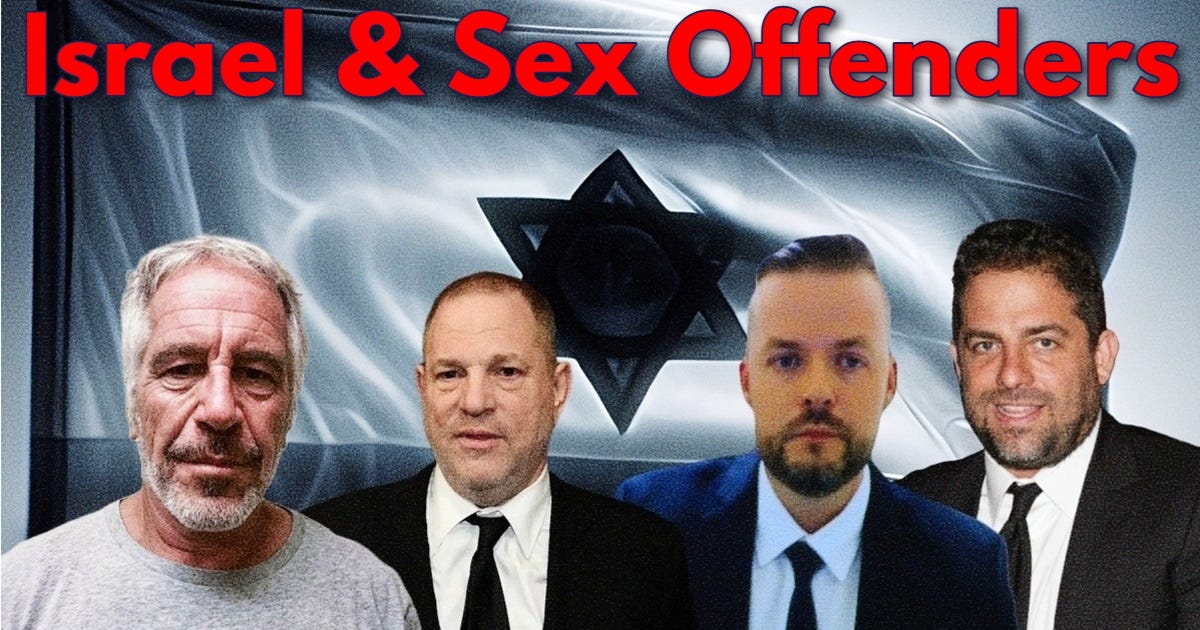
Zionoid? Ziocon? Ziothug? What are we to call a country that, when it isn’t grinding Palestinians into the mud, is safe-housing sex fiends from around the world? Meshuggeneh? Stick around!
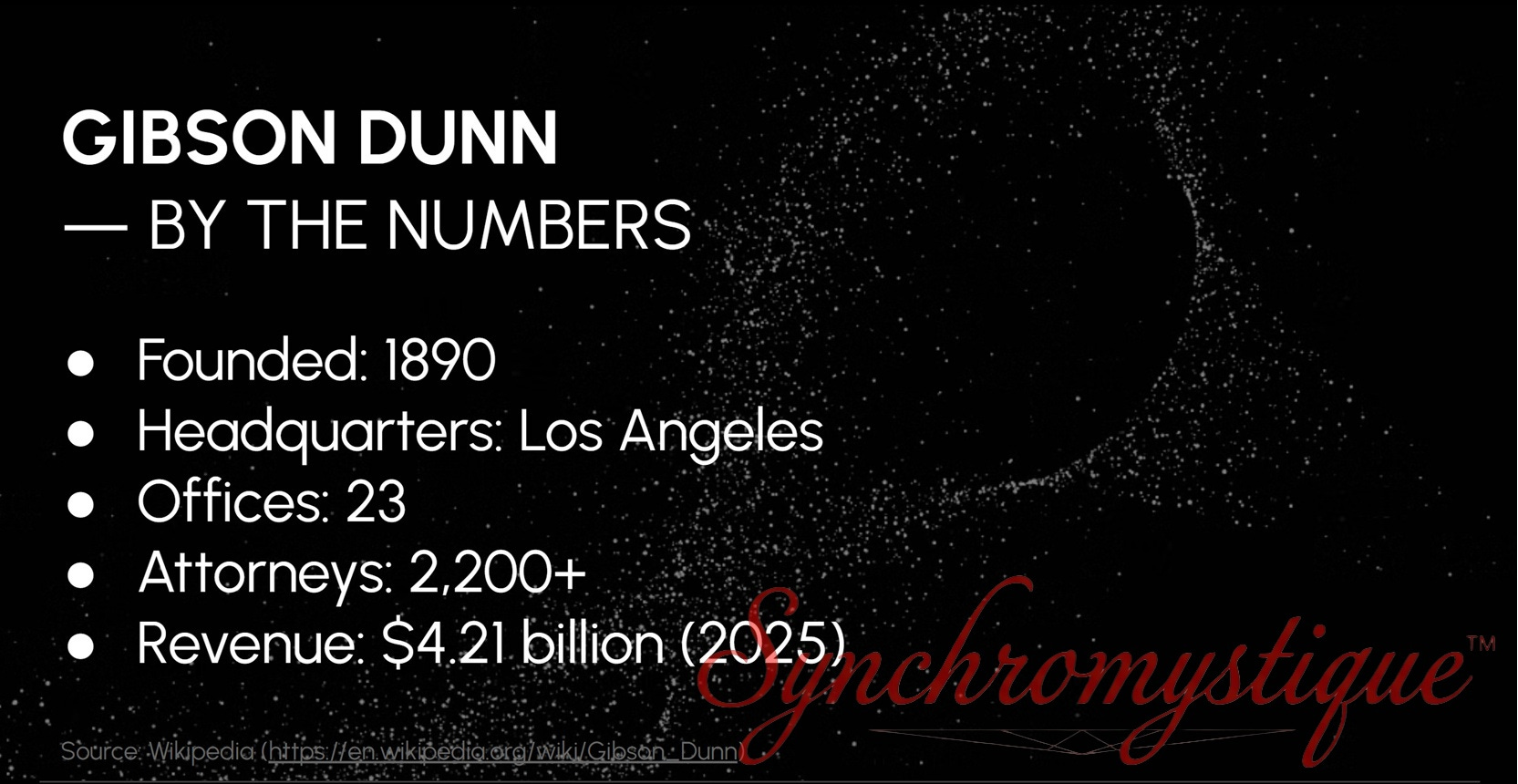
Gibson, Dunn & Crutcher — known universally as “Gibson Dunn” — was founded in Los Angeles in May 1890, a provenance that set it apart from the Northeastern establishment firms chronicled elsewhere in these pages. (Though, in terms of its reported revenue — $4.21 billion — it is right at home with the rest, and stands above several.)
In 1903, at the suggestion of mutual client Henry Edwards Huntington (the railway magnate and art collector whose Pasadena estate became one of the finest research libraries in the world), the nascent firm merged with the practice of former Los Angeles city attorney William Ellsworth Dunn, creating the largest law firm in Southern California at the time.
The firm’s most consequential alumnus is almost certainly Theodore Bevry “Ted” Olson, a longtime Gibson Dunn partner born — and this is the sort of detail (identified by S. K. Bain) that delights numerologists and SynchroMystics alike — on September 11, 1940. Olson served as Ronald Reagan’s Assistant Attorney General for the Office of Legal Counsel from 1981 to 1984, during which period an investigation found that he had given “misleading and disingenuous” testimony to Congress regarding the Superfund environmental scandal. He was also a founding member of the Federalist Society43 and a key figure in the Arkansas Project — the operation, conducted through the American Spectator, that funneled over $2 million to investigators digging for anti-Clinton material.
In December 2000, Olson personally delivered the oral argument on behalf of George W. Bush in the Supreme Court case Bush v. Gore — which effectively determined the outcome of the 2000 presidential election.
For our mention of that episode, see “11 ‘Milestones’ in Election Fraud.”
Of major crypto-political and SynchroMystical interest is the fact that Ted’s third wife, Barbara Kay Olson, a conservative television commentator, was killed aboard American Airlines Flight 77 on September 11, 2001 — which happened to be her husband’s 61st birthday. Story goes that she had delayed her departure by a day in order to wake up with him on his birthday.
Among the firm’s other notable alumni: James Brien Comey, former Director of the Federal Bureau of Investigation (and architect of the eleventh-hour announcement regarding Hillary Clinton’s email server in the days before the 2016 election); Aileen Mercedes Cannon, the federal judge who presided over the Mar-a-Lago classified-documents case against former President Donald J. Trump; Josh David Hawley, the Missouri senator who raised a fist to the crowd gathering outside the Capitol on January 6, 2021; Tom Cotton, the Neocon Arkansas senator and Iraq War veteran; and Eugene Scalia, son of the late Supreme Court Justice Antonin Scalia, who served as Secretary of Labor under Trump.
The firm also produced William French Smith, who served as Attorney General under Ronald Reagan and was one of his closest personal friends from California.
One further name that merits attention in any SynchroMystical accounting of the firm: Kenneth Winston “Ken” Starr, the independent counsel whose Starr Report laid the groundwork for President Clinton’s impeachment, was a Gibson Dunn partner. His report, as noted in the Kirkland & Ellis entry above, as well as in our dedicated video, was dated September 11, 1998.
On the controversies front, the firm’s record is reliably colorful. In 2007, the Montana Supreme Court ruled that Gibson Dunn had “acted with actual malice” in a lawsuit against an art expert, conduct the court characterized as amounting to “legal thuggery.”44
In 2023, a San Francisco federal court sanctioned the firm and ordered it to pay $925,000 for engaging in a sustained, concerted, bad-faith effort to “Delay, [Misdirect,] and [use] Frivolous Arguments” to obstruct plaintiffs in a consumer-privacy case stemming from the Facebook-Cambridge Analytica data scandal.45
A 2024 investigation by ProPublica described the firm as “playing both sides” of free speech, using First Amendment arguments both to defend fossil fuel companies and to silence their critics, while simultaneously filing numerous suits against environmental activists on behalf of clients including Chevron, Energy Transfer, ConocoPhillips, and Enbridge.46
In 2010, Olson (and Floyd Abrams) successfully argued Citizens United v. FEC before the Supreme Court — the decision that dramatically expanded the scope for independent corporate political spending.47 Depending upon one’s perspective, this either vindicated free speech or effectively auctioned democracy to the highest bidder.
For The SynchroMystic’s opinion on all that, see the Substack piece “SCOTUS Pocus.”
‘Corporate Personhood’
·
Feb 20
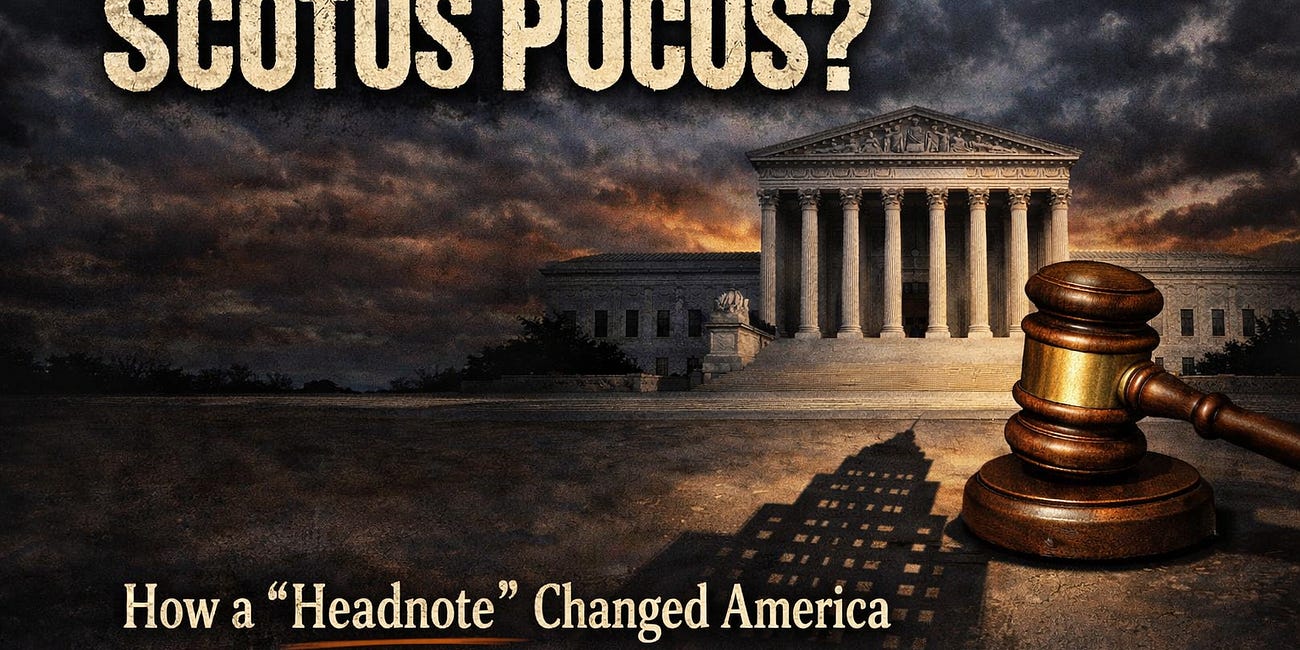
N.B.: Here’s something — a retooled appendix to “10 Suspicious Law Firms” — to mull over while you’re (hopefully eagerly) awaiting the publication of “Catholic Curiosities.” (Working title only!)
Following that, McCormick’s estate plan created the charitable McCormick Foundation.
Richardson later was hired as counsel for INSLAW, which brings up the PROMIS-Octopus affair.
He was “discovered” dead by his valet, Charles Jones, who was also implicated in the killing.
Davison was also involved with the American Red Cross.
We’re sympathetic with the thought that there was more than meets the eye with the Titanic disaster. It’s possible that Astor was the victim (directly or indirectly) of a complicated plot. However, we lack the space and time to delve into that topic, here.
Davison’s son, Frederick Trubee Davison (Skull & Bones, 1918), became a CIA recruiter.
Trump’s other attorneys included Jenna Ellis and Sidney Powell.
Olds led U.S. Steel from WWII to the Eisenhower era.
This is another case of a footnote turned appendix that took on a life of its own.
Others surfacing in this connexion include two Army Air Corps officers, John Jouett and Carl A. Spaatz, as well as an early business associate of Trippe’s named John Hambleton.
Skadden may no longer have been Pan Am’s counsel when the latter’s Flight 103 crashed over Lockerbie, Scotland on Dec. 21, 1988 — following which, supposedly, “unidentified American officials” (suspected to have been CIA or DIA) for some reason arrived on the scene even before emergency responders. According to some reports, these mystery agents handled (tampered with?) crucial evidence, for unknown purposes, and even potentially removed some of it, to unknown destinations.
Other firms were Cravath, Paul Weiss, Wachtell; see Andrew Ross Sorkin, Ravi Mattu, Bernhard Warner, Sarah Kessler, Michael J. de la Merced, Lauren Hirsch, and Ephrat Livni, “Law Firms Warn Universities About Antisemitism on Campus,” New York Times, Nov. 2, 2023, <https://www.nytimes.com/2023/11/02/business/dealbook/law-firms-schools-antisemitism.html>.
Roberts, “The Man Behind The Vaccine Mystery,” CBS, loc. cit. “[T]he Bush family and the administration have …many ties to Eli Lilly. …President Bush’s father …sat on the company’s board in the 1970’s; White House budget director Mitch Daniels …[was] once an Eli Lilly executive; and Eli Lilly CEO Sidney Taurel …serves on the president’s homeland security advisory council.” Ibid.
Daschle has repeatedly worked as a lobbyist, for example, with the “K-Street” firm Alston & Bird — a position he was allegedly recruited to fill by former Republican Senate Majority Leader Bob Dole. Among Alston & Bird’s clients were Abbott Laboratories, CVS Caremark, and Health South.
David Ray Griffin, Debunking 9/11 Debunking, Northampton, Mass.: Interlink Publ. Group; Olive Branch Press, 2007, p. 212; archived at <https://dn790002.ca.archive.org/0/items/debunking-9-11-debunking-an-answer-to-popular-mechanics-and-other-defenders-of-t/Debunking%209-11%20debunking%3B%20An%20answer%20to%20Popular%20mechanics%20and%20other%20defenders%20of%20the%20official%20conspiracy%20theory%20-%20David%20Ray%20Griffin.pdf>; citing Christopher Bollyn, “9/11 and Chertoff: Cousin Wrote 9/11 Propaganda for PM,” American Free Press via Rumor Mill News, Mar. 4, 2005, <http://rumormillnews.com/cgi-bin/archive.cgi?read=66176>; archived at <https://web.archive.org/web/20060325034719/http://rumormillnews.com/cgi-bin/archive.cgi?read=66176>.
Ibid.
However, one George Blow was another key player. Blow’s obit states: “He served on a number of professional associations including the Committee of 100 Federal City, the Board of Directors for The Washington Institute of Foreign Affairs and the Sheridan-Kalorama History Association. He was a member of the Society of the Cincinnati and the Society of Colonial Wars.” According to “George Blow,” Legacy.com; Washington Post, May 23, 2021, <https://www.legacy.com/us/obituaries/washingtonpost/name/george-blow-obituary?id=6177889>.
Ibid. Cf. “Debunking 9/11 Myths,” Wikipedia, Mar. 27, 2026, <https://en.wikipedia.org/wiki/Debunking_9/11_Myths#Benjamin_Chertoff>; citing David Dunbar, Brad Reagan, and Jim Meigs (PM editors), interview, Odeo, podcast, Aug. 22, 2006, <https://web.archive.org/web/20070601181713/http://odeo.com/show/1783494/view>.
Another key player’s obit states: “He [George Blow] served on a number of professional associations including the Committee of 100 Federal City, the Board of Directors for The Washington Institute of Foreign Affairs and the Sheridan-Kalorama History Association. He was a member of the Society of the Cincinnati and the Society of Colonial Wars.” “George Blow,” Legacy.com; Washington Post, May 23, 2021, <https://www.legacy.com/us/obituaries/washingtonpost/name/george-blow-obituary?id=6177889>.
Board members included Adolf Augustus Berle, Jr., a lawyer who, with Gardiner Means, authored The Modern Corporation and Private Property (Piscataway, N.J.: Transaction Publ; Rutgers Univ., 1932), and who had been part of Franklin D. Roosevelt’s “Brain Trust.” See “1957 Annual Report,” The Society for the Investigation of Human Ecology, Incorporated (SIHE, Inc.), Forest Hills, N.Y.: SIHE, Inc., 1957, p. 3; archived online at <http://w3.osaarchivum.org/files/holdings/other/blinken/pdf/B_SF_14.pdf> and <https://web.archive.org/web/20200825225229/http://w3.osaarchivum.org/files/holdings/other/blinken/pdf/B_SF_14.pdf>. Cf. “Human Ecology Fund,” Wikipedia, Sept. 24, 2024, <https://en.wikipedia.org/wiki/Human_Ecology_Fund>. Berle and Means described the emergent “new economic state” for which “[t]he law of corporations … might well be considered …a potential constitutional law …”, ibid., p. 313. In 1962, Means expanded, writing: “[C]orporate enterprises” effectively constitute “great collectives of enterprise, and …[the] system composed of them might well be called ‘collective capitalism.’,” The Corporate Revolution in America. According to Wikipedia: “Means argued that where an economy is fueled by big firms it is the interests of management, not the public, that govern society.” “Gardiner Means,” Oct. 25, 2023, <https://en.wikipedia.org/wiki/Gardiner_Means>.
“James Richard Patton, Jr.,” loc. cit.
Via its subsidiary Degesch (Deutsche Gesellschaft für Schädlingsbekämpfung).
Jonah E. Bromwich, “As Establishment Warms to Trump, Elite Law Firm Takes On His Appeal: The involvement of Sullivan & Cromwell in the appeal of President Trump’s criminal conviction underscored how New York’s legal power players have moved toward Mr. Trump,” New York Times, Jan. 29, 2025, <https://www.nytimes.com/2025/01/29/nyregion/trump-criminal-conviction-appeal.html> and Katherine Faulders, Peter Charalambous, and Aaron Katersky, “Trump hires new lawyers, files notice of appeal for hush money conviction: The change in lawyers comes after he named three former attorneys to DOJ posts,” ABC News, Jan. 29, 2025, <https://abcnews.com/US/trump-hires-new-lawyers-files-notice-appeal-hush/story?id=118225281>.
Funded early on by the John M. Olin Foundation, the Scaife Foundations (of billionaire Richard Mellon Scaife), the Lynde and Harry Bradley Foundation, the Smith Richardson Foundation, and the Earhart Foundation. Later, the Koch brothers (Charles and David and their various foundations) added their support as well.
Amanda Bronstad, “‘Delay, Misdirection and Frivolous Arguments’: Gibson Dunn, Facebook Sanctioned in Privacy Cases: ‘This case is an example of a wealthy client (Facebook) and its high-powered law firm (Gibson Dunn) using delay, misdirection, and frivolous arguments to make litigation unfairly difficult and expensive for their opponents,’ U.S. District Judge Vince Chhabria ruled,” Law.com, Feb. 9, 2023, <https://www.law.com/therecorder/2023/02/09/delay-misdirection-and-frivolous-arguments-gibson-dunn-facebook-sanctioned-in-privacy-cases/>.
Sharon Lerner, “Donald Trump’s No. 2 Pick for the EPA Represented Companies Accused of Pollution Harm,” ProPublica, Jan. 22, 2025, <https://www.propublica.org/article/david-fotouhi-donald-trump-epa-pollution>; cf. Emily Sanderson, “The Law Firm Helping Big Oil Weaponize the First Amendment: Gibson Dunn is ‘playing both sides’ of free speech, using it to defend fossil fuel companies and silence the industry’s critics,” DeSmog, Jan. 5, 2024, <https://www.desmog.com/2024/01/05/gibson-dunn-chevron-dapl-oil-free-speech/>.
No posts
Comments
Nothing yet. Say the first thing.
Sign in to join the conversation.