
Suddenly the world went quiet.
A week ago I emerged from an evening sea swim to find my hearing had almost disappeared. Not completely, just that familiar muffled quality that comes with blocked ears. It happens once or twice a year. Years of endurance running seem to have persuaded my body to produce more earwax than is entirely helpful.
Usually it is little more than an inconvenience. This time it felt different. It made painting harder. I couldn’t quite explain why. My eyes were working perfectly well, yet I felt strangely disconnected from the work. It was as though I couldn’t properly see because I couldn’t hear.
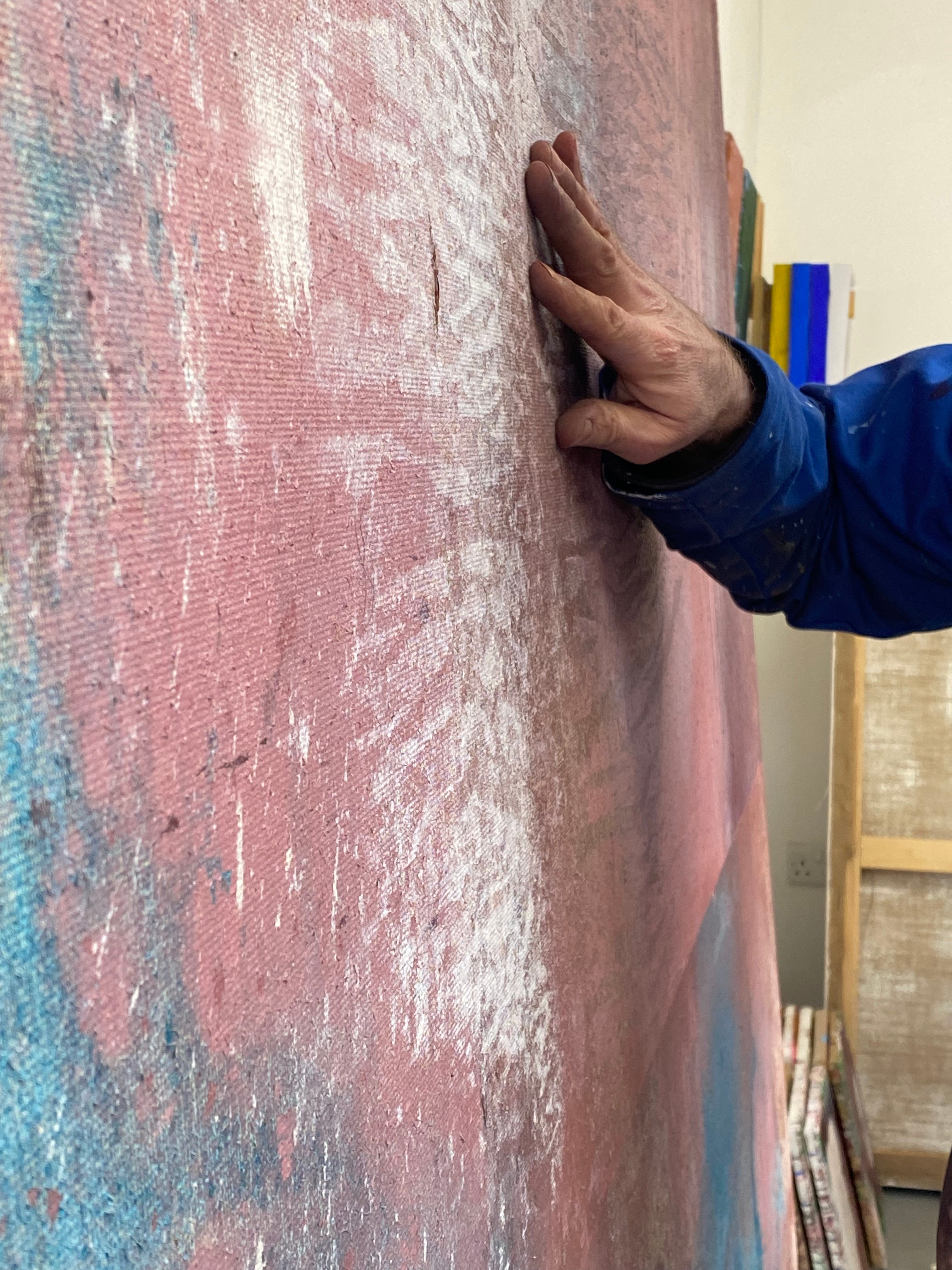
I’ve often felt uneasy when painting is described as primarily a visual art. Of course it is visual, but that has never seemed the whole story to me. The paintings I care about involve the whole person. Mind, body, imagination, memory, emotion and touch all arrive together in the act of making. In many ways painting feels closer to touch than sight. Every colour has its own weight, resistance and character. Some pigments drag reluctantly across the surface while others seem almost to float. Some are generous and forgiving, allowing endless adjustment. Others are stubborn, refusing to cooperate unless approached on their own terms. Paintings ask us to learn their language.
It also has its own music. The clink of a palette knife against glass. The soft drag of a brush across canvas. The sound of charcoal catching on a rough ground. Even the timbers of the studio expanding and contracting with the weather become part of the atmosphere in which the work comes into being.
But there is another kind of listening. The temporary loss of hearing made conversations feel strangely unstable. I struggled to locate their rhythm, their pace and emotional texture. Even the edges of ideas seemed to lose their shape. I couldn’t tell whether they were hard or soft, gentle or abrupt. Everything flattened. To my surprise, painting flattened too. It was as though my inner world could no longer find its way into conversation with the material world. I was trying to dance without hearing the music.
Perhaps this is what painters are really learning. Not simply how to see, but how to listen.
Learning to listen to a painting is one of the most important things an artist can cultivate. It asks us to engage both our outer and inner hearing. To notice not only what we want the painting to become, but what it is quietly asking of us. This requires a particular kind of attention. One that is free, as far as possible, from habit, certainty and ego. Painting becomes a conversation rather than a declaration. The work begins to answer back.I suspect this is true beyond painting.
Our ability to see is inseparable from our ability to listen. When we stop listening, we begin projecting ourselves onto the world rather than entering into a relationship with it. We cease to encounter reality and instead meet only our own expectations. Artists are no different. When listening disappears, painting can easily become an expression of identity alone. Sometimes that is enough to attract attention, particularly in a culture that rewards personality and certainty. But attention is not the same as depth. Viewers may admire the work, yet never truly enter into conversation with it.
The paintings that continue to matter are those that keep listening long after they leave the studio. That, perhaps, is one of the things I care most about when I work with artists. So much of our time together is not spent discussing technique or careers but learning how to pay attention: how to listen more deeply to ourselves, to our materials, to one another and to the paintings we are trying to make. Because I have come to believe that better paintings rarely begin with better answers. They begin with better listening.
If these are questions that interest you, I’d love you to join me for Studio Conversations. Each programme is a small community of artists exploring not simply how to make stronger work, but how to build a deeper, more attentive relationship with their practice. The conversations are generous, thoughtful and rooted in the belief that art is, above all, an act of listening.
Across five weekly sessions we’ll discuss:
subject, theme, and motif
influence and provenance
process and resistance
artistic identity and context
meaning, continuity, and sustaining practice
The sessions will be a space for reflection, exchange, critical thinking, and serious engagement with the realities of making work over the long term.
The next cohort begins Monday 5th October 2026.
5 weekly Zoom sessions
90 minutes each
recordings and notes included
discussion space between sessions
More information and registration here:
No posts
Comments
Nothing yet. Say the first thing.
Sign in to join the conversation.