
When I think back on the authors who ruined me as a writer, there was that postrecession era after 2008 where, like a lot of other Millennial men, I had the experience of reading David Foster Wallace’s nonfiction essays for the first time and seeing the voice inside my head printed on the page. I got really wowed, and unfortunately this produced a period of heavy ironic footnoting for a short while after.
Then there was Proust. Those languorous but precise sentences in “Swann’s Way” really damaged me on some lymphatic level, like a leukemia I would never really get over. I had to go back to journalism school and embark on a career as a hard-boiled newspaper writer to beat the Proust into remission and out of my prose.
Just know this: Whenever you see a short, clear sentence out of me, it is an act of training, discipline and will.
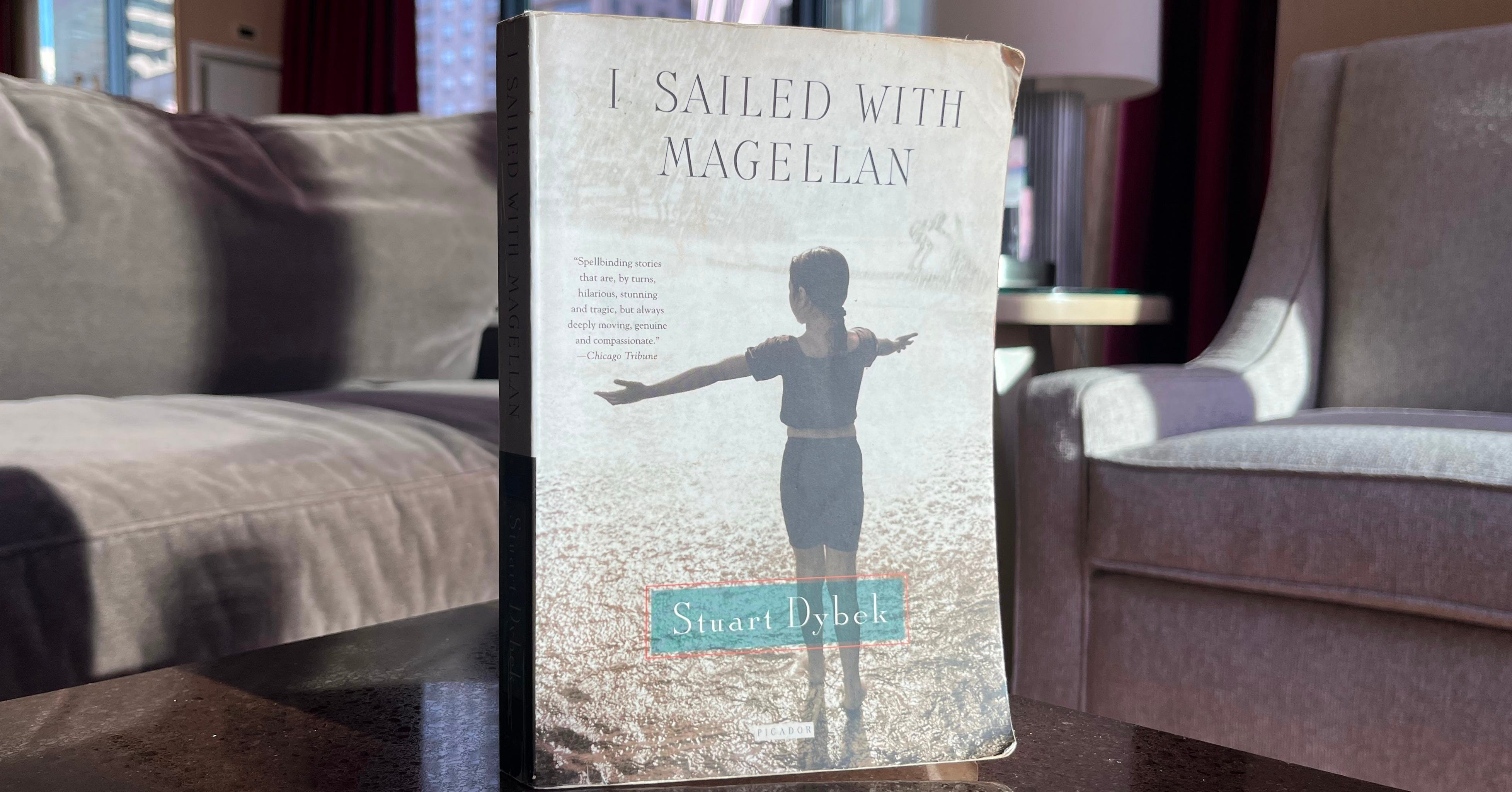
But when I was an undergraduate English major studying creative writing, it was really short story author Stuart Dybek who cast a mind-control spell on me for a while. In class we were assigned Dybek’s “Pet Milk,” printed in the New Yorker in 1984.1 Barely several paragraphs long, the story was to me, a small-town Missouri kid, an act of literary sorcery that would eventually imbue me with strange if not terribly useful powers.
“Pet Milk” starts with a Proustian act of remembrance, except instead of a madeleine, the narrator is sipping on instant coffee with PET Milk. (It’s not for pets, that’s just what the Illinois company that made the evaporated milk was called.)
“There’s almost something of the past about it, like old ivory,” the narrator writes of pet milk. He sips, and the memories come crashing into the present like train cars, one after another.
He remembers grandma, who had always used the pet milk for the cream in her coffee, listening to something Ukrainian or Spanish or Greek on her warped little radio in Chicago, where “all the incompatible states of Europe were pressed together down at the staticky right end of the dial.”
The clouds of the pet milk in the coffee looked like the clouds over the skyline outside grandma’s window, which reminds the narrator of the swirls of crème de cacao in the drinks the narrator would get with his girlfriend Kate at a neighborhood restaurant in the Pilsen. It was their first year out of college, that time of lovers with star-crossed futures:
She talked of going to grad school in Europe; I wanted to apply to the Peace Corps. Our plans for the future made us laugh and feel close, but those same plans somehow made anything more than temporary between us seem impossible. It was the first time I’d ever had the feeling of missing someone I was still with.
And so out they tumble from the restaurant one night, looking to hook up and knowing it’s almost over. They jump into an express train on the El up to Evanston and lock themselves into an empty conductor’s apartment for a bit more time together, speeding away from a past together in Chicago that they’re already leaving behind. Then comes “Pet Milk”’s famous ending, reminiscent of James Joyce’s transcendent conclusion at the end of “The Dead” in “Dubliners.”
Dybek:
The train was braking a little from express speed, as it did each time it passed a local station. I could see blurred faces on the long wooden platform watching us pass—businessmen glancing up from folded newspapers, women clutching purses and shopping bags. I could see the expression on each face, momentarily arrested, as we flashed by. A high-school kid in shirtsleeves, maybe sixteen, with books tucked under one arm and a cigarette in his mouth, caught sight of us, and in the instant before he disappeared he grinned and started to wave. Then he was gone, and I turned from the window, back to Kate, forgetting everything—the passing stations, the glowing late sky, even the sense of missing her—but that arrested wave stayed with me. It was as if I were standing on that platform, with my schoolbooks and a smoke, on one of those endlessly accumulated afternoons after school when I stood almost outside of time simply waiting for a train, and I thought how much I’d have loved seeing someone like us streaming by.
I spent years trying to figure out all the writerly tricks in “Pet Milk,” from the selection of the details, the archaeological layering of memories on top of each other, the flexibility of the metaphorical “as if,” and especially Dybek’s mastery of the sentimental past tense: all his past-habitual “we woulds,” modal “I coulds” and past-continuous “-ing” verbs.
This is how you write about a past that’s both dead and alive, long gone but which you can’t let go.
Of course, the irony of spending so much time slavishly copying Stuart Dybek in my own writing is that I would grow up to be a much different type of writer. I don’t even write fiction anymore and very rarely dwell on my past anyway, lost or not. My preferred archaeology involves rummaging through the great treasury of the humanities to look for what we might have completely forgot, like those antikythera mechanisms and Greek fires and self-healing Roman concretes that we forgot how to make. If I practice a literary necromancy, it’s not the sentimental kind.
I prefer the dislocations of the present, the weird here, even as I somehow ended up with a conservative prose style that was probably better suited for readers in the 20th century. My writing has a foreign accent it can’t shake. I seem to have time-traveled from the past into a future ruled by agentic AI and advertising on Instagram, and I may not actually hold citizenship in this timeline.
At this point I might normally be expected to impart some thoughts to today’s 19-year-old who’s trying to figure out their own style in a world that has largely given up on that sort of thing as some kind of major problem. Well, I couldn’t say. Stuart Dybek had me thinking that I was going to move to Chicago and become a great Chicago writer too, and all these years later I’m in Los Angeles without even really feeling like an “L.A. writer.”
If pressed, my advice would be:
You really don’t need that many -ing verbs.
Don’t write a first sentence that could work as the first sentence for a completely different piece. (“John was in trouble.” Etc.)
Constraints are great for creativity.
You may not get the chance to have an editor but just know that you need one anyway.
Read a lot, find somebody you want to slavishly imitate and don’t feel bad about being totally derivative. The butterfly breaks out of the cocoon.
Of course, if you’re reading a newsletter about writing, you’re probably not the kind of person who needs advice. You’ve already made some kind of wrong turn somewhere and can’t turn back. You’re probably already on your way; you may have already arrived.
No posts
Comments
Nothing yet. Say the first thing.
Sign in to join the conversation.