
Lots of pictures in this one, so the email may be cut off. Read on a browser or in the Substack app for the best experience.
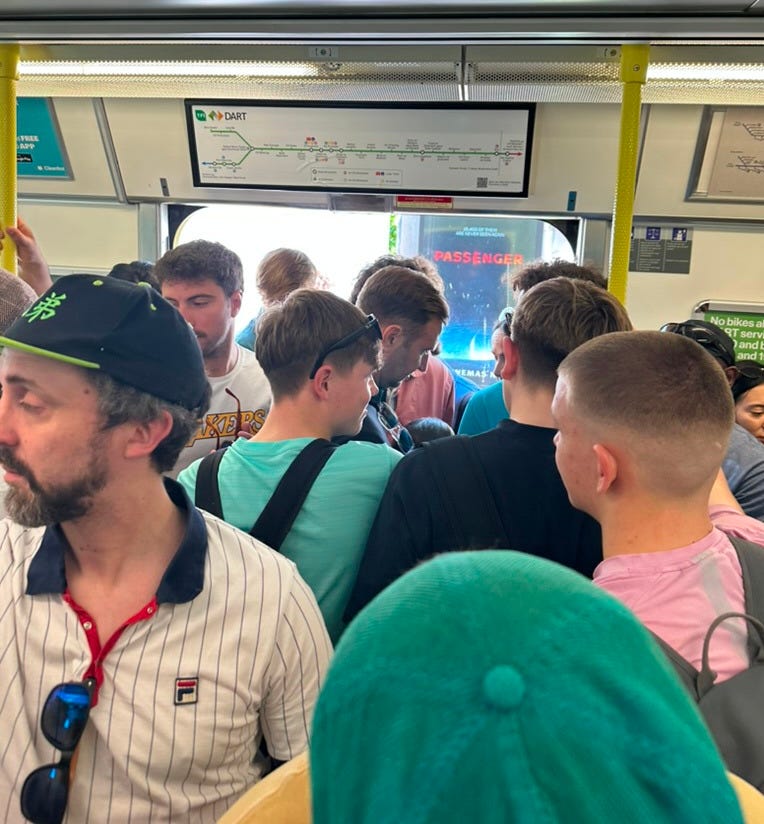
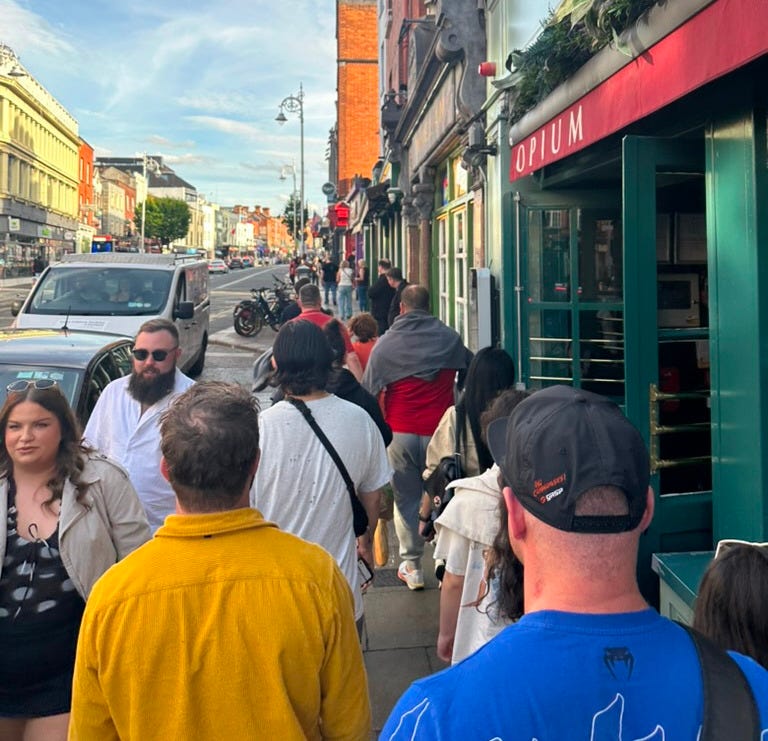
I’ve just returned from the gurgling streams and spongy mountain passes of County Kerry, Ireland. But this isn’t Field Stack, so I’ll touch on Dublin, which I found eminently walkable, beautifully detailed, and dripping with history. It is also Europe’s fastest-growing city, and its narrow sidewalks and jammed trains seemed to be bursting at the seams.
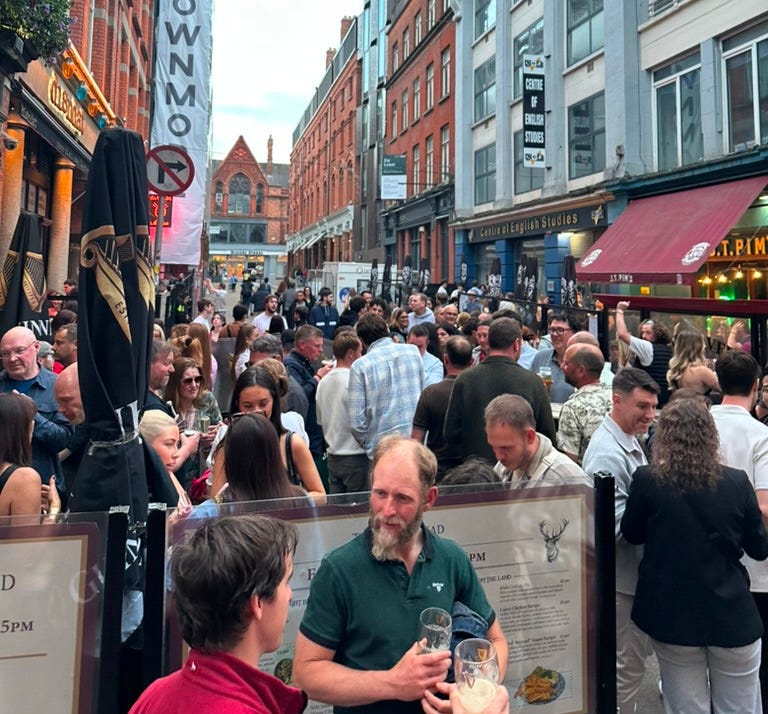
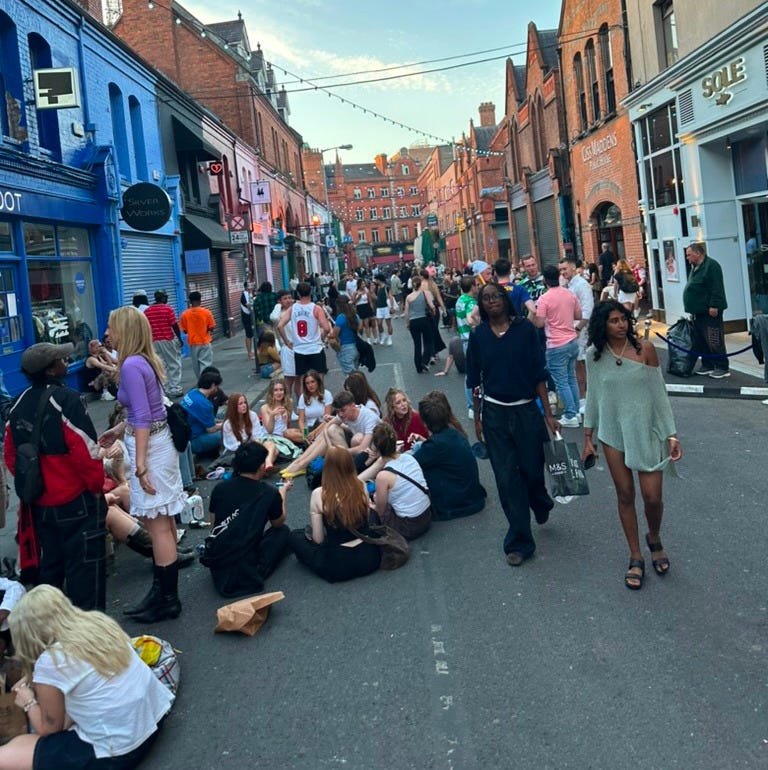
On Drury Street, crowds enjoyed pints sitting on the curb and in the road. The street was pedestrianized during COVID and remains one of the few car-limited spaces in the city center. Several bars and restaurants are allowed to set up seating and dining enclosures, but many seemed to flock there with their own food and drink just to see and be seen. The lack of public seating is a missed opportunity. The historic city development in Ireland and the UK does not regularly install the piazzas and squares of the Continent. There are small parks like St Stephan’s Green, and the massive Phoenix Park is easily accessed from the City center, but the average street or corner seems to lack the smallish gathering areas that make cities pleasant. I’ll caveat all this by saying I didn’t see much of the residential neighborhoods, and these areas may have pocket parks and benches, but there is a notable lack of public space in Dublin center. I asked an Irish friend where Dubliners would, say, celebrate a big sporting event or attend a political rally, and he didn’t have an easy answer.
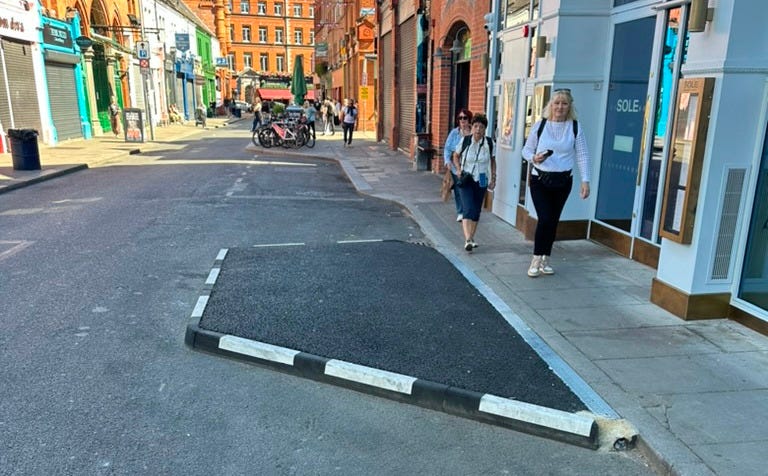
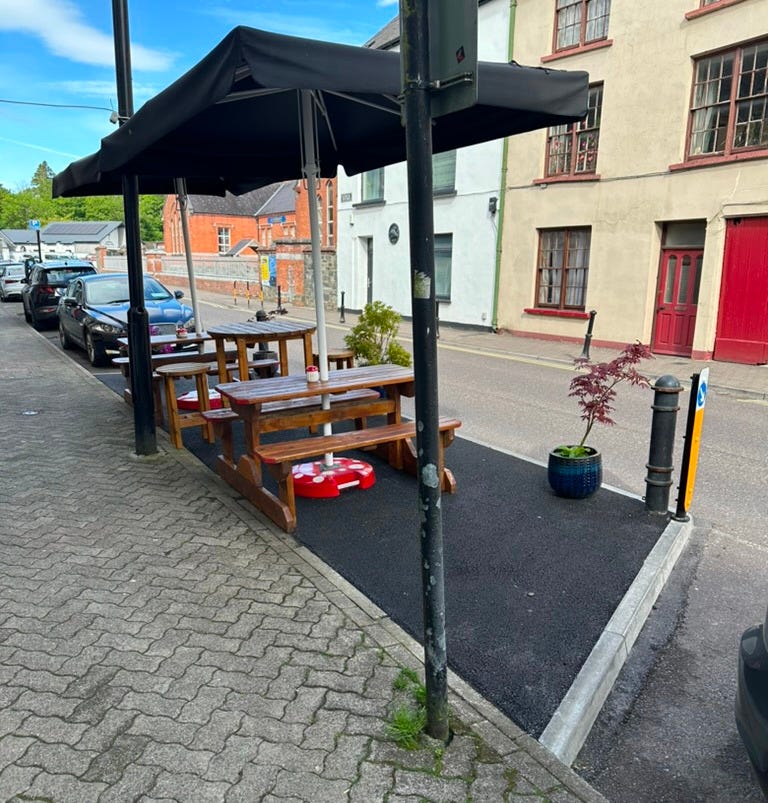
If you ever go on vacation with me, I will stop regularly to take photos of really mundane stuff, and one thing I liked was these curb extensions, which my friend jokingly described as pedestrian overtaking zones. In NYC, something like this would take 3 years and 4 public meetings to install, but the Dublin Council uses them liberally to add pedestrian space to the city’s narrow sidewalks. Some of them were set up for outdoor dining. I also noticed similar treatments in Killarny, a town of 14,000. Seems like this is just part of the Irish roadbuilding toolkit.
Of course, the effects of growth are felt acutely in Dublin’s famous housing shortage. In the hotel, I caught an interview panel that included the legislator Eoin Ó Broin. I won’t pretend to understand what was said, but the tone of the interview made it clear that people view housing as a full-on crisis, and it was impressive to hear national politicians speak about local housing projects down to the number of units. Maybe this kind of specificity is possible in a small country, but it highlighted how low a priority housing has been in US national politics, pretty much my whole life.
Dublin is also car-choked. A week before departure, I assumed that this being Europe, I would take some kind of train from the airport to the city center. Not so. Dublin is the 7th most traffic-congested city in the world, and a new metro line to the airport has been in planning limbo for decades. This is a shame because getting cars off the road would open up a lot more space, for example, along the heavily trafficked River Liffey. The river near O’Connell Bridge has been turned into an esplanade, but there could be much more here if lanes of traffic weren’t in the way. I was happy to head to Kerry, but the heaving, bustling capital was more interesting than I expected because it has its warts. It felt like a city in progress, which always makes me want to return.
I arrived in London during a heatwave but still managed to walk five miles a day and achieve a rare English tan. The first night in my clean but totally un-airconditioned room above a pub, I had to soak a towel in the shower and lay it over me to sleep.
But the heat accentuated things I love about London, and led to a new discovery. I was grateful for the many parks that shaded walks through Lambeth and Hackney. A little less than half of the city is green space, one of the highest proportions in the world, which is a pleasant fact year-round but was a godsend in the heat. I think three things characterize “Englishness” across class and race. One is a love of plants, and spring highlighted just how well the city is planted. I had never seen the Barbican in May, and the brutalist housing block’s balconies were a riot of multicolored flowers. Looking through the gate of the Inner Temple gardens, I was sad that I’d miss London Open Gardens, when the private gardens of churches, council estates, and fenced-off Kensington squares open to visitors. Second, while Americans might be crazy, English people are eccentric, and something about the sun fueled the Londoner’s urge to juggle in public, ride a penny farthing, and wear nothing but their underwear in the park — all things I saw.
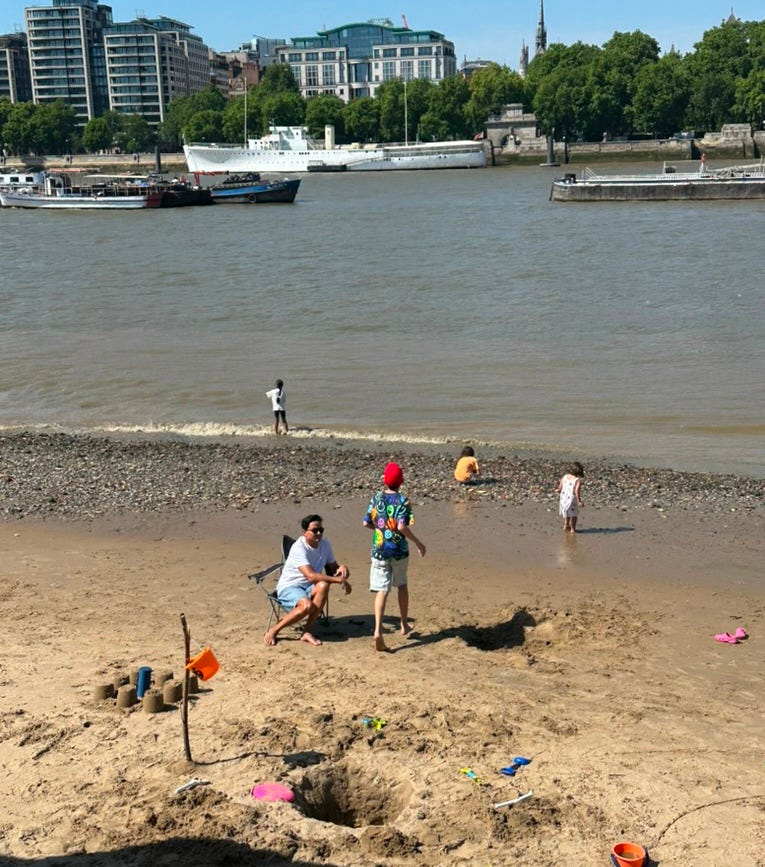
The discovery I made is a new and exciting lifestyle, what I’m calling Basin Life™️. Longtime readers will know I’m very attached to urban rivers, and I love the Thames in particular. The heat seemed to break any hesitancy to get close to the water, and I saw dogs fetching balls from the muddy water, several children up to their ankles, and generally a lot of people treating the foreshore like a beach.
In the east are a series of basins where riverboats and goods used to transition from the Thames into the canal system. Several of these, like Limehouse Basin and Shadwell Basin, were redeveloped into housing in the 1980’s.
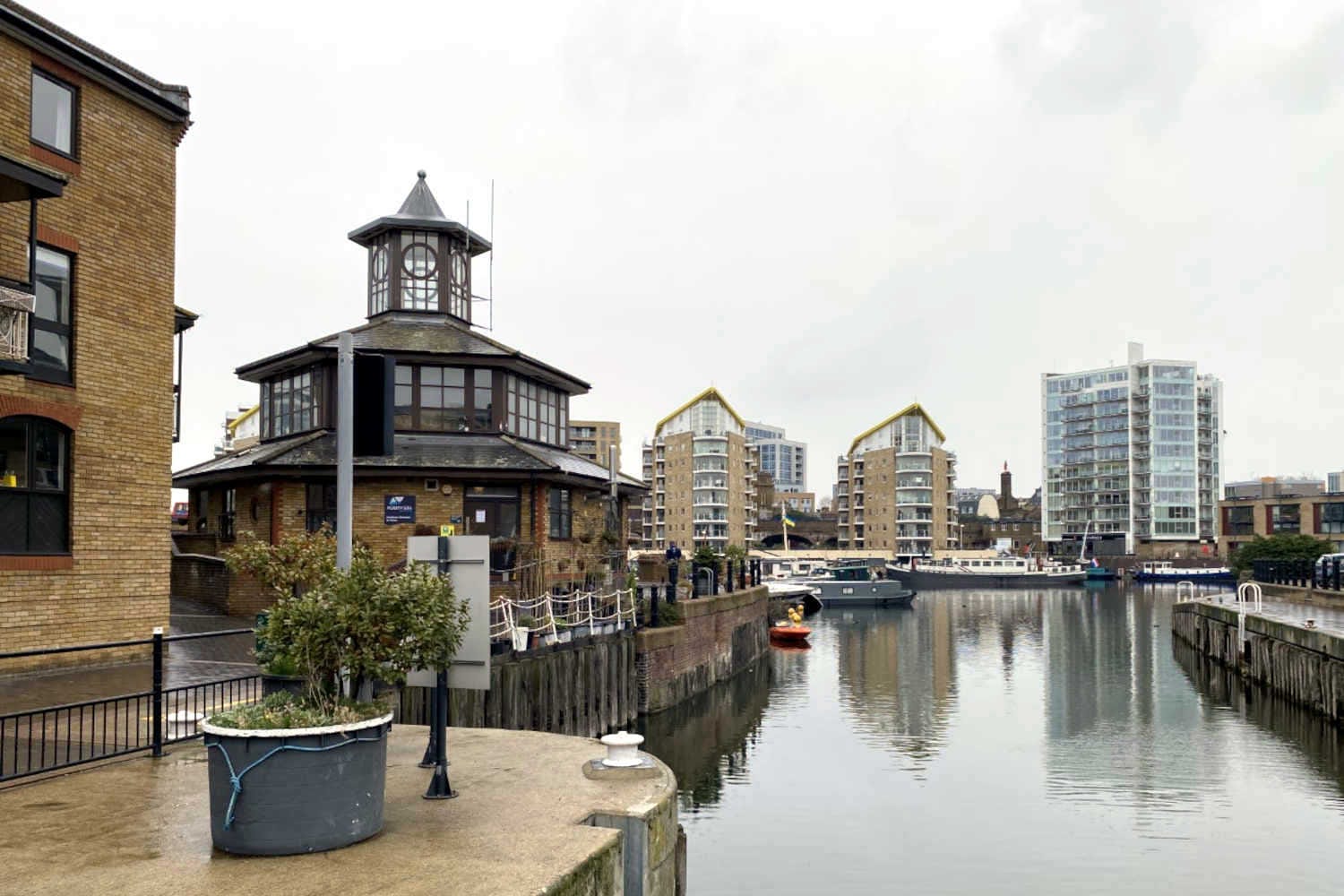
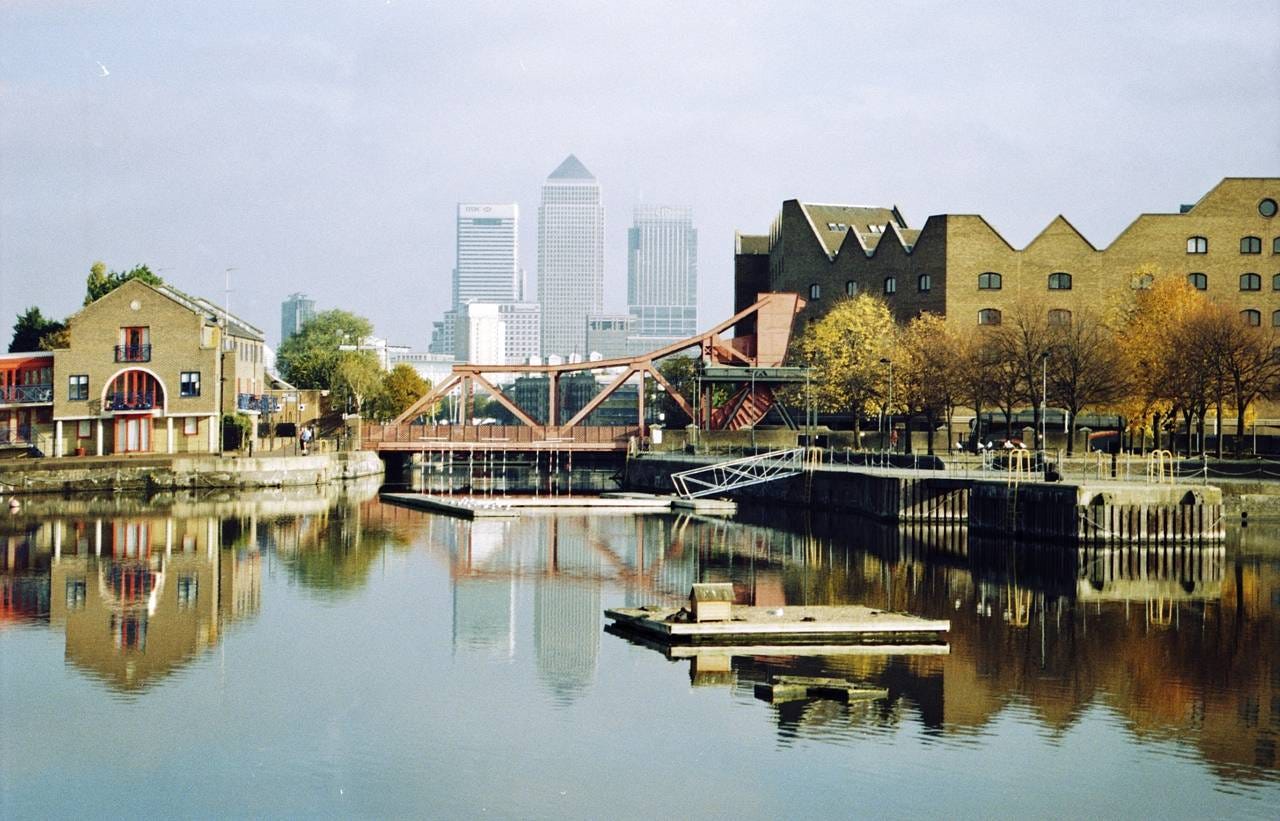
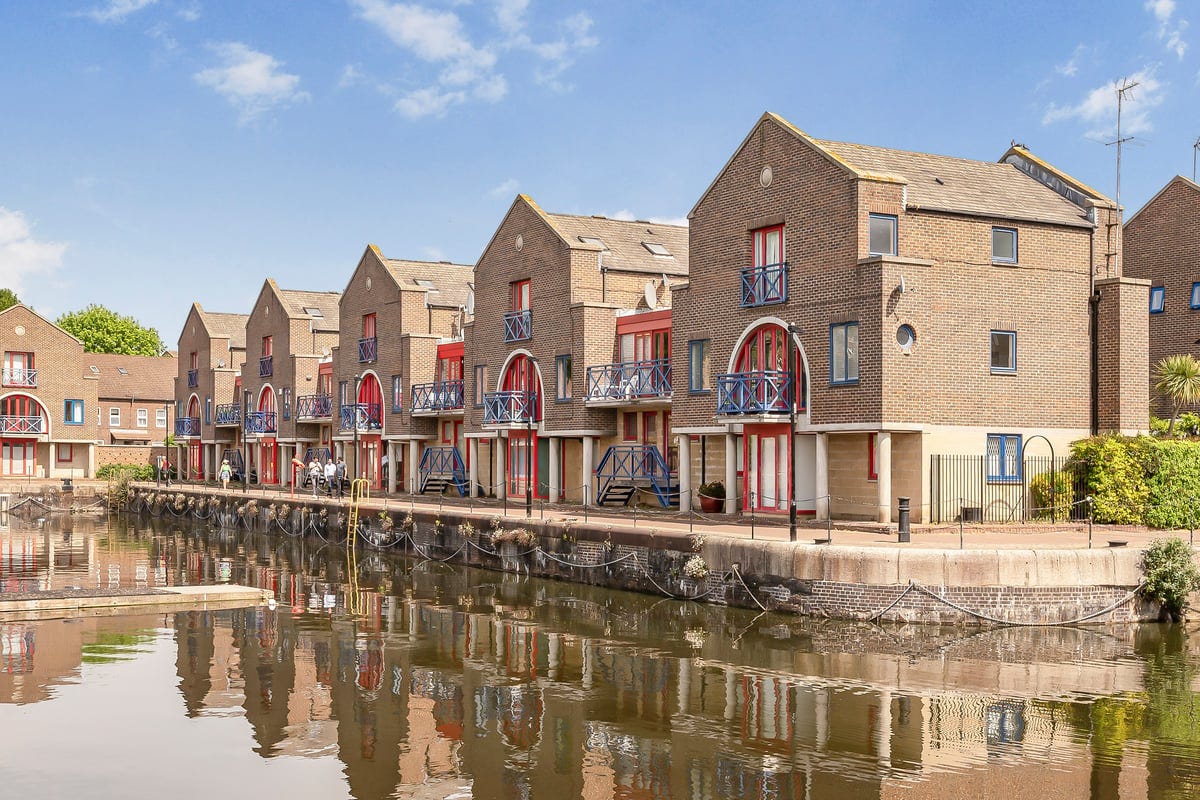
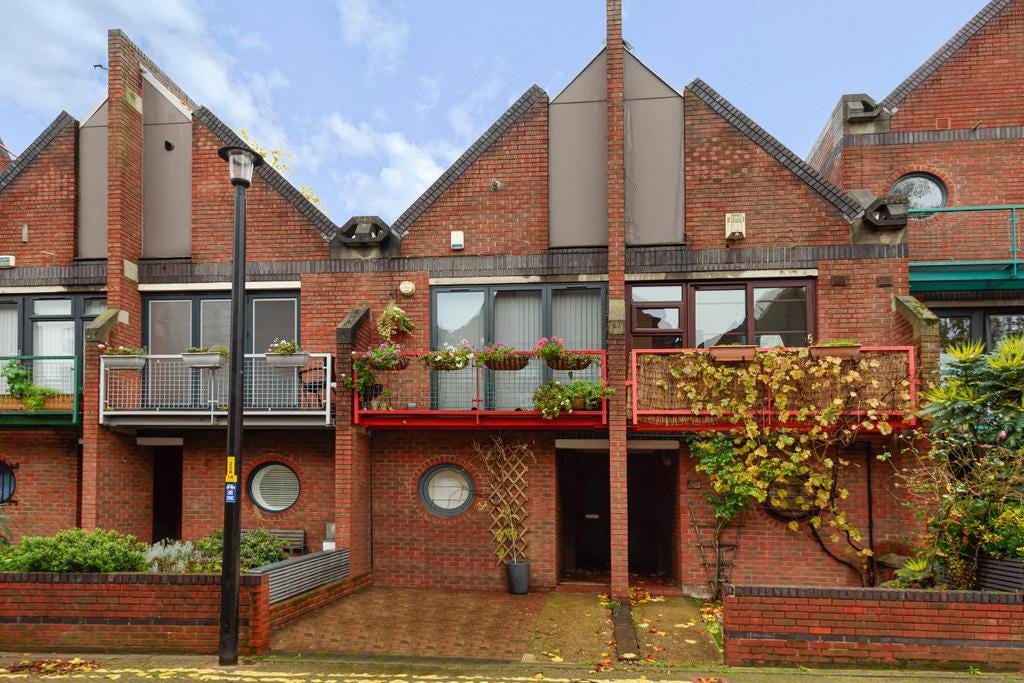
The buildings here are frankly… weird, but there are balconies, good light exposure, and views onto the Thames and the basin docks. What cemented living here as a lifestyle was my discovery that people swim in these things. Shadwell has long been an illicit swimming spot, but no one seemed to be bothered by the illegality.
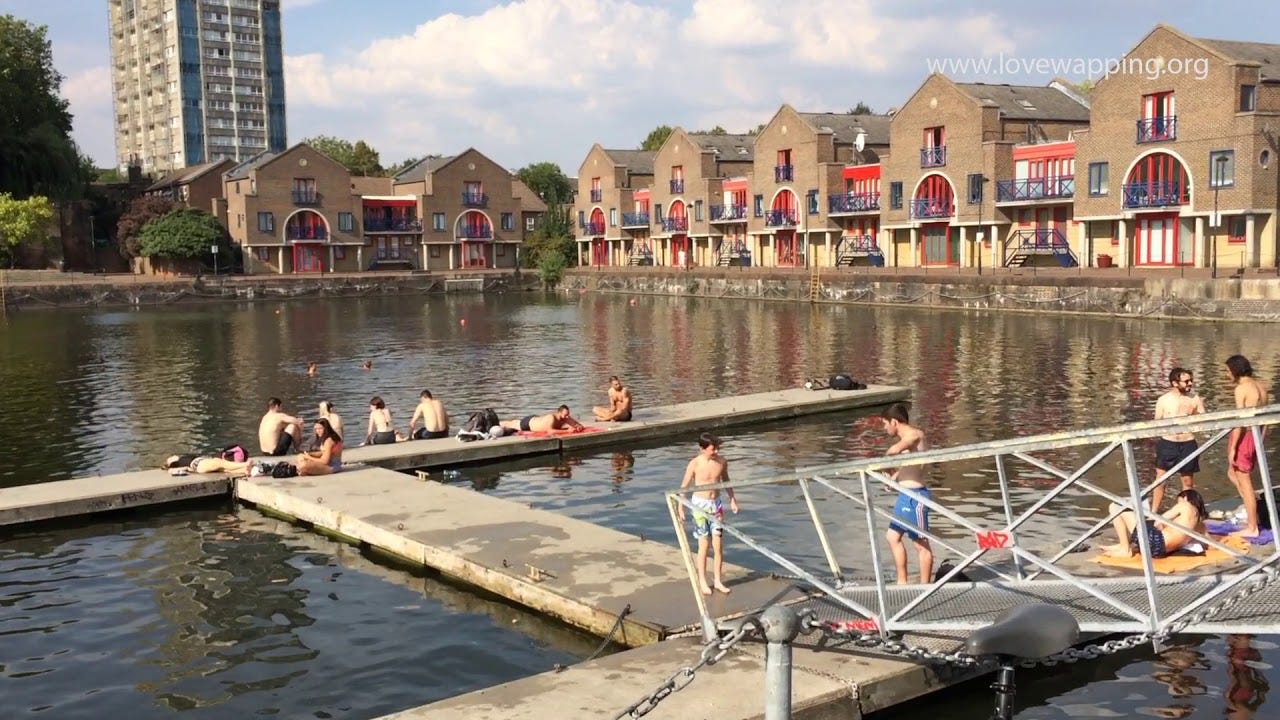
On a visit to Wapping, young people still in their bathing suits crammed the Thames-facing Prospect of Whitby Pub for a pint and a rolled cigarette. This is the essence of Basin Life. It’s ignoring the fact that you might have just contracted aquatic herpes with a cask ale and lung damage. You throw a ball into the river for your dog, and live in one of these 80’s, vaguely nautical brick things.
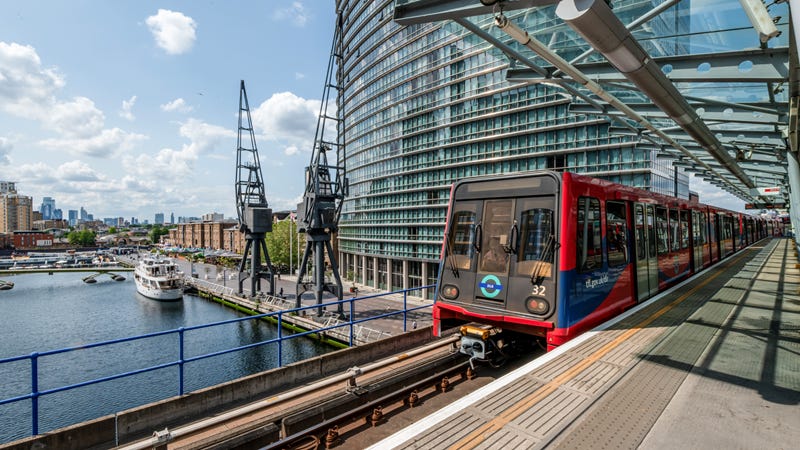
You use really weird transportation like the Docklands Light Rail, the Greenwich Foot Tunnel, or even the London Cable Car. God willing, I’ll live in London again one day, and I will seek out Basin Life.
I wasn’t around long enough to dig into any new developments or planning projects in detail, but in the heat, several vignettes filtered into my awareness. When I went to UCL, I commuted by bike, but the number of cyclists has noticeably increased, with a 43% rise in cycling trips over the past 6 years. The intersections of Brixton had an almost Danish level of bike commuters during rush hour — this, in a country where it rains 100 days a year and that had virtually no cycling infrastructure at the start of this century, frankly, puts NYC to shame.
On a walk through the City of London, I noticed a large amount of student housing being built. The City of London is the borough that covers the historic core and business center of London, an area sometimes called the Square Mile. Student housing is important, but during an acute shortage of actual housing, its prevalence feels misguided. Back in 2023, UCL terminated its partnership with my American university, a partnership that allowed me to pay seven thousand USD for a term in London, while students from Asia were paying 20 thousand pounds. My advisor back home was blunt — they make no money from us. If London is good at anything, it’s bending over backwards for foreign investment (I’m currently reading Patrick Radden Keefe’s London Falling and can’t put it down). Rather than build housing, the Square Mile’s government, essentially a development cartel with the trappings of a medieval guild, has decided to go all in on students, who can be packed into small rooms and charged high fees. With the Russians non-grata and the Saudi’s unwinding their investments in Britain, who knows, 800 students might just equal one Emir in revenue. This is in keeping with the pattern of ensuring no one actually lives in the Square Mile, which, despite once being among the most densely settled places on Earth, now has less than 9,000 residents. I added up the three student-housing proposals currently approved in the Square Mile and got roughly 2,200 student beds, a staggering proportion given the number of actual residents. I hoped that since my last visit, the post-COVID workscape and the economic fallout of Brexit might have diversified what is still one of the most beautiful and history-rich parts of the city, but that doesn’t seem to be the case.
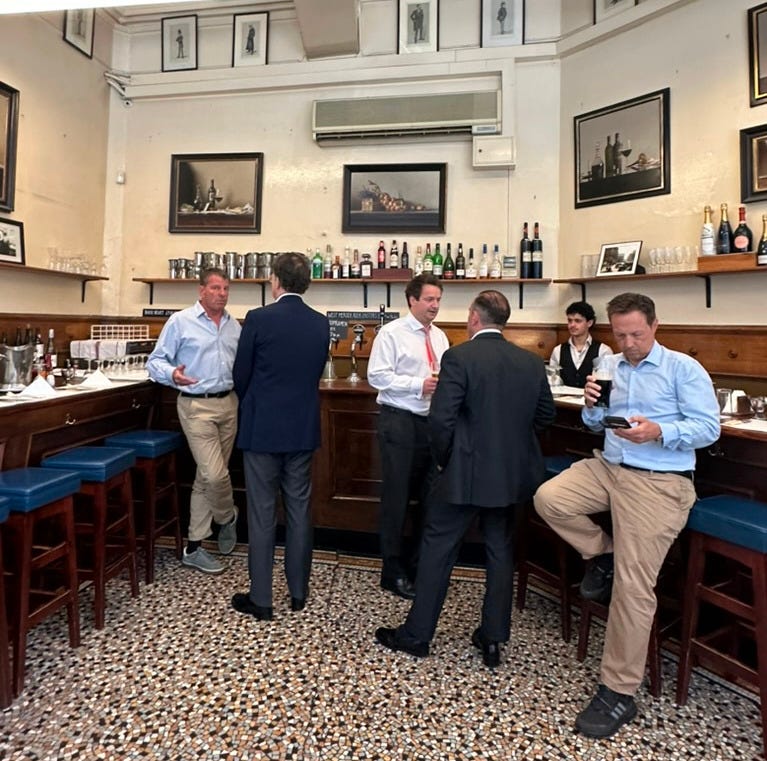
I didn’t let housing supply ruin my vacation, and had a perfect lunch at Sweetings of fresh seabass in a parsley caper sauce for a price I would kill for in Brooklyn, while two bankers next to me split a bottle of Chablis with fat oysters on a workday lunch and complained about deals. It was a perfect a summation of the place, as perfect as the border collie with muddy paws that kept depositing a stick at my legs in a pub’s yard in rural Ireland.
Nick:
I went to Grogan’s Castle Lounge three times in the four days I was in Dublin. Grogan’s Victorian neighbors—like the delicate Long Hall and pristine Palace Bar—feel like museums. Grogan’s feels like a public living room. The interior has a slight barnyard funk. Behind the bar, a copy of The Ginger Man sits beside the Powers bottles, above a production line of toasters pumping out ham and cheese sandwiches.
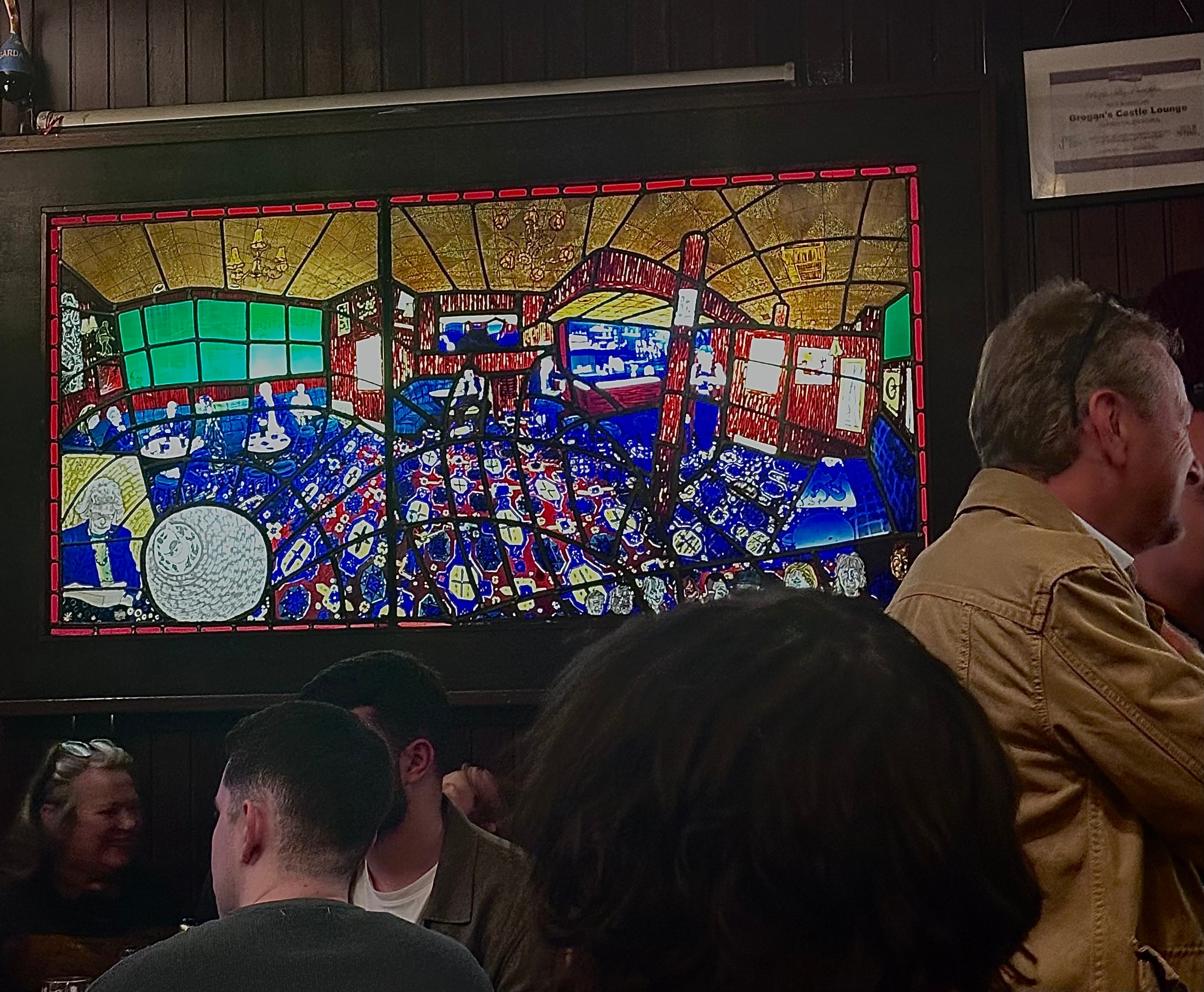
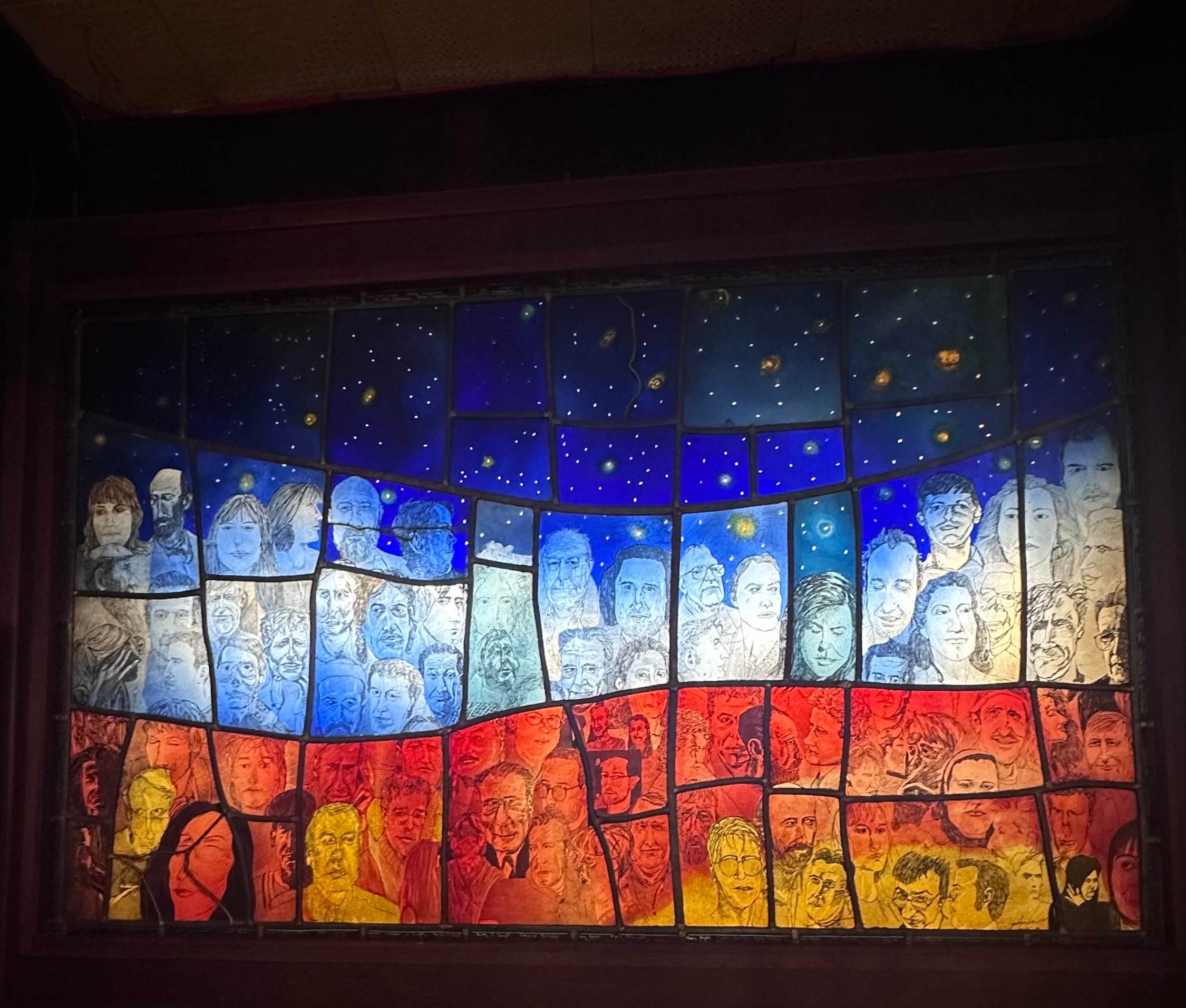
More notable are two stained-glass pieces by an artist (and patron) named Katharine Lamb. One is a warped reflection of the very room you’re standing in. The other is a collection of revered regulars from the past.
My research team sank into the well-worn benches, and like the punters before us, made the same silly jokes, farted into the same seats, spilled drinks onto the same carpet, and added our own (redacted) number of pints to the historical tally.
An Irish friend told me that when her granny died, they laid her body on the kitchen table for the wake. Family and friends gathered around, telling stories, eating sandwiches, and drinking tea. Sitting in Grogan’s felt similar, but in a nicer way.
Jamie:
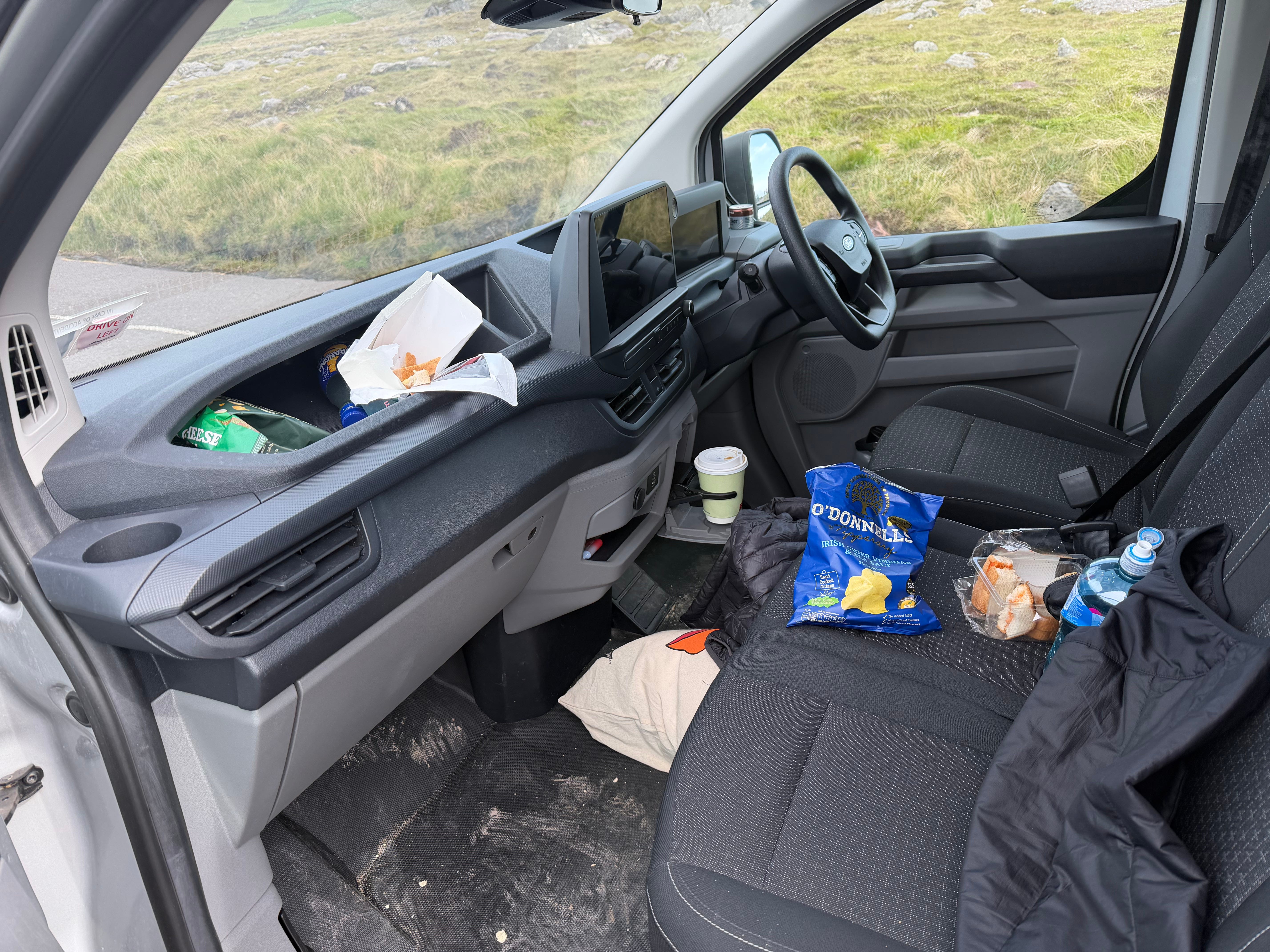
I was really impressed by the gas station sandwiches in Ireland. I probably ate roughly 8-11 egg salad sandwiches over the course of the 10 days I was there, not to mention the odd ploughman’s or chicken tikka. The bread in these is surprisingly soft—I am left with the distinct and satisfying impression (bear with me) that some actual, meaningful gestures toward flavor and consistency are being made in factory kitchens all across this fair isle, that they adhere here (no, really) to some Stricter and far more Holy mass-produced food prep order than our CITGOs and our Speedways…. I never once touched (never even thought about touching!) the various tuna packets I had tucked away in my luggage. Ended up only eating a quarter or so of the Trader Joe’s Tuscan Pane loaf I’d brought along, this being their rustic, country-style sourdough loaf famous for its “airy interior” and “crispy crust.” There are 7 of 12 string cheeses remaining in my backpack as I return thru U.S. customs on Memorial Day. It isn’t clear to me if I’m supposed to declare these items or not (since while they certainly do fall under the “Food / Produce / Agricultural Products” heading, they had originated from the U.S. to begin with, so…?).
No posts
Comments
Nothing yet. Say the first thing.
Sign in to join the conversation.