
Hello friends!
I hope your summer is off to a good start! I’m just back from travels to Spain, Portugal, Greece, and the tiniest bit of the UK, and am now slowly sliding back into my writing practice. This summer, that means finishing drafting a nonfiction book that I sold a while back but haven’t officially announced yet: Typo, coming next year from the Object Lessons series at Bloomsbury!
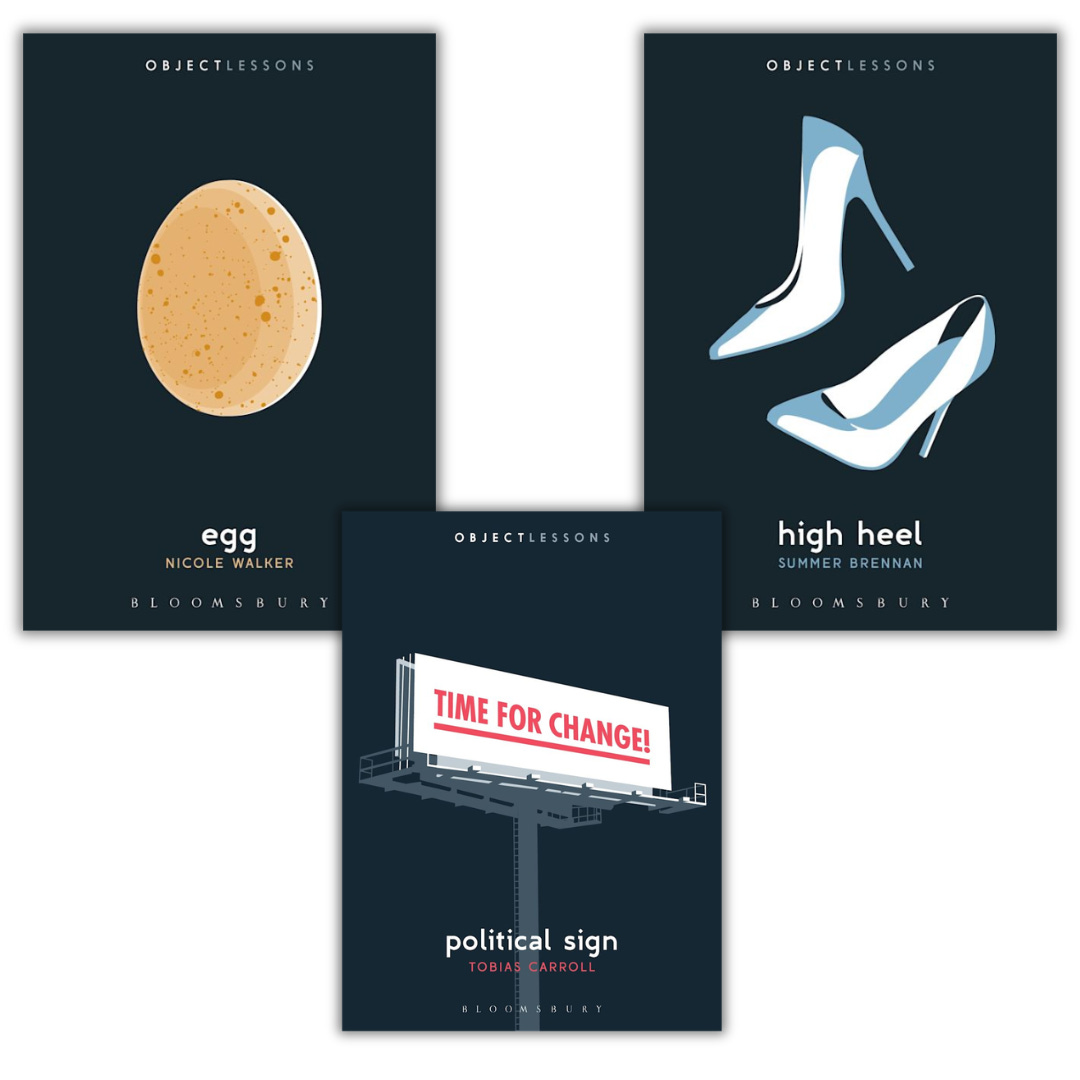
If you’re not familiar with Object Lessons, its editors describe it as “a series of concise, collectable, beautifully designed books about the hidden lives of ordinary things.” Each Object Lessons book is about 100 pages long, and each one does a deep dive into a specific object or category of objects. For instance, some of my favorites include Egg by Nicole Walker, High Heel by Summer Brennan, Blackface by Ayanna Thompson, Videotape by Oana Godeanu-Kenworthy, and Political Sign by Tobias Carroll. It’s such a fun, smart series, and I’ve been a fan of the books it's published for many years now. I’m glad to finally be writing my own!
In my proposal, I pitched Typo as a “wide-ranging exploration of the way typos impact, imperil, and ultimately enrich our lives through the randomness, delight, humor, and danger they engender.” It’s been a lot of fun to research and write, and of course I’m including many of my own experiences with typographical errors and other related writing mistakes. (I have made so, so many facepalm-inducing typos in my career, in both private and public…)
Which is also where you come in! As part of the book, I’d like to include anecdotes from other writers and readers about the most memorable typos you’ve encountered, in your own creative or professional writing, in your personal communications, or in your reading of published work. If you’d like to share a story with me for possible inclusion in Typo, you may put it in the comments below or you may email me directly by replying to this newsletter. (You can also use the contact form at my website, if you’d prefer.) If I use your story, I’ll obviously credit you (unless you’d prefer to remain anonymous), either in the book’s main text or in the acknowledgments.
While the first thing we think about with typos might be mistakes and potential embarrassment—and yes, please send those stories!—I’m also looking for times where typos or other written errors led to new ideas, inspirations, or breakthroughs. Personally, I know that sometimes the “wrong” word has ended up pointing the way toward something far more interesting than I’d originally intended, and I’d love to collect some specific stories about that phenomenon from other writers.
In thanks, I’ll give a three-month paid subscription to this newsletter to anyone whose stories I end up using. That’s enough to at least check out all the paid craft lectures that I’ve done over the past year or two, and hopefully to catch the next one, which is going to be in the first weeks of August. (I’d hoped to host one in late June or early July, but unfortunately can’t make it happen with some upcoming work and personal travel. My apologies! News on the next lecture date incoming with my July craft essay, sometime next week.)
Thanks in advance to anyone who has a good typo story to share! I can’t wait to read them. More soon, friends!

Thanks so much for reading! If you’re not already subscribed, please consider doing so by clicking the button below.
Matt Bell’s next novel is Penitent, forthcoming in 2028 from Doubleday Books. He is the author most recently of the novel Appleseed (a New York Times Notable Book) and the craft book Refuse to Be Done, a guide to novel writing, rewriting, and revision. He is also the author of the novels Scrapper and In the House upon the Dirt Between the Lake and the Woods, as well as the short story collection A Tree or a Person or a Wall, a non-fiction book about the classic video game Baldur’s Gate II, and several other titles. His writing has appeared in The New York Times, Esquire, Tin House, Fairy Tale Review, American Short Fiction, Orion, and many other publications. A native of Michigan, he teaches creative writing at Arizona State University, where he directs the ASU Worldbuilding Initiative.
Comments
Nothing yet. Say the first thing.
Sign in to join the conversation.