
Hello friends! I hope you’re having a good summer so far. I’ve got a couple of quick pieces of housekeeping before we get to this month’s craft essay:
First, thanks to everyone who already sent in your typo stories and anecdotes for my next nonfiction book, Typo. I haven’t had a chance to reply to everyone yet, so if I haven’t gotten to you, my thanks is incoming. So many great stories, so many fantastic errors! If you’d like to hear more about that book or send in your own contributions, you can do so here.
Second, the next live craft lecture for paying subscribers will be held on August 6 at 7pm ET, on Zoom. As always, I’ll send out the Zoom link a day or two beforehand, to everyone who’s a paid subscriber at that point. As promised, the August lecture will be a deeper dive into another method of outlining the novel, breaking down “sequence theory” in screenwriting and how to apply that to fiction. (It’s the method I used to structure Penitent, my next novel.) If you’re interested in joining us, you can subscribe by clicking the blue button:

I’ve never been a writer who begins writing a novel or a story with my protagonist’s life entirely mapped out: I often don’t even know their name when I begin, much less their personalities, their desires, their histories. I’ve never made one of those questionnaire-style charts where you list a character’s eye color, favorite foods, hang-ups, and so on. Often, I proceed from roles, not persons: a detective, an environmentalist, a soldier, a parent, thrust in media res into some specific situation. It’s in the writing that I get to know my characters, not the planning, letting them reveal themselves in the choices they make in scenes and the things they say in dialogue. But this approach does present its own challenges, especially in the earliest writing: How can I accurately predict what a character will do next if I don’t know who they are?
One reason I often find it easier to write scenes later in a draft (and doubly so in later drafts) is because by then I’ve usually filled in some of that missing knowledge, in part by studying the story I’m writing as it emerges. One protagonist rolls his hand during another character’s speech and I note his impatience. Another makes a claim in dialogue that even her most questionable choices are always meant to serve the greater good, revealing her belief that the ends justify the means. As these qualities and narratives cluster around a character, I build a better idea of who my characters are, what their strengths and weaknesses are (as well as their blind spots), and where they might need to grow or change.
Eventually, I may come to know these strangers I’ve invented better than they know themselves. Even more useful, though, is asking, What is the story my characters telling themselves about themselves? What does that story get right and what does it get wrong?
On one level, what happens in fiction that prioritizes character might be the story of this story, this self-myth: the protagonist begins with one story about who they are, then, through narrative, discovers some level of falsity in that story, before arriving at a new, truer story about themselves and their place in the world.
A workaholic who justifies his absence from the rest of life learns that there’s more to value than the next promotion. A cruel miser without meaningful attachments learns to love and be loved. A person traumatized by a sudden romantic betrayal vows never to date again, only to rediscover romance on better, more honest terms. Each of these characters has one self-narrative at the beginning of their tale and another at its end. Increasing the distance and distinction between these two stories is one way to achieve dramatic effect.
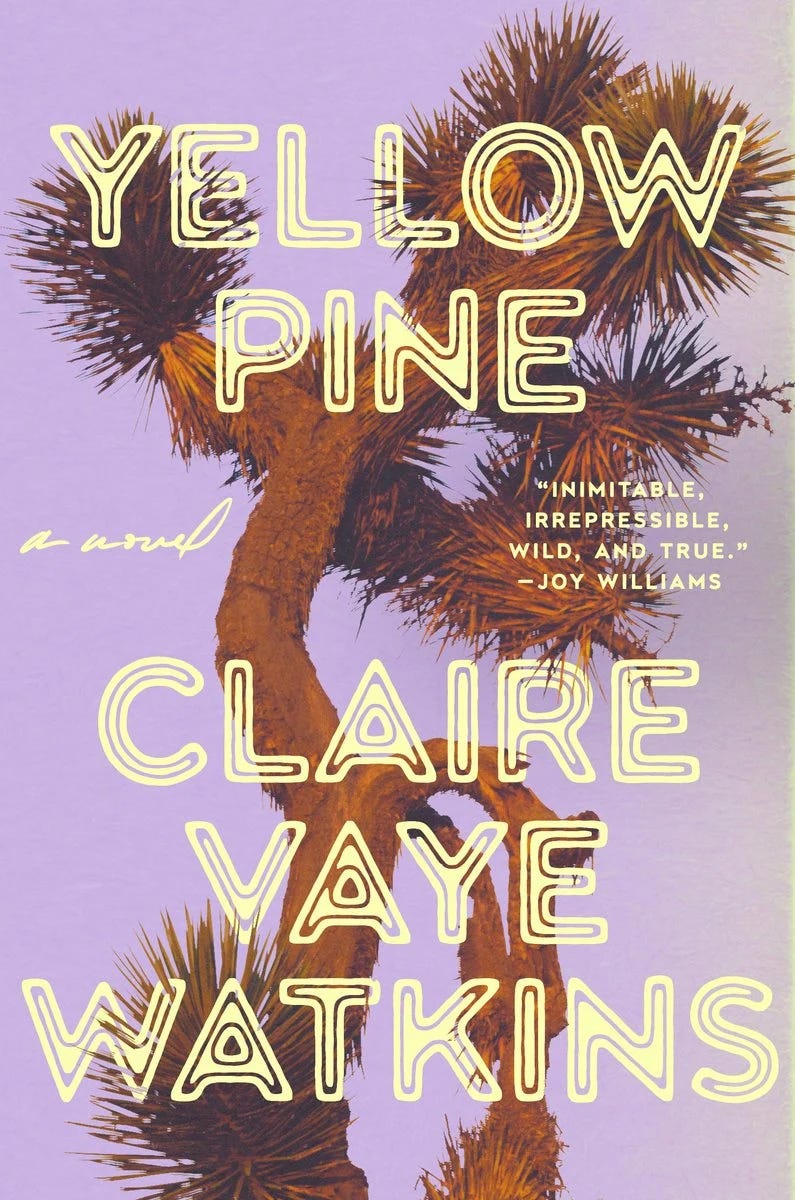
In Refuse to Be Done, I included a quote from an interview with Claire Vaye Watkins, where she said:
You need to know the story the characters are telling themselves, and then beyond that, you have to know the story your characters are telling themselves about the stories they tell themselves.
I love this slightly twisty way of noting that this self-narrative I’m describing above isn’t one story but two: the self-narrative, and the story of how your character arrived at it. The first is the character’s self-imposed operating instructions; the second is an important piece of backstory, describing how a character came to be the way they are.
Here’s an example from my own life: When I played sports in high school, I knew I wasn’t the strongest or fastest kid in my grade, so I told myself that I’d have to outwork other people if I wanted to play. I never became a great athlete but I did try hard to make up for what I lacked, especially in my junior and senior years, and I ended up starting on the football team and co-captaining the wrestling team. When I started writing fiction seriously in my early twenties, I told myself a variant of that story: I wasn’t the smartest or most talented or most educated writer, I decided, but I bet I could outwork a lot of other people. For years, that story pushed me to write nearly every day, to read as widely as I could, to seek out opportunities to volunteer or work for literary organizations to learn how the world I wanted to enter worked.
Crucially, it doesn’t matter if either of these stories were true! What mattered was that I believed them and took actions and made choices based on that belief. It’s the same with stories your protagonists or other characters tell themselves: for the purposes of writing a compelling character, it’s not necessarily about what’s empirically true, it’s about what’s believed and acted upon.
Last month, I taught a weeklong retreat on novel writing and revision where all of the participants arrived with at least one full draft of their novel. There, I turned some of the above theory into a writing exercise that we used as a tool for evaluating our novels-in-progress and getting additional clarity on our protagonists. Afterward, we all shared our results, and then discussed the characters and their stories together as a group, asking questions to further delve into our protagonists’ psyches. It’s a useful exercise to do by yourself, I hope, but I think it might be even better done with a writing partner or workshop group.
Here’s what I asked my workshop’s writers to write, either as a short essay about their protagonist or as a letter from them. Try this with one of your own characters:
Write out the story your protagonist tells themselves about who they are, why they act the way they do, and/or how they see themselves in relation to others. What is the driving narrative of their life?
Detail the experiences or choices or perceptions that led your protagonist to this story. What events provide the evidence behind their story?
How true is this self-myth? What does it accurately reveal about your protagonist? Where is it a lie? Does the story keep your protagonist from being honest with themselves or from getting what they want?
How does this story help your protagonist? How does it harm them or others?
How strongly does your protagonist cling to their self-myth? What would it cost them to give it up?
Do other people in the protagonist’s life tell the same story? What other stories are there about your protagonist among the people they love? Among their coworkers? Their enemies?
Again, I think this is most useful once you’ve written a draft (or even a significant part of one), as by then there’ll be lots of evidence to draw upon in the text. But I can see how this could be useful to do as prewriting too, if you’re so inclined. During last month’s class, I wrote my own essay while my workshop worked, focusing on a protagonist I’ve already spent years with at this point. In thirty minutes of writing, I discovered something crucial about the character’s self-myth that had never occurred to me before, and I already can’t wait to put that knowledge to use in my next draft.
Good luck with your writing this month! More soon, friends.
Thanks so much for reading! If you’re not already subscribed, please consider doing so by clicking the button below.
Matt Bell’s next books are Penitent, a novel forthcoming in 2028 from Doubleday, and Typo, non-fiction to published by Bloomsbury’s Object Lessons series in 2027. He is the author of the novel Appleseed (a New York Times Notable Book) and the craft book Refuse to Be Done, a guide to novel writing, rewriting, and revision. He is also the author of the novels Scrapper and In the House upon the Dirt Between the Lake and the Woods, as well as the short story collection A Tree or a Person or a Wall, a non-fiction book about the classic video game Baldur’s Gate II, and several other titles. His writing has appeared in The New York Times, Esquire, Tin House, Fairy Tale Review, American Short Fiction, Orion, and many other publications. A native of Michigan, he teaches creative writing at Arizona State University, where he directs the ASU Worldbuilding Initiative.
Comments
Nothing yet. Say the first thing.
Sign in to join the conversation.