
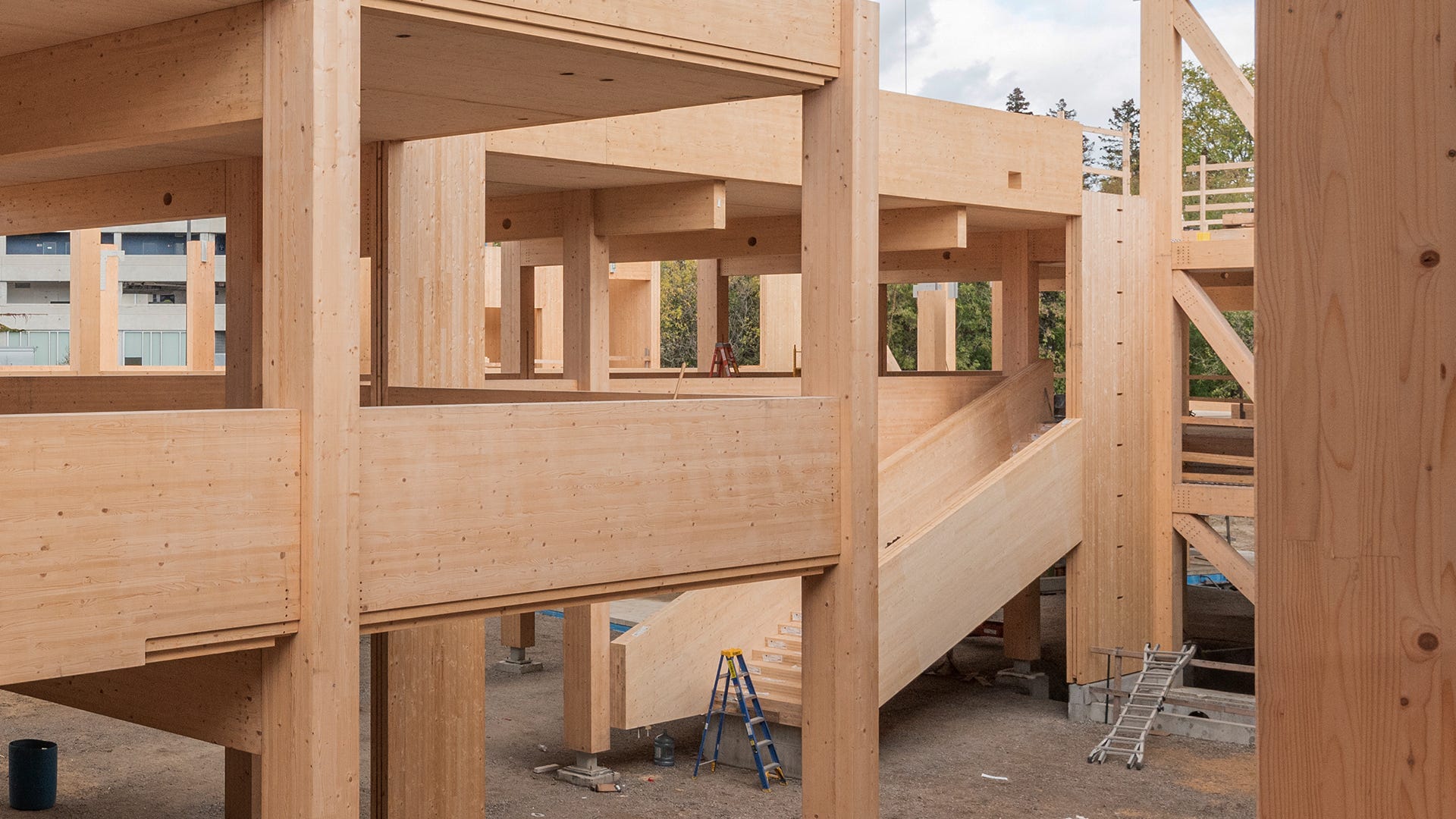
For the first time, wood can replace concrete and steel in cities. When we remember that concrete and steel are 120 years old, and mass timber just starting, that means we are witnessing the beginning of a new material era.
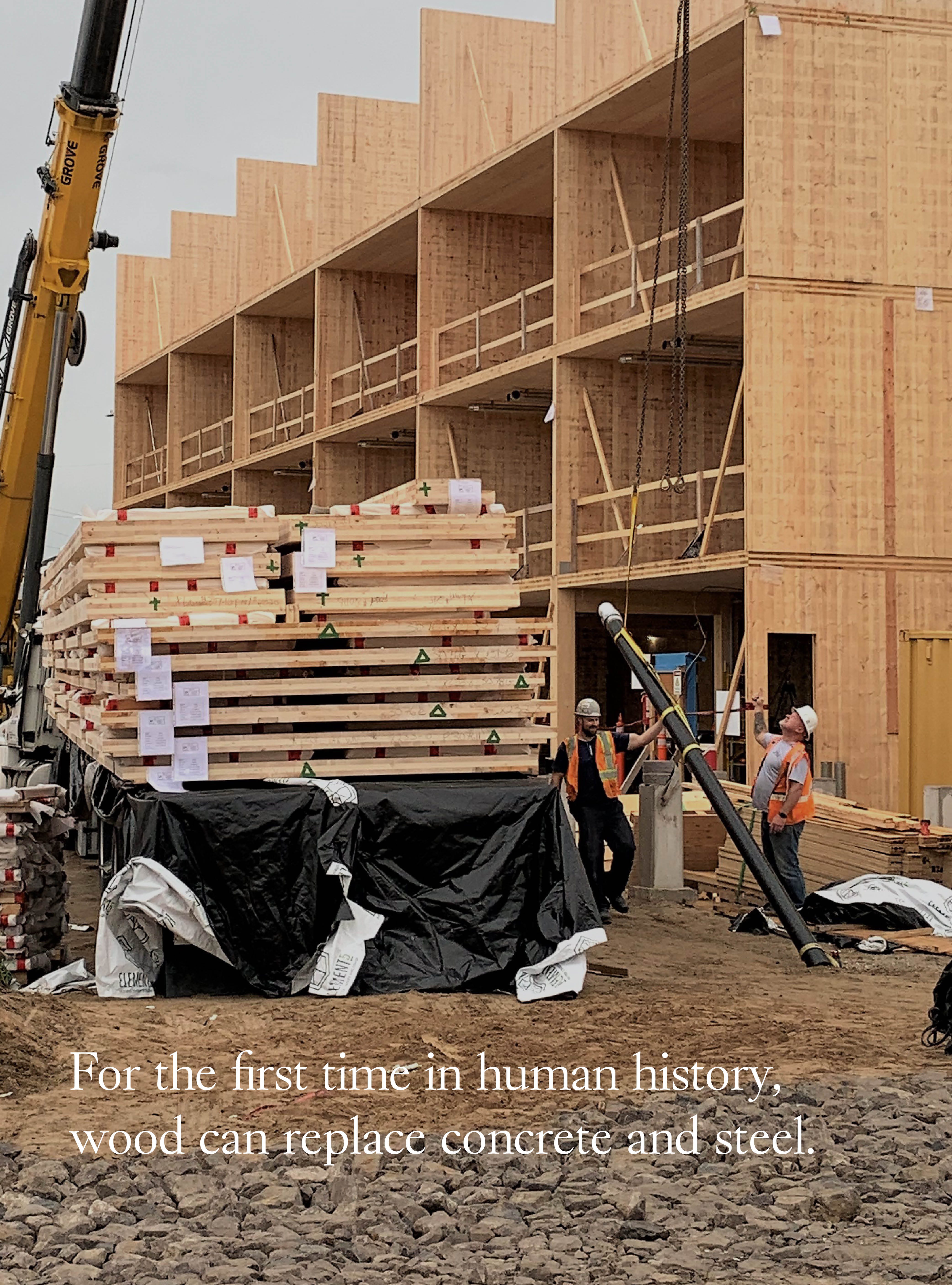
What is mass timber? Why is it different from the wood construction that we see in the suburbs? Mass timber is massive! But, it gets is mass from laminating small pieces of wood together instead of big pieces. This means two things: 1) mass timber doesn’t rely on old growth trees for its strength 2) it rivals concrete and steel in its strength and safety performance.
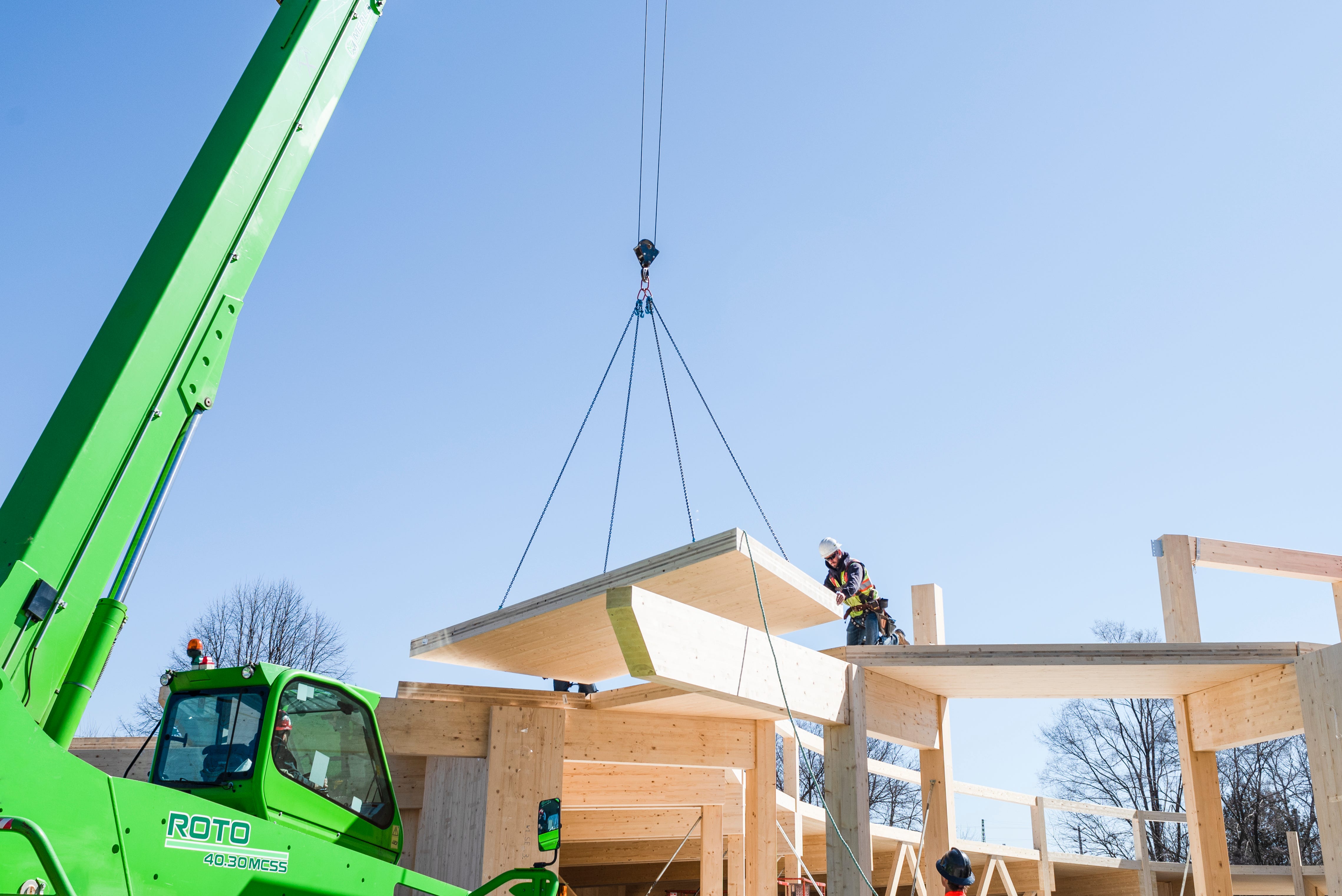
Mass timber took root in Europe 35 years ago. Today, rising urban density, prefabrication, and advances in manufacturing are bringing it to the rest of the world.
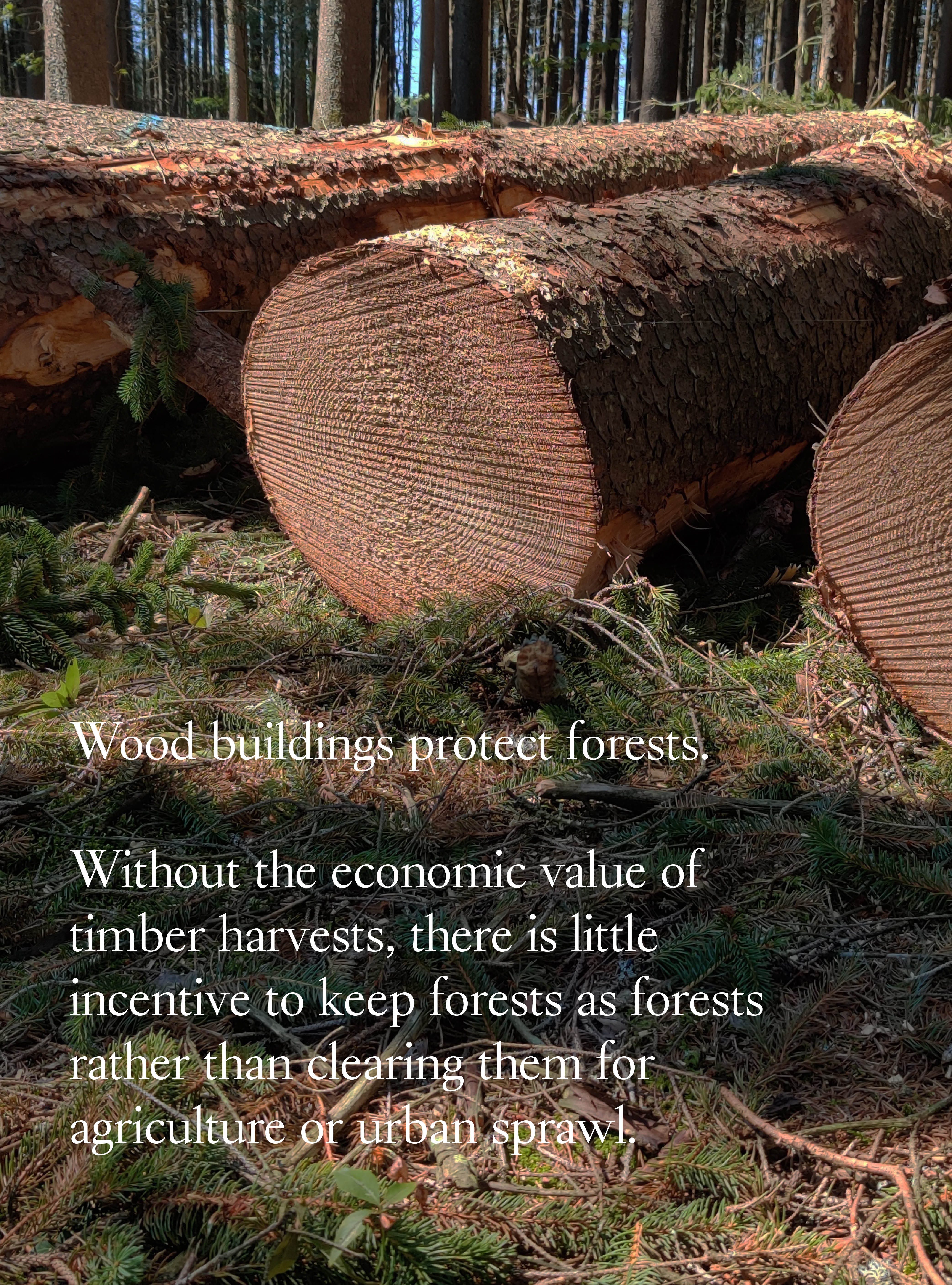
Internationally, there are talks of biodiversity credits that would pay countries to keep forests and forests. Specifically this idea is being tested in the Amazon to prevent clearing for beef production. However, in most places, a strong timber market can protect forests. This works in a unique, sometimes counterintuitive way. Forest owners want to maintain their forest’s value, so they replant and care for their land with management plans. This means that the forest is regularly thinned, cool burned, and look after to prevent mega fires, the spread of disease, and drought from climate change. In other words, a forest that is cared for by humans is the one that will be the most resilient.
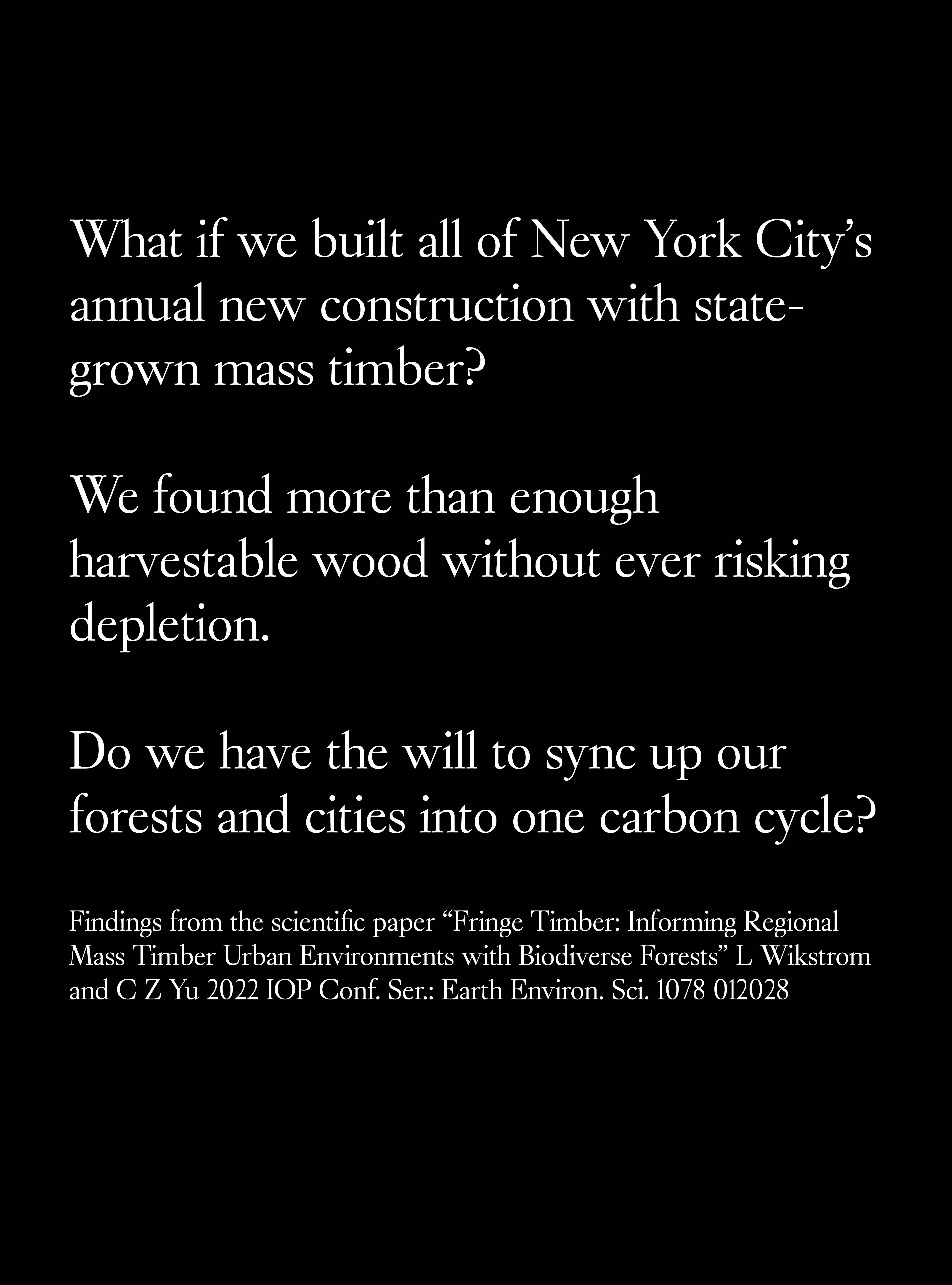
In 2022, I had a question: would mass timber cause deforestation? Would we cut too much and be left with an even worse situation: no trees to absorb carbon from the already saturated atmosphere?
The math surprised me. In the paper, we discovered that there is more than enough wood in the state to build all of New York City’s new construction annually with locally harvested mass timber without depletion. This means that the city has the potential to tap into the carbon cycle of the forest, harvest mature trees, and watch as natural regrowth replaces everything that was harvested.

Now that we know its mathematically possible, the bigger challenge is whether we have the will to accomplish such a large scale plan that crosses private property boundaries and intersects with existing construction infrastructure and knowledge.
On the other hand, something at this scale has the potential to establish New York as one of the most resilient places for the next 100 years.
Photos courtesy of Element Five.
No posts
Comments
Nothing yet. Say the first thing.
Sign in to join the conversation.