
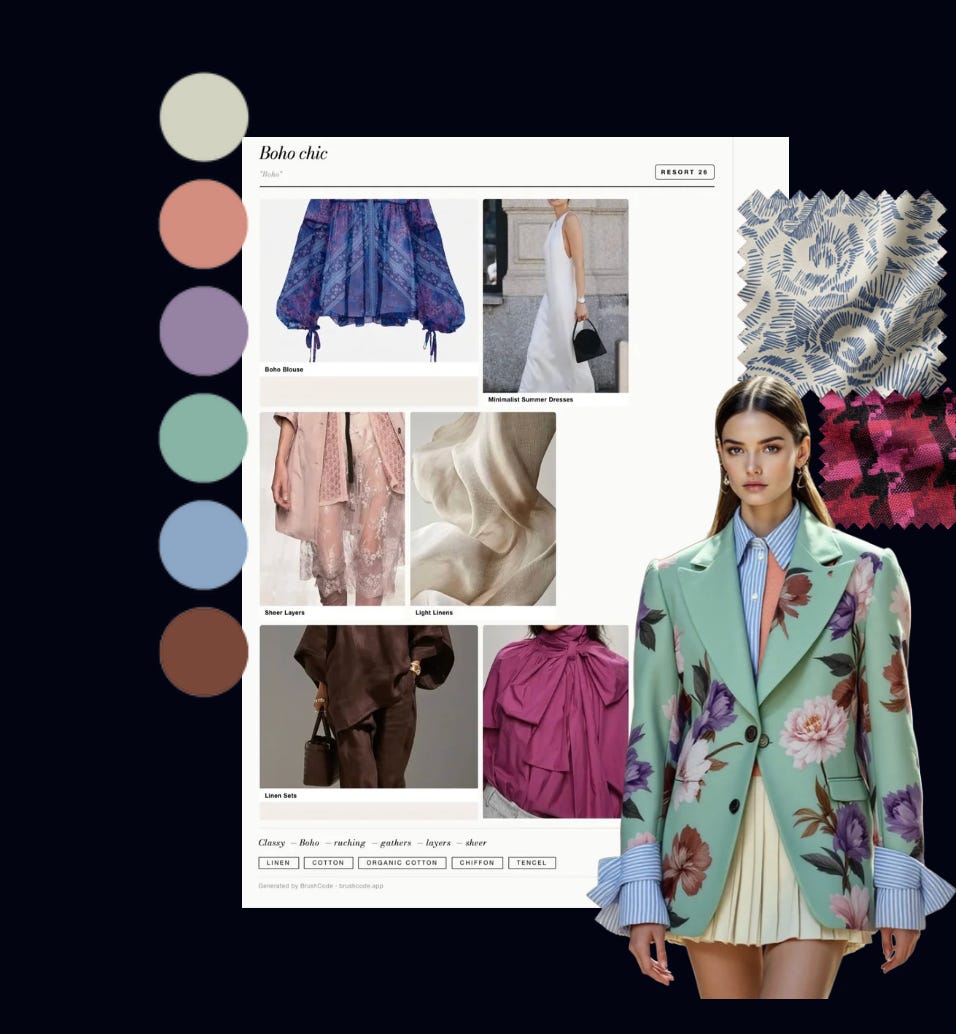
There is a scene in The Devil Wears Prada where Miranda Priestley turns to Andy and tells her that the cerulean blue she is wearing was chosen for her “by the people in this room.” It is still one of the most quoted lines in fashion, cemented into the zeitgeist thanks to the film’s recently released sequel.
But when I hear those words, I wonder: who has access to that room? Does everyone get access? And if not the room, do they get the minutes of the meeting?
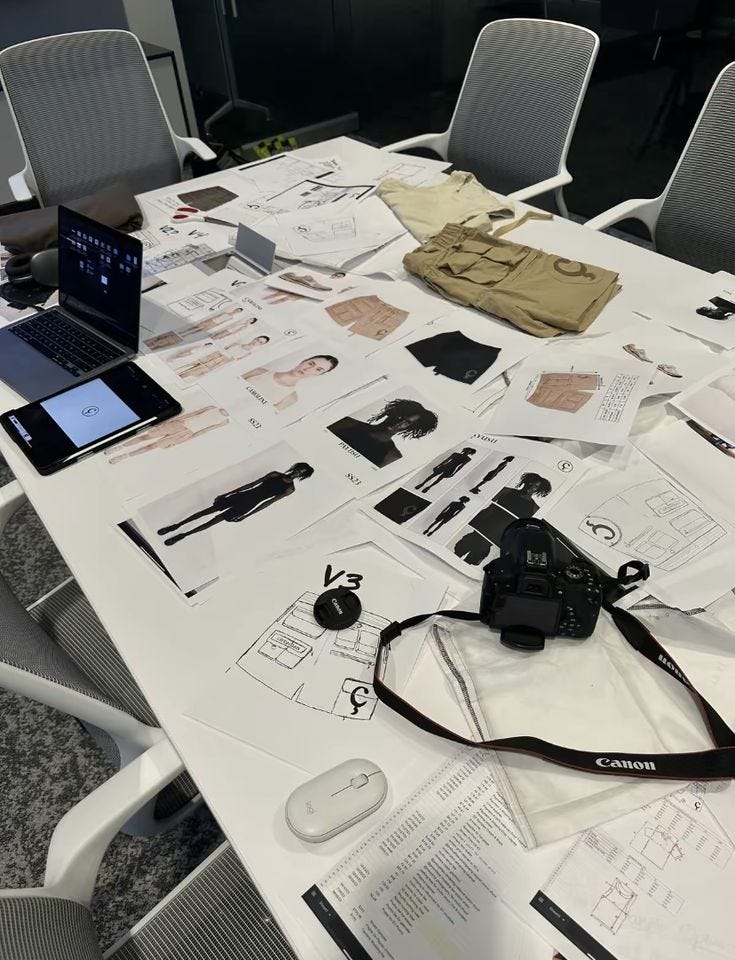
They don’t. Not many at all do. And that gap is what I want to talk about because it was a personal pain point for me for over a decade before it became the reason I built something.
I have worked in the fashion industry for 15 years, and in that time I have never had access to tools like WGSN, Tagwalk or Heuritech because I was always working at a small or medium sized brand - and brands of that size are very much the majority.
No matter the size of the brand, though, today sustainability is on the list. Not to say that things are going particularly well - the EU and UK’s transition to sustainable fashion is a mixed picture: systemic change is accelerating due to strict new laws, but the industry is still one of the least sustainable.
Even so, there are many conversations around sourcing better, improving supply chains, and working with factories that have proper labour standards. All of that matters, yes. But somewhere that conversation rarely goes is around moving sustainability upstream from the factory floor to the design desk.
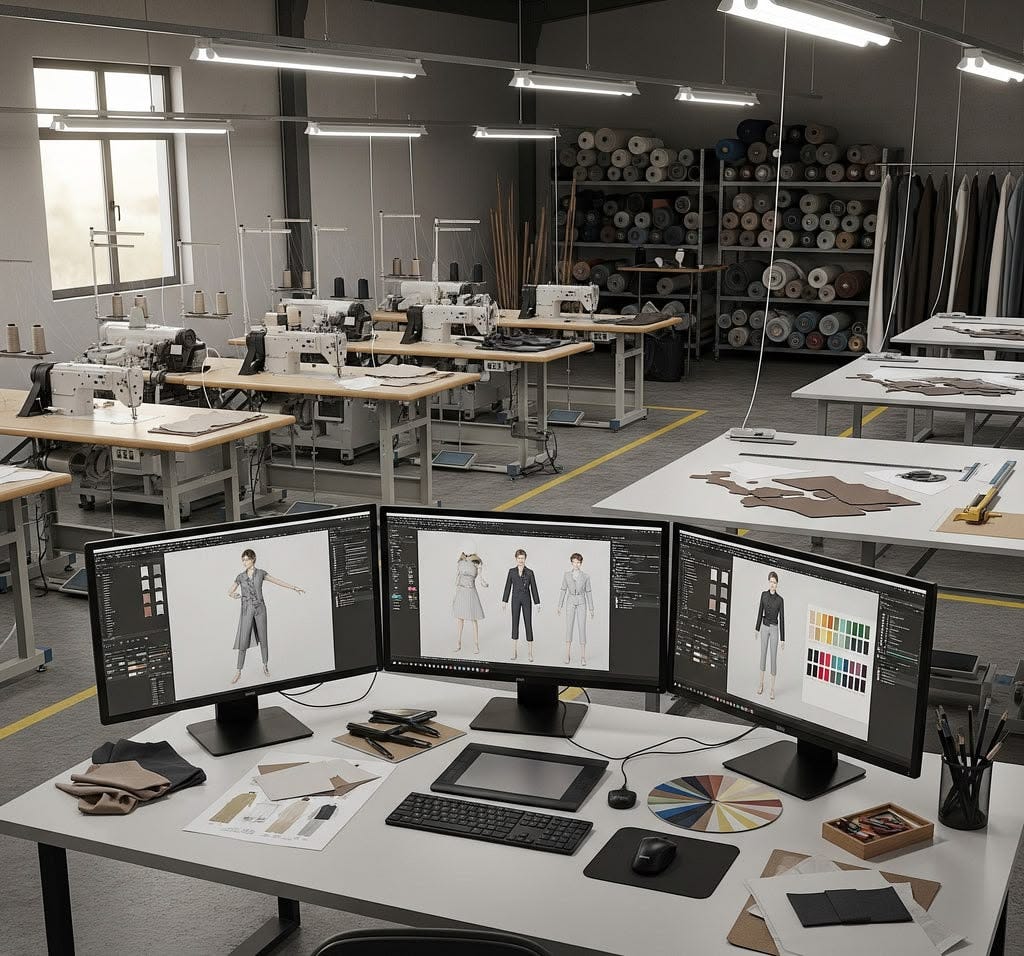
As far as I see it, the most wasteful decision in fashion is a design decision made without the right information. The moment before the fabric is ordered, before the sampling brief is written, before a single metre of cloth is cut. And right now, for most designers at independent and mid-sized brands, that decision lives entirely in one person’s head, made on instinct alone, with no data to back it up.
You don’t believe me? The average fashion brand writes off about 30% of its inventory as deadstock, and a lot of it ends up in discount bins. That fabric was ordered, cut, made and shipped before anyone asked whether it would sell.
Another problem that fashion has is that we only get to see everything once it is already on the runway or in stores. Small and medium sized brands have no choice but to get inspired by what they see.
I think, though, if they had the right tools, they would not be getting inspired by someone else’s work but would instead be the ones setting the direction.
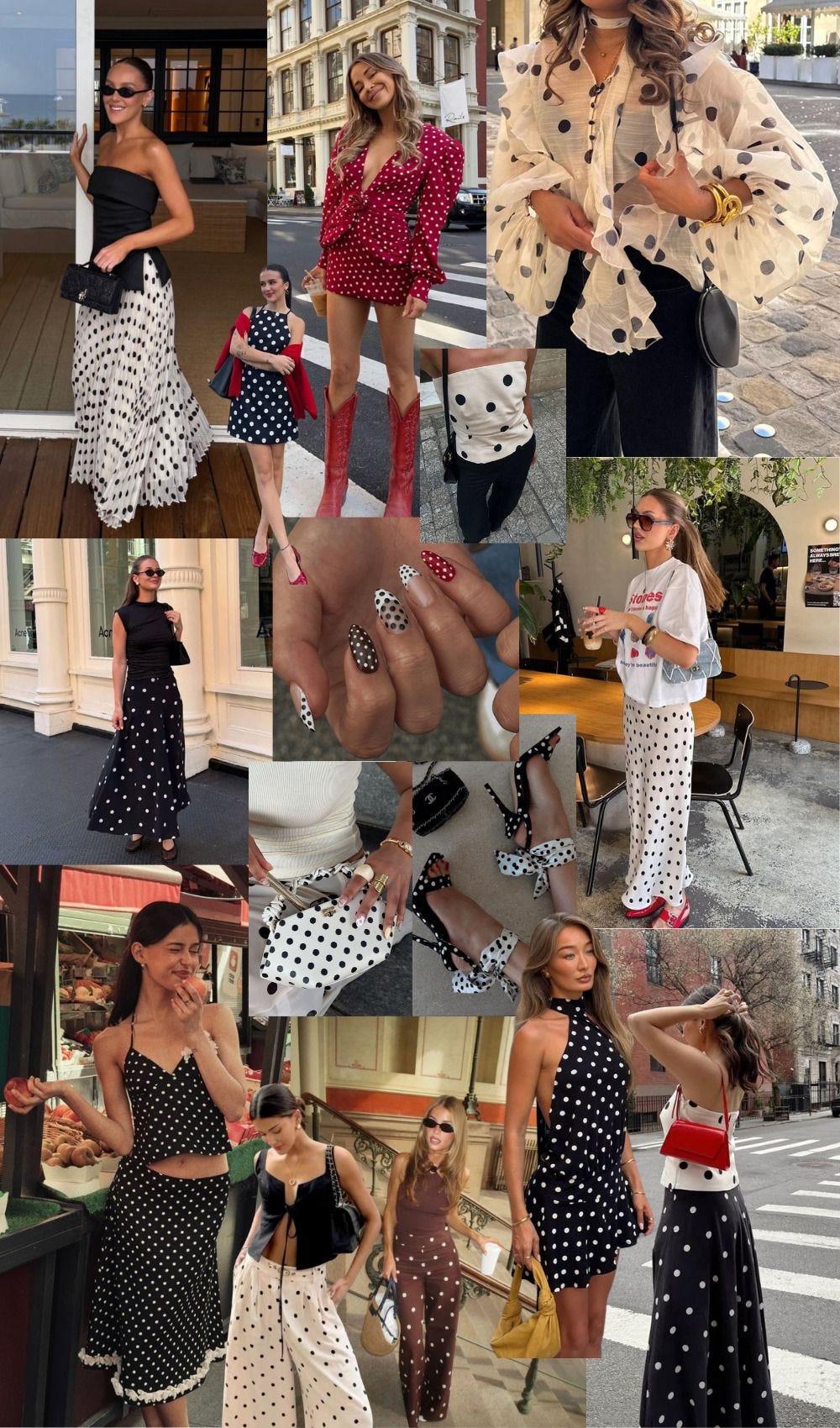
It may sound harsh but the tools that exist today do not help SMEs. Trend forecasting reports tell you that polka dots are in next season. What they don’t is whether polka dots are right for your brand. That distinction is everything.
A trend that works for one brand is just more information to drown in for another. I’ll say it, generic information applied to a specific brand identity is simply not useful.
In my opinion, WGSN doesn’t have a monopoly on good taste. What it does have is a monopoly on confidence. I mean, it charges £20,000 a year - case closed. But if we scratch a bit deeper, what it is selling is the confidence to commit to a direction without the market giving an indication or confirming it.
But that confidence should not be a luxury. It should be available to everyone who is a part of this industry.
Whether we like it or not, we are living in the age of the algorithm. Every platform we use learns our behaviour, refines its understanding of who we are, and serves us accordingly.
Fashion design deserves the same. The more a brand uses a tool, the more that tool should understand their aesthetic, their customer, their handwriting and filter every trend decision through that lens.
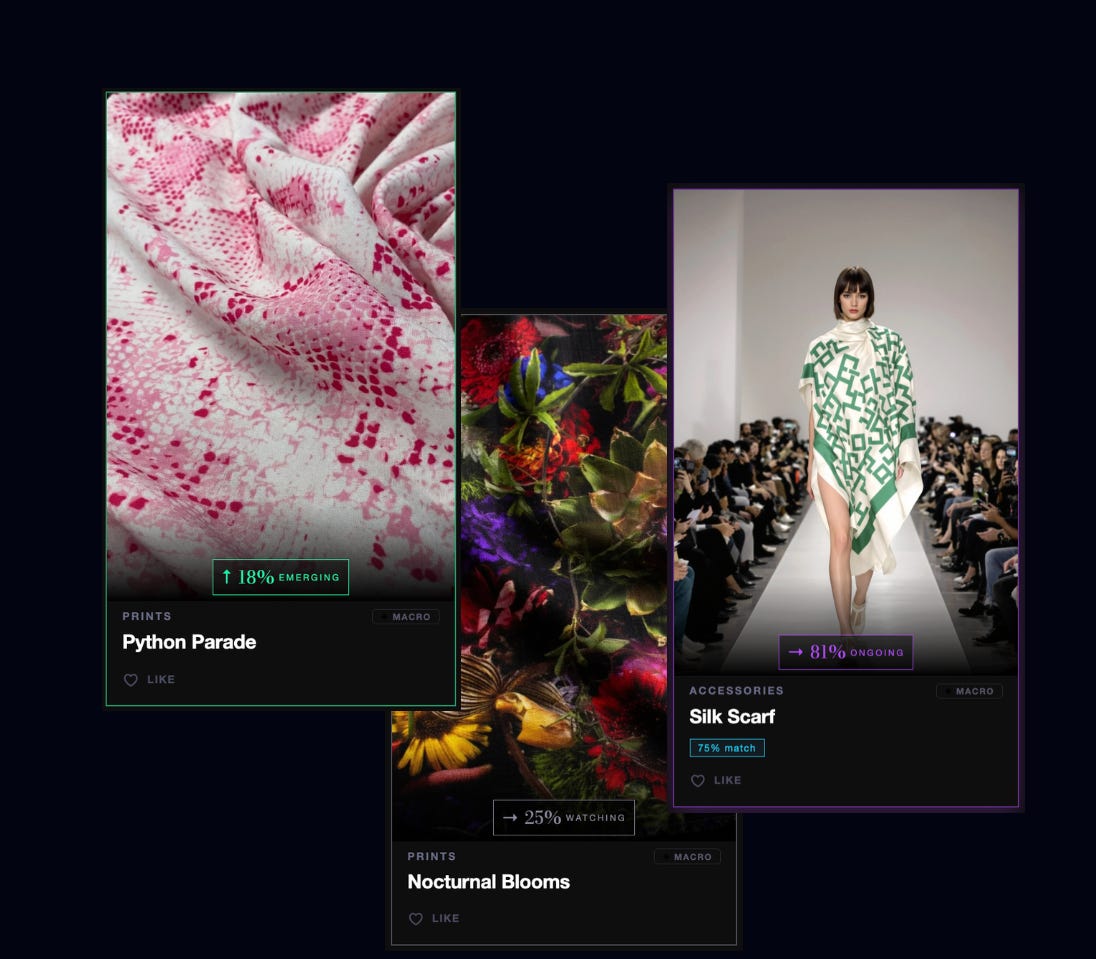
That is why I built BrushCode. An AI platform that starts by learning a brand’s DNA, their visual signature, their aesthetic codes, the things that make them distinctly them. It then surfaces trend intelligence that is personalised to that identity, not the global average. And in its design studio, a designer can upload an idea, a sketch, a reference and get a score for brand match, trend alignment and sustainability impact before a single sample is made.
The aim is simple. To give every designer, whether they are running a two-person label or a fifty-person brand, access to “the room.” Or at the very least, the minutes of the meeting.
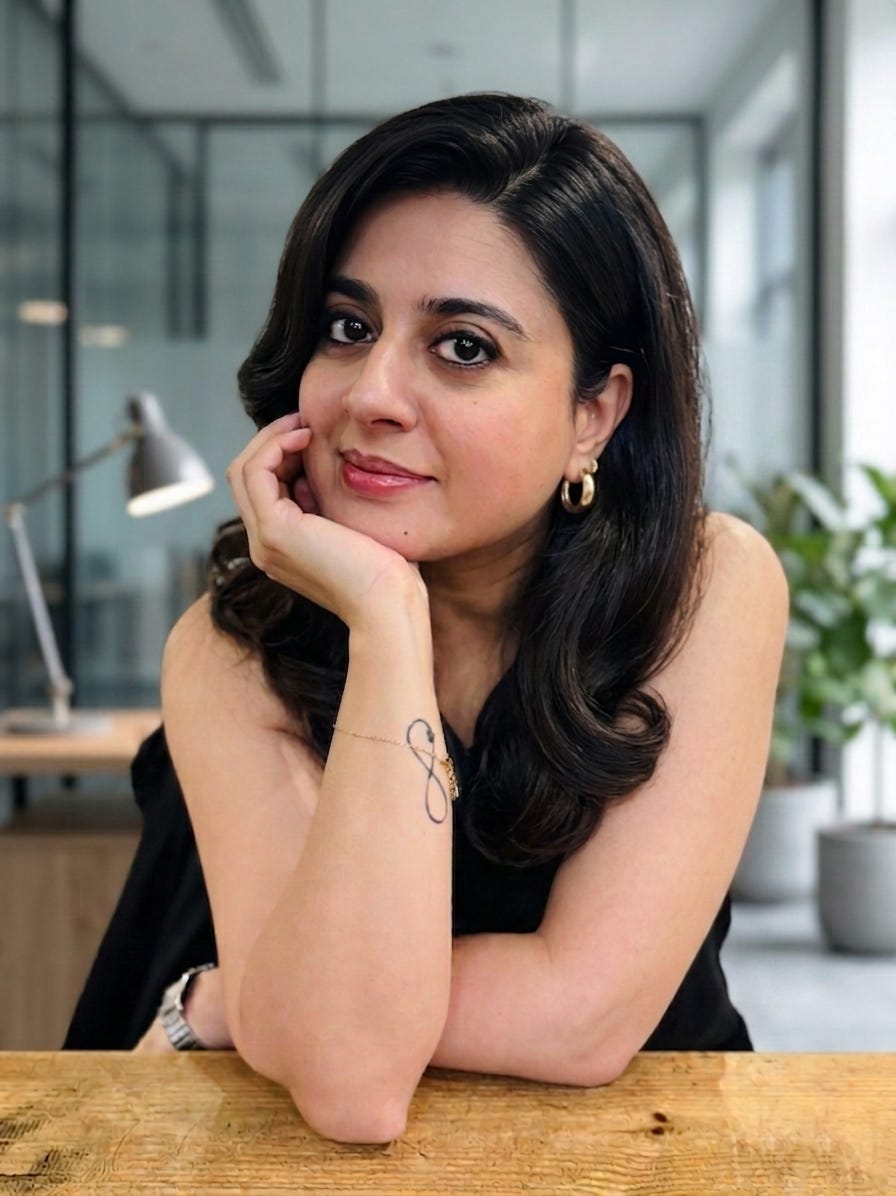
About the author: Shreya Bhan is the Founder of BrushCode, a personalised trend forecasting tool built specifically for fashion SMEs, freelancers, designers and students. With 15 years of experience across luxury and contemporary fashion, spanning leather goods, accessories, print design and creative direction, she has worked at brands including Mother of Pearl and Meng London, and co-founded Etre Designs, an embroidered accessories label featured in Vogue, Harper’s Bazaar and Elle. She holds a B.Des in Leather Design from the National Institute of Fashion Technology, Delhi, and was awarded a Global Talent Visa by the British Fashion Council for her contribution to the industry.
Before building BrushCode, Shreya spent several years working at the intersection of fashion, blockchain and digital art, with work exhibited on the Times Square billboards and an interview alongside Randi Zuckerberg. She built BrushCode from scratch with no engineering background, using AI assisted development tools, driven by a personal frustration with the lack of accessible, personalised intelligence available to independent fashion brands. She has spoken at the UN General Assembly in New York and is based in London.
Get in touch with Shreya today: hello@brushcode.studio or visit brushcode.studio for more details.
◆◆◆
Comments
Nothing yet. Say the first thing.
Sign in to join the conversation.