
The Egyptian pound’s exchange rate against the US dollar – 48.8 as I write – is the clearest measure of the economy’s resilience in the midst of regional conflict.
When Israel and the US launched attacks on Iran on February 28 and decapitated the regime with a raid on supreme leader Ali Khamenei’s compound in Tehran, the EGP was in virtual freefall. The currency plunged to a low of 54.8 against the greenback as a wave of speculative hot money fled the local treasury and the stock exchange.
Capital outflows in March and early April are estimated at up to $12 billion, delivering a horror-story shock to Egypt’s economy. The government was already grappling with sharply higher energy-import costs and rising food inflation, while tourism revenues and Gulf worker remittances were falling at the same time.
However, the announcement of an extended 60-day ceasefire on June 18, together with a drop in Brent crude prices to near their pre-war level, has been macroeconomic manna from heaven for the EGP and Egypt’s embattled economy.
Yet the situation remains fragile. The US military launched fresh strikes on Iran this week after Iranian attacks on commercial vessels in the Strait of Hormuz.
Against this volatile backdrop, the EGP has been the best-performing currency since mid-May and returned to its pre-war level. Inflation in Cairo has eased to 14.6 percent. Fuel prices have fallen, while the central bank’s hard-currency reserves exceeded $53 billion at the end of May — $2 billion above their level on December 31 2025.
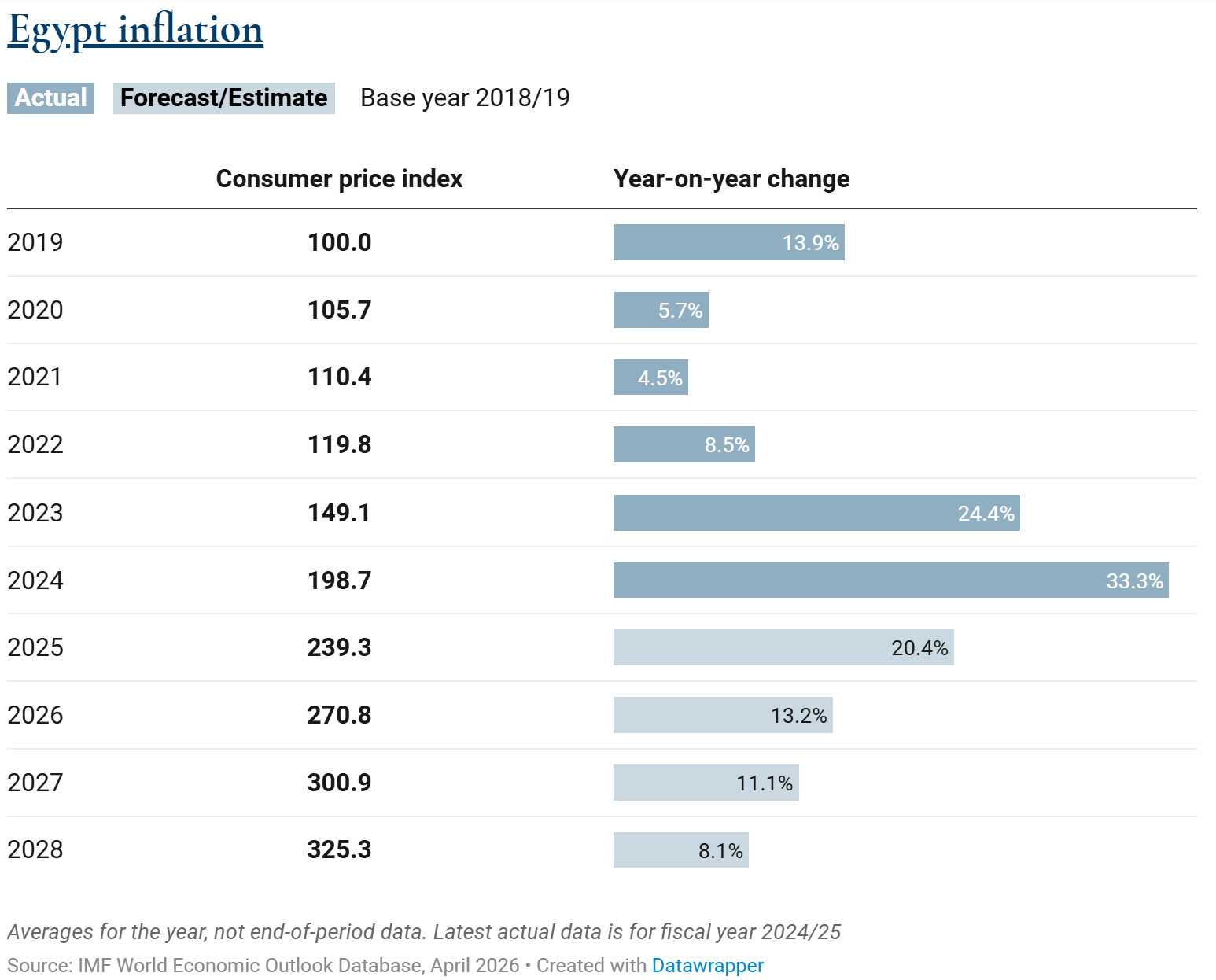
In retrospect, the Iran war demonstrated the Dickensian worst of times and best of times for the fortunes of the Egyptian pound. The EGP is now the best-performing floating-rate currency in the world as Western institutional and GCC private capital aggressively accumulate both Egyptian government treasury bills and dollar-denominated Arab Republic of Egypt Eurobonds.
Global macro data has reinforced the case for buying EGP government debt: US June non-farm payrolls were a pathetic 57,000, while the drop in Brent crude and a loosening of the Hormuz chokepoint have eased fears of supply-side inflation.
No wonder the US dollar swooned: its safe-haven role diminished after the ceasefire agreement and US Treasury yields fell across the curve as the New York bond market priced out the odds of a Federal Open Market Committee rate hike in July.
The drop in oil prices, a lower US dollar plus no Fed rate hike this summer and possibly the rest of 2026 equate to a high-octane rally for Egypt’s sovereign dollar Eurobonds. And that is exactly what happened in June.
Sentiment towards EGP local debt and sovereign Eurobonds should remain positive this autumn, provided the US-Iran situation stabilises and is not derailed by war in Lebanon or naval tensions in Hormuz.
Yet more market signals reinforce the case for Egypt in a Mena bond portfolio.
Two significant asset sales now ease the path towards the release of a $1.6 billion loan tranche out of an $8 billion IMF credit facility Egypt opened to help finance war-related disruption.
The government allowed the local subsidiary of Abu Dhabi energy firm Taqa to buy 170 petrol filling stations from Watania, a company affiliated with Egypt’s armed forces. The deal is significant because investors had feared that political resistance from President Sisi’s powerful inner circle of generals would shield military-owned companies from privatisation.
Alcazar Capital of the UAE also acquired a wind farm venture located on the Red Sea coast.
Tourism was badly hit in March and April as war raged in the Gulf but arrivals have soared since the ceasefire deal. The tourism minister forecasts year-end visitor arrivals to rise 5 percent above the 2025 level of 19 million and possibly exceed a record 20 million by the end of December.
Ironically even remittance flows retain their strong upward trend. Egypt expects a record $45 billion in remittances in 2026. This is counterintuitive for me as 1 million Egyptians work in Saudi Arabia alone, where the impact of the Iran war has not left the economy unscathed.
Paradoxically, the Hormuz closure forced oil tanker owners to reroute across the Bab al Mandab since the Houthis did not actively join the war. This explains why Suez Canal tanker traffic, and therefore toll revenue, have risen a third in 2026, adding support to Egypt’s GDP growth, which is expected to reach 5 percent in fiscal 2026.
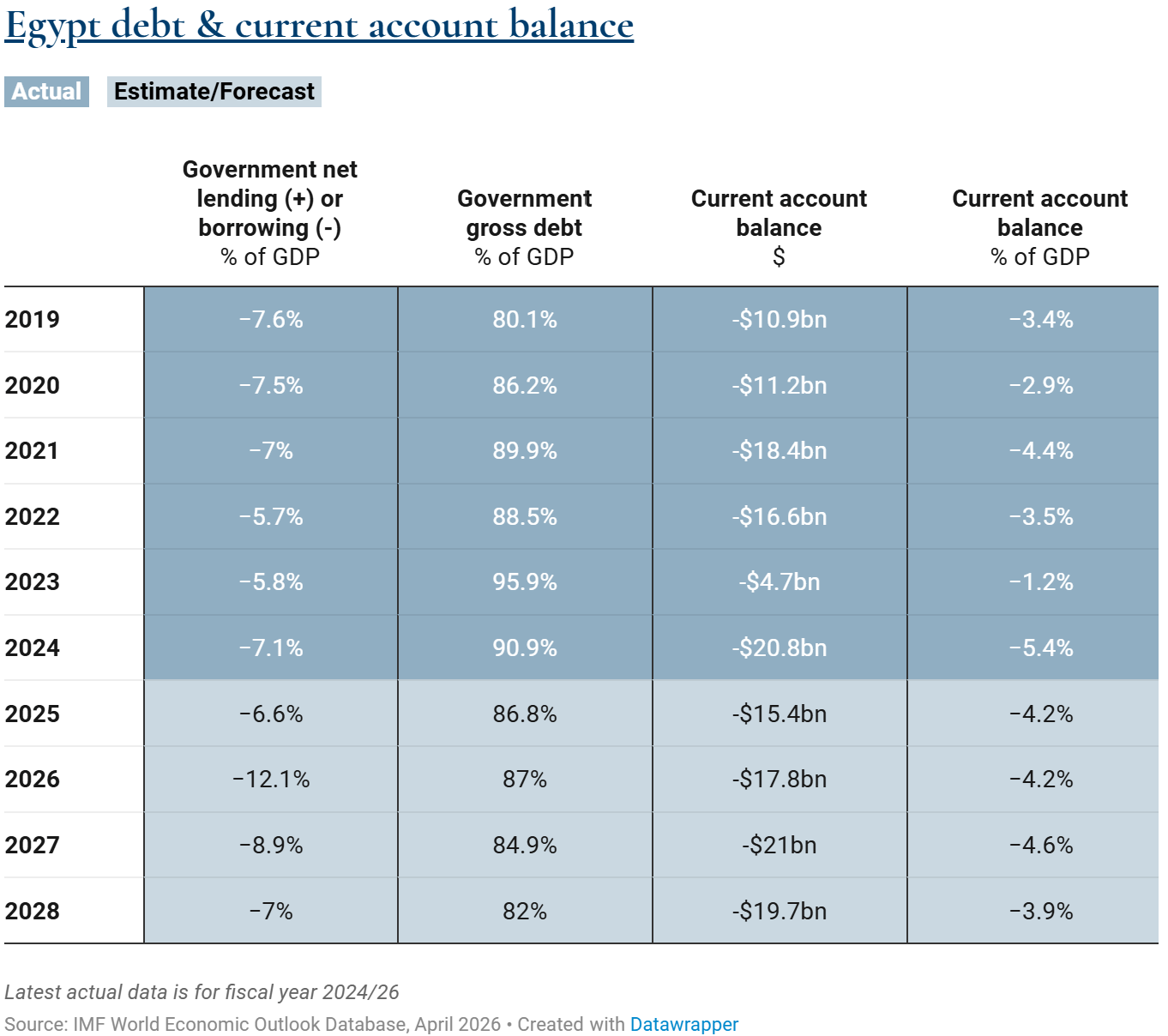
Still, Egypt’s structural economic problems must not be glossed over as external debt is still high at $170 billion (45 percent of GDP) and public debt is unsustainably elevated at 90 percent of GDP.
A 5-6 percent budget deficit calls for fiscal tightening, while military-owned construction mega-projects risk overstating growth momentum and could ultimately fuel a debt crisis.
That is a scenario the Arab world’s most populous state can ill afford while the GCC and Levant still face the risk of war and one-third of Egypt’s 120 million people live below the World Bank’s poverty line, now just $3 a day.
Comments
Nothing yet. Say the first thing.
Sign in to join the conversation.