
In times of confusion and crisis within the Church, faithful Catholics can take heart from the clear, unwavering commitment to Tradition shown by the Society of Saint Pius X (SSPX). Recent events, including the episcopal consecrations on July 1, 2026, at Écône and the subsequent decree from the Dicastery for the Doctrine of the Faith, highlight not division, but a profound love for the perennial teachings of the Church and the salvation of souls. Far from despair, this moment calls us to rejoice in the preservation of the Catholic Faith in its fullness. From looking at the Modernist side, it is very dismal, but on Tradition’s side it is full or hope!
The SSPX continues its vital mission: ensuring that Traditional Catholicism is preserved for future generations. As one observer who attended the consecrations noted, “The Society of St Pius X and its faithful have been excommunicated by the Vatican for being too Catholic.” This fraternity exists “to ensure that Traditional Catholicism is preserved,” ordaining priests and providing the Sacraments in a time when many souls hunger for authentic and Apostolic doctrine and worship.
Our Lord Himself warned us of such times: “Beware of false prophets, who come to you in sheep’s clothing but inwardly are ravenous wolves”(Matthew 7:15). In the current crisis, this calls to mind those in positions of authority—bishops and even higher—who outwardly present as shepherds of the flock while promoting teachings and practices that undermine the Faith. The SSPX’s stand is a vigilant response to this reality: protecting souls from error while remaining rooted in the one true Church.
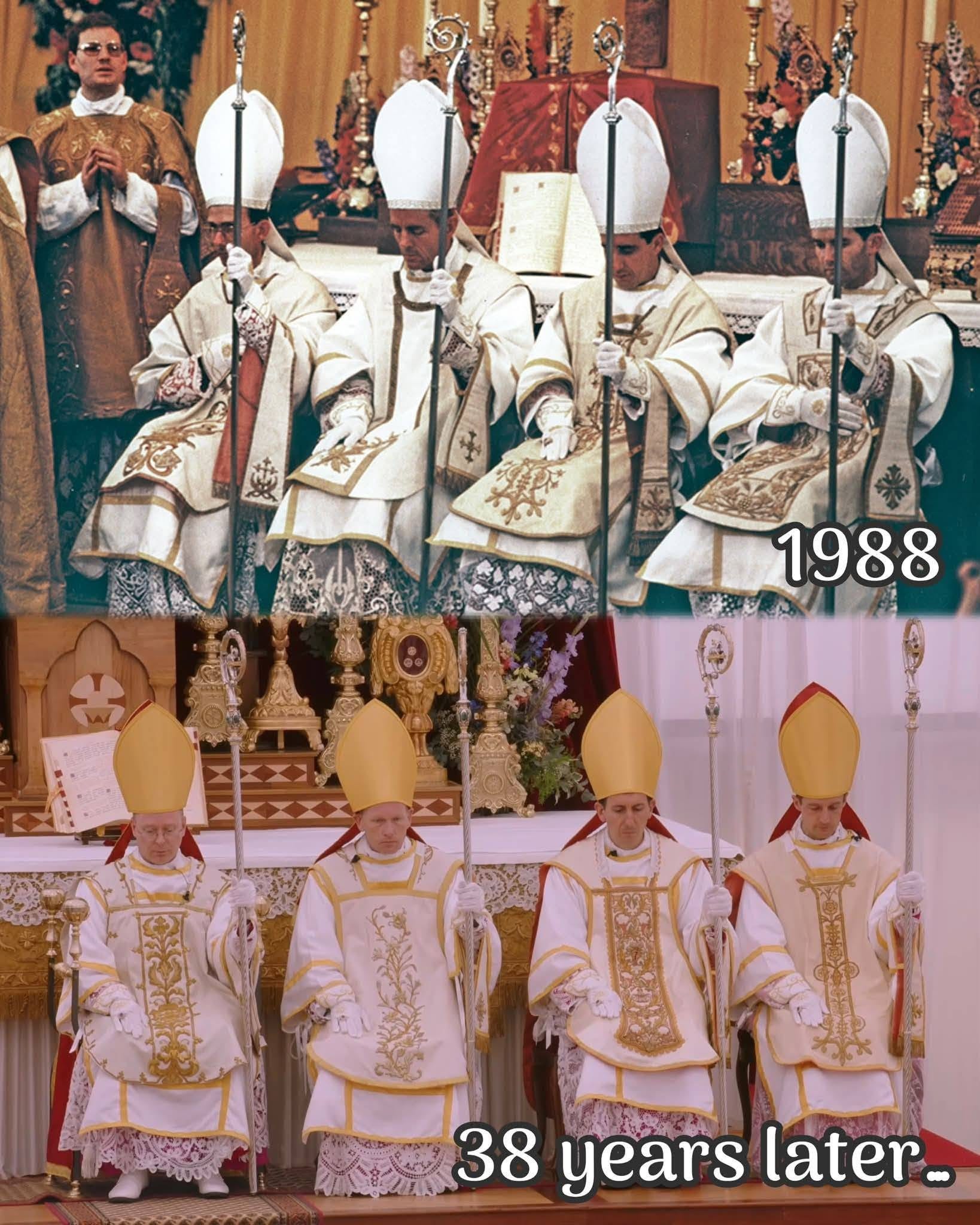
The July 2, 2026 decree labels the consecrations as schismatic, but a careful examination reveals important distinctions rooted in theology and canon law. The FSSPX News analysis explains:
“Schism must be carefully distinguished from simple disobedience. Schism presupposes a systematic and habitual refusal of dependence. On the contrary, disobedience may be merely a passing act, without its perpetrator in any way contesting the authority of the law or the legislator, and without wishing to habitually evade it. […] Disobedience may consist in refusing to recognize the legislator’s competence in a given case, without contesting his power. There is no schism there. There would be one if the refusal to obey stemmed from the fact that the authority of the legislator is rejected.”
The very fact that they had attempted to ask Rome for permission since 1988 is proof that there is no contesting of authority or habit of disobedience.
Quoting theologians like St. Cajetan and the Dictionary of Catholic Theology, it affirms that the SSPX “has never claimed to constitute a parallel or autonomous Church; it exercises its apostolate as a work of the Catholic Church, in its service and for its propagation.” They recognize the Pope as head, pray for him in the Canon of the Mass.. This is not rebellion against the office of Peter, but fidelity to the Faith when obedience would conflict with higher goods or disobedience is demanded against false shepherds.
“Therefore, the consecrations of July 1st cannot in any way be considered a schismatic act. To adhere to them is to adhere not to a schism but to a courageous act that presents itself as a refusal of obedience to the Pope, certainly serious but perfectly justified. Indeed, as St. Thomas Aquinas reminds us, following the Apostle St. Peter, non-obedience or the refusal to give undue obedience can, in certain circumstances, be a moral duty.”
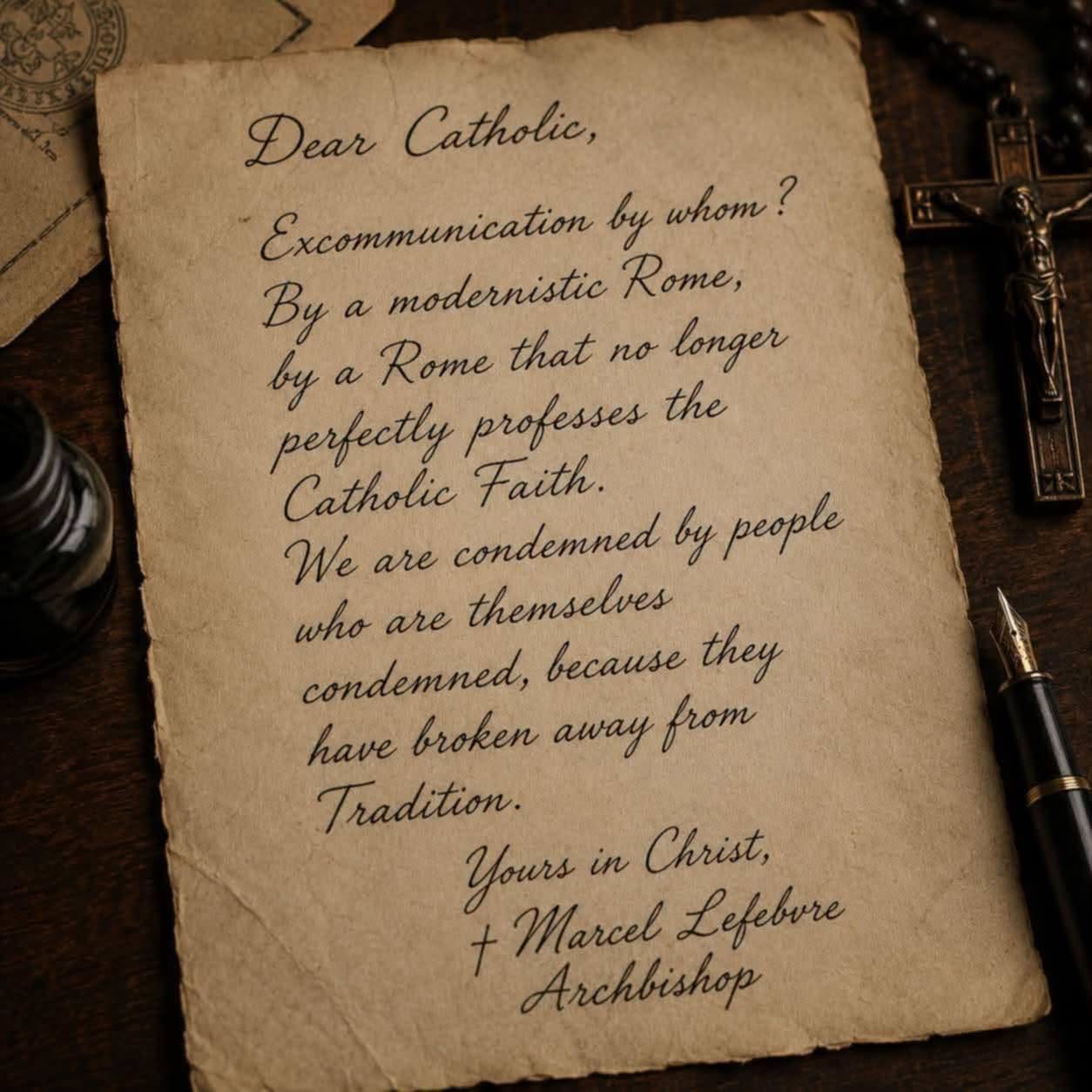
Archbishop Marcel Lefebvre, founder of the SSPX, beautifully articulated the nature of authentic obedience. He taught that obedience is a moral virtue with limits, always subordinate to the theological virtues:
“The three great theological virtues, Faith, Hope and Charity, cannot have an excess: one cannot adhere too much to the revealed truth, nor trust too much in God’s help, nor love God too much. All the other virtues are moral virtues and they consist in the right measure... This is particularly true of the virtue of obedience: the true virtue consists in the right measure between the defect, which is disobedience... and the excess, which is servility (to comply with an illegitimate order).”
True obedience can never contradict Faith, Hope, or Charity. As Lefebvre emphasized, the masterstroke of Satan has been “to lead so many into disobedience to Tradition in the name of obedience.” The SSPX follows this principle: ready to obey in all that aligns with the Faith, but bound in conscience to resist what harms it.
In recent weeks, several U.S. bishops have publicly urged the faithful attached to the Society of Saint Pius X to return to “full communion” with the Church, framing their appeal as a call to repentance and reconciliation. Yet this invitation comes with a non-negotiable condition: explicit acceptance of the Second Vatican Council in its entirety—along with the post-conciliar reforms and the emerging emphasis on synodality.
Far from a simple gesture of mercy or unity, these overtures effectively demand that traditional Catholics renounce their longstanding critique of the Council’s ambiguities, its liturgical rupture, and its doctrinal shifts on religious liberty, ecumenism, and collegiality. For those who see Vatican II and its fruits as a source of crisis rather than renewal.
Such “reconciliation” amounts to an ultimatum: compromise the Faith you have guarded, or remain outside the visible structures of a Church that increasingly appears to prioritize dialogue and process over the unchanging deposit of Faith & Tradition.
Note well that Obedience is not the highest virtue in the Faith. It is only a moral virtue and above it are the 4 Cardinal virtues (Justice, Temperance, Prudence, Fortitude) and then above those, are the 3 Theological virtues (Faith, Hope, Charity).
It follows therefore, that Obedience then in the order of the virtues cannot contradict, for example, the virtue of Faith. As St. Thomas Aquinas says in the Summa, Article 3: Question 104 regarding Obedience: “And so those, namely the theological, virtues whereby he adheres to God in Himself, are greater than the moral virtues, whereby he holds in contempt some earthly thing in order to adhere to God.”
Fr. Hesse, S.T.D., J.C.D., S.T.L., J.C.L., a renowned canon lawyer, Doctor of Thomistic Theology, and lifelong friend and personal secretary to Cardinal Stickler at the Vatican (1986–1988), offers a clear, intelligent, and often witty explanation of the challenges facing faithful Catholics today. He powerfully reminds us:
“Obedience itself can only be defined by the Ten Commandments and Church Tradition. The Traditional Latin Mass, as you and I know it, belongs to the very state of the Church — the status Ecclesiae. If the Pope tries to change that, you must say: ‘Sorry, Holy Father, but we cannot follow that.’ To follow the Pope into error is not obedience, but sin. As St. Paul warns, even if an angel from heaven should preach another Gospel, do not accept it. Or, as Chesterton put it: if an angel brings you something else to drink, thank him for his kind attention — and pour it down the sink.”
At the heart of these actions lies a real, objective crisis: the grave danger to the Faith and the ordinary means of sanctification. The SSPX acts out of necessity, a principle long recognized in Church teaching: “Necessity makes licit what is illicit” and “Necessity knows no law,” as St. Thomas Aquinas taught.
In today’s landscape, turning to many canonically regular priests risks exposure to teachings at odds with perennial doctrine. The faithful deserve a liturgy that unambiguously expresses eternal truths and sacraments free from widespread abuses. The SSPX provides exactly that, lawfully and courageously.
Canon law supports this strongly. Canons 1323 and 1324 exempt acts done under necessity or grave fear from penalties, even latae sententiae excommunication. “The absence of grave guilt excuses from any penalty,” and the SSPX’s response addresses an objective peril. Neither the bishops nor the faithful incur automatic censure; individual judgment applies, and no general excommunication of attendees holds.
On Sacraments: Confessions remain valid by supplied jurisdiction in necessity, and marriages are valid by the spouses’ consent, especially when avoiding doctrinal compromise. The SSPX ensures souls receive grace without compromise with the Modernists post-conciliar revolution.
While Rome has seen fit to bless and approve homosexual unions through declarations such as Fiducia Supplicans, the Vatican’s July 2 statement now effectively seeks to curse and invalidate the true and good marriages celebrated within the Society of Saint Pius X.
This glaring inconsistency reveals a troubling inversion of priorities. Far from endangering souls, the SSPX continues to provide the Apostolic Sacraments in their full integrity, ensuring the faithful receive sanctifying grace without being forced to accept ambiguous teachings or liturgical ruptures.
In an age when error is often indulged and tradition is penalized, the Society stands as a bulwark preserving the Catholic Sacraments as they have always been understood and transmitted.
This is a time for encouragement, not fear. The SSPX’s actions echo the saints who defended the Faith amid trials. As one guide to the crisis puts it, we live in an era of poor catechesis where a “modernist revolution” promotes a “humanist religion of man in place of that of Christ.” Yet the remedy is clear: return to the Church’s traditional teachings, such as the Social Teaching of Leo XIII and St. Pius X’s Pascendi, which equip us to discern truth and build on solid ground.
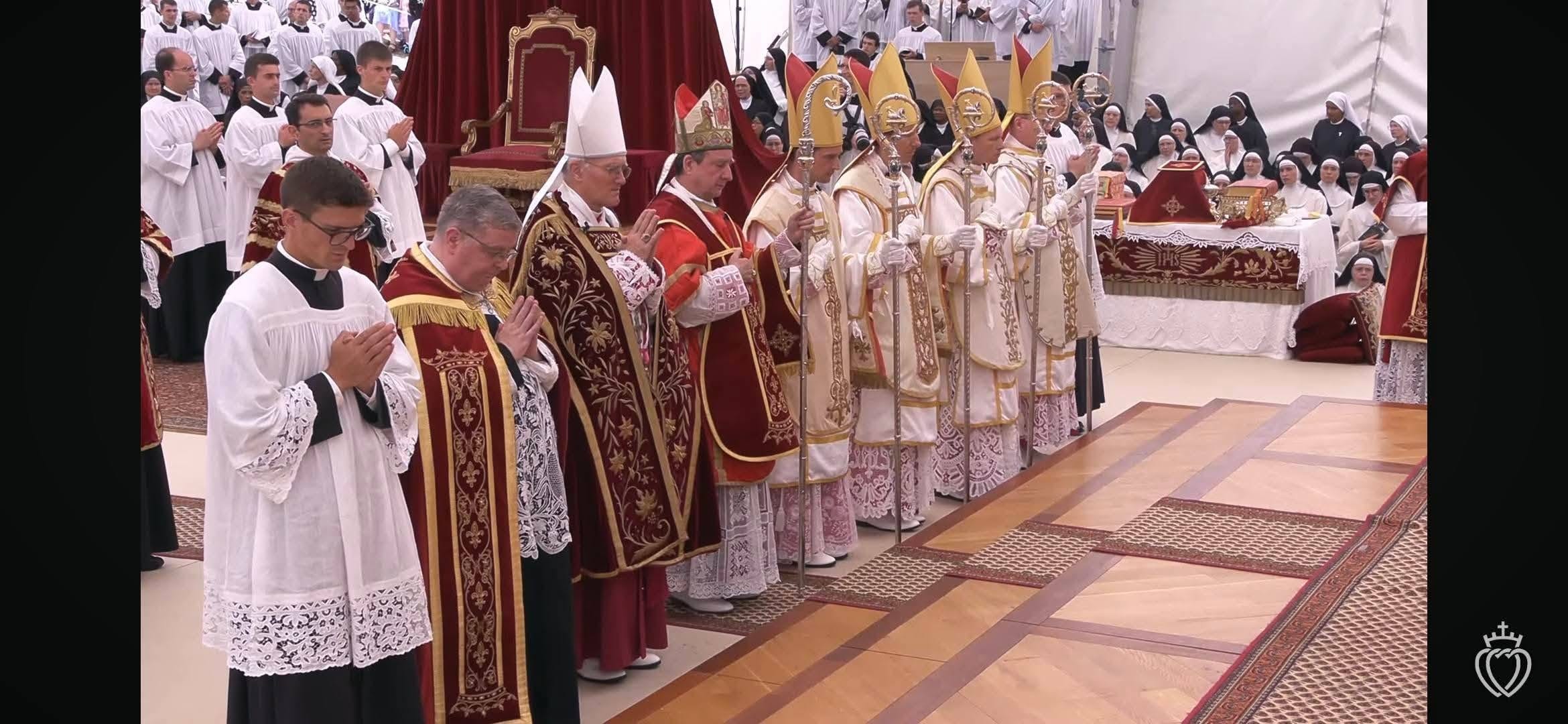
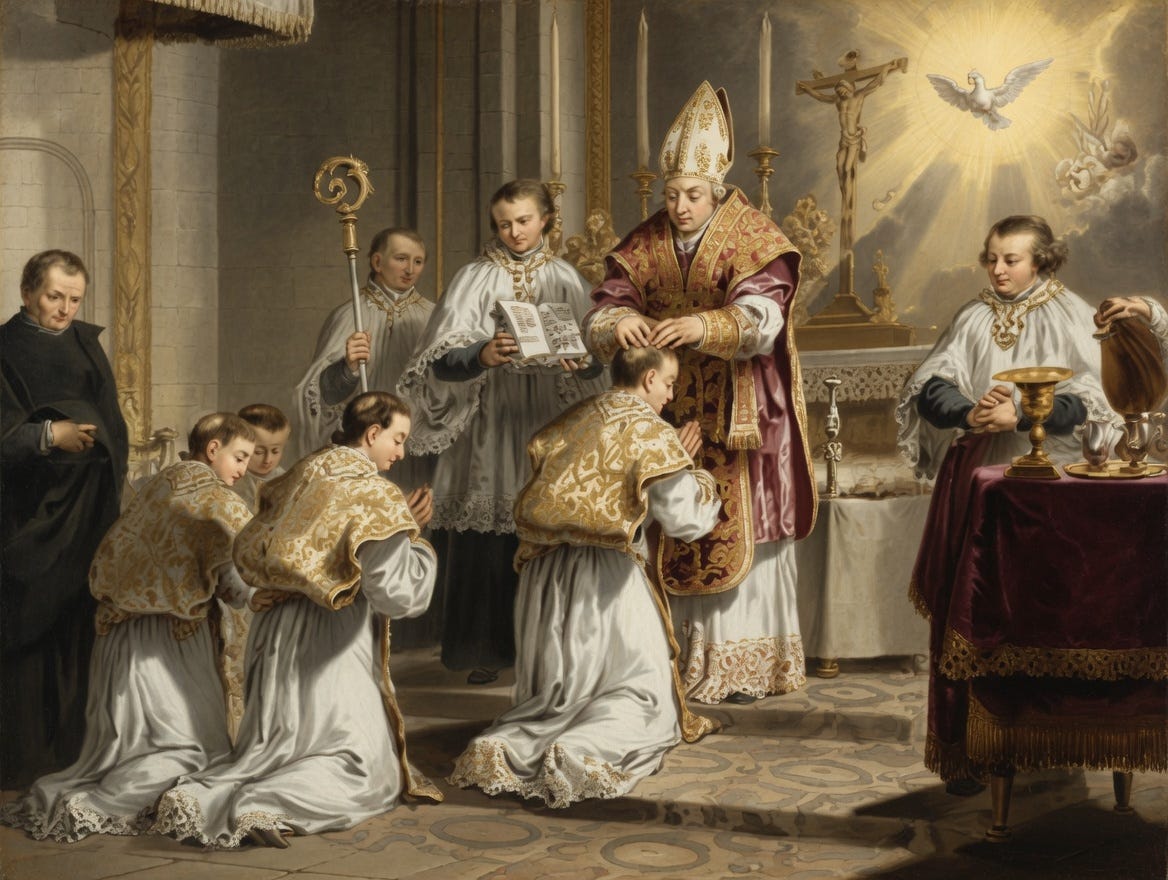
The consecrations ensure the continuation of priestly ordinations, preserving the Mass, Sacraments, and doctrine for the salvation of souls. Over 16,000 faithful gathered at Écône—a powerful witness of love for Tradition (See a beautiful video of the here by Matt Perdie ). This is not unfaithfulness but a Hope-filled mission: keeping the Faith alive so it can one day flourish universally again.
To all who attend SSPX chapels, receive the Sacraments there, or support this work: you are not alone. Your fidelity preserves a treasure for the whole Church. Study the constant Magisterium, pray for unity in Truth & Charity, and take heart—the gates of Hell will not prevail. The SSPX stands as a beacon, reminding us that in Christ and His unchanging Truth, there is always hope and victory.
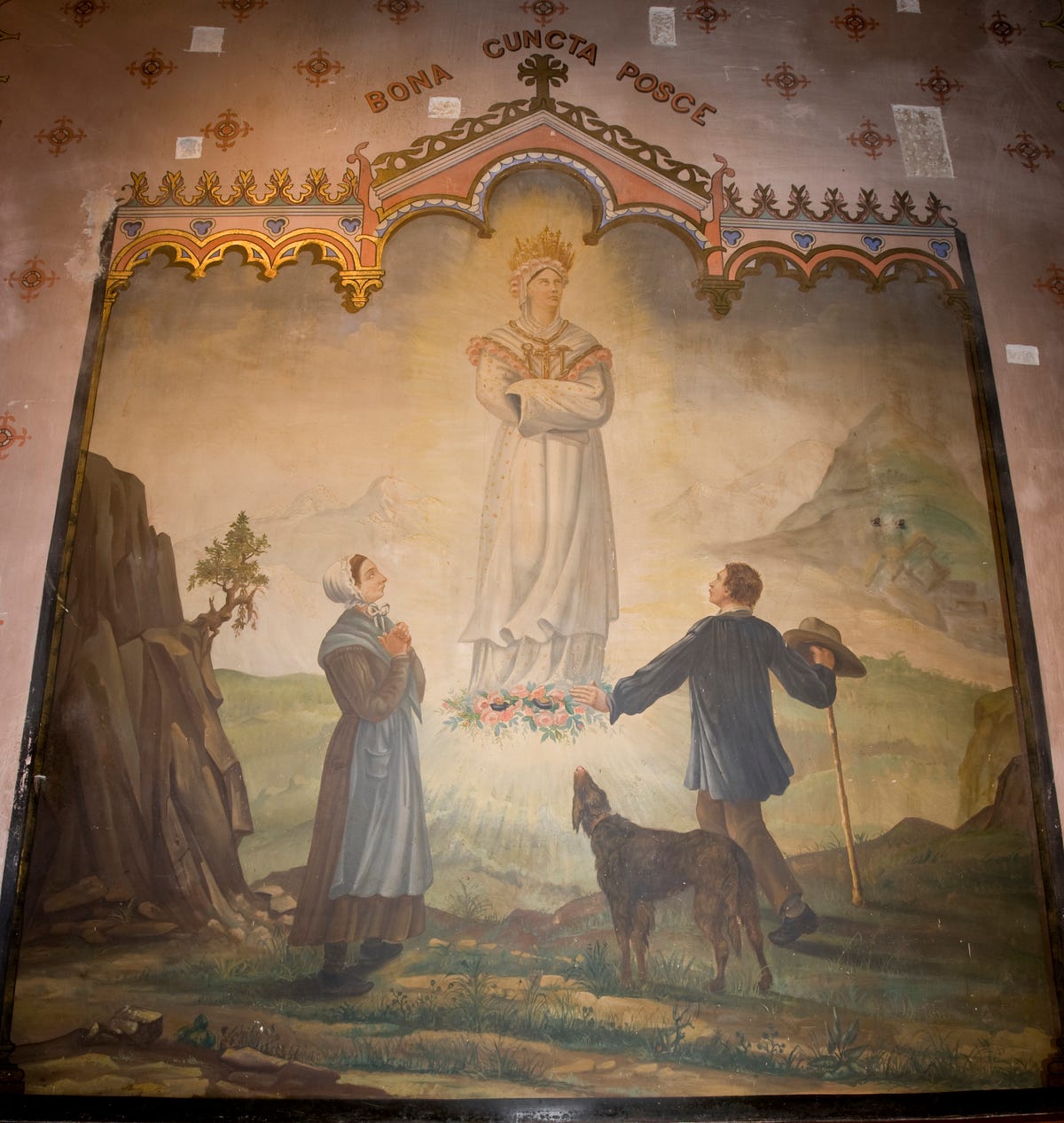
Our Lady of La Salette, in her approved 1846 apparition, delivered a sobering warning that resonates powerfully in our present crisis. She foretold a time of widespread apostasy that would strike at the very heart of the Church, with corruption and loss of faith beginning at the highest levels.
In the words transmitted through visionary Mélanie Calvat, “Rome will lose the Faith and become the seat of the Antichrist,” as shepherds — including priests, religious, and even bishops — would abandon the true Religion and lead souls astray. This prophecy echoes other approved Marian messages that speak of internal betrayal and a great trial for the Church from within.
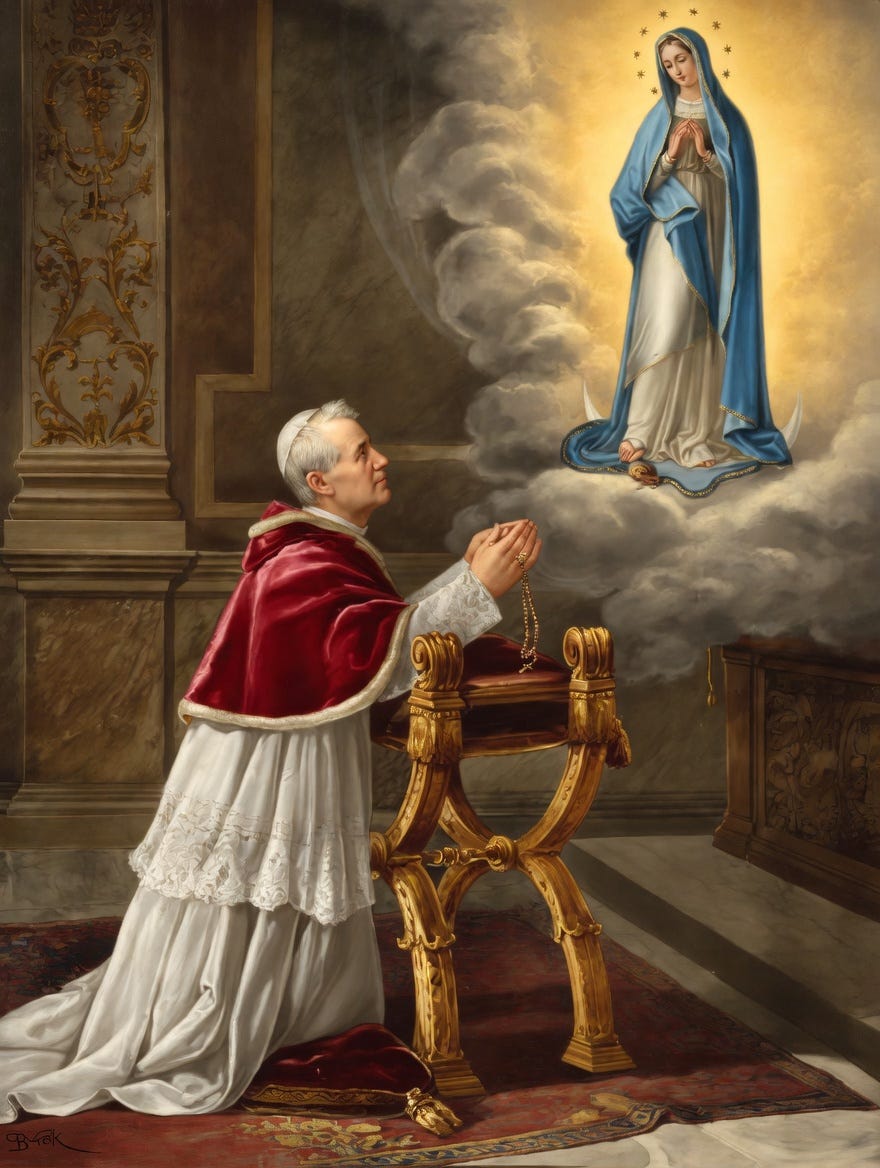
When Rome appears to bless what the Church has always condemned while penalizing fidelity to Tradition, these heavenly warnings remind us that the current confusion was long foretold — and that remaining steadfast in the unchanging Faith, as the SSPX seeks to do, is the path of true obedience to Our Lady and to Christ our King.
The gates of Hell will not prevail!
Read the full inspiring analysis here:
The Aftermath: A Catholic’s Guide (Chris Jackson on Substack)
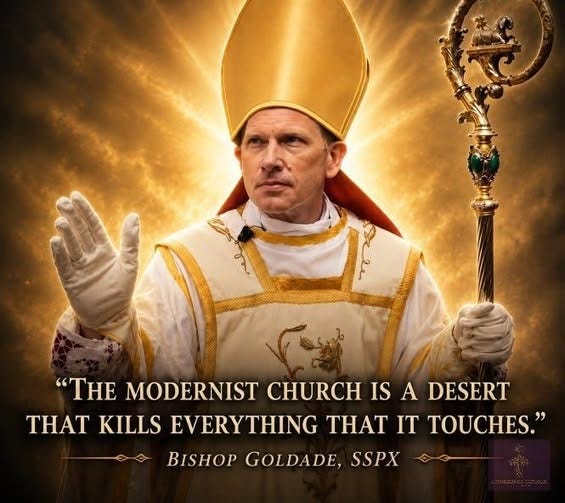
Modernist Church is a Desert. It Kills Everything it Touches. ~Bishop Goldade SSPX
Thanks for reading MassConversions’s Substack! This post is public so feel free to share it.
No posts
Comments
Nothing yet. Say the first thing.
Sign in to join the conversation.