
Welcome to the 191st issue of Subtle Maneuvers—and thanks to everyone who came to our Book Club meeting on Sunday; it was a pleasure to talk through The Situation and the Story with you all, and to unpack Vivian Gornick’s ideas about persona, texture, “purposeful innerliness,” writing as “a journey of attitudes,” and lots more. For paid subscribers who would like to review my slide show of resonant quotes/ideas from the book, I just posted the file here.
Also, quick reminder: Worm Zoom reconvenes next week, August 3–7! We’ll cowork together each morning from 6–8am Pacific / 9–11am Eastern time—and after Friday’s session we’ll have our Worm Salon, a longer get-to-know-each-other chat, for about an hour. If you could use a little extra accountability and camaraderie in your creative practice this summer, find all the details and join us here.
For a 2023 New Yorker profile of the Los Angeles artist Betye Saar—who died on Sunday, just four days shy of her hundredth birthday—the writer Hilton Als asked Saar about the “healing effect” of her art—specifically, “if she wanted to redeem people with her work.” Saar’s response is fascinating:
Yeah. But not to preach, not to control. To give them a hint that there’s something else. There’s always other. And if you open yourself up to other, you can do and think all sorts of things.
Throughout her career, Saar was always finding other directions or layers for her work, guided by intuition, chance encounters, current events, and a lifelong interest in mysticism and the occult. (According to her mother, Saar was clairvoyant as a child but lost her abilities at age six, after her father died. Or maybe they weren’t lost?)
I got to meet Saar briefly last May, at a press preview for the exhibition Let’s Get It On: The Wearable Art of Betye Saar, on display at LA’s Roberts Projects until August 22. The gallery’s PR agency had told us that Saar would be present but might or might not be available to take questions, depending on her energy level that day. As it turned out, the ninety-nine-year-old was brimming with energy, leading our group on a lively tour of her early costume designs, which she started making in 1968 because, she told us, “I got a divorce and I needed a job.” They ended up being a key stepping-stone toward the assemblages that became her most potent and durable medium as an artist.
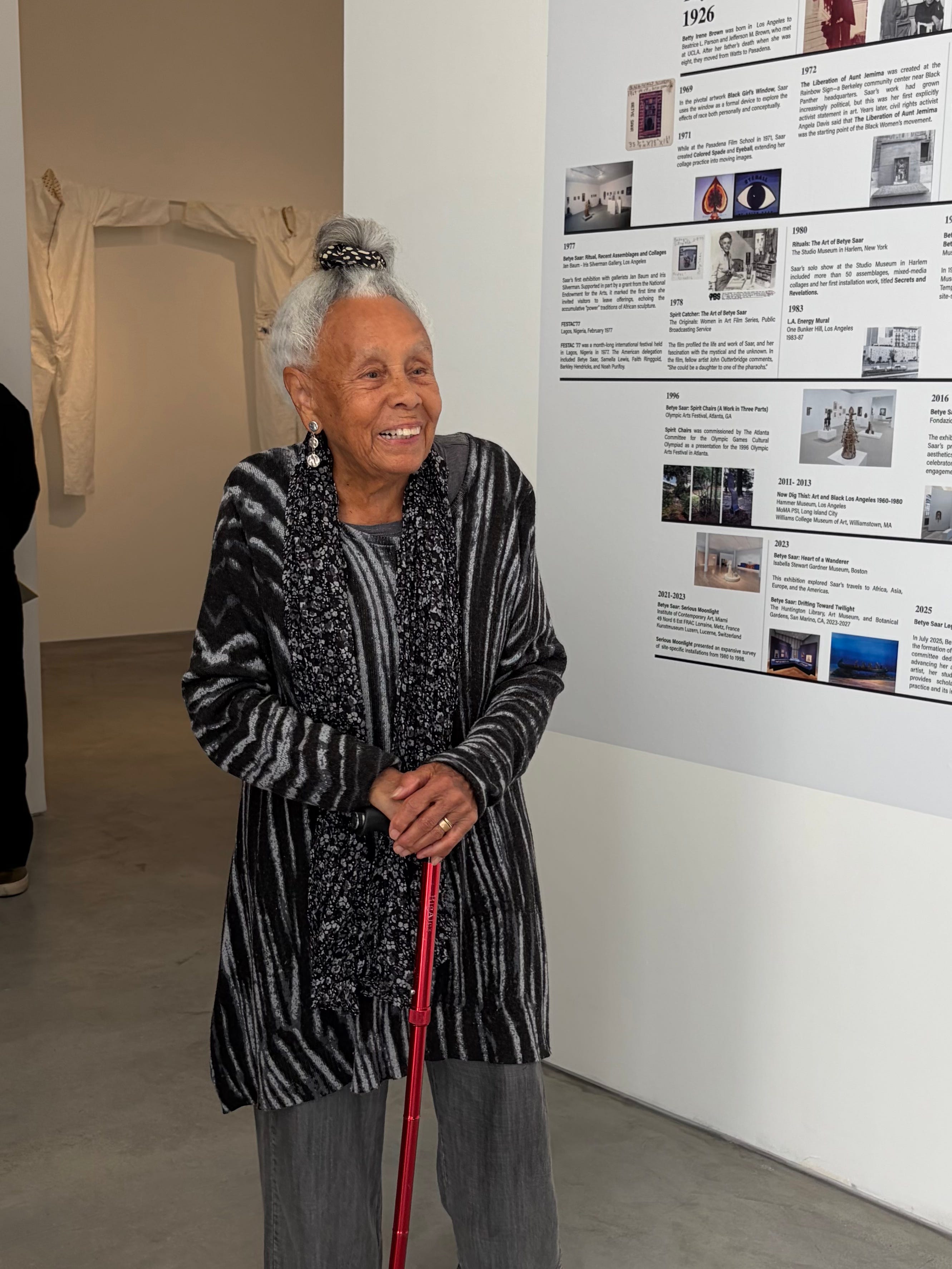
Saar was born in Los Angeles in 1926. She grew up in Pasadena but spent a lot of time visiting her grandmother in the Watts neighborhood of South LA, where she watched Simon Rodia at work on his Watts Towers, assembled over three decades from steel, mortar, and countless bits of tile, glass, shell, and other found objects.
It was a formative influence, as were her mother’s lessons in sewing and the family’s general air of scrappy self-sufficiency, necessary in the Depression years of her childhood. Saar grew up making her own clothes—and walking with her eyes on the ground for any interesting objects she might want to collect, a practice she kept up for the rest of her life.
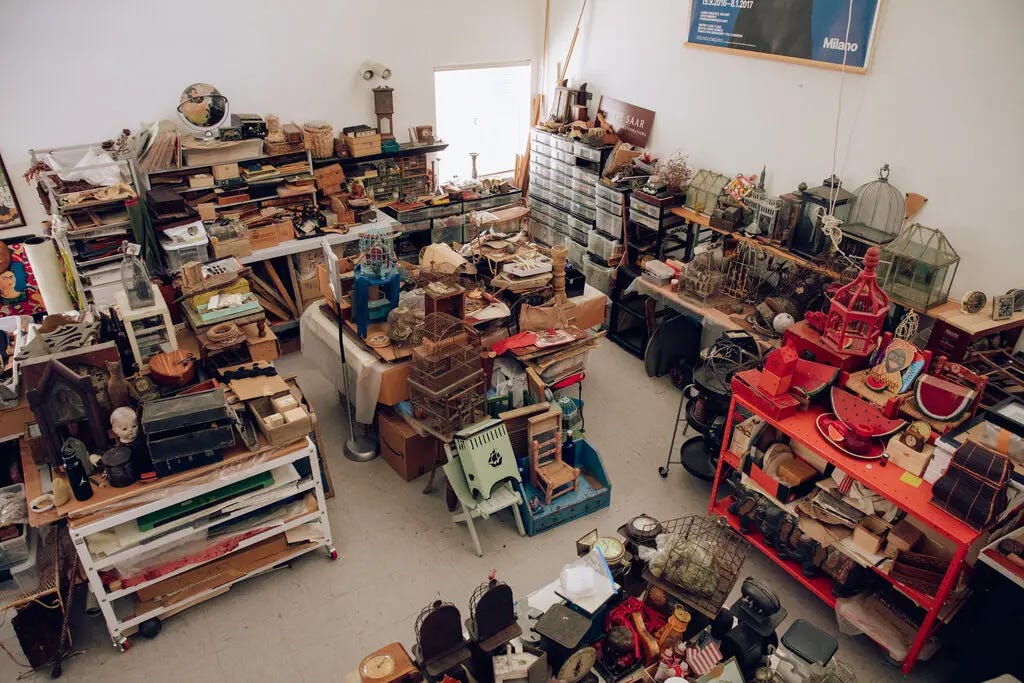
Saar went to UCLA but found that the fine-arts department was inhospitable to Black women like herself; she studied design instead. After graduating she designed greetings cards and enamel giftware, and went on to study printmaking in Long Beach. She also married (and eventually divorced) and raised three daughters in Laurel Canyon, still a rustic hillside enclave when she settled there in 1962.
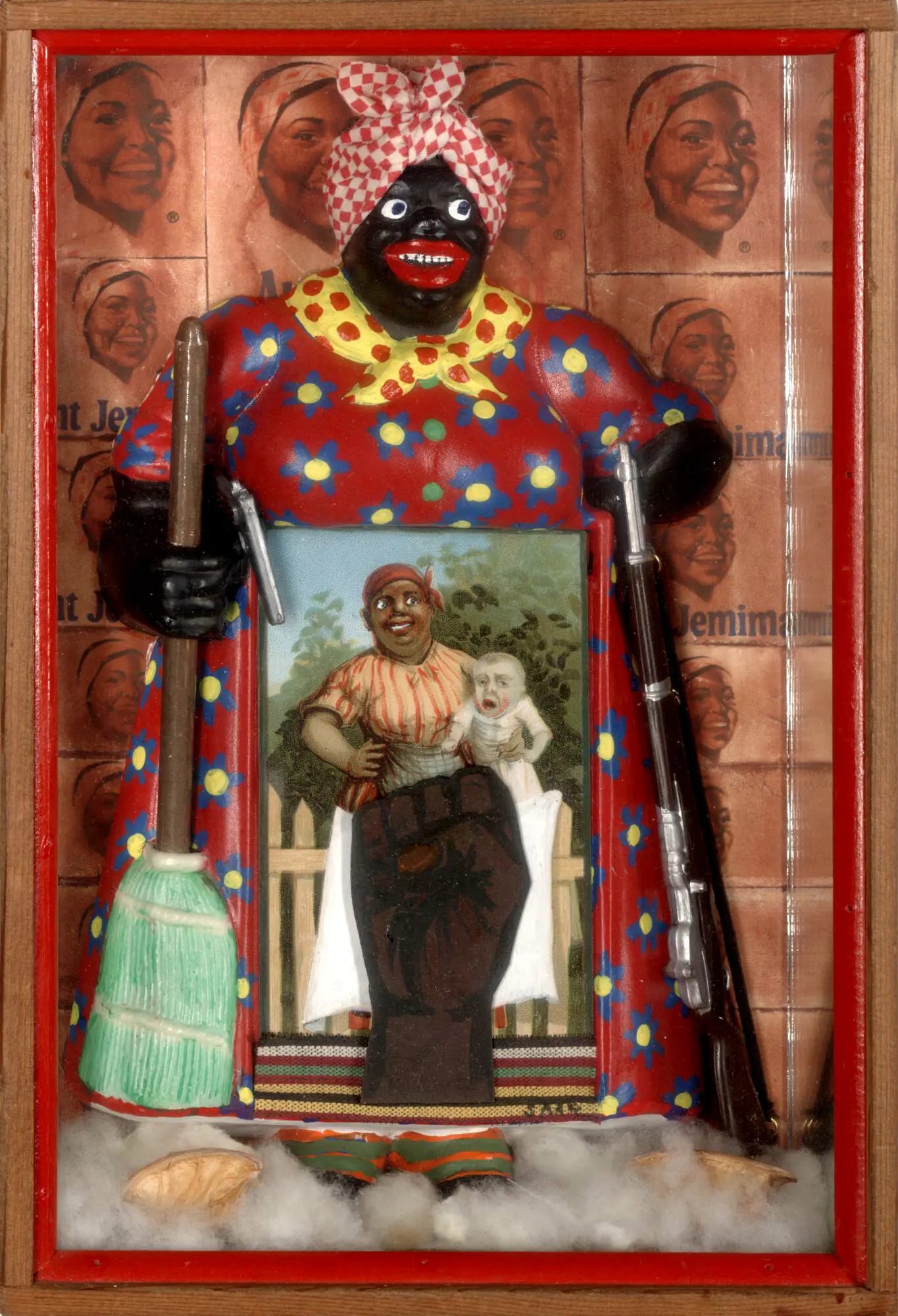
The decisive pivot in her career occurred in early 1967, when she encountered the artist Joseph Cornell’s boxes on a visit to the Pasadena Art Museum (now the Norton Simon Museum). Saar realized that the objects she had been collecting could be assembled in a similar way, in three-dimensional collages that could be politically explosive—as in her most famous work, 1972s The Liberation of Aunt Jemima—or otherworldly, informed by the occult symbolism she was always drawn toward.
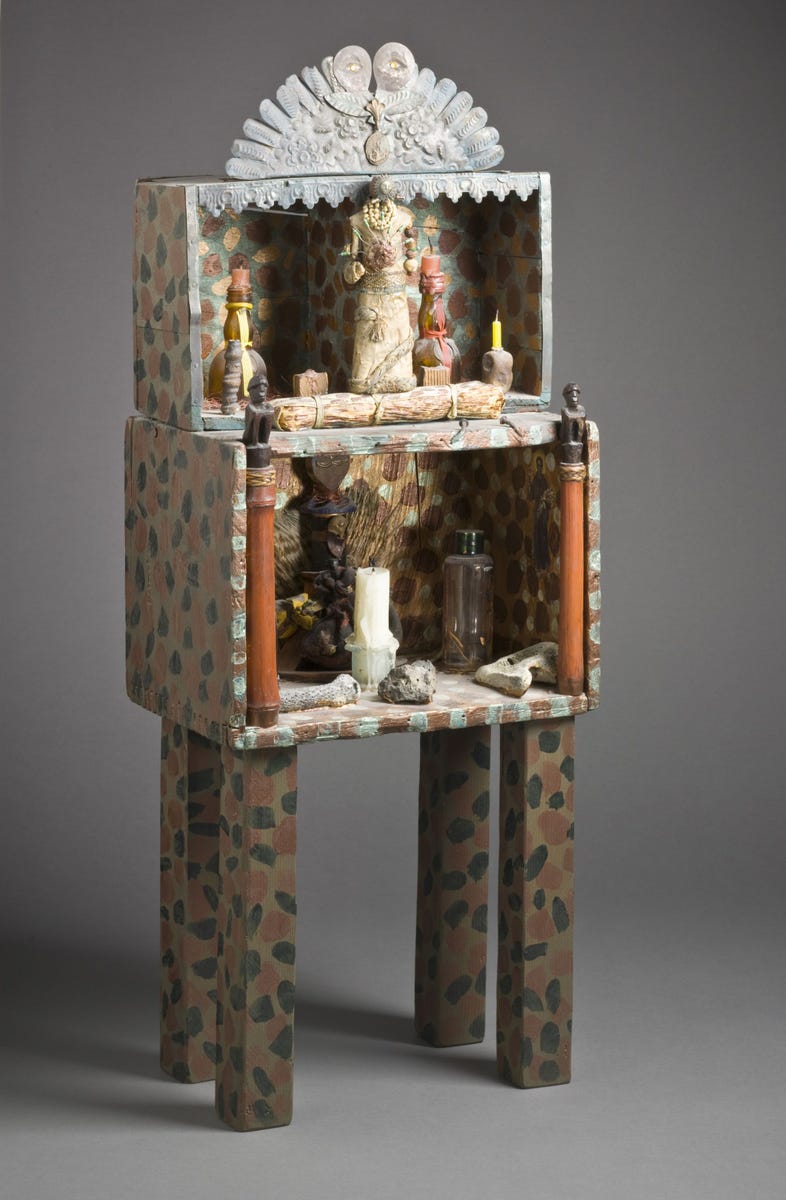
Energy is a great theme in all her work. “Everything has a past, so I feel that that energy is somehow enclosed with the object,” Saar said in a 2020 documentary. She continued:
It’s always a puzzlement when I start collecting things, like, “What can I do with this? What’s the point of that?” And then I’ll find another component and it says, “Oh yeah, I can use it here.”
I love how Saar talks about this process: that “it’s always a puzzlement” when you begin something new, and the way out of that puzzlement is to just keep gathering material—ideas, impressions, objects—until eventually the material tells you what to do next.
At the risk of getting too woo-woo in this newsletter: I also love something Saar said in a 1977 interview for Eleanor Munro’s book Originals: American Women Artists. She was talking about a period in the mid-1970s when she decided to consult a psychic about her work, seeking to better understand what she was up to in her assemblages. Saar told Munro:
About three years ago, I went to a psychic who reads your energy, and through her I began to understand the work. She explained how one’s energy is locked away, and how certain words can be keys to unlock it. The body is a door, and the word is the key, and the opening of the door is accompanied by a release of energy.
For me, this quote feels like the key to something I can’t quite articulate—perhaps to that other that Saar referenced above, and to whatever comes when you let the other into your work and life. The opening of a door? A release of energy? I’m not sure but I’m going to keep turning the key.
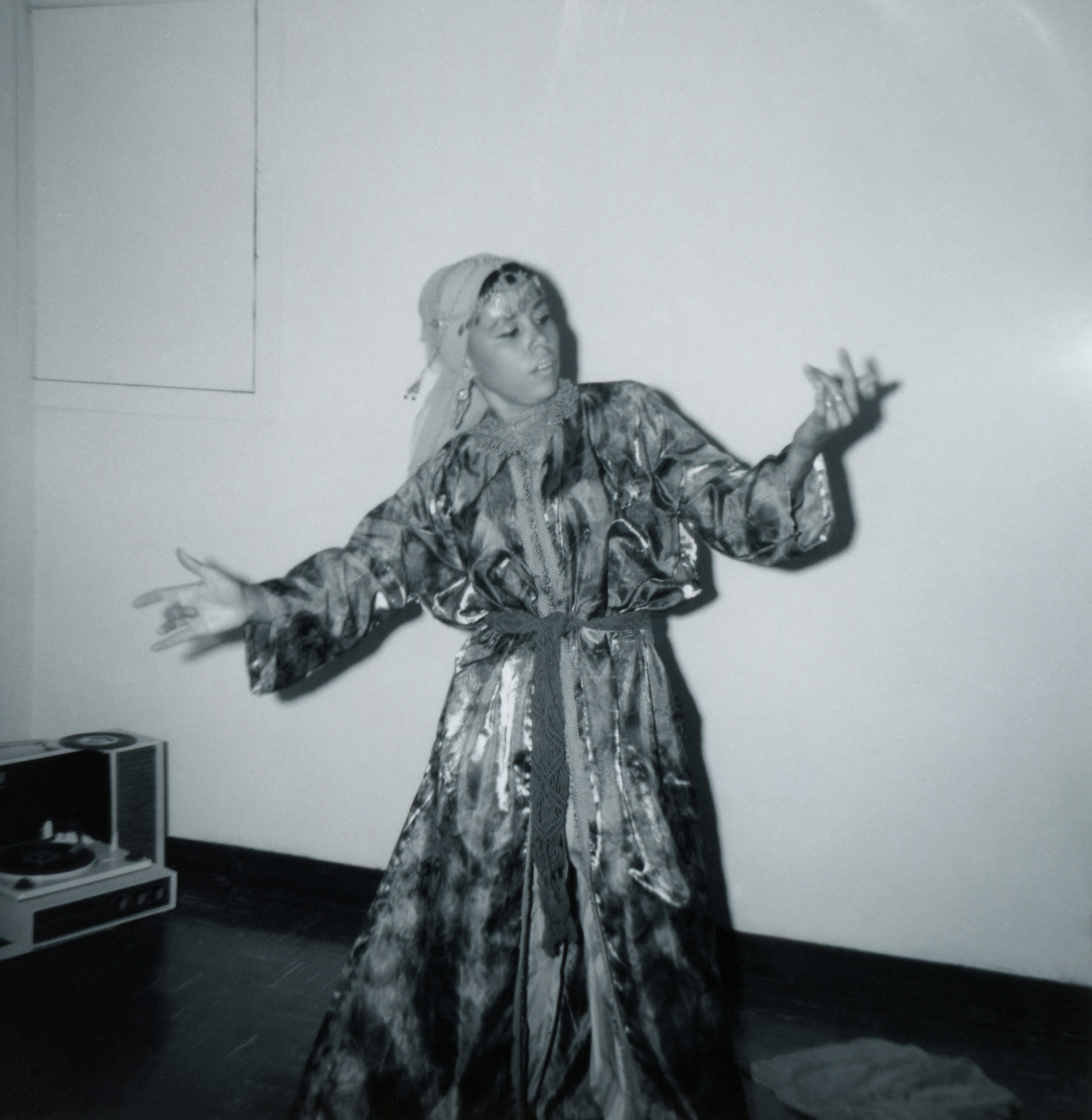
From the more woo-woo corners of the archive:
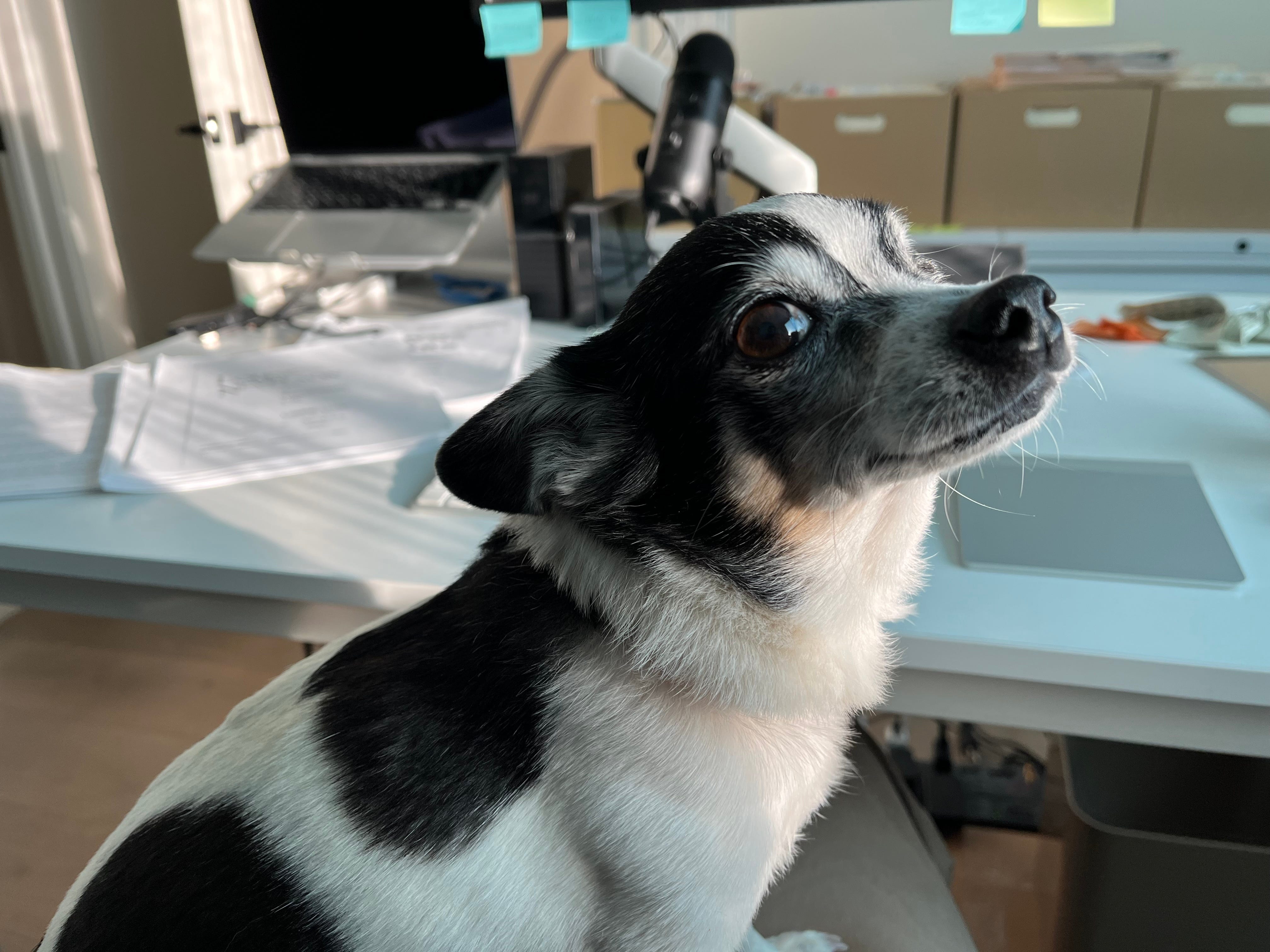
Thanks for reading. This issue is dedicated to another recently departed energetic being: our beloved dog, Uno, who passed away at home on July 17. After 190 newsletter issues, this is the first one I’ve written without him snoozing nearby or casting one of his myriad subtle facial expressions my way, trying to tell me something and trusting that I would do my best to figure it out. He was right, of course; I miss our daily collaboration more than I can say.
Comments
Nothing yet. Say the first thing.
Sign in to join the conversation.