
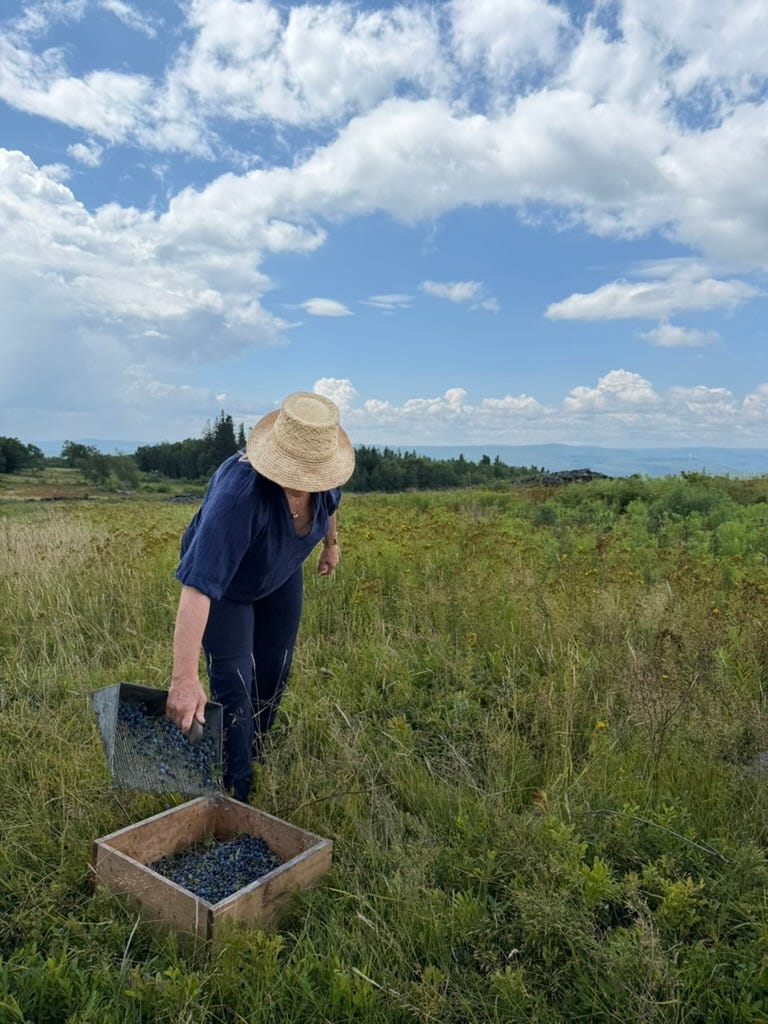
For the past year, Lilly has been telling Pat and me about picking lowbush blueberries in western Massachusetts, where she lives.
“You have to come,” she’d say.
I thought I knew what she meant.
I couldn’t have been more wrong.
I never need a reason to spend a few days with Lilly, but picking wild blueberries in the mountains of western Massachusetts had become a focus for our trip. (Well...that and swimming in “the lake,” another of her summer traditions.)
The drive to our destination wound through the rolling hills of the Berkshires, climbing higher and higher until, almost imperceptibly, the temperature dropped ten degrees.
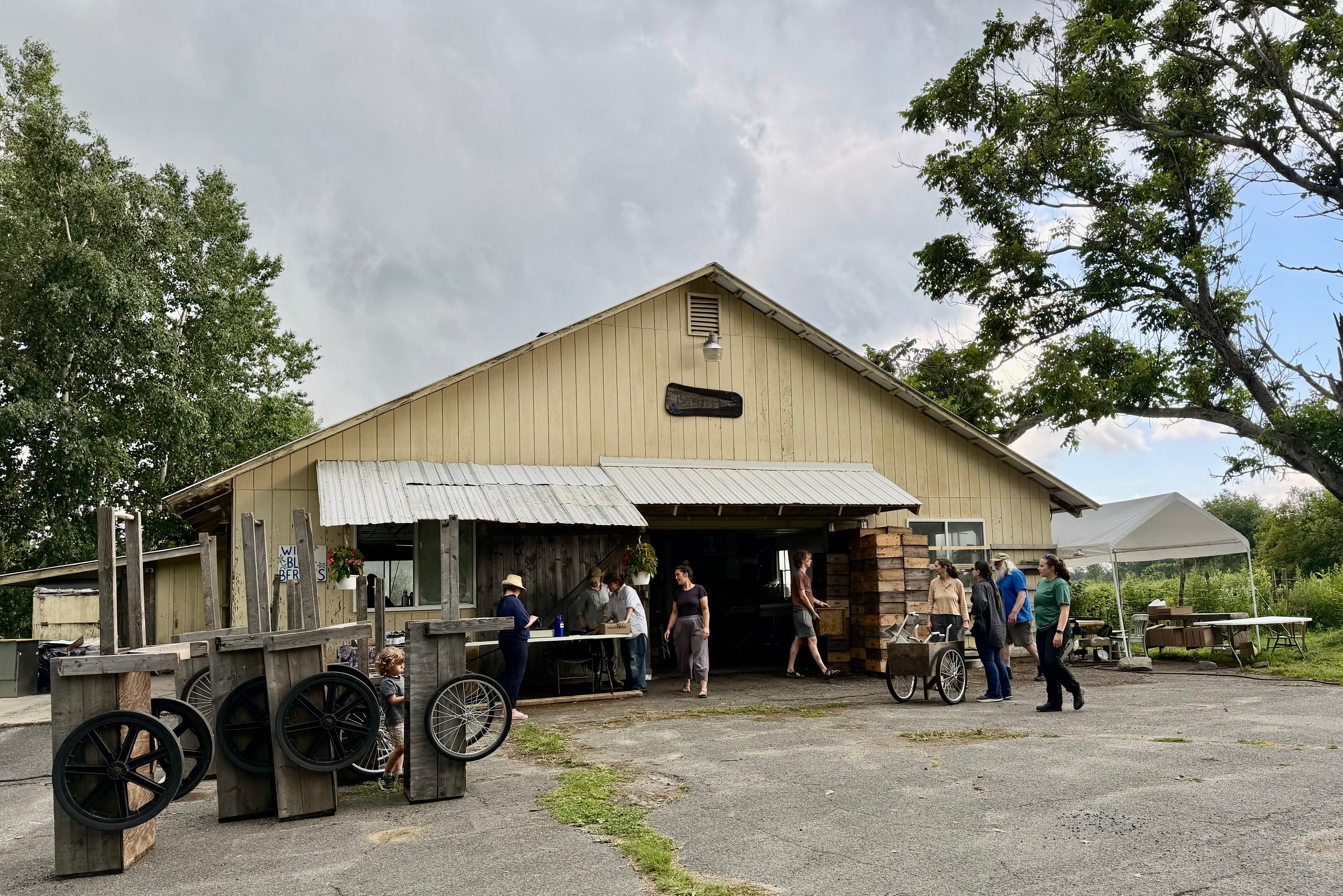
We arrived at The Benson Place, a family farm perched 1,700 feet up on Burnt Hill, in the tiny town of Heath. Their 30 acres of organic wild low bush blueberries are harvested during an incredibly short, two-to three-week season at the end of July and beginning of August. Miss that window, and you’ll have to wait another year.
It didn’t take long to realize this was much more than a blueberry farm. It’s a family built around stewardship. They actively create habitat for native pollinators, leave part of every harvest for the bears, birds, deer, and other wildlife that have long depended on these hills, and care for the land with remarkable respect.
Before we’d picked a single berry, I knew we were somewhere special.
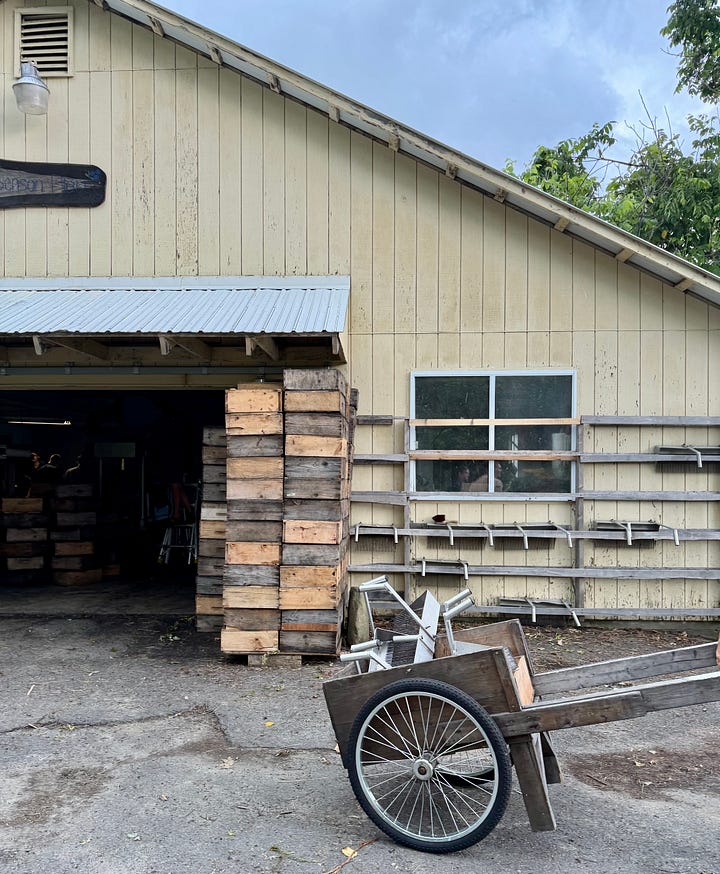
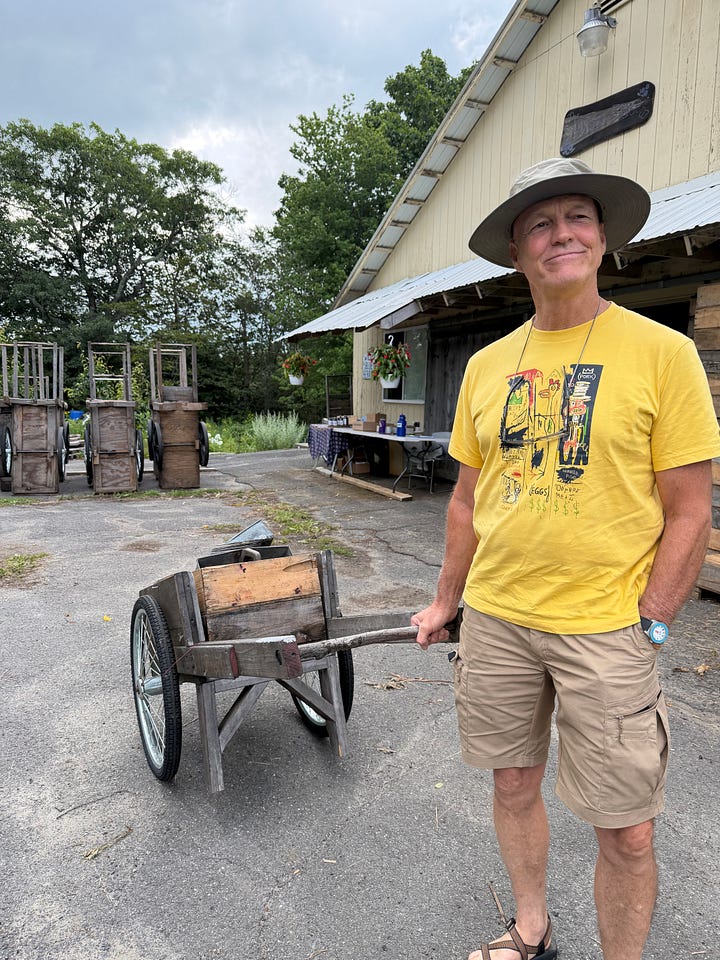
We picked up handmade metal rakes, weathered wooden berry boxes, and a wooden cart before heading out to our patch.
Instead of waist-high bushes, (high bush blueberries), we were wandering through acres of tiny berries carpeting the mountainside. The rakes, surprisingly sharp, perfectly combed the berries from the plants. Every so often we’d stop to pull stray weeds, empty the berries into the wooden boxes, and carry on.
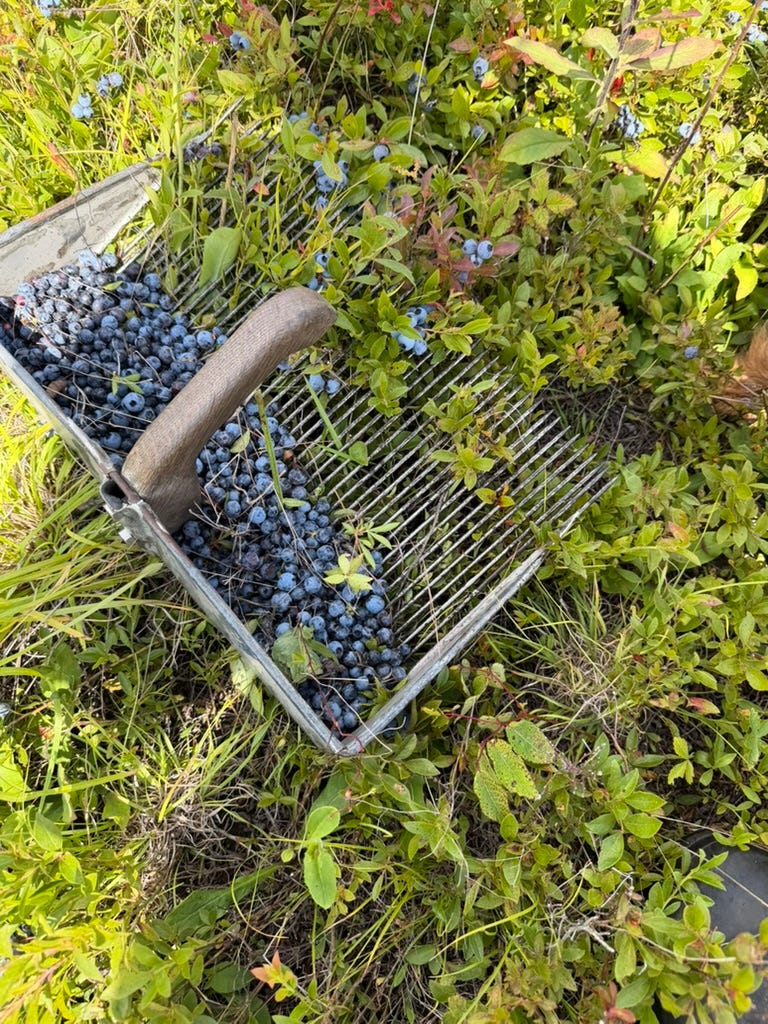
Within minutes I understood why people come back year after year.
There was something deeply satisfying about running that little rake through the bushes and hearing the berries tumble into the wooden boxes. Before long, I’d settled into a rhythm—rake, lift, empty, repeat—under a sky that couldn’t decide between sunshine and rain.
But the harvest wasn’t quite over.
Back at the sorting shed, we poured our berries onto a gently moving conveyor belt that carried them through the cleaning process. Larger leaves and twigs were separated first, and then we stood around the belt together, picking out the last stray stems by hand before the berries tumbled into the boxes they’d travel home in.
It was so satisfying to watch—and another reminder of just how much care goes into every berry.
When we finally loaded the truck, we had picked 55 pounds of blueberries. That’s a lot of blueberries!
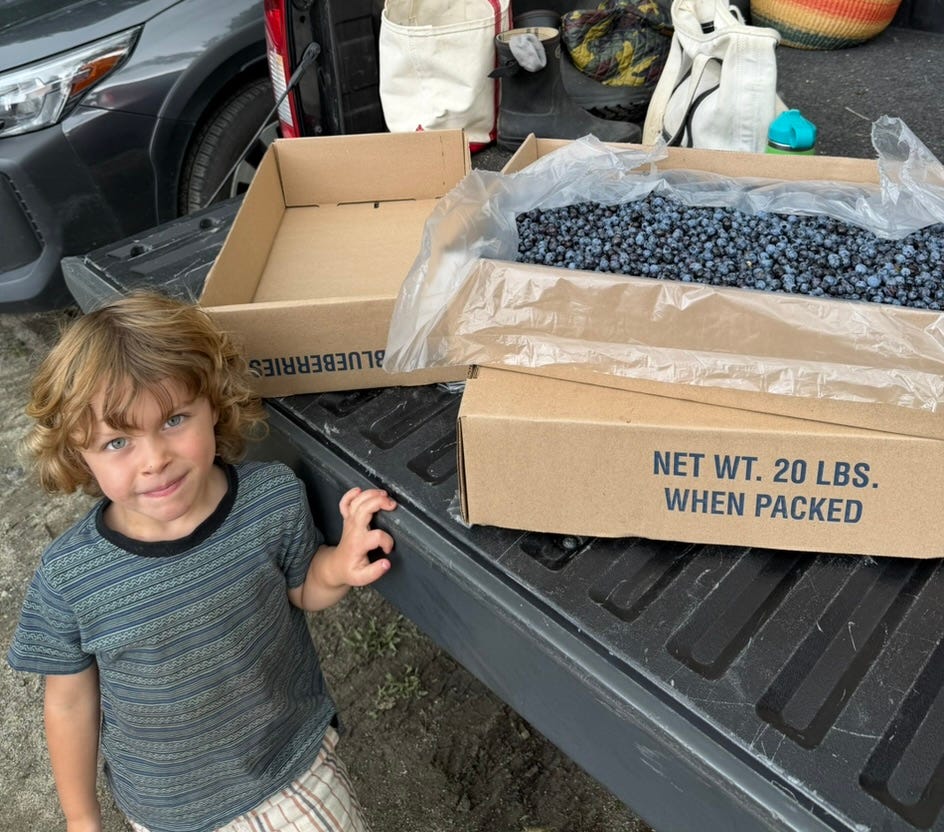
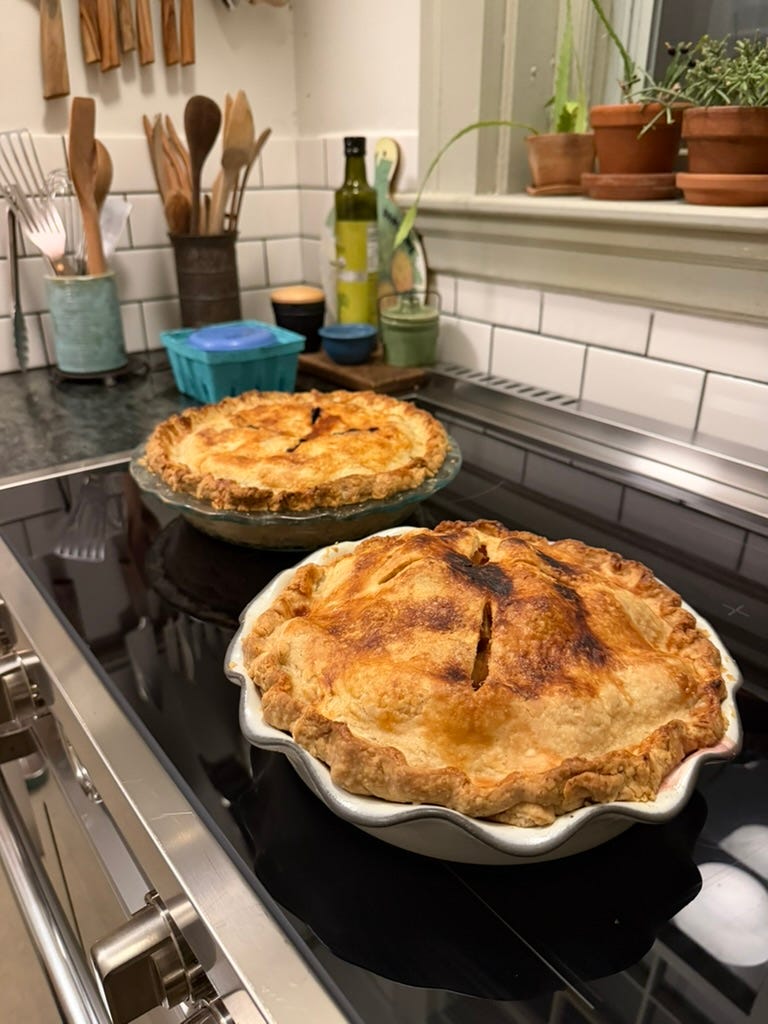
Back at Lilly’s apartment, she sprang into pastry-making action, announcing on the ride home she was making pie.
Out came the food processor. Pie dough came together in minutes while I set a pot of blueberries on the stove for compote and another for blueberry syrup. Before long, Lilly had two pies in the oven—one blueberry, generously overfilled with berries we’d picked just hours before, and one peach, using the fruit already waiting in her kitchen.
The pies were delicious, but the blueberry filling was looser than I’d hoped. Those little blueberries don’t behave exactly like the cultivated berries I’m used to baking with, and we had guessed at the amount of thickener.
I knew I wanted another chance to get it just right.
That’s one of the things I love about cooking. Recipes aren’t carved in stone. They’re living things. You make a note, change one thing, try again, and suddenly it’s exactly what you hoped it would be.
Forty-two pounds of blueberries made the trip home with me to New York.
By the time I’d unpacked the car, my kitchen had become blueberry headquarters.
Bags went into the freezer. Compote simmered on the stove. I made another batch of yummy blueberry syrup (wonderful splashed into fizzy water with lots of ice), and a double batch of blueberry scones. There were berries for friends, and, of course, another blueberry pie.
Some adventures end when you get home. This one followed me home.
Blueberries will be in my kitchen for quite a while, and I am perfectly happy about that.
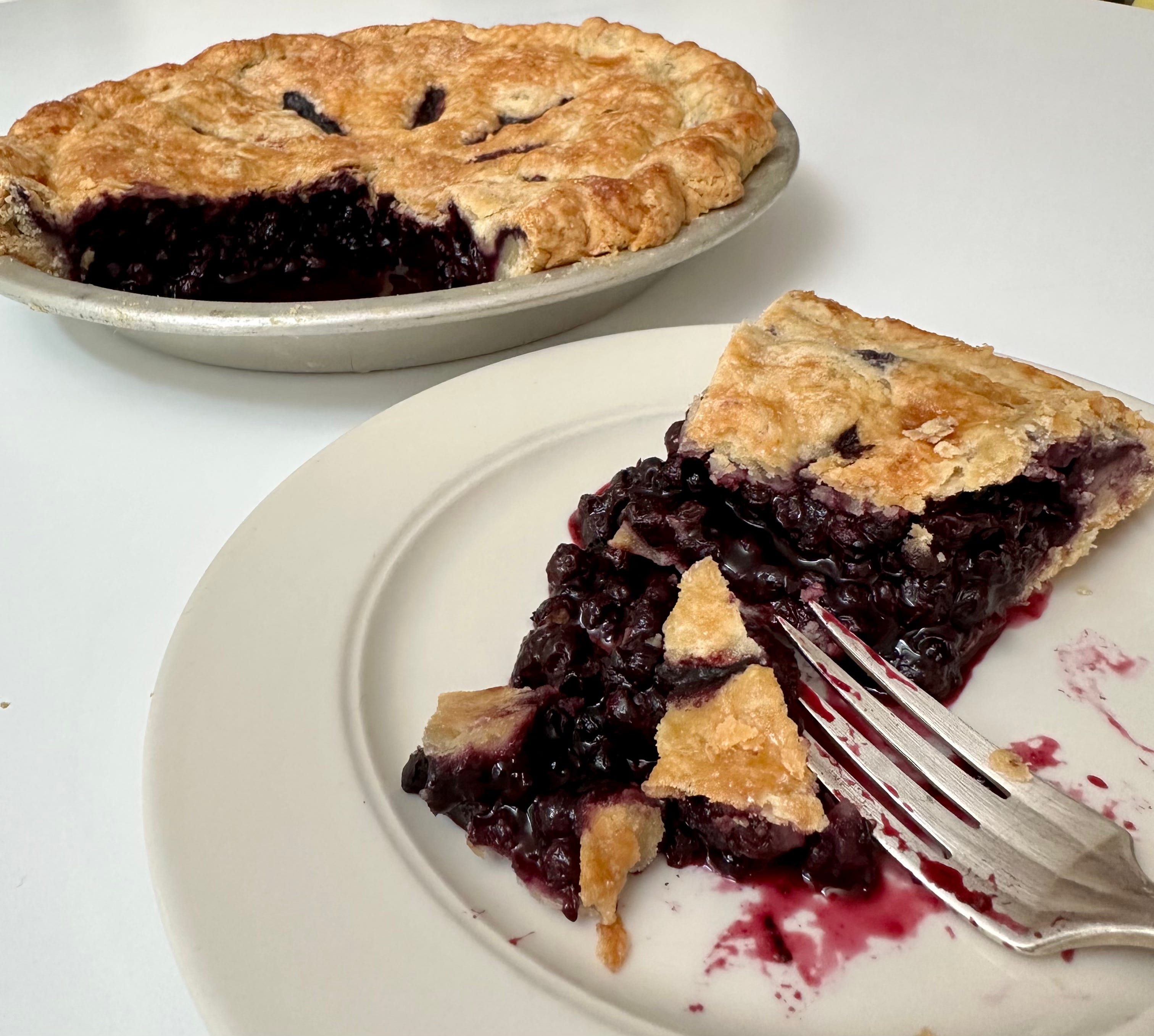
Blueberries have a mind of their own. Some are surprisingly juicy; others seem determined to become jam. That’s why I give a range for both the sugar and the thickener. Think of the recipe as a guide rather than a rule. Taste your berries, notice how juicy they seem, and trust your instincts.
I prefer a pie that celebrates the fruit itself. Too much sugar can hide the bright, almost floral flavor of the berries, so I usually stay toward the lower end of the range.
A great pie begins with a good crust, and once you have one you love, the possibilities are endless. This pie is made with my favorite pie crust, which I've shared here on Substack. I'll be sharing it here on its own very soon.
Makes one 10-inch double-crust pie
6 cups blueberries
¼–½ cup sugar, depending on the sweetness of the berries, plus 1 tablespoon for sprinkling
2 tablespoons cornstarch or finely ground tapioca
Finely grated zest of 1 lemon
2 generous pinches kosher salt
2 tablespoons unsalted butter, cut into small pieces
1 recipe double pie crust, chilled
1 egg white, lightly beaten
If using tapioca pearls, grind them in a spice grinder until they become a fine powder.
Preheat the oven to 425°F.
In a large bowl, combine the blueberries, sugar, tapioca (or cornstarch), lemon zest, and salt. Toss gently but thoroughly so every berry is evenly coated. Let sit while you roll your pie crust.
Roll one disc of pie dough into a circle about ⅛-inch thick and fit it into a 10-inch pie plate, leaving a slight overhang.
Pour the blueberry filling into the crust and spread it into an even layer. Scatter the butter pieces evenly over the berries.
Roll out the second crust and lay it over the filling. Trim and crimp the edges to seal. Cut four or five slashes in the top crust to allow steam to escape.
Brush the top generously with the beaten egg white and sprinkle with the remaining tablespoon of sugar.
Place the pie on a sheet pan to catch any drips. Bake for 10–15 minutes, until the crust begins to take on color. Reduce the oven temperature to 375°F and continue baking for 35–45 minutes, rotating the pie if needed for even browning.
The pie is done when the crust is deeply golden, and you can see the filling bubbling through the vents. Those bubbles tell you the thickener has fully activated.
Let the pie cool for at least 1 hour before slicing. For the cleanest slices, refrigerate the pie overnight and serve it at room temperature or gently warmed.
Mary’s Notes
Keep your pie dough cold from start to finish. If it begins to soften while you’re rolling or decorating, pop it into the refrigerator for 10 to 15 minutes before continuing. Cold butter creates a flakier crust.
Start the pie in a hot oven. That initial blast of heat helps set the crust, encourages beautiful browning, and gives the pie its structure before the filling begins to bubble.
Let the pie cool completely before slicing. I know it’s hard to wait, but the filling needs time to set. A warm slice will always be a little looser than one that’s had a chance to cool.
On thickeners: I’ve made fruit pies with flour, cornstarch, and tapioca over the years, and I keep coming back to finely ground tapioca. It creates a clear, glossy filling that lets the fruit shine without the cloudiness flour can sometimes leave behind. Cornstarch works beautifully too if that’s what you have on hand.
Whatever thickener you choose, don’t judge the pie by the clock. Judge it by the bubbles. The filling should bubble vigorously through the vents for several minutes before you take it from the oven. That’s what activates the thickener and ensures the filling will set as it cools.
There are people who make life richer simply by saying,
“Come with me. I want to show you something.”For me, Lilly is one of them.
From my table to yours,
Mary
Comments
Nothing yet. Say the first thing.
Sign in to join the conversation.