
As a small space gardener, I’ve long grown tomatoes in containers, and have found that many tomato varieties thrive even in the confines of a pot. Here are a few tips learned over many years of container growing.
For my container tomatoes, I use large containers and a high-quality potting mix. For a regular-size tomato, the pots are at least 14 inches across (18 is even better) and about the same height. This year, I’m growing several tomato varieties designed for small containers and those are in 8 or 10 inch diameter pots. The smaller the pot, the more often you will have to water and fertilize.
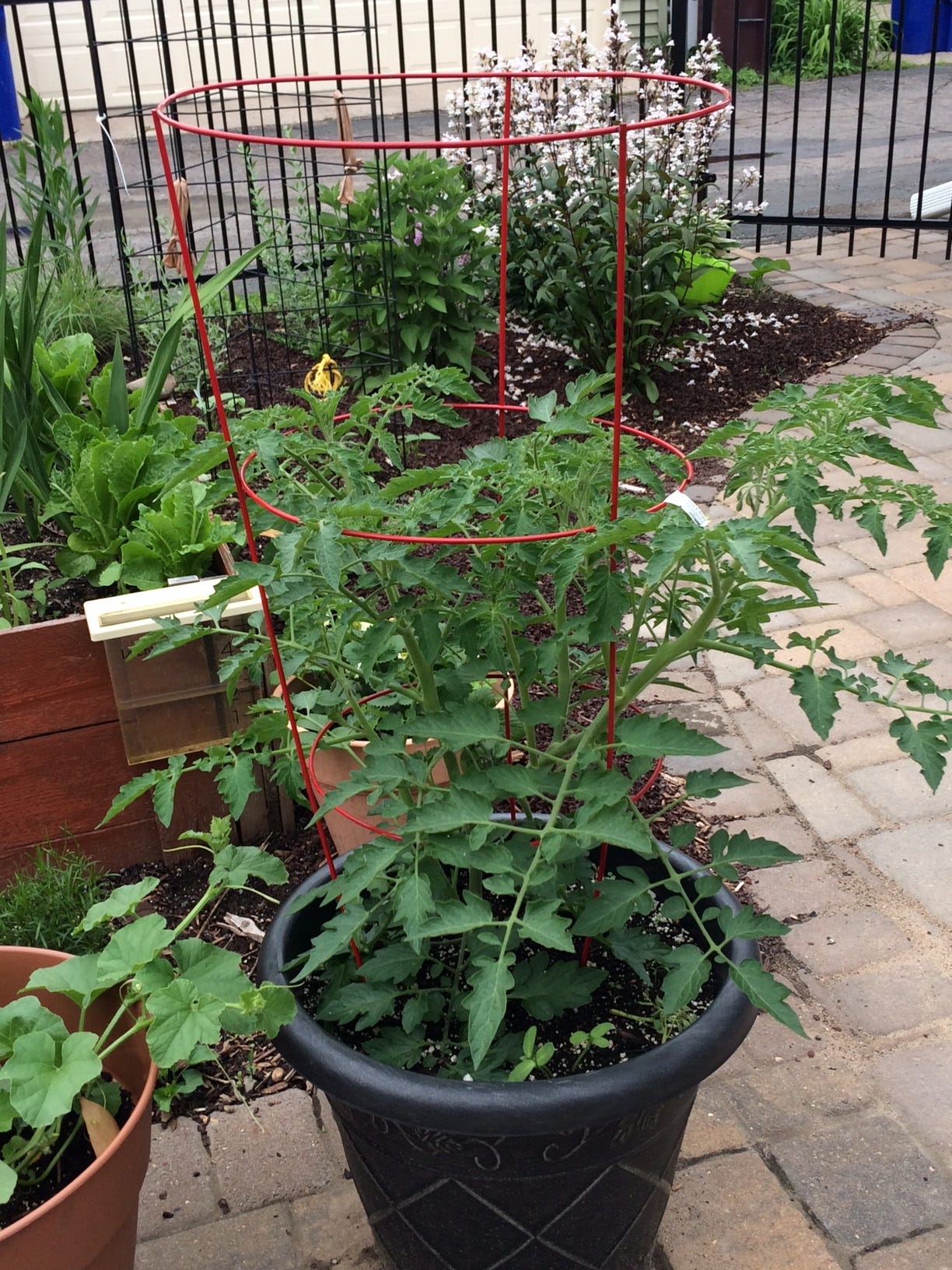
Generally, determinate or bush tomatoes grow well in containers as do those specifically designed for patio or container growing. These tomatoes get to a determined size, set fruit and then stop growing. Indeterminate or vining tomatoes keep growing until the frost stops them. I’ve grown indeterminate tomatoes in pots many times. They do get scraggly and a bit diseased by the end of the season, but they still produce lots of tomatoes.
A high quality potting mix has most of what the nutrients tomatoes need. However, you will have to add fertilizer during the season because nutrients will wash away with rain and watering. I use an organic fertilizer formulated for vegetables and herbs from the Dr. Earth brand. I add fertilizer starting about a month after the plants are transplanted to their final home, and every three or so weeks after that, depending on how much rain we get and how the plants look. One sign that tomatoes don’t have enough nutrients is that they set flowers but not fruit. The best thing about growing tomatoes in containers is that the potting soil lacks all of the soil-borne diseases that tend to hang out in the ground—that’s a good thing!
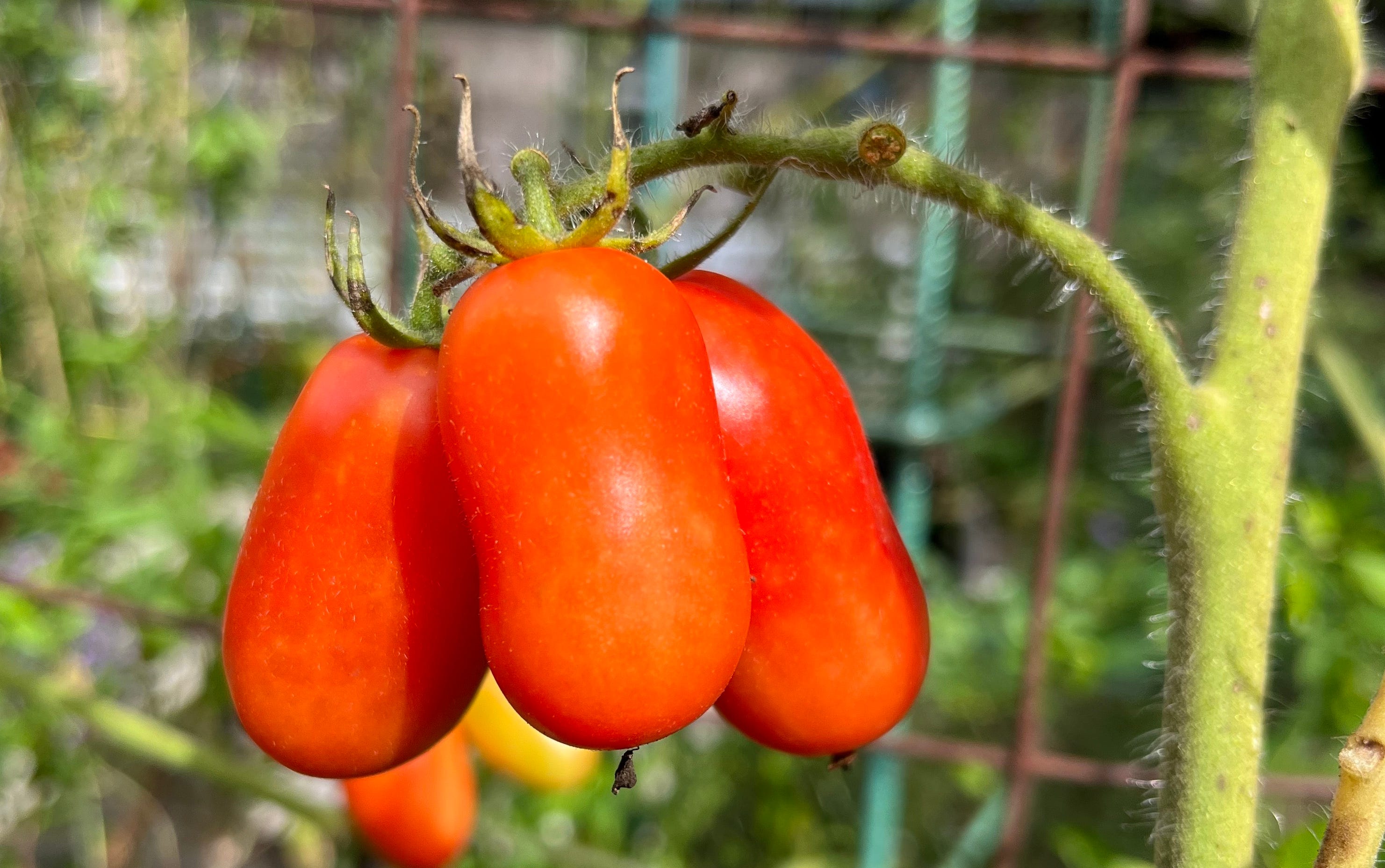
Tomatoes don’t like to have overly wet feet and they hate wet leaves, so make sure your containers have good drainage—at least three or four holes in a large pot. Keep them elevated off the patio or deck, too, to make sure the water can drain. They also grow best with air circulation and that’s one of the ways container growing is easier. Put your containers on wheels and move them around if the plants get too big or too close to each other.
One disadvantage of container tomatoes is that in dry spells you have to stay on top of watering. Tomatoes need consistent—but not excessive—moisture throughout the growing season to perform best and avoid blossom end rot.
Even small tomatoes that are meant to be grown in containers may need a bit of support. If it’s a normal size tomato, I put a cage around the container. If the plant gets big and the container starts wobbling, I add one or more stakes to hold things up.
This probably goes without saying, but put your tomato containers in the sunniest spot you have. Sometimes you can cheat a bit, but generally you want six to eight hours a day to get the best growth and fruit.
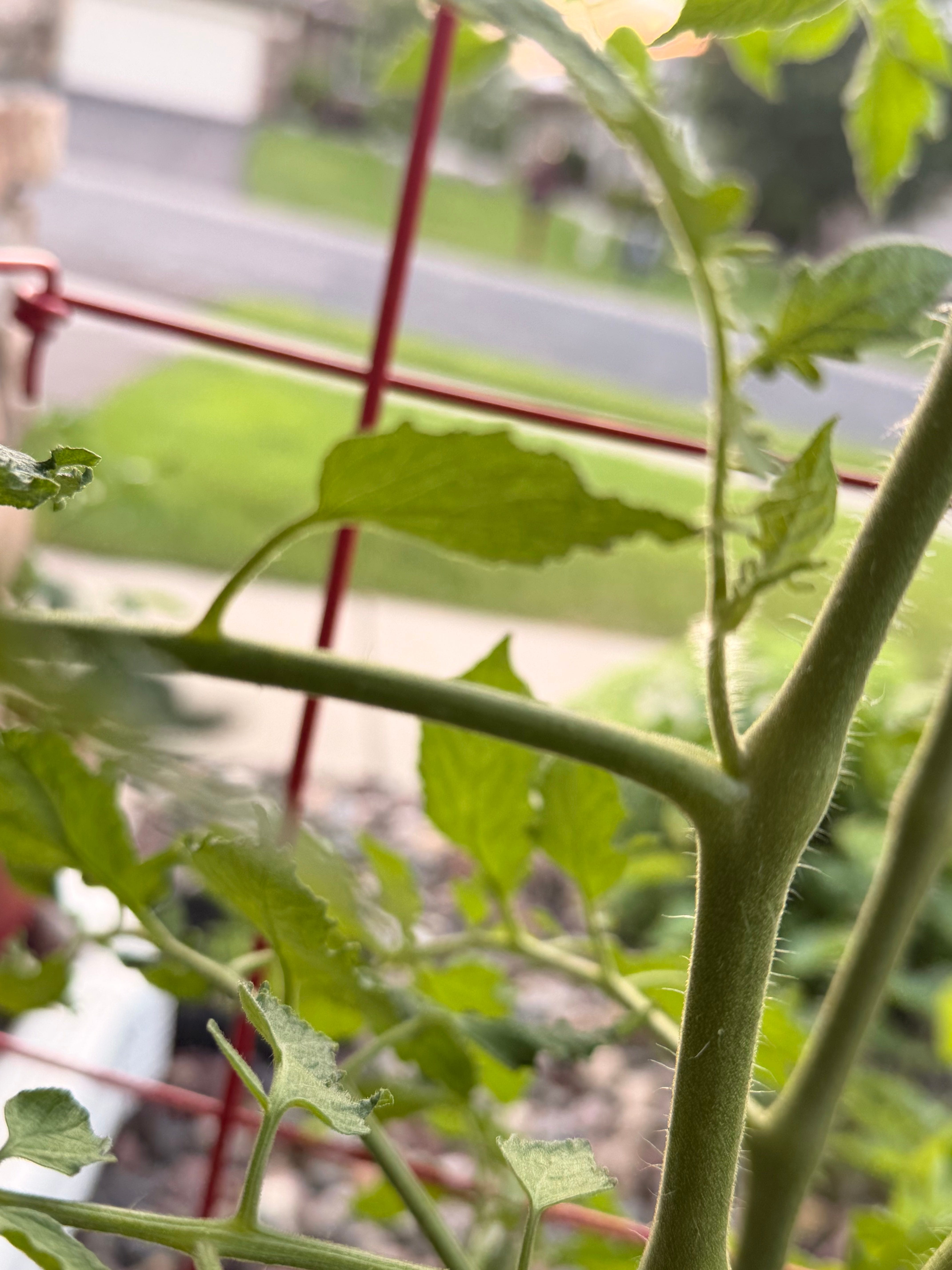
To pinch or not to pinch, that seems to be an endless debate among tomato growers. It refers to pinching off the sucker that grow in the notch between two branches of your tomato. Pro-pinchers believe that removing the excess foliage improves air flow and helps the tomato put more energy into producing fruit. Anti-pinchers think it doesn’t make much difference and that more foliage keeps the plant more robust. I don’t have strong feelings one way or the other. I’ve pinched and I’ve let tomatoes grow as big as they want. However, if your tomato is a bigger variety and you’ve got it in a container, you might want to control the foliage a bit.
No posts
Comments
Nothing yet. Say the first thing.
Sign in to join the conversation.