
Even before I moved to a townhouse with limited gardening space, I grew food in containers and planter boxes. Containers made it easy to control the soil and drainage, which reduced the likelihood of disease. Containers could be moved to allow for more air circulation when plants got bushy, and the selection of plants bred for small spaces is growing every year, making the choices abundant. Containers require regular watering and more fertilizer, but overall the harvests are healthy and plentiful.
Is every vegetable suitable for container growing? No. (Sorry, butternut squash.) But here are five you might want to consider growing in super small spaces, no matter the size of your overall garden. You won’t harvest enough food to feed a football team from any of them, but you’ll be surprised by how much joy and food you can grow in a tiny pot.
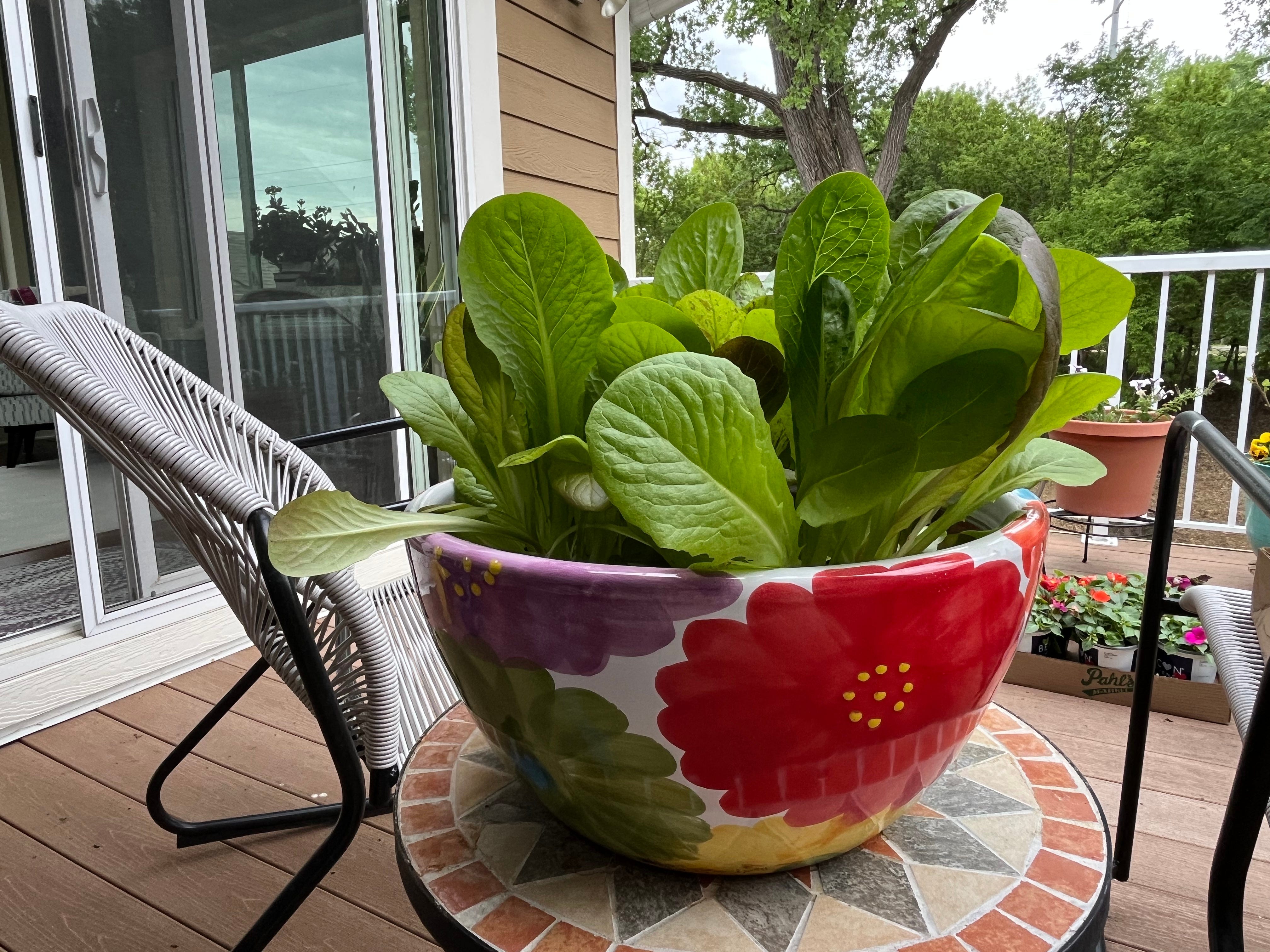
This is probably the easiest, quickest super small space crop. Choose a wide, low bowl with drainage holes and fill it with a high-quality potting mix. Use lettuce starts you’ve grown indoors or just spread the seed lightly on top of the potting mix with a thin cover of soil or sand. Keep it watered and wait for the magic to happen. In about six weeks, you’ll have tender leaves to harvest. This works especially well with “cut and come again” lettuce mixes, but I’ve had good luck growing small heads of lettuce in bowls as well. The variety Pablo was pretty and delicious and once I grew Romaine heads in window boxes. As you harvest, plant more seed or harvest the bowl and add a summer annual flower for the warm months.
While bowls are great for lettuce, bok choy and other small cabbages also grow well in containers. This year, I’m growing a variety called Toy Choi. It ripens in less than five weeks and I’m going to be harvesting a head for a stir fry tonight.
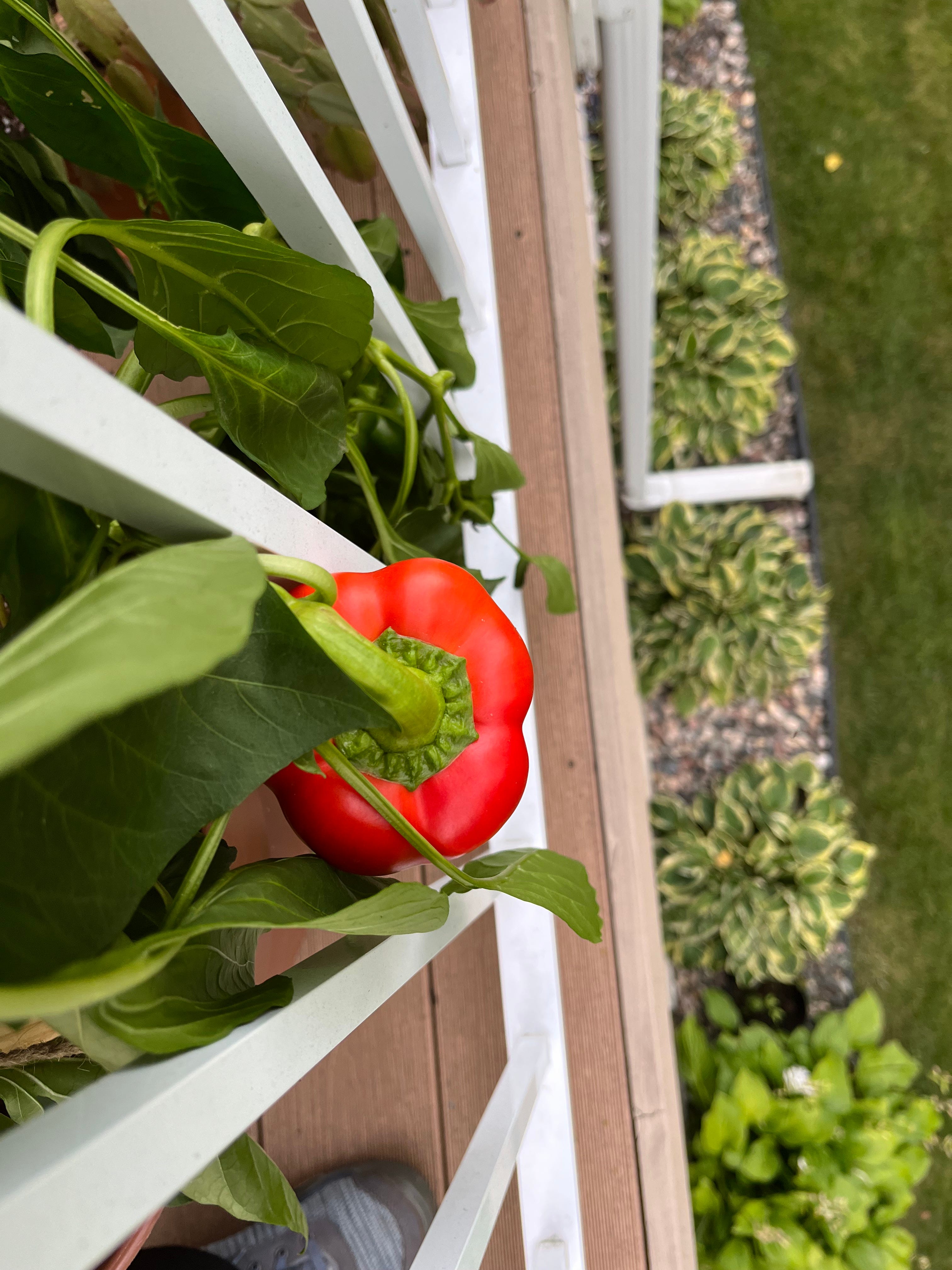
After lettuce, peppers are my favorite vegetable for container growing. The plants are just the right size for a 14- or 18-inch container. I use plastic containers because they are easy to move around and terracotta loses moisture too rapidly. Peppers need warm temperatures, so put them in your sunniest spot, and they like consistent moisture. Because you will have to water a pot more than an in-ground garden, plan on adding supplemental fertilizer midsummer to keep the nutrients up. A regular tomato cage fits easily inside that size container and is a good way to support the pepper. I also grow peppers in my community garden, but the ones on my deck are safer from deer and other predators. This year, I’m trying a new pepper called Big Ben sweet bell pepper, which is meant to be grown in pots.
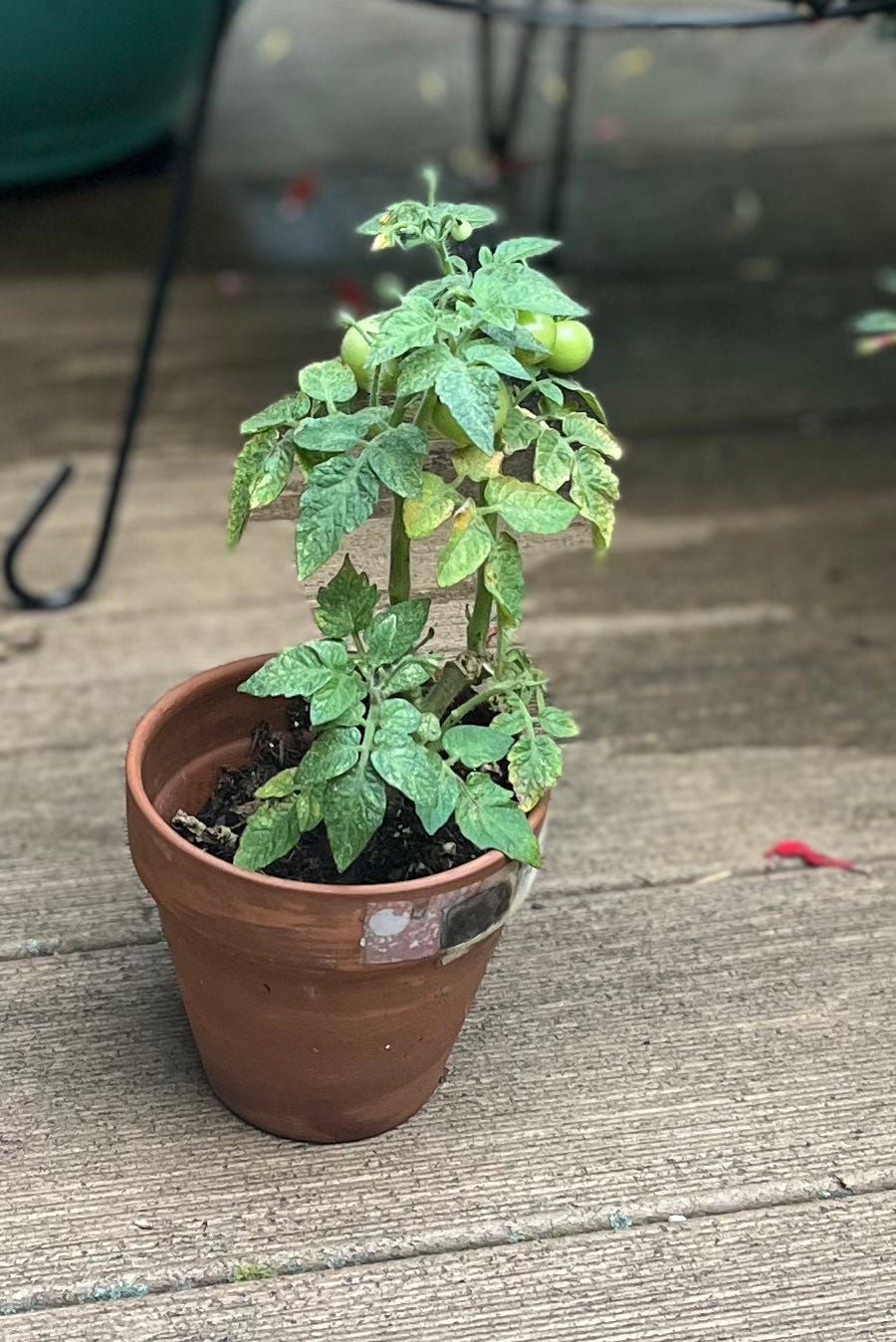
Because more people are living in condos, apartments and townhouses, plant companies have been introducing more and more varieties of tiny tomatoes. Last year, I grew an ‘Orange Hat’ tomato, a 6- to 9-inch plant from Baker Creek Seeds. I grew it in a 4-inch pot, per instructions, and it did produce some fruit but the size of the pot made it hard to keep up on watering and I only got a few fruits. I’ve had much, much better luck with regular patio sized tomatoes, such as Sugar Basket Orange. This year, I am trying two new varieties, courtesy of Burpee. Both are bred specifically for hanging baskets, though I will be using a raised pot. Cherry Blast grows only 8 inches tall and 18 inches wide, while Akoya is a purple tomato that grows 12 inches high and 18 wide. Both will be perfect for 12 inch pots on the deck.
Many determinate tomatoes can be grown in containers as long as the containers are at least 14-inches across and bigger is definitely better. Celebrity is a super reliable older slicing variety that does well in containers. Like peppers, you want to make sure the plants get adequate water, but their roots are not water-logged. They also need extra fertilizer as they season goes on. Once flowers have set, use a fertilizer that is higher in potassium and phosphorous rather than nitrogen. The potassium and phosphorous help with fruit production rather than leaves.
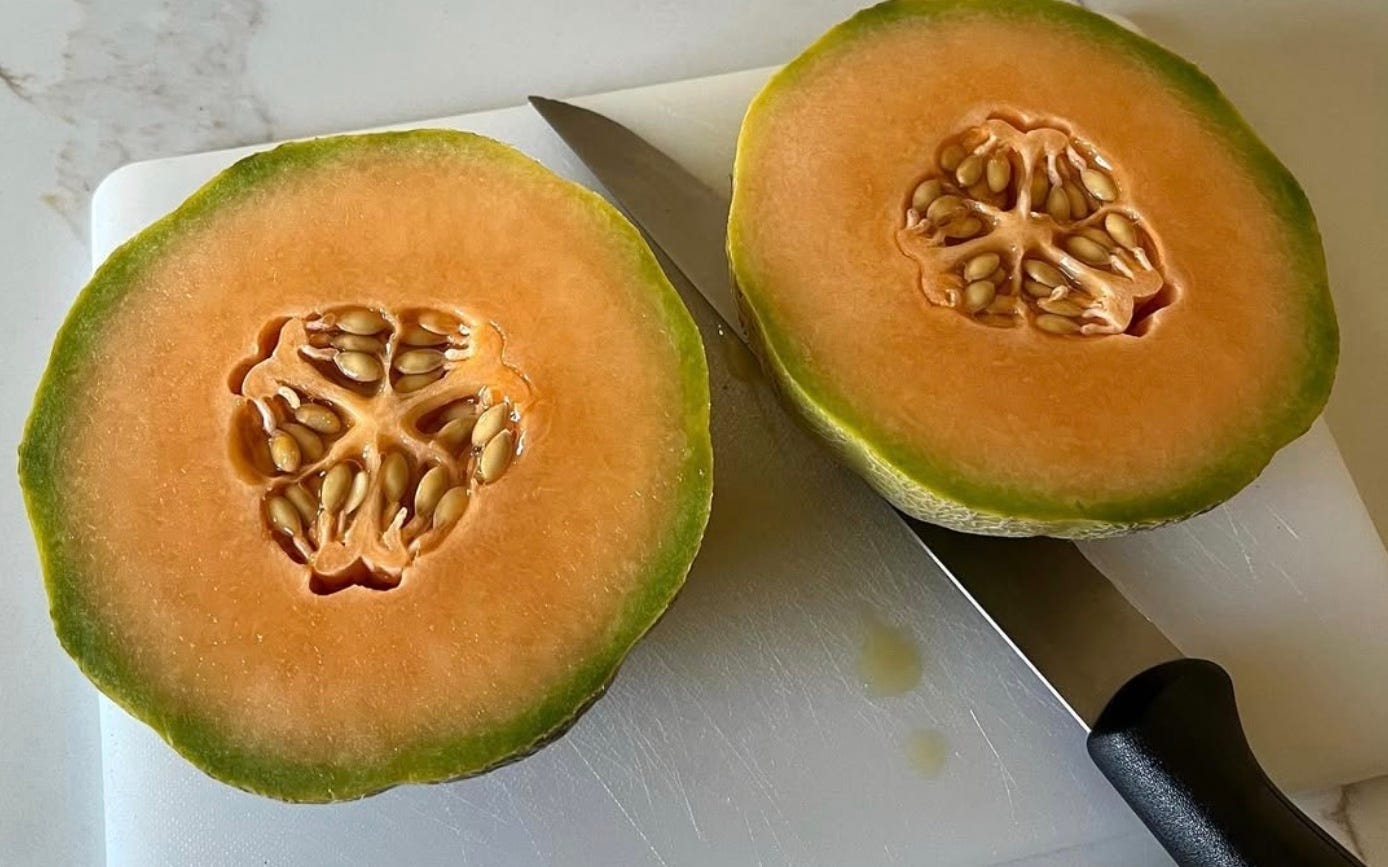
An introduction from the University of Minnesota in 1948, Minnesota Midget melon is the most reliable and delicious cantaloupe for northern climates. It grows on 3 to 4 foot long vines, each of which produces six or so melons. Each melon is the perfect size for two people — or just one, if you are hungry. I’ve grown these in large containers with a bit of support to keep them off the ground. Like all melons, they like sun and a relatively rich, well-drained soil. These melons are fairly fast growers. The plants I set out in early June generally are ready to harvest by the end of July or early August. If you wanted to extend the crop, you could plant a couple of plantings two or three weeks apart and have melons from late July into September. I have tried growing these in my community garden, but the deer almost always seem to get in and wreck the crop before I get to it.
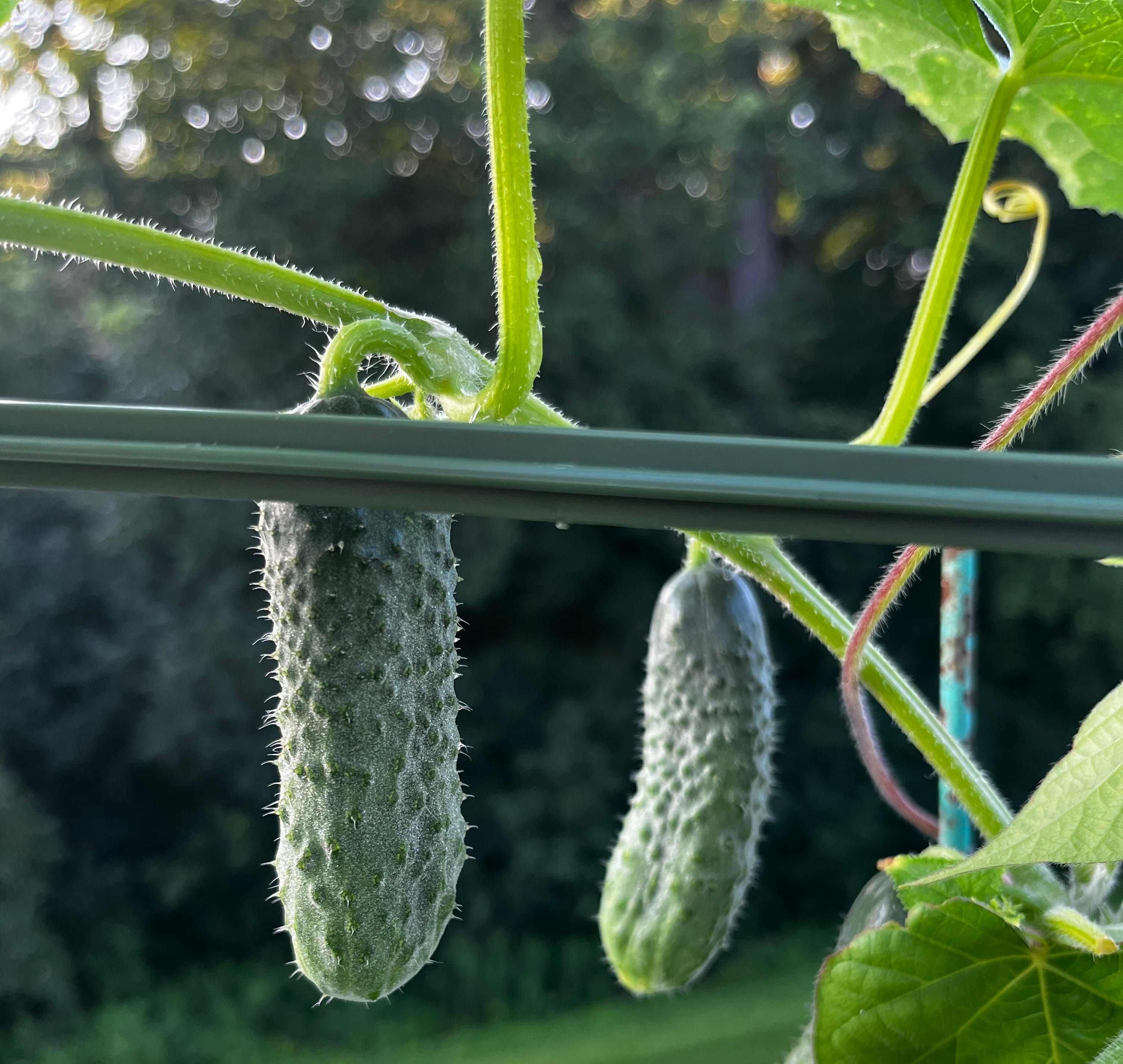
Cucumbers are one of the easiest crops to grow and they adapt well to containers. Two things to remember: in northern climates, do not put the cukes out too early. They love heat. Second, make sure you have the trellising in place when you plant the cucumber seeds or seedlings. Cucumbers can grow fast and you want to give them a place to climb. This year, I’m growing Russian Pickling cucumbers up the trellis on my planter box on my deck. This is a quick growing variety and the fruit reportedly resists turning bitter. The vines grow only 3 to 4 feet long, which will be ideal for covering the trellis. You can also find bush style cucumbers, but even those cukes grow best with a trellis. Cucumbers are heavy feeders, so you will need to fertilize throughout the season and water regularly. A layer of mulch around plants will help retain moisture. Also, if your tiny cucumber plants start to set fruit, you may want to remove that to allow the plant to get bigger and establish its roots.
What I Grew on My Deck in 2025
I know there are more foods people grow in containers. What are your favorite fruits and veg to grow in containers?
Thanks for reading Your Northern Garden! This post is public so feel free to share it.
No posts
Comments
Nothing yet. Say the first thing.
Sign in to join the conversation.