
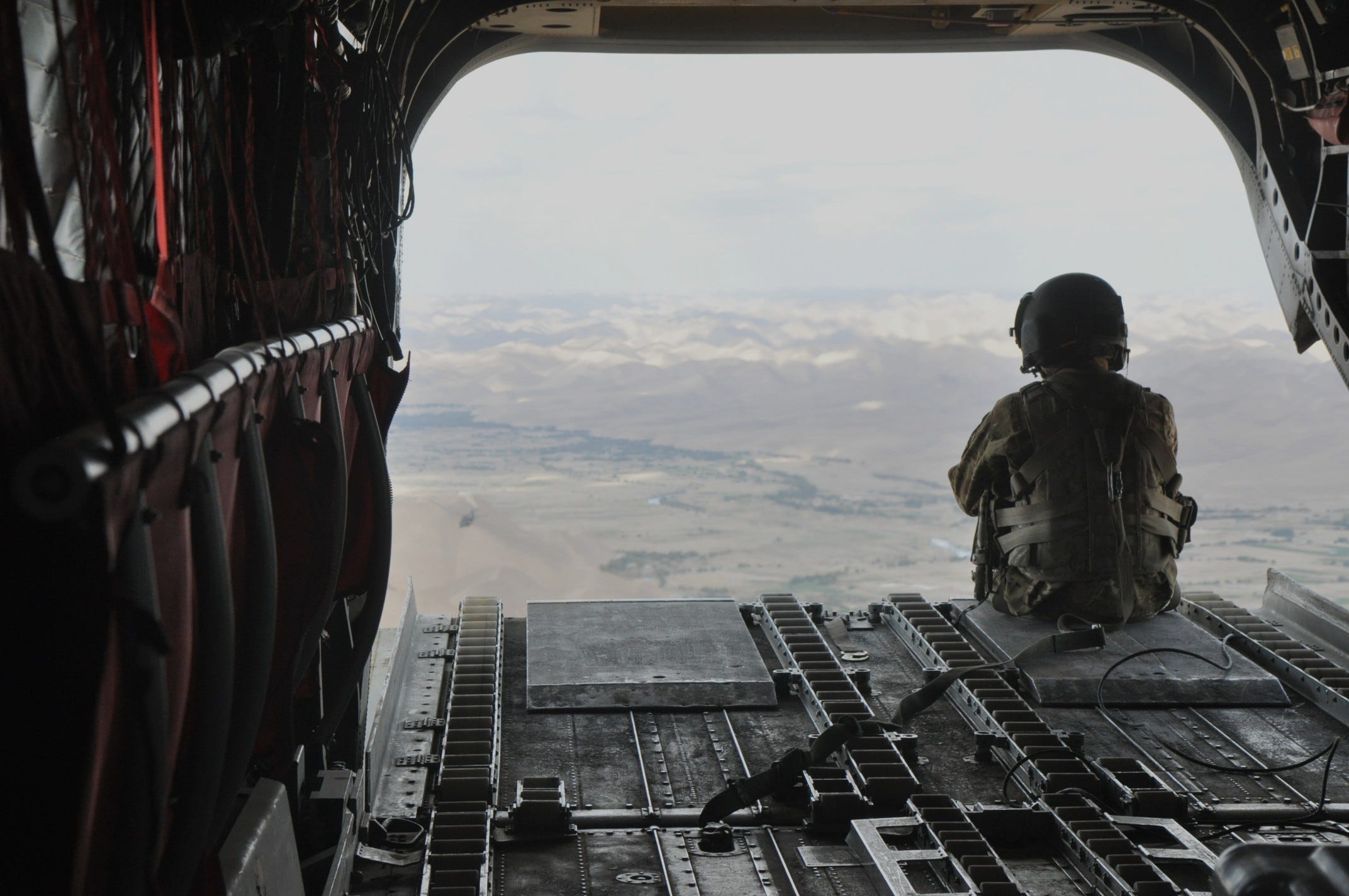
A U.S. Army soldier looks out from the back of a Chinook helicopter flying above western Afghanistan in October 2011. (c. Martin Kuz)
A shorter version of this essay originally appeared in the Minnesota Star Tribune. I’m posting the full piece here because of the relevance of the American-Israeli war on Iran to Russia’s full-scale invasion of Ukraine. Driven by delusional hubris and sycophantic advisers, U.S. President Donald Trump and Russian dictator Vladimir Putin both launched wars of choice that they believed would end in a matter of days. Terrorized for more than four years by Putin, Kyiv is now suffering from the ripple effects of Trump’s decision to attack Tehran six months ago as America’s missile supply dwindles and Washington’s interest in Ukraine all but disappears.
Pete Hegseth deployed to Afghanistan with the Army National Guard from 2011 to 2012 amid the longest war in U.S. history. I was there as a reporter during that period, and though we never crossed paths, I’m sure the future defense secretary heard the ubiquitous Taliban proverb that, in its way, foretold the conflict’s outcome.
You have the watches. We have the time.
The saying carried the clear implication that the Taliban — toppled from power soon after American forces invaded in fall 2001 — would fight as long as necessary to reclaim their perch, absorbing war’s terrible costs until Western resolve curdled. Twenty years later, as the U.S. military withdrew and the Afghan security apparatus collapsed, their prophecy crystallized into reality.
Those with the watches departed in defeat. Those with the time reemerged triumphant.
I’ve wondered whether Hegseth has recalled that Taliban axiom as he oversees the U.S. war against Iran — another country whose leaders think in decades, centuries and the sweep of history rather than two-year election cycles and monthly jobs reports. If his memory needed a nudge, an Iranian foreign ministry spokesman provided a reminder of sorts late last month.
Denying reports that American officials had badgered Iran into resuming negotiations, Esmail Baghaei asserted that Tehran “has never allowed, and will never allow, the United States to determine the timing of war and peace.”
Lacking the flair of the Taliban’s adage, his statement still echoed its essence: The U.S. military has the watches — the bigger, flashier arsenal — but Iran owns an exponentially larger stockpile of time, perhaps the most potent weapon of all in asymmetrical warfare. The Trump administration’s failure to realize as much before launching a joint attack with Israel on the Islamic Republic in February suggests that American officials ignored the brutal lesson of Afghanistan.
The confidence of Iran’s leaders that they can wait out their adversaries derives from a belief that they possess a higher tolerance for economic and political pain. Like Russian dictator Vladimir Putin, Tehran’s autocratic regime recognizes that two of the greatest assets of democracies in peacetime — open markets and free elections — pose potential liabilities in wartime.
Recent polls show that nearly two-thirds of Americans disapprove of a war that to date has killed 18 U.S. troops and wounded more than 620, cost an estimated $37.5 billion and depleted the country’s missile reserves. The rising discontent matches the trajectory of the country’s inflation and gas prices as Iran holds the Strait of Hormuz hostage. The combined impact of an unpopular conflict and a sagging economy magnifies pressure on President Donald Trump — and, by extension, the Republican Party — to end the hostilities before November’s midterms.
“We got to wrap it up,” House Speaker Mike Johnson told reporters on July 21. One week later, breaking a brief lull in strikes by both sides, Iran launched an unexpected missile attack on U.S. forces in Jordan, evidence that Tehran’s clerics care little about the tick-tock of America’s watches.
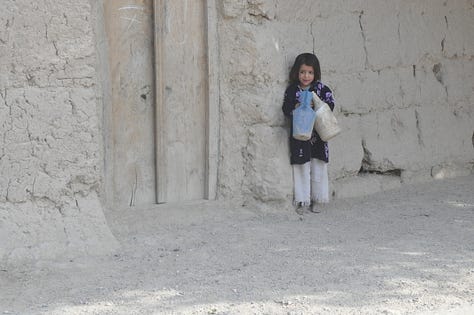
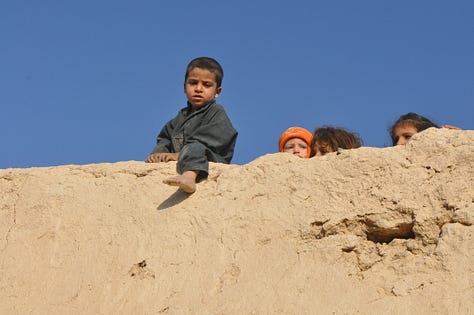
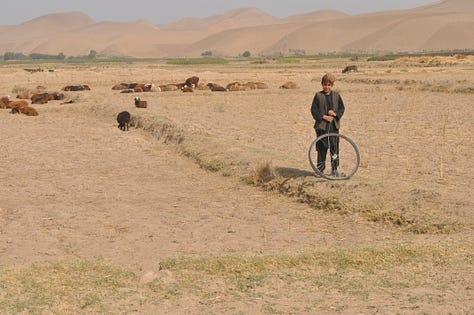
The presence of U.S. and Afghan forces patrolling in villages in western Afghanistan in October 2011 drew the curiosity of children. (c. Martin Kuz)
The regime’s iron grip on power, sustained since the 1979 Iranian Revolution through day-to-day repression and horrific, large-scale crackdowns, insulates its leaders from the kind of economic and political blowback that worries Johnson. Iran’s ultimate authority lies with its unelected supreme leader, Mojtaba Khamenei, who ascended to the position after an Israeli airstrike in the war’s first hours killed his father, Ayatollah Ali Khamenei, terminating a despotic 36-year reign.
The same attack claimed the lives of several other family members, and speculation persists that the new ruler — unseen in public since then — was among them. Regardless, abetted by allies in Moscow and Beijing, the regime remains entrenched alongside the Islamic Revolutionary Guards Corps, a parallel military force far stronger than the country’s traditional armed services.
The IRGC’s decentralized structure, including a network of proxy militias across the Middle East, gives Iran almost limitless capacity to withstand the superior firepower of the American and Israeli militaries. Operating in a similar manner, the Taliban foiled U.S.-led international forces for two decades. The group’s insurgency continued without pause even after the loss of its reclusive leader and founder, Mullah Omar, whose 2013 death went undetected by Western intelligence agencies for two years.
Beyond missiles and drones, the Revolutionary Guards wield a weapon unlike any that was available to the Taliban in their landlocked country and one that allows Tehran’s leaders to export the war’s fallout worldwide. The IRGC’s ability to disrupt shipping traffic in the Strait of Hormuz — a countermeasure that, incredibly, neither Trump nor Israeli Prime Minister Benjamin Netanyahu anticipated — enables Iran to wage another form of forever war against America and the West: an unending economic jihad.
Before his tour in Afghanistan, Hegseth deployed to Iraq, America’s other 21st-century quagmire. In Pentagon briefings, the self-styled “secretary of war” bristles at the notion that Trump has plunged the country into fresh quicksand. Three weeks after the U.S.-Israeli attacks began, Hegseth derided comparisons between America’s latest attempt at regime change and its earlier military misadventures in Afghanistan and Iraq.
“This is not those wars,” he insisted at a March press conference. “President Trump knows better. Epic Fury is different. It’s laser-focused.” His description has proven both right and wrong. The war on Iran is different — because the Islamic Republic has blown up that laser focus.
In contrast to Afghanistan and Iraq, where the fighting largely stayed within each nation’s borders, Iran and its proxies have struck targets in more than a dozen countries and roiled the global economy. Benefiting from the same American fixation on situational tactics at the expense of long-range strategy that aided the Taliban, Tehran has exposed the military vulnerabilities of Washington and its Middle Eastern allies, forcing U.S. Central Command to defend a vast battleground.
Five months into his war of choice, Trump appears to have grasped that the Islamic Republic holds all kinds of cards, to borrow one of his pet phrases. A couple of weeks ago, days after profanely threatening to escalate U.S. attacks, he backed down, writing on social media that he would hold off at the behest of Iran and other countries in the region.
The next day, Iranian officials dismissed his claim that they sought a reprieve as “nothing but a new lie” and reiterated that the country’s armed forces remain “on high alert and ready for any eventuality.” As the Taliban showed in outlasting the world’s most powerful military, Tehran’s stubborn resolve reflects an awareness that, then as now, time is America’s greatest enemy.
Etc.
— Substack has added a feature that enables free subscribers to comment on posts while barring nonsubscribers from doing so. In the past, the options were limited to allowing comments from everyone, only paid subscribers or no one. I’ve allowed paid subscribers to weigh in rather than everyone primarily because I didn’t want Russian apologists and/or bots to hijack the discussion. Now that you can comment irrespective of whether you’re a free or paid subscriber, I hope more of you will share your thoughts.
— My sincere thanks for reading. If you’re a free subscriber and find Reporting on Ukraine worth your time, please consider upgrading to paid. You can also support my self-funded coverage here. Thank you.
Comments
Nothing yet. Say the first thing.
Sign in to join the conversation.