
We fear what we don’t know. But I believe enough fear exists already, meaning we as a society need more understanding of each other. In this series of interviews called Wholesome People, so far we’ve talked to a working girl, a high school dropout, and a corporate slave.
Here’s the next installment . . . American Expatriates.
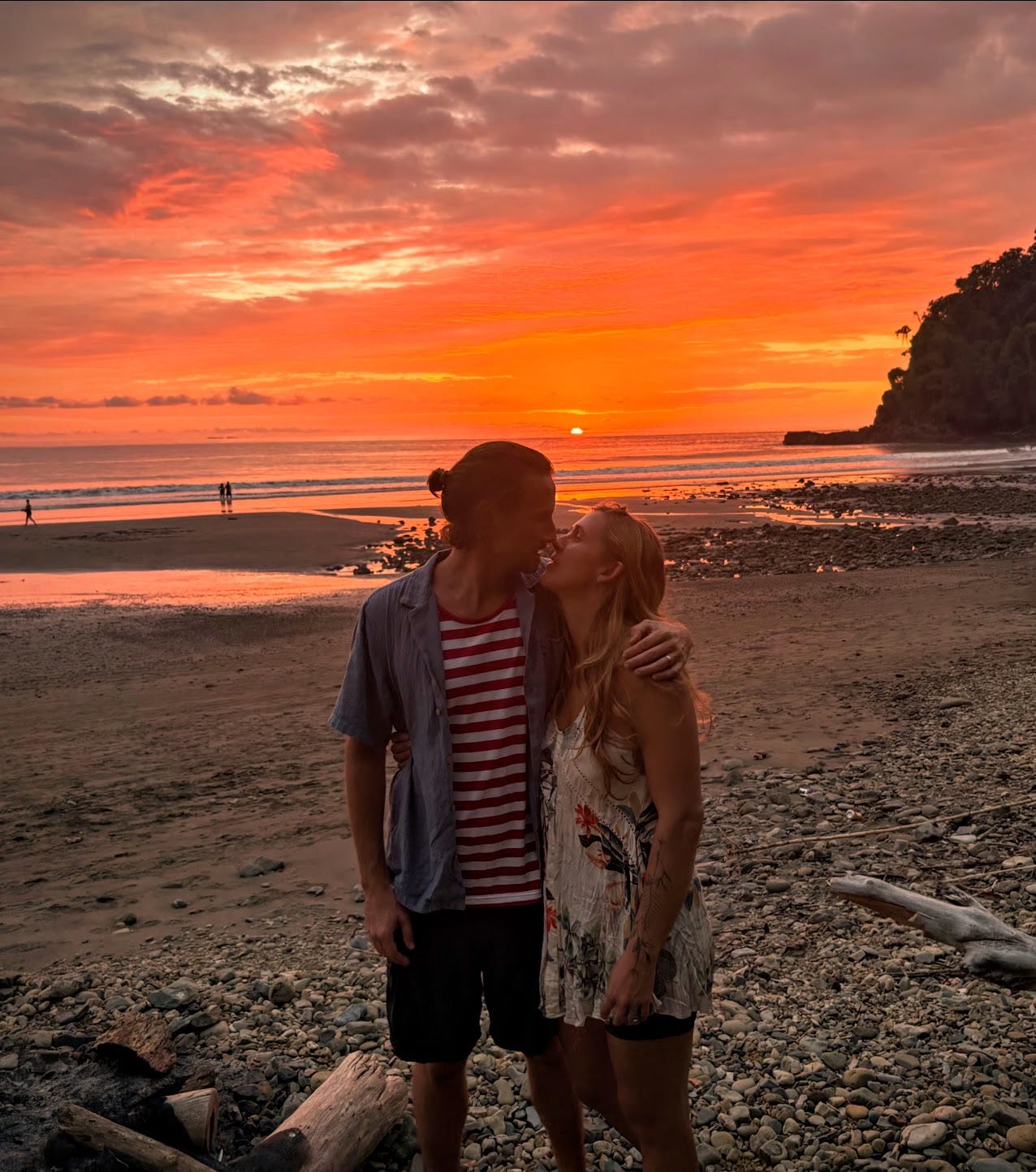
Fifteen years ago I lived in a shitty rental house with some great friends. We were all single and had a standing question of who would get a girlfriend first. Within a month of each other, my buddy Ryan starting dating his now-wife, Kate, and I started dating my now-coparent, Haley.
After moving out, Ryan and Kate moved up to a cabin in the mountains, beginning a decade of hopscotching to various locations throughout the United States—and now their present residence in Uvita, Costa Rica.
In that time, we all had kids; Haley and I got divorced; yet, seeing as we had rendezvoused again and again over the years, we didn’t want that change in our circumstance to derail the collective friendship. Kate said: “We definitely have the same mentality where, like, we’re all black sheep here, riding a different wave than most of society.” I think that has something to do with our friendship sticking for all these years.
So, six weeks ago, Haley and I and our kids flew down to see Ryan and Kate and the family in Costa Rica. Good timing because they’re about to move again, this time to New Zealand.
I wanted to hear more about their travelling life, so the last night of the trip we sat down for an interview. If you’ve ever thought about living abroad, here’s some insider information . . .
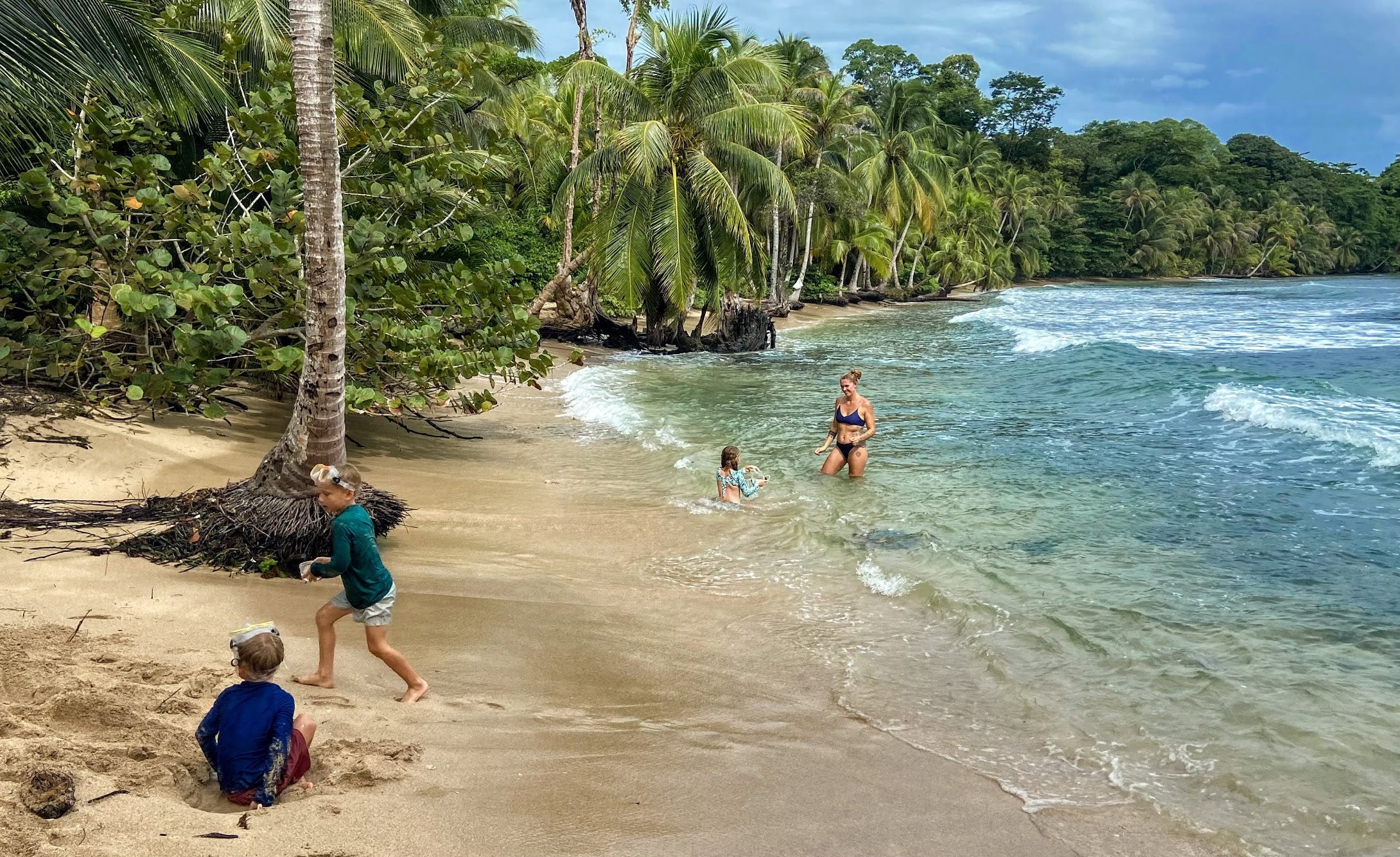
Kate: I feel like everyone that we’ve met, what we all have in common is that we don’t fit in where we’re from. And that alone creates its own subculture.
Ryan: We’re all seeking something. And maybe there’s a difficulty finding contentment with what we have. It’s about the search.
Ryan: Well, I think it’s very important to leave a place to appreciate it. But whatever it is that I’m seeking I hadn’t found it in the U.S., which is why we’re here.
Kate: Oh, let’s see. I’ve lived in six states. And we’ve driven cross country many times.
Ryan: My parents were military brats, both of them moved around a lot, so there was never a sense of rootedness. Everywhere we’d go, it was like: Okay, this is just the next leg of the journey.
Ryan: Yeah, and the beautiful thing about the United States is that there are no real borders within the country. From state to state, it’s so vastly different. And I will say I think we’ve done a really good job of trying each of those cultures out for a period of time. Not necessarily with the intention of living there, but at least visiting and trying to understand them. And there were a couple times I felt like we were close to finding our people. But the minute we’d feel settled, it was like: This was nice. What’s next?
Kate: I’m looking for somewhere to settle, and I don’t feel that we ever found our tribe. And that’s what you need to settle. I mean, I think we found people that we probably could have had as friends forever here in Costa Rica, but it didn’t check all the boxes in terms of someplace to raise our kids. That’s something I know more about than when we started this journey.
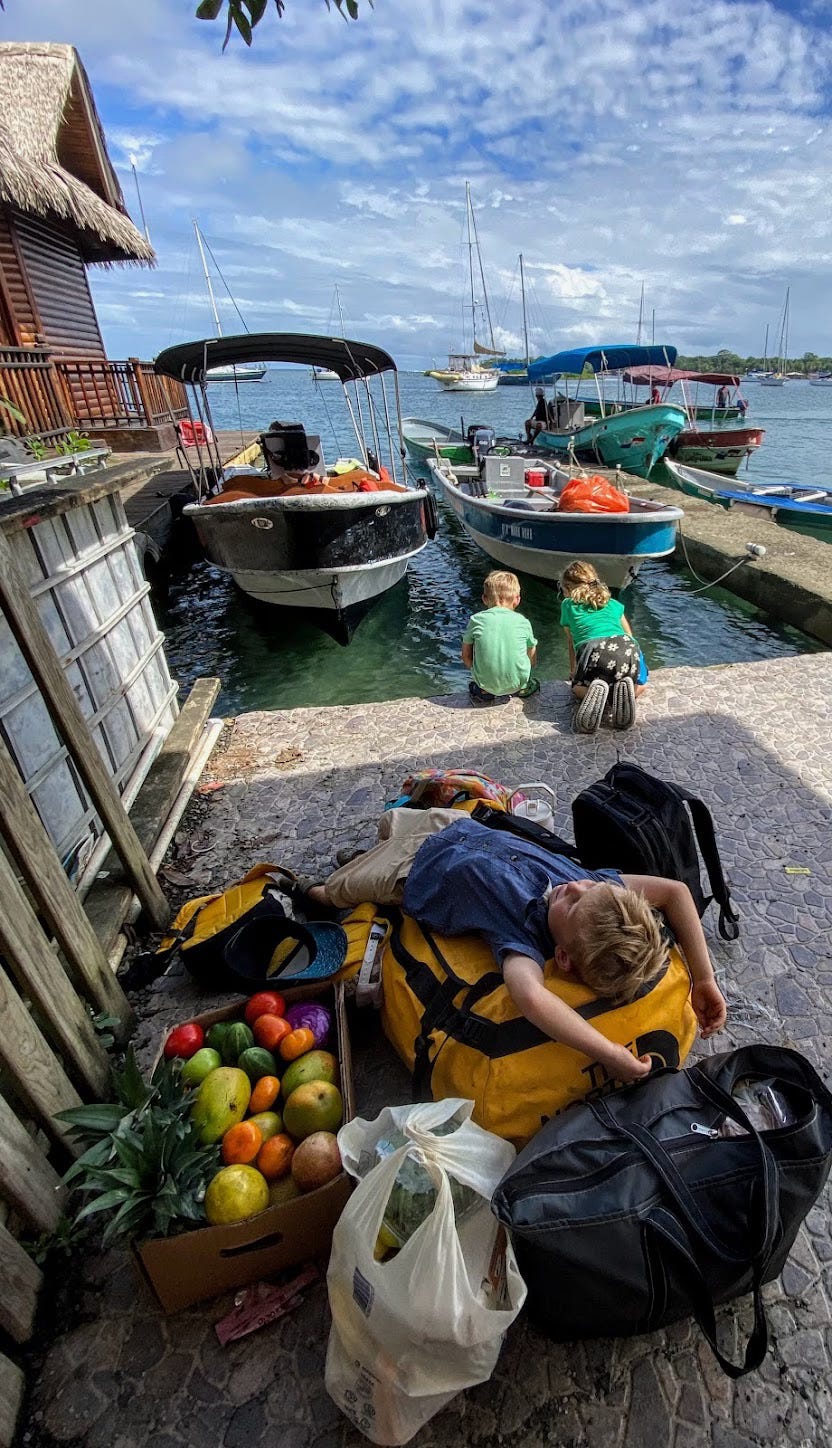
Ryan: It’s that global citizen mindset. I want them to be able to meet anybody in the world and see them with and open heart, you know? Just to be able to engage with people. Obviously we all have our biases, but I want our kids to just see the humanness.
Kate: It’s hard. I don’t know that it felt like home until, One) we had really nested, and Two) we found people that I deeply enjoyed spending time with. Only when those two kind of collided was I able to see this as a long term situation. Now I forget that I’m an ex-pat sometimes because I’m just here living my life.
Ryan: It takes being comfortable being uncomfortable. You have to be willing to step out of your comfort zone. And that can take a long time. I still don’t think I’ve adapted entirely. I’ve habituated to it in some ways, but I’m still caught off guard all the time. I’m often still uncomfortable.
Kate: There’s a romantic period that happens when you move somewhere. And it’s like: oh, this place that feels so tropical and vibey and whatever. And then you get this deep discomfort that happens when you’re really trying to get to know a country and a different language and everything is really hard. Maybe you get robbed, which happened to me, or maybe it’s something else and it can really cause a lot of turmoil. But if you stay with it, allow yourself to be okay being uncomfortable, then you have this growth period and you’re able to go back to a neutral state again.
Ryan: They call it surviving the dip down here. If you can survive the dip, you’re probably pretty good. Like, okay, you’re gonna be around for a little bit.
Ryan: Yeah, because it’s not easy to turn your back on what you know, what’s familiar. We could very easily move to the suburbs in the U.S. and live a conventional life. But we don’t really want easy. There’s value in the struggle.
Kate: I also don’t think that’s easy, a more conventional life. I found it very challenging to actually try to conform. When we lived in the suburbs I was so much more deeply sad and depressed. I don’t have any of those feelings anymore. I was never a depressed person. It was the environment.
Kate: I think sometimes it’s hard for our families to understand us. That’s probably one of the hardest things to do with this explaining ourselves and why we’re moving again and why this seems good to our family.
Ryan: In our little barrio there’s plentiful opportunity to connect with Ticos and Ticas, the locals. And I’m grateful for that.
Kate: Our kids’ school helps with that, too, because there are locals going there. That’s created a beautiful connection that we wouldn’t have had otherwise. But there’s a barrier there right off the bat, and you have to break through it for the locals to want to get to know you.
Ryan: Yeah, since expats are relatively transitory, it’s like why invest emotionally in these relationships if I don’t think you’re gonna stick around.
Kate: There’s a big difference. Yeah, tourists are someone who’s stopping through, an expat is someone molding themselves into another culture. You’re not just on the external layer anymore.
Ryan: I’ve learned that as a family, we can do hard things. And I don’t want to shy away from that. If anything, I’m kind of gluttonous for more experiences.
Kate: We’re definitely all better for it. In the U.S. everything is just so readily available. It’s really hard to get things here, and I think Costa Rica has given me the chance to rethink, like, recycling and reusing the products I have. I’ve had to make a lot of things from scratch, because otherwise I’m not gonna get them. It has created a real sense of fulfillment.
Kate: Yeah, we have to carry stuff in if we really need it. And then otherwise, it’s just food that we’re buying here. But that has been so good for the family. We are not bombarded by an excessive amount of toys, for instance, because there’s no excess.
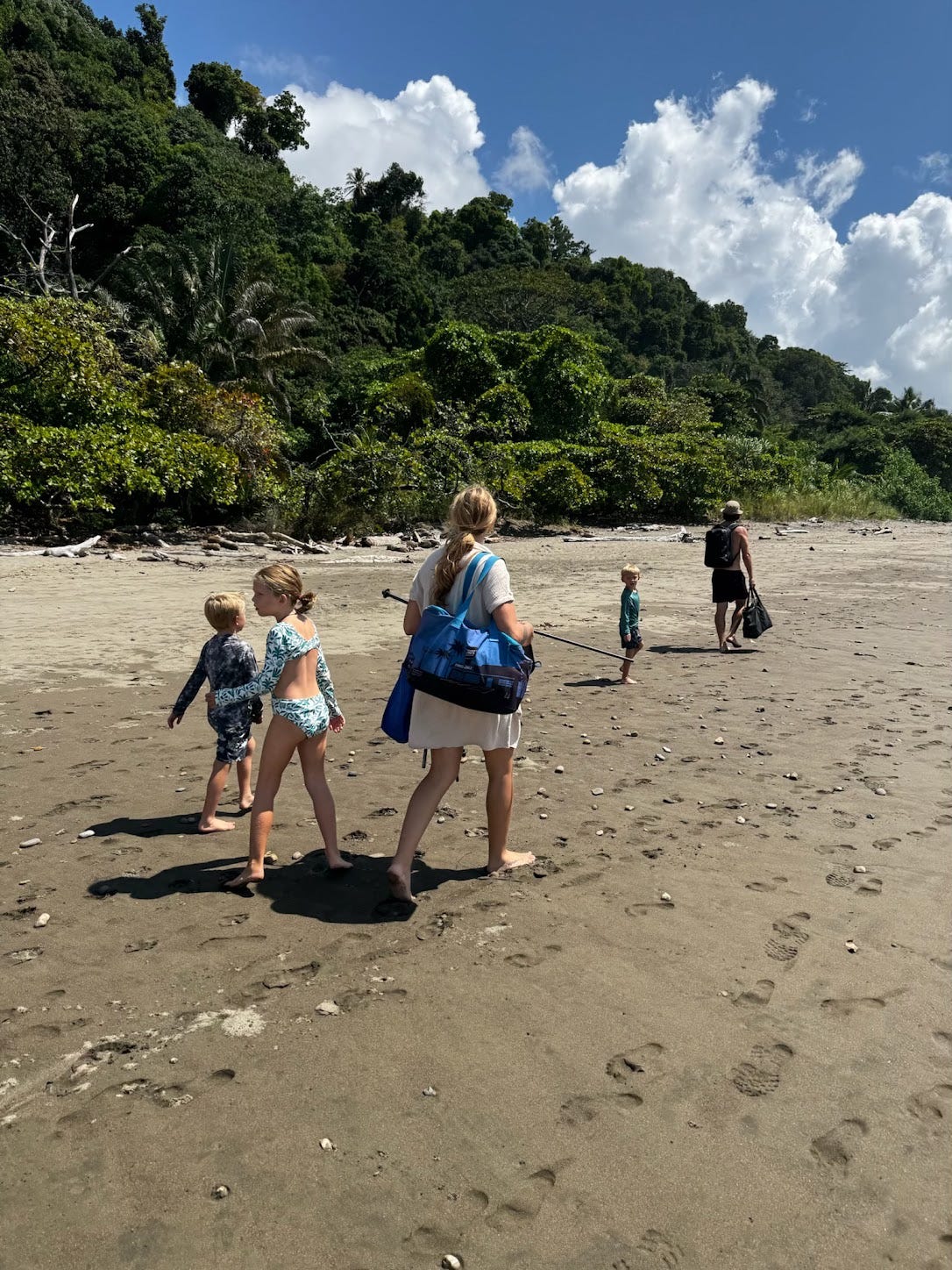
Ryan: Yeah, but I’ll be honest, I’m nervous about returning to a culture where everything is readily available again. Because we went without it for so long, and I feel like that was precious. And, like, I’m still a hungry ghost . . . like, I’ll get there, and I’ll see, and I’ll want, and I’ll consume.
Kate: But now I know firsthand that I can make something from scratch, and I don’t need to just go pay double for it at grocery store anymore. That itself is freedom.
Ryan: I’m going from that working remote, running the beach in the morning and barefoot in the jungle, to a full time job in what, to me, is a city. Yeah. I’m gonna have culture shock. I am gonna be uncomfortable again. Which is good, but I don’t want to rely on the conveniences that I know aren’t healthy for me. Because this has been a period of health. And healing.
Kate: I also think that we’re intentionally moving to somewhere that living still means being outside, being active, and being in nature. Therefore, I think we wouldn’t be moving if we’d be sliding backwards. We’re moving somewhere that fits us as people.
Ryan: And here’s the traveler versus the tourist . . . if it doesn’t fit, we’ll fucking move. Onto the next.
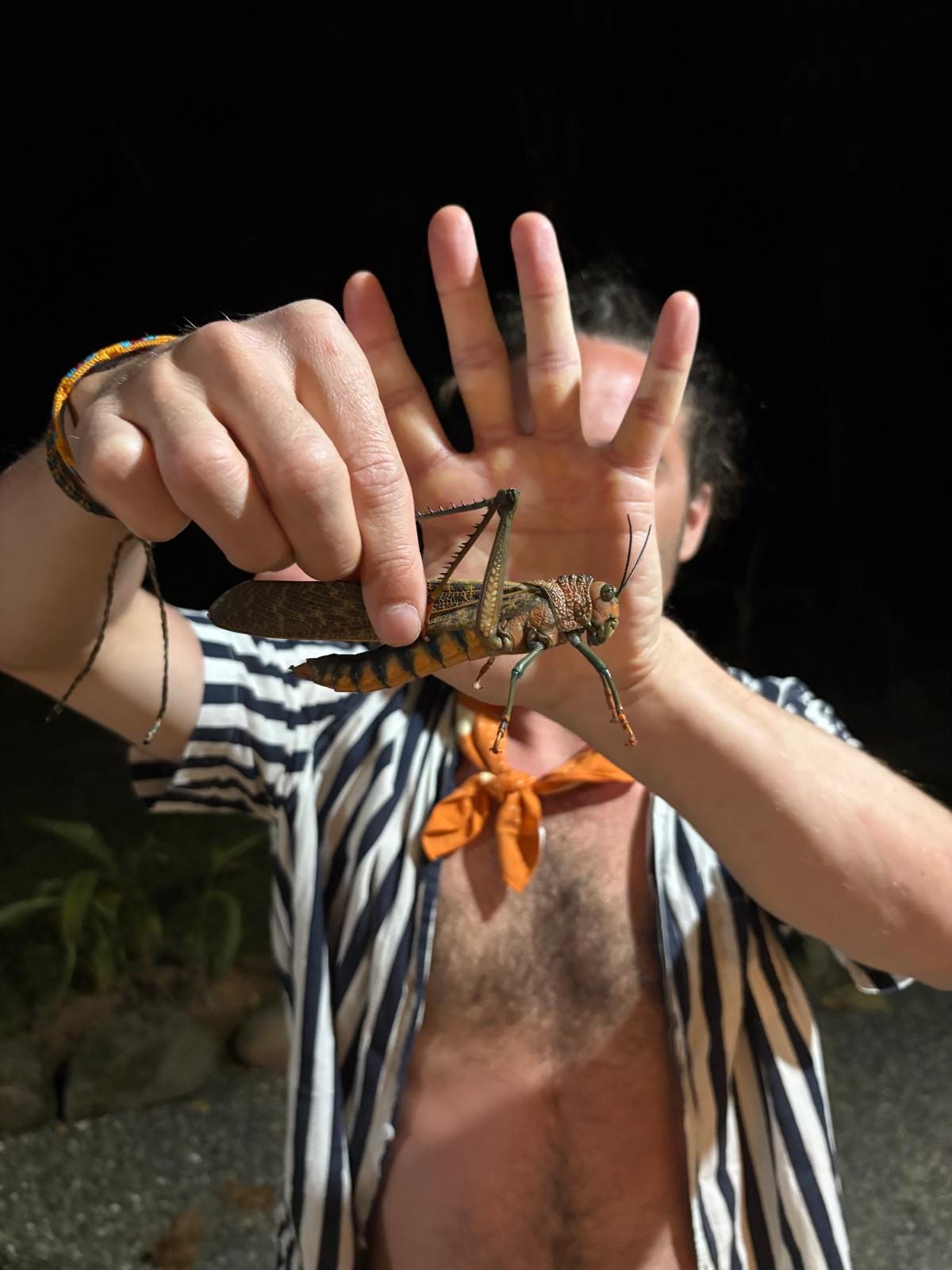
After we returned to the States, Ryan texted me and added: “I recognize that we come from a place of privilege.” And to that I say, sure, but more than anything it’s a privilege of mindset. The belief that anything is possible. A poverty of possibility is the worst kind of poor.
Whether that means moving your family abroad, quitting a miserable job, travelling post-divorce, whatever it may be, anything is possible. But the path to greater comfort requires trudging through some discomfort first. And if you can survive the dip you’re probably pretty good.
Until next time . . .
Martin
If you are interested in reading more of my work, I recently published a book of essays about staying human in the algorithmic age, which Michael Mohr called “honest, authentic and smart.” BUY IT HERE.
Comments
Nothing yet. Say the first thing.
Sign in to join the conversation.