
There is something magnificent about someone who is truly themselves. You’ve seen this person . . . at a party, on the street, walking their own way, dressing their own way, seeming not to care for what others think of them. They’ve got style.
Having carved themselves out of mediocrity, this person is a piece of art. And it’s hard not to stare.
But what is it that draws us in? Do we see ourselves in there? Perhaps a version of ourselves we dream on, a life entirely our own. It’s a beautiful thing. And that’s why I call this art. Creating art from life.
Artist or not, a masterpiece is in there for all of us. We just need to carve our true selves out.
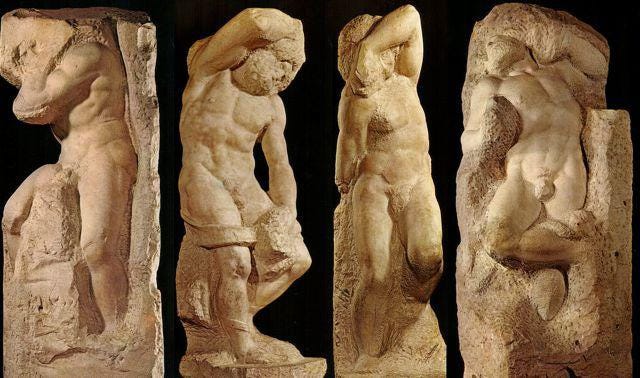
Most art is made through addition: paint on the canvas, words on the page, performers on a stage. Layer upon layer you fill the empty space. There are only two artforms which arrive through subtraction: sculpting stone and Life.
See, as opposed to the painter who must keep adding more paint to create their vision, the stone sculptor works with the premise that the perfect form already exists within. It simply must be revealed, chipped out with hammer and chisel.
You might think that life is an art of addition, layering experience to build up wisdom, but I think the wisdom to live our truest life is already in us, and each experience merely exposes it.
On that basis, where do we find the tools for the art of living?
The hammer is our life itself, the drive and ambition to live true to ourselves. As for the chisel, there are many to choose from—relationships, education, travel, hobbies—and all reveal this truth. But I’ve come to believe one stands out in a way the others cannot: our jobs. Because how we make money is survival in the most primal sense. And it cuts deep.
Now I’ve had many jobs over the years, but a certain period of work carries a particularly sharp blade. As soon as school ends, whenever that is, a world of possibility opens up. It’s time to make something of ourselves.
Considering the options at this point in life is not unlike a sculptor staring at a raw block of stone. And eventually you must pick up the hammer and chisel.
When I reached this point in life, I decided to pursue my dream of being a musician.
At twenty-three, I’d been passionate about playing music for over a decade. Freshly graduated from college, I moved to Denver to give it an honest go. I hustled, playing shows nearly every weekend both solo and with multiple bands, but I quickly realized free beers and $25 coffee shop gigs weren’t gonna pay the bills.
So after a brief stint as an ice cream man, I took a day job as a barista, all in service of the dream . . . and I lasted nine months.
Truth was I didn’t want all the other things that came with being a musician—jockeying for gigs, endlessly hauling gear, wrangling flaky bandmates—and, more importantly, I realized it wasn’t the music I loved so much as writing the songs, the lyrics, the stories inside of them. (Cue the beginnings of becoming a writer.)
For a long time I felt shame around the fact that I’d held so much conviction in wanting to be a musician and failed. Discovering that what I thought I wanted wasn’t actually what I wanted brought a certain sadness into me.
I no longer dreamed about being a musician.
I’ve written before that you’ve got to kill your dreams. Only taking action will make your dreams realized, and sometimes they aren’t as good as you’d hoped. But with every dream turned into reality, a bit more truth about who we are surfaces. This is the gift.
In these moments of discovery, the person we thought we were comes off in the equivalent of a chip of stone, eventually creating a whole pile of people we used to be lying at our feet. Yet they are not waste. It’d be a mistake to discard them. The trick is to appreciate these people who were once us.
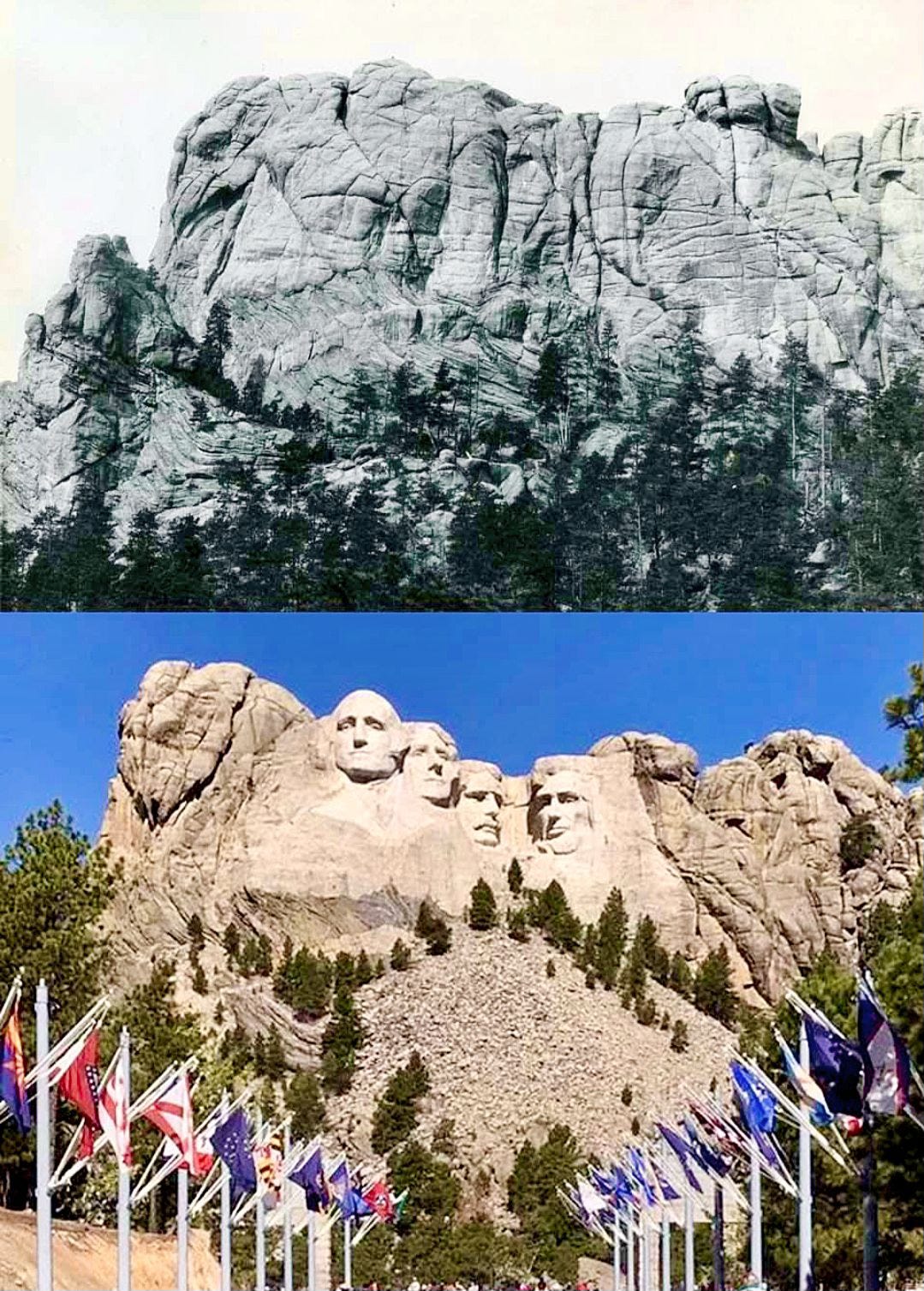
Appreciating who we used to be isn’t always easy. Even that magnificent person who seems to be 100% themselves has a pile of used-to-bes beneath them. Because that’s what it means to be human.
It’s dangerous to project perfection on someone else, especially those we admire, as if they arrived fully formed. In his newsletter, Justin Welsh has talked about the selective editing we perform on people who have achieved our goals, glossing over the struggle they’ve gone through to get there, and how it does us a disservice thinking that way. That kind of storytelling only adds confusion and doubt and falsehood to our sense of self when that’s what we need to remove.
So we must be careful when looking at others, yes, but this also applies when looking at ourselves, all those people we used to be.
Every version of ourselves is an earlier iteration of a truth we once lived. To disregard any of them cuts off the path that got us here. And anyway, we cannot disappear who we used to be. We must accept and love and make peace with all of them. Or else.
As Joan Didion wrote in Slouching Towards Bethlehem:
. . . I think we are well-advised to keep on nodding terms with the people we used to be, whether we find them attractive company or not. Otherwise they turn up unannounced and surprise us, come hammering on the mind’s door at 4 a.m. of a bad night and demand to know who deserted them, who betrayed them, who is going to make amends.
Perhaps this is only possible to see in retrospect, this continual and sometimes-invisible growth.
Let me again return to art.
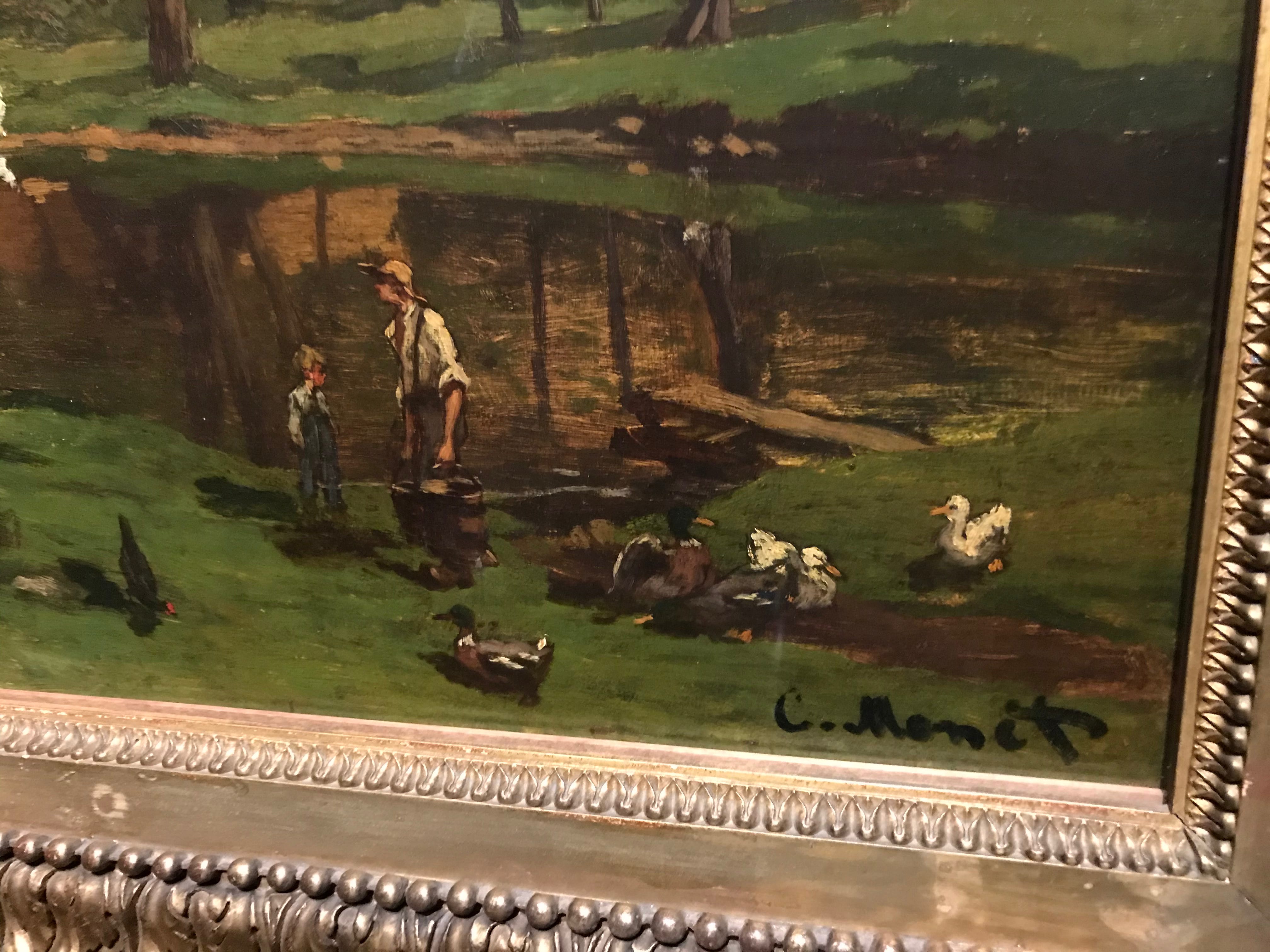
Years ago I went to see an exhibit on Claude Monet at the Denver Art Museum, featuring paintings from his teens through to his eighties, spanning his entire career. His style directly reflected the stages of his life: the formality while coming up, the iconic impressionism of his prime, and the almost psychedelic brushstrokes of his later years.
This is how we appreciate an artist’s body of work, in the evolution.
Artist or not, life follows the same path: trying to figure things out early by following others’ lead; hitting our stride in midlife and making an impact; and finally reducing life to its very essence in the eccentricity of the end.
However, I often think that what we call eccentricity in our elders is simply the wisdom of a truth finally revealed, of knowing what matters, a letting go of all the stuff the rest of us still cling to: social status, material goods, all that bullshit. This is simplicity on the other side of complexity, closer and closer to the essence of ourselves, the perfect form within finally coming through.
As Leonardo da Vinci said: art is never finished, only abandoned. This artwork called life is one of endless chipping and shaping. I like to think that so long as we’re alive—truly living, that is—this art project cannot be abandoned. So pick up your chisel, keep swinging the hammer, and soon the magnificent person you’re staring at might be yourself.
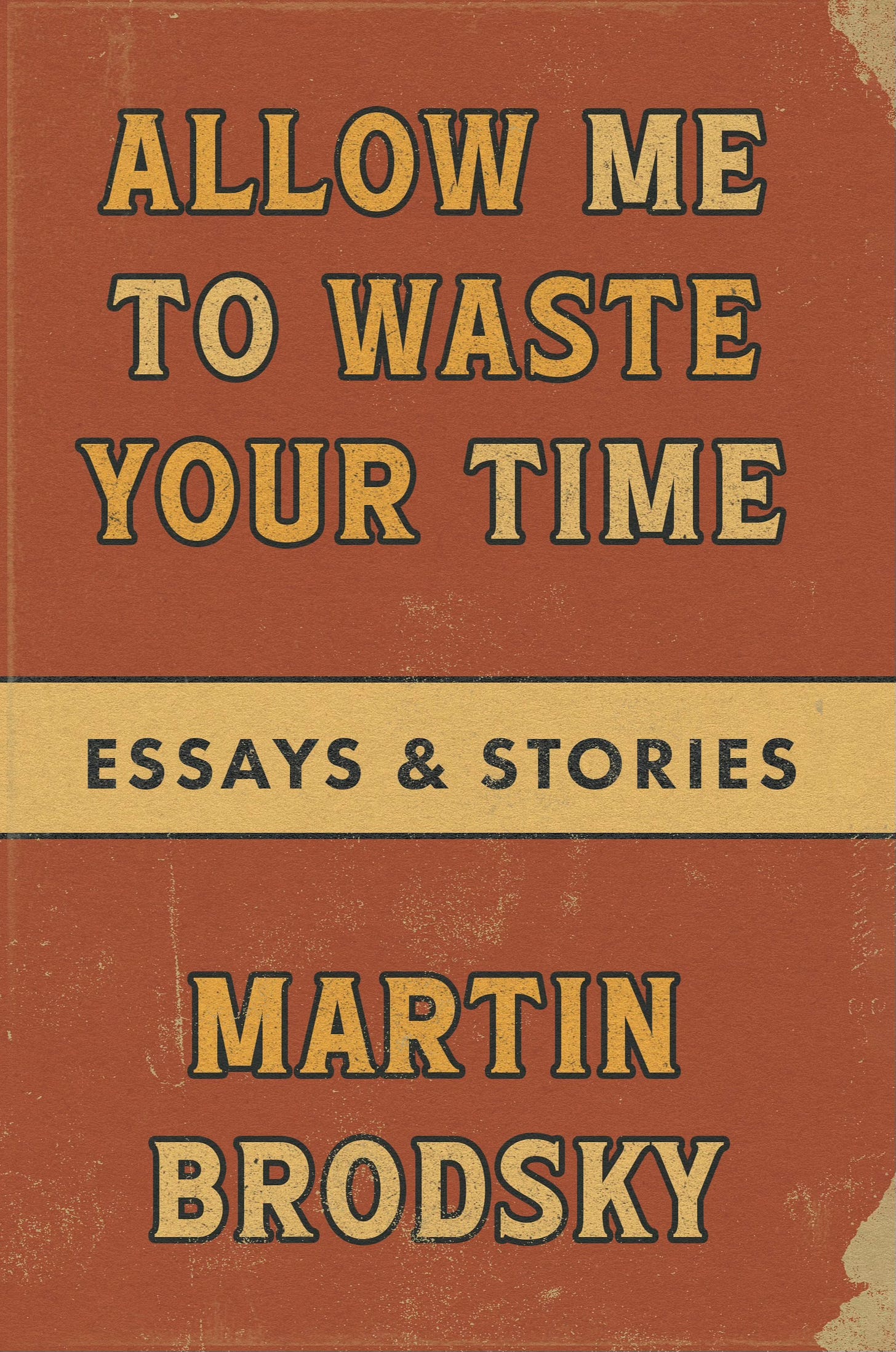
I also published a book of essays about staying human in our world of distraction, which Michael Mohr called “honest, authentic and smart.” BUY IT HERE.
Comments
Nothing yet. Say the first thing.
Sign in to join the conversation.