
A platform with 1,350 brands and a listing on the horizon just paid tens of millions of dollars for twenty scientists. Not for their channels, their content engine, or their customer data - those MoEngage already had. What it bought, when it acquired Aampe in June, was the thing the announcement names in a quieter word than “AI” or “agent,” a word the industry has spent a decade treating as back-office vocabulary: decisioning. MoEngage’s own note puts it - generative AI dissolved the old constraint of producing enough content, which only exposed the problem underneath the problem, the one that had stubbornly remained unsolved. For those of us who have spent years inside this discipline, watching a major platform name it in a press release as the thing worth buying is a surreal milestone.
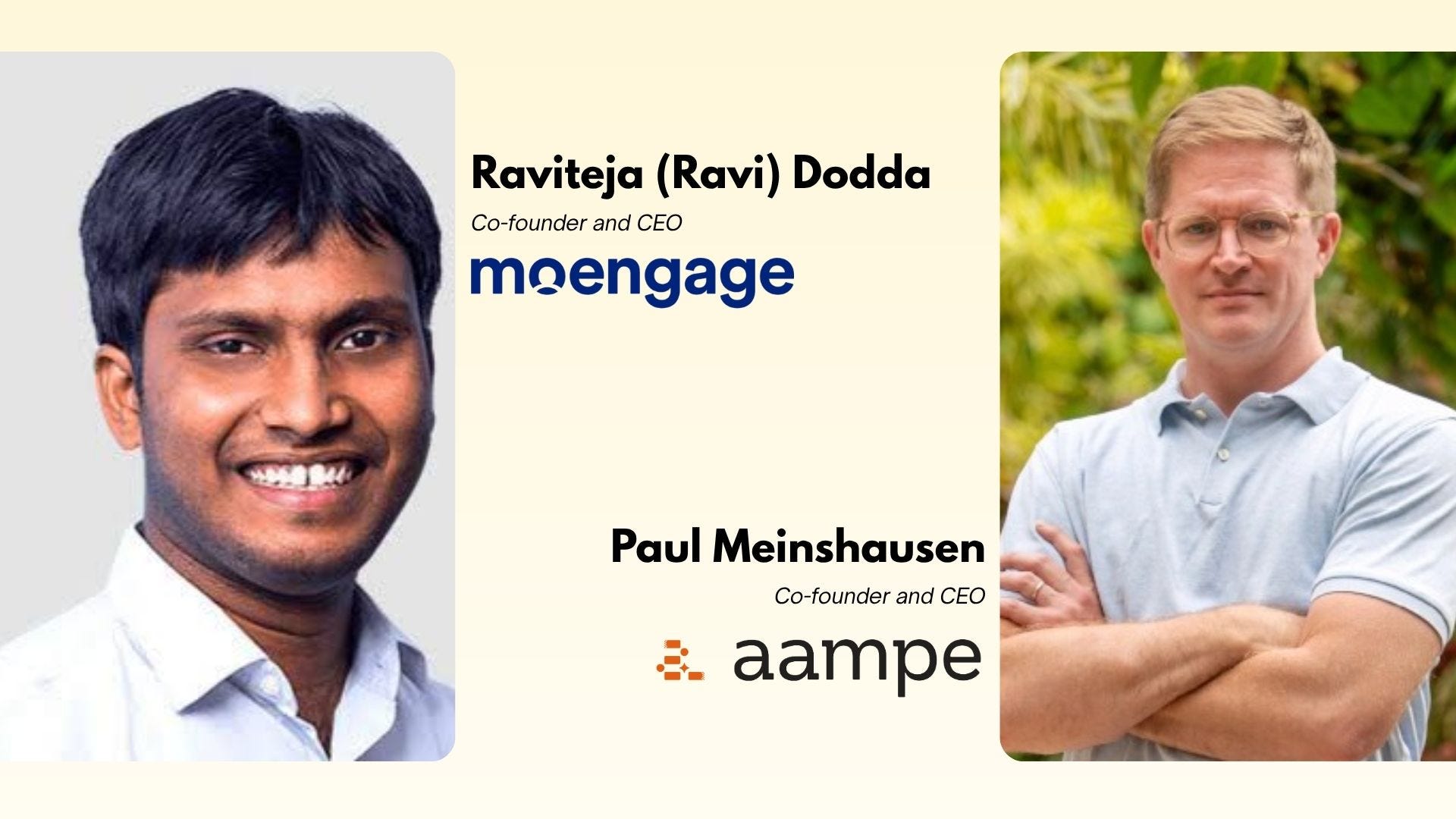
The deal interested me enough that I didn’t want to write about it from the outside. So, I tried something MarTech Square hasn’t done before: I went to the founders on both sides for their perspective. I put a pair of deliberately pointed questions to Raviteja Dodda, who co-founded and runs MoEngage, and to Paul Meinshausen, who co-founded Aampe and now leads its new Agentic Decisioning group. Both answered generously, and their answers - along with the questions themselves - run through this essay. What struck me most is that they answered different questions than the ones the market is asking. The market wants to know whether the agents work. The founders are already arguing about what the humans do next.
For most of the last decade, decisioning was the part of the stack nobody (madly) fought over. It sat beneath the campaign builders and the creative tools - the unglamorous arbitration logic that worked out who received which offer, on which channel, at what moment. Buyers asked about deliverability, journey builders, channel counts; they did not, as a rule, ask whose engine decided what to send.
The cost of that neglect is now measurable: Gartner's 2025 Marketing Technology Survey found only 49% of purchased martech tools are actively used, and just 15% of organisations qualify as high performers. We spent a decade accumulating capability and under-invested in the layer that decides what any of it should do. That is the neglect acquisitions like this one or Braze's acquisition of OfferFit before it - are pricing: when the middle layer nobody put on a slide becomes the layer worth writing a cheque for, something has shifted in where the value is understood to sit.
The question I put to Ravi: Of all the capabilities you could have acquired - content, new channels, data infrastructure - you chose decisioning as your first acquisition. Why was that the bet worth making now, and what does it signal about your focus on customer decisioning as a capability?
His answer traced a sequence. “We’ve been building towards a true agentic CEP,” he mentioned. “Custom Agents solved the first half - agents that run 24/7 to generate tailored content, identify segments, and surface insights, automating the marketer’s own workflow. Paired with solid channels and data infrastructure, the gap that remained was further downstream: actually, deciding what’s right for the customer in the first place.” That gap is where Aampe comes in - in his words, “a dedicated agent for every individual customer, one that observes, learns their tradeoffs, and decides the right message, moment, and channel for them, with persistent memory that keeps improving over time.” And then the line that could serve as this essay’s thesis, delivered by the acquirer’s CEO rather than by me: “the next frontier of value in marketing shows up once you treat engagement as fundamentally a decisioning problem.” For a community that spent years making that argument to many conferences, this is the sound of the argument being won.
On 24 June, MoEngage acquired the San Francisco company Aampe, and the three scientists who founded it joined to lead a group called, with no hedging, Agentic Decisioning. Aampe’s architecture rests on a single, almost stubborn idea: one agent per user, not one model per segment. For a brand with ten million customers, that means ten million small autonomous agents, each holding its own running model of one person - their rhythm, the tones and framings they respond to, what actually moves them - and updating it after every interaction. Underneath sits reinforcement learning, which is just a fancy name for trial and error: try a message, watch what happens, adjust. Layered on top is causal inference, which asks the harder question - did the message actually cause the customer to act, or would they have done it anyway and the timing was coincidence. It stores no personally identifiable information, learning instead from anonymised patterns of behaviour.
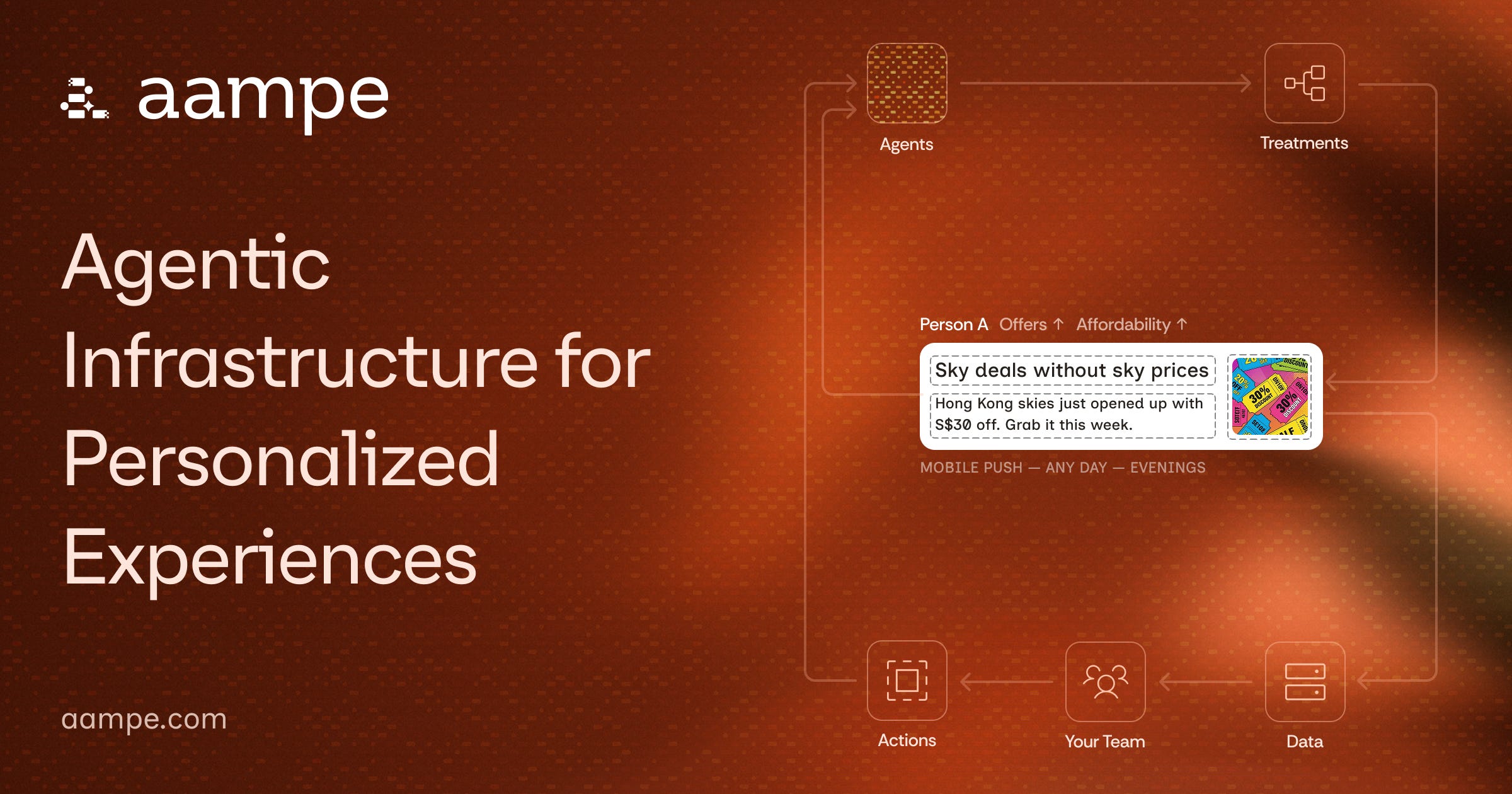
I want to be precise about what that is and isn’t, because the loose use of “agent” is the fastest way to misread this category. These are not chatbots. They do not write copy or hold conversations. They are decisioning agents - narrow, relentless optimisers of message, timing, frequency and channel - not the generative assistants the word now conjures. Hold that distinction and the deal comes into focus. Lose it and you will risk comparing the wrong things.
The timing is not an accident. Scott Brinker and Frans Riemersma’s Martech for 2026 report found that 90.3% of marketing organisations now use AI agents in some capacity - yet only 23.3% have them in full production. Nine in ten are experimenting; fewer than one in four have operationalised. That gap between pilot and production is what every major platform is racing to close, and it is why decisioning - the deployable, measurable core of agentic marketing - has become the ingredient worth acquiring rather than another feature worth building. Generative tools made content close to free and instant, removing the old excuse. The scarce thing left standing is relevance, and relevance is decisioning by another name. The category has been promoted from plumbing to product.
But the more I sit with this deal, the more I think the promotion comes attached to a genuine architectural fork, and it’s the fork - not the headline - that deserves our attention. I have started describing the two paths as the hub and the swarm. The decisioning tradition most of us grew up in is the hub: a central engine that holds the business rules, weighs competing offers against one another, applies suppression and eligibility, and arbitrates a single next-best-action for each person from one shared policy. The hub’s great virtue is that it can see everything at once. It can refuse to send a win-back discount to someone the company is about to approach for an upsell, because one brain is making both calls.
The swarm inverts that. Instead of one policy reasoning over many people, it runs many policies - one per person - each learning locally and optimising for its own user. The swarm’s virtue is the mirror image of the hub’s: it never starts cold, never collapses an individual into the average of their segment, and improves continuously without a human shipping the winning variant. MoEngage and Aampe report hundreds of millions of these agents making, by their account, more than two hundred billion decisions a week. Whatever you make of the figure - and I’ll come to the figures - that is a different shape of system than the centralised hub, not a faster version of it.
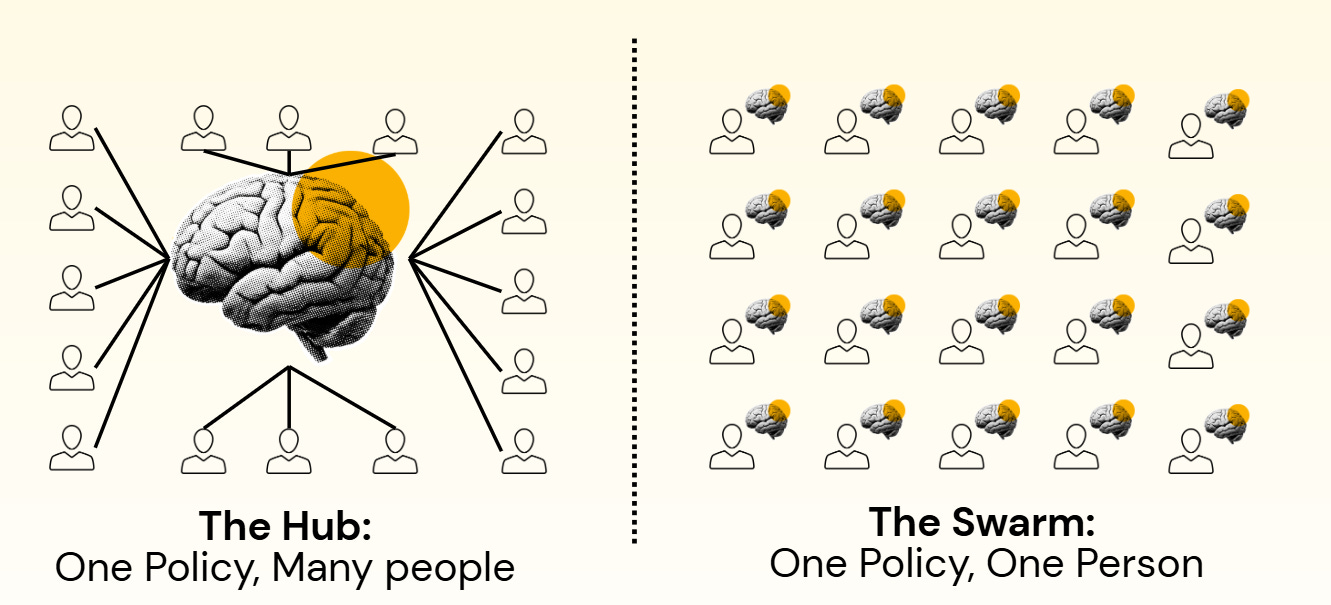
The fork matters because the two architectures are good at different things, and the things the swarm is weakest at are precisely the things the hub was built to do. When every user has their own optimiser, who holds the global view? Who guarantees that the agent maximising one customer’s engagement isn’t quietly undermining a margin target, a contact-frequency policy, or a brand commitment that only makes sense at the portfolio level? Governance designed for one arbitrating engine does not transfer cleanly to a million independent ones.
That governance worry is exactly what I put to Paul, and I asked it with the sharpest edge I could (lol):
The question I put to Paul: When one agent’s local optimum collides with a portfolio-level constraint - a margin floor, a global frequency cap, a cross-sell the brand is timing centrally - what resolves it? Is cross-agent arbitration something Aampe models explicitly, or an emergent outcome the guardrails are trusted to bound?
His answer went somewhere I didn’t expect. Rather than defending the swarm against the governance objection, he argued that per-user agents make strategic trade-off management more viable than it has ever been - because for the first time, trade-offs can be priced instead of argued.
Consider how these conflicts get settled today. A business sells two product lines, X and Y, and the marketer can only message about one. Paul’s description of the current resolution mechanism is uncomfortably accurate: these trade-offs are “handled almost politically - the louder business stakeholder, or the one with more influence with the CEO, gets to compel the marketer to message about their product line.” Every practitioner reading this has been in that meeting. We all know how to game the framework.
The swarm’s alternative is to model the trade-off explicitly, per person, using expected value. An agent might estimate its user is more likely to respond to X than to Y - but if a response to Y is worth twice as much to the business, the arithmetic can still favour Y for that person. The strategic weight is set centrally, by humans. The application of that weight happens individually, ten million times, by agents. The hub doesn’t disappear in this picture; it moves up a level, from making the decisions to pricing them.
Paul was equally pragmatic about pace: simpler constraints like global frequency caps “can be retired in favor of agentic management at the rate the business is comfortable with” - a line that concedes the transition is as much organisational as technical. And he was candid about the genuinely unsolved part: agents can’t know what isn’t in their system of record. A flash sale, an unusual holiday, a supply disruption - the exogenous world still has to be fed to the swarm by humans, and how heavily to weight that temporary context is, in his words, a question a vendor can’t answer in general. I find that admission more reassuring than any claim of full autonomy. The swarm has a seam where human judgement enters, and its builders know exactly where it is.
A word on the vendor’s numbers, because they are doing a lot of persuasive work. The most quoted proof point comes from Taxfix, which reports running Aampe against a rules-based system it had tuned for four years and seeing a 40% revenue uplift versus a holdout. That is a great result, and it is also from a single customer, in a specific context. The healthiest instinct our community can model here is not cynicism but discipline: ask for holdout-controlled results, on your own audience, with the method written down. The fact that the most rigorous question to ask about an AI decisioning system is still “show me the holdout” should reassure us. The fundamentals of our craft did not change. They just became the thing everyone is buying.
It helps, too, that the people behind the engine are scientists rather than showmen. My second question to Paul was about failure:
The follow-up to Paul: What’s the failure mode when the agent’s learning gets a person wrong - and how quickly does an agent unlearn?
He pushed back on the premise: “Learning is not a one-time thing - it’s volatile like a stock market. People change, your product changes, the world changes. Unlearning is just a natural part of actually learning continuously over time.” A system built by people who expect their models to be wrong tomorrow, and who design for it, earns more trust than one built by people who believe they’ve captured the customer. Whether that rigour survives inside a scale-obsessed, listing-bound organisation is worth watching. The community should keep asking.
Buried in Paul’s answer was a reframe I haven’t stopped thinking about. He argued that marketing pays far too much attention to “getting the user right” - as if the customer were a puzzle to be solved. The business, he pointed out, can only act through its own communication: what a scientist would call the treatment, and what reinforcement learning calls the action space - the set of moves available to you. “When you get someone wrong,” he told me, “What you are really doing is getting your ad wrong.”
Follow that thread and the job description changes. Most decisioning today amounts to this: the marketer has messages A, B, C and D, and the system figures out which to send to user 121. The messages are fixed; the intelligence is in the choosing. Paul is more interested in the inverse - using what the agents learn to discover that the set is incomplete: “how the marketer can use the agents’ decisions to learn that they should add message E to their set of potential messages. That’s where massively compelling value will start to emerge.” In that world, the swarm isn’t just an executor of the marketer’s options; it’s an instrument that reveals where the options run out - a live map of the gaps in your own message portfolio. Decisioning stops being only about choosing well and starts being about composing better. The action space, not the audience, becomes the thing you optimise.
Which is the deeper reason I land where I do. Strip away the architecture and the funding and what this deal really does is move the marketers up a level. In the hub world, much of the decisioning practitioner’s day went into authoring rules, maintaining segments, and building journeys. The swarm doesn’t need most of that labour; it discovers it. What it cannot discover is what it should be optimising for, where the lines are that it must not cross, or - as Paul’s exogenous-context problem shows - what’s happening in the world outside its own records. The objective function, the guardrails, the context: the most consequential decisions in any decisioning system, and stubbornly, irreducibly human.
Which brings me to my second question to Ravi:
The follow-up to Ravi: If decisioning is the discipline that defines the next decade of customer engagement, what’s the shift in mindset - and in how teams are built -you’d urge marketers to start making now?
His answer came in two halves, and it’s the organisational half that names something new. On the technical side: “stop treating AI as a pilot you run alongside your real stack - start investing in tech that’s actually woven into your marketing workflow, and that’s transparent enough for you to understand why a decision was made, not just that it was made, while still keeping a human in the loop.” On the organisational side, he named a role: “building out a new kind of role - the marketing engineer - someone who can actually build, tune, and enable agentic marketing and decisioning, and bring the best practices with them. Teams that invest in both now are the ones who’ll be ready when this becomes table stakes; teams that treat it as another pilot will be starting from scratch later.”
The marketing engineer. Take that phrase into your next planning meeting, because it describes a role most organisations don’t have and will shortly need: fluent enough in the machinery to set the weights, tune the guardrails, and feed the swarm its context; fluent enough in the business to know what the weights should be. It is not the campaign builder’s job with new tools. It is the hub’s old job - holding the global view - performed one level up, on behalf of a million agents rather than a million rules.
So, I don’t read MoEngage buying Aampe as the moment decisioning got automated away. I read it as the moment decisioning got taken seriously enough to fight over - and, having heard the people who made the deal explain it in their own words, as an unusually honest sketch of where the discipline is heading: away from authoring the rules, toward authoring the intent; away from choosing among fixed messages, toward composing the action space itself. The question it leaves open is not whether the swarm works - it does something - but who, inside our organisations, is qualified to tell a million agents what “good” means, and who is watching to make sure they pursue it within the lines we would defend out loud. Ravi has given that person a title. Paul has given them their hardest problems. What the decisioning community does next is decide whether that role gets built by us, deliberately - or around us, by default.
This essay is the independent analysis of MarTech Square. Raviteja Dodda (MoEngage) and Paul Meinshausen (Aampe) were approached directly for comment and provided the quoted responses; their words appear as given, trimmed for length. Neither they nor MoEngage reviewed, approved, or influenced the analysis, framing, or conclusions of this piece, which are the author’s own. MarTech Square received no compensation or consideration from any vendor mentioned.
No posts
Comments
Nothing yet. Say the first thing.
Sign in to join the conversation.