

In September 2022, Adobe announced its intention to acquire Figma for $20 billion expecting to close the acquisition in 2023. One year later, due to regulatory scrutiny and demands for divestitures, Adobe abandoned the deal, opting to pay a $1 billion breakup fee to Figma. In July 2025, Figma listed on NASDAQ. In this Substack, we analyze the cost of this government action.
Acquisition Distributions
At the end of December 2023, on a fully diluted basis, preferred shareholders owned approximately 54% of the company. Roughly $10.7 billion of the acquisition price would have been paid out to preferred shareholders; for our analysis we assumed that most preferred shareholders were in some type of GP/LP arrangement.
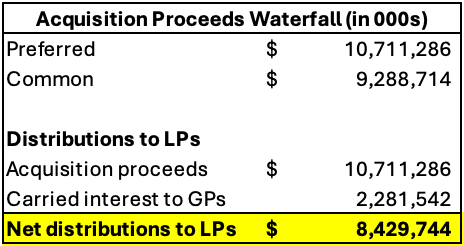
Source: Figma S-1, Adobe 10-Q, Marlinspike research
The acquisition was structured as a 50/50 cash/Adobe equity split and we assumed that Adobe’s share price would have remained constant over the six months until closing.
IPO in 2025
On the last day of July 2025, Figma began trading on Nasdaq. On its first day of trading, share price reached $115.50. However, over the next four months, the share price declined, and today (Dec 1, 2025) the stock is trading around $36. For our analysis, we assumed today’s share price would stay steady until the end of February, when the six-month lock-up agreement expires.
Estimated Cost of Regulatory Action
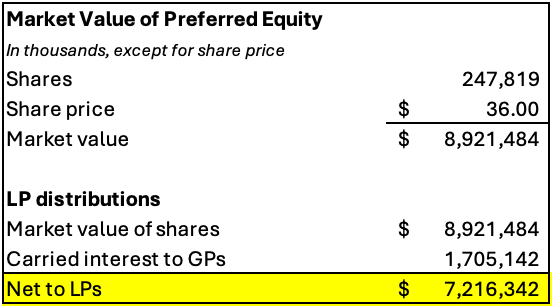
Source: Google finance, Marlinspike research
Total value of equity distributed to LPs under current IPO scenario is approximately $800 million less ($7.2 billion vs $8.4 billion). However, to fully account for time value of delayed distributions we need to calculate net present value (NPV) of delayed distributions.

Source: Marlinspike research
The NPV of capital distribution delay and lower valuation is estimated at $3.7 billion – these are significant losses for LPs.
Markets > Individuals
Under the last administration FTC worried about incumbent companies acquiring potential competitors – FTC’s theory assumed acquisitions stopped development of new technologies and competition, ultimately (in the future) harming consumers.
While we will never know how Figma – Adobe deal would have played out, we do know that regulators took a one-dimensional view of the merger. Regulators only focused on two companies and their market standing. NPV is probably best estimate of the direct cost of regulatory action, $3.7 billion on this deal, however hidden cost is much higher. If we believe that VCs and their LPs play a role in the innovation economy, our analysis would be incomplete if we did not analyze impact to overall VC funding. Had Figma deal closed and LP proceeds reinvested through new VC fund commitments, overall capital raised by VCs in 2023 would have increased by 10%. It is hard to see how reducing available funding for startups could have a positive impact on innovation and ultimately consumers.
Regulatory actions start with great intentions, but they always generate side effects. Often those side-effects have direct opposite result of the one intended. Our advice to policy makers would be simple – let markets sort it out.
Comments
Nothing yet. Say the first thing.
Sign in to join the conversation.