
I'm not a historian nor a music scholar, but I was there at the beginning—a firsthand witness to what I'm about to tell you.
The influence of Blues and Country on the evolution of Rock and Pop music has been well-documented and is largely accurate, based on what I witnessed. But what influenced Blues and Country? There is another musical element, not so widely recognized, that played a formative role in Rock, Pop, Big Band harmony vocalists, and especially Gospel. This is my attempt to tell that story.
It was a sunny Sunday morning in north Alabama, and, in keeping with family tradition, my father had the radio tuned to a program featuring popular gospel quartet music and announcements of public singing gatherings happening that day. On this particular Sunday, the singing that caught my dad's interest was at Crooked Oak Baptist Church in Colbert County, a short drive from our home. These gatherings were called “All Day Singing and Dinner on the Ground.” My dad, mom, my little brother, and I piled into the 1949 Plymouth and set off. Entertainment options were scarce for a seven-year-old country boy, so a singing event was something I genuinely looked forward to.
"All Day Singing and Dinner on the Ground" described both the length of the singing program and the communal meal offered during the lunch break. In our local vocabulary, lunch was always called “dinner.” The food, prepared by attendees and the ladies of the hosting church, was laid out on long tables made of broad planks set across sawhorses under the shade of trees. I won’t delve into the meal’s specifics, except to say it was typical, hearty Southern fare—and delicious.
The singing itself was Sacred Harp music, which uses shape notes to indicate intervals rather than specific pitches. The notation is built on four shapes for the notes: fa (a triangle), sol (an oval), la (a rectangle), and mi (a diamond). In practice, each shape represents the interval between the primary note and the new tone. So instead of a note designating a specific pitch, it designates the distance away from the basic note. The starting note, typically fa, was around middle C. Most of the songs were in a minor key, and sometimes, one part of the congregation held a chord while the others sang the lyrics. The melody followed the intervals—dictated by the shape of the note at each syllable.
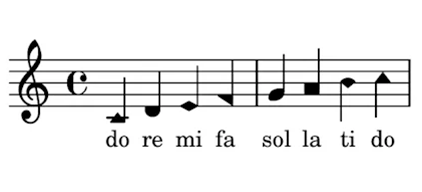
You can hear a modern example of this singing here:
0:00
-0:22
Popular singing schools taught this notation method. My father attended the popular James D. Vaughn Singing School in Lawrenceburg, TN, before I was born, but I grew up hearing his stories about it. This style of music has endured, and singing schools teaching it remain active today. Hymnals incorporating shape notes were called “shape note hymnals.” Examples include Walker’s Southern Harmony and The Sacred Harp, the latter first published in Georgia in 1844, which gave the style its name.

Video courtesy of Tim Barnwell - The Face of Appalachia channel on YouTube
Remember, I lived in a “dry” county and had never had my reality altered by alcohol or (heaven forbid) drugs. The most worked up I had ever seen people was when a firey preacher admonished the congregation to “be saved and come to the Lord.” The oratory was always more effective when reinforced by the excitement of well rendered gosple songs. When “Just As I Am I Come To Thee” or “Amazing Grace” was sung by a good chior, it was a persuasive call to action. It was the nearest one could come to a transcendental experience in north Alabama. Sacred Harp singing played a primary role in “spreading the gospel” in the rural culture.
The excitement of Sacred Harp singing left an indelible mark on me—and on musicians like Elvis Presley, Carl Perkins, Jerry Lee Lewis, and countless other young Southern musicians. When they discovered they could ignite similar excitement by singing secular lyrics to the rhythms they heard in church, Rock and Roll was born. The echos of Sacred Harp singing in church was ready to be communicated to a wider audience. The invention of the electric guitar by Les Paul around the same time didn’t hurt, either.
One way Sacred Harp's influence appears in Rock music is through the use of close, sometimes dissonant harmonies and driving rhythms. You can hear echoes of this in early hits like Elvis Presley's 'Mystery Train' or in the harmonized vocals of The Everly Brothers. The sense of communal energy from those 'All Day Singing' found a new, electrified home in the spontaneous style of Rock and Roll performances. African American musicians brought their own group-singing traditions, incorporating minor keys and call-and-response styles, which became the foundation of Southern Blues.
The deep understanding of Sacred Harp harmony led naturally to the formation of gospel quartets who turned their craft into entertainment. Popular gospel groups in my youth included The Statesmen and The Blackwood Brothers, whose concerts my dad took us to whenever they came through Alabama. This was my exposure to singing harmony.
A side note: my first professional singing experience was with a gospel quartet I helped form in high school. We called ourselves the Hazlewood Quartet, named after our school. We even had a weekly TV show in Decatur, Alabama, for a time and opened for the Blackwood Brothers at a couple of concerts in Birmingham.
It was around this time that I attended my first pop-rock concert, featuring Steppenwolf, an energetic California band in Birmingham. I was blown away. That was when I realized that music has the power to alter one’s worldview more effectively than anything else I had ever experienced. Whether in a church or a concert hall, the medium is the message. Inspired by that transcendental experience, I began learning songs on my dad's Gibson acoustic guitar. I imagine this is how many Southern “musical coming-of-age” stories unfolded: first joyful exposure to church music, followed by the excitement of listening to music on the radio or at a rock concert.
In my opinion, the Sacred Harp Music of “All Day Singing” is one of the overlooked foundation stones of American music. It also made a huge contribution to boosting church participation by the rural populace.
For those curious to learn more, numerous resources on the history of shape note singing, singing schools, and “All Day Singing and Dinner on the Ground” gatherings are available online. One of the most comprehensive is at Wikipedia: Sacred_Harp
No posts
Comments
Nothing yet. Say the first thing.
Sign in to join the conversation.