
Picking up from last time. It is physical pain that acts analogously to spiritual loss, rather than the other way around. In grief, God is right there. Reject Him, and horror takes over.
The frequent appearance of embryos in Xtro act as reminders of the eeriness inherent to patriarchal relations. Aristotle believed in a “one seed theory” in which the man’s semen is the only benefactor of genes during reproduction. This, obviously, was before the discovery of the female egg. The only challenge to this line of thinking at the time was penned by Galen, who believed that the woman also possessed semen inside her that intermingled with the man’s. But why the female semen needs more semen to create life is unclear. Regardless, in Galen’s contrary “two seed theory” the man is left superfluous. Rather than asserting that female semen is simply weaker, the Neoplatonist Porphyry took from Aristotle. Only the man has the seed. As to why the child does not resemble the father’s visage exactly is because, during pregnancy, the fetus will begin to revert upon itself via the mother. The egg being her imagination and whatever images the future child can grasp onto.
As pseudo-scientific as it is, Porphyry’s embryology lends a credence to the power of imagination that is reminiscent of both Schlegel’s natural idealism and, more recently, the bio-electrical research of Michael Levin. But prior to these advances in the actualization of Platonic space is the notion of ideoplasty, which dictates that within the ‘great chain of being’ images can act as diversions for creatures who are in search of their source. Upon conception, the fetus reaches for the father’s likeness but anchors to the mother’s, as well as anything gestating in her mind. The physician Soranus of Ephesus gives an unfortunate example in his Gynecology:
What is one to say concerning the fact that various states of the soul also produce certain changes in the mould of the fetus? For instance, some women, seeing monkeys during intercourse, have borne children resembling monkeys. The tyrant of the Cyprians who was misshapen, compelled his wife to look at beautiful statues during intercourse and became the father of well-shaped children; and horse-breeders, during covering, place noble horses in front of mares.
While overly literal, the thinking is still sound. The safeness of the embryo naturally seeks its opposite, even in concept. The milky shell of outsideness is rife with thought-forms, irradiations, words and images, all for the taking.
But now you may be asking, if the membrane of the embryo is necessarily image-ridden and our natural inclination is to grasp towards it from our prenatal setting, why is this notion of outsideness so negative? Wouldn’t images be good, as they guide the soul upwards towards logos?

The problem here is two-pronged. For one thing, approaching the outside is not necessarily a vertical, transcendent movement. It’s important to distinguish the direction of the grasping. Secondly, images are in themselves problematics that have to be understood in order to be “good.”
I’ll start with the latter point. By returning to Soranus’s anecdote we can evaluate how an image can be judged either negatively or positively. Note the sequence of pairs here:
Human woman sees monkey → misshapen child
Female horse sees male horse → noble horse
Human woman sees statue → noble child.`
The woman’s mind is never on her own wavelength, it is either pointed downwards towards the animal kingdom (monkeys) or upwards towards Platonic forms (beautiful statues). Only horses get to think of other horses. Or as Plotinus had put it, the “logos of an ox does not occur except in connection with the Matter appropriate to the ox-kind” (Enn. VI. ix). Porphyry’s theory implies that a woman is always staring into the eyes of her lover during sex, which is great but not always the case. It also spells a certain degree of mediocre progeny. Why should the baby want to be the mirror-image of the father when it can aspire to something greater than itself? Even in Soranus the nous functions a lot like God’s wrath, bringing about a greater perfection to the misshapen by an aggressive compression of being.
At the risk of sounding too un-metaphysical, the function of an image is in the state of grace that it might imbue in one that aspires to it. Aspiration is active in grace. But I disagree with the notion that if that image is a monkey then it’s only gravity that does the work. The creaturehood of another is still something that lies outside ourselves and invites one to grasp. The real treachery here is in mirror-images. Ideally, a child should aspire to be like their father, sure, but only in life. In concept, new worlds must constantly be being accessed. Soranus’s triumph is in excluding other humans from the equation of conception. What we get from each other is really only what we lack; there is no human Matter and hardly any human-kind.
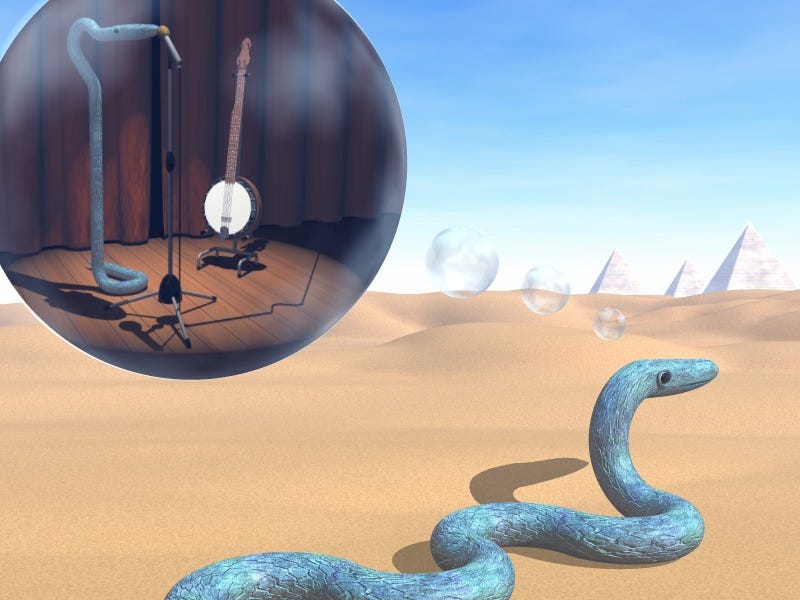
Patriarchy, thus, is a kind of aesthetic incest. Where the child tries to grasp the world on his own, the “one-seed,” obstructs view. By planting only what procures dad’s mirror-image, son comes of age without ever leaving the womb.
Now I can take aim at the first prong, about direction. But as the famous hymn goes, “In Christ there is no east or west.” Our only spatial metaphor is still the embryo, which exists as a convex to the Platonic ‘chain of being’ I mentioned earlier. But the hypostatic layers of reality––matter, spirit, Christ, and God––are arranged not as a ladder but as spheres within spheres. The adventure to God is a vertical one, yes, but towards a concentric center rather than a summit-less peak. Like how a black hole is sheer and total absence, but is recognized by the reality inverted around it. God lies at the center in utter simplex, which we find vestiges of in all that He is not.
The first sphere of reality, matter, does not stand on its own. Rather, like one of the rings of Saturn, it perpetuates as the irradiating effects of a deity it has long since been alienated from. Origen described the soul as inhabiting its own immaterial vehicle in its passage down into matter. This ‘coat of skins’ that the soul travels in is spherical too, and changes as it moves. Perhaps the ambiguity of the images we cling onto are the effects of this movement fuzzing the edges of logos as it falls to meet us. But where it descends it descends entirely.
The fetus in its mother’s belly is similarly alienated from the firmament that encircles its own sphere. It spends its life in perpetual dissatisfaction, feeding off of the outside world from a tube to eventually enter into it from a tunnel. Remnants of the firmament provide glimpses into its future. Like things seen from the corner of one’s eye during a nightmare, they will shock its body into the shape of a shield to further encase itself in life. The scars of existence are physically evident but derived from spiritual loss.
Be it a monkey or a beautiful statue, the images we cling onto are qualified in not. Our prenatal existence is a convex, so where we project we project entirely, and we do this through analogy. If aspiration is analogous to grace and gracefulness necessarily lifts one up, the destination of that up is up to us. What’s important is the weightlessness. To be filled with God’s breath implies a perpetual lack (a void) within ourselves that channels a relationship with the outside world. The reciprocity of this pneumatic wind tunnel is made by analogy; likenesses between. Breath travels by exhalation.
No posts
Comments
Nothing yet. Say the first thing.
Sign in to join the conversation.