
As you may have noticed, the Winter Olympics has started. It’s one of my favourite times with all these thrilling sports which most people only see every four years. I’m brushing up on my big air and half pipe as we speak.
One winter sport I do follow more regularly is skeleton; sliding down an ice track head first on a tea-tray (almost). It’s fast, exciting and my British compatriots are rather good at it.
I think there are comparisons between being good at skeleton and good at Solution Focus. This is a great time to explore the parallels (and acknowledge the differences). So, ready, get set…
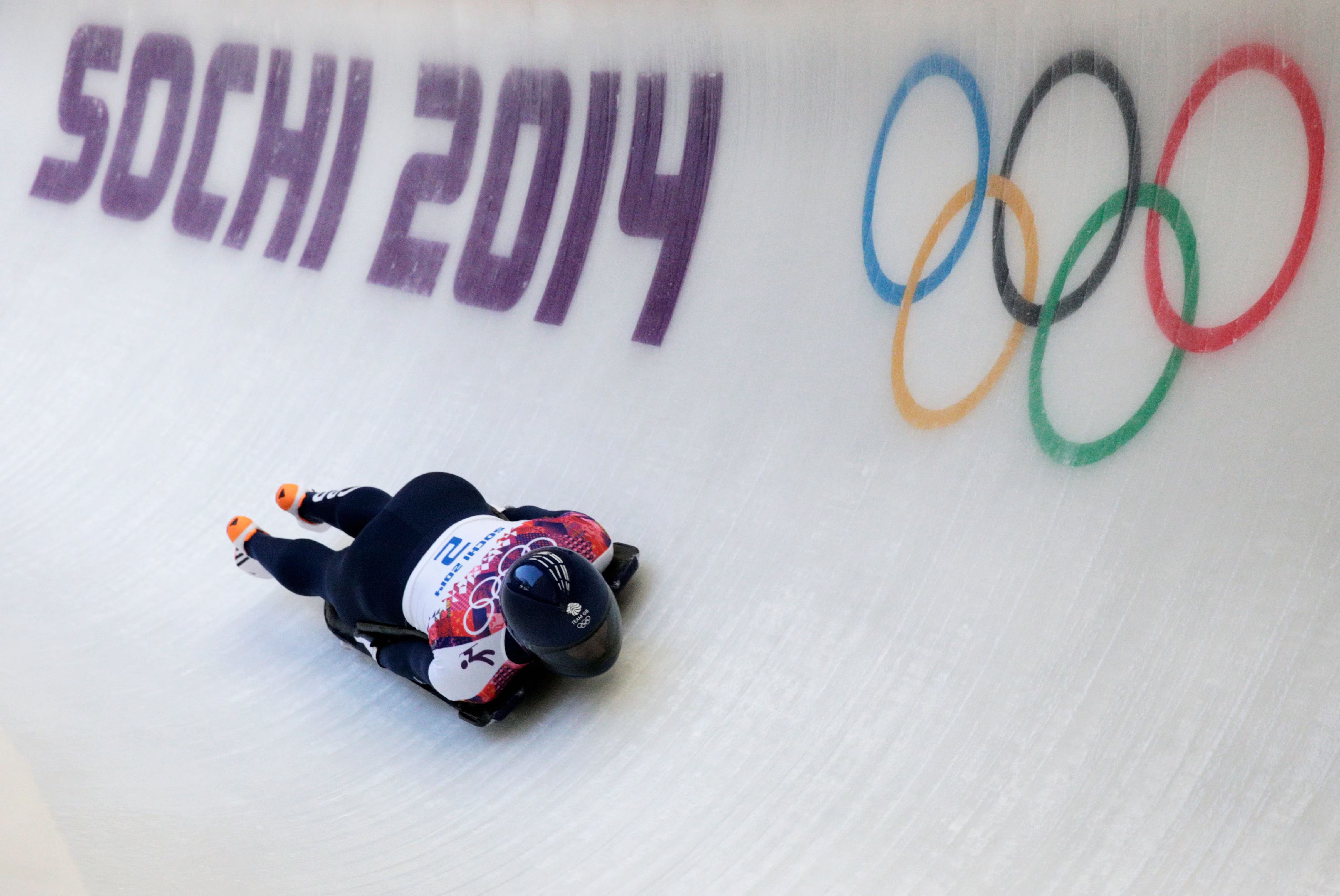
Skeleton
Skeleton is a sliding sport alongside bobsleigh and luge. It’s about sliding down an ice track with heavily banked corners as fast as possible. The top sliders compete through the winter season in a World Cup, which culminates in the World Championships. In Olympic years, the Olympic competition doubles as the world champs.
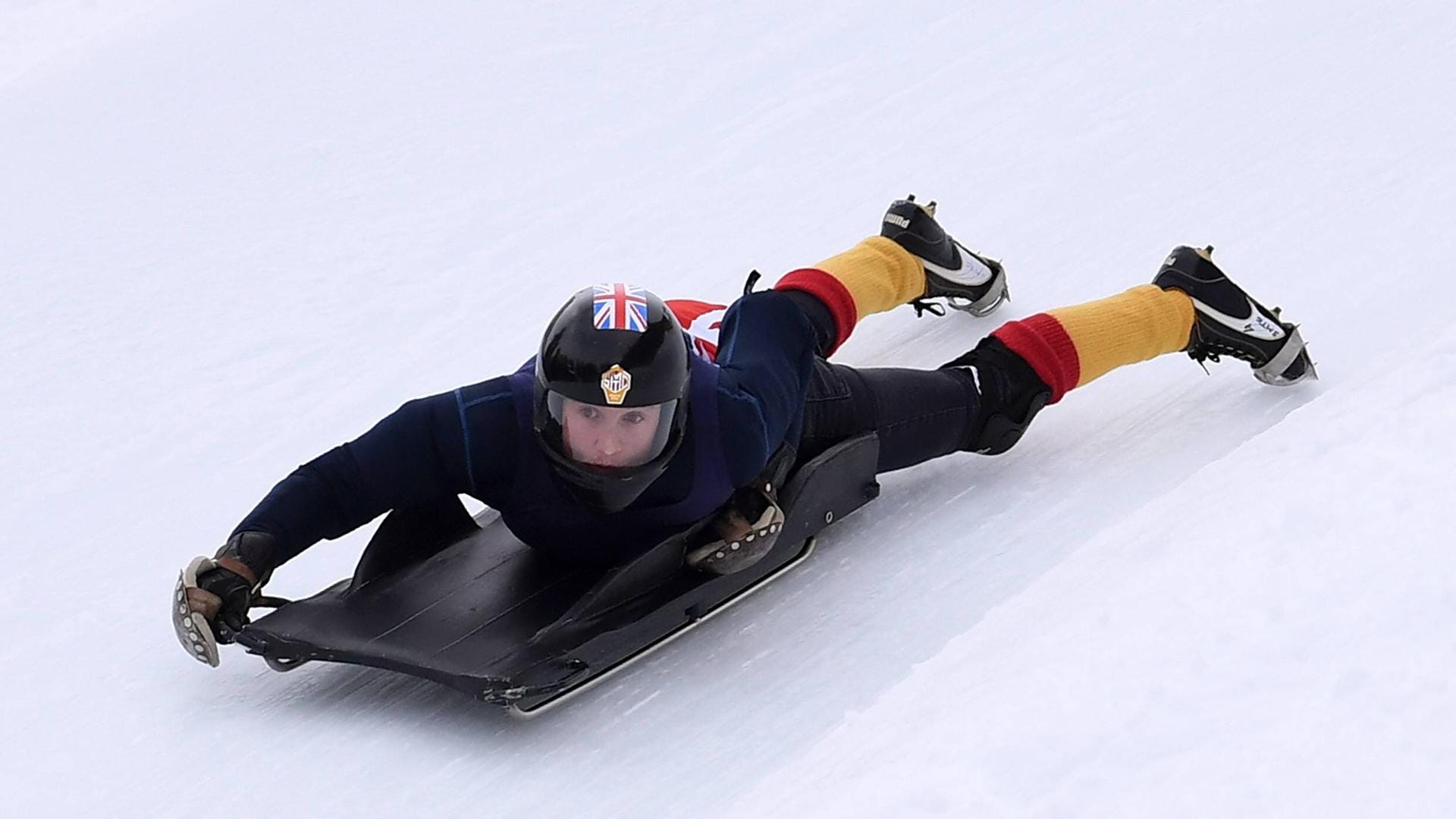
The sport developed from tobogganing on the Cresta Run in St Moritz (which was pioneered by daredevil aristocratic Brits in the 1870s). Below is a pic of a Cresta runner – note the ‘all-over-the-place’ style, much less customised cradle and strap-on toe-caps for steering and braking.
As a side-note, it’s curious how the Brits are usually the ones who write down rules for sports. Football (called soccer after the association which founded it), rugby union, rugby league, cricket, tennis… they all start with a bunch of Brits in a pub writing some rules.
Modern skeleton, named after the ‘cage’ resembling a ribcage in which the slider lies, has been a regular part of the Olympics since 2002. It’s more streamlined than tobogganing – no toe-caps, lycra suits, lots of training and practice. The riders steer with body shifts and occasional foot-touches. The start is critical – riders spend a lot of time practising short sprints while bent over nearly double pushing their sleds. Once under way, the rider tries to maintain their aerodynamic shape while steering as little as possible – every steer loses time. A flowing and unobstructed run will usually be fast. Here’s a video to give you an idea:
As I mentioned above, the Brits have been very successful over the past 20 years. Kristan Bromley led the way by becoming world champion in 2004, followed by British Olympic medallists Alex Coomber (bronze2002), Shelley Rudman (silver 2006), Amy Williams (gold 2010), Lizzy Yarnold (gold in 2014 AND 2018), Dom Parsons (bronze 2018), and Laura Deas (bronze 2018). We’re back in the running this time; Matt Weston is the current world champion and a big medal contender along with his teammate Marcus Wyatt, with Tabitha Stoecker and Freya Tarbit in contention in the women’s event.
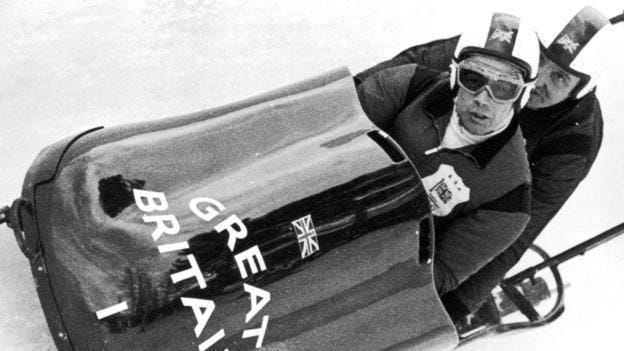
I have followed the sport since the early 2000s, partly because it’s full-on thrilling and partly because we’re good at it. One of my earliest sporting memories is being excited that Tony Nash and Robin Dixon were the reigning two-man bobsled champions at the time of the 1968 games in Grenoble. (They came fifth out of 22 after a race marred by snowfall.)
How to be good at skeleton – and Solution Focus
I have long thought that there are some interesting parallels between sliding sports including skeleton and practising Solution Focused work. Some of the key aspects are:
Being well prepared and fearless
Getting off to a good start
Doing as little as possible
Getting to the end as quickly as you can
Let’s unpick what these mean for sliders, and how they might connect with SF practitioners.
As we get ready to perform, it’s important to be ready and focused. For a skeleton slider this means having done the physical work and exercise, experience at sliding and learning the course (which way the corners go, when to steer and so on). With this experience in hand, they stand at the top ready to do their best, not terrified about the ordeal ahead. And they know that not everything will go according to plan and adjustments will have to be made. (When learning, skeleton sliders start from halfway down the course to make it a bit more manageable.)
For an SF practitioner quite a lot of this is the same – having done the work and practice to learn our trade, having enough experience to be confident at the outset and being ready to focus on our clients. We too know that there will be adjustments to be made along the way. We don’t have a detailed plan at the start of the session (this is one of the differences), but we stand ready to perform nonetheless. Interestingly, one of the early outcome studies of solution focused practice noted that newly trained practitioners performed slightly better than the more experienced – perhaps it’s easier to start ‘clean’ in these circumstances?
Getting off to a good start is vital in both settings. In skeleton, a good start is a fast start. The slider runs along bent nearly double and pushing their sled, then leaps aboard and settles in as the speed increases. There is a simple relationship between the (quickest) start time for the first 50 metres and the potential time at the bottom of the track. (Other things can go wrong on the way down, as we will see, but it’s difficult to overcome a slow start even with skilful sliding.)
In SF work we also want to get off to a good start. This is about building the start of a conversation based around the client’s hopes for the future rather than their problems in the past. I have written about this a ‘building a Platform’ (a term first introduced in the late 1990s by my colleague Michael Hjerth) – what’s the topic, what are our best hopes for that, what difference would it make to us and others. In SF practice we like to get on to this as quickly as possible; as we think there is no logical connection between the client’s problem and the future they might seek, time spent on the former is viewed as slowing things down. And of course, having the client feel heard and acknowledged is also part of a good start.
Skeleton sliders want to get down the course by doing as little as possible. Every steer, every hit on the wall, every correction which might result in the runners sliding sideways – these are all ways to lose time. The rider does have to steer into the main corners by shifting weight and moving legs – but they want to be positive, do it once (or perhaps twice for a two-pressure corner) and keep things neat. And then there are lots of very slight adjustments to keep near the centre of the track where there is less risk of hitting the wall and the slider can let things flow. Exits from the corners are vital – a few milliseconds early or late and the rider is not running true and straight into the next section, with consequent need for more corrections.
In SF we prize doing as little as possible. Most of the time the client will be talking (in response to our questions) and we are tucked in, listening, letting things flow. We are not correcting the client, rephrasing what they say, interpreting their dreams or anything like that – we are paying attention to their actual words and encouraging them onwards to expand the details about better futures, presents and pasts. I would liken the ‘big’ SF questions (miracle question, scale, coping, signs of one step up the scale etc) to the big positive steers into corners. There is a change of direction, which we want to make clean and clear. Then the tiny adjustments are like the world-stretching questions which build detailed interactional descriptions, and the tiny ‘keep-going’ responses we make as the client talks.
In skeleton, the winner is the person who complete their runs in the shortest time. All the runs in the competition (four in the Olympics) are added together, and the lowest cumulative time comes away with the gold medal. There are no ‘style marks’ like in ski jumping or ice skating – it’s as simple as first to the end wins. And, as we have seen already, a fast run usually follows a fast start and a well-judged and neat descent.
We don’t have quite the same competitive edge in SF practice, but the goal nonetheless is to get the client back to feeling they can cope again a quickly as possible. SF practice co-founder Steve de Shazer, when asked how many sessions SF therapy should take, famously replied “As few as possible, and not one more”. I identified Brevity as one of the five key values of the Solution Focused aesthetic in a 2019 paper (available to read free in the Journal of Solution Focused Practices, which I now edit, full disclosure). Not wasting the client’s time is a key part of our practice.
I have been mulling over these parallels for two decades and more. Indeed, Paul Z Jackson and I talked to the UK skeleton team coaches about supporting them some 20 years ago (though nothing came of it). I’ll be cheering on all the athletes this coming weekend. Take a look and appreciate their speed, elegance and courage in action.
The SF24 festival happened last week, and my talk/session on the past, present and future of SF in academic publishing is already online to view at
SF24 has its own Youtube channel where you can enjoy sessions recorded this year as well as back to the start in 2021 when face-to-face conferences were impossible and the event offered a new way to connect. Long may it continue.
Comments
Nothing yet. Say the first thing.
Sign in to join the conversation.