
I sometimes think that I ought to have a little go at being Absolutely Furious. I’m not an angry chap by nature, especially not on a warm summer’s day when I have a sherry in my hand and a song on my lips. But being furious is the fashionable thing these days, or so I’m told. I’ve even heard of a thing called the “culture wars”, and it turns out that I have been terribly remiss by not joining in. So I shall lay aside my sherry, wire up the caps-lock button on my keyboard to a device that measures my heart-rate, and pick a CAUSE. (Apparently you can’t be properly furious unless you have one).
My cause is to root out homophobic slurs from the English language.
They’re bad. Really BAD.
And it goes back a long, long way. In Old English times a gay chap was called a bæddel. Well, bæddel was a bit broader than that. It meant gay or effeminate or hermaphrodite. The Anglo Saxons, you see, were HORRIBLE and BIGOTED, and they didn’t have any of the fine degrees of differentiation that are so dear to our modern hearts. You don’t need to read too much of Beowulf to realise that they were a rather macho, heteronormative bunch. Anyone who didn’t have a flagon of mead in one hand and a wench in the other probably got called bæddel.
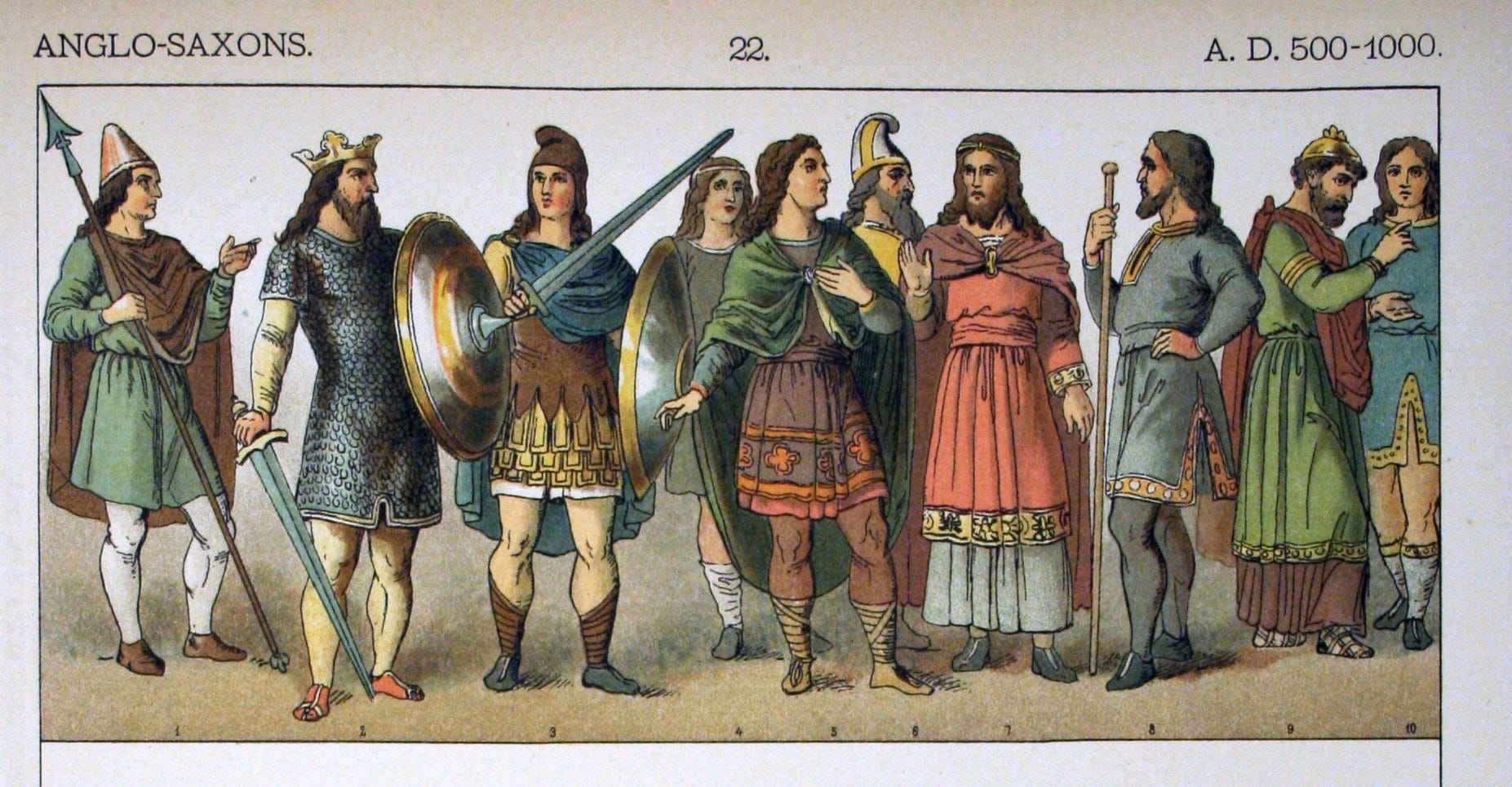
We know the word bæddel, because it was what the Anglo-Saxons used to translate hermafroditus from the Latin, as recorded in the eleventh century Antwerp Glossaries (with which you are doubtless familiar).
But they also used the related term bædling when they were policing sexuality, WHICH THEY SHOULDN’T HAVE DONE. There’s an ecclesiastical law code from the seventh century that says, rather oppressively:
gif bædling mid bædlinge hæme, X winter fæste
Which means
If a gay fellow shags a gay fellow [he must] fast for ten winters
Which sounds suspiciously like FAT-SHAMING.
As you can tell, the Anglo-Saxons were UTTER ROTTERS. And it went further. Like playground bullies who go around saying that anything they don’t like is gay (“I hate maths! Maths is gay!”), the Anglo-Saxons started saying anything inferior of weak was bæddel.
So if they didn’t like a bit of food, they would say “This food is bæddel”, which is horribly, horribly, irretrievably homophobic.
Then they dropped the L, and, as æ had always been pronounced like the a in cat, you ended up with the word bad.
That’s right, I’m afraid. The word bad originated as a homophobic slur. And it’s now one of the most common words in the English language.
And that MEANS that if YOU have ever IN YOUR LIFE used the word BAD, you are HOMOPHOBE.
YOU MONSTER!
I’m going to start a campaign to have the word bad CANCELLED. I need a slogan, of course. I was going to run with BAD IS BAD, but I’m worried that that may be self-defeating. So, after much thought, I’m going with BAD IS NOT GOOD, which, I like to think, is punchy and to-the-point. If all goes well, I can have society cleansed of all prejudice by a week on Tuesday.
I should probably get some badges printed, but, for now, I’m going to put MY FEET UP, pour myself a little glass of SHERRY, and contemplate the BIRDSONG OUTSIDE MY WINDOW.
And you, dear bigoted reader, if you have EVER used the word bad, should feel utterly ashamed of yourself, and do some sort of penance. I suggest fasting for ten winters.

Incidentally, this post would not be complete without mentioning two things. First, there are some scholars who disagree with the derivation of bad from bæddel. However, every major authority agrees that it’s by far the most likely origin. Second, medieval surnames functioned much more like nicknames. One of the important links in this story is a fellow from the year 1203 who rejoiced in the name Asketinus Baddecheese.
No posts
Comments
Nothing yet. Say the first thing.
Sign in to join the conversation.