
True market transformation doesn’t happen through lukewarm, incremental optimizations. It happens when data, marketing, and a deep-seated refusal to accept the status quo collide.
Fanaticism is the ultimate form of brand accountability: it means you actually care enough to disrupt an industry.
When you possess that kind of drive, you realize it isn’t just a personality trait—it is a repeatable cycle. In the corporate and tech worlds, this intense, manic energy manifests as a predictable engine of disruption. I call it The Fanaticism Loop.
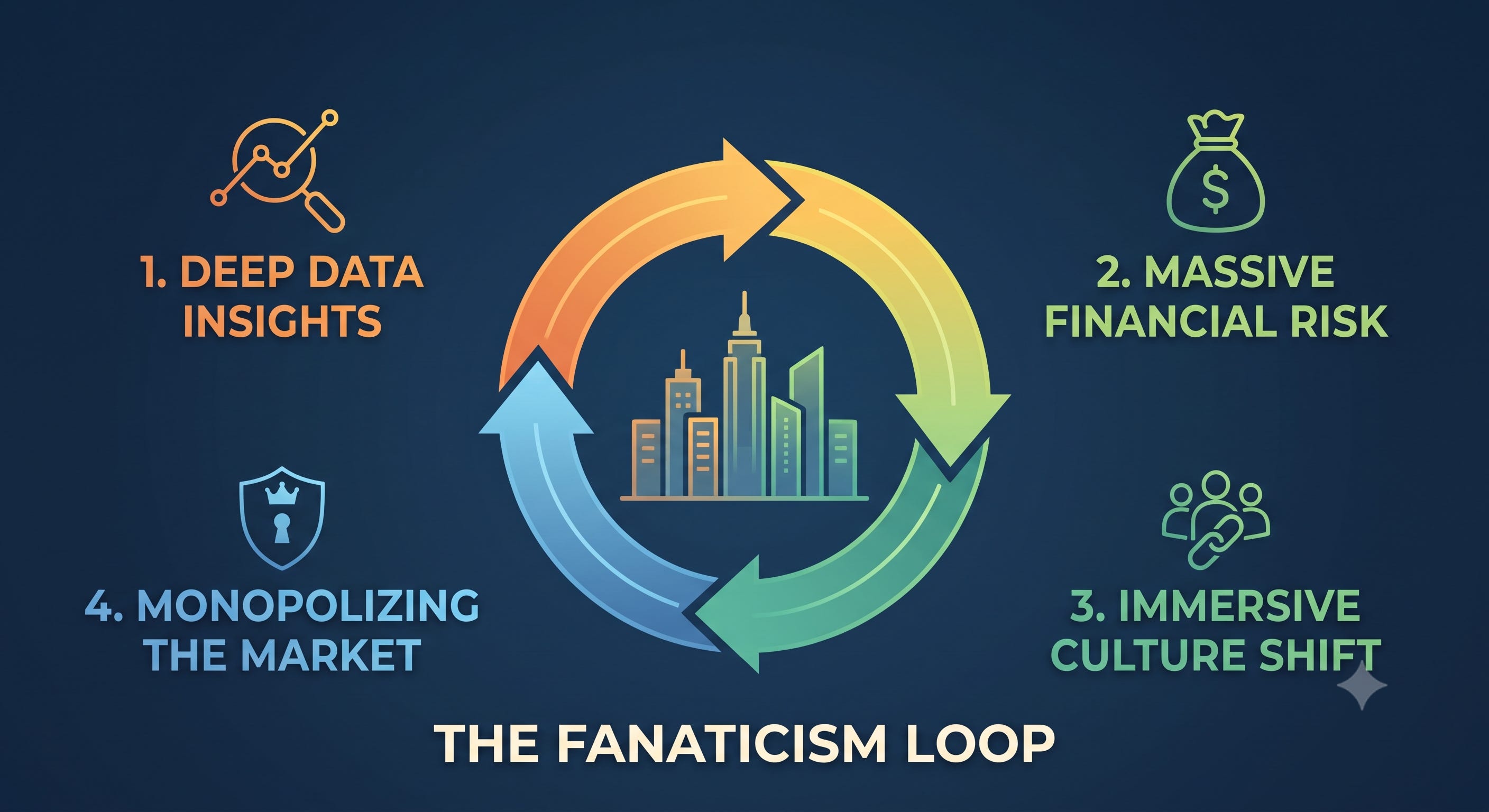
The loop begins with an obsession with the truth. Just as a fanatic dissects every micro-detail of their interest, a disruptive business starts by uncovering algorithmic data analysis, predictive patterns, and deeply personalized user profiles. You see the gaps in the world that everyone else is blind to.
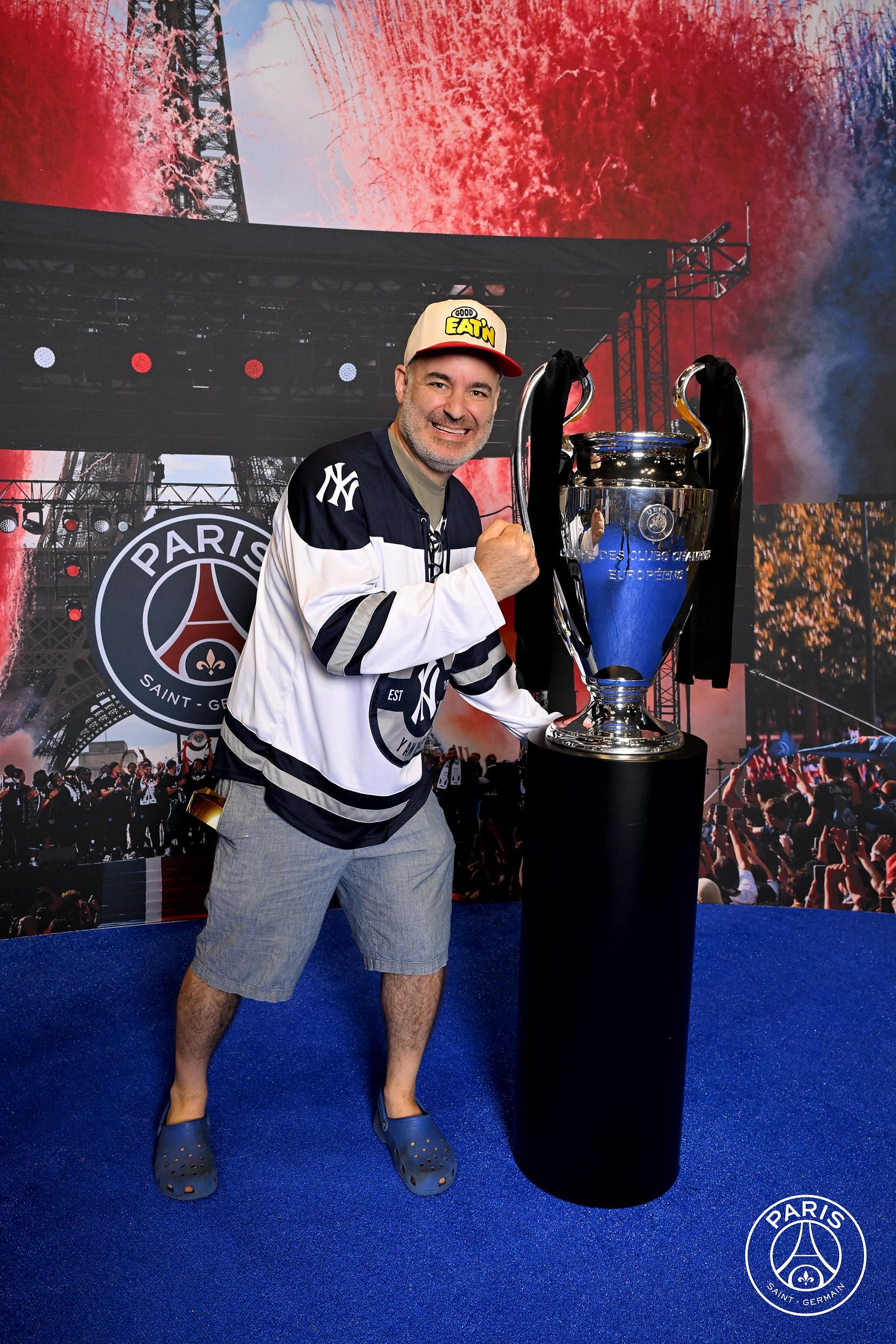
I experienced this firsthand recently while walking into Fanatics Fest in New York City with my son. Around us, grown men were carrying rare trading cards like priceless historical artifacts; thousands were queuing just to catch a glimpse of their sports heroes. They were utterly, deeply fanatical about their teams.
But the moment I walked into the venue, my own fanatical lens kicked into overdrive. I wasn’t just looking at the sports stars; I was scanning the activations, the experiential design, the data captures, and the consumer psychology. Right there on the floor, I spotted an activation for a brand called Good Eat’n. Instantly, I was breaking down its positioning, its packaging, and its market execution.
At that exact moment, my son looked at me, thoroughly annoyed, and said: “Can you just stop being so fanatical about marketing for one second?”
It made me laugh, but it also made me realize something fundamental. My lens for viewing most commercial experiences is marketing. Sometimes it annoys him. Sometimes it annoys others. Sometimes people look at me and think, “Who the hell is this guy, and why does he keep talking about this?”
The truth is, I can’t turn it off. It’s the reason I find myself waking up at 5:00 AM on a Sunday morning, trapped in a self-imposed prison of my own making, forcing my thoughts into an essay like this. My co-founders of The Marketing Accountability Council and my Start-up Dāginty are cut from the identical, obsessive cloth. We are all beautifully, desperately fanatical about what we are building because we dug into the data, found the friction points, and refuse to let our brand become wallpaper.
True fanatics don’t hedge their bets. This stage demands high-stakes investments, substantial R&D funding, and aggressive market strategies. You scale rapidly, throwing everything into the fire because you believe your insight is a certainty, not a gamble.
Look no further than the literal festival floor where my son and I were standing. Before Fanatics Fest launched, the sports memorabilia and collector ecosystem was broken. The industry was dominated by old-school, local trading card shows that looked exactly like they did in the 1990s: bad lighting, folding tables, and zero experiential design.
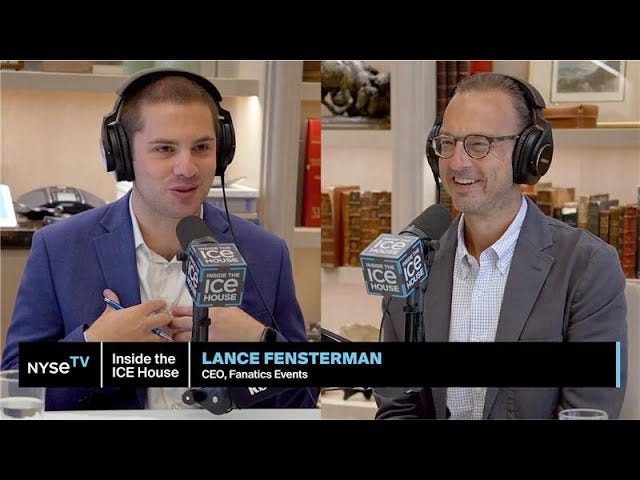
Fanatics CEO Michael Rubin looked at that data and saw a massive unmet obsession. To fix it, he partnered with Lance Fensterman—the mastermind who turned New York Comic Con into a global phenomenon—and applied the “Comic-Con playbook” to sports.
But this wasn’t a safe bet. Rubin took a massive, multi-million dollar corporate risk, openly admitting that the inaugural event was a $15 million marketing investment designed to lose money out of the gate.
Legacy thinking would have killed the idea on day one because the immediate spreadsheet ROI wasn’t there.
But Rubin didn’t build a multi-billion dollar empire by making safe choices. He understood that to win a market completely, you have to invest ahead of the revenue curve. That risk paid off spectacularly, smashing records as over 200,000 passionate fans packed out a million square feet at the Javits Center.
When you are that intense, the world starts to bend around you. The fanaticism spreads from the founders to the early adopters, shaping new behaviors, cultivating irrational loyalty, and building dedicated communities. You aren’t just selling a product anymore; you are establishing a shared value system.
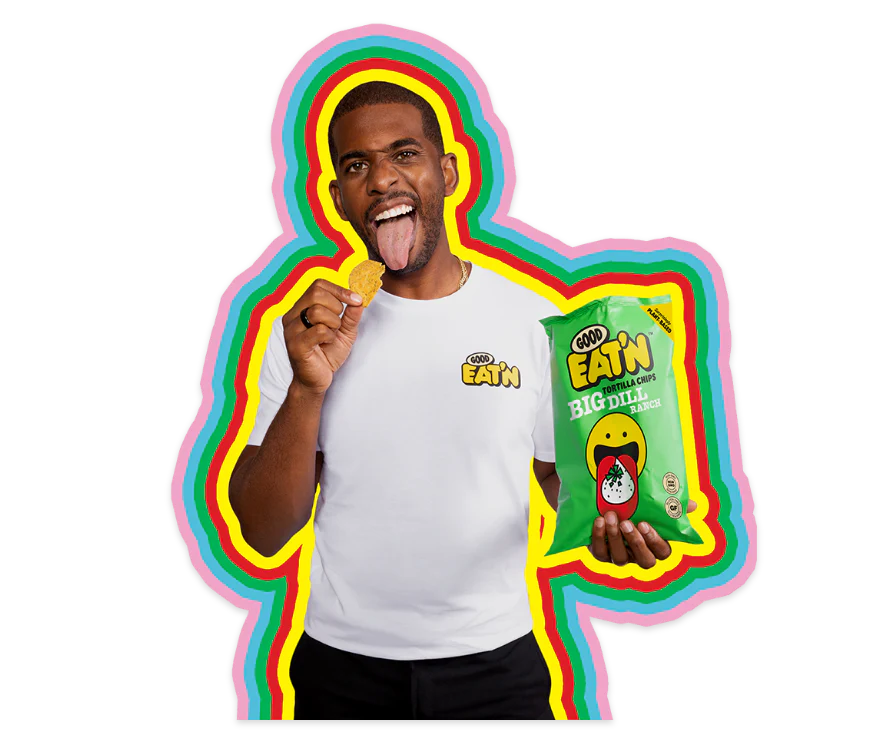
When I saw Good Eat’n right as I walked into the fest, it hit me: this product literally would not exist if someone hadn’t been fanatical about fixing a broken system.
Massive legacy conglomerates like Frito-Lay have spent decades optimizing their supply chains to pump out ultra-processed foods loaded with artificial dyes (like Red 40 and Yellow 6) and chemical preservatives to protect their corporate margins. They look at data to protect the status quo.
But Good Eat’n (co-founded by NBA star Chris Paul) represents what happens when a creator gets completely fed up with the junk. Instead of launching just another boring “health food,” they engineered a beautiful, vibrant brand delivering nostalgic flavors (like Nacho Cheeze and Hot Puffs) using clean, plant-based, real-food ingredients.
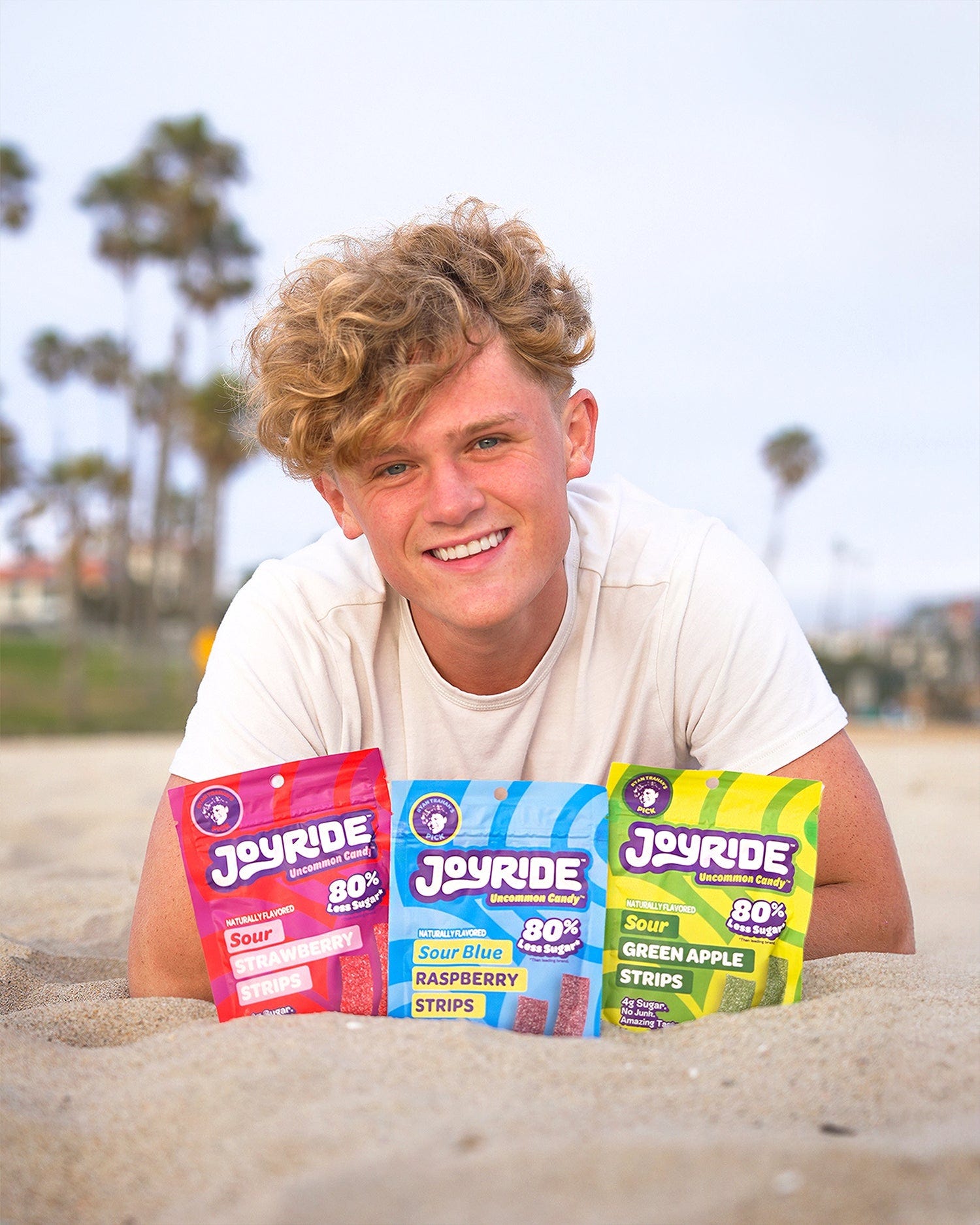
Joyride exemplifies a shift in the candy industry from traditional, artificial confections to plant-based, low-sugar options. Founded by Tyler Merrick in 2022 and expanded with Ryan Trahan in 2023, it offers flavors like sour strips and ropes made with real ingredients, no fake colors, and less sugar, transforming the candy experience.
These brands are winning because they refuse to compromise. That refusal to compromise is the exact definition of fanaticism at work.
For those of us on the Marketing Accountability Council, this brings us back to our own sandbox.
If you are fanatical about marketing and data, let it take over.
Data shouldn’t just be used to look backward and report on what happened; it should be the fuel that drives your creative obsession. When you dive deep into data, you find the real friction points, like people being fundamentally sick of ultra-processed foods, or sports fans being sick of boring card conventions, and you use that data to take massive risks and build something radically better.
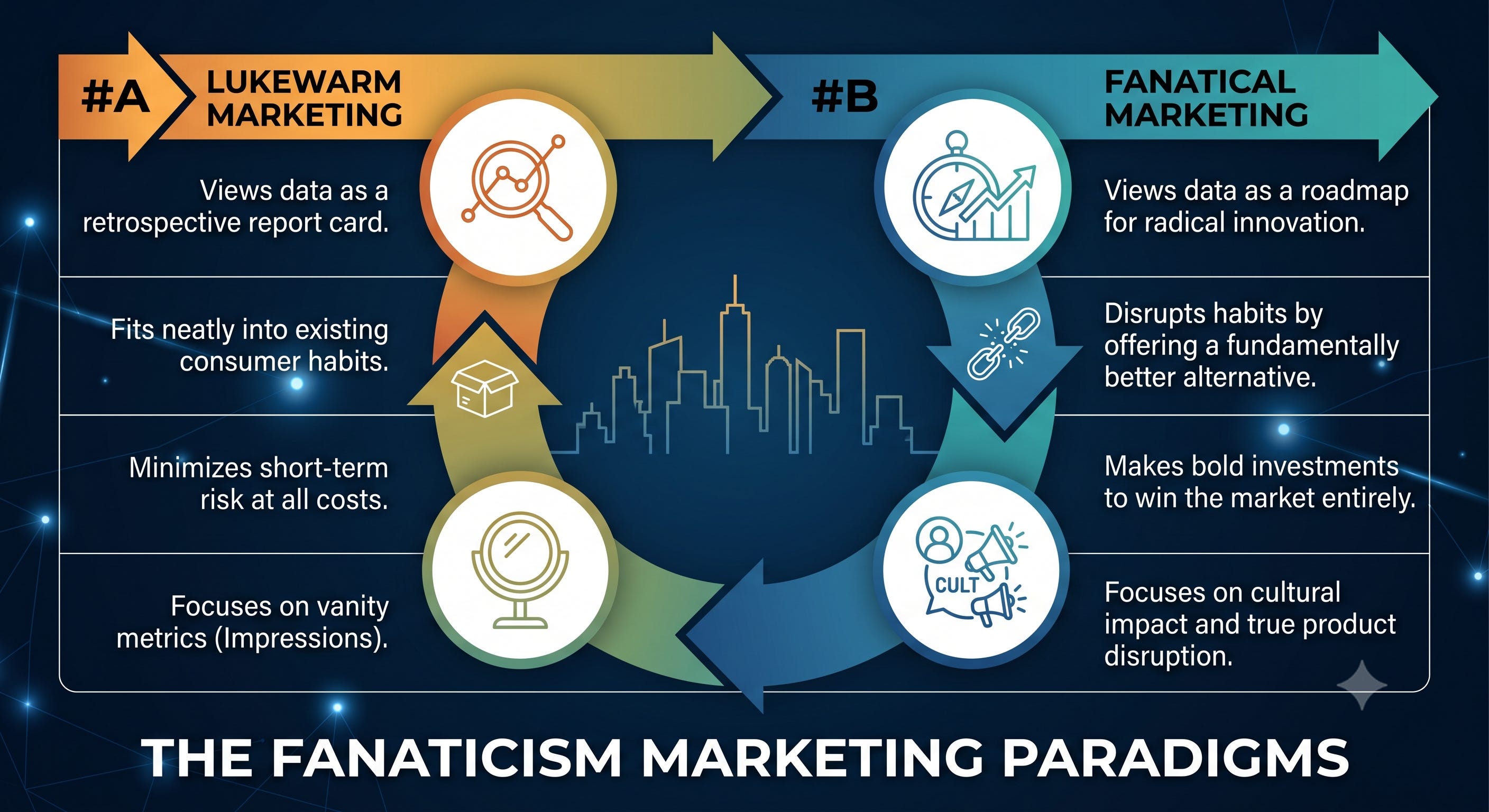
Nothing of consequence changes until you become fanatical. Fanaticism means you refuse to let your brand be wallpaper. It means you stand behind your product with total accountability, ensuring that every touchpoint- from the ingredients in the bag to the experience on the convention floor- proves to your audience that you care just as much as they do.
The Takeaway for the Council: Stop optimizing for the average. Let people ask “who is this person and why do they keep talking about this?” Because when you build with that level of obsession, you don’t just participate in a market—you change it.
Lance Fensterman Interview on Fanatics Fest - This video features an in-depth conversation with Fanatics Events CEO Lance Fensterman, where he discusses the innovative vision behind Fanatics Fest and how they scaled it to revolutionize sports culture.
While the Fanatics business model is truly impressive in scale, creativity, and industry disruption, there is a hidden tax that everyday sports fans are paying the second they step onto the convention floor.
While I spent an incredible weekend watching legends and analyzing their brilliant brand activations, the data advocate in me couldn’t ignore the aggressive, clunky, and outright lopsided data-collection funnels targeting unsuspecting fans under the guise of “free giveaways.”
Can a brand be an industry-defining creative enterprise and run a deeply flawed data-mining circus at the exact same time? Absolutely.
👉 Read my full exposé on the real cost of a “Fan Activation” and learn how to protect your digital footprint at the next big event.
Comments
Nothing yet. Say the first thing.
Sign in to join the conversation.