
Last weekend at Fanatics Fest, I was handed a drink that looked less like coffee and more like the New York Knicks had been melted inside a clear plastic cup. Top layer: a thick, cloud-like slab of electric-blue coconut cold foam. Bottom layer: a neon-orange strawberry-mango energy base. It tasted like liquid gummy bears dissolved in battery acid.
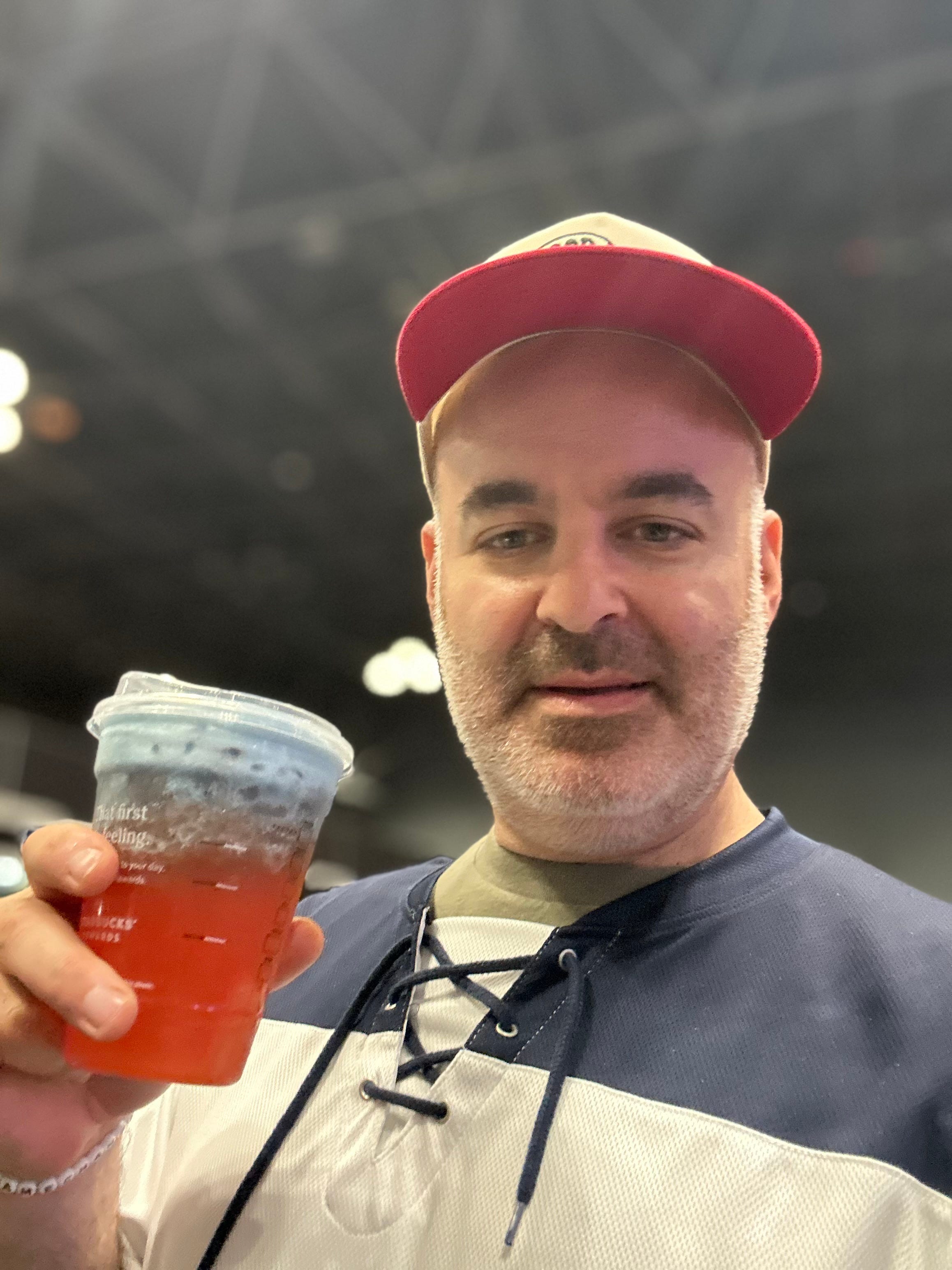
I would never order it. Yet there I was, watching Starbucks—a brand historically built on the quiet intimacy of European espresso bars, dark roasts, and handcrafted craft—parade around a sports fan convention like a fast-food chain desperate for a viral moment. It felt weird. More importantly, it made me wonder: Is this really the best CEO Brian Niccol can do?
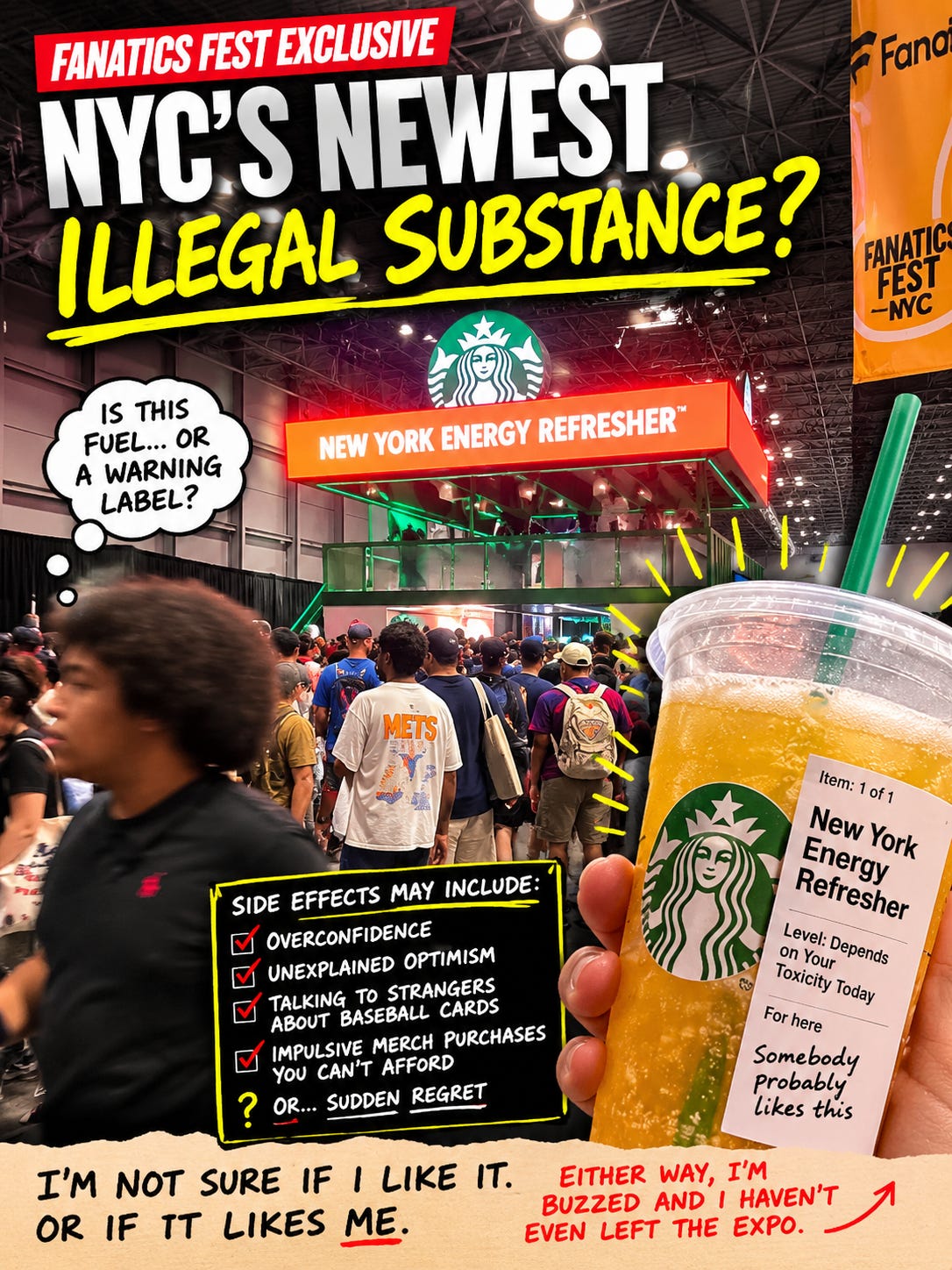
When Starbucks brought in Brian Niccol—the former Taco Bell and Chipotle executive—the market expected an operational turnaround. Instead, the brand feels like it is suffering from an existential identity crisis.
From a brand equity perspective, Starbucks is committing a textbook cardinal sin: category drift. They are running an operational footprint built for espresso bars while trying to market a menu built for carnival concessions.
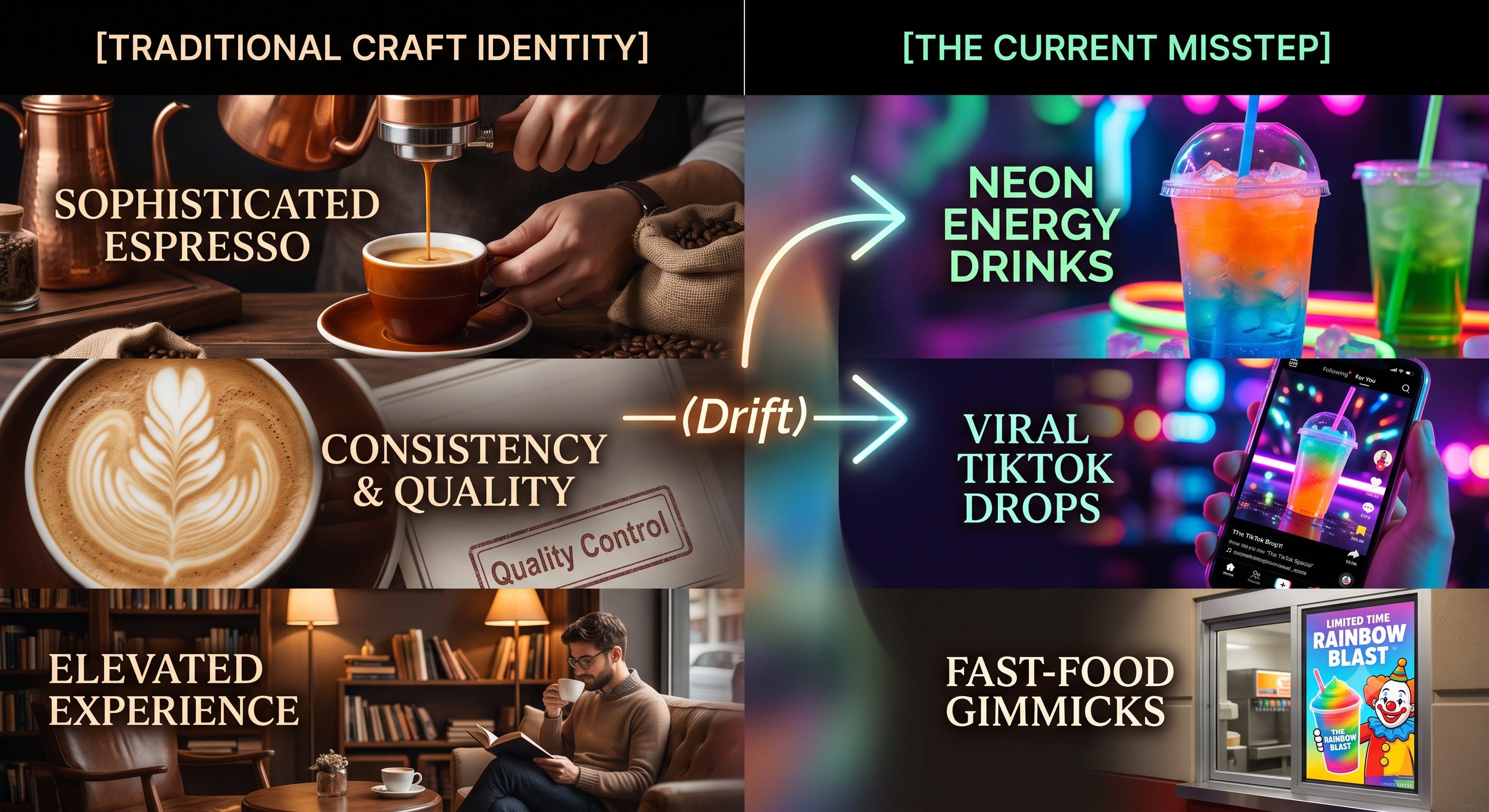
Slapping a blue foam on an energy drink and calling it a local sports activation isn’t high-level brand strategy; it’s short-term noise. Clever event sponsorships and hyper-sweet novelty drops don’t solve a fundamental strategic disconnect:
Chasing the TikTok Economy: Over 75% of Starbucks’ sales are cold beverages, driven by Gen Z customization, extra syrups, and colorful cold foams. Instead of guiding culture, Starbucks is letting social media trends dictate its product development.
The Price-to-Value Disconnect: Consumers will pay premium prices for a high-end coffee experience. They will not continue to pay $7 to $8 for a cup of ice, fruit juice, and food dye handed to them through a chaotic pickup window.
Starbucks’ strategy isn’t groundbreaking—it’s a reactive copy-paste of competitors who are structurally far better suited for this space.
Dunkin’ never pretended to be an artisanal coffee sanctuary. They are a fast-moving, high-speed refueling station. When Dunkin’ partnered with creators like Charli D’Amelio or Ice Spice to launch sweet, colorful signature drinks, it felt organic to their value proposition. Dunkin’ owns fast-casual, pop-culture energy. Starbucks adopting the same strategy feels like a corporate midlife crisis.
Chains like Sonic, Taco Bell, and Dunkin’ have drive-thrus, equipment, and labor models optimized for speed, novelty drinks, and high-margin sugar treats. When Starbucks tries to fight in that arena, it slows down its stores, overwhelms baristas with 10-step custom builds, and alienates its core customer base.
While Starbucks tries to figure out if it wants to be a high-end café or a fast-food slushie stand, Luckin Coffee is eating its market share by focusing on efficiency and clarity:
No Mixed Messages: Luckin doesn’t pretend to be a lounge. They run hyper-efficient, app-first pickup kiosks.
Operational Discipline: They offer popular, creative drinks (like coconut lattes), but their supply chain and tech stack are built for extreme speed and low costs.
Value Realism: Luckin delivers fast, reliable caffeine without asking the customer to pay a luxury markup for a chaotic experience.
Starbucks is stuck in the worst position a major brand can occupy: an expensive option that no longer feels special.
Slapping blue foam on a sports drink for a fan convention doesn’t prove Starbucks understands youth culture—it proves they are running out of ideas to justify their price tag. If this hyper-sweet, trend-chasing playbook is the core strategy coming from executive leadership, then Starbucks isn’t evolving. It’s admitting defeat to fast-food competitors while surrendering the very coffee heritage that made it an icon
Comments
Nothing yet. Say the first thing.
Sign in to join the conversation.