
Among those making a big splash in the early days of film were three sisters… Norma, Constance and Natalie Talmadge. They all played quite different roles with Natalie’s the most peripheral, reluctantly appearing in a handful of films (mostly in uncredited roles) but best remembered for her marriage to Buster Keaton and her behind-the-scenes influence on his work.
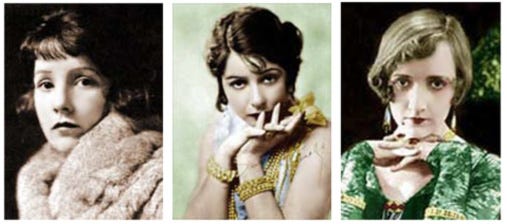
The two Talmadge sisters (Norma and Constance) became two of the most beloved stars of the silent era but in many ways were very different. Norma was a slight, doe-eyed brunette beauty adept best known for portraying emotionally intense characters. Constance was a tall, gawky blond, far less pretty but with an infectious personality, a talent for physical comedy, and a spirited on-screen presence.
Despite these differences, the sisters were often closely associated due to their studio’s publicity department who highlighted the familial connection, and marketed their films together to distributors. This promotion didn’t mention that they had grown up in impoverished circumstances with a largely absent, alcoholic father and a mother, Peg, who made ends meet by renting out a spare room, taking in laundry, selling cosmetics and teaching art classes.
Growing up the the girls had been inseparable, putting on little plays, supporting each other, cheering each other’s achievements, and raising stray and injured cats, dogs and birds in their basement. After a friend suggested that Norma would make a good model for title slides which were shown in early nickelodeons, Peg became a pushy stage mother promoting first Norma, and later Constance who people described as having undeniable spunk and charm.
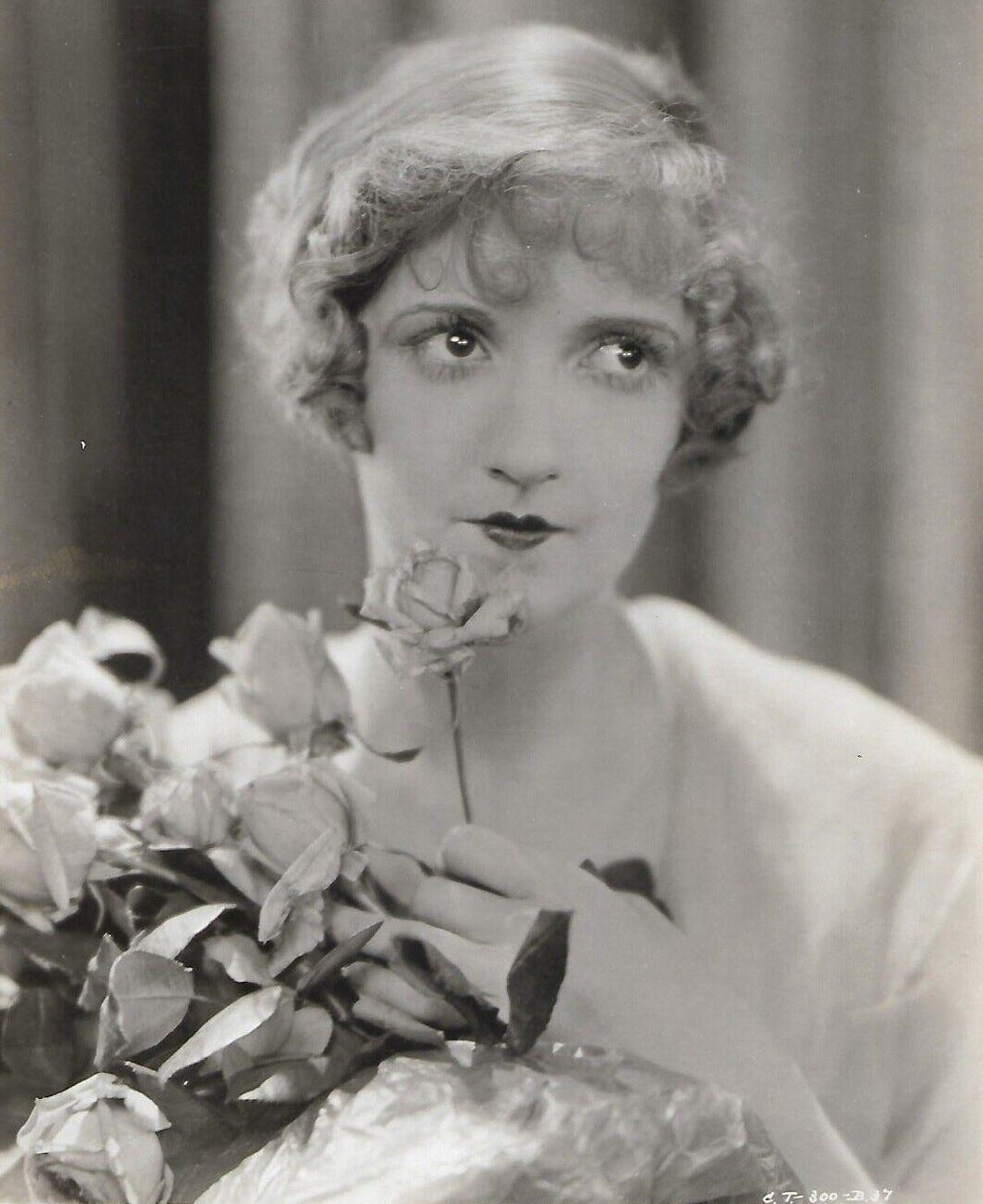
Constance was different. Blonde where her sister had dark hair, she was buoyant, showed a talent for comedy, and went by “Dutch” a nickname Peg had given her because she looked like a cherubic Little Dutch Boy.
Constance’s first comedy short for Vitagraph was In Bridal Attire (1914) and was followed by appearances in a number of two-reel comedies predominantly with comedian Billy Quirk. Her big break came when D.W. Griffith cast her as The Mountain Girl in Intolerance (1916), with Griffith re-issuing her segment as a solo feature entitled The Fall of Babylon (1919), for which he re-shot her death scene ending so that her character would live happily ever after.
After this she was promoted to starring parts at Triangle Film Corporation where she formed an important professional relationship with writer Anita Loos who admired her “humour and her irresponsible way of life” and would go on to write a number of screenplays for her.
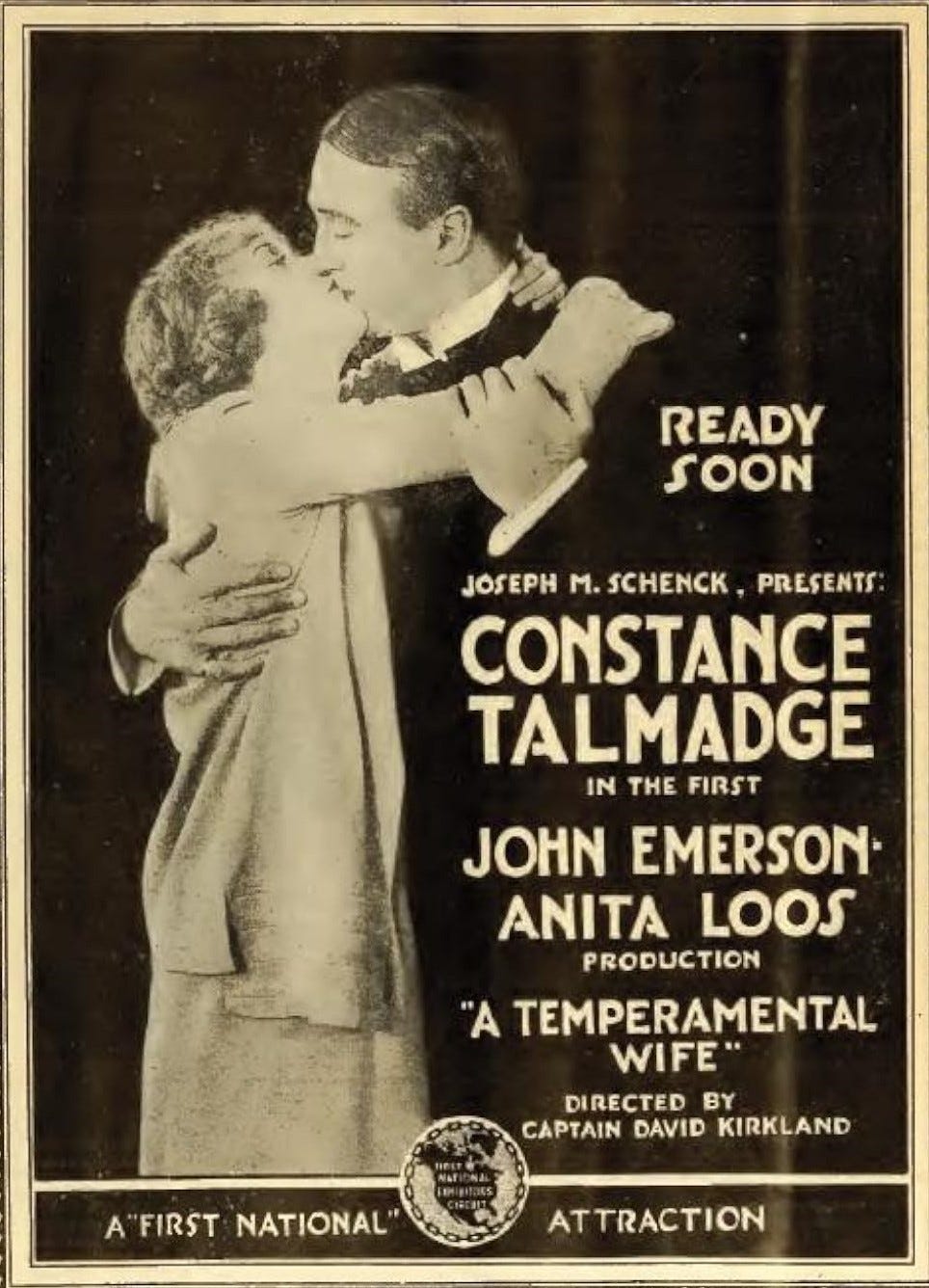
According to Loos, Peg Talmadge convinced Joseph Schenck to start The Constance Talmadge Film Company after her contract with Triangle expired, with Loos and husband John Emerson co-producing her films. Constance’s popularity soared with a 1921 Moving Picture World poll rating Norma and Constance Talmadge as the first and second most popular movie actresses respectively, while they also enjoyed a sizable international following.
Into the early 1920s Constance charmed audiences with a number of flapper-era comedies, mostly co-starring alongside silent film great Harrison Ford. When asked about her abilities as an actress Constance said:
I enjoy making people laugh and this type of work comes easiest and most naturally to me, I am not a highly emotional type. My sister could cry real tears over two sofa cushions stuffed into a long dress and white lace cap, to look like a dead baby, and she would do it so convincingly that 900 persons out front would weep with her. That is real art, but my kind of talent would lead me to bounce that padded baby up and down on my knee with absurd grimaces that would make the same 900 roar with laughter.
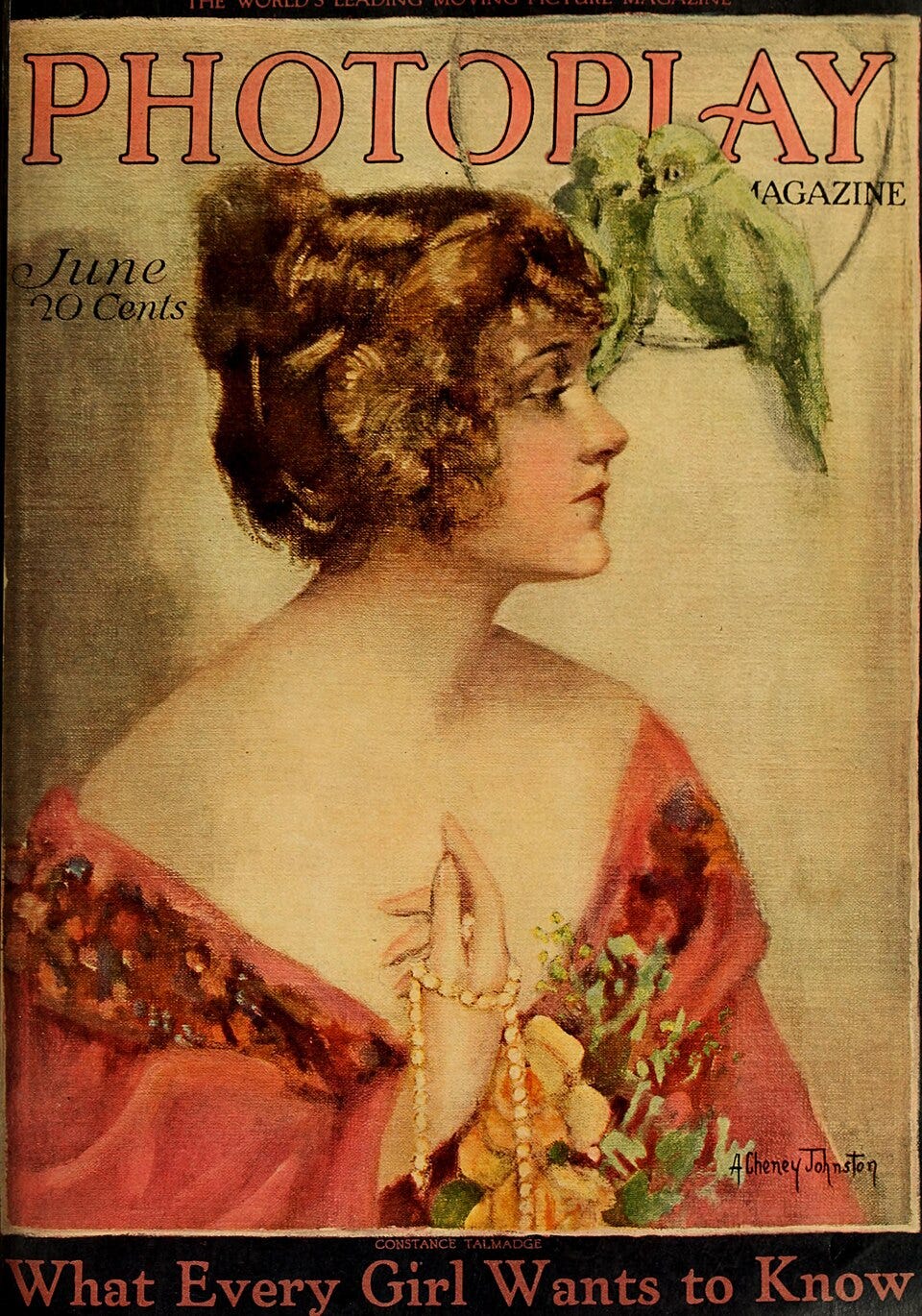
Throughout the 1920s Constance’s films became fewer and further between, with her last film Venus (1929) being produced in France. While Time magazine reported at the time that Constance had become bored with filmmaking, the truth was that talkies had arrived and she didn’t have a voice (described as ‘squeaky’) that would allow her to make the transition. So Constance retired after appearing in more than 80 films.
Her mother Peg held on to the hope that Constance might one day return to films, saying:
Success and fame cast a spell that can never been quite shaken off. A woman, because of her love, may say, and in the fervor of the moment believe, that she is ready to give up her chosen work. But there is sure to come a time when keen longing and strong regret for her lost career dominate over the more placid contentments of love and marriage. Then unhappiness and friction ensue.
Even if Constance didn’t abandon acting for love, Peg was mistaken as not only did her daughter not return to acting, of her four marriages, the two most enduring came after she left acting.
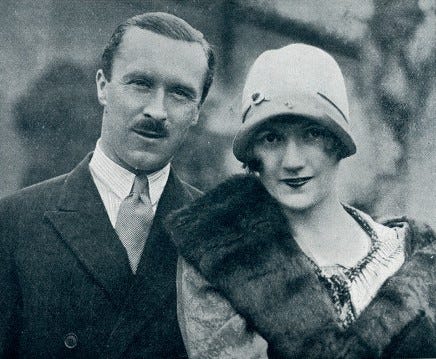
During her career Constance had a lower profile sister than her sister Norma, but today she is far more recognisable with her madcap antics credited as a precursor to the screwball comedies of the 1930s.
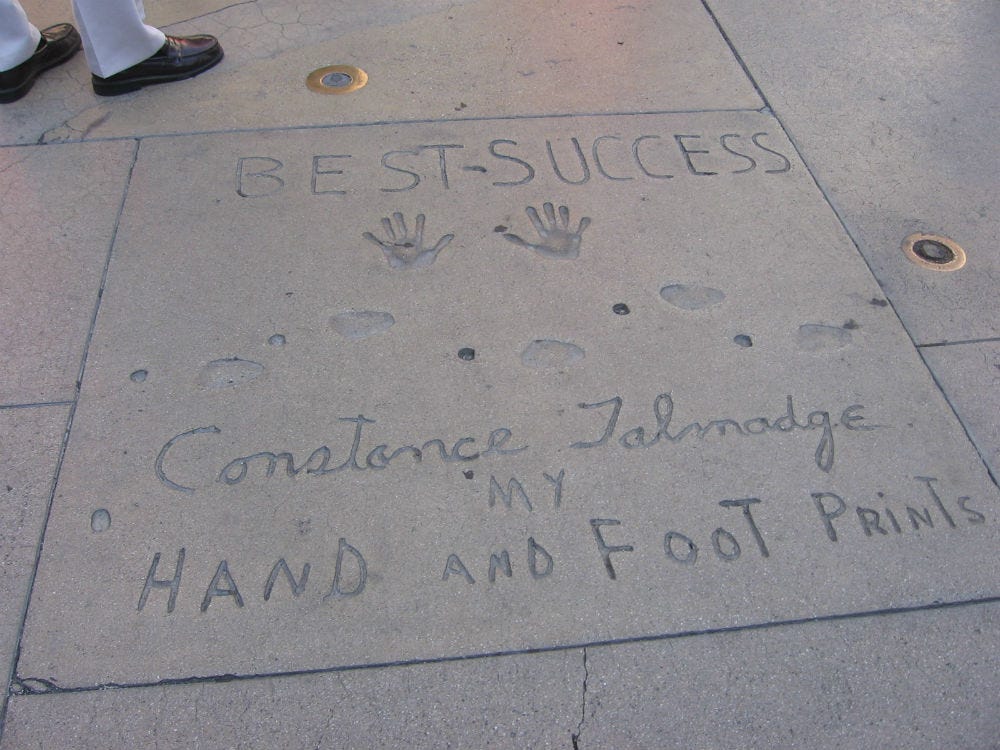
She left her mark in other ways too. Along with her sister Norma, Mary Pickford, and Douglas Fairbanks, Constance inaugurated the tradition of placing her footprints in concrete outside Grauman’s Chinese Theatre. True to her comic tendencies, rather than leaving single hand and foot prints, she left a trail of five footprints in her slab as if she were walking away.
Constance was also honoured with a star on the Hollywood Walk of Fame.
Thankfully almost half of Constance’s feature films have survived in their entirety with several others surviving in part. That’s a far better record than that of other films that were made at the time. As they say, you can’t keep a good woman down, and ‘Dutch’ was certainly irrepressible.
Comments
Nothing yet. Say the first thing.
Sign in to join the conversation.