
In the years that followed the introduction of sound a large number of unique and interesting films were produced. For filmmakers this period was marked by the uncertainty of transitioning to what must have felt to them like an entirely new medium. To their credit they entered this period with a willingness to experiment in what turned out be a brief window of freedom (known as the Pre-Code period) that was soon followed by the exertion of far greater control by the censors. All these factors go some way to explain why a film like The Great Gabbo was made. But they’re not the entire story.
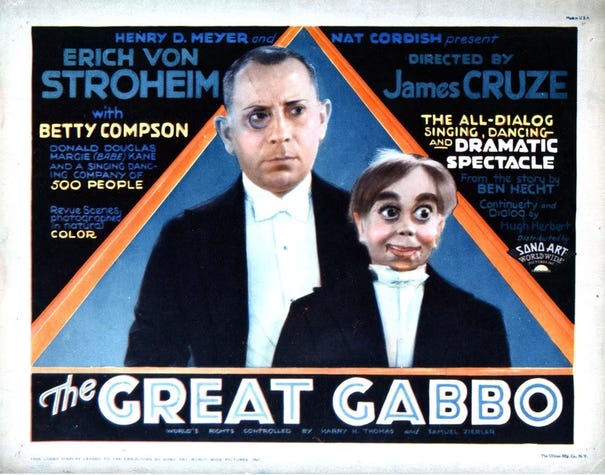
Based on the 1928 short story “The Rival Dummy” by Ben Hecht the script was adapted by Hecht and playwright Hugh Herbert into a musical drama, a genre which was new to audiences. Director James Cruze took things a step further by making the unusual decision to shoot a number of the film’s sequences in Multicolor, a subtractive two-colour motion picture process that had been pioneered that same year.
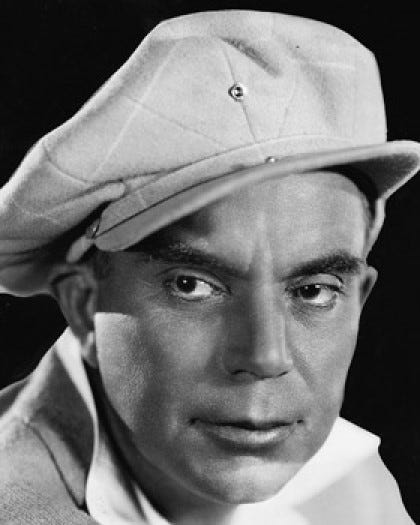
Cruze was an atypical director, not only coming from a Mormon family in Utah but also someone who was believed to be part Ute Indian. He had paid his way through drama school by working as a fisherman before dabbling in film acting and producing. In 1923 he shifted his primary focus to directing, though by 1929 Cruze’s directing career was on the decline and The Great Gabbo was a chance to resurrect it. Cruze felt the moody Erich Von Stroheim was the perfect Gabbo, and cast his wife Betty Compson as his long suffering assistant Marie.
Von Stroheim saw his involvement with this film as a fresh start following the difficulty he’d had directing the film Greed, a film that remains infamous for it’s exorbitant cost and its original 10 hour running time. While Von Stroheim managed to cut it to 6 hours, and then 4 hours, the editing was handed to the film’s scriptwriter by the frustrated studio and she cut it to 2 1/2 hours. When the heavily edited version flopped at the box office Von Stroheim disowned it.
This expensive failure and his reputation for being notoriously difficult to work with led to his blackballing as a director and elater sparked a desire to re-launch himself as an actor.
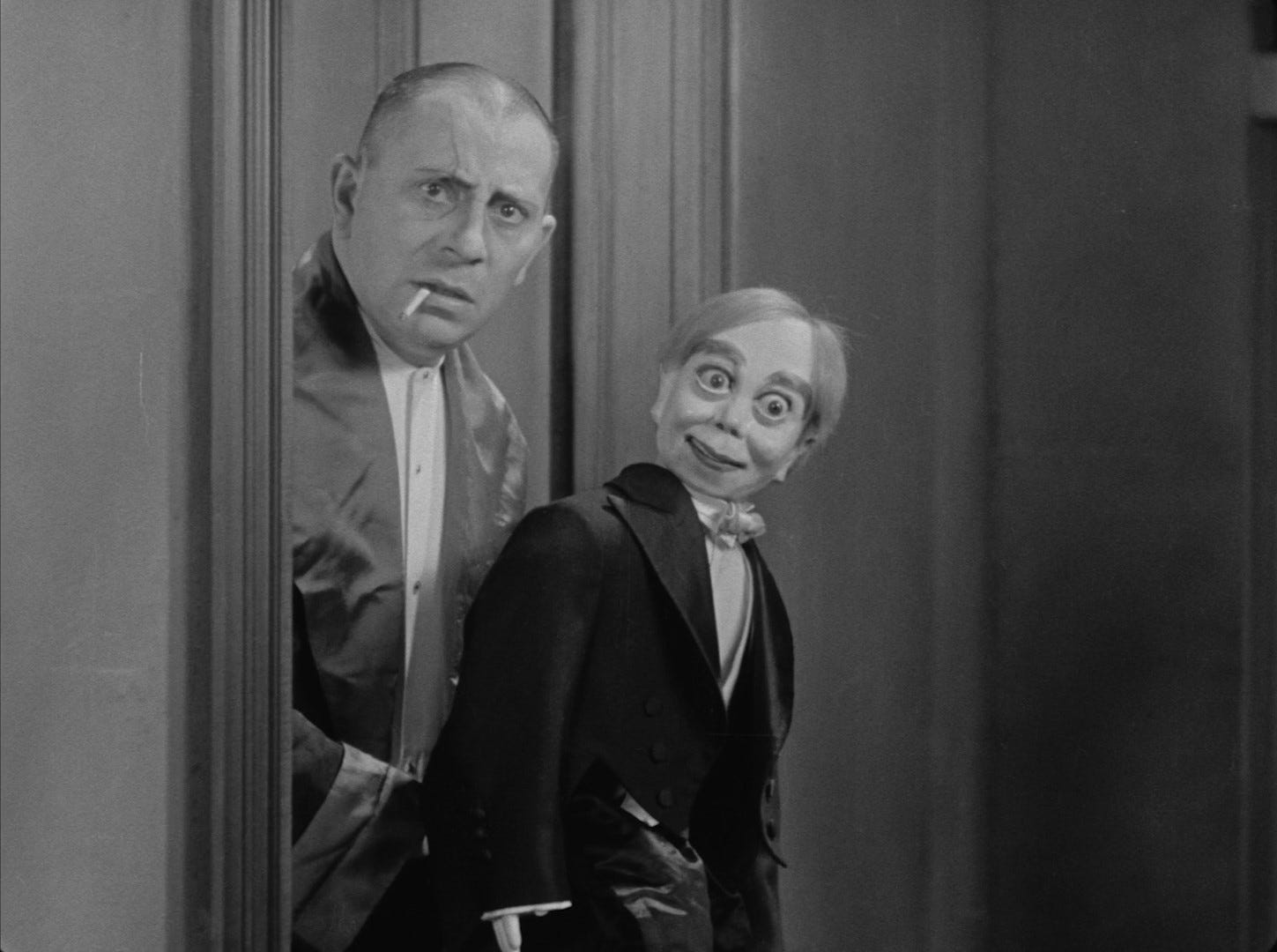
The film’s story focuses on the brilliant, but obnoxious, ventriloquist Gabbo who increasingly uses his dummy “Otto” as a conduit for his true feelings and beliefs. Despite Gabbo’s astonishing ability to make Otto talk and sing while he smokes, drinks, and eats, the film opens with Gabbo playing to small audiences in flea-pit venues. He takes his frustration out on his girlfriend and assistant Mary, who loves him, but is driven to leave by his megalomania, superstition, irritability, and cruelty. Her biggest regret is in leaving Otto through whom she believes she can see Gabbo’s better nature.
Two years later Gabbo has become a nationally renowned ventriloquist, revered for his talent, but still pining for Mary, who is now romantically involved with another singer/dancer, Frank. With both Mary and Frank performing in a show in which Gabbo is the headliner, he attempts to win her back. Despite some initial success Mary remains committed to Frank, causing Gabbo to spiral from eccentricity to complete madness.
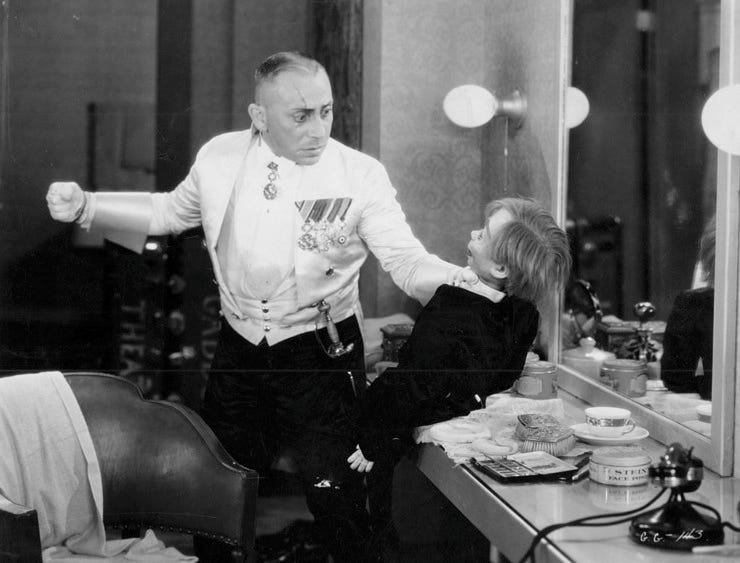
In anger and frustration Gabbo punches Otto in the face, disfiguring him, before storming onstage and creating the violence and mayhem that effectively ends his career. Gabbo walks off into oblivion, carrying his disfigured dummy and muttering to himself, likely to never be seen again.
The film interweaves stark drama with quite elaborate full-length, large-scale, on-stage musical production numbers. The film’s relentless energy is driven in large part by these song and dance numbers but also by Von Stroheim’s performance. His overt self importance, his demeanour (that resembles that of a Prussian army officer) and his offensive behaviour are compelling rather than endearing, as he struts around, slurping his coffee, constantly complaining and bragging. His Gabbo is a gluttonous, showbiz animal, whose supreme confidence in his talent leads to him treating his audience as an annoyance.
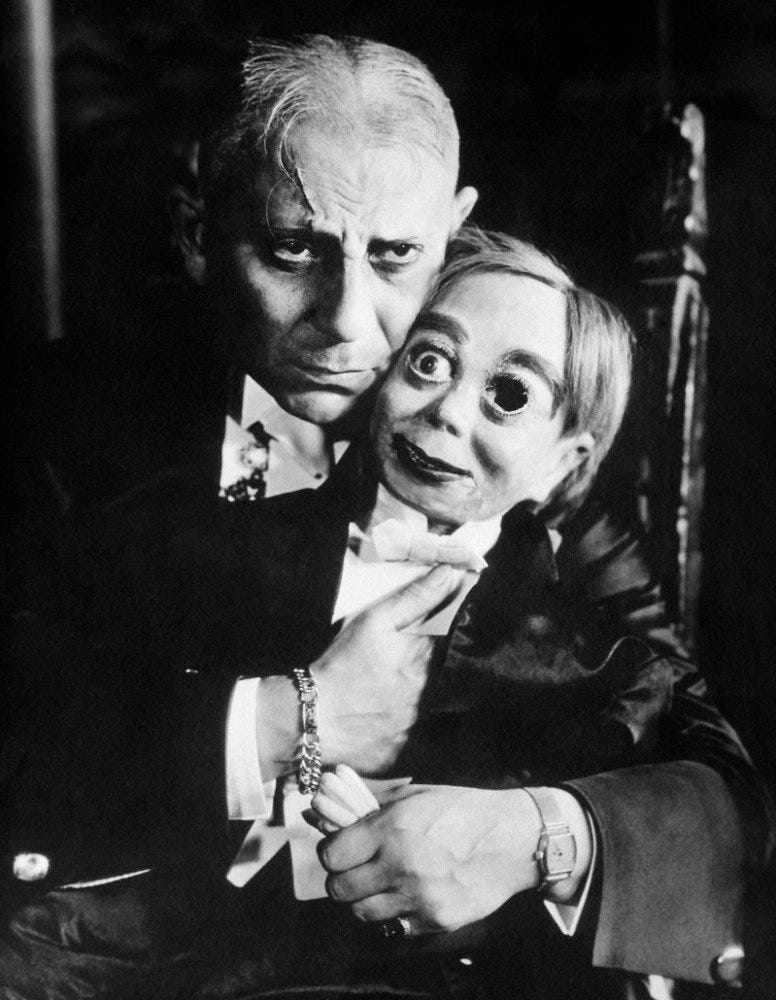
The character of Gabbo is resurrected in the eyes of the audience at the point of his downfall. After behaving as an appalling brute for almost the entire film, by the time of his meltdown we are given an insight into the pain of his existence at which we pity him for his suffering and the knowledge he doesn’t have the character to rise above it.
The production manages to create a believable and spectacular Broadway revue, which is impressive given the significant constraints that would have existed working for a poverty row studio like Sono-Art. The film opened to lukewarm reviews and although Von Stroheim’s performance was praised, the film did nothing to further his career.
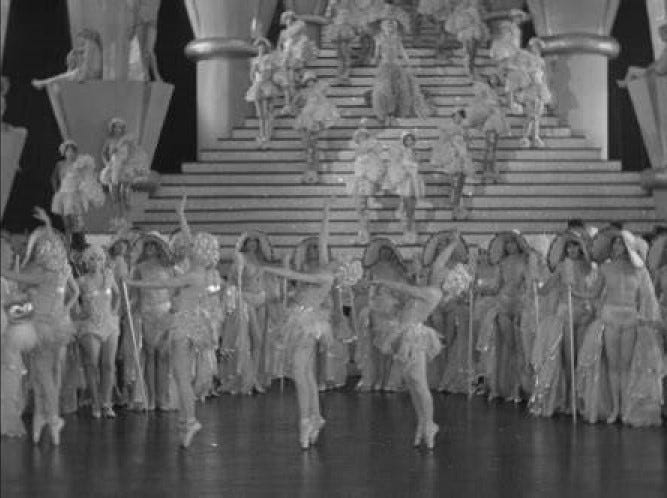
The original film ran 96 minutes, including the exit music, and survives in a number of forms of different lengths, but what seems to have been lost is the colour sequences that Cruze experimented with. But this doesn’t adversely affect the film we can see today.
Since the making of The Great Gabbo many films have turned their eye on the performing arts and have featured troubled and troubling central characters with great success. Whether this film’s difficulties were a result of being among the first of its kind, or just ahead of its time, it has attracted more interest in the years after it flopped at the box office.
What’s interesting about looking back on films long after they were made is what you can see, or imagine, with the benefit of hindsight. It is tempting to see the film as commentary on how Hollywood treated Von Stroheim or even his character as a caricature of the person he was. The same commentary surrounds Von Stroheim’s appearance in Sunset Boulevard as the madly devoted and long forgotten director from the silent era.
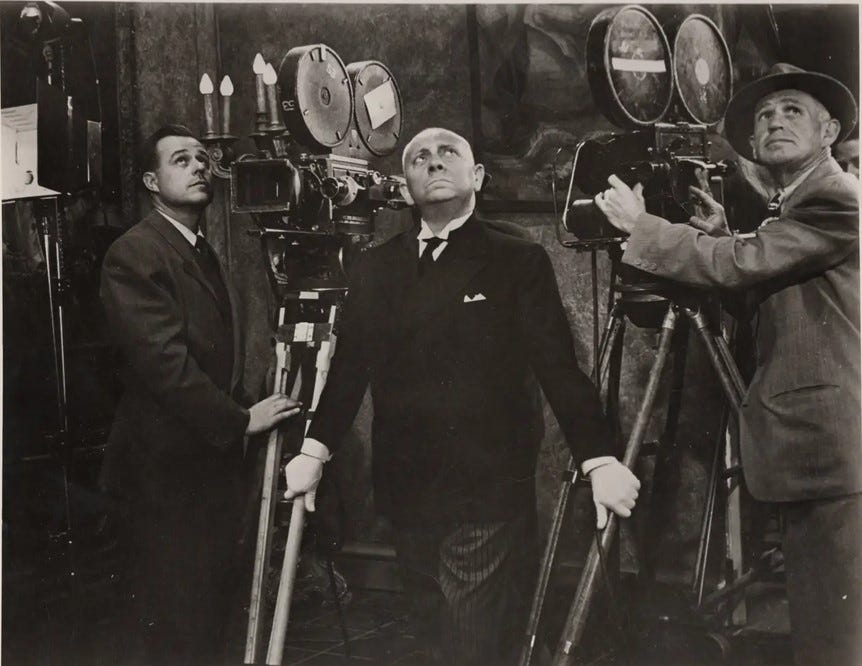
Von Stroheim’s biographers have said that he often took Otto home with him after shooting, and for many years wanted to remake the film, which could be seen as another example of supposed madness of Von Stroheim.
If the name Gabbo rings a bell it is probably due to The Simpsons and the episode “Krusty Gets Kancelled”. Gabbo is the name of a walking, talking, singing (and borderline evil) dummy who works with a man named Arthur Crandall. Gabbo returned in later episodes where he was seen to have been ruined by scandal and left to do performances at casinos and other low-rent locales. It’s a similar story with the roles of the ventriloquist and his dummy reversed.
Comments
Nothing yet. Say the first thing.
Sign in to join the conversation.