
It seems only fair that a Substack entitled Progress & Survival should contain at least one post about that much-maligned musical genre Prog (or Progressive) Rock, a form that has survived far longer than most its critics thought possible.
But don’t click away just yet: this is a much broader piece about music inspired by a glut of concerts I’ve been fortunate to attend over the last two weeks. It’s long, but if you love music, then read on.
My odyssey began in Regent’s Park a couple of weekends ago, when I attended the final concert of the Regent’s Park Music Festival, a lovely small festival that this year celebrated its tenth birthday.
I had returned my ticket for Wagner’s Tristan und Isolde at the Barbican in order to go, and as I made my way around the Inner Circle I briefly wondered about my choice. I needn’t have worried, although after reading Hugh Canning’s excellent review of the Tristan, I did rather wish I could have been in both places at once.
Having found my seat in the lovely garden of St John’s Lodge, refreshing G&T in hand, sun crossing the sky above the stage, we were treated to a fabulous programme by the Orchestra for the Earth under the baton of its founder and artistic director, John Warner.
Carrying the title, Music in the Secret Garden, it included Dvořák’s 9th Symphony, From the New World, punctuated by shorter pieces shaped, as the programme says, ‘by the relationship between folk song and landscape: the idea of music carrying the memory of a place’ - a sentiment that inspired much of the great Czech composer’s output.
There were lovely pieces by Bartok and Manuel de Falla, as well as a selection from Dvořák’s own Gypsy Songs. Three British composers also featured: Vaughan Williams’ sublime The Lark Ascending was wonderful, with beautiful playing by the soloist Lana Trotovšek. I wasn’t the only audience member looking skyward in the hope of a rare sighting.
Ordinarily the highlight for me would have been seeing Sir Karl Jenkins mount the stage to conduct the first movement of his concerto grosso, Palladio, a fabulous piece. But I was really there to hear what may well have been the world premiere of Richard Stoker’s Pastoral for Oboe and Strings.
Readers of longstanding may remember my piece about my friend Gill Stoker who died in 2024. She and I set up a charity to promote Richard’s music after his death in 2021, and since she died I have taken over the running of the Richard Stoker Trust. Its archive may yet unearth evidence of a previous performance of the Pastoral, but I’ve yet to find any.
As John Warner said while introducing the piece, Richard’s music is undergoing something of a renaissance. It has recently been performed by the clarinettist Emma Johnson, and by the Waldstein Trio. Some of Richard’s songs have been used by Matthew Rose at his Tosti Academy summer school for young opera singers. And John’s orchestra has performed three different compositions of Richard’s over the summer. The Pastoral didn’t sound at all out of place in such illustrious company. I only wish Richard and Gill could have been there to hear it.
At home later that evening, I was shouting at my phone for once again turning on my google feed, which I’ve tried to turn off countless times, when I was distracted by a story about the late Keith Emerson, musical genius behind the prog rock group Emerson, Lake and Palmer.
ELP fans will know that back the 1970s, the band built its name with a number of stadium-rock versions of classical pieces, most notably Aaron Copland’s Fanfare for the Common Man. The story I’d been fed was about the BBC Proms and the fact that, the following Saturday, the Royal Albert Hall would be hosting the first ever ‘Prog Rock Prom’.
Now, every year I get a copy of the Proms programme, choose the events I’d like to attend, and book tickets pretty much as soon as they go on sale. This year — don’t ask me why — I didn’t. Disaster: not only was the Prog Rock Prom showcasing new orchestral arrangements of songs by some of my favourite bands, it appeared I’d also missed the chance to see my all-time favourite artist, Peter Hammill, sing live at the Royal Albert Hall.
Almost hysterical, I pulled up the Albert Hall website only to find the concert was sold out. I clicked on the ‘Returns Only’ button more in frustration than hope, but to my amazement there was one seat available in the entire place, which I duly snapped up.
But before the prom on Saturday, we headed down to Glyndebourne (on my birthday) to see the revival of Michael Grandage’s 2010 production of Benjamin Britten’s Billy Budd. I love Britten, especially his operas, but I’d never seen Billy Budd.
An opera at Glyndebourne is the best imaginable birthday treat, and if E.M. Forster’s libretto (based on the novella by Herman Melville) telling the tragic story of an idealistic young sailor press-ganged onto a British Man O’ War as it engages the French navy during the 1797 War, was not especially upbeat; the production, the playing of the London Philharmonic under Nicholas Carter, and the singing were all masterful.
Alan Clayton in particular, as the conflicted moral exemplar, Captain Vere, is a tenor right at the top of his game. It was my first time seeing the young British baritone Thomas Mole sing a major role, as Billy Budd; he is surely a star of the future. And Clive Bayley, as the old hand who takes Billy under his wing, sang beautifully, as he always does.
Back in London, I headed off to the Royal Albert Hall with a spring in my step. Taking my front row seat in a grand tier box, I had a perfect side view of the stage. This was only the second prom of the season, and in what may be a first, the second night opened with the same piece as the first night, Copland’s Fanfare.
Except this was a new arrangement, based on ELP’s reworking of the original. The BBC Concert Orchestra under Robert Ames delivered it superbly, with Carl Palmer playing drums with the energy of someone half his age, and even counting in the conductor on a couple of occasions.
The night was curated and compered by BBC 6 Music’s Stuart Maconie who hit the nail on the head as he introduced the evening: ‘For years, a fondness for Progressive Rock was the love that dare not speak its name.’
It’s true: back in the late 1970s, when I went to my first gigs (in order and within six weeks of each other: Genesis, Peter Gabriel and Greg Lake) prog was musical marmite: those of us who loved it simply couldn’t understand the loathing of those who didn’t.
You can check out the full programme on the Proms website. Orchestrations for the twenty-one pieces were shared among seven arrangers, and they were all excellent. The whole point of Prog is that it leaves little space for improvisation or the addition of further rhetorical flourishes. About as much that can be done with the music already has been. But each new arrangement made fabulous use of the orchestra, none more so than the excerpt from Mike Oldfield’s Tubular Bells, which concluded the first half.
I thought the instrumental pieces were generally better than the songs. I especially enjoyed Soft Machine’s Out-Bloody-Rageous - Part 1 from their remarkable 1971 album, Third, released a year before Sir Karl Jenkins joined them for the first of his three stints.
Some might baulk at the inclusion of Osibisa in a Prog concert, but if you’d seen them at Ronnie Scott’s in 2021 as I did, then you’d understand Maconie’s thinking. Christian Balvigs’ brilliantly arranged medley of their Komfo, alongside Sylvia by Focus and Peaches en Regalia, my favourite Frank Zappa tune, reminded us that while its origins were firmly British, prog’s influence quickly became global.
The guest vocalists made a decent fist of a difficult job, although Gruff Rhys, first up with Jethro Tull’s Living in the Past, appeared woefully under-rehearsed. Thankfully he made a better job of The Incredible String Band’s Maker of Islands. Jane Weaver’s light, pure soprano was a little underpowered for Nights in White Satin, though she sang Northern Lights by Renaissance beautifully. And her duet with Guy Garvey on Genesis’s Entangled, which Christina Patterson would have loved, was sublime.
Garvey gave a great interpretation of I know what I like, and did a decent job with King Crimson’s uber-difficult In the Court of the Crimson King. The Staves sang wonderfully each time they were called on to provide backing vocals, and on their own in a brilliant version of And You and I by Yes.
But the highlight of the evening for me, as it was always going to be given that I’ve seen him perform live more that fifty times since 1983, was Peter Hammill singing Van Der Graaf Generator’s Refugees. You likely won’t have heard of Peter, or the band he founded back in 1968, but he and they have a devoted following around the world.
He last performed at the Royal Albert Hall in 1969, when VdGG were invited to support Jimi Hendrix after a chance meeting in a pub. Saturday may well have been the first time he’s sung in front of six thousand people in 57 years.
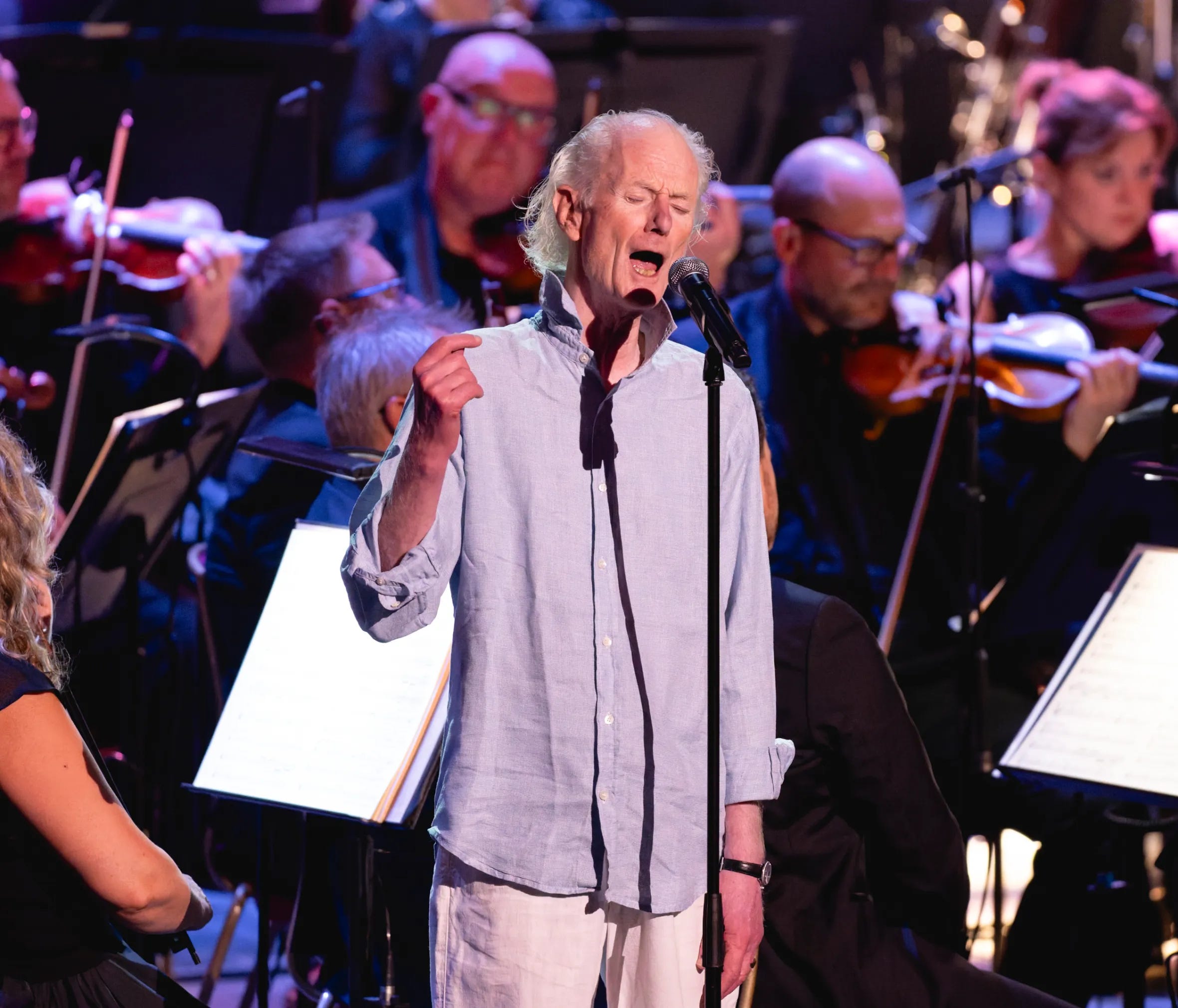
He looked as thrilled as I was to be there, and gave a superb performance. Refugees is a regular encore when he performs these days, but it sounded better than ever in Adam Dennis’s superb arrangement, with the BBC Concert Orchestra in full flow. As John Bungey said in his review for The Times: ‘At 77 [Peter] was in mighty voice singing the poignant Refugees.’
In the not inconsiderable press coverage, much was made of Prog’s classical connections. As my musical menu this fortnight suggests, ELP and Sir Karl Jenkins provide the most obvious links between the two. But I have no doubt that my own love of classical music, and especially the operas of Wagner and Verdi, has its roots in those early albums by Van der Graaf Generator, Genesis and King Crimson.
Much has also been made of how punk emerged as a more authentic, even working class, reaction to the excesses of Prog; Johnny Rotten famously saying that the Sex Pistols hated Pink Floyd. It’s less often mentioned that Mr Lydon has cited Peter Hammill as a strong influence. If you want to discover the origins of punk, don’t listen to Never Mind the Bollocks; listen instead to Hammill’s solo output from 1974 and 1975. You’ll be surprised.
It was a little disappointing that of the grand old men and women of Prog, only Carl Palmer and Peter Hammill showed up on the night. Many are no longer with us of course, including Palmer’s two bandmates in ELP. But plenty are, and surely they must have been invited to take part?
What a party it would have been had Peter Gabriel, Robert Fripp, Thijs van Leer, Rick Wakeman and Andrew Latimer been there. Latimer was the driving force behind Camel, and their non-inclusion is the only bone I have to pick with Stuart Maconie.
I’m agnostic on the question of whether the world’s foremost classical festival should give up so many slots to non-classical music. In recent years we’ve have jazz proms, a Dr Who prom, a gaming prom, and even a Traitors prom (okay, the last of these is clearly beyond the pale). As a strategy for persuading more people of the delights of classical music, I think it’s a non-starter. But I’m not sure that’s the point, and I do think that at least some devotees of classical music might enjoy being introduced to other genres. And what better place to start that Prog Rock?
Like London buses, the gigs kept coming, although the contrast between the Prog Rock Prom and Tuesday evening’s concert at Wigmore Hall could not have been greater.
Sitting in the bar before the final instalment of Jean Rondeau’s residency, it was clear that we were among people who were very serious about their music. The programme that Rondeau had lined up for us was ancient music at its most authentic and ethereal. He is possibly the world’s leading exponent of one of the world’s oldest instruments: the Harpsichord. And on Tuesday evening he played it like I’ve never heard it played before.
The programme consisted mainly of Louis Couperin, topped off with a couple of Tombeaus by Jean Henry d’Anglebert and Ennemond Gaultier.
This was French music from the 17th century, played as it would have been in the court of the Sun King, Louis XIV. Over 75 minutes we were transported to another world. The music was incredibly complex, but so beautiful it might have been composed by angels, and Rondeau’s execution was impeccable; he even kept playing with his right hand while he was obliged to re-tune a string with his left.
With his long hair and beard, he looks and moves like Christ on his way to the cross, so it was a relief when he came back on stage to talk to the audience and reveal himself as someone whose life is completely dedicated to the music he plays, and finding new audiences for it. I for one, shall certainly be exploring more of this wonderful music.
No rest for the wicked as, on Tuesday evening, I set off to see my favourite among the current crop of new English bands making fabulous, original music: Black Country, New Road.
In his programme notes for the Prog Rock Prom, Stuart Maconie mentioned that in a recent interview with the band, Georgia Ellery had told him that she had great affection for Prog. Which perhaps goes some way to explaining why they are the only band who, in their frequent instrumental stretches, remind me of what VdGG were doing back in the early seventies. If you want an example, listen to the original version of Dancers from their 2023 album, Live at Bush Hall.
For their return to London they were playing outdoors at Somerset House, part of that venue’s excellent Summer series. It’s a lovely place to listen to live music. This was their fiftieth gig across four continents since I last saw them in Brixton last October. And boy did it show. Their stagecraft, their control of the material — like may of the Prog greats, their songs are not easy to play — and their embrace of vocal improvisation, especially by the remarkable Tyler Hyde, were all excellent.
There were confused looks among the many twentysomethings present when they opened the set with a great cover of Wings’ classic Band on the Run, but thenceforward they stuck to their own material playing most of Forever Howling with huge confidence, supplemented by an intriguing slow version of Dancers, and the sublime Pigs/Turbines, which May Kershaw delivered with Keith Emerson-like grandeur.
And it was the first live performance of their new song, Strangers, for me, which was released back in March on the new double album in support of Warchild, Help 2, to which a remarkable line up of artists — including Damon Albarn, Pulp, English Teacher, Olivia Rodrigo and The Last Dinner Party — contributed tracks.
Over the last year they have regularly performed a fabulous cover of Big Star’s classic 1972 song, The Ballad of El Goodo, which Tyler introduced as the kind of song they’d like to write going forward. That ambition is off to a flying start with Strangers, a song that might so easily have emerged from the early 1970s California scene; but also has that unique Black Country, New Road sound in spades.
All in all great gig. Even the beer wasn’t overpriced. They’re back to Europe for most of August and North America again in October, before a fascinating-looking concert at the London Coliseum in November when they will be teaming up with the Orchestra of English National Opera. Another example of prog-classical crossover.
We probably wouldn’t have gone to see James Taylor at the O2 arena last evening had friends of ours who were going not asked for a bed for the night. (We are a short bus ride from the world’s most successful music venue.) But I am so glad we decided to go with them.
Born the same year as Peter Hammill, at 78 Taylor is still a remarkable performer, his voice as good as ever; his between-song commentary brilliantly humorous, and his backing band as good as any I’ve seen since Leonard Cohen graced the O2 stage nearly two decades ago.
Taylor’s music is quintessentially American, and reminds us just how much that once-great nation has contributed to western popular culture over the last century. There is nothing complex about his songs: they just tell enduring human stories backed by sublime tunes. 15,000 people in the O2 arena were in ecstasy, but the happiest man in the place was James Taylor.
The highlight for me came towards the end of his set when he sang the beautiful Fire and Rain, the song that launched Taylor’s career back in 1970. And a song that provides a neat link back to where we began with Richard Stoker.
If you read my earlier piece about Richard’s wife, Gill, you may remember that after she died, I found amongst her possessions the recordings she had made with Richard after she responded to his advert for a jazz singer. None of her friends or relatives had ever heard any of these recordings. The one I chose for Gill’s funeral was her stunning version of Fire and Rain: you can imagine how I felt when James Taylor sang it last night.
The Radio 3 live broadcast of the Prog Prom is available on BBC Sounds now. And the Prom will be broadcast on BBC4 tonight at 7pm. This may be the first time Peter Hammill has appeared on British Television since he sang Tintagel by the Sea on Playaway back in 1979. Yes, it’s true: you can check it out here.
Update, 27th July
I’m delighted that not only did Stuart Maconie read my review of his prom, but he took the trouble to respond to my questions:
“Thanks for your thoughtful review. I did ask several of the people that you mentioned and received many gracious enthusiastic replies and apologies from the likes of Ian Anderson Peter Gabriel et cetera who were either away on holiday or hearteningly playing gigs elsewhere that night in Europe…..
…. also a selection from The Snow Goose was in my original thinking (see also Caravan etc) But in the end, it came down to getting the right mix of famous, obscure ‘immediate’ and deep cut, the voices, and the fact that there was no way I was not including some Gentle Giant!”
If you enjoyed this piece, who not check out these other music-inspired pieces of mine?
Something magnificent in Bethnal Green
·
March 5, 2025
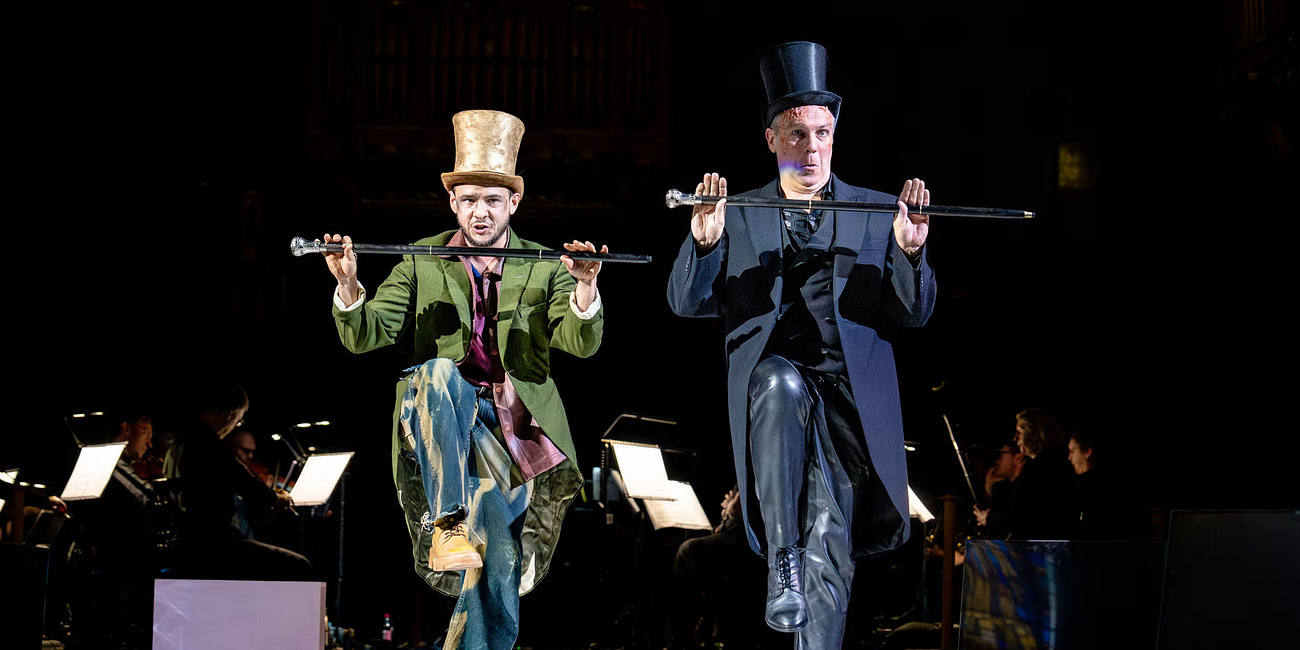
For most of us, Covid-19, with its attendant lockdowns, is not something we want to remember. But five years on, the culmination of one of its few silver linings has just been realised at an illustrious boxing venue in London’s East End.
The Boss vs The Master
·
August 7, 2024
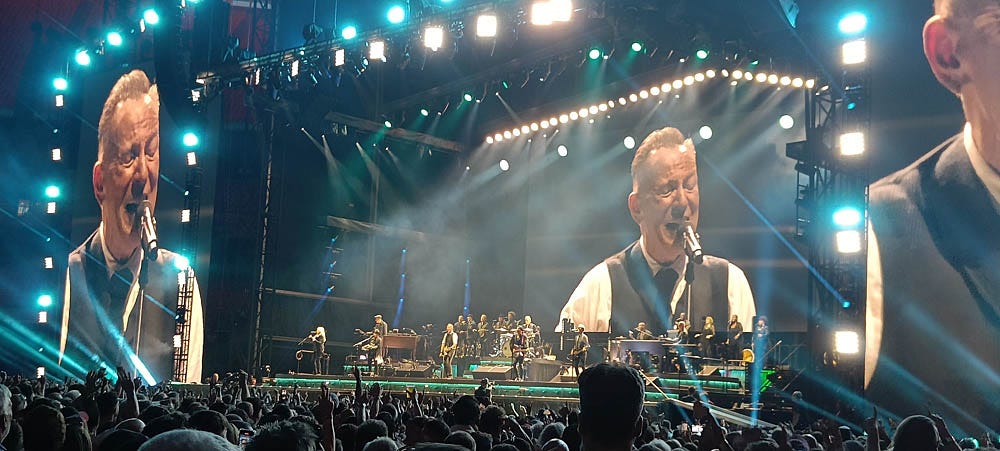
Regular readers may remember this piece from last year: having seen The Blue Aeroplanes at the Electric Ball Room and Wagner’s Das Rheingold at the Royal Opera House in the same week, I wondered if anyone else had been at both events and then attempted to compare the creative proces…
Sacred Music
·
January 19, 2024

Last month at the London Coliseum, Max Richter gave a sold out charity performance of his 2020 composition Voices to mark the 75th Anniversary of The Universal Declaration of Human Rights.
The Blue Aeroplanes (and Wagner)
·
October 6, 2023
As I bounced around the Electric Ballroom in Camden Town last Friday evening to the frenzied sound of The Blue Aeroplanes (believe me, they’re the best band you’ve never heard of) I looked around at the other 50 and 60-somethings behaving as if they were still 19, and wondered if I was the only person present who had al…
The Tragedy of Claude Vivier
·
September 19, 2023
Whenever I spot a piece by the Canadian composer Claude Vivier on the programme of a concert I’m attending, as I read the progamme notes and look him up on Wikipedia, I am reminded of his tragic, short life, and wonder about the connection (if any) between his dreadful childhood and his undoubted genius.
Comments
Nothing yet. Say the first thing.
Sign in to join the conversation.