

After years spent chipping away at our attention spans, internet culture now claims it can make our brains stronger. The cure? As an answer to brainrot, Oxford’s 2024 Word of the Year, brainmaxxing has emerged. Could social media culture be developing its own antibodies?
If our attention has become fragmented, perhaps we simply need to retrain it. After years of consuming the cognitive equivalent of fast food, maybe it’s time to give our minds something more substantial to feed on. That’s the idea behind Deepstash, an app that promises to replace doomscrolling with microlearning, notably through summaries of bestselling self-help books. With more than 5 million downloads and Google searches at an all-time high (110,000 searches in June and July), the promise of becoming more knowledgeable has never been more popular.
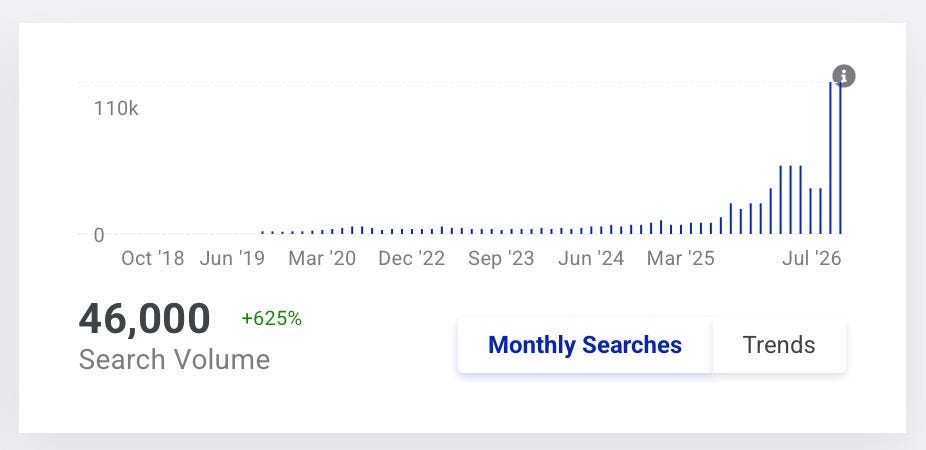
Reading more worthwhile content, exercising our memory, rebuilding our ability to focus, learning instead of scrolling endlessly and mindlessly... it is hard not to see this as a change for the better, isn’t it? At least on the surface. Because the underlying philosophy has not shifted an inch. The goal is still, as ever, to optimize everything, right down to our own brains.
Does that mean we should dismiss the app altogether? In a recent LinkedIn post, Vincenzo Vinzi, President of ESSEC Business School, one of France’s leading business schools, captures part of the debate currently unfolding. If machines increasingly accumulate knowledge on our behalf, he argues, the value of human intelligence will have to lie elsewhere. What matters now is our ability to frame a problem and exercise enough judgment to “recognize, among mountains of data, the one question that is truly worth asking.”
Fair enough. But at what point does outsourcing knowledge begin to erode our own judgment? After all, judgment does not develop in a vacuum. Looking something up when we need it is not quite the same as already knowing it, or at least having enough reference points to put it into perspective.
Those reference points have another virtue: they can resurface when we least expect them. Proust captured something of this phenomenon through involuntary memory, although his intuition was primarily sensory. The point is that we cannot frame meaningful questions without a body of knowledge to draw on, just as judgment does not transfer easily from a subject we understand to one we know nothing about. And perhaps this is where AI reshuffles the deck. We may need less general knowledge to find answers, but we will need just as much to make the connections that lead us to the right questions and to judge the value of the answers we get.
Should we all rush to download Deepstash, then? If you already spend your days scrolling through videos of Tung Tung Tung Sahur and the various offspring of Italian Brainrot, it’s clearly an upgrade. I’m even tempted to say: go for it! But in trying to extract the key idea or takeaway, the app decides for us what can safely be left by the wayside, at the risk of standardizing what we retain. Unless, of course, hyper-personalization solves the problem: everyone gets their own tailor-made version of what is “essential”…
But is what suits us best always what we need most? In our eagerness to cut to the chase, we may end up eliminating precisely what makes the journey worthwhile: what we never set out to find in the first place. “It’s not the destination that matters, but the journey,” as the saying goes. We might as well take it literally and keep going…
There is something strange about the way we don’t always know what matters while we are living through it. Something insignificant today may not be insignificant tomorrow. It might be an ordinary conversation that, only later, we realize was the last one. A shattering moment whose words we have forgotten, while somehow remembering the wallpaper in the room. And sometimes it isn’t even a question of importance. Meaning itself can be turned on its head. Today’s “I really screwed up” becomes, ten years later, “the best mistake I ever made.” And yesterday’s “I was happy,” in light of what came next, sometimes acquires a quiet qualification: “or at least I thought I was.”
And that points to a far more vertiginous limitation for any technology that might claim to sort the world on our behalf, doesn’t it? The question is no longer simply whether it knows us well enough to determine what matters to us today. How could it possibly know what will matter to us tomorrow, when that may depend on events that haven’t happened yet, or simply on our own transformation, on who we will have become?
Which brings me back to a short story by Stefan Zweig, The Invisible Collection, which, rather curiously, came back to me as I was writing these lines. It tells the story of an elderly collector who has gone blind and receives a visit from an art dealer who has come to admire the prints to which he has devoted his life. What he doesn’t know is that his family, ruined by inflation, has gradually sold them off without ever daring to tell him, replacing them in their portfolios with worthless sheets of paper. And yet he still handles them with delight, remembers each one in precise detail, and recounts how he found it and how long it took him to acquire it. Faced with his enthusiasm, the dealer realizes what has happened and chooses not to reveal the truth.
It can be read as a parable about illusion, raising the question of whether a painful truth should always be preferred to a lie that preserves us. Or as the story of a blind man who, perhaps, sees more clearly than everyone else. But what I see above all is the story of a man who has lost everything without losing anything essential. In his home, the portfolios are empty, but they have done their work. In ours, saturated with summaries and “maximized” ideas, the portfolios are overflowing. But what remains once the screens go dark? What truly stays with us?
MD
No posts
Comments
Nothing yet. Say the first thing.
Sign in to join the conversation.