
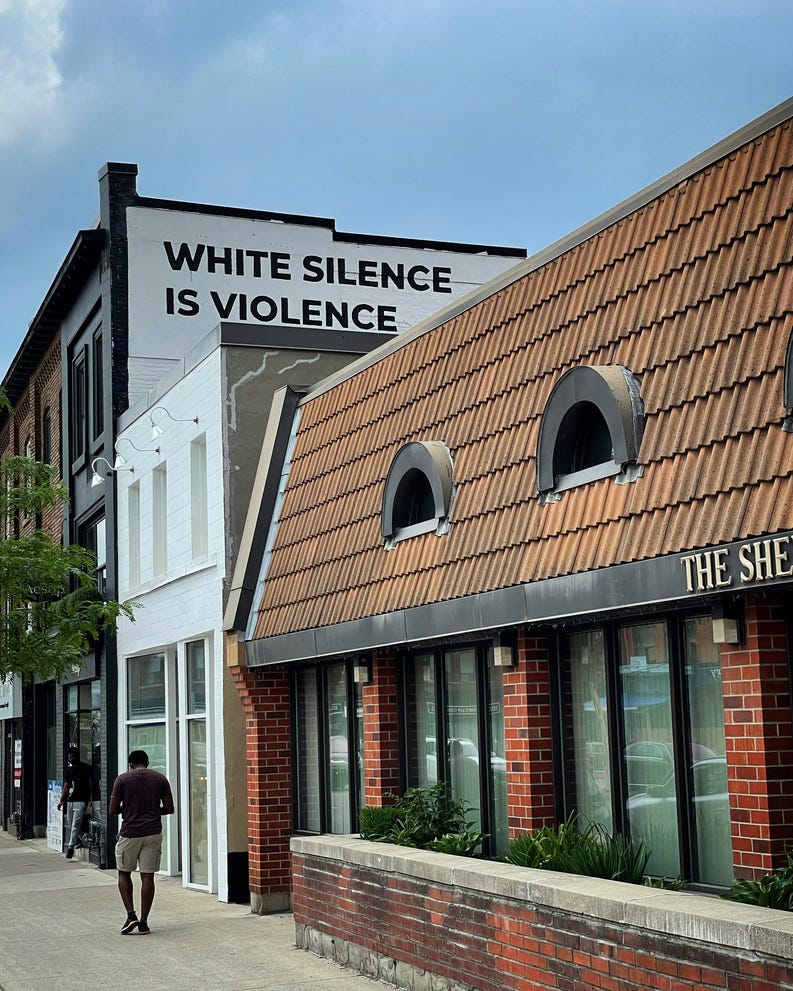
A perfectly plated brunch. A drone shot over a gorgeous coastline at golden hour. A “day in my life” that unfolds like a cinematic film: coffee, skincare, errands, laughter, soft lighting, and lies.
For over a decade now, I have been studying the steady influx of influencer culture, paying close attention to how it responds under pressure, or when its premise and legitimacy is challenged. In a world where we are actively living through pandemics, genocides, escalating fascisms, political unrest, the ever-present flirtation with nuclear catastrophe, online influencer content just keeps on being churned out, to feed insatiable algorithms with filters, captions and monetization.
This persistence is often framed as “harmless joy” which is then reframed as both resistance, and resilience, in hard times. If, like me, you take off the delusion goggles and look beneath the surface, if you have trained yourself to read between the lines, then perhaps we will both agree that the “apolitical” influencer is not apolitical at all. They are simply political in a way that protects their income, and their brand safety, and that right there also gives us a really good look into their politics, and the frameworks within which they are functioning, and rendering their work legitimate.
A familiar script appears whenever influencers are urged to acknowledge injustice.
My page is not political. I don’t do politics on my platform.
There’s the overtly political, sure! But I am more interested in understanding the politics that is carefully omitted. Politics being normalized through repetition. Politics determining which group’s oppression is considered “too heavy” “too much” for the feed, and which oppressing group’s national pride is allowed, even encouraged to be celebrated, without question. The decision to keep going, keep posting, as if nothing alarming is happening in the world around us, is a deeply political decision.
Influencer culture in some ways, can be a mirror of society, and serves as a mechanism of perception management. Over time, the culture trains audiences, in what to pay attention to and what to tune out, or rather, opt out from altogether. Due to the deceivingly innocent packaging influencer culture comes in: lifestyle, food, travel, daily observations, it works, rather successfully. Back in the day, they’d say “sex sells.” Today’s biggest commodity is: relatability.
When we think about propaganda, what comes to mind? Usually folks will imagine old-school posters, official broadcasts and overt state messaging, without paying attention to contemporary propaganda being artfully presented to us as “good vibes only.”
Influencer culture operates within the logic of an unnamed power: the ability of a nation-state (or a nationalist project) to shape desire, legitimacy, belonging and identification, without appearing coercive. Influencers operating within influencer culture, do not need to wave a nation’s flag in our faces constantly. They simply need to produce, repeat and regurgitate a continuous, consistent aesthetic under which the nation appears wholesome, welcoming, aspirational, progressive and uncomplicated.
A country then, with its cities and towns, beaches and parks, transforms into a lifestyle product. The interruption of this fantasy, such as highlighting occupation, caste violence, surveillance, land theft, militarization, forced displacement, racist policy, mass death, must be edited out at all costs, not necessarily out of willful ignorance, or naiveté, but as a very clear “brand” strategy. The feed has to remain sellable and to remain sellable, it must be relatable, and to remain relatable, the audience/consumer must remain comfortable.
The influencer culture effect is political even, and especially when, the creator insists their platform is apolitical or neutral.
Allow me to illustrate with examples, without naming influencers operating within influencer culture, because I am not interested in defamation, nor do I believe this is an individual problem. I am more interested in observing and recording patterns that have been emerging while studying the content uploaded by these creators.
There is a young, relatable woman, living in a coastal region of India, who built an audience around the aesthetics of affordability and ease. She records food deliveries to her home, usually dines against a stunning tree lined view, sometimes with her partner, and they put on a performance of what a slow-paced, relaxed and organic life can look like. The content is quite soothing, and can make one forget that the world is on fire.
However, there’s a lot missing from her frame, and her choice in framing is itself not neutral by any means. The region she lives in has been hosting a significant influx of Israelis, including individuals who have served in the IDF, flocking there to “detox” after participating in war crimes, and the few Indian citizens who have called out this reality have been doxxed, attacked and some have also faced threats to their lives. She glides past this reality, smiles, eats, and continues to film her days.
Recently, I visited her page and noticed a change in her content. She posted about taking a trip with her partner and others, to watch a film in the cinema. Of all the brilliant, nuanced, cinematically breathtaking films she could have posted about, such as masterpieces by Deepa Mehta, Mira Nair, Neeraj Ghaywan, and others, she decided to share a film that is deeply entrenched in nationalist mythology, divisiveness, weaponization of trauma, and propaganda. In her post, she calls the film brilliant and expresses immense excitement for part two. Suddenly, the “my page isn’t political” curtain drops, and behind it a very familiar mise en scène is unveiled: an optical performance of outrage, empathy, and courage that is deeply selective.
Under the comments, this particular content creator’s very disappointed followers attempt to challenge her for promoting propaganda. She becomes quite defensive and pivots to highlighting terrorist attacks. She repeats the same script that states use when they need to justify harm and it becomes quite obvious, that her silence on many other issues wasn’t her lack of political frameworks. Silence was the essence of her political position, until the moment that nationalism needed her to raise her voice.
Across the border, in Pakistan, we see a related phenomenon. There is a fairly recent, but potent archive forming of foreign and domestic travel influencers being granted access to lands that the original custodians of those areas cannot safely access, or are actively restricted from. The content creators and influencers move through the country on a red carpet laid out for them, with all the perks, such as, escorted safety, curated hospitality, luxury accommodations, adventure tours and brand partnerships. The very communities being actively silenced, marginalized and oppressed, are suddenly highlighted, and exploited as representations of ethnic multiculturalism, and entertainment.
During the recent alarming Pakistan–India military escalations, (with direct implications for my family and loved ones back home) and strained political tensions, many influencers who otherwise insist on neutrality abruptly abandoned their apolitical posture. Accounts long dedicated to lifestyle content, fitness routines, food, comedy and travel, were all of a sudden saturated with militaristic rhetoric, calls for annihilation, casual references to nuclear warfare, and gleeful fantasies of mutual retaliation. The image of the snake eating itself crawls to mind.
Followers were gained and lost in real time as influencer platforms became battlegrounds for allegiance, aestheticized with memes, flags, songs and slogans. That our regional history includes one of the bloodiest colonial partitions and forced migrations in history, loss of life unimaginable, was of no significance. It took mere seconds of a cacophony of news clips, tweets and disinformation, for the predatory tools of fascism to saw through the collective. Content creators resorted to dehumanization of the “other,” glorification of state violence, and a total reduction of our complex histories into unhelpful binaries of loyalty and betrayal, all costumed as national pride. In these moments, the influencer’s earlier claims of neutrality revealed themselves as contingent rather than principled. Digital platforms once again demonstrated their capacity to transform personal brands into conduits for collective aggression, while profiteering off seeds of division.
During the ongoing crisis in Iran, where thousands of protesters have been killed, imprisoned, and/or disappeared for resisting an authoritarian regime, and where global attention has material consequences, several high-profile non-Iranian influencers, including at least one immensely successful brand founder with a global audience and ethical responsibility, demonstrated how influence can become actively harmful when divorced from lived political realities on ground.
The influencer’s dissemination of a pro-regime video, to millions of followers and fans, later retracted with an apology framed around intent, functioned as an accelerant within an already volatile transnational moment. Content shared under the guise of ignorance or “learning in public” amplified state narratives that Iranian activists have spent years risking their lives to dismantle. Diasporic communities have fractured further, tensions spilling into physical space, and reports have emerged of real-world confrontations and altercations at retail locations in Canada associated with the influencer’s brand. This escalating situation is evidence that influence does not remain online. When misused carelessly, it can and does ignite harm, far beyond the screen. Opining online without accountability, context, or alignment with those most at risk perpetuates harm, in the very real world.
Israeli and American influencers have also entered the stage, centring their own geopolitical fantasies rather than the safety, or self-determination, of Iranians themselves. Under the language of “solidarity” and “liberation,” they have repurposed the uprising as rhetorical fuel for pre-existing agendas, advocating for sanctions and military interventions, while remaining distanced from the material consequences such retaliation will have for people on ground. The crisis in Iran is yet another platform upon which influence is being performed, in alignment with foreign policy talking points, that have historically deepened instability and suffering.
When an influencer creates a post with virality as the primary goal, while disabling political commentary in their comments section, this very action defines narrative control. The audience is encouraged to consume the landscape without any nuanced context, and to accept a perfect performance of culture without facing any contradiction. The audience need not burden itself with questioning why certain communities are being disappeared, silenced, massacred and/or militarized against.
The idea of the nation as an untroubled product is packaged and sold back to us. Its effectiveness is further legitimized by a filtered aesthetic that makes it all look like it’s “just travel content” and nothing more. It’s not that deep. YOLO!
Across so-called Canada too, the flag, the maple leaf, white pop-culture references, brand partnerships and national pride are all being served in 30 second, patriotic clips on various social media platforms.
I am guessing brand ambassadors will not have much luck with their sponsors if they begin to use their platforms to highlight the alarming rise in racism and anti-immigrant rhetoric across the “great North.” The ongoing oppression of Indigenous communities and the reality of land theft doesn’t make for good content on the gram, now does it? Where is the mention of a healthcare system so degraded due to redirection of funding into private healthcare programs, and that people are dying while waiting to be seen in emergency rooms? Or that millions across the country are struggling with rising costs, food insecurity, quite literally on the brink of losing their homes.
The story must remain as pristine as the glossy immigration pamphlets. Clean streets, cozy cafes, stunning nature, “the best country in the world” with the mighty influencer serving up the perfect tourism board. With the threat of an American invasion lurking in the background, pro-Canada content is on steroids at this time.
While I do not align in the least with author, Chimamanda Ngozi Adichie’s views, on gender, and vehemently denounce transphobia, I once listened to her talk online before all the rightful backlash, where she said, “The problem with stereotypes is not that they are untrue, but that they are incomplete. They make one story become the only story”.
Influencer narratives function as incomplete truths, with selective frames cut, edited and copy/pasted to represent reality. Because the framing is skillfully curated with trending sound bytes, and eye-catching visual aesthetics, the consumer forgets to question what is missing.
We all, dangerously assume, that absence of any component, perhaps renders it to be benign.
There is a gendered component of the influencer culture phenomenon, a resurgence of so-called “traditional” domestic roles, often framed as slow living, femininity, homemaking, or “opting out” of chaos and crisis. Let’s bake through the madness!
On the surface, this content presents itself as a personal lifestyle choice with soft lighting, bougie kitchens, made from scratch meals, carefully styled children and spouses, and domestic bliss/serenity being sold as a brand strategy. Underneath the pastel aesthetics lies an ideological project. This genre of content routinely erases the structural conditions that make such lifestyles possible, for example, wealth, racial privilege, proximity to whiteness, inherited property, domestic labour outsourced to invisible others (usually migrant workers and/or asylum seekers) while romanticizing dependence, gender hierarchy, and a return to rigid social roles, the very roles our ancestors fought long and hard to free us from.
Nostalgia here, serves as a tool to further legitimize patriarchal, and often nationalist ideals, such as, the sanctified, heteronormative family unit, the obedient woman, the home as moral fortress against a corrupt, satanic world and procreation as the ultimate act of feminine divinity. In many cases, this content integrates seamlessly with far-right and ethno-nationalist imaginaries, where the “pure” home serves as a metaphor for the “pure” nation, and reproductive, unpaid labour becomes a political, capitalistic and religious duty.
Again, the refrain is familiar.
I’m not political. I just share my life. Good vibes only! You’re just jealous! Love and light!
The cumulative effect is unmistakably political, disciplining women’s aspirations, laundering regressive ideologies through beauty and domestic pleasure, erasing queer, feminist perspectives, and presenting deeply unequal, gendered arrangements as natural, and desirable.
The harm actively narrows the horizon of what is imaginable, particularly for young audiences, while disguising coercion and socialization, as choice.
Social media platforms are not neutral sites by any means.
Social media systems are engineered for engagement, and engagement thrives on identity, belonging, drama, rivalry and spectacle. Hyper-nationalism adapts quite well to this environment because it offers instant structure. Us/them, pride/shame, purity/threat, hero/terrorist.
Influencers, whether knowingly or not, are becoming part of a larger propaganda machine of megalomaniacs. They may not be receiving direct instructions from a state actor and there’s no doubt that some content creators genuinely believe they’re “just sharing my life.” But upon close examination of patterns emerging, their content often aligns with nationalist agendas because the algorithm rewards what nationalism produces: cohesion within a group, antagonism toward outsiders, romanticized origin stories, heroes of mythic proportions, and simplified enemies.
The active and deliberate choice to avoid politics can function as a political act when avoidance serves the status quo, and is often, in total compliance, with systemic imbalances and power structures.
My aim here is not to blame or psychoanalyze influencers operating within the very systems you and I are actively participating in, whether as creators, bystanders or consumers.
But, I do believe we can deploy stronger critical assessment skills and perhaps start with questioning why we are treating influencers as reliable narrators of reality.
Influencers cannot replace journalists or historians. Content creators have rarely undergone rigorous training in ethics, accountability, or fact-checking. They more often than not, have no awareness of harm reduction, and are not being peer-reviewed by a regulatory body. They are accountable to no one but their sponsors. Their incentives are aligned with attention, access, sponsorship, monetization and accelerated growth.
None of this is to say there aren’t brilliant thinkers building vibrant communities online, there are. Artists, political analysts, poets and creatives committed to educational work, debunking myths, tracing histories, widening the frame, refusing ideological narratives, dismantling power imbalances, making knowledge inclusive and accessible, holding world leaders accountable and opening the gates to awareness for the rest of us. The Mind Revolutionary, Liberation Tool Box, Brown History, Why Is That Racist, Brother Omid, Interstellar Isabellar, and so many more come to mind. Nuanced truth tellers who run in the opposite direction of the word influencer, adamantly refusing commodification of their identities and content.
Social media did not emerge as a nationalist propaganda engine by accident.
Its early promise, however naïve, was framed around connection, creative growth, democratized speech, and the circumvention of traditional gatekeepers.
What we are witnessing now is its consolidation with centralized and coercive platforms, heavily influenced by a small but powerful class of tech billionaires whose political and financial interests extend well beyond innovation.
Many of the globally renowned billionaires buying social media platforms en masse, maintain documented investments in surveillance and military technologies, detonating all illusions of neutrality.
Recent years have made this convergence harder to ignore. Major technology companies have invested in sophisticated surveillance, data-harvesting, and behavioural analysis tools under the banner of security and optimization.
Executives associated with lifestyle, streaming and entertainment platforms have publicly disclosed investments in weapons of mass destruction technologies.
Meta’s well-documented moderation practices during Israel’s genocide of Palestinians have demonstrated how algorithmic suppression, shadow-banning, and content removal can function as geopolitical alignment, rather than mere policy enforcement.
Similarly, shifting ownership structures and regulatory pressures around platforms like TikTok have been accompanied by explicit commitments to curtail content documenting Palestinian suffering, while aggressively policing critiques of Zionism, framed as safety, but operating as ideological containment, in full view.
In this context, influencer culture, far from operating within a neutral infrastructure, is being produced and legitimized within platforms whose underlying politics are increasingly aligned with state power, militarization, and surveillance capitalism.
What innocently appears as lifestyle content floating autonomously in the digital realm is, in reality, circulating through systems whose owners possess extraordinary power to shape visibility, culture, and even dissent itself.
If we are going to survive this era with our mental health and psychological well-being intact, we need to do the constant, and hard work of discernment, while also making every effort to take our power back as consumers.
When I come across a travel vlog, an influencer’s feed or a food and lifestyle page on any social media platform, I ask myself a set of questions:
What story is being framed here, and what is being left out?
Who benefits from this framing?
What kinds of comments are being allowed, and what comments are deleted?
Who is the creator engaging with, and who are they actively suppressing, ignoring, deleting, erasing?
When does the creator or influencer locate their courage to speak up, and what topic provokes them to take a stand?
When is the same influencer or creator silent, and what is perpetuating their silent position?
Whose suffering is treated as “too political,” and whose nationalism is treated as culture?
Is consent being manufactured to justify harm?
Which frames were erased, to present this content/narrative as symmetrical, pristine and relatable?
Perhaps, the most dangerous propaganda is a culture that feeds us comfort and “good vibes only” while the world bleeds off-screen.
No posts
Comments
Nothing yet. Say the first thing.
Sign in to join the conversation.