
I was a child with a wild imagination.
I grew up in a generation without gadgets tethered to our hands. Time spent in front of the television was carefully controlled, so the mind had no choice but to build its own worlds.
I’d open the lids of ornamental boxes and create entire worlds inside them, complete with characters and landscapes. When friends came over, I’d spin wild tales to captivate their attention. I’d say there were sharks in a tank perched on the roof, waiting to slither down the pipes and eat us through the shower if we weren’t careful, and everyone would be in fits of squeals and laughter.
There was a little alley behind my home, tangled with overgrown creepers and trees, and I’d lead cousins and friends on daring adventures through it, hand in hand, conjuring endless plot twists along the way.
Every new day felt like a movie set.
Once, I even crafted an elaborate story at school, telling teachers and students alike that I had spent the night in the hospital because my tonsils were swollen, and that, whilst there, the other younger patients and I colluded, and slipped sleeping pills into the nurses’ and doctors’ water, so we could explore the hospital wards freely without adult supervision. Needless to say, trouble followed quickly, because a friend’s parent called home to check on me after the supposed tonsil surgery, and my darling mother was left completely gobsmacked with confusion.
Imagination was how we survived childhood.
Imagination taught us to process trauma before we developed the language for what trauma was.
Imagination was how we lived through geo-political upheaval that made the adult world feel unstable, and strange.
Imagination was the one place where we were always safe, and sovereign.
The problem with our world is that imagination is allowed to flourish only until a certain age. Beyond that, we label it lying, fabrication, or exaggeration, rarely pausing to recognize the skill, the sheer talent it takes, to craft entire worlds and stories out of nothing.
I was performing in school plays from childhood all the way through to A-levels (equivalent to high school), exploring roles pertaining to comedy, drama, romance, thriller and everything in between.
I still remember the feeling of being at the receiving end of a thunderous standing ovation after a school play, performed in Urdu, over three nights. It is no easy feat, to move a room full of people. We absorb characters from scripts into our psyches, and then make them live in our bodies, by giving them life. Acting is an intimate act of storytelling supported by expression, movement, and presence.
This love of performance runs in my blood. My mother, in her small bedroom in Lahore, would transform domestic spaces into Mughal courts using fabrics, kitchen utensils and ordinary, every day household items. Entire royal processions consisting of neighbourhood children and school friends would unfold between the four walls of her abode. My Nana (maternal grandfather), stationed as a soldier in the British army, performed regularly on stage in military productions. It is evident that I originate from a lineage of storytellers, each passing their torch of creativity to the next family member.
Is creativity genetic or learned? I don’t really know. What I do know is that this particular flame was lit long before me, and I am merely its current keeper.
After completing my A-levels, the pursuit of acting as a career was discouraged. I understand why. The film and theatre industry is stained with a messy reputation, and for young women of colour, navigating a world designed to diminish them, the risks were high.
One look at Hollywood’s #MeToo movement lays bare a sordid underbelly that the industry spent decades glossing over with glamour. Beginning in 2017, the accounts that surfaced, spanning decades, implicating some of the most powerful men in film and television, confirmed the horror that countless women had endured, and grieved, for years.
The price of a career in acting was often extorted in rooms where unspeakable violations took place. For women of colour, the reality was even grimmer. They navigated predatory power and the additional challenge of racism, making them less likely to be believed and protected, and more likely to be discarded when they dared to speak up.
My parents, who steered me away from acting years ago, were trying to protect me and I don’t hold that vigilant level of care against them. I am also grateful for their protection, because I was indeed a very naive, young person, easily exploited and often taken advantage of.
So, I pursued a formal education in visual art at the persistence of my mother, and built a robust career that has spanned the past two decades. But every now and then, I’d meet an actor or a director who, mid-conversation, would say: “you know, you should be working in film. You have an expressive face the camera will love.” I’d usually laugh, and change the subject.
Then, I turned forty.
…and our forties can pave roads with immense clarity. This age hands you a permission slip. When cancer runs in the family, when you understand deep in your bones, that time is not unlimited, urgency transforms into a truly reliable compass.
I created a profile on a talent recruitment platform at the advice of a dear friend. I uploaded headshots and recorded voice reels across multiple tonal ranges. I uploaded footage of varied facial expressions, all recorded from the comfort of my home studio.
Then, I switched off the computer, and went to bed.
I woke up to a flood of emails. Emerging filmmakers, advertising agencies, even a Canadian government department, all seeking South Asian talent for their projects. One audition led to another. Believe it or not, I’ve landed dialogue-heavy lead roles in two films, as well as voiceover projects. I’m finding myself working on sets I’ve spent decades observing from behind the camera, except now I am in the frame. It feels so surreal. To think, this is just the beginning of yet another life adventure.
Performance is daunting, I will not pretend otherwise. Acting is laborious, the auditions and rehearsals are long, and filming days stretch into the night. But the joy. The joy. The world has a word for everything except the moment when a woman stops waiting for permission and steps, without apology, into the fullness of herself. Especially women of colour, and especially women over forty.
Research by Clemson University economists analyzing domestically produced American films from 1920 to 2011 found that by thirty, women held just 40% of leading roles, and past forty, that share collapsed to a mere 20%, while men claimed 80%. A separate study by the Annenberg Foundation’s Institute for Diversity and Empowerment, examining over 1,000 films released between 2007 and 2017, found that only 24.6% of women on screen were over forty at all. The industry, for all its celebrated storytelling, has never been particularly interested in telling ours.
The stats reveal ageism and sexism operating within institutional design. Women actors follow a conveyor belt. The “it” girl, love interest, whore, mother, grandmother, gone. For men, age means gravitas, but for us women, it has historically meant erasure.
There are certainly some noticeable shifts taking place.
Viola Davis, an actor who has spent her career illustrating how women of colour are denied their stories, says it way better than I can:
“The only thing that separates women of colour from anyone else is opportunity.”
She has also spoken of the generations of women before her, whose gifts went into the ground with them, uncelebrated and unexpressed. Davis refuses to add to that graveyard. “There’s got to be a voice deep within you that is untouched by definitions,” she says, “…and it is there that you become divinely who you are.”
Hannah Waddingham was 47 when she won her first major Hollywood award, after decades of theatre. When she won, The Female Quotient posted: “At 47, Hannah Waddingham is proving that success can be achieved at any age. Let’s all remember to rally around women who are pursuing their dreams throughout every phase of life.”
There is no expiration date on dreaming big, and I reject the premise that “it’s too late.”
So many women quietly shelve their dreams, especially after marriage and children, crushed under the weight of responsibility. Their dreams lie dormant in boxes, gathering dust. The world teaches women to leave those boxes unopened, and to be grateful, practical, grow up and not want too much.
I want too much. I have always wanted too much. And I’m never going to apologize for wanting too much. I want the whole darn cake. I will have it, and I will eat it too.
The version of me that stood on that stage for a school play, feeling the thunder of an audience’s applause, was far from a child playing pretend. She was an autonomous person discovering her dreams. Despite decades of detours, the dream was always there, waiting to be freed.
Imagination, I have found, thrives under pressure. I have tested this across pandemics, grief, the loss of a parent, amidst every crisis the world has managed to produce. Under pressure, imagination, quite literally, ignites.
I am forty.
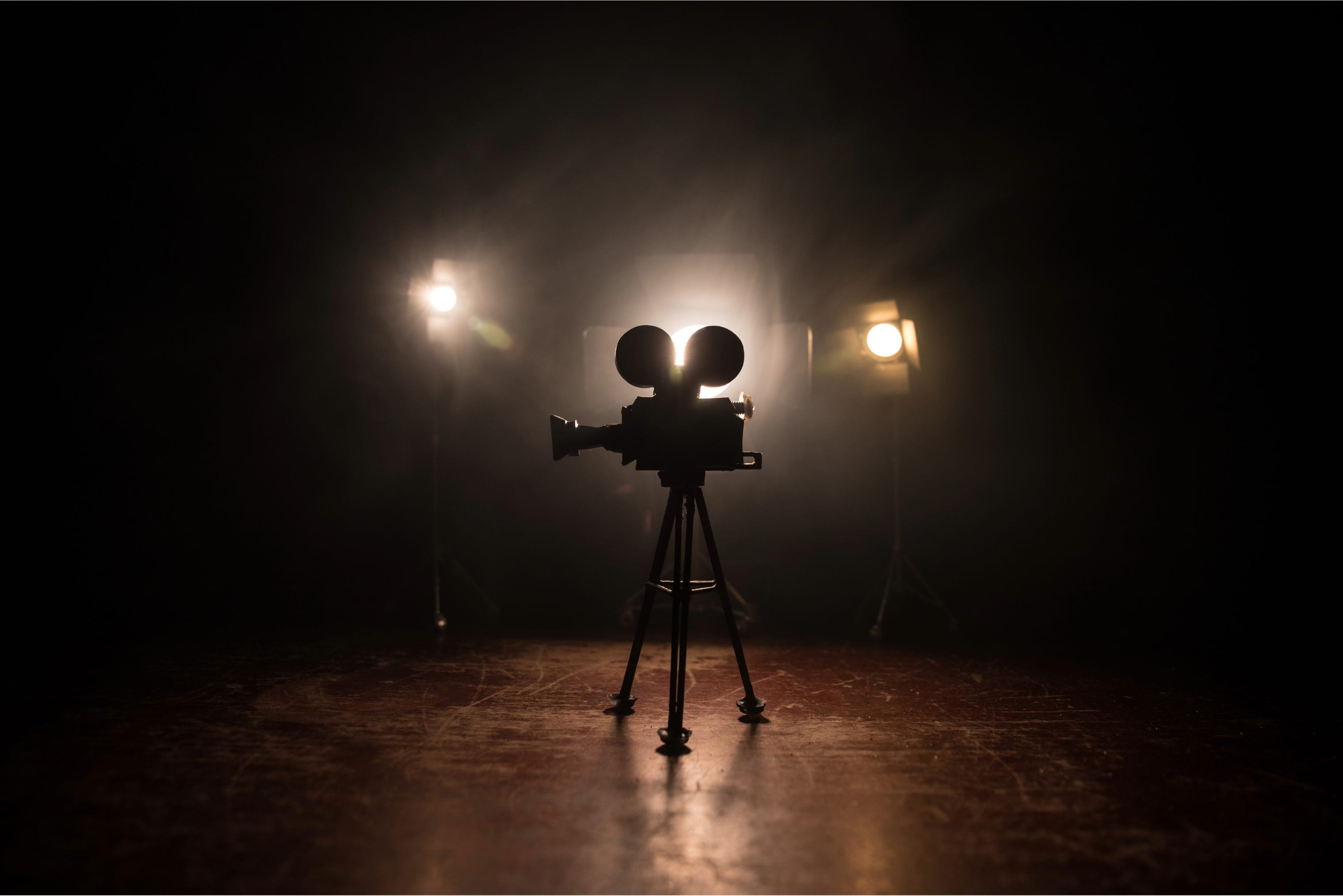
I am writing this from a film set.
There is no barrier, no wall blocking my path, that I cannot break through.
The most radical thing a woman can do in this world, is to live a life that is entirely and unapologetically her own. Not the life her parents envisioned, nor the one her culture prescribed, nor the one that arrived by default when she wasn’t paying attention.
The world’s noise about who you should be by now, what you should look like, what age permits and forbids, is all socially constructed scaffolding that can be dismantled.
Tear it down!
If you’re reading this and there’s a box gathering dust on your shelf, rip that latch open and unleash your dreams. It will be hard, brutally, maddeningly hard. But I swear, I will roar so loud the walls will shake. It will be worth every single ounce of fight. More power to you as you harness that main character energy and free your dreams! <3
No posts
Comments
Nothing yet. Say the first thing.
Sign in to join the conversation.