
Every conversation about mRNA vaccines eventually gets to the spike protein. Did it persist too long? How did the immune system respond to it? Did it end up where it shouldn’t? What is it doing in our bodies? What is its toxicological profile?
These are the common questions. But our paper argues that the entire conversation has been missing something important.
The lipid nanoparticle, the foreign oily droplets (please not lipid bubbles!) that carry the mRNA into your cells, is not biologically inert. It is not just packaging or an inert truck. It is an active participant in what happens to your cells. And importantly, it may be doing things that no one designed it to do.
That is the claim at the centre of our review, published this month in Acta Pharmaceutica Sinica B. This post is my attempt to explain it in plain language.
An LNP (a lipid nanoparticle) is about 80–100 nanometres across, about a thousand times smaller than the width of a human hair. But its structure matters much more than it’s size
It is not a hollow sphere with mRNA floating inside. THAT is a lipid bubble, and it is totally wrong (which is why anyone saying lipid bubbles to me gets ignored or my wrath, depending on the day of the week, lol). Cryo-electron microscopy shows that LNPs have NO HOLLOW aqueous core. Instead, the mRNA’s negatively charged phosphate backbone is bound directly to the positively charged ionizable lipids through electrostatic attraction, forming a compact, disordered lipid-nucleic acid matrix. The mRNA is not a passenger in a container. It is electrostatically entangled with the lipids. (oh and it has to get untangled once it leaves the endosome, how does that work?)
The four components are: an ionizable lipid (electrically neutral at physiological pH, positively charged in acidic environments which is the pH-sensitivity the entire delivery system is built around); a helper lipid (DSPC) that provides structural support; cholesterol that stabilizes the assembly; and a PEG-lipid coating that shields the particle from immune detection and prevents clumping.
None of these are bonded by conventional chemical bonds. The particle is held together entirely by weak, non-covalent interactions such as electrostatic attraction, van der Waals forces, hydrophobic effects whose collective organization gives the particle its properties. This is the domain of soft matter physics, where behaviour emerges from the whole in ways the individual parts would not predict.
The structure is also metastable, that is kinetically trapped, like a ball balanced on a hill rather than resting in a valley. The manufacturing process freezes the components into a configuration they would not reach spontaneously. Stable enough for storage and injection; but not at equilibrium. It is designed to stay that way until it encounters the right trigger, specifically, the acidity of an endosome, or contact with a cell membrane, at which point reorganization releases the payload.
The problem our paper raises is that reorganization is not a clean, one-time event. A metastable supramolecular assembly (which I call a SuPREX. See my post below)
Once a SuPREX encounters the complex environment of a living cell, such as blood proteins, membrane surfaces, and shifting pH gradients, it does not deliver its cargo and becomes inert. How could it? It continues to interact. And that is where the biology begins, way before any spike protein is made. These concepts are critical in order to understand what is really happening in your body with the LNPs. The usual pharmacological understanding of a drug or even of an antibody does not apply. These are particles, and that changes everything.
Here is a figure I developed with SciSpace trying to explain the pharmacological actions of the LNP. The first row is the mechanism flow, which needs to be understood before any of the downstream processes can be analyzed. Only step 6 and half of step 7 are spike protein-focused. The rest is what I call the pharmacological phase (from Naasani)
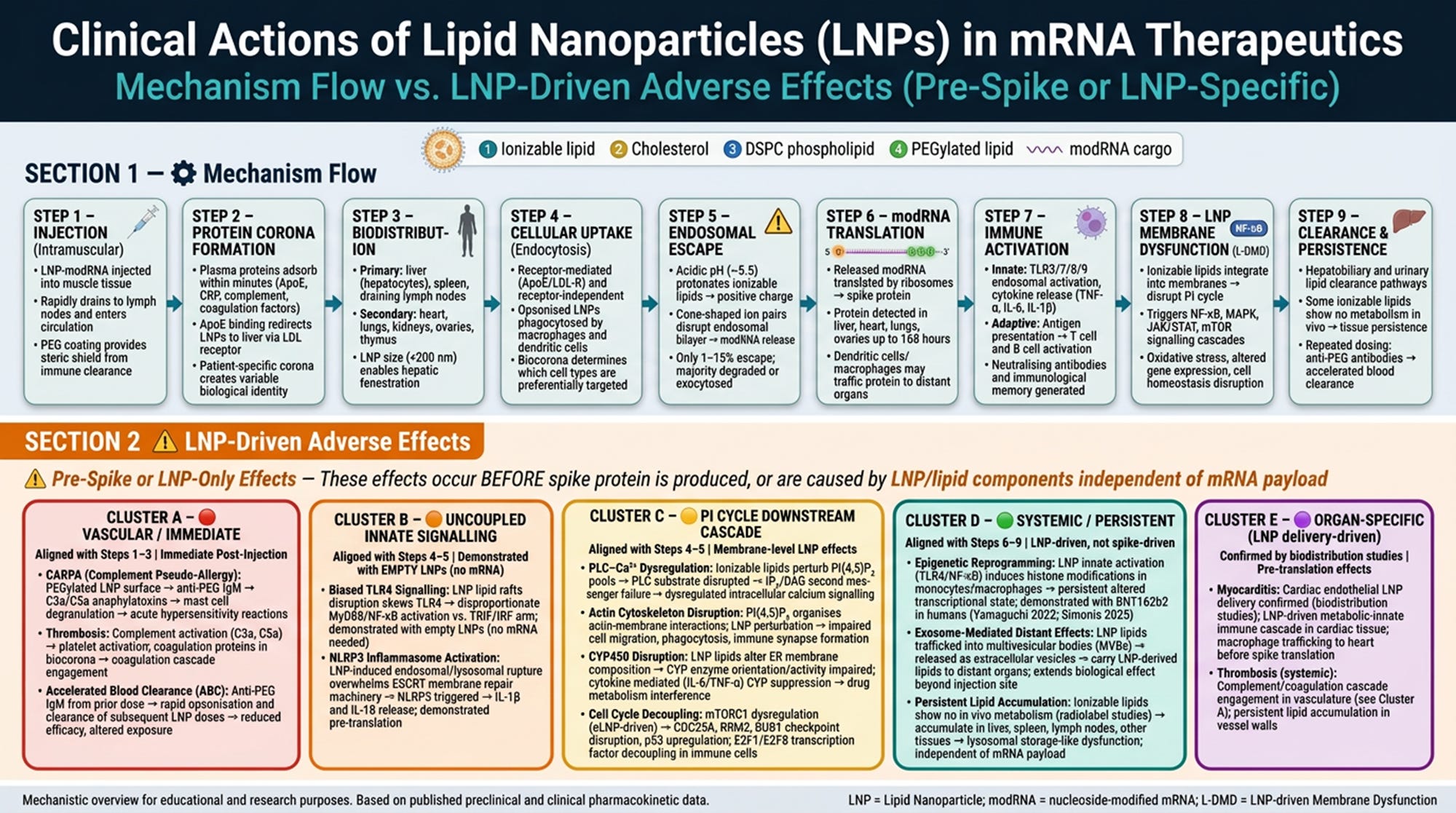
Our paper’s title is not accidental. We are arguing that LNPs are not passive transport vehicles; they are active interfaces between synthetic chemistry and living biology. And that the first contact with human biology means that these particles obtain a biological identity (from the protein corona), which results in behaviours that cannot be extrapolated from their known attributes in the vial or before delivery.
The reason comes down to the physical behaviour of ionizable lipids. These lipids are designed to be electrically neutral at the body’s normal pH, but to become positively charged in acidic environments. That charge-switching is what enables endosomal escape, the rate-limiting step of the mRNA vaccines. But cell membranes are negatively charged. This means that a positively charged ionizable lipid and a cell membrane are naturally attracted to each other.
We do not consider this attraction to be trivial. We review evidence from molecular dynamics simulations, lipidomics experiments, and cellular studies showing that ionizable lipids can insert themselves into cell membranes, which can perturb the carefully maintained lipid architecture of the fluid mosaic that cells depend on to function. This biophysical interaction is measurable and rarely discussed with respect to these products. It’s soft matter physics, not biology and the data is not found in virology, or immunology journals
The question is: what are the downstream consequences, if any?
Your cell membranes are not uniform flat sheets. They are dynamic, highly organized structures often described as fluid mosaics. Different compartments inside the cell have different lipid compositions, and one of the key ways cells know which compartment is which is through small lipid molecules called phosphoinositides, a family of membrane lipids derived from a parent molecule called phosphatidylinositol (PI). (tiny dwarf with awesome power).
Think of phosphoinositides as address labels or tags. An early endosome, a sorting compartment has one label. A late endosome has a different label. The recycling pathway has another. These labels determine what proteins dock onto each compartment, what gets sorted where, and how vesicle traffic flows through the cell.
The cycle that creates, modifies, and recycles these labels is called the PI cycle.
We hypothesize that ionizable lipids, by inserting into cell membranes, alter the charge environment and physical properties of these compartments in ways that perturb the PI cycle. This is not a massive catastrophic disruption; it is a subtle shift. But subtle shifts in the PI cycle propagate downstream. Because these address labels regulate signalling pathways that control inflammation, cell growth, metabolism, and stress responses.
Specifically: the PI cycle feeds into the activation of NF-κB (a master inflammation switch), MAPK and ERK pathways (stress and growth signalling), JAK/STAT (immune coordination), and mTOR complexes (metabolism and cell growth decisions).
Perturb the PI cycle, and you get altered signalling across all of these.
We call this cascade L-DMD: Lipid-nanoparticle-driven Membrane Dysfunction.
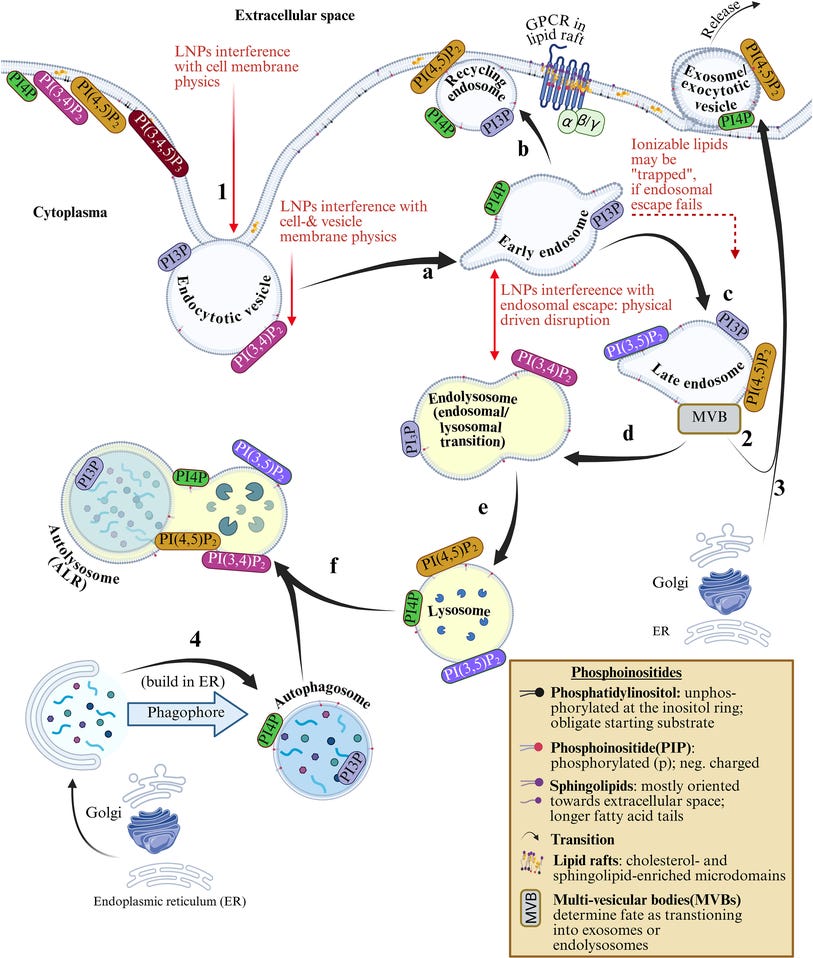
Here is, in my view, the most striking piece of evidence in the paper.
Between 12% and 80% of lipid nanoparticles in any given mRNA vaccine batch contain no mRNA at all (depends on LNP type and how they are measured; the reviewers were strict about that) For the mRNA vaccines, they are likely in the 15-35% range. But, they are empty capsules. This is not a manufacturing defect and is an inherent feature of the assembly process. Encapsulation efficiency is never 100%. (Even though they measure it at 98%+; that just measures how much mRNA is in the buffer, so you could have 98% of the mRNA in 50% of the capsules. How to measure mRNA in individual LNPs is still an analytical challenge).
The question nobody had asked clearly enough was: are these empty LNPs biologically inert?
The answer, from a 2021 mouse study by Ndeupen and colleagues, is a decisive no.
Mice were injected intramuscularly with empty LNPs at the same dose typically used in pharmacodynamic research. What happened in their cells? The researchers measured gene expression across the whole genome. They found:
Approximately 9,500 genes upregulated and 8,883 genes downregulated
NF-κB (the inflammation master switch) upregulated by roughly 2.5 to 2.6 log₂-fold which that is a substantial increase
The TCA cycle (the central pathway for cellular energy production) markedly downregulated shows an approximately 2.0 log₂-fold reduction
PPARγ signalling also markedly downregulated with about the same magnitude
Robust activation of the innate immune sensors TLR, NOD, and RIG-I
No mRNA. No spike protein. The LNP alone, empty, produced thousands of changes in gene expression, including suppression of energy metabolism and activation of inflammatory pathways.
This matters enormously for how we think about the biology of mRNA vaccines, because most post-vaccination studies have attributed observed effects to the spike protein directly or to immune activation by the mRNA. The Ndeupen finding suggests there is a third contributor that has been largely invisible in the analysis.
And now of course we have Mori et al, and others showing empty LNPs having biological activity shown in humans.
Among the most significant downregulated pathways is PPARγ is Peroxisome Proliferator-Activated Receptor Gamma.
PPARγ is not a household name, but it does a remarkable number of things. It is a central regulator of lipid metabolism. It governs mitochondrial function. It modulates anti-inflammatory signalling. In macrophages PPARγ acts as a brake on inflammatory gene expression.
When PPARγ is suppressed, you lose that brake. NF-κB, already being driven upward by LNP exposure, has less counterbalancing anti-inflammatory tone. The result is a shift toward a more sustained, less self-limiting inflammatory state.
Research cited in our paper shows that partial PPARγ dysregulation alone can “broadly disrupt cellular metabolism and signalling, influencing disease fate decisions across multiple tissues.” The key word is partial, you do not need total ablation. A meaningful reduction in PPARγ signalling, sustained across time, can alter how tissues handle inflammation, lipids, and energy.
Whether this is sustained in humans following mRNA vaccination is not currently known. We are explicit about that. But it is the right question to ask, and it has not been a priority question in vaccine safety monitoring.
One of the most practically significant sections of the paper concerns a class of liver enzymes called cytochrome P450 enzymes, or CYPs.
CYP enzymes are the workhorses of drug metabolism. When you take a medication, —any medication, the liver uses CYP enzymes to process it, detoxify it, and prepare it for elimination. The best-known CYP enzymes are CYP3A4 (responsible for processing roughly half of all pharmaceutical drugs), CYP2C9, CYP2C19, and CYP1A2.
Our review assembles evidence that LNP exposure suppresses the expression of these enzymes. This appears to be mostly transient and due to cytokine expression, but it has been noted and documented.
The implication is direct: if your CYP enzymes are transiently suppressed following LNP administration, drugs that depend on those enzymes for their metabolism will linger longer in your body and at higher concentrations than intended. Drug-drug interactions caused by CYP suppression are one of the most common sources of medication toxicity in clinical practice. Clozapine (for schizophrenia), warfarin, many immunosuppressants, and dozens of other drugs are all CYP-dependent. And how long does this last? I do not think in most people, this is permanent, it is likely for a 2 week period, but it the LNPs may still suppress CYP at low levels for longer. Does this make a difference? No one has looked, but I think it is likely. In fact, the first drug interaction documented was in a patient who had profound neutropenia from his clozapine and vaccine interaction.
As a retired pharmacist, I find this finding particularly important. Did patients experience higher levels of some drugs, and did those with narrow therapeutic indices show adverse effects? Clozapine, antiepileptics, benzodiazepines, tacrolimus, others? The case reports show that it did. (and case reports for drug interactions are well established and accepted.) It does not mean the mRNA cannot be given due to drug interactions alone, but it does mean that a med history should be taken and steps to manage potential drug interactions should be initiated. Can you imagine if you need a drug history assessment prior to vaccine administration in all those pop-up and drive-through clinics?
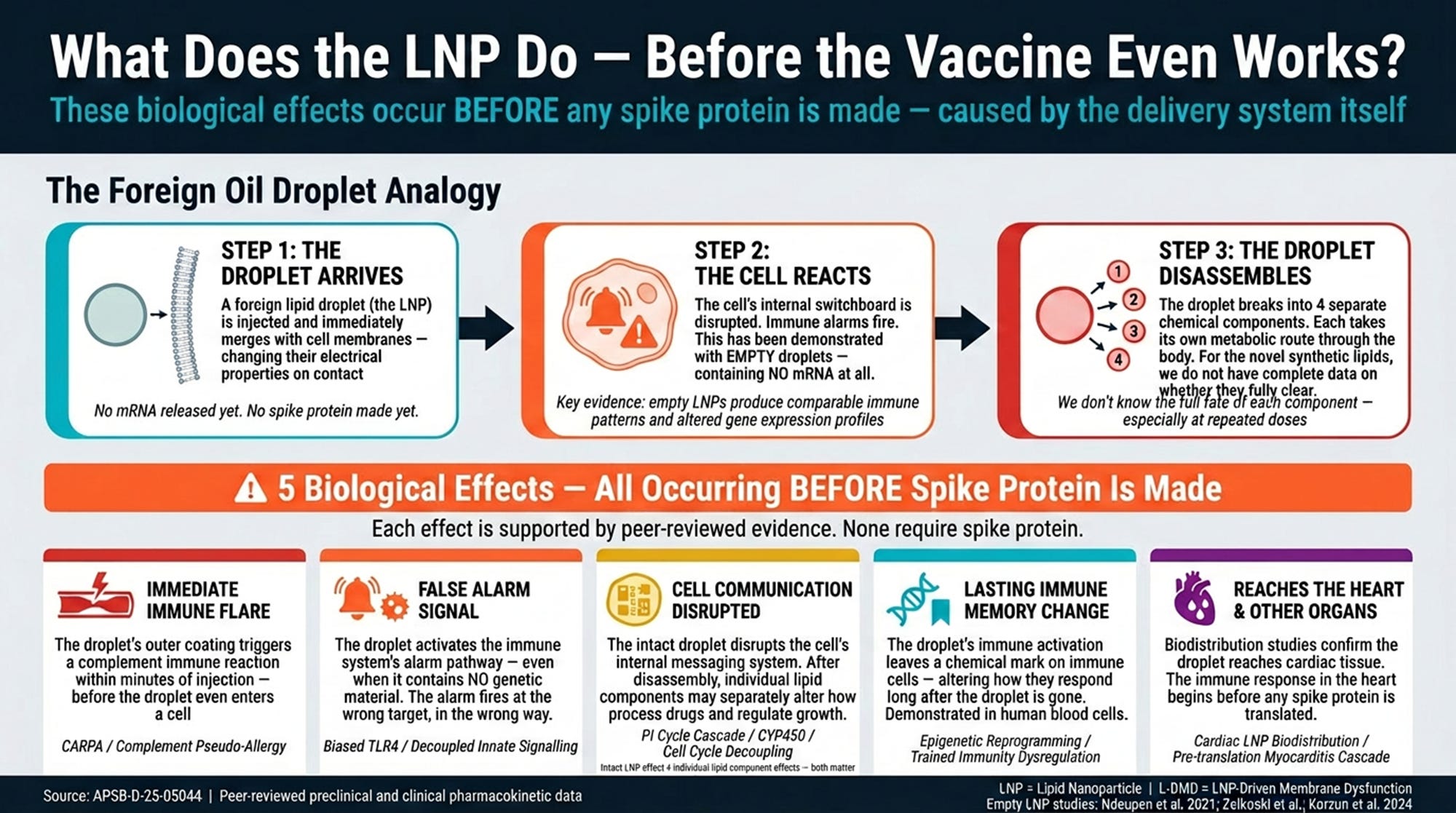
Here is a high level figure which describes the LNP effects
And for those who want more detail, these figures describes almost all of the processes involved with the LNPs as SuPREXes. Kinda freaky, no?
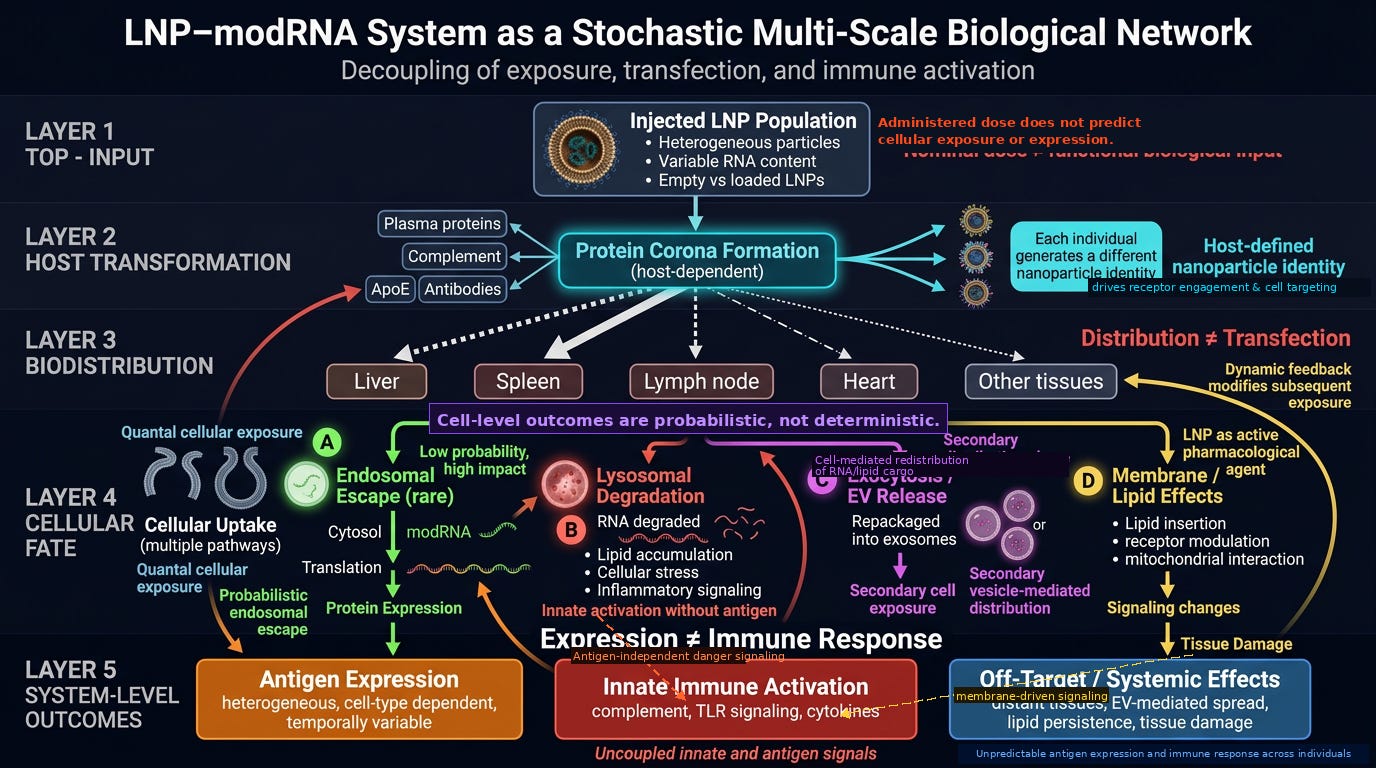
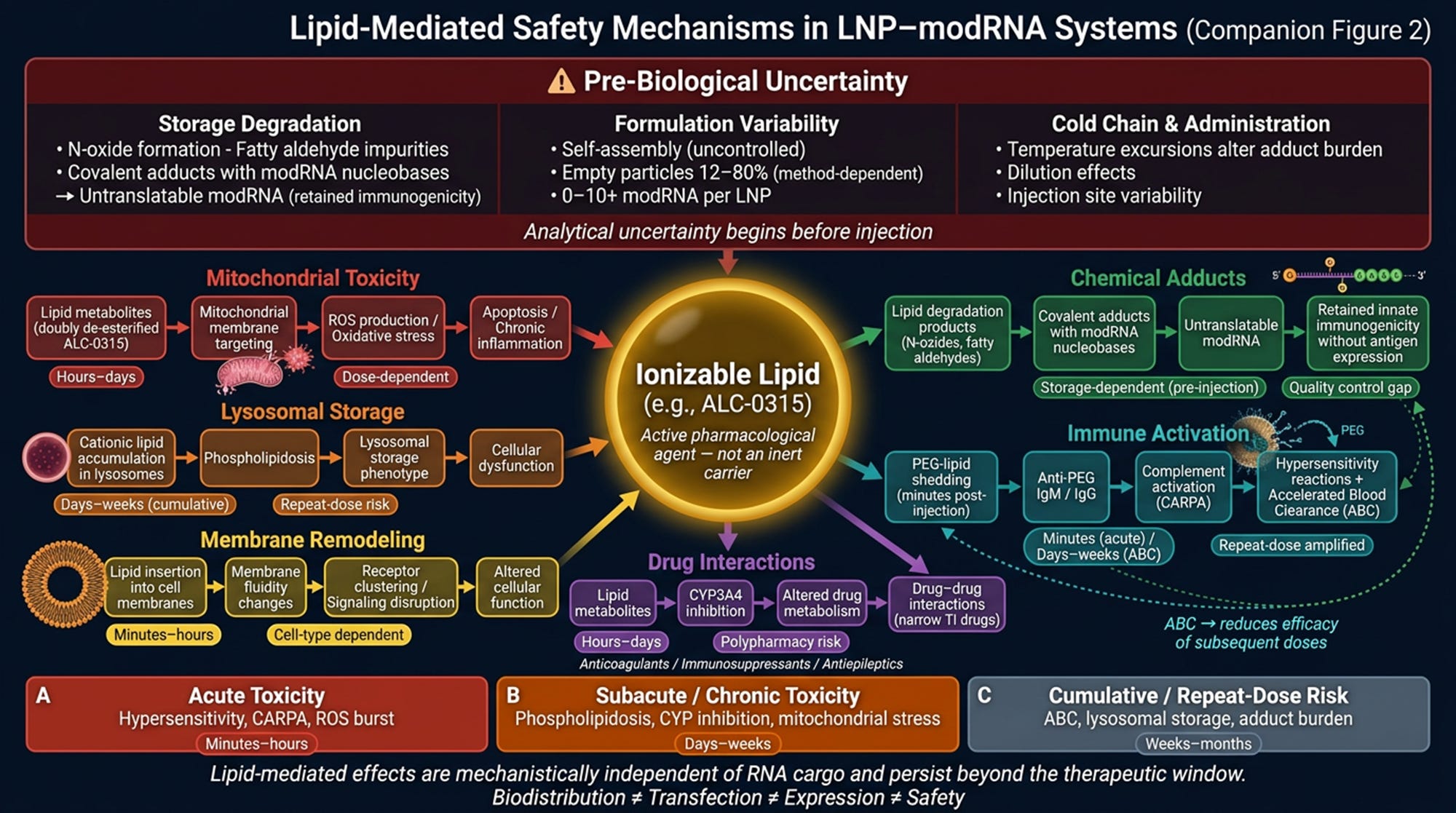
Note: the lysosomal storage hasn’t really been proven, but there are hints in Mori et al.
Multiple independent research groups have now documented persistence of spike protein or mRNA beyond the timeframes originally anticipated, in some cases months, or years after vaccination. This has been contentious. The conventional explanation tends to involve claims about the inherent molecular stability of modified mRNA.
Our L-DMD framework offers a different explanation. We hypothesize that mRNA persistence may not be primarily about the molecule’s chemical durability. It may be about the cell’s failure to cleanly shut off and degrade it.
Cellular homeostasis involves intricate mechanisms for RNA turnover, translation shutdown, and protein degradation. These mechanisms are themselves regulated by the same MAPK, mTOR, and other pathways that L-DMD predicts will be perturbed by LNP exposure. If those shutdown mechanisms are dysregulated, mRNA and protein can persist functionally even if the molecules themselves are not intrinsically long-lived.
This is a hypothesis. We present it as one. But it is testable with current laboratory tools, and it shifts the explanatory weight from the mRNA sequence to the delivery system, which is a different direction than most of the current research is looking. I have also posited a related hypothesis: covalent bonding of ionizable lipids to the mRNA or fragments thereof due to the ionizable lipid chemistry, which I discuss here.
Our paper is a hypothesis-generating review. We have been explicit and careful about this throughout.
We are not claiming that mRNA vaccines cause specific diseases. We are not claiming that the L-DMD effects are permanent or catastrophic, though that possibility exists. We do not address whether mRNA vaccination is helpful or harmful, because answering it would require weighing L-DMD risks against COVID disease risks in a way our paper likely cannot answer.
The biophysical interaction between ionizable lipids and cell membranes is real, measurable, and not adequately accounted for in current pharmacological models of LNP behaviour.
This interaction disrupts the PI cycle, which alters downstream signalling cascades in ways consistent with observed omics data.
Empty LNPs are biologically active and account for a meaningful fraction of every dose.
These effects, especially on CYP enzymes, PPARγ, and metabolic balance, have implications that have not been adequately studied in the context of repeated human LNP exposure.
Current pharmacovigilance systems are calibrated for acute immunological events, and are not designed to detect the kind of low-grade, delayed, multi-systemic signals that L-DMD predicts.
The paper’s explicit limitations section acknowledges: most of the supporting data comes from mouse models and in vitro studies, with dosing conditions that may not directly translate to human intramuscular injection. Confounders in human studies are difficult to control. No causal relationships with clinical disease states have been established. Longitudinal human validation is lacking, and that is urgently needed.
We publish this as an invitation for that validation work to happen.
One thing I want to make clear: our hypothesis addresses a fundamental pharmacological question about lipid nanoparticles as a platform.
The same platform using ionizable lipid nanoparticles is increasingly being used for gene therapy, cancer treatment, RNA interference therapies, and protein replacement medicine. Several are already approved or in advanced trials. The field is expanding rapidly. See my report on the 6th mRNA therapeutics here.
Understanding how the delivery vehicle interacts with cell biology, independent of payload, is not optional science. It is foundational science. If we do not understand how the LNPs behaves, we cannot rationally design better, safer “wrappers”, if it can be done at all, and the next generation of LNP medicines will be built on the same uncertain foundation as the first. This has happened before in pharmaceutics and drug development.
I am a retired pharmacist with rheumatoid arthritis, no PhD, and no institutional affiliation. My co-author Falko Seger is a self-taught independent researcher in Berlin. Our other co-author is Dr. Stephanie Seneff, a computational and systems biologist at MIT.
We wrote this paper because we believed it needed to exist: the lipid nanoparticle was being systematically underanalyzed as a pharmacological agent in its own right, and the existing evidence, assembled carefully, pointed toward mechanisms with real clinical implications.
That it was accepted, after peer review, by Acta Pharmaceutica Sinica B, Q1 ranking, is not something I take for granted. I wrote elsewhere about what that journey felt like spiritually. Here, I will simply say: the science was taken seriously, on its merits, by reviewers who had every reason to be skeptical. I am grateful for that.
If you are a researcher and you want to test the L-DMD hypothesis the paper lays out specific proposed experiments. If you are a clinician and you have patients on CYP-metabolized drugs who have received mRNA vaccines and shown unexpected drug effects, this paper may offer a framework you can use for a case report(s). If you are a scientist designing next-generation LNP formulations, this is, we believe, where the important design questions now live.
The mRNA era of medicine is not ending. LNPs will carry the next generation of therapeutics for cancer, rare disease, and much else. Whether those medicines are as safe and predictable as they can be depends, in part, on asking the questions this paper raises.
DOI: 10.1016/j.apsb.2026.07.001
Open access. (Thanks Stephanie!)
And as always, pray the rosary. Thanks.
Thanks for reading Maria Gutschi! This post is public so feel free to share it.
No posts
Comments
Nothing yet. Say the first thing.
Sign in to join the conversation.