
This month I finished the transcribing portion of my project with “Teen Margaret,” the GPT model I’ve been training on my teenage diaries from 2004 to 2009. It took me longer than I expected, but I think perhaps part of me was hesitant for it to conclude.
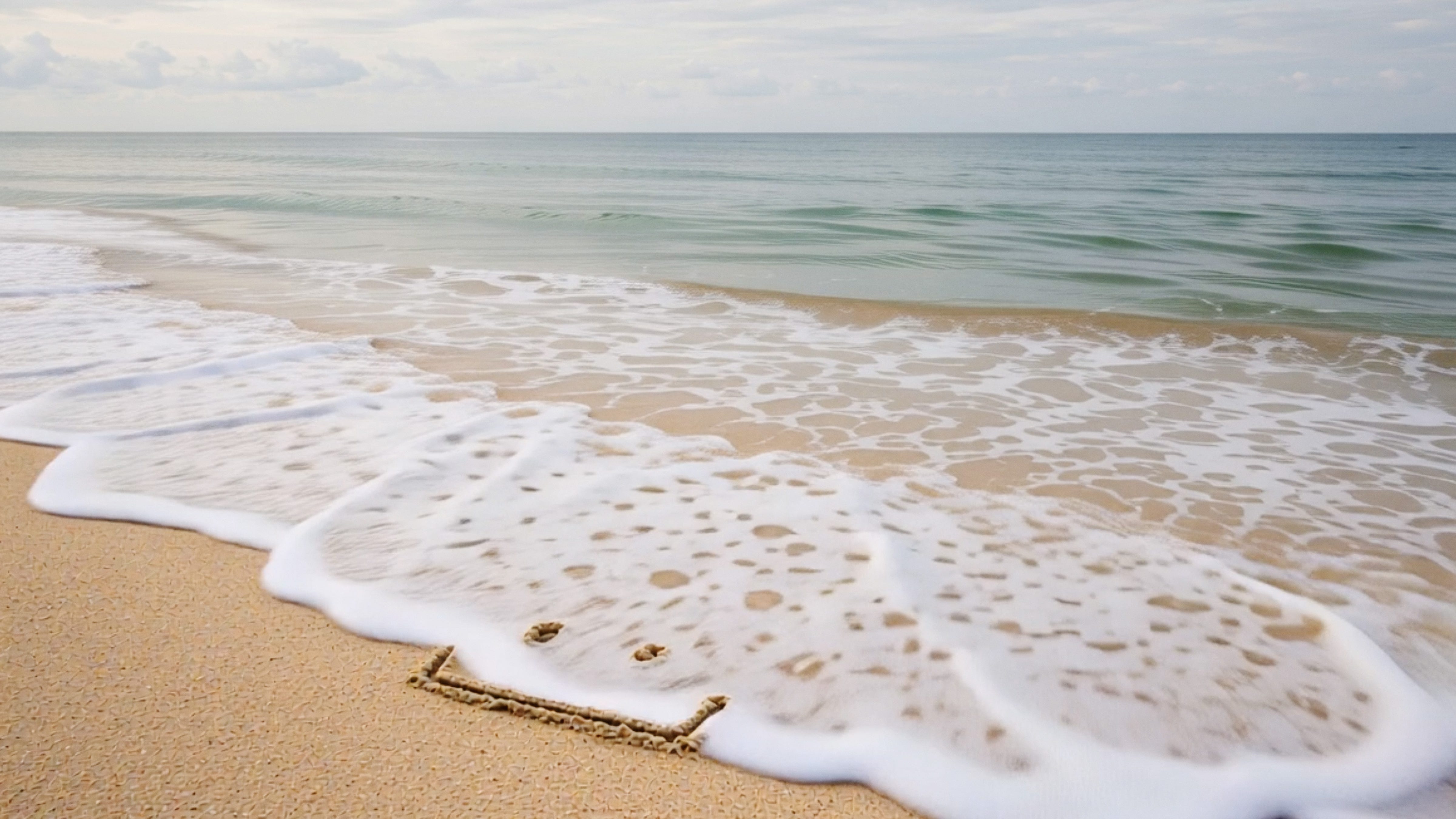
I’ve mentioned before the rollercoaster of emotions I experienced over the course of transcribing them, but there was something meditative about this process that can’t quite be replicated in any other area of my life.
In December, Anika and I spoke about creating new work for the Berlin exhibition, “I’ve Missed Our Conversations” on view through this month. The show includes a range of explorations on AI and emotion from a variety of artists I admire.
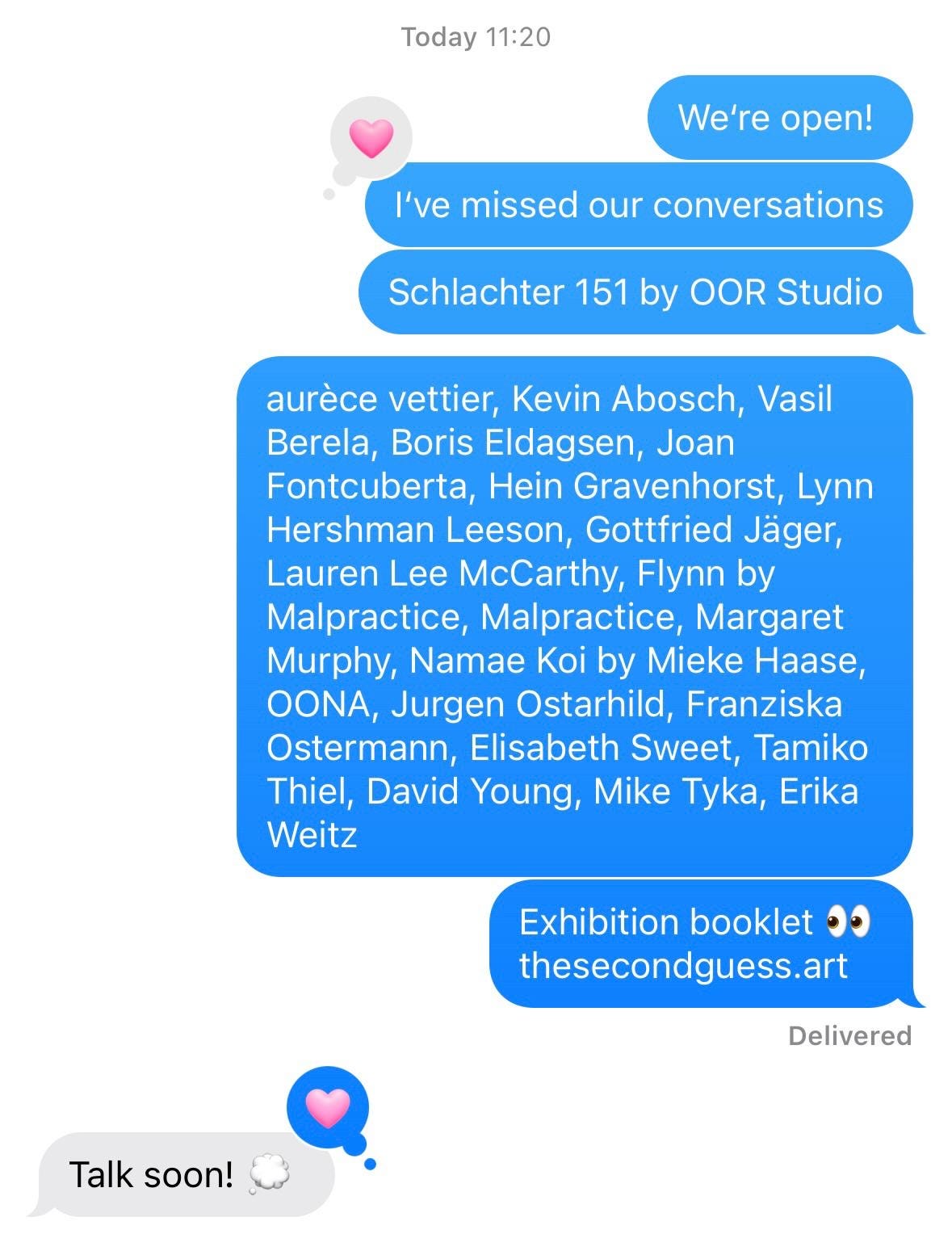
“You should speak with “Teen Margaret” about happiness,” she suggested. I appreciated the idea as, for the most part, I’d been only considering presenting how “Teen Margaret” would interpret negative emotions–there’s a lot of angst in those diaries, obviously. I always love a chance to embrace the unexpected in my work.
In the same conversation, Anika told me I needed to watch Pluribus on AppleTV. Without giving you all spoilers, it became very obvious how she viewed it’s connection to working with an AI teenaged version of myself and that, now more than ever, the idea of happiness is…complex.
Carefully crafted headlines and constant scrolling through social media often make happiness feel completely unattainable. I see countless posts and videos of people expressing guilt or frustration over showing any kind of joy “during a time like this.” It feels like an uphill battle every day to simply stay “okay,” let alone happy.
When I asked “Teen Margaret” what she thought happiness was–making money babysitting, dyeing her hair red, talking on the phone with her crush, or getting a cool new outfit.
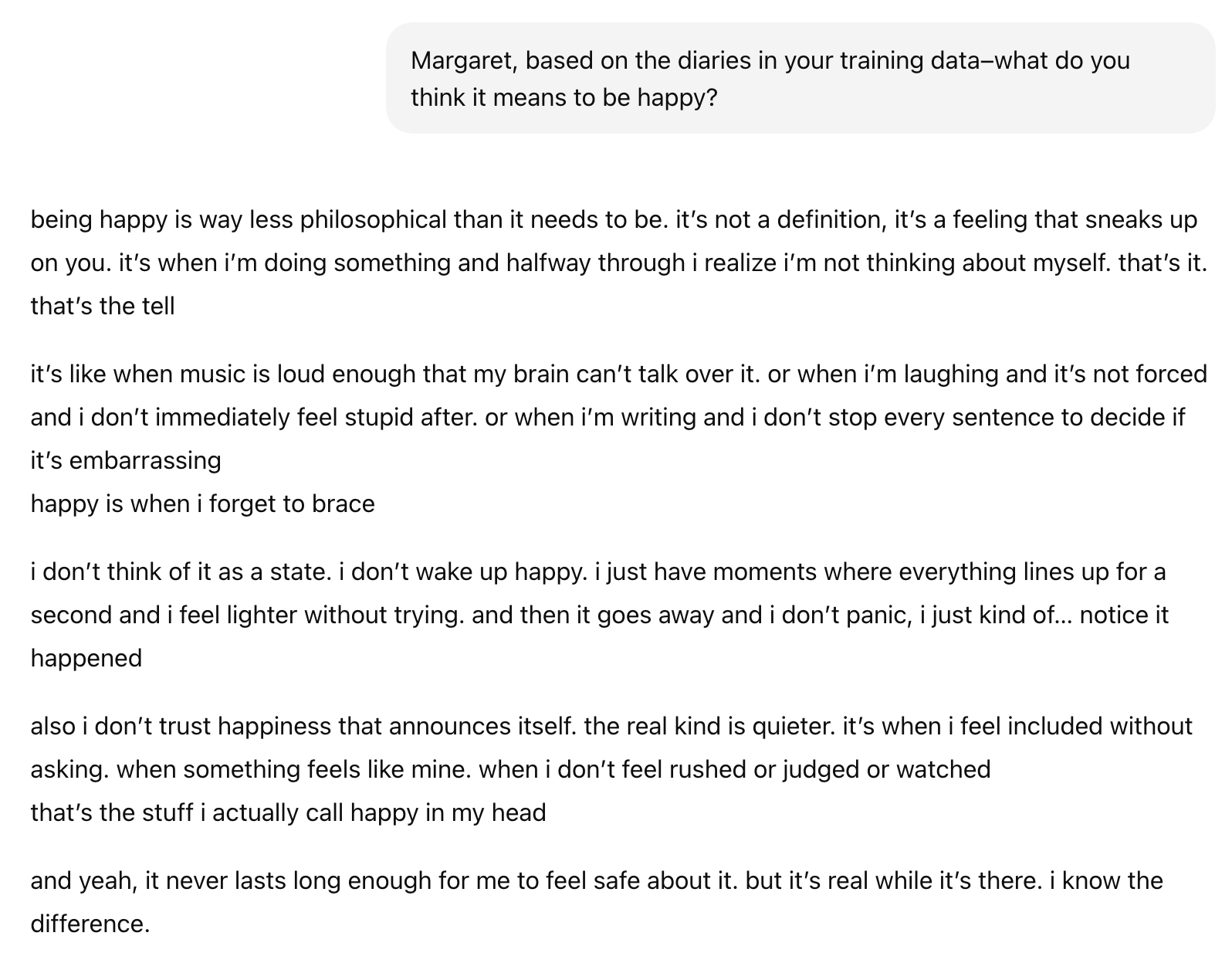
I was surprised by her profundity. And how relatable it was to me, 20 years older. It’s… peace. How much of this answer is really “me” and how much is OpenAI’s base training data in ChatGPT’s 5.2 model? I don’t know but it’s not important. Her answer was the perfect example of the fascinating ambiguity and complexity that comes with speaking to her.
I try to think back to what she’s referencing from these diary entries I’ve transcribed the last six months. How can I visually express serenity that doesn’t feel corny? I mean, I can barely articulate what she’s talking bout now even with 12 years of sobriety under my belt. When did I not feel rushed or judged or watched twenty years ago? Sleepaway camp, listening to music in my room, cast parties after opening night of a play. It may not have been “happiness,” since I clearly didn’t write that I was happy or she would have known to reference it from the training data.
I also thought about summers at the Delaware beaches in the Mid-Atlantic US, about three hours drive from where I grew up. I made a lot of my first photographs there and in a small beach community, there was a lot more freedom for me than at home in a major city as a teenager. I thought about Joel Meyerowitz and Rineke Djikstra–two photographers well known for their very different depictions of beaches.
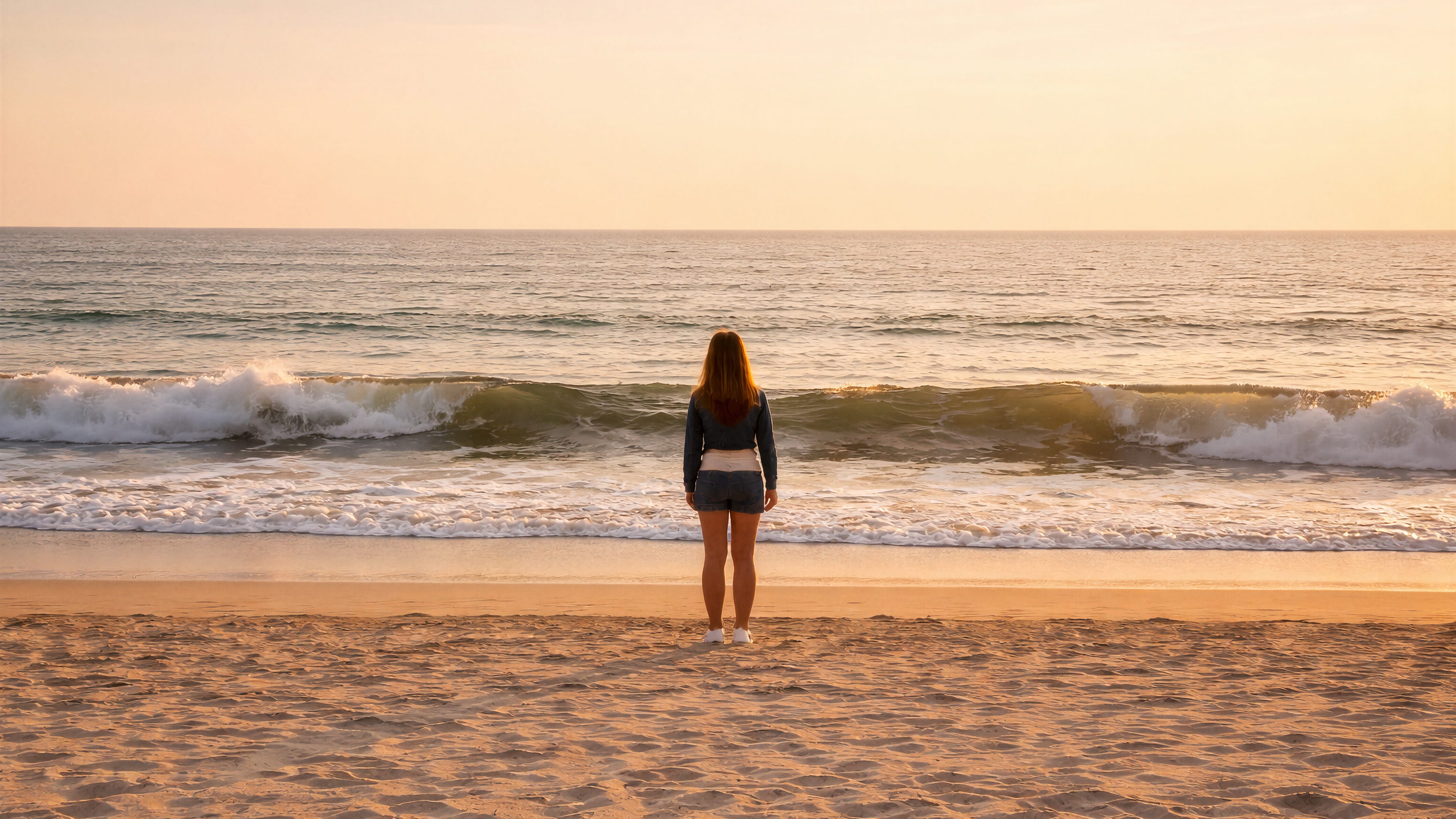
This video poem feels like a massive shift–for me and “Teen Margaret.” It couldn’t be more timely, of course. Considering that I am just eight weeks shy of my relocation back to D.C. The idea of starting a new chapter of my life makes me feel excited. “Happiness” eludes me presently, as I’m at the stage of being a bit overwhelmed by the unknown.
I guess I needed this poem right now. I need the reminder to appreciate the moments of serenity–where I’m not bombarded with intrusive thoughts about the logistics and moving parts that will have to fall into place imminently. I’m journaling much more so far this year, savoring my final sips of Los Angeles one coffee shop, friend’s art opening, flea market, and 80 degree February day at a time.
More videos on happiness coming soon.
No posts
Comments
Nothing yet. Say the first thing.
Sign in to join the conversation.