
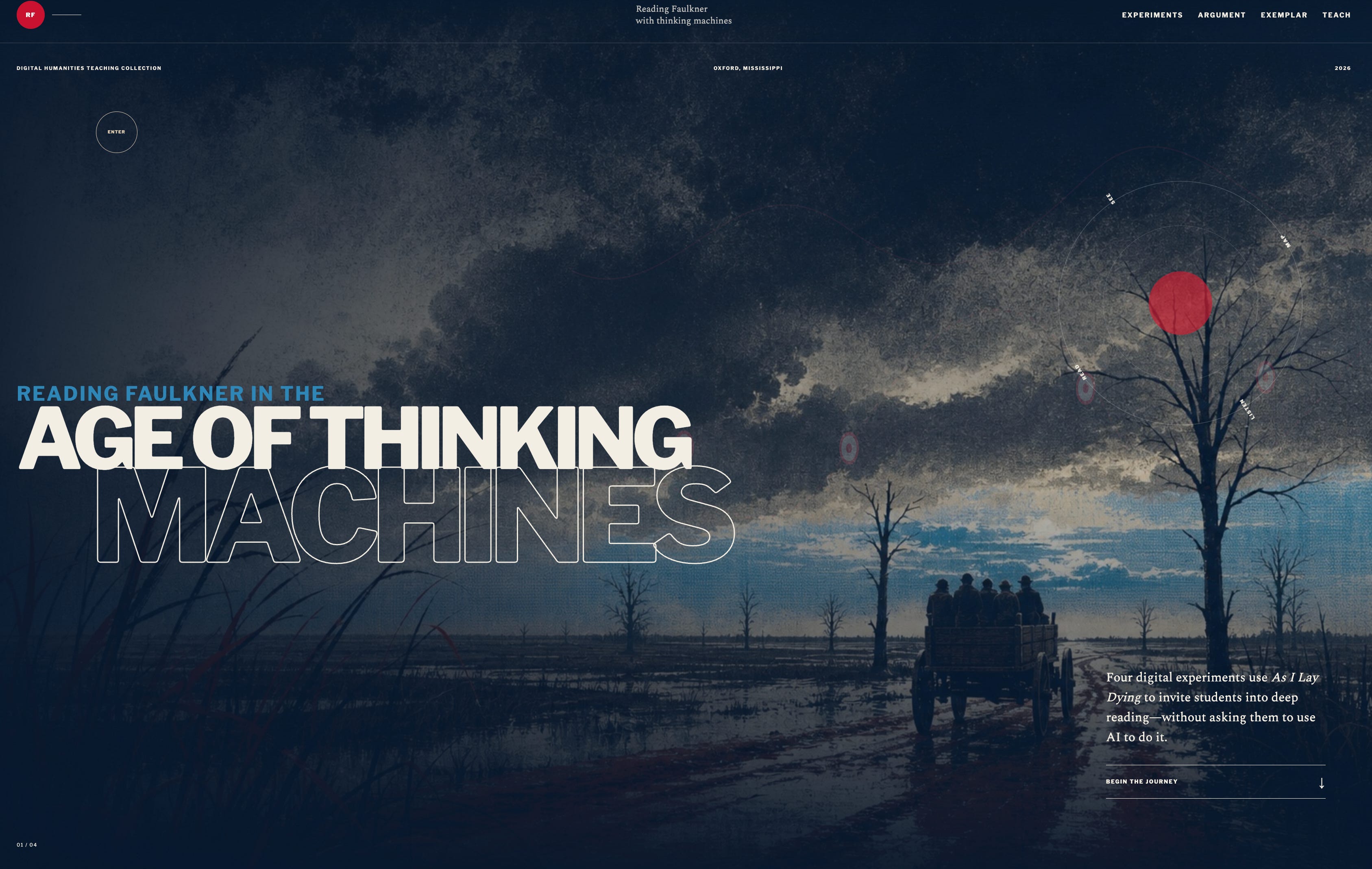
I’m releasing a project I created to help my online students read, with the hope that others might be able to use, adapt, or otherwise feel inspired to try something new this coming semester. I made Reading Faulkner in the Age of Thinking Machines as a gambit of sorts—could I make something using AI that students would want to engage with and read and not offload to AI?
In the summer of 2024, I wrote about how few people were discussing AI’s impact on students’ reading and called for a renewed focus on maintaining beneficial friction in learning. Since then, it seems like everyone is talking about reading and friction. There’s Rose Horowitch’s The end of reading is here, James Marriott’s The dawn of the post-literate society, the rise of AI Friction Labs, Frictional AI Workshops, and thoughtful provocative pieces calling into question if all types of friction are helpful, like Jon Ippolito’s Does Education Really Require the F-word? and Aaron Tay’s articles on access friction negatively impacting search.
I’ve written, researched, and spoken at length about AI’s impact on reading, and it all feels exhausting. 1 But doing so has helped me understand that people are often talking past one another in the grand debates over reading. Namely, our moment is a shift in literacy, not the end of it. Young people are far from illiterate, but they are immersed in technology in ways alien to us that make their relationship with reading very different from our experience:
Reading habits are changing more rapidly than in previous generations. This is causing tension between adults who grew up reading in a different landscape than “young people today have never experienced a world without ubiquitous short-form video.” This tension isn’t new. Some two centuries ago, Britain found itself in a panic after many young men began reading penny dreadfuls and women were sometimes even committed to asylums due to “novel sickness” after reading too many romances.2
Reading expectations have not changed or been meaningfully revised to account for shifts in reading habits or for how new technologies alter our interests. Many faculty echo the sentiment of Tyler Jagt’s My Students Can’t Read essay, despairing about how students struggle to read even short articles. However, as Liz Norell found in a recent survey of college students and their reading habits, many students struggle not with reading but with understanding why reading matters to their learning in the classroom.
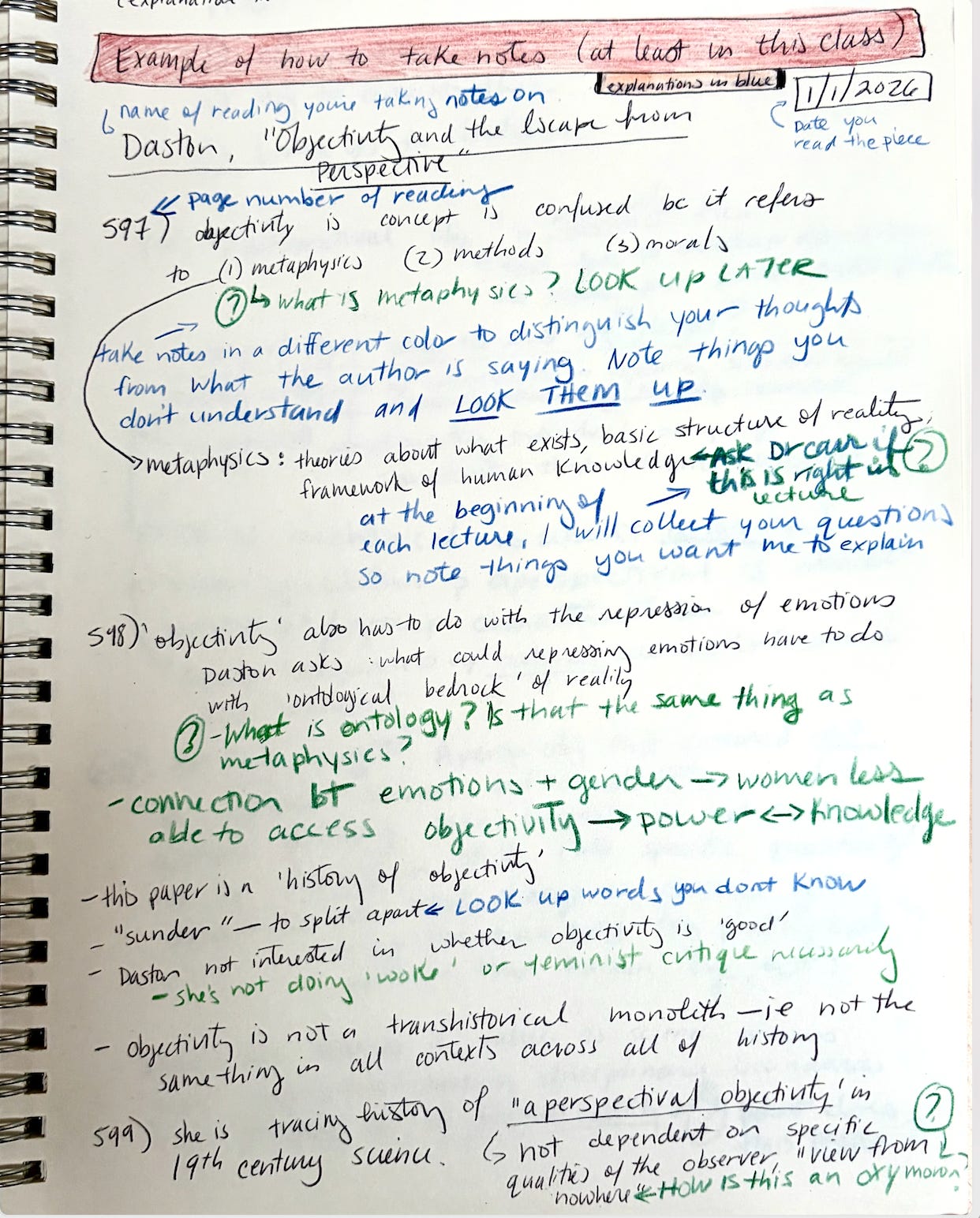
Some faculty have leaned too heavily into the power dynamics of the class and stopped articulating why a reading they assign matters or even making practical arguments about the need for reading in discipline-specific areas. Instead, they often rely on “me teacher, you student, here’s the assignment.” It takes work to impart the value of reading when we teach. Danielle Carr went viral on X earlier this year by showing the process she uses to teach students how to take notes in her Society and Genetics course. Why was the post so popular? Has it become radical for faculty to actually share how they teach reading or simply acknowledge that, yes, students need help to read in our classes?
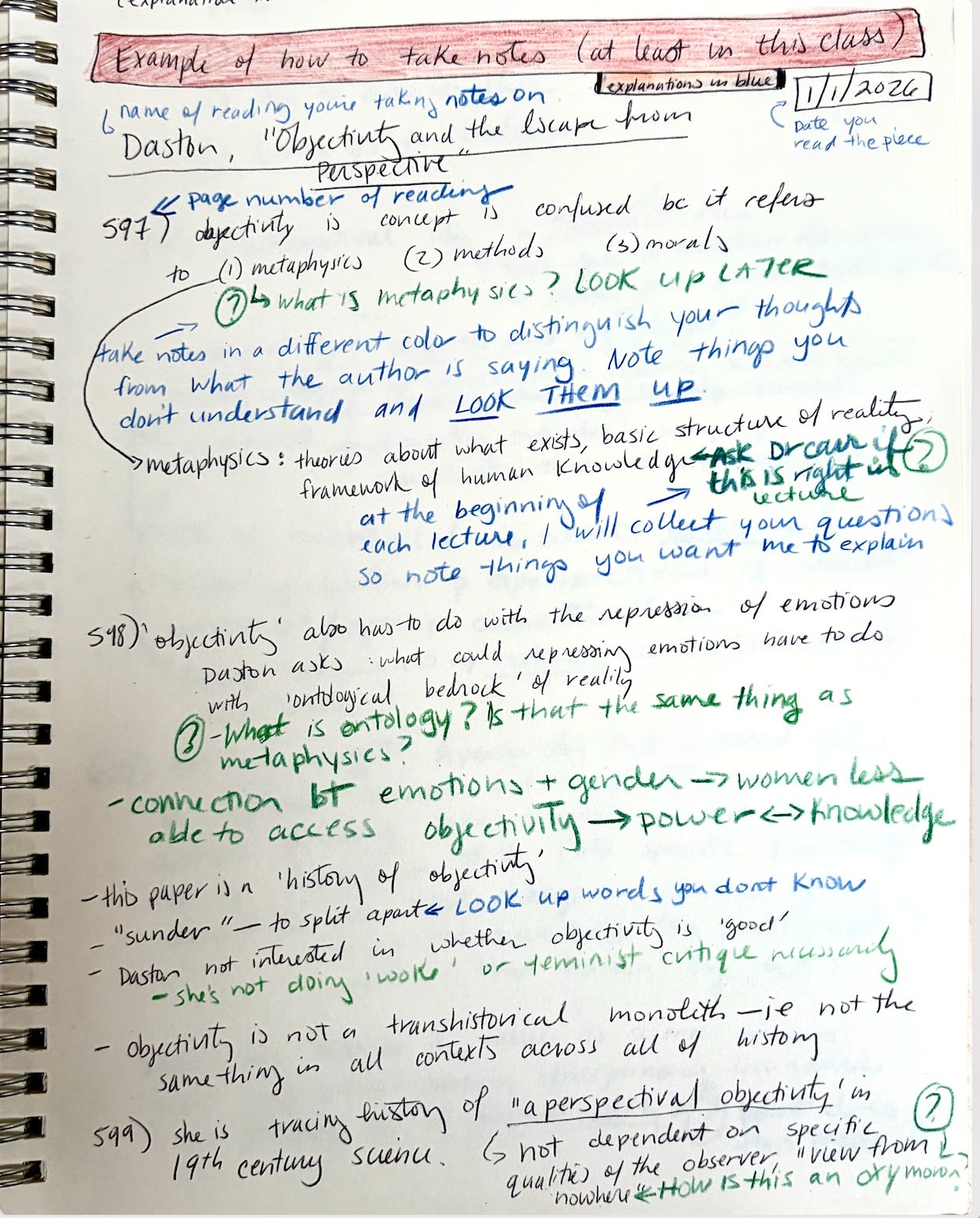
Danielle Carr Carr’s How to Take Notes In this Class
Far from blaming students, I believe that we must take some measure of accountability for our part in sowing this so-called crisis in reading among young people. For one, we’ve effectively stopped communicating why reading matters. Instead, we’ve adopted judgmental, paternalistic, and dismissive stances about student reading habits that signal a complete disinterest on our part in learning how they grapple with reading under digital distractions. Complicating matters even more, we’ve sent messages to them that learning is transactional through the endless certification and skillified micro courses of higher education, devaluing any sense of wonder or joy. Workforce, skill-based, future-ready, are all the meaningless buzzwords we’ve let creep into our mission statements, when we could have spent that energy developing our cultures around shared values and a vision of a future where human beings are more than a set of replaceable skills that can easily be mimicked by a machine.
It is within this landscape that students increasingly seek out asynchronous online learning—the ultimate transactional educational experience. I teach in this world and am guilty as any in having a hand in creating an ecosystem that focuses on delivering education as a neatly packaged hyper-efficient product to my students. But there have been times in the past when I challenged myself to change that dynamic. One such example was moving my discussion board to a virtual one using Microsoft’s Flip video discussion tool. Sadly, Microsoft has pulled the tool from the open internet and integrated it within their Teams suite of tools. You can use Padlet or Voice Threads for a similar experience with students now.
I teach within an interdisciplinary program called Digital Media Studies at the University of Mississippi. DMS caters to students studying communication, art, and coding. It’s a wide variety of disciplines that are often difficult to find common topics that might interest them. Since 2022, generative AI has become an umbrella encompassing most of the topics we cover, so I wanted to try and create something that would appeal to writing/reading, art/ design, and coding/UI. 2026 just happened to be the year William Faulkner’s As I Lay Dying entered the public domain.
I set out to create a digital experience for students who take mostly online courses to become enmeshed in the world of a novel nearly a century old. I used AI to help me consider how students might experience Faulkner’s fictional world through text, sound, and imagery. I not only wanted an immersive experience for students, but I also wanted one that would be resistant to being offloaded to a chatbot. What emerged was a series of digital projects using Faulkner’s text as a lodestar.
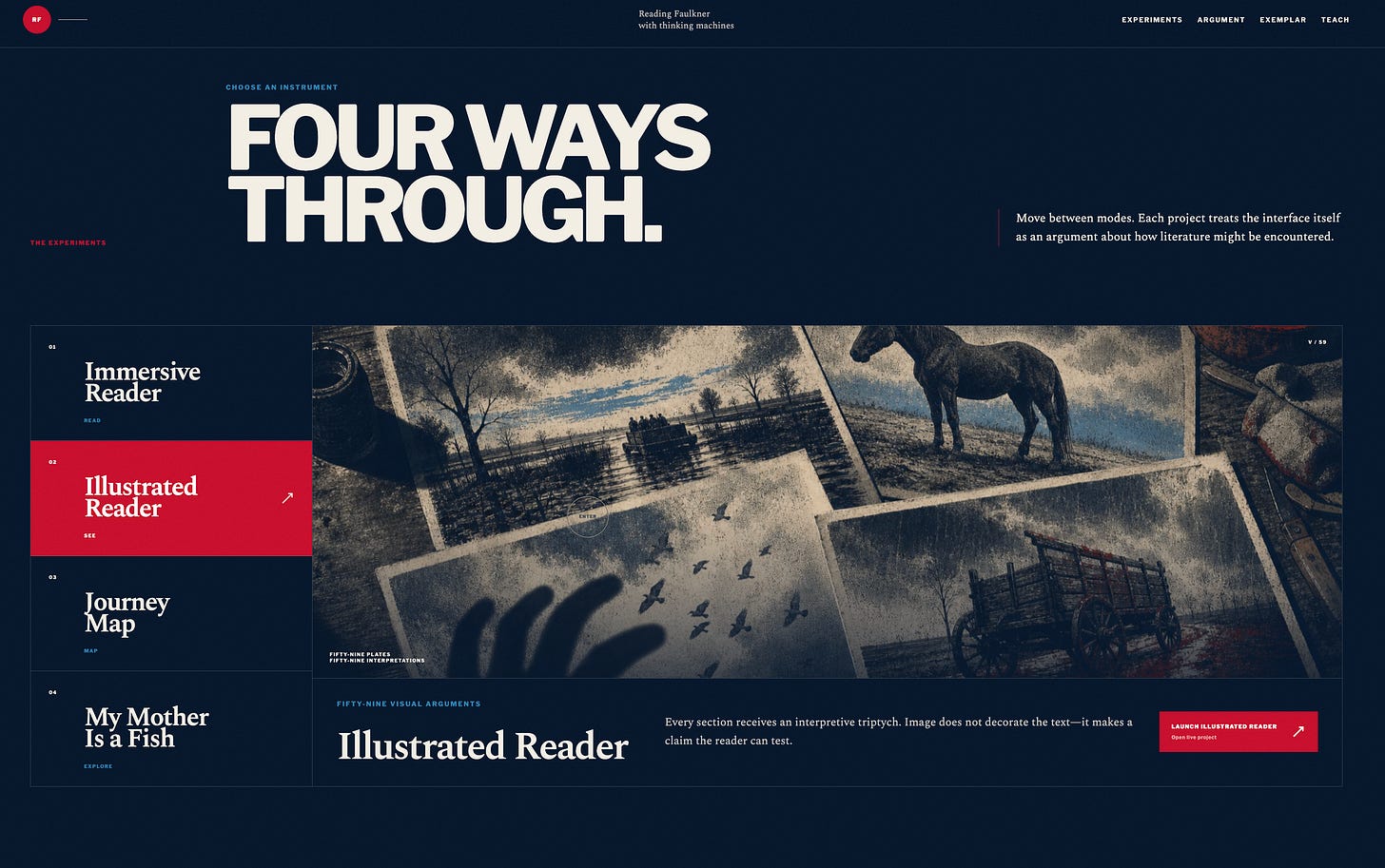
Building this wasn’t easy. It took access to three different $20 per month AI plans, storyboarding software, and a great deal of patience. The end result was four distinct digital experiences:
I was able to have AI format and transcribe the text into a digital reading, then incorporate my reading tracker tool to allow students to annotate and tag parts of the text that they can then export. The goal with annotation is to get them to pause, take notice, and consider what matters.
I created a character sketch for each of the main narrators and an interactive map to help students plot the journey they take within the novel. This is designed for both my coding and art students to consider how different modalities might help a reader navigate a text.
Sound and is one element in design that I wanted students to experience with the novel, so I created a digital card discussion game that paired an image with a sound and even a looped video of a virtual storm in the background to match the dark tone of the novel. I also incorporated some eerie throat singing on the home page to make the overall experience strange and disorientating, much like reading the novel is for many.
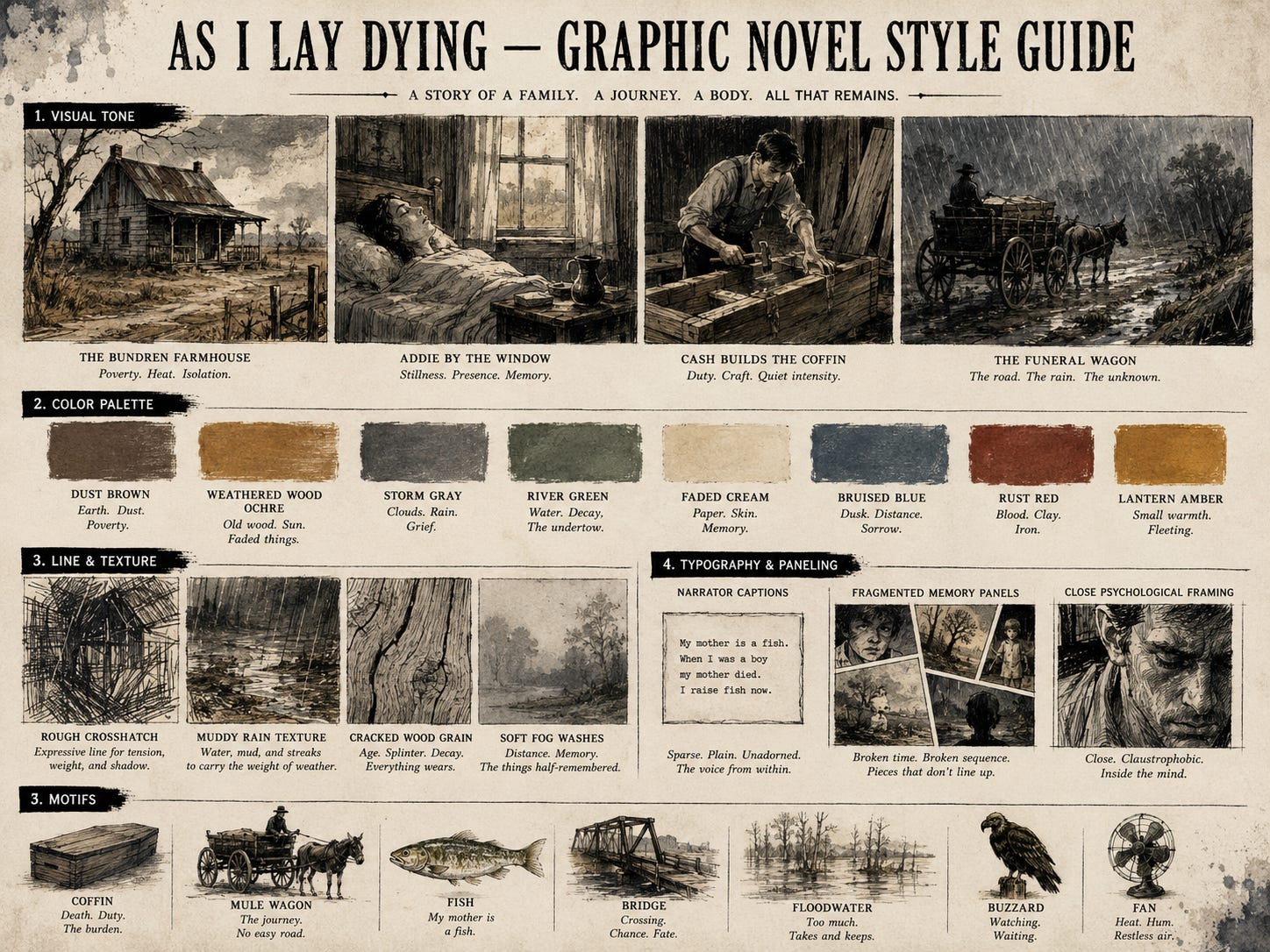
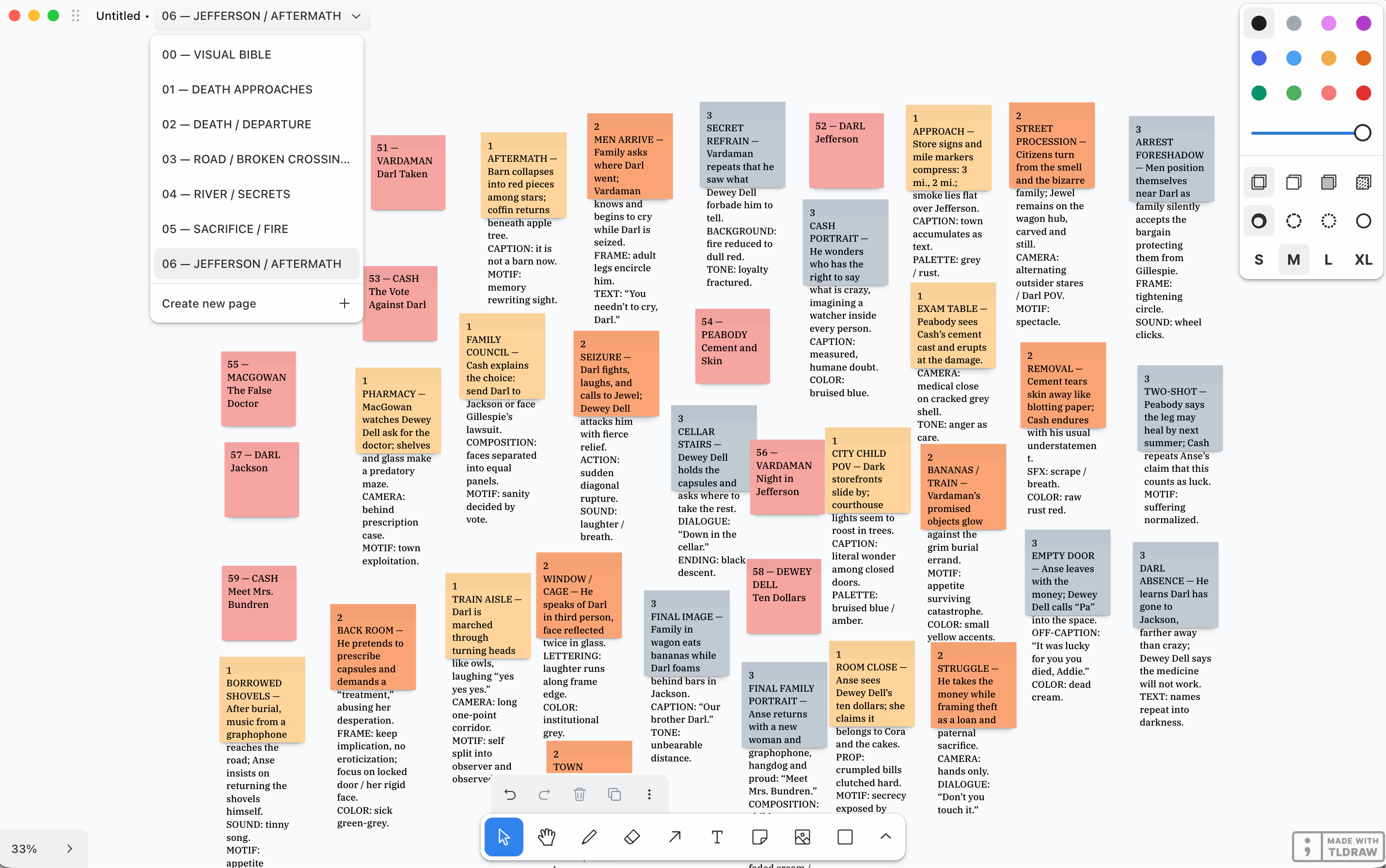
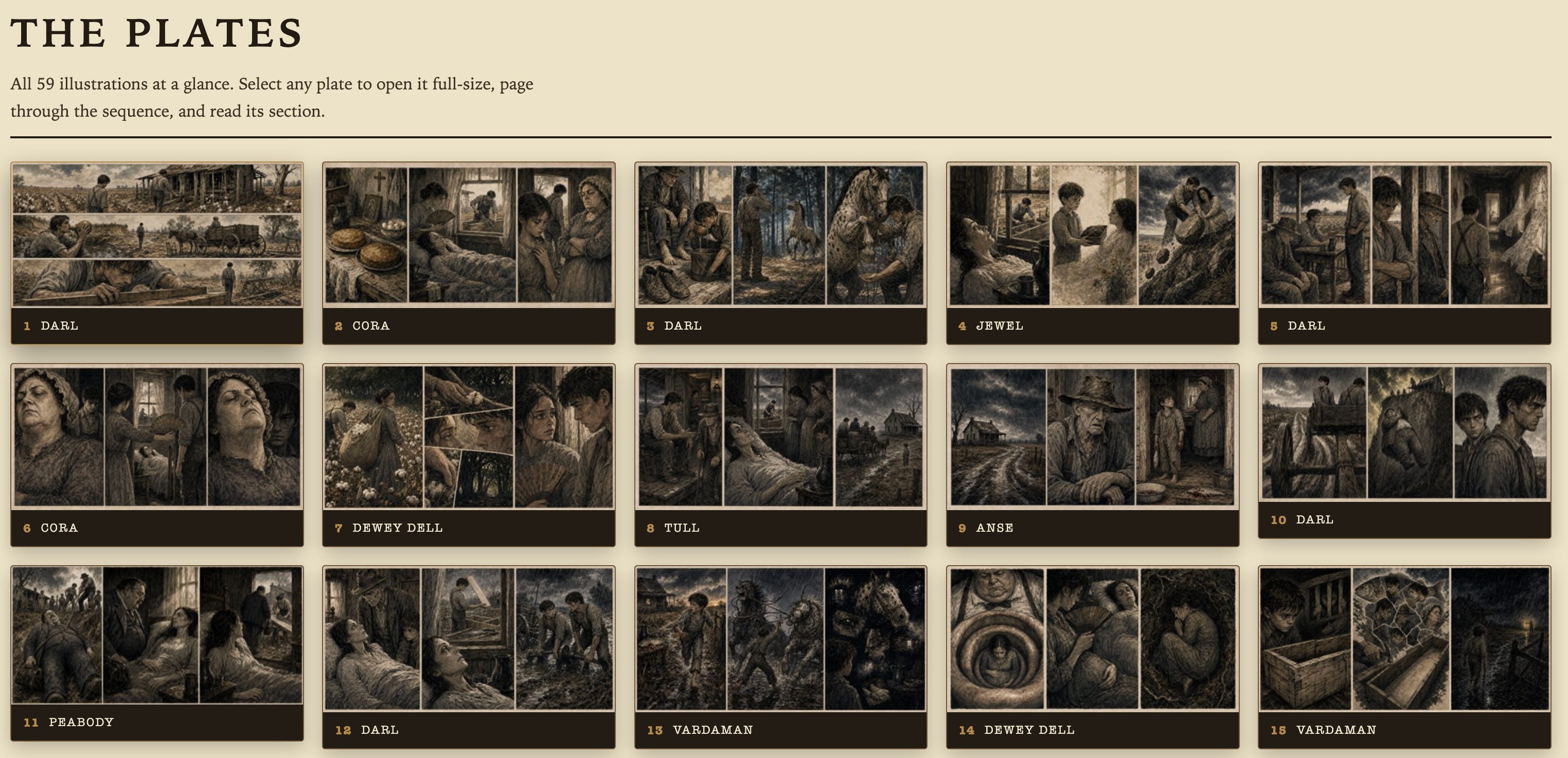
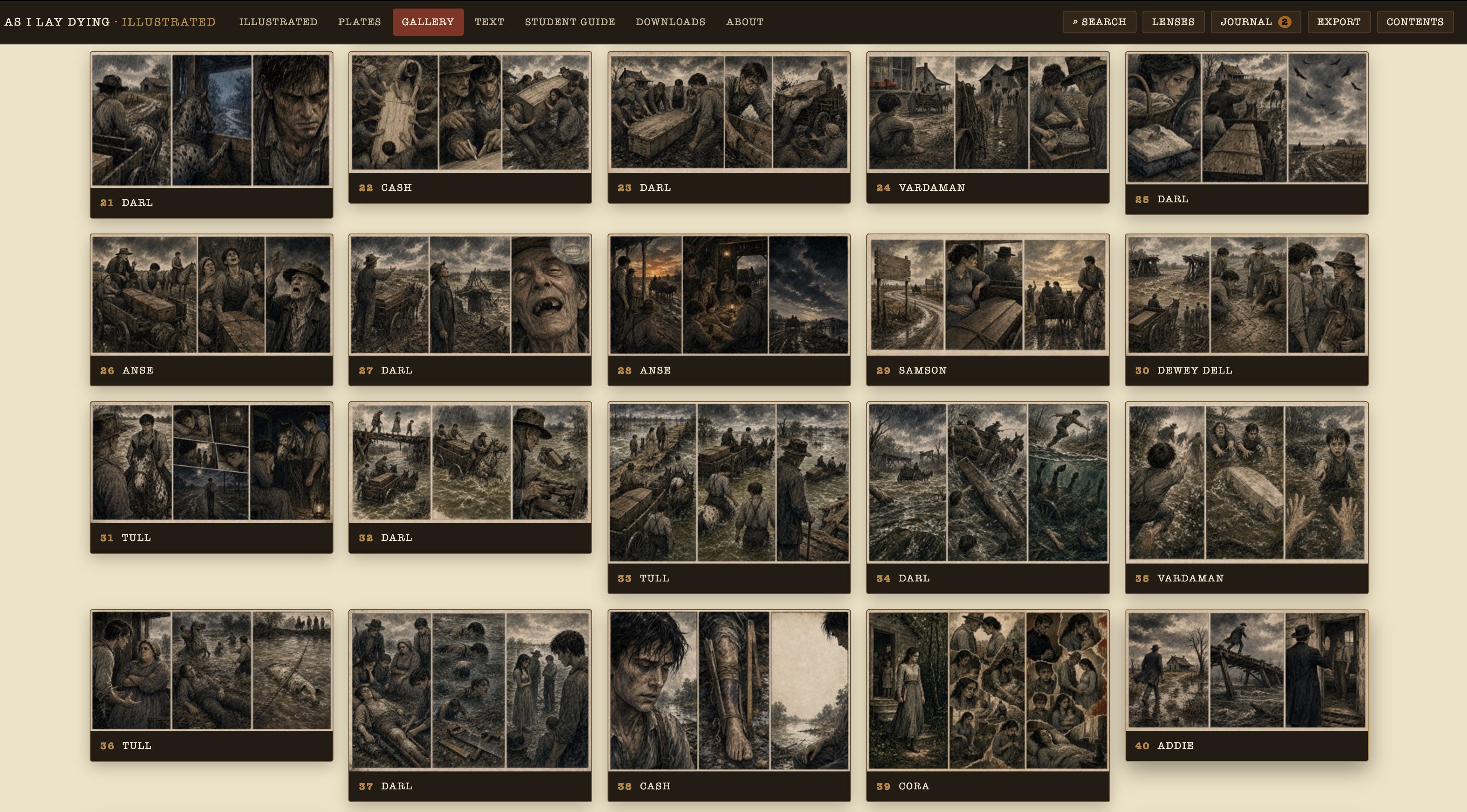
The most ambitious and time-consuming part of the project was storyboarding an illustrated version of the text to create 59 unique image plates, with three images per chapter. That meant AI had to not only generate 177 images, but each image had to maintain the same artistic style across each plate and ensure that the action matched the account of each chapter. In a novel that is driven by voice, that meant having to create a detailed storyboard for each of the 59 chapters. On top of this, I added the reading tracker tool and I also incorporated the ability for students to leave voice annotations and upload those to the LMS. The beauty is that all information is stored locally on the student’s browser.
The entire project took weeks of work and multiple iterations before I settled on these four main artifacts. I routinely hit my 5-hour usage limit on Claude Code and OpenAI’s Codex and had to wait hours between sessions for even minor tweaks. Storyboarding and coming up with a style guide and concept map took the most work. Developing the illustrated version involved downloading a tool called Tldraw Offline and connecting Codex to it and walking through 59 unique storyboards before tasking GPT 5.6’s image generator to use the style guide I created to generate 177 images across 59 chapter plates. That alone took the majority of a week. Once the project was completed, I then used Claude Code to pull together a completed site, including a student reading guide, ePub, and PDF versions.
I want my online students to read the text from their own distinct disciplinary backgrounds, and I want them to be invited into a much deeper argument about the nature of creating and experiencing knowledge in the era of ubiquitous AI.
Crucially, while this project used existing text and new technology to create, I built it with the intention that students didn’t have to experience the novel using AI. None of the AI-coded experiences ask students to use AI. There are no embedded chatbots, no AI personas of Faulkner, and no click-button features for providing the reader with a tidy summary of the text. Each experience is an encapsulated module connected by a shared topic and theme to help students slow down, explore, and take in a completely fictional landscape so far removed from their lived experience that they might well confuse it for science fiction.
There’s also an argument implicit in the design that I want my students to struggle alongside me throughout reading it. I’ll be revisiting these questions with them and offering my own responses throughout the semester:
How do new technologies complicate and complement our relationships with text and art?
What choices are important for a human to make or cede to a machine when designing large-scale projects?
Who is the author, artist, or designer? What do these terms mean now when AI tools are used?
I’m keenly aware some may consider this slop, or even worse, a sleek wrapper to increase student distraction. Kashmir Hill’s I Got Slopped is a good reminder that writers and artists haven’t consented to have their work or images used by AI, and the general public’s response to purchasing anything labeled as ‘AI’ isn’t one of enthusiastic glee.
In trying to preserve online learning, I’ve seen many faculty move to surveillance and AI detection as solutions to counter the technology’s impact on learning, with little success. Students ignore or easily bypass most detection techniques, and the sheer volume of AI use overwhelms most faculty. We’ve greeted AI as an uninvited and unwelcome interlocutor in our classrooms. Perhaps using AI to code a unique experience for students that speaks to ways that they’ve become accustomed to encountering content invites them to want to learn. Perhaps it’s just as foolish as turning to any of the other so-called solutions to curb AI’s influence. I’m more interested in signaling to my students that I care about them and how they learn than presenting this project as a salve for online learning.
Reading in the era of thinking machines means making intentional choices in how we assign words and reconsidering how students read in digital spaces. As a reader and writer, I see the value in grappling with a challenging text, but that’s my bias. While I’d argue it is a damn good one, I don’t think all students are persuaded by this stance because it really is just a preference at this point, one many of us have been asking students to treat as a sacred obligation. The text in these experiments remains Faulkner’s, not my own, nor that of a machine. The sounds come from open-source samples on Freesound. The images, video, and code are all generated by AI. Creating intentional experiments that mix AI with human art and call for students to slow down and engage with it might one day create a balance between the analog and digital realms we haunt. As literacy habits continue to shift, so too should our response.
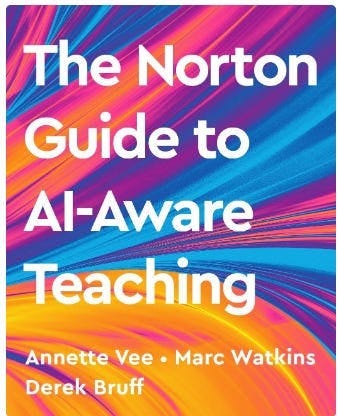
The Norton Guide to AI-Aware Teaching is now available to order as an ebook! Print copies are expected to start shipping on September 24th. Here’s how you can get a copy:
Our publisher Norton is pleased to offer the guide as a free ebook for all instructors currently using a Norton textbook. If that’s you, you’ll receive access from the Norton team when the ebook is available July 1st and can contact your local Norton representative with any questions.
If you would like to order the ebook, you can now do so through Amazon and Barnes & Noble and other retailers.
If you would like to pre-order the paperback version of the book, you can now do so through Norton, Amazon, Barnes & Noble, and likely other retailers. If you go through Norton, be sure to use the code AIFREESHIP at check out to get free shipping!
If you would like to order multiple copies for a campus reading group or some other faculty development effort, Norton has an option for you: On orders of 10 or more print copies, we offer 50% off the list price and free domestic shipping. (Such orders must be on a nonreturnable basis.) To take advantage of this offer, contact Peter Wentz at pwentz@wwnorton.com with subject line “Norton Guide to AI-Aware Teaching.”
See John Springhall, Youth, Popular Culture and Moral Panics: Penny Gaffs to Gangsta-Rap, 1830–1996. https://link.springer.com/chapter/10.1007/978-1-349-27458-1_3
Comments
Nothing yet. Say the first thing.
Sign in to join the conversation.