
There is a misleading version of the AI story that says recruiting is about to be automated away.
I think the more useful version is this:
Recruiting is being repriced.
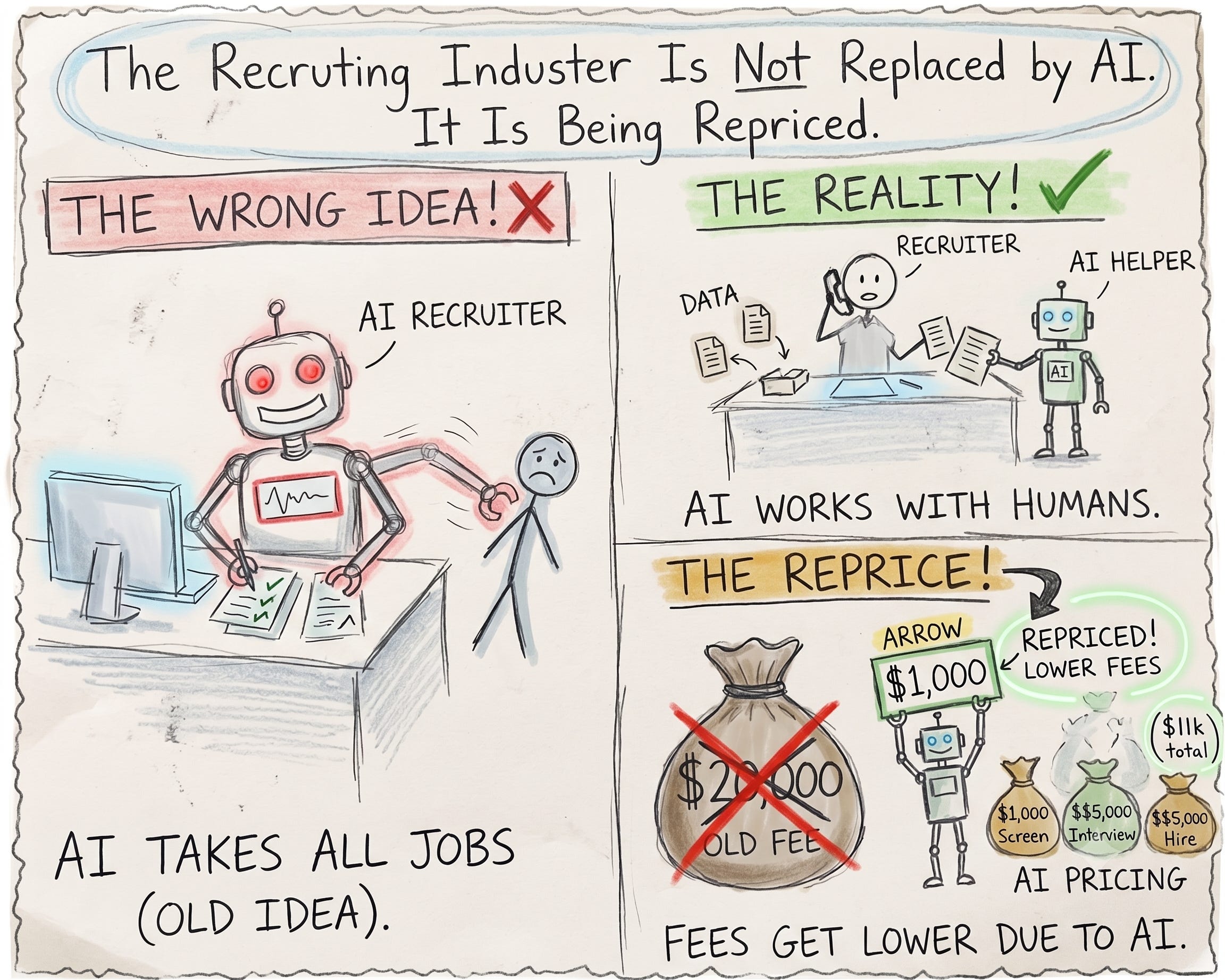
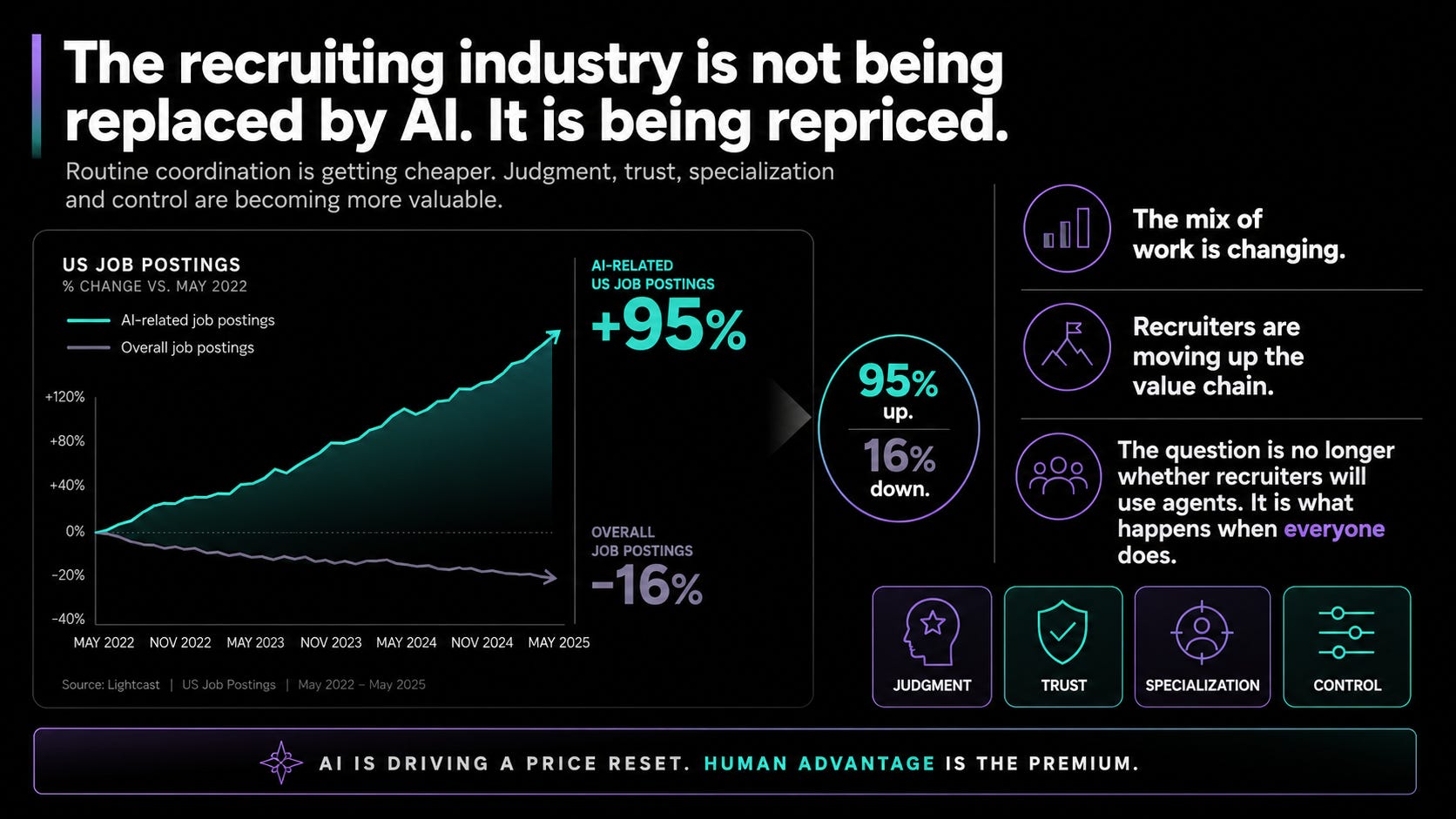
Routine coordination is getting cheaper.
Judgment, trust, specialization and control are becoming more valuable
By EQ.app
AI-related US job postings increased 95% year over year during the first half of 2026, while overall job postings declined 16%, according to ManpowerGroup data reported by StaffingHub.
That is a remarkable gap. The best recruiters are not disappearing. They are being pushed toward harder work:
Understanding unfamiliar and rapidly changing roles.
Separating real capability from AI-polished applications.
Advising clients whose organizational structures are changing.
Building specialist communities before a requisition arrives.
Applying human judgment where the data is incomplete or contradictory.
This is not the end of recruiting.
It is a move up the value chain.
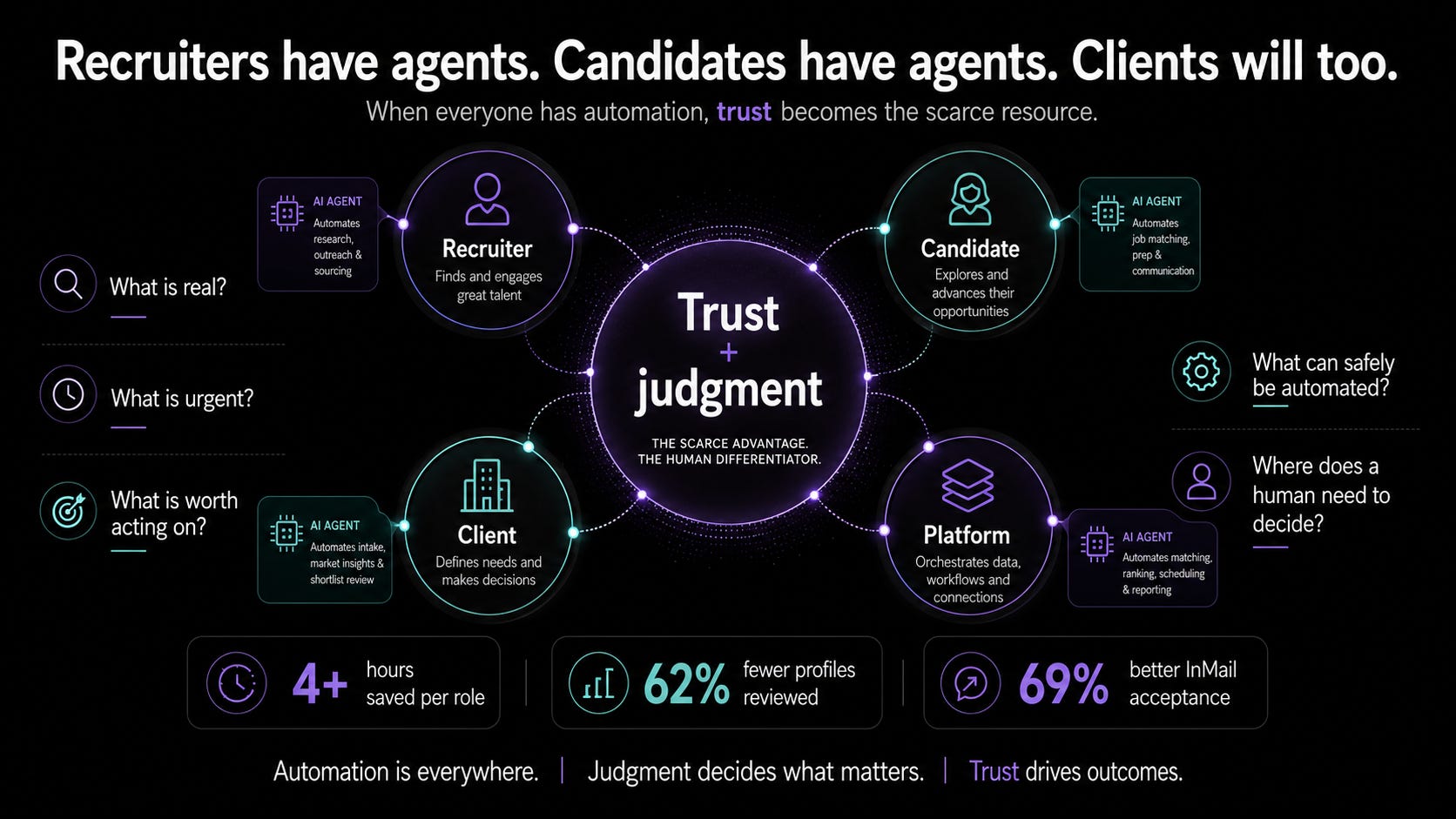
LinkedIn now describes Hiring Assistant as an AI agent built directly into LinkedIn Recruiter.
It can create projects, source candidates, review applicants, draft outreach, prescreen interested candidates and learn from recruiter actions.
LinkedIn says early adopters saved more than four hours per role, reviewed 62% fewer profiles and achieved a 69% improvement in InMail acceptance rates.
Those are not small productivity gains.
They change the economics of sourcing.
Automation itself stops being the advantage.
The advantage becomes knowing:
What is real?
What is urgent?
What is worth acting on?
What can safely be automated?
Where does a human need to make the decision?
When both sides of the market have agents, trust becomes the scarce resource.
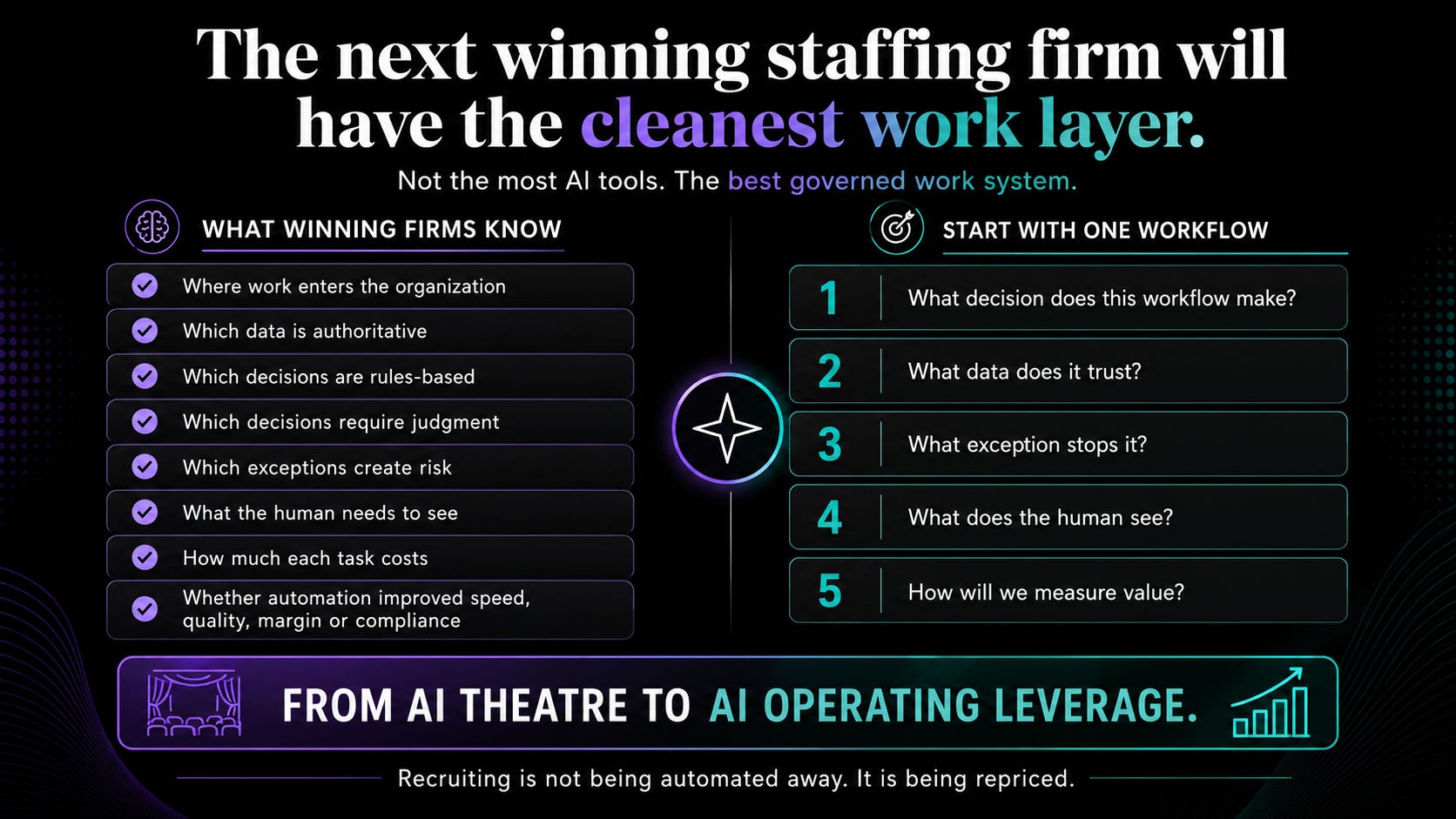
Staffing and recruiting businesses are coordination businesses.
Every placement depends on hundreds of small pieces of information moving through the company:
Together, they are the operating system of the staffing company.
The market keeps talking about models.
Operators keep discovering that the real work is the layer above the model.
Memory.
Permissions.
Routing.
Identity.
Dashboards.
Integrations.
Business rules.
Monitoring.
Auditability.
This is becoming an urgent infrastructure problem.
A recent survey of more than 1,400 senior IT leaders found that 83% believe their infrastructure needs upgrades to support agentic AI systems.
Only 17% expressed full confidence that their technology stack could support mission-critical AI agents.
The same research found that 62% were experiencing high inference costs caused by problems such as data movement, storage bloat and idle infrastructure.
Poor data.
Disconnected systems.
You can automate a mess, but you will create the mess faster and at greater scale.
Open-weight models are improving rapidly.
That will continue to reduce the cost of intelligence and give companies more choices over where and how models run.
But a cheaper model does not create an operating system.
The workflow.
The memory.
The permissions.
The source-of-truth hierarchy.
The domain knowledge.
The human checkpoints.
The enterprise controls.
A free engine is not a free vehicle.
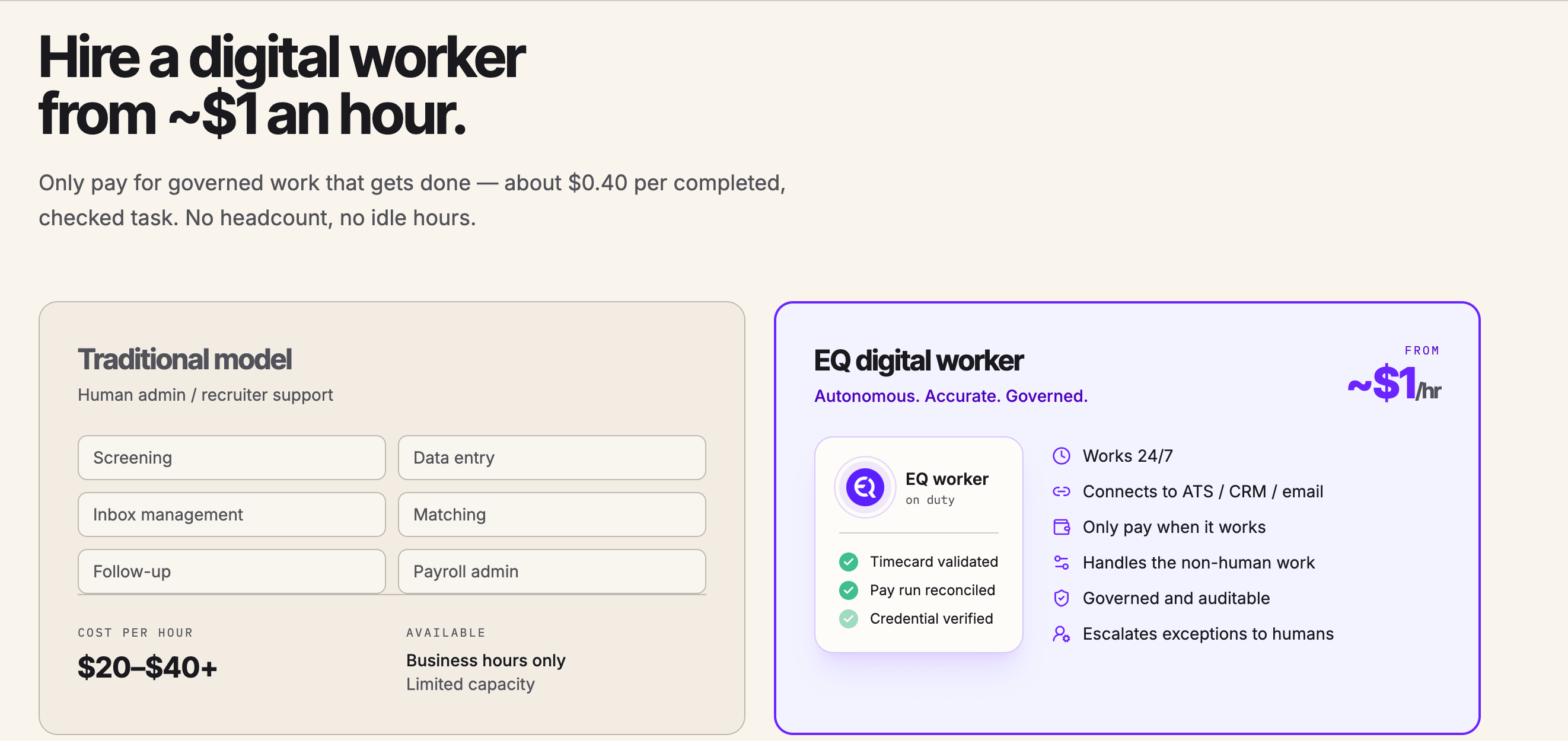
Our own work this week kept returning to the same lesson.
The customer does not just need an AI worker.
They need a governed work system.
AI is not eliminating the recruiting industry. It is exposing what customers were really paying for.
They were never paying for searches, emails, database updates or administrative movement.
They were paying for a trusted outcome:
It is being repriced.
What part of your business is ready to be handed to an agent—and what part would break if you did?
Comments
Nothing yet. Say the first thing.
Sign in to join the conversation.