
“Unaishi aje vi-basic ni ka’a kesho iko promised…”
- Nyashinski, in ‘Marathon Runner’
There was no queue. I want to start there, because in our Nairobi, “there was no queue” isn’t a neutral statement. And if you’ve experience this our Nairobi for a significant stretch of time, you know exactly what I mean. I’ve done the thing where you’re still arguing with an Uber driver about the approach road from Langata while the show you paid for starts inside. I’ve watched a ticketing line stretch so far it disappears around a corner and snakes back round to you, with nothing to do but stand there counting your own regret.
At no point during the entire evening of the Showman Residency experience did we encounter anything like that. You walked in. You found your seat. You went to find food. You were back to your seat on the inside of 10 minutes. You went to buy drinks. You were back in 5. The operation moved with a quiet, unshowy competence that is rarer than it has any business being.
And then, 8pm. On the eye.
Not 8:07. Not “the show is about to start” at 8:23. I even stopped attending events because I’ve grown resentful of the hang time.
8pm. Mercy Mutisya was on that stage at eight o’clock. On the eye. The white-text-on-crimson-red-background countdown was real. The lights went on on schedule. Eight-on-the-eye. Which sounds like a minor thing, until you have spent enough years attending Nairobi events to understand that it is not a minor thing at all. That, in itself, felt like a message.
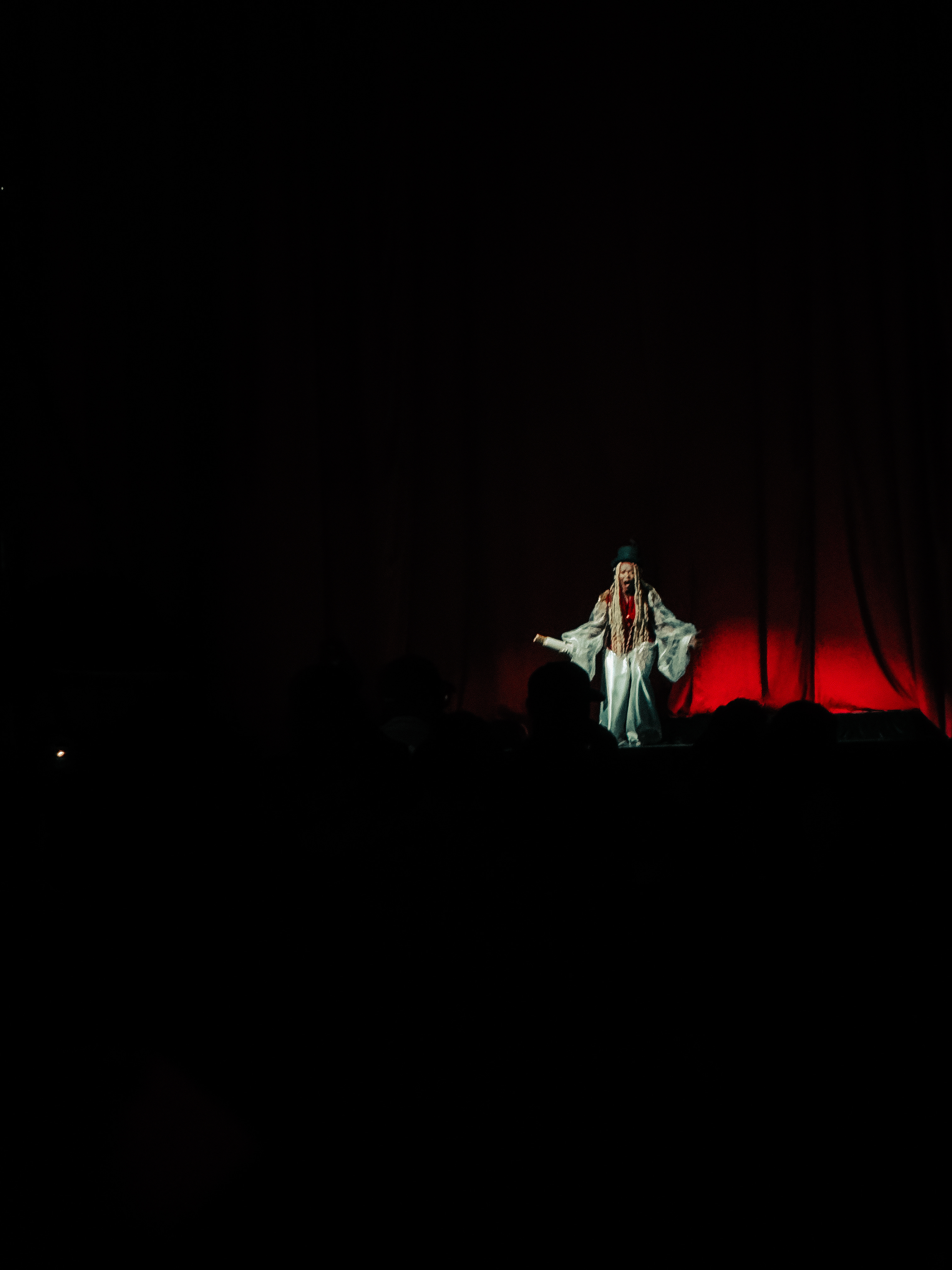
By 11pm - 11:05, really, to be precise about it, because that’s when I recovered the presence of mind to look at my watch - the show was done. The credits had rolled. There were pockets of people gathered in different spaces, in awe of what they had just experienced. And that awe was certainly earned. We had just been given something, and we hadn’t quite processed it yet. I don’t knwo if we have - I mean, here I am, typing and deleting and retyping one week later.
I remember the conversation being roughly: “Are we going home or are we going out?” It was a Sunday. The next day was Monday. Home won. But the question got asked. That’s the sign of a good show.
“There’s no guesswork.”
- Ibrahim Muchemi
I’ve been thinking about the concept of a force multiplier for the last couple of years - introduced to it properly in a strategic context, and then finding, the way you do with useful frameworks, that it kept showing up wherever I looked.
The core idea, if you haven’t encountered it: A force multiplier is a thing that, by its very existence, augments and amplifies whatever it comes into contact with. Not by adding more of itself units - by elevating what already exists. In military theory, superior intelligence is a force multiplier, because then you know exactly what to do instead of just throwing bodies into the grinder. In organisations, the right leader is a force multiplier, because you make choices led by the right mix of instinct and wisdom, instead of just shoving an app update down people’s throats that logs them out of their M-PESA accounts.
Applied to a society’s ecosystem - and I want to be unambiguous about this, because it’s something I firmly believe in - the diligent incubation and execution of creativity is a infinite force multiplier.
Otherwise put: A production ambitious enough, well-resourced enough, and executed with enough actual seriousness doesn’t only employ skilled people. It creates the occasion for skilled people to operate at their actual ceiling. There is a version of every dancer in this city, every sound engineer, every choir director, every aerial silk performer, that we never see - because the productions available to them haven’t required it. Haven’t had the budget for it. Haven’t conceived something big enough to need the full version of what these people can do. Or haven’t had the imagination for it.
The right application of creativity changes all this. It makes the latent visible. It turns capacity into proof. Infinite force multiplier.
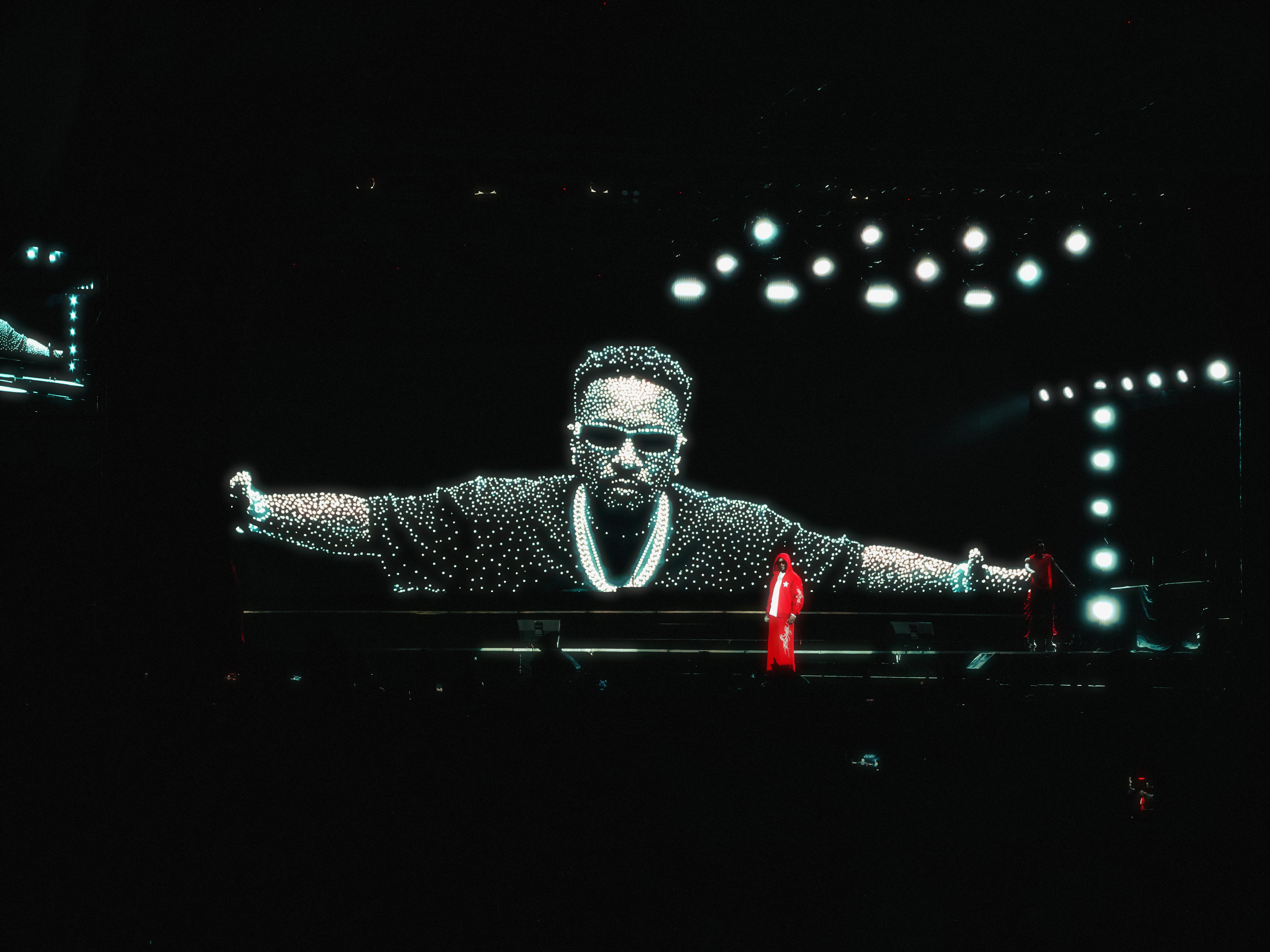
The Showman Residency - 7 shows, April 4 to April 12, 2026, Carnivore Grounds, Nairobi; approximately Ksh 40 million, self-produced, self-funded - was, if I had to name one thing it was, a force multiplier.
“Every time Nyashinski comes up with ideas, my mind gets blown.”
- Fakii Liwali
At some point, I think I counted approximately 50 people on that stage simultaneously. Not for the curtain call. Not as decoration. Not as backdrop. 50 people doing specific, skilled, rehearsed work, all at the same time.
At some point, Peti Masupo, the lead guitarist, was playing guitar while suspended roughly ten feet above the stage. I clocked this in Freedom Units, because something about the specific wrongness of a human that high up, doing something requiring that level of precision, makes metric feel inadequate. Ten feet. In the air. Still playing. The audience didn’t quite know what to do with it, and honestly, neither did I. It was one of the more extraordinary things I’ve seen at a live performance in this country. Just sitting with that. Moving on.
There was, at some point, someone else even higher in the air - close to the roof of the structure that housed us. Her name is Juliana. She was doing aerial yoga. These are things that I’ve only ever seen in films and TV shows. And there she was, in this our Nairobi, just gliding through the air with fabric as her only support. I mean… Listen, here’s her Instagram account. I’m still finding the proper words.
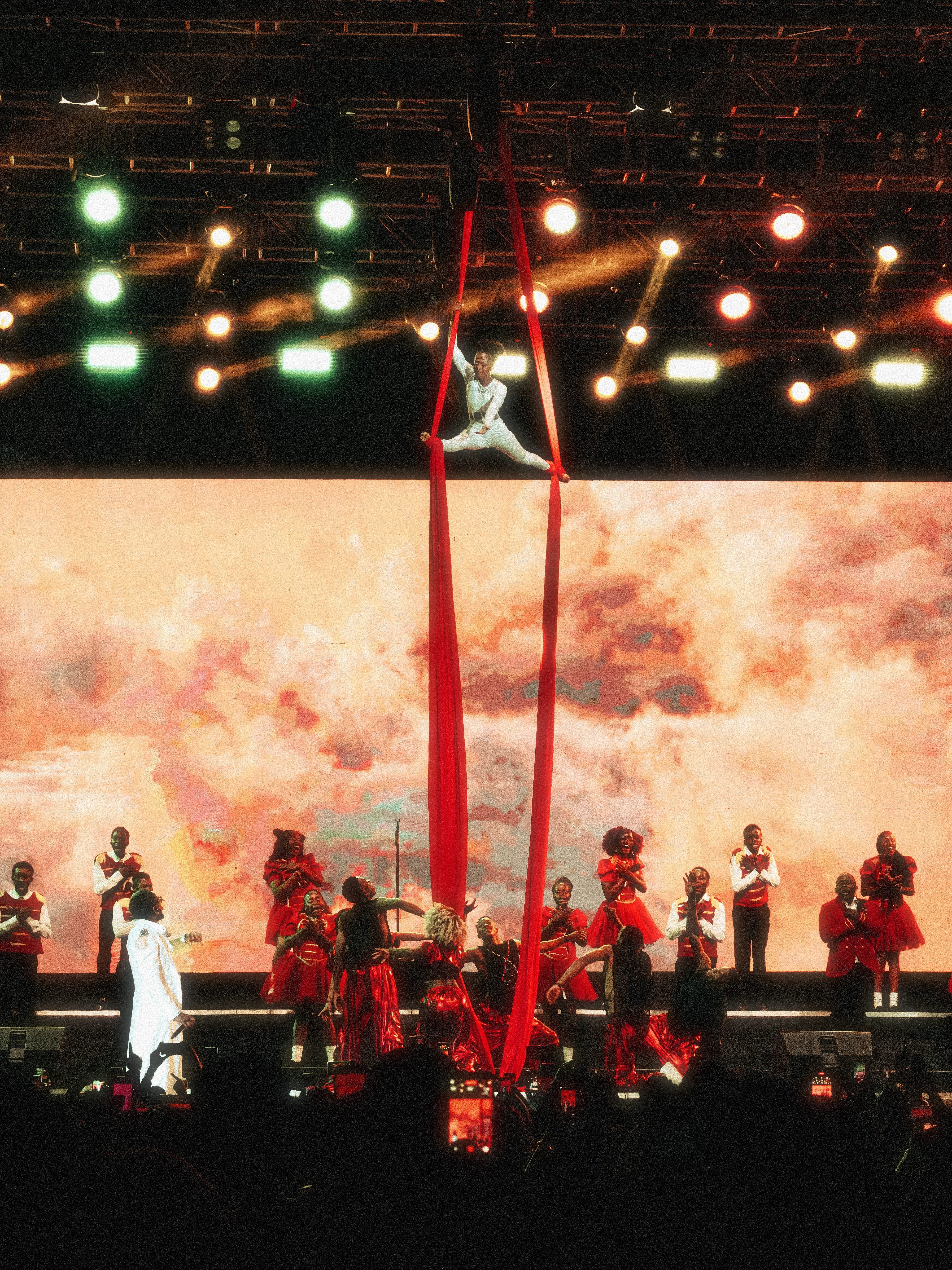
If I started naming names, we’ll be here a while. That’s how massive this staging was. I’ll direct you to Nyashinski’s Instagram - he does a brilliant job handing the flowers where the flowers are due.
All of them doing this seven times. Once each Saturday, 8pm. Twice each Sunday - 2pm and again at 8pm, same night, same stage, same standard. Then the Wednesday VIP show. Seven shows across nine days. And on those Sunday double-header days: 2pm to 5pm, home briefly (only if you lived close enough, and you weren’t sure if you left the stove on), back at 8pm, 11pm, home. The physical and mental discipline of holding a production at that standard, not once or twice as a special occasion - that part doesn’t get talked about nearly enough.
“He already had ‘the Bible.’”
- Gathoni Kimuyu
Here’s where I want to push back on the usual framing, though, because I think the usual framing - “Nyashinski proved what is possible; he showed us a new ceiling; he opened a door” - is underselling what happened here. Interesting, yes. True, certainly. But not quite there yet.
Nyashinski didn’t build the talent. He found it. The brilliance is what followed: He assembled it. And there’s a genuis in assembling genius.
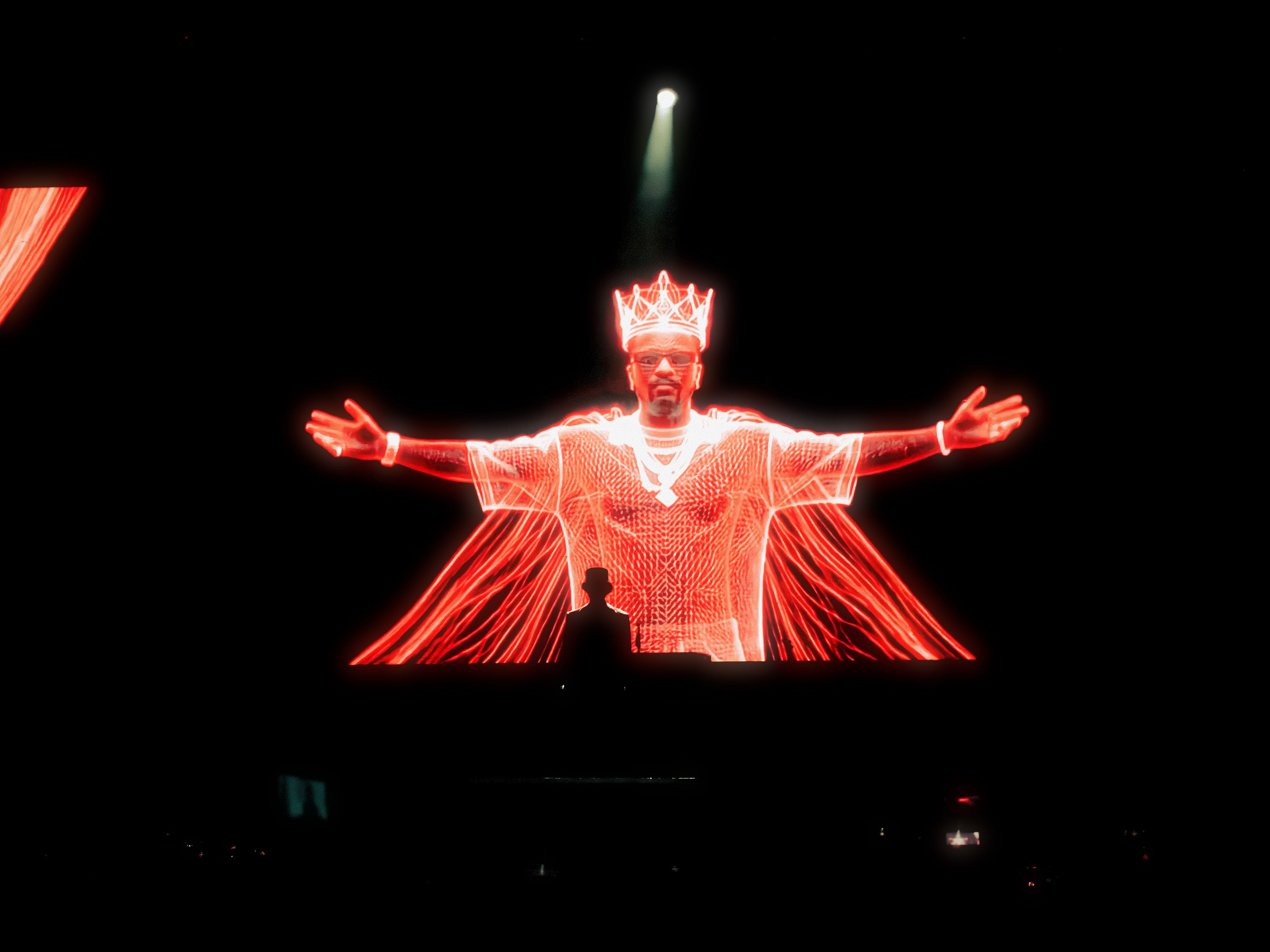
Peti Masupo existed before this show. His skill with a guitar existed before anyone put him on a harness above a stage. Mugambi Nthiga’s practice in theatre and direction - that was already there. The choir members had voices and training that preceded this production. Homeboyz had the equipment, the studios, the expertise. The aerial silk performer trained in some prior context, for some prior purpose. Every dancer had developed their discipline somewhere, for something.
Think about every name - Gathoni Kimuyu, Mercy Mutisya, Michael Smallz, Shiko Kimani, Jackson Babu, Ben Gitts, Oscar Mwalo, Amina, Tobit, Faith, Bancy, Joy, Mwende… Every name, every person, already in their zone.
What the Showman Residency created - what forty million shillings and Fakii’s budget management and Nyashinski’s notebook full of ideas (his team called it, simply, the Bible) actually produced - was the occasion for all of that existing capacity to become fully visible simultaneously. It made the latent legible. Under one roof. For 180 minutes, 7 times.
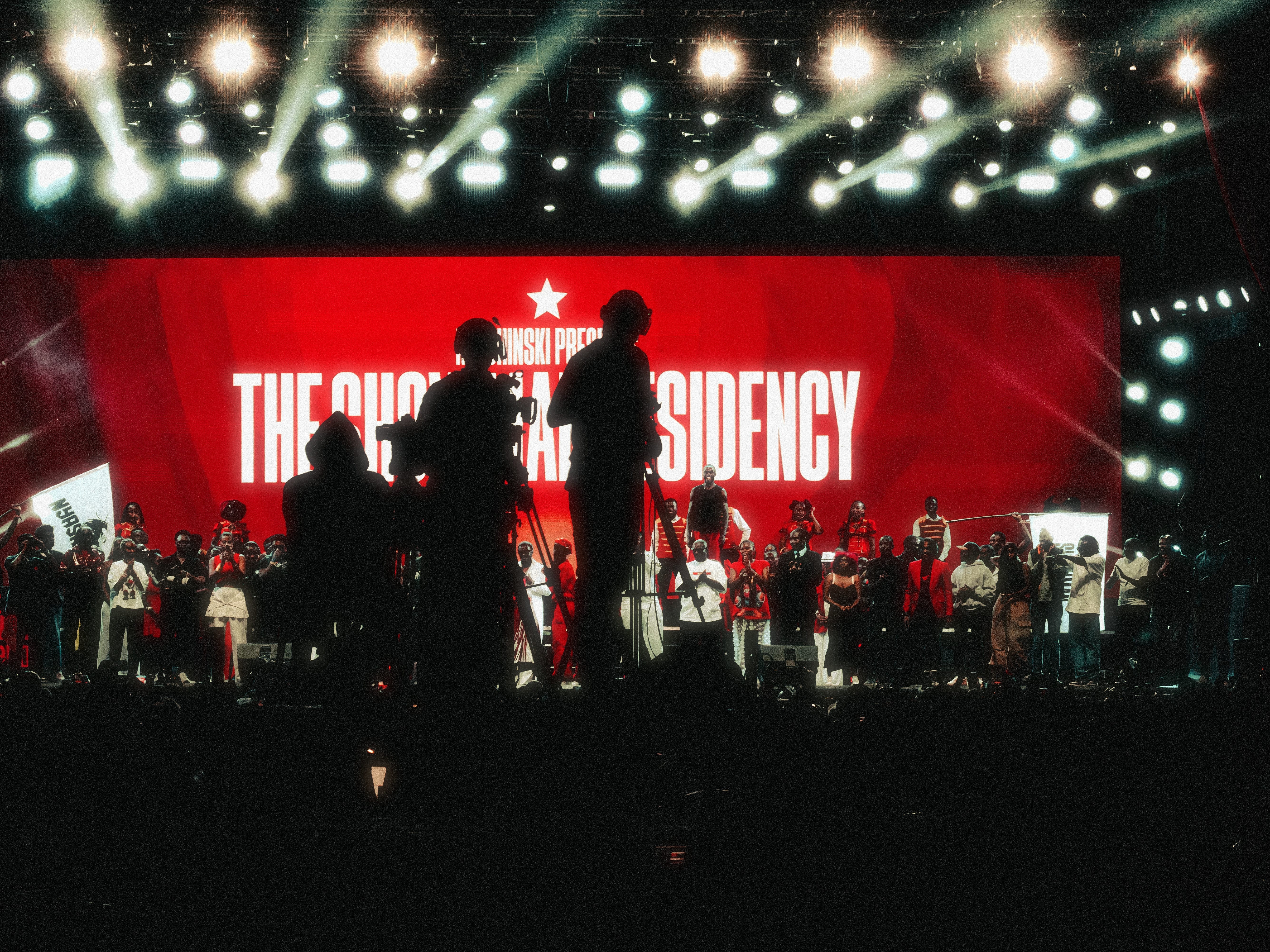
And this is the thing that I think changes the terms of the usual conversation about Kenya’s creative economy. The usual conversation is about potential. It’s “training” and “capacity building” and so many fancy-sounding terms… And yet what’s needed is the right investment, the financial muscle. Yes, the potential is real, and the capacity building is a conversation to have, but 7 out of 10 times, what’s missing is the right infrastructure, the right policy environment… and the right investment. Which is why the Showman Residency wasn’t, to me, a demonstration of potential. The Showman Residency demonstrated present-tense reality. “We have this,” it said. “The ability. The capacity. It’s here. Right now. It’s been here. Now let’s move already.”
Ksh 40 million moving through the hands of sound engineers, choreographers, theatre directors, choir members, riggers, set builders, costume suppliers, lighting specialists, show producers, onsite cleaners, event security… That’s forty million shillings in the pockets of skilled people doing skilled work at a level their field respects. That’s invoices and salaries and careers made more legible. That’s practices validated. That’s people fed and rents paid. The force multiplier does its work not just by employing the 50+ people on stage. It does its work far beyond them. So far beyond what’s visible and obvious.
“We are representing Kenya on stage.”
- Mercy Mutisya
I was not prepared for the tribute.
There’s always a cost, a toll, that callous politics and corruption (by will or incompetence) extracts. It’s a toll that has always been paid in human blood - needlessly so, at that. There are so many lives lost, so many people dead, so many loved ones killed, that would still be with us, if only the people who took their oaths of office simply abided by those oaths that they took. Those aren’t just words that are uttered hivo-hivo. Those are sacred - not only to whatever deity you believe in, but to us, as a people.
“We, the people of Kenya-”
Oaths are covenants. And these people just keep breaking them with their evey breath, every utterance, every action, and using our blood to pay the price.
It’s not our price to pay though. It never was. It’s theirs to pay.
That, to me, is what the tribute represented. That tribute wasn’t a pause in the show. It was part of the show - designed, deliberate, specific. Every one of us could feel it - that it wasn’t added for mere optics. They genuinely wanted to hold space.
What I kept coming back to was the word presence. Nyashinski was present to it. His team was present to it. Not in the sense of, “We included a segment about a serious topic,” but in the way you can tell when someone has actually sat with the weight of what they are acknowledging and not merely gestured toward it. Ibrahim Muchemi and the other actors in the Greek chorus were present to it. The choir was present to it. And because they were, the audience became present to it too.
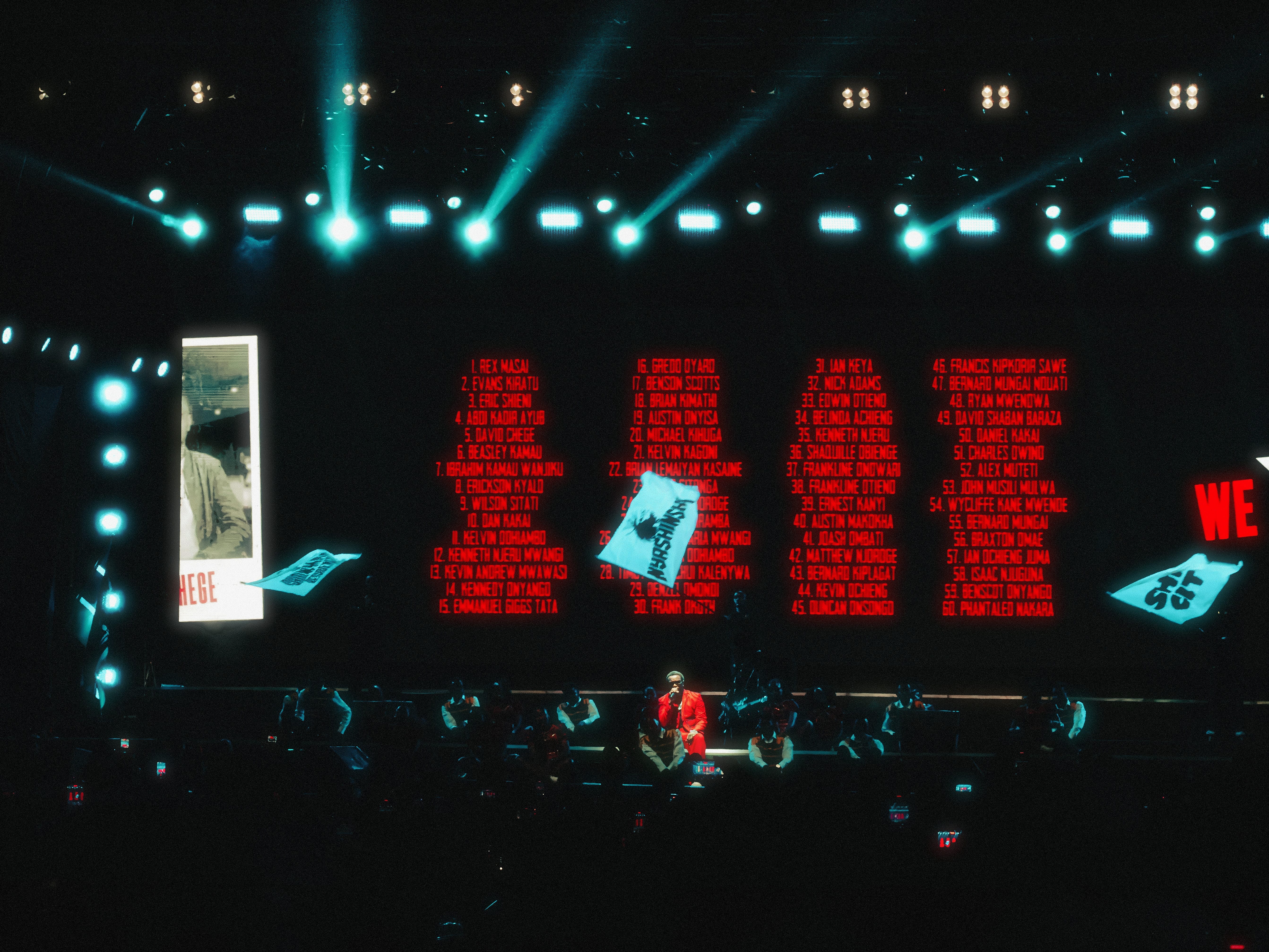
There is something that happens in an open field when a thousand-odd people are asked to hold the same grief together, and it is held with enough care and enough craft that nobody flinches away from it. It is, arguably, the oldest and grandest thing performance has ever done. Long before any of this was ticketed, long before Carnivore was a venue, the gathering and the performance and the communal acknowledgment of loss were the same thing. The Showman Residency knew this.
There was something spiritual there. I mean that in the plainest possible way.
“The Showman Residency serves as a proof of concept and a pilot for the next residency.”
- Ian Arunga
So here is what I actually think this all adds up to.
The phrase “creative economy” gets deployed mostly as aspiration in this country. A thing we’re building toward. A policy priority. A grant application category. I’ve read enough reports and sat through enough panels to know the genre well. Heck, I’m a photographer, so I know it oh-so-well. The argument is always roughly: There is untapped potential, here are the structural obstacles, here is what is needed, here is the opportunity cost of inaction.
Fine. All of that is real.
The Showman Residency, in my reading, makes a different argument entirely.
It says: The capacity is already here. The talent is here. The audience is here - willing, present, and hungry for work that respects their intelligence and their evening. Ksh 3,000 to Ksh 20,000 is a real price point for a real market. Seven shows, audience sizes deliberately capped - and that cap wasn’t a shortage of ambition; it was an expression of it. Nyashinski and the village he curated chose the quality of experience over the scale of revenue. That is a values statement. It is also a market signal.
[I want to be honest - and you may have picked up on it earlier - that I am not a neutral observer of this argument. I have spent a not-insignificant portion of my working life trying to make the case that creative work in this country, on this continent is serious, consequential, and worth the respect we routinely give to industries that move fewer hearts. The Showman Residency made my argument for me. Seven times. In three hour chunks each time. I am, I’ll admit, deeply grateful for that.]
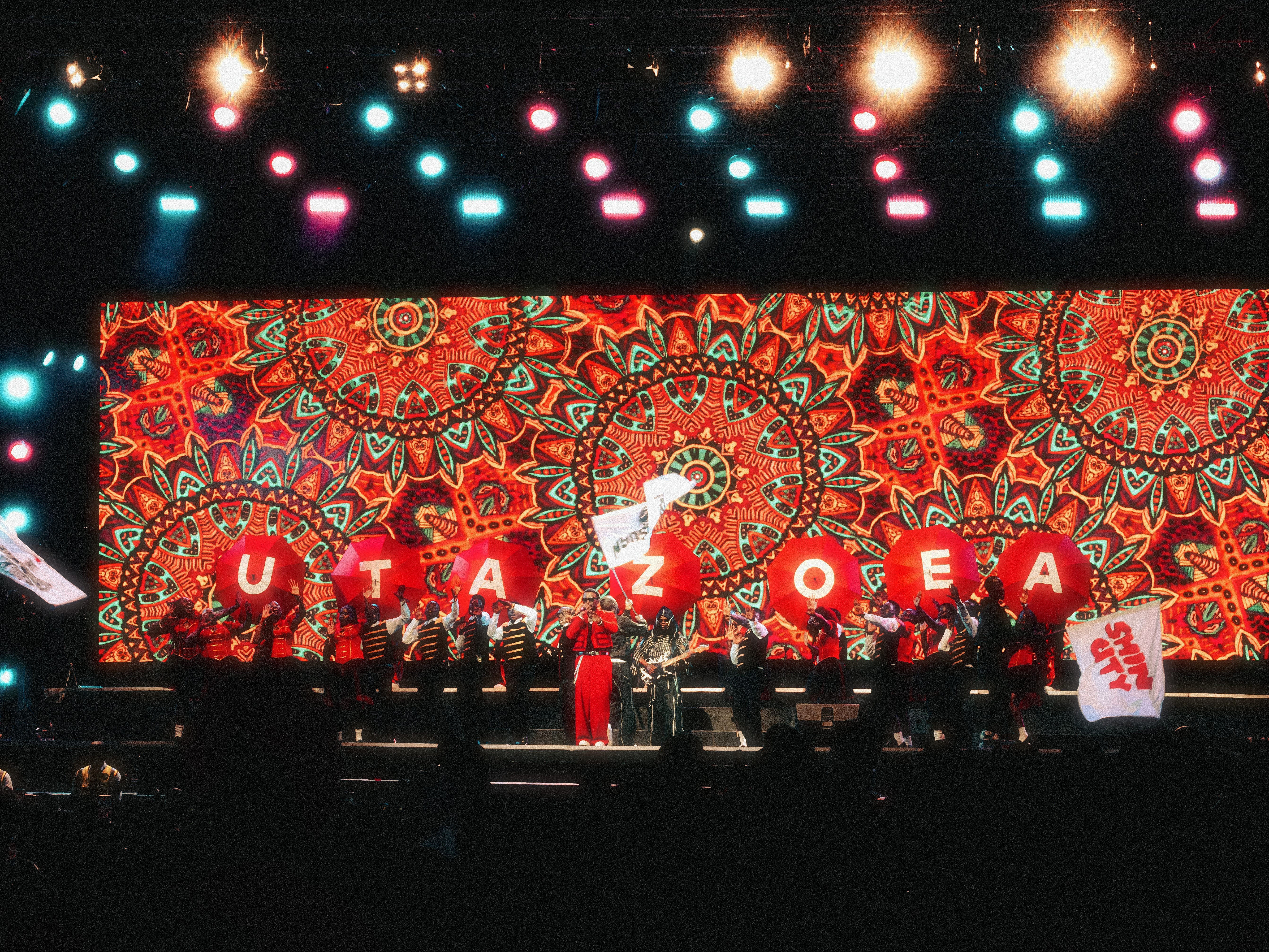
A force multiplier, I’ve come to think, is not just economic. The Ksh 40 million matters - it’s real money doing real work for real skilled people, and I don’t want to float past that with a vague wave of the hand. But the other part of what the multiplier does is work on the imagination. It works on every person who saw what was possible and is now, somewhere, asking themselves what they are building. It works on every young performer who now knows what the ceiling looks like. It works on every promoter, every venue operator, every corporate sponsor, every arts funder who has been operating with a lower ambient sense of what this ecosystem can produce.
Ian called it a proof of concept. Everything from here is argument, not aspiration.
“Sijui ka’a ntaona kesho…”
- Nyashinski, in ‘Mungu Pekee’.
On the final show of the final night, two things happened that I want to name separately, because… well, you’ll understand.
The first: At the end of ‘Now You Know’ - before the encore, I think, before ‘Mungu Pekee’ - there was a curtain call. Every member of the cast, acknowledged. The full company, together on stage, held up in front of the audience that had been watching them. It was a thing that Nyashinski always knew he wanted it in the show. The sequence and execution? You can sense a Mugambi touch when you see it.
The second: The credits. I believe I saw credits. I say “believe” because I was so taken by everything that bits of that evening felt nigh-euphoric - so maybe I saw the credits only in my mind in my euphoric high. There were credits, weren’t there? Rolling across those towering screens? Every contributor named, every role accounted for, because someone had decided that this production would think about itself the way a film thinks about itself? (Gathoni had done something similar for Free Me.) Because if those credits actually existed, and not just in my mind, then a live show with credits… That’s a definitive statement from the people that made the thing - that everyone deserves to be seen.
And that last bit - that everone deserves to be seen - is a thing that Shin himself also bore witness to: Nyashinski spoke of the Village. He was speaking to people he’d been in relationship with across multiple years and multiple projects and what felt like a shared understanding of what it meant to make this kind of work independently.
In between, the chanting started.
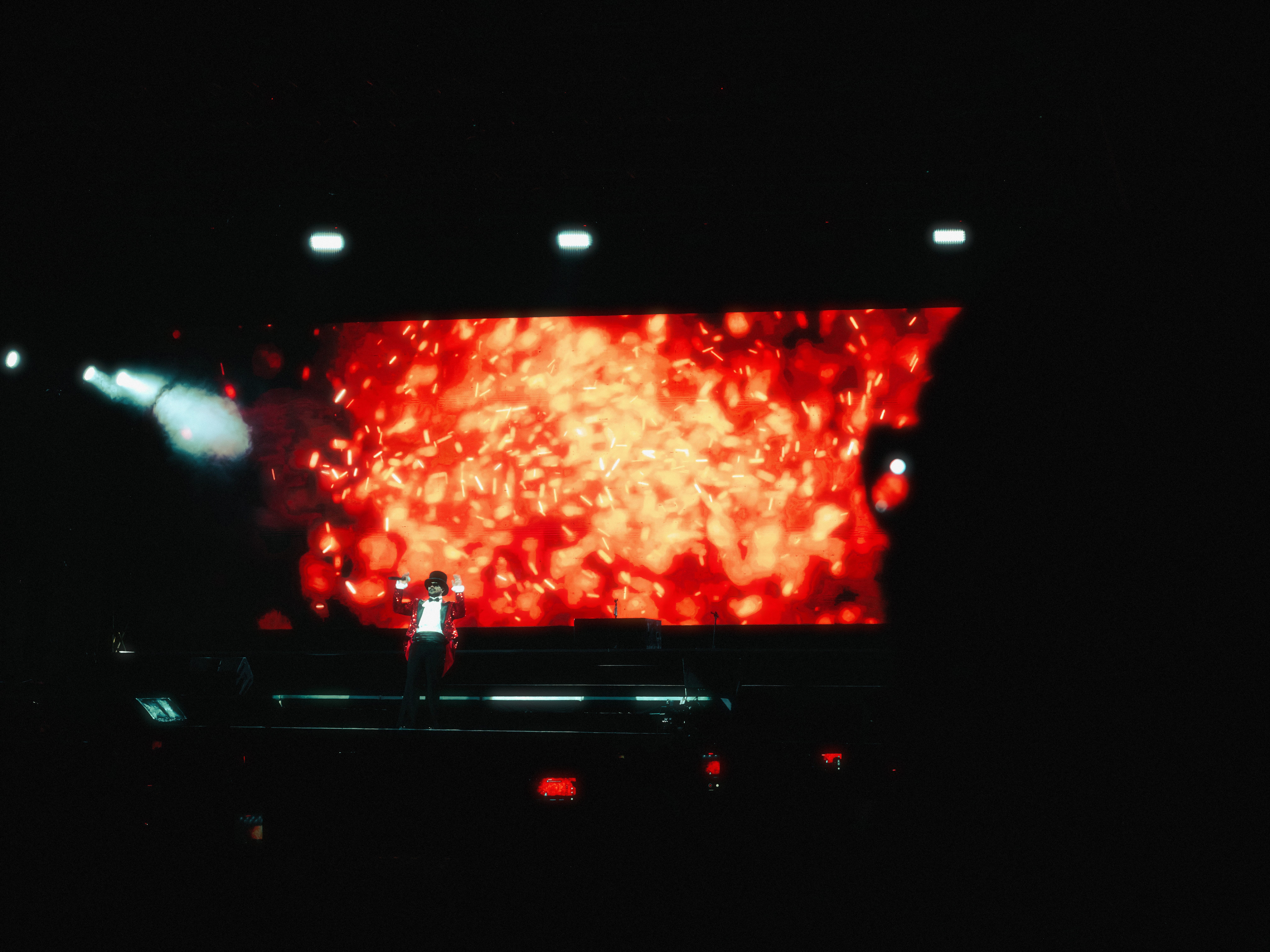
“G.O.A.T.”
He named the cost.
“G.O.A.T.”
He named what it had meant.
“G.O.A.T.”
A genuine grin on his face. The one that brings a grin to your own.
Then, as he was seemingly winding down - 10.57pm - the chanting morphed.
Anyone who has been in a Kenyan crowd when it decides what it wants knows there is no argument to be had. It builds from somewhere in the chest, rhythmic and escalating.
“Mungu pekee!”
“Mungu pekee!”
“Mungu pekee!”
“MUNGU PEKEE!”
It’s something of an open secret: Mungu Pekee has been personal since the year it came out. In the last several years, for reasons we may explore afresh at a different time, it has become more personal still. Not because the song changed. Because I arrived somewhere that the song had already been.
Sijui ka’a nitaona kesho. Not in despair, but in a kind of radical steadiness - the equanimity of someone who has looked directly at uncertainty and decided to keep moving anyway.
And at its centre: Namwogopa Mungu pekee. Not humans. Not whatever the enemy has assembled.
Namwogopa Mungu pekee.
I’ve heard the lines of that song hundreds of times at this point. And I’ll likely hear them hundreds of times more. But this one time, in the right space, with the right people - stripped down to the richness of soul that a chorus of human voices carries - it can re-open something you thought was closed.
Turns out it was never closed.
The choir sang. We all sang. And somewhere between the verse and the chorus, I wept. The honest kind. Not the comfortable, cute kind. The other kind that knows something you haven’t managed yet.
I wept.
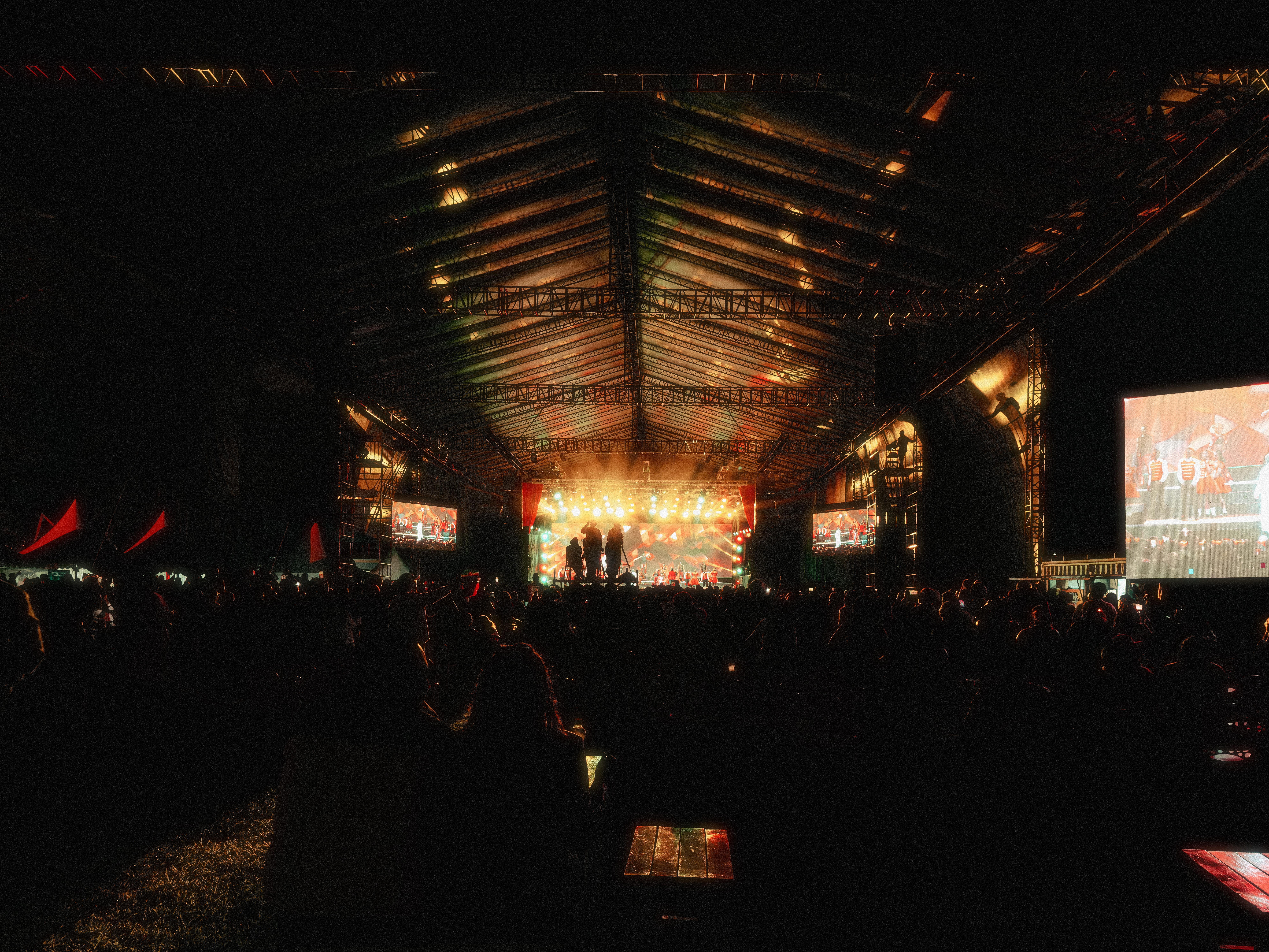
All of it - all 40 million shillings of it, all of that discipline and grief and 8-o’clock precision - had arrived here. In this acoustic song. In the specific moment where a production large enough and well-made enough and honest enough reached past the spectacle and found this person standing at the very back of the audience who had been carrying something.
I wept.
The Village was on its feet.
Nyashinski was smiling.
They had done the thing.
That’s the proof.
I didn’t talk about this earlier, because I genuinely didn’t know where to place it as I wrote this out, so I’ll just place it here.
“Listen, man, I think you need to come for this show.” This was Mugambi on the phone with me a few days prior to the show. “There’s something about it that I believe you’ll appreciate, and it’ll really speak to you.”
The man already carries the titles of writer, actor, director - but on this count, I’ve decided that I might as well bestow the title “oracle” or “seer” upon him too.
I’m typing this out at 9.26pm - a sliver shy of one week since that gig. And a part that’s still playing over and over and over in my mind is the “Marathon Runner” performance. Technically, it was brilliant, as with all other parts of the show. Every bit of it.
But there was a look of unmatched contentment and unmitigated joy that was on Nyashinski’s face that has just stayed with me. With every time they ran it back and started the song from the top - once, twice, thrice, and I think they went back to the top four or five times - that contentment seemed to “runneth over”. (It’s Sunday. I couldn’t resist it.)
That sense of joy, that sense of fulfillment, that sense of contentment that he had in him in that moment? I felt it. It touched my soul. And it has reignited something in me that I thought - feared - had been snuffed out.
Force multipliers work in many ways.
Keep jogging.
Comments
Nothing yet. Say the first thing.
Sign in to join the conversation.