
There is a conversation that keeps finding me. In DMs, in comment sections, in branding consultation conversations. It follows me from LinkedIn to Threads to YouTube comment sections to earnest email newsletters from people selling paid training packages with banners saying things like Helping Creatives Thrive™. The conversation goes like this: You need to be making videos. Short-form videos. Reels. TikToks. YouTube Shorts. You need to be going vertical. You need to be posting behind-the-scenes. You need to show your process. You need to document your day. You need to be present, and “present” now means a ring light, a talking head, and fifteen seconds of trending audio you didn’t choose for yourself.
So repeated is the idea, and so thoroughly brow-beaten, that during once-upon-a-photoshoot, I bolted an Osmo Pocket 3 onto the top of my camera in order to have “content.” The footage still sits on one of my drives somewhere. Unwatched. Unedited. Just… there.
Me, I am a photographer. A writer too. With a plethora of other skills acquired on my path thus far. But at heart, photography is the thing that brings me joy.
(And money. Money is a good thing in life’s equation.)
I’m certainly not a “visual content creator.” Nor a “multi-platform digital storyteller.” A photographer. Someone who has spent years learning to be still in front of a moment - to wait for it, to read light the way you read Mr. Mukomeza’s writing on the blackboard, to understand that the best photographs are not taken so much as received. The photograph is, by its nature, a practice that requires patience and attention arrive at the same place simultaneously. It is, by its very existence, a practice of quiet. And every six months or so, someone finds me and tells me, with genuine helpfulness, that I need to stop being a photographer and start being a show.
I’ve tried to be charitable about this. I have. The advice is not wrong, exactly - not if your goal is reach, and reach is a legitimate goal. The algorithm does prefer video. The numbers do say short-form content drives engagement. The consultants are not lying. But something in me keeps resisting, and I’ve spent long enough dismissing that resistance as mere stubbornness or creative snobbery that I’m now suspicious of the very dismissal. What if the resistance is the point? What is it about this thing I keep refusing?
Here is the thought I keep returning to.
The word “content” is doing something quiet and destructive, and I think I’ve grown a genuine revulsion for it. (Revulsion for? Revulsion against?) It has been doing it for so long that we’ve stopped noticing. Content, as a noun, has always meant what fills a container. A jar has contents. A letter has contents. The contents are subordinate - they exist in service of the vessel that holds them. Or perhaps it’s the other way round - that the vessels exist in service of the contents. Either way, the contents themselves are a primary thing of value - they exist to serve some form of fundamental and necessary function.
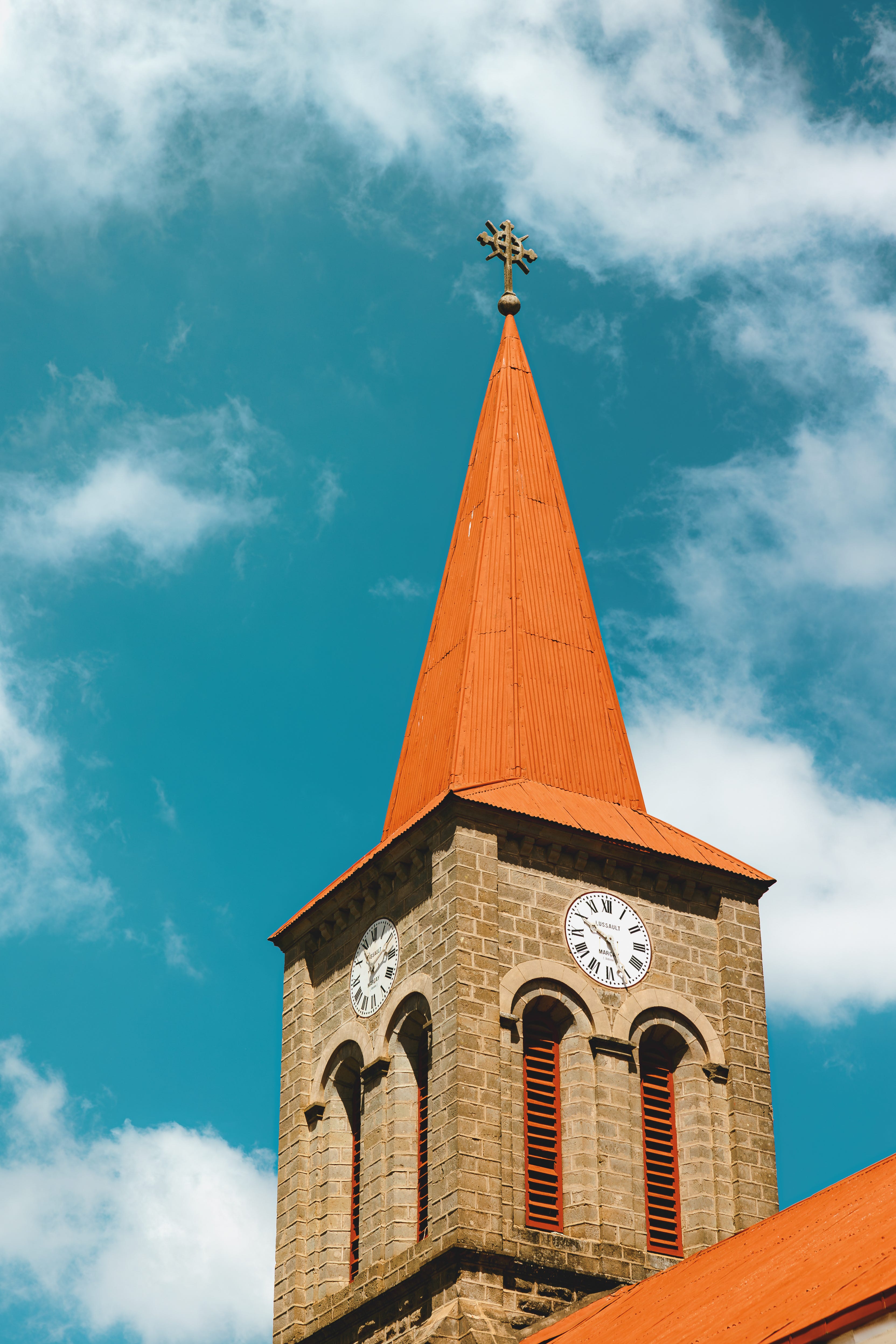
So when the digital economy adopted this word to describe photographs, essays, films, music, journalism, and every other thing it could throw into that one amorphous bucket, it did not choose the word accidentally. “Content” was chosen with the logic of a platform: The platform is the vessel, and your work is what fills the vessel. Your photograph, your essay, your careful documentary, your years of learning light - these are the contents of Instagram’s jar. The jar is only made valuable because of its contents - as Instagram only starts to matter because of what you and I place inside it.
I want us to sit with that for a moment, because I think we moved past it too quickly when it happened: The value of the container seemingly and suddenly far superseded that which it contained.
Before “content,” we had specific words for specific traditions of making.
Photography. Journalism. Filmmaking. Essay-writing. Each word carried a lineage: A set of questions about what the work owed to its subjects, its readers, its moment. Each word situated you in history. A photographer had predecessors. A journalist had an ethic, even when the ethic was violated. A filmmaker had a craft that predated any platform’s existence by decades. “Content creator” barely has any of that, if at all. It has a niche, a posting schedule, and a growth rate. It tells you where you stand in relation to the platform’s economy, not in relation to any human tradition of trying to understand the world through images and words, through motion and stories.
Which is why the move from “photographer” to “content creator” is, to me, not a branding upgrade, but a different thing entirely - an identity transplant, as it were. And I’m not interested in that kind of transplant at this time.
What is curious is how willingly we accepted it. I accepted it - I’ve used the word “content” about my own work more times than I’m content to admit. It crept in the way these things creep in: First in business contexts, then in casual speech, then in how I thought about what I was doing. I need to post more content. My content is underperforming. What kind of content should I be making? Each usage felt neutral. Each one was a small concession. At some point, without quite deciding to, I’d started thinking about my photographs the way a factory thinks about units. The photographs didn’t change. The thinking about them did. And having been an agency lad myself, I see exactly how smooth that transition was.
This is the aspect I suspect we prefer to gloss over nowadays in order to keep ourselves from a crisis of identity: The format we choose to work in is not neutral packaging for an idea that exists independently. The format shapes the idea before you’ve finished thinking it. If you are photographing with the Reel already in your head, you are not photographing. You are scouting locations for a video. If you are writing with the carousel already planned, you are not writing. That’s just slide copy that you’re preparing. The medium reaches back into the creative act and reorganises it from the inside. The medium is the message - a phrase attributable to one Marshall McLuhan in 1964, if Google is to be trusted. What he did not say, perhaps because the platforms hadn’t been invented yet, is that the medium can colonise the message before the message exists.
[Now there’s a word we’re going to have to explore in this content context: “Colonise.” We’ll do that another time. We’re on a roll right now.]
I think about this specifically with photography, because the stillness is the point. The photograph is a moment of arrest - it stops time, makes it examinable. It asks: Look here. Stay with this. What do you see? Video asks something different. Video asks: What happens next? Both are legitimate questions. But they are not the same question, and you cannot answer the first one while your brain is already formulating the second. When I am told to document my process as a photographer - film the before and after, show myself setting up the shot, put the trending audio over the final reveal - I’m being asked to turn a practice of attention into a performance of practice. These look the same from the outside. They are entirely different from the inside. One is photography. The other is content about photography.
And here is the question I keep returning to, the one I haven’t seen answered honestly in any of the branding newsletters: Why? Not why in the strategic sense - I understand the strategy. But why in the personal sense. I am a photographer. I am a writer. These are not accidental identities - they are things I chose, returned to, kept choosing even when they were difficult, even when they paid badly, even when the sensible thing would have been to do something else entirely. Why, then, must the prescription always be to do the other thing? Not to get better at photography. Not to deepen the writing. No. To make videos. To perform on TikTok. To become a version of myself that the algorithm finds legible.
Can we name what that actually is? Because it’s not growth advice - otherwise it would be about the actual primary thing you want to do. It’s somethign that feels a little more insidious. Stop doing the thing you do and start doing the thing the platform currently prefers. The fact that you happen to be a photographer is incidental. The advice would be the same if you were a sculptor, a poet, a ceramicist. It is advice that does not care what you make, only that you make it in the correct 16:9 format, at the correct triweekly frequency, with the correct viral hook in the first three seconds. Your specific practice - the one you’ve spent years learning, the one that gives you any reason to be listened to in the first place - is treated as raw material for a performance in a medium you didn’t choose.
Yes, I have capabilities. I know video. I’ve done video. I could figure out the rhythm of a Reel, find my on-camera voice, build a production workflow. That’s not the question. The question is: To what end? If I’m spending my hours filming “behind the scenes” of my photography, those are hours I’m not photographing. If I’m writing captions designed to stop a scroll, I am not writing. The time is not infinite. The attention is not infinite. And joy - as these past few years have revealed to me - is not necessarily infinite either. There is a particular kind of exhaustion that comes not from working hard but from working sideways, from spending your energy on a thing adjacent to the thing you care about, in service of an audience you’re not even sure wants what you actually make.
I grew up a church kid. In those circles, there was a saying that was banded around rather commonly: “Comparison is the thief of joy.” It was often in very close quarters to the second half of the commandments list, with the core premise being that comparison breeds jealousy, and jealousy then breeds theft, murder, and that lingering gaze upon thy neighbour’s spouse.
Everyone quotes that comparison saying because it’s largely useful in life and mostly true. But I’ve been thinking lately that the algorithm might be a more efficient thief. Comparison at least requires you to encounter another person’s work. (Or spouse). The algorithm instead sneakily redirects our hours until we look up and can’t remember the last time we made something we loved.
Is that trade mandatory? Must we perpetually negotiate joy against exposure, fulfilment against algo-points, the work against the performance of working? Must our paycheque be so desperately dependent upon the algorithm’s continued approval of the reality show produced around our actual work and lives? I don’t think anyone in the branding newsletters has answered that question directly. At least, I haven’t seen that yet. The ones who come closest tend to say something like: Find a way to make it fun. Which is kind advice, well-meant, and which completely sidesteps the structural problem. The problem is not that making Reels and Shorts and TikToks is unpleasant. The problem is that it isn’t the thing. And no amount of finding-the-fun changes what you’re trading away in order to do it.
I am aware that I am at risk, here, of sounding precious. The artist protecting the purity of the practice from the contaminations of commerce. I know that version of this argument, and I’ve always found it a little suspect - a bit too convenient for people who already have audiences and can afford to be principled about how they grew them. So let me be honest: I don’t fully trust my own resistance. Some of it might be fear of a new format. Some of it might be genuine annoyance dressed in aesthetic principle. Me, I can’t always tell the difference.
But here is what I can tell. The branding advice is not value-neutral. It has a direction, maybe even an agenda. It’s not saying, ‘Explore video if it interests you.’ It’s saying, ‘Video is where the algorithm rewards you, therefore video is what you must do.’ The “must” is doing a lot of work in that sentence, and the “therefore” is the sleight of hand. The algorithm’s preferences are not the same as the art form’s logic, and they are certainly not the same as our own. What the algorithm prefers is whatever keeps people on the platform longest, which at this particular moment in history happens to be short-form video. This will change. The algorithm changes every few months, even - it has already changed several times since I started paying attention to it. Instagram was built on photographs. Then it decided to be TikTok. The photographers who’d built their entire practice around its logic found, practically overnight, that the reach numbers for their non-Reel posts cratered. Not because their photographs got worse. Because the jar changed its mind about what filler was worthy of its jar-ness.
The platform’s preferences are not interested in artistic development, yours or mine. Nor in personal growth that comes with the creation and appreciation thereof. They are not interested in what we’re trying to say, or whether we’re getting better at saying it, or whether the work we’re making is honest. They are interested in one thing: Engagement that generates advertising revenue. The algorithm does not distinguish between a photograph that changed how someone sees the world and a photograph that made someone stop scrolling for three seconds before moving on. These are categorically different things. The algorithm treats them as the same thing. When we start making work to satisfy the algorithm, we’re making work to satisfy something that cannot tell the difference between actual human significance, and sheer noise. We’re optimising for a metric that is indifferent to meaning.
There is a study - there are many studies, actually - showing that platforms optimising for engagement metrics consistently lower the overall quality of the content they distribute. Not because the creators get worse, but because the incentive system rewards what spreads, not what matters. Literally yesterday, the Twitter timeline was littered with a stream of posts repeating the same (bad) April Fool’s lie about being unable to copy links on the platform - precisely because one post went viral, and others copied it, and those went viral, and more copied it, and the algorithm boosted those again… and on and on the cycle went. In this algorithm-led logic, what spreads and what matters overlap only partially and often only by accident.
And with that has come a new reality that some researchers have labelled “algorithmic anxiety” - a chronic stress that comes from having your livelihood tethered to a system that is opaque, volatile, and entirely uninterested in your wellbeing. Way too many full-time creators report burnout within their first 2 years. Way too many say that when their content underperforms, it affects their sense of self-worth. This system design, this variable reward schedule - post, wait, check, sometimes it succeeds, sometimes it doesn’t, you never know in advance - is structurally identical to a slot machine. We were not working for ourselves. For a significant portion of the time, we were running a treadmill that provided power to the machine for the ability to keep pulling the lever.
[I want to say I’m above this. I’m not. I’ve checked analytics at half-eleven at night. I’ve felt the specific flatness of a post that didn’t land. I’ve caught myself doing the math on what kind of photograph gets more engagement and whether I should make more of those. I’m in this, is what I’m saying. I’m not writing from the outside.]
And then there is the layer beneath the layer. It’s a layer that isn’t discussed in the branding webinars, partly because it requires sitting with some genuine discomfort. The platforms were not built for everyone equally. The algorithms were trained primarily on Western user behaviour, optimise for Western advertising markets, and as a result, they distribute Western-inflected work further and more profitably than work that doesn’t read as familiar to the system. A creator in Ethiopia can generate millions of views on TikTok and receive no direct performance payout from the platform, because Ethiopia is not currently included in TikTok’s Creator Rewards Programme. The culture travels. The money doesn’t. African sounds, dances, aesthetics, and language move globally - Afrobeats is on international charts, slang from Lagos is in London timelines - but the monetisation infrastructure was built elsewhere, for elsewhere, and is being extended to the continent on the platform’s timeline, not the creators’. The attention economy runs on African creativity. The attention economy does not pay African creatives the same rate for it. Even today, an African creator typically earns under $1 per 1,000 views on platforms like YouTube, whereas a US-based creator can earn $3 to $10 for the same amount of attention. Yes, yes, there’s all the advertiser-related nuances at play, and marketers may rush in here with their CPMs and such, and yet that still doesn’t belay my point.
(Also: Remember that word I said we’d need to explore earlier? That “colonise” word?)
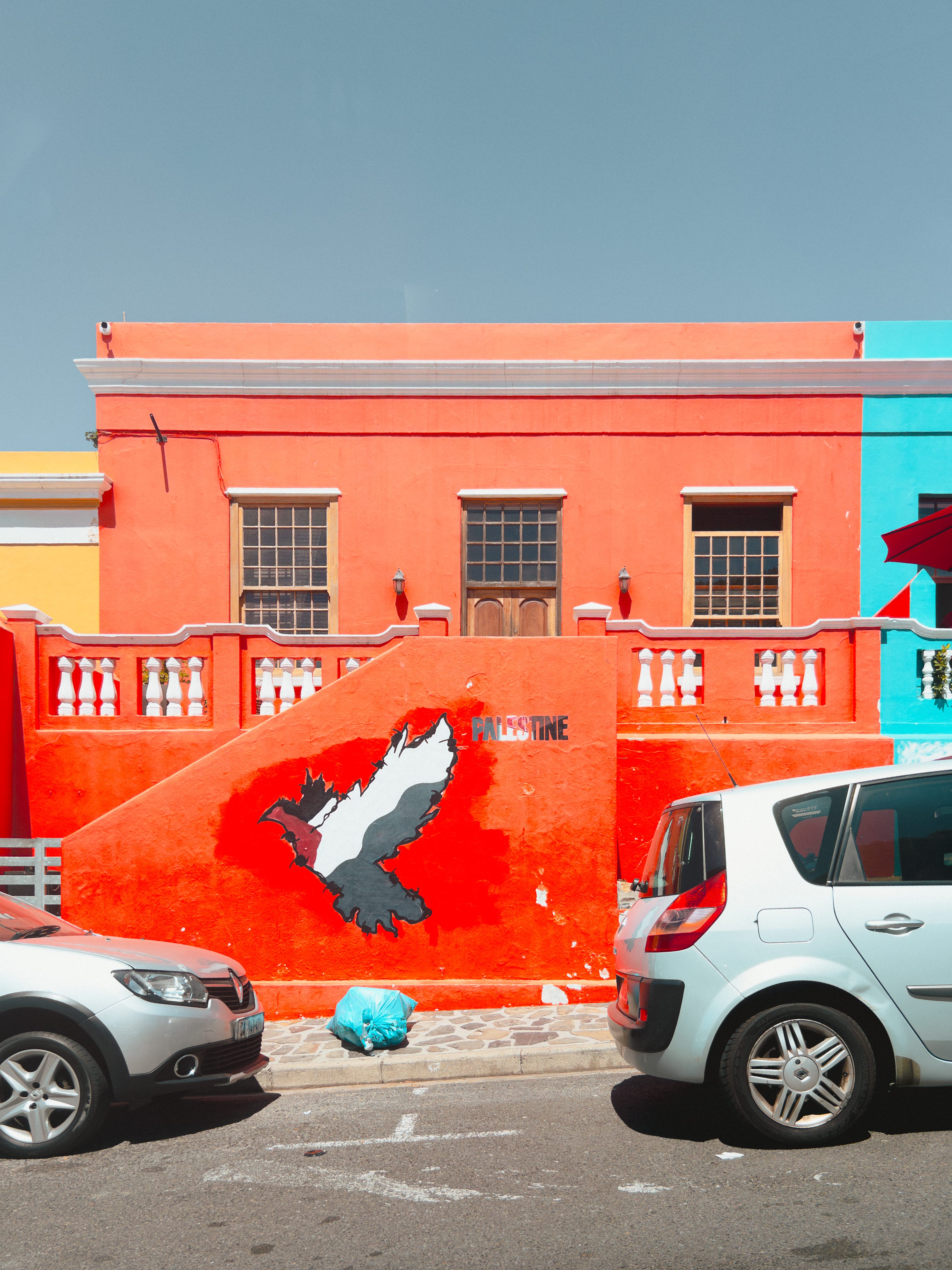
I’m not going off on a tangent here. It’s the same argument at a different altitude. The word “content” flattens all art, craft, and thought into filler, and the platforms that invented the word were never neutral about whose filler they valued most. When I’m told to post Reels to grow my photography, I’m being told to perform my practice in the format that best serves a platform whose infrastructure was designed around different creators, in different markets, for different advertisers. My work becomes legible to the system only when I translate it into the system’s preferred language. The translation is always a loss.
I don’t have a clean ending for this. I genuinely don’t.
I still have an Instagram account. I have a TikTok account. I have Twitter (I refuse to call it “X.” X is a letter of the alphabet, not a brand. We’re not doing that here.) I have a YouTube account somewhere. I’ve put up posts in the past week. I will probably post more. The advice to make videos is not wrong if what you want is reach, and I do want reach, and I’m not pure enough to pretend otherwise.
But I will not post “content.” I take photographs because the practice matters to me and because I believe images can change how people understand the world. I recognise that none of that changes if the photographs are only seen by twelve people - reach is not vanity, reach is how the work gets to do what it came here to do. But I still will not record or publish “content.” I refuse to entertain the word. Not publicly, not in how I describe my own work to myself.
[Although there’s a certain rebel rabbi from Nazareth who allegedly had his work consistently witnessed by only twelve people, and yet here we are, 2000+ years later, with a huge portion of the world’s population professing fully awareness and alleged acceptance of said rabbi’s work but acting in complete opposition to it. Hmm. That last part may have been a slight tangent on my part. Right. Where were we? Ah, yes.]
Because there is something worth protecting in the naming. In refusing, at the very least, to call the photographs, the writing, or any other product of mindful consideration “content”. In remembering that the frame is not neutral - that calling your work filler is a prior concession to the jar’s supremacy, before you’ve even started. You can work within the system without adopting the system’s language about your own work. You can post Reels whilst knowing that the Reel is not the photograph. You can engage the algorithm without becoming its vocabulary.
Words mean things. Words matter. Language matters.
I think that’s what I’ve been trying to say this entire time.
The branding consultants are not the villains. The algorithm is not quite the villain either - it is a consequence of an economic logic that we all, collectively, built and sustain. We are all in this. The consumer scrolling past the essay to watch the 15-second dance contributed to this. The creator who optimised themselves into a posting schedule contributed to this. I contributed to this. The villain, if there is one, is the moment when we stopped asking what the work was for and started asking what the platform preferred - and then treated those as the same question.
They are not the same question. I think that’s the thing I most needed to say.
[Also, tiny little tangent: At some point, “content” became either video with 5 cuts per second, or a picture with some form of summer-style music attached to cheat the algorithm into calling it video. I think I hate that too.]
Marcus Olang’ is a photographer and writer. Who apparently has been thinking about this one single word for a rather long time.
Comments
Nothing yet. Say the first thing.
Sign in to join the conversation.