
The day after a recent Y Combinator demo day, a company took the roughly 100 startups that had just presented and, in 24 hours, replicated every one of their products. It is a tidy little parable for the moment we are in. The barrier to building has collapsed—you can vibe-code a working product over a long weekend—and the reflex is to treat that as liberation. However, Jim Hornthal offered a drier read: congratulations, he said, you have proven you can build the wrong product really quickly. If anyone can build anything almost instantly, then the building was never the hard part. The question then becomes: if that is the case, then what is?
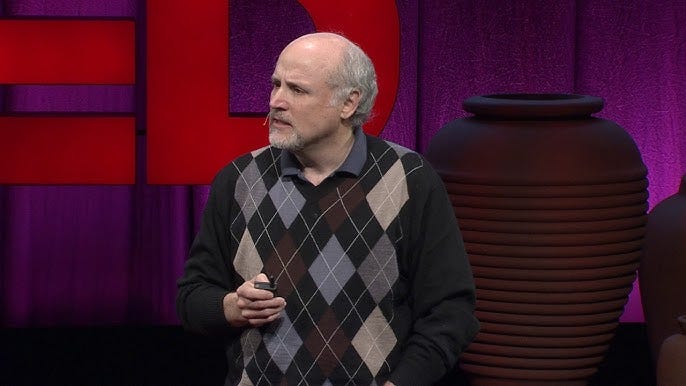
Hornthal has earned the right to ask it. He founded Preview Travel, one of the first online travel agencies, took it public in 1997, and later merged it into what we know as Travelocity today—which means he has already lived through one technology-driven extinction event, watching more than seventy percent of travel agents disappear while the survivors adapted by deepening the very human services a screen couldn’t replace. For the past 15 years, he has taught the Lean LaunchPad course at Berkeley and Stanford alongside fellow entrepreneur Steve Blank, helping thousands of founders trade their faith for evidence. We invited him onto the latest episode of the FROM THE CULTURE podcast to help us think through what entrepreneurship becomes when the tools get this cheap, and the conversation kept circling one clarifying idea: as AI drives the cost of building toward zero, the scarce resource is no longer the idea or the execution. It is the irreducibly human work around them.
Start with the economics, because they are staggering. Hornthal walked us back to his first computing venture, where a 90-megabyte hard drive was the size of a dishwasher, cost $40,000, and needed its own air-conditioned room. Today he carries two terabytes in his pocket. Compute is nearly free, storage is nearly free, bandwidth is nearly free—and large language models now push knowledge itself toward free. His framing is pointed: if knowledge is free, then you are only inches from wisdom. “Knowledge,” he likes to say, “is knowing a tomato is a fruit; wisdom is knowing not to put it in a fruit salad.” The tools can hand you the former in seconds. The latter is completely on you.
If the machine can generate the knowledge, what then is the role of the founder? Hornthal’s answer is a sequence he insists most people get wrong. The sequence begins with problem curation—the patient, unglamorous work of defining what problem you are actually solving, and for whom. Only then comes resource identification, and only after that does Hornthal arrive at what, in his estimation, most founders erroneously start with: team formation. The reason the founding team is so rarely the right team, he argues, is that people assemble the crew before they’ve sufficiently curated the problem to know who the crew should be. According to Hornthal, AI, when used well, is a genuine multiplier in this work rather than has been reduced to a slop machine. Hornthal reframes it as augmented intelligence whose highest use is not answering questions but expanding pattern recognition.
Our judgment has always been capped by what we have happened to read, done, and remembered; as Hornthal argues, an LLM trained on that terrain lifts that ceiling, surfacing analogies we’d never have reached on our own. Through this lens, today’s technology works best to fuel curiosity and augment what has historically worked by enabling us to do so more efficiently. This is why, when the conversation turned to what actually separates the founders who make it from those who don’t, Hornthal did not name intelligence as the core criterion. Instead, he pointed to curiosity and the willingness to be wrong.
His students arrive at Stanford and Berkeley accustomed to being right, and entrepreneurship, he told us, is largely the practice of being wrong—repeatedly, and without taking it personally. He put a number on it: across the first decade of National Science Foundation innovation teams, some of the smartest scientists in the country, the ratio of invalidated to validated assumptions ran about 8:1. Wrong eight times for every once they were right. The teams that thrived treated each invalidation not as failure but as signal.
His other differentiator was diversity—not as a moral gesture but as cognitive range. His best teams pair MBAs with engineers, because, as he put it, “MBAs can sell things that can’t be built and engineers can build things no one wants to buy; forcing them together raises the odds you make something both real and wanted.” The minicomputer giants that dismissed the personal computer as a toy weren’t short on talent. They were short on perspective.
Underneath all of it sits trust, which may be the most human variable of all. Hornthal quoted his friend, Harvard Business School professor Bill Sahlman, who said that entrepreneurs don’t run out of money so much as they run out of trust—and once the trust is gone, the money follows. In an age when founders are considering the benefits of AI in their businesses, this perspective holds new weight. The people you lead still have to believe you, and belief cannot be vibe-coded; it is earned in the same slow, proximate way it always has been. It’s still human. As Hornthal likes to paraphrase the words of Gandhi, “There go my people, and I must follow them, for I am their leader. The tools have changed everything about how we build, but they have changed almost nothing about why anyone follows.
So, as we enter into an era that Hornthal calls the “vibe founding” era—a generation where a dozen ideas are quickly sorted to assess real resilience—and the doorway into it becomes increasingly democratized, the more value we’ll place on the things the machine can’t do, because that’s where distinctiveness happens. The product is never inherently valuable; people assign value to it, but only when it meets them at a genuine point of friction. That act of meeting—seeing the world through someone else’s meaning-making lenses and clearly enough to know what actually matters to them—requires an intimacy no model can manufacture for you. AI can hand you the whole haystack in an instant. Knowing which needle matters, and why, is still the founder’s job—and it may be the only part that was ever really the job at all.
Check out our full conversation with Jim Hornthal on the latest episode of FROM THE CULTURE here.
No posts
Comments
Nothing yet. Say the first thing.
Sign in to join the conversation.