
Every organization is, in the end, a bet on people. It’s why recruiters spend fortunes and quarters combing the job market for the right hire, why front offices employ armies of scouts, why A&R executives fly across the country to sit in on a showcase. The logic is the same whether you’re staffing a marketing team, drafting a point guard, or signing a girl group: your odds of winning in the consumer market are decided long before the product ships, by whether you correctly identified the talent that would make it happen. We celebrate the win. We rarely study the eye that spotted the talent in the first place. That eye is a skill—arguably the most underrated one in business—and few people alive have demonstrated it more repeatedly than Mathew Knowles.
Knowles is, by most accounts, one of the most accomplished talent developers in modern music—the architect behind Destiny’s Child, the shepherd of Beyoncé’s, Kelly Rowland’s, Michelle Williams’s, and Solange’s careers, the former President of Sanctuary Records’ urban division, the founder of Music World Entertainment, which he built after leaving a top sales job at Xerox. So, we invited him onto the latest episode of the FROM THE CULTURE podcast to answer a question that has followed me since I worked for him years ago: how does one person so consistently identify talent? He’s done it repeatedly for decades, so we can only consider it a skill, not a fluke. He’s looked beyond chart numbers, beyond what’s on any resume, to discover some of the best talent onstage and in the office. What emerged from our conversation with Knowles was a method—one that says the thing you’re evaluating is rarely the thing you think you’re evaluating.
Knowles told us he’d have every artist or prospective employee sit and talk with him in his office, sometimes for two hours, before ever asking them to sing or walk him through their resume. In these conversations, he was evaluating three things, the factors he says make the difference when finding the right talent for his organization: were they passionate, would they listen, and did they have the work ethic to match. “I don’t care how well you sing or how many degrees you have,” he said; without those three, it wouldn’t work.
I can testify to this method, because I went through it. I’d flown from New York to Houston to interview with Knowles, braced for the hard questions about my perspective on the music industry and how a company might fare in the current digital landscape. Surely, these questions would be the evaluative criteria by which he’d determine whether I’d get the gig. But the questions never came—not right away, at least. Instead of the work questions, he asked me life questions. We spent ninety minutes talking about where my mother was from, where my father was from, what his parents did, and so on. Maybe fifteen minutes of the conversation addressed my actual skills. I kept waiting for the other shoe to drop. It never came—because the interview I thought I was in wasn’t the one he was conducting.
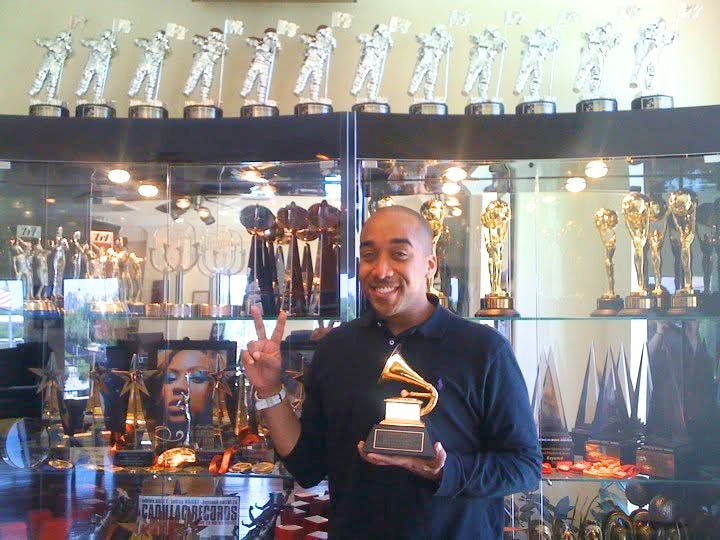
The choreography went further than I realized at the time. Knowles deliberately delayed the start of my interview 17 years ago and left me alone in his office for about 8 minutes or so, with a towering wall of Grammys, MTV honors, Soul Train plaques, and NAACP Image Awards. He wanted me to sit in the presence of what had been built. If the room humbled me, then he’d get a sense if I had the right disposition for the organization. If it inflated me, that told him something, too. It may have come across as someone arrogant and unlikely to listen—not a good fit for the environment he was trying to nurture in this organization. Ostensibly, he turned a talent evaluation into an assessment of character under quiet pressure—because he’d learned that skill is common and cheap, while the disposition to keep getting better is rare and decisive.
What he’s really scanning for, he revealed, is how a person’s disposition metabolizes failure—and here he offered the most quietly radical idea of our conversation on the pod. When he took over the group that would become Destiny’s Child, they had just lost on Star Search, performing, absurdly, against a thirty-something rock band. Host Ed McMahon pulled him aside and told him something that reordered his philosophy: the people who consistently win on the show tend to disappear, while the ones who lose come back, retool, change the lineup, and break through.
Knowles asked us to Google the losers of Star Search live on the podcast. I did, and read the list aloud: Beyoncé. Justin Timberlake. Christina Aguilera. Dave Chappelle. Aaliyah. “Failure,” he said, “is the opportunity to grow, not a reason to quit.” Then he lived it—going back to community college for artist management, surviving a production deal that collapsed, and a partner who died—treating each setback not as a verdict but as a delta between where he was and where he needed to be. The talent he prizes most isn’t the one that shines in the audition; it’s the one that comes back from a loss.
That reframing is the through-line of his method, and one I can relate to my own career. A “no” today, in his world, is simply information about what has to be true for tomorrow’s “yes.”
But, for Knowles, spotting talent also means seeing where a person fits within the organization and keeping them focused. During my tenure with Knowles, flush with excitement, I emailed him insisting that we work with an artist I loved, the great PJ Morton, with whom I had arranged a meeting to discuss potentially working on a project for one of our artists, the multi-platinum-selling gospel artists Trin-i-tee 5:7. Knowles’ reply was four words I can still recite: “Stay in your lane.” Or, as he corrected me on the podcast, “Stay in your damn lane.” It felt like a rebuke. But it was actually a lesson in roster construction: he had a vivid vision and had assembled specific people to play specific positions, and a point guard trying to play power forward doesn’t make the team better—it makes it chaotic. Identifying talent is only half the eye; the other half is knowing exactly where it belongs.
Spotting talent that way only pays off if you then trust it, and Knowles defines trust in an unexpectedly practical way. It’s faith, he said, but not the spiritual kind: it’s what you extend to the pilot you assume didn’t drink last night, to the air traffic controller you assume is at their post. Once he’d identified someone, he extended that same faith and got out of the way. He never once looked over my shoulder; I walked into rooms to present to partners pitch decks he had never seen; his expectation was simply that I’d show up well.
Near the end of our conversation with Knowles, we asked what he’s most proud of considering all that he’s built. He set family aside and declined to script his own legacy—”you will determine my legacy,” he said, “my body of work will determine my legacy”—and then, tellingly, the thing he reached for wasn’t a Beyoncé record. It was the five young Black managers, men in their twenties, whose companies he acquired and whom he helped make millionaires, one of whom went on to run creator services at Spotify. “To me,” he said, “that was bigger than Destiny’s Child.”
I now understand why, and I have a personal stake in understanding it, because I was one of the people he spotted when my resume said I wasn’t ready. The awards measure what his eye produced. The people he identified and grew measure the eye itself—the thing that made the outputs repeatable rather than lucky. That is the skill worth stealing from him: not the ability to develop talent once you’ve found it, but the discipline to look past the audition, past the resume, past the obvious, and see who a person will become. Spot that correctly and often enough, and you don’t win once. You build a hit factory.
Check out our full conversation with Mathew Knowles on the latest episode of FROM THE CULTURE here.
No posts
Comments
Nothing yet. Say the first thing.
Sign in to join the conversation.